
Introduction
A cozy balcony can transform a small outdoor space into a functional and relaxing extension of the home. With the right Pinterest ideas, even a compact balcony can become a visually appealing area for rest, reading, or casual gatherings. This article explains how to design an aesthetic balcony using practical, beginner friendly methods and clear planning.
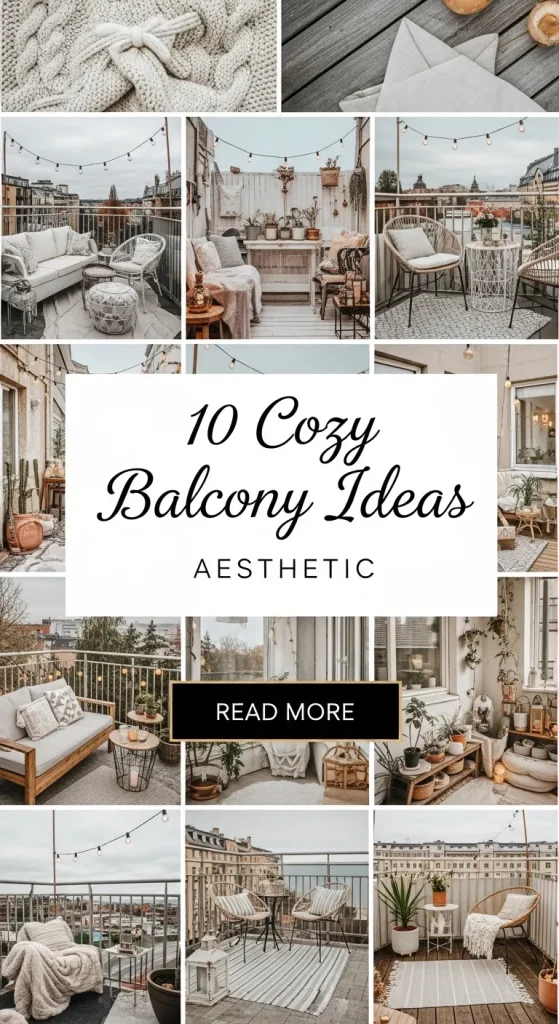
Readers will learn how to apply DIY techniques, choose suitable materials, and organize small spaces efficiently. Each idea focuses on simple execution while maintaining modern design principles. The goal is to create a comfortable, stylish balcony using accessible tools and thoughtful decoration that enhances both usability and visual appeal.
A balcony does not require a large budget or advanced skills to look appealing. With proper planning and creative ideas, even limited space can reflect a warm and inviting atmosphere. Thoughtful placement of elements such as lighting, seating, and greenery can significantly improve the overall aesthetic and functionality of the area.
This guide focuses on clear, step by step methods to help beginners achieve practical results. Each section provides structured inspiration that aligns with modern home decor trends while remaining easy to implement in real living spaces.
Why This Idea Is Trending or Useful
Cozy balcony designs are trending because they offer a simple way to extend living space without major renovation. Many people prefer functional outdoor areas where they can relax, work, or enjoy fresh air. Pinterest ideas highlight these small transformations because they are achievable, visually appealing, and adaptable to different home styles.
The practical value of a cozy balcony lies in its flexibility. It can serve as a reading corner, coffee spot, or relaxation zone. This makes it a useful addition to modern homes where space is often limited. The DIY aspect also increases its popularity, as most designs can be created with affordable materials and simple tools.
These designs are beginner friendly and do not require professional expertise. Step by step tutorials make it easy to follow instructions and achieve consistent results. The focus on minimalist style and aesthetic organization also aligns with current home decor trends, making these ideas both functional and visually balanced.
Materials and Preparation
Before starting any balcony transformation, proper planning is essential. Begin by measuring the space and identifying how much area is available for seating, decoration, and movement. This helps avoid overcrowding and ensures a balanced layout.
Common materials include outdoor rugs, cushions, wooden pallets, small furniture, fairy lights, planters, and storage baskets. These items are widely available and suitable for DIY projects. Tools such as scissors, adhesive hooks, paint brushes, and basic hand tools may also be required depending on the design.
Preparation involves cleaning the balcony thoroughly and checking the surface condition. Ensure the flooring is stable and suitable for added layers like rugs or decking tiles. Weather conditions should also be considered when selecting materials to ensure durability.
Planning the color palette and design style in advance helps maintain consistency. Choosing neutral tones or soft colors often supports a minimalist aesthetic, while adding texture through fabrics and plants enhances the overall appearance.
MAIN IDEAS
Idea 1: Soft Cushion Lounge Setup
How to Create
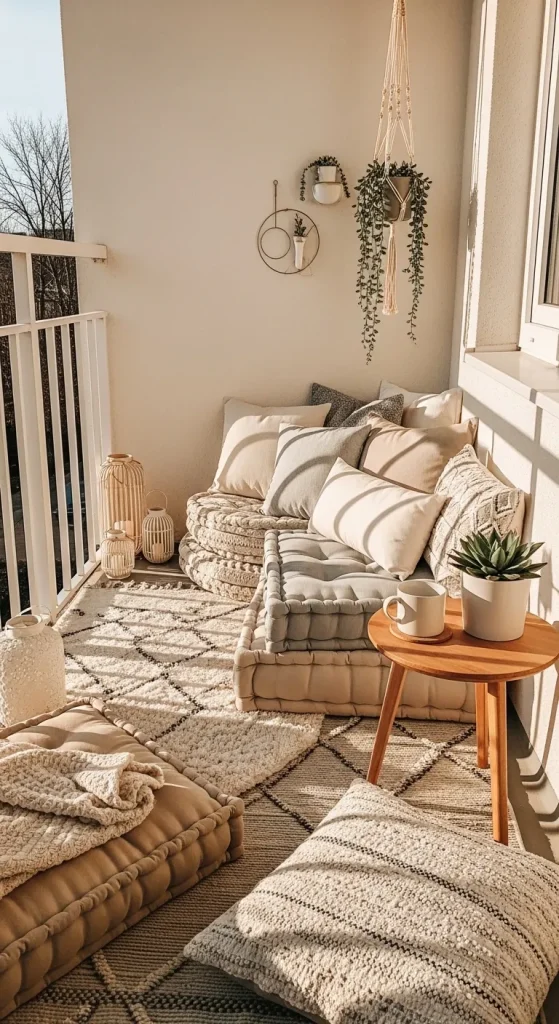
A soft cushion lounge setup focuses on comfort and relaxation using floor seating arrangements. This idea works well for small balconies where traditional furniture may not fit. The design involves layering cushions, throws, and rugs to create a cozy sitting area. Neutral or pastel tones help maintain a calm aesthetic, while textured fabrics add visual depth.
This setup supports a relaxed environment suitable for reading, casual conversations, or quiet time. The absence of bulky furniture makes the space feel open and flexible. Adding low-height elements also enhances the sense of intimacy, which is essential for a cozy balcony design.
To create this setup, start by placing a durable outdoor rug as the base layer. Arrange large floor cushions evenly across the space, ensuring enough room for movement. Add smaller cushions for back support and include a soft throw for additional comfort.
Use weather-resistant fabrics to ensure longevity. Optional elements such as a small tray table or lantern can enhance functionality. Keep the arrangement balanced by avoiding excessive layering, which may make the space appear cluttered. This step by step approach ensures a practical and beginner friendly result.
Idea 2: Vertical Garden Wall
Step-by-Step Guide
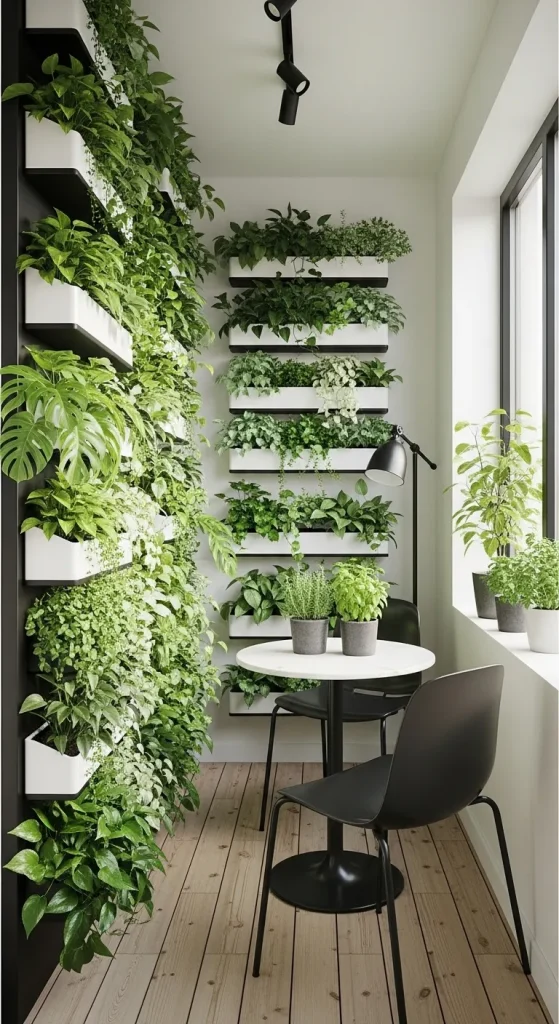
A vertical garden wall maximizes limited space by utilizing vertical surfaces for greenery. This idea enhances the aesthetic while improving air quality and creating a natural environment. It is suitable for balconies with limited floor space but available wall areas.
The design involves arranging plants in a structured layout using hanging pots, shelves, or wall-mounted planters. Selecting a mix of leafy plants and small flowering varieties adds variation and visual interest. The arrangement should maintain balance and avoid overcrowding.
To build a vertical garden, install a sturdy frame or use pre-made wall planters. Secure the structure properly to ensure safety. Choose lightweight pots and arrange them evenly across the surface.
Select plants based on sunlight availability and watering needs. Regular maintenance such as watering and trimming is essential to keep the wall healthy. This DIY project provides a structured and organized approach to incorporating greenery into balcony decor.
Idea 3: Warm String Light Ambiance
How to Make
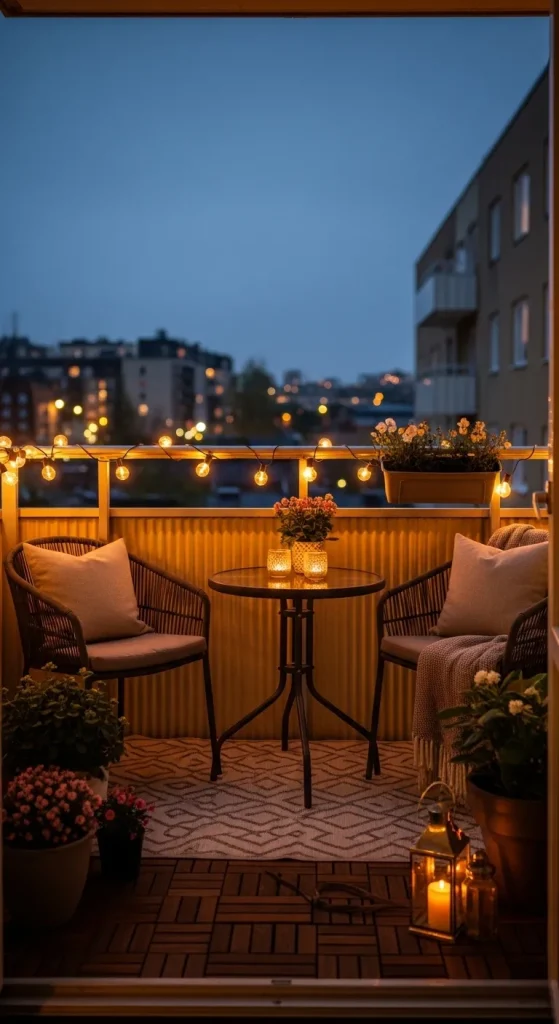
String lighting is an effective way to create a cozy and inviting atmosphere. Warm-toned lights add softness to the space and enhance the overall aesthetic during evening hours. This idea works well for all balcony sizes and requires minimal materials.
The concept focuses on strategic lighting placement to highlight key areas such as seating or plants. Soft lighting improves visibility while maintaining a relaxed mood. It also complements other decorative elements without overpowering them.
To install string lights, begin by selecting weather-resistant lighting suitable for outdoor use. Attach adhesive hooks or clips along the railing or wall. Arrange the lights in a pattern such as straight lines, drapes, or zigzag layouts.
Ensure the power source is safely positioned and protected from moisture. Test the lighting before final placement. This simple step by step method provides a quick and effective way to enhance balcony aesthetics.
Idea 4: Wooden Pallet Seating
Execution Process
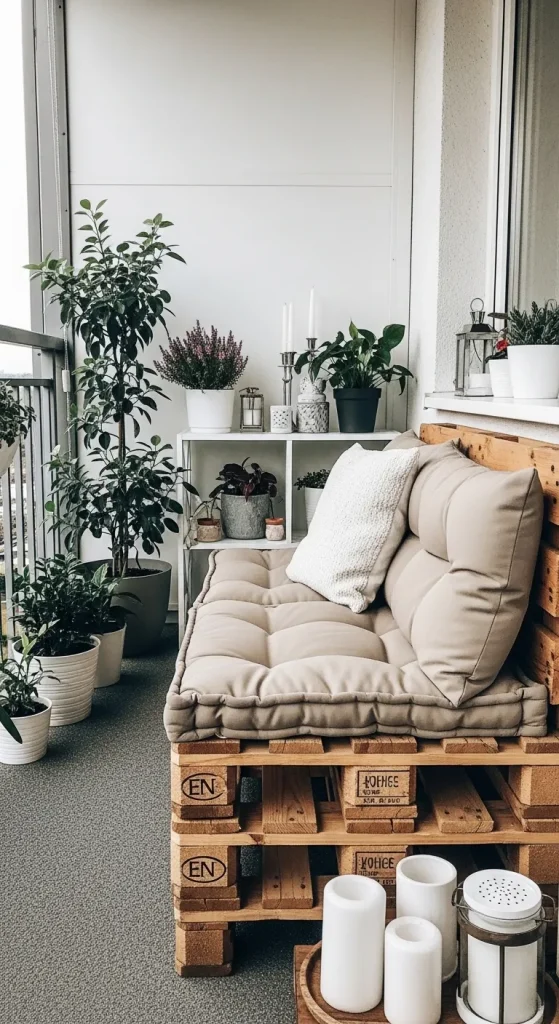
Wooden pallet seating offers a cost-effective and customizable solution for balcony furniture. This idea uses repurposed pallets to create benches or low seating structures. It supports a rustic yet modern design approach.
The design can be adjusted based on space availability. Pallets can be stacked for height or arranged horizontally for wider seating. Adding cushions improves comfort while maintaining a clean aesthetic.
To create pallet seating, clean and sand the pallets to remove rough edges. Apply a protective finish to enhance durability. Stack or arrange the pallets securely and place them in the desired position.
Add seat cushions and back support pillows. Ensure the structure is stable before use. This DIY tutorial is beginner friendly and allows for flexible customization based on individual needs.
Idea 5: Mini Coffee Corner
Setup Method
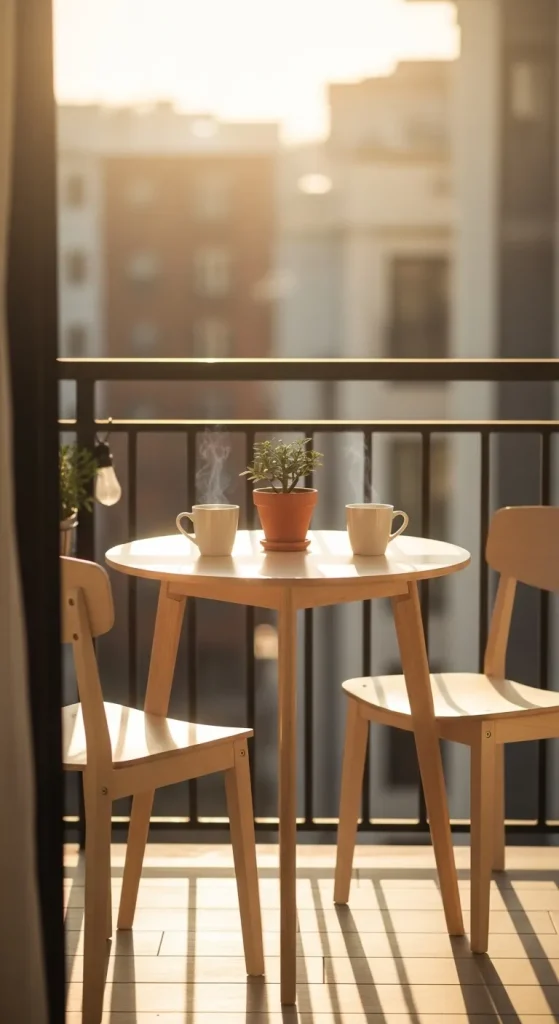
A mini coffee corner transforms the balcony into a functional relaxation space. This idea focuses on creating a small area for enjoying beverages or light meals. It is ideal for daily use and adds practical value.
The design includes a compact table and one or two chairs. The arrangement should allow easy movement while maintaining balance. Adding small decorative elements enhances the aesthetic without cluttering the space.
To set up the corner, choose foldable or compact furniture. Position the table near the railing for an open view. Add simple decor such as a small plant or tray.
Ensure the materials are suitable for outdoor use. Keep the layout minimal to maintain functionality. This step by step approach ensures a clean and organized result.
Idea 6: Boho Textile Layering
How to Create
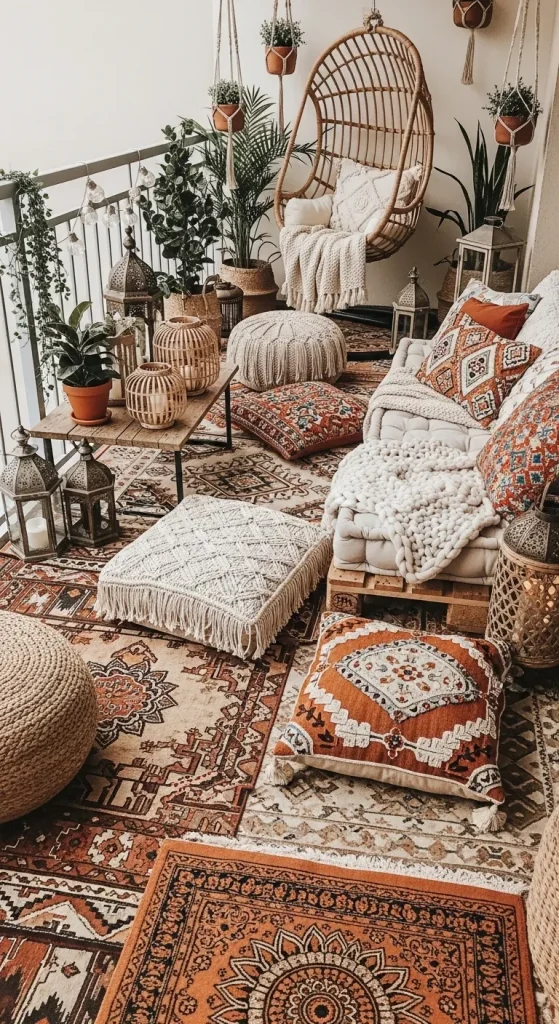
Boho textile layering focuses on combining different fabrics to create a warm and textured environment. This idea uses rugs, throws, and cushions to add depth and personality to the balcony.
The design emphasizes patterns and natural tones. Layering textiles creates a soft and inviting atmosphere while maintaining visual interest. It works well for creating a relaxed and artistic space.
To implement this idea, start with a base rug and add additional layers such as smaller rugs or mats. Arrange cushions in varying sizes and patterns. Include a lightweight throw for added texture.
Ensure the colors complement each other to avoid visual imbalance. Use weather-resistant materials when possible. This method provides a simple yet effective way to enhance balcony decor.
Idea 7: Hanging Chair Feature
Step-by-Step Guide
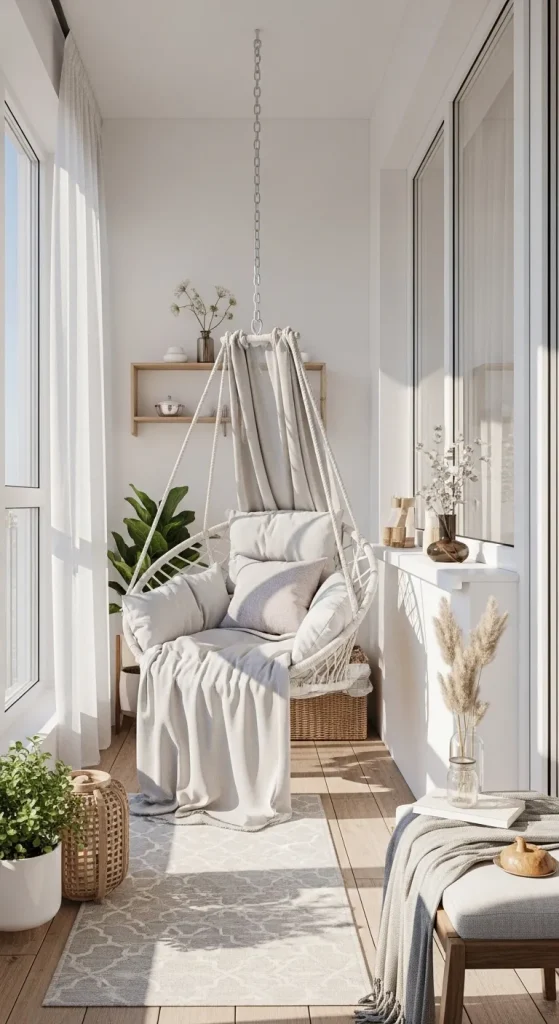
A hanging chair adds both functionality and visual appeal to a balcony. It creates a focal point while providing a comfortable seating option. This idea works best for balconies with strong ceiling support.
The design introduces movement and softness to the space. It complements minimalist and modern styles while maintaining practicality. The chair can be styled with cushions for added comfort.
To install a hanging chair, secure a strong hook or mounting system to the ceiling. Ensure it can support the required weight. Attach the chair according to instructions and test stability.
Add cushions and position the chair to allow safe movement. Maintain enough surrounding space to prevent obstruction. This setup creates a relaxing and visually balanced environment.
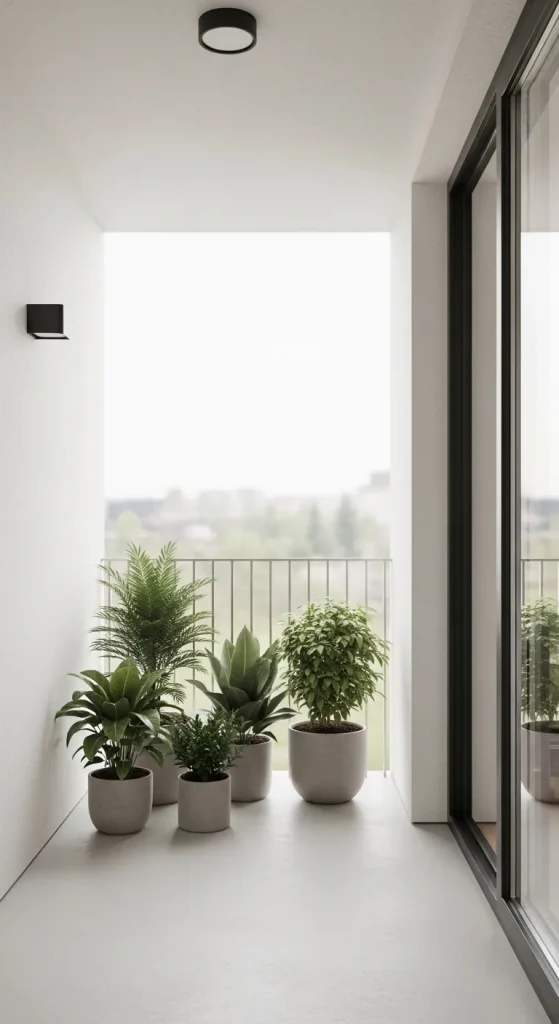
Idea 8: Minimalist Plant Arrangement
How to Make
A minimalist plant arrangement focuses on simplicity and clean design. It uses a limited number of plants arranged in a structured manner. This idea supports a calm and uncluttered aesthetic.
The concept emphasizes quality over quantity. Selecting a few well-placed plants creates a balanced and organized look. Neutral pots and simple layouts enhance the minimalist style.
To create this arrangement, choose plants with similar care requirements. Place them evenly along the balcony edge or on small stands. Maintain spacing to avoid overcrowding.
Use consistent pot designs for a cohesive look. Regular maintenance ensures the plants remain healthy. This approach provides an easy project suitable for beginners.
Idea 9: Privacy Curtain Setup
Execution Process
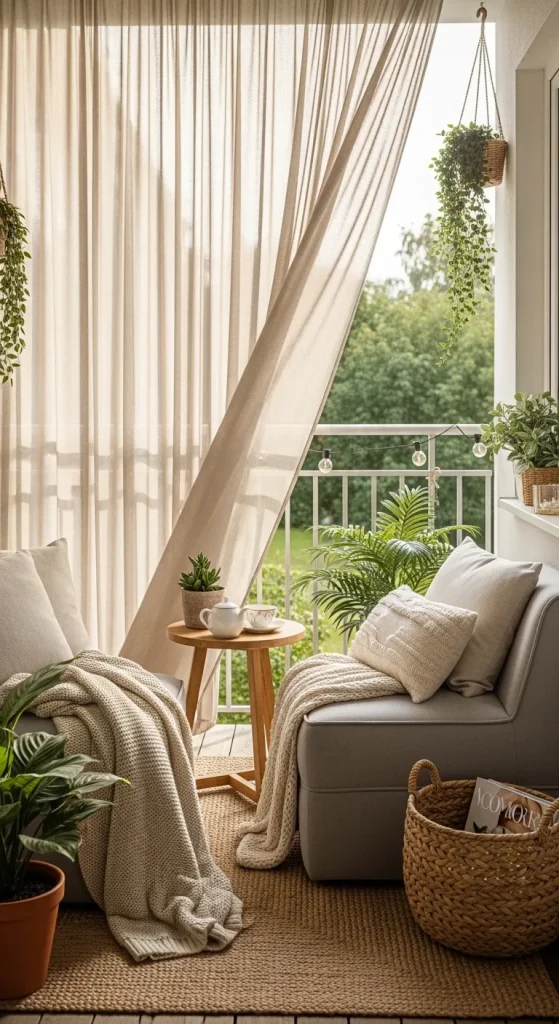
Privacy curtains improve comfort by creating a secluded environment. This idea is useful for balconies in close proximity to neighboring buildings. It also adds softness to the overall design.
The curtains can be styled to match the balcony theme. Light fabrics allow airflow while maintaining privacy. Neutral tones support a modern and aesthetic appearance.
To install curtains, attach a rod or wire along the balcony frame. Hang lightweight outdoor curtains and adjust them for coverage.
Ensure the material is weather-resistant. Secure the ends to prevent movement in wind. This setup enhances both functionality and visual appeal.
Idea 10: Decorative Shelf Styling
How to Create
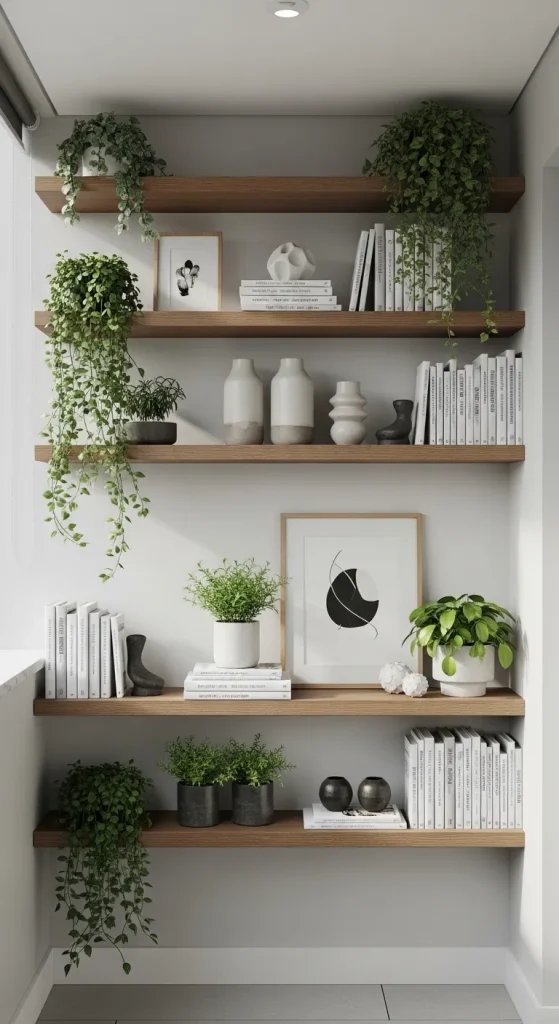
Decorative shelves provide additional storage and display space. This idea helps organize small items while maintaining a clean layout. It is suitable for balconies with limited floor space.
The design involves wall-mounted or freestanding shelves. Items such as plants, books, or small decor pieces can be arranged neatly. Balanced placement ensures a tidy appearance.
To create shelf styling, install sturdy shelves on the wall. Arrange items in a structured manner, leaving space between objects.
Avoid overcrowding to maintain clarity. Use consistent colors or materials for a cohesive look. This step by step method improves organization and enhances the balcony aesthetic.
Common Beginner Mistakes and How to Avoid Them
One common mistake is overcrowding the balcony with too many items. This reduces functionality and disrupts visual balance. To avoid this, prioritize essential elements and maintain open space. Another issue is choosing unsuitable materials that cannot withstand outdoor conditions. Always select weather-resistant options to ensure durability.
Poor planning can also lead to ineffective layouts. Measuring the space and planning placement in advance helps prevent this problem. Ignoring lighting is another mistake that affects usability. Adding soft lighting improves both function and appearance.
Practical Tips for Better Results
Start with a clear plan and focus on one design style. Consistency improves the overall look. Use neutral colors as a base and add accents through textiles or plants. Keep the layout simple to maintain functionality.
Regular maintenance is important for long-term results. Clean surfaces, adjust decor, and check materials periodically. Using multi-functional items can also improve efficiency in small spaces.
Styling, Presentation, or Organization Ideas
Arrange elements in layers to create depth. Place larger items first, then add smaller decorative pieces. Maintain symmetry where possible for a balanced look.
Use storage solutions such as baskets or shelves to keep the area organized. Keep frequently used items accessible while storing less-used items neatly.
Budget or Time Planning
Set a realistic budget before starting the project. Focus on essential items first, then add decorative elements gradually. DIY projects help reduce costs while allowing customization.
Time planning is equally important. Break the project into smaller steps and complete one section at a time. This ensures better results and reduces errors.
Creative Expansion and Advanced Inspiration
Advanced ideas include combining multiple concepts such as lighting, plants, and seating into one cohesive design. Experimenting with textures and layouts can create unique results.
Seasonal updates also provide fresh inspiration. Changing cushions, plants, or lighting arrangements keeps the balcony visually engaging. This approach allows continuous improvement while maintaining a functional space.


Leave a Reply