
Introduction
A well-organized pantry is one of the most valuable features in any kitchen. Whether you have a spacious walk-in pantry, a dedicated pantry cabinet, or a small shelving unit tucked into a corner, smart storage solutions can transform a cluttered space into an efficient and beautiful storage area. A thoughtfully designed pantry not only makes meal preparation easier but also helps reduce food waste, saves money, and creates a cleaner, more enjoyable kitchen environment.
Modern pantry storage goes far beyond stacking canned goods on shelves. Today’s homeowners are using clear storage containers, woven baskets, pull-out drawers, lazy Susans, adjustable shelving, labeled jars, tiered organizers, and custom storage systems to maximize every inch of available space. These practical solutions make it easier to see what you have, quickly access ingredients, and maintain an organized pantry over time.
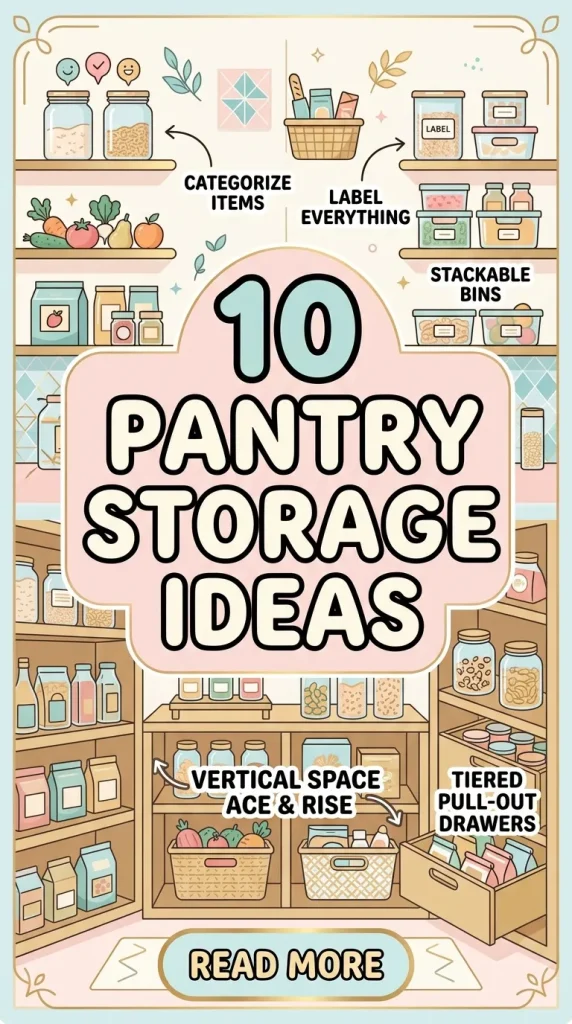
One of the biggest advantages of organizing your pantry is improving your daily routine. When everything has a designated place, grocery shopping becomes more efficient, cooking becomes more enjoyable, and cleaning takes less time. A well-designed pantry also adds visual appeal to your kitchen, creating a neat and Pinterest-worthy space that feels both functional and inviting.
Whether you’re organizing a small apartment pantry, a large family pantry, or a modern walk-in storage room, these ten pantry storage ideas will inspire you to create a system that combines style with practicality. By incorporating smart storage products, natural materials, and thoughtful organization, you can build a pantry that supports your lifestyle while maintaining a beautiful, clutter-free appearance.
Materials Used
Depending on your pantry style, you may use:
- Clear airtight food storage containers
- Glass storage jars
- Pantry labels
- Woven storage baskets
- Wire storage baskets
- Pull-out drawers
- Lazy Susan turntables
- Tiered shelf organizers
- Adjustable shelving
- Wooden storage crates
- Stackable bins
- Under-shelf baskets
- Door-mounted organizers
- Spice racks
- Acrylic storage bins
- Can organizers
- Food storage baskets
- Wooden trays
- Chalkboard labels
- Storage hooks
- Shelf dividers
- LED cabinet lighting
- Step stool
- Decorative jars
- Measuring containers
How to Organize a Pantry Efficiently
Begin by removing everything from the pantry and sorting items into categories such as baking supplies, canned goods, snacks, pasta, cereals, spices, beverages, and breakfast foods. Discard expired products and donate unopened items you no longer need.
Clean all shelves thoroughly before adding organizers. Install adjustable shelves whenever possible to accommodate different container heights. Transfer dry goods into matching airtight containers and label every container clearly for quick identification.
Store frequently used items at eye level while placing heavy appliances and bulk supplies on lower shelves. Reserve the highest shelves for seasonal items or products used less often. Incorporate baskets and bins to group similar products together and prevent clutter.
Finally, maintain the organization by returning every item to its designated place after use. Regularly check expiration dates and refill containers as needed to keep your pantry efficient and visually appealing.
1. Clear Airtight Container Organization
One of the easiest ways to create a clean and functional pantry is by using matching clear airtight containers for dry foods. Flour, sugar, rice, pasta, oats, cereal, beans, lentils, nuts, and snacks all look more organized when transferred into transparent containers. Because you can instantly see the contents, it becomes much easier to monitor quantities and know when it’s time to restock.
Choose BPA-free acrylic or glass containers with airtight lids to keep food fresh while protecting it from moisture and pests. Matching containers also create a uniform appearance that instantly elevates the overall design of your pantry. Add minimalist labels to each container using printed stickers, chalkboard labels, or engraved tags for a polished Pinterest-inspired look.
Arrange containers by height and category to maximize shelf space and improve accessibility. Taller containers should be placed toward the back while shorter ones remain in front, allowing every label to stay visible. Tiered risers can further improve visibility for smaller jars and containers.
Beyond aesthetics, airtight containers reduce waste by extending food freshness and preventing spills. They also simplify meal preparation because ingredients are easy to identify and measure. Whether your pantry is large or compact, investing in quality storage containers creates an organized foundation that makes daily cooking faster, cleaner, and far more enjoyable.

2. Woven Basket Storage System
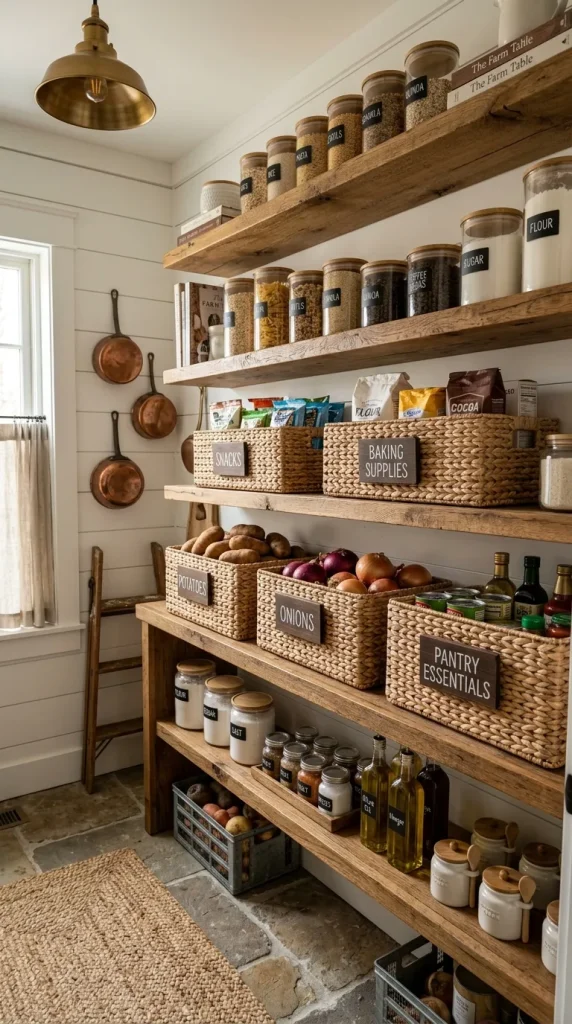
Woven baskets introduce warmth and texture while providing practical storage for pantry essentials. Use baskets to group snacks, baking supplies, potatoes, onions, paper products, or packaged foods into clearly defined categories. This prevents loose items from spreading across shelves and makes the pantry easier to maintain.
Natural wicker, seagrass, and rattan baskets complement farmhouse, coastal, Scandinavian, and modern kitchens alike. Choose baskets with built-in handles so they can be pulled forward easily when accessing items stored toward the back of shelves.
Label each basket according to its contents using wooden tags or simple adhesive labels. For example, dedicate one basket to breakfast foods, another to children’s snacks, and another to baking ingredients. This system allows every family member to locate items quickly without creating unnecessary clutter.
Woven baskets also hide colorful packaging that may otherwise make the pantry appear busy. Instead of seeing multiple boxes and bags, you’ll enjoy a calm and cohesive appearance that feels professionally organized while remaining highly functional.
3. Adjustable Pantry Shelving
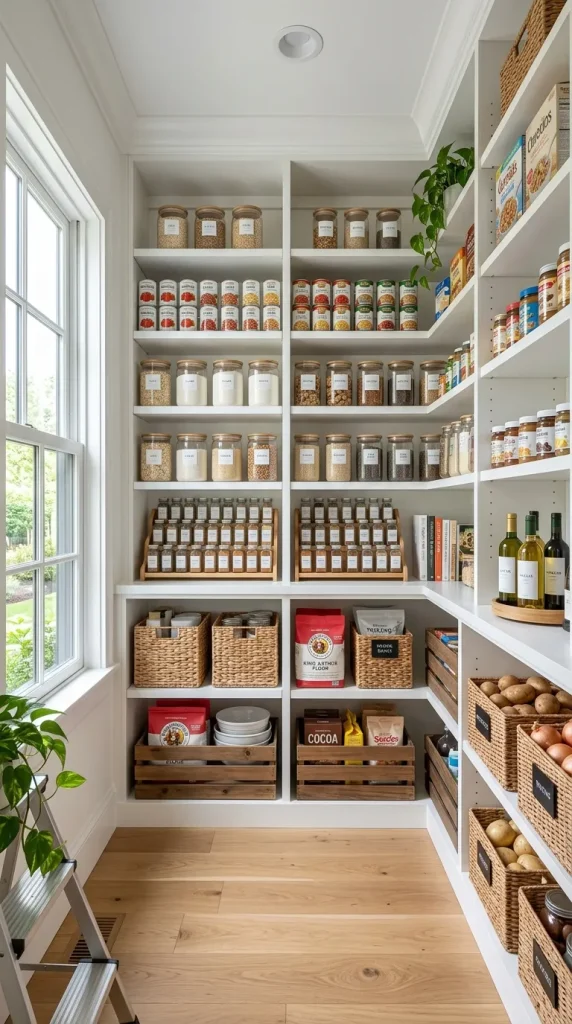
Adjustable shelving provides maximum flexibility because storage needs change over time. Installing shelves that can be repositioned allows you to accommodate tall cereal containers, small spice jars, canned goods, and large kitchen appliances without wasting valuable vertical space.
Organize shelves according to frequency of use. Everyday ingredients should remain at eye level while less frequently used products occupy higher or lower shelves. Leave enough vertical clearance between shelves to prevent overcrowding while maintaining efficient use of space.
Shelf risers can create additional storage levels within individual shelves, especially for canned goods and spice jars. Combining adjustable shelving with baskets and containers creates a customized organization system that adapts to your family’s changing needs.
Because adjustable shelving maximizes every inch of available storage, it’s especially beneficial for compact pantries where efficient organization is essential.
4. Pull-Out Drawer Storage
Pull-out drawers eliminate the frustration of reaching deep into pantry shelves. Instead of moving multiple items to access products stored in the back, drawers slide outward to reveal everything at once.
These drawers work particularly well for canned foods, snacks, pasta, baking supplies, and packaged goods. Transparent drawer fronts provide immediate visibility while dividers keep products neatly separated.
Soft-close drawer mechanisms add luxury while preventing containers from shifting during use. Organizing drawers by category also speeds up meal preparation because ingredients remain grouped together.
Pull-out storage combines convenience with accessibility, making it one of the most practical upgrades for both large and small pantries.

5. Lazy Susan Corner Organization
Corner shelves often become difficult to access, leading to forgotten products and wasted space. A rotating Lazy Susan solves this problem by bringing every item within easy reach.
Use turntables for cooking oils, sauces, vinegars, spices, condiments, canned goods, and baking decorations. High-sided organizers prevent bottles from tipping while rotating smoothly during use.
Group similar items together so cooking becomes faster and more efficient. Multiple smaller Lazy Susans often provide better organization than one oversized model.
This simple storage solution transforms awkward corners into highly functional pantry zones while preventing products from disappearing behind other items.

6. Door Storage Organization
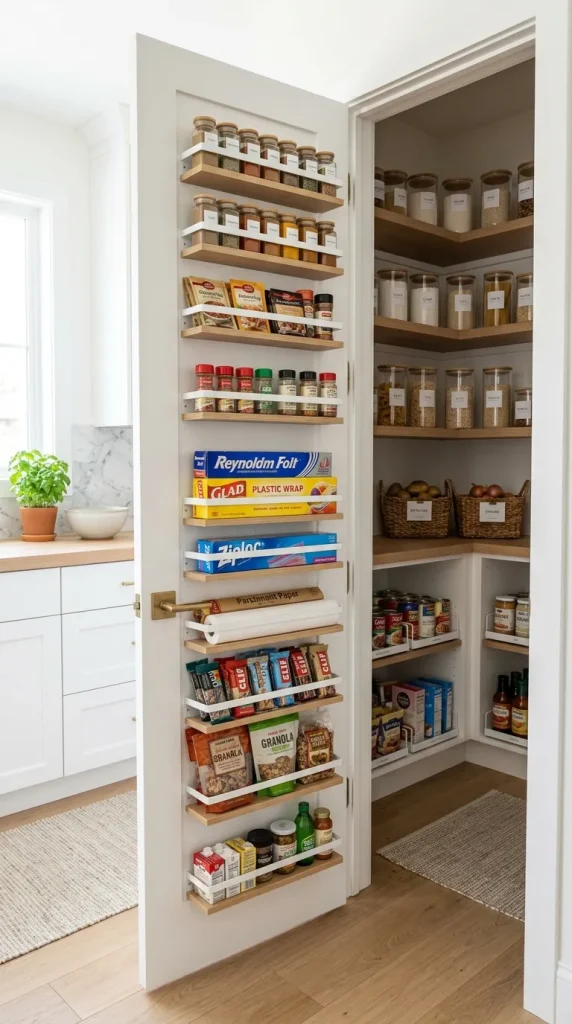
The inside of pantry doors offers valuable storage opportunities that often go unused. Install narrow shelving, wire racks, or acrylic organizers to hold spices, seasoning packets, foil, plastic wrap, paper towels, snacks, and small bottles.
Door organizers free up valuable shelf space while keeping frequently used products easily accessible. Clear bins allow labels to remain visible and simplify inventory management.
Choose adjustable door systems whenever possible to accommodate products of varying heights. This organization method is especially useful in smaller kitchens where every inch matters.
Properly utilized door storage dramatically increases pantry capacity without requiring additional floor space.
7. Dedicated Snack Station
Creating a dedicated snack station simplifies busy mornings and encourages organization throughout the family. Use labeled baskets or acrylic bins for granola bars, crackers, chips, dried fruit, nuts, popcorn, and healthy snacks.
Position children’s snacks on lower shelves for independent access while storing adult items above. Rotating stock regularly ensures older products are consumed first, reducing waste.
Matching containers maintain visual consistency while making snack selection quick and convenient. Decorative labels further enhance the organized appearance.
A designated snack zone keeps pantry traffic organized while minimizing clutter elsewhere.

8. Pantry Labeling System
Labels are one of the simplest yet most effective organizational tools. Clear labels help every family member return items to the correct location while reducing confusion.
Use waterproof printed labels, vinyl lettering, or chalkboard tags depending on your preferred aesthetic. Label shelves, baskets, containers, and bins consistently throughout the pantry.
Including expiration dates on refillable containers further improves inventory management. Color-coded labels can distinguish baking supplies, snacks, breakfast foods, and cooking ingredients.
A complete labeling system keeps the pantry looking neat while making maintenance significantly easier.

9. Open Shelf Display Pantry
Open shelving transforms pantry organization into an attractive design feature. Arrange matching jars, baskets, and containers neatly while keeping frequently used ingredients visible.
Display attractive items such as pasta, grains, spices, tea, coffee, and baking supplies in glass jars with wooden lids. Layer natural materials like woven baskets and wooden crates to add warmth.
Maintain visual balance by grouping similar items together and leaving small areas of empty space. Decorative lighting further highlights organized displays.
An open pantry encourages tidiness because every item remains visible while creating a beautiful Pinterest-inspired kitchen.

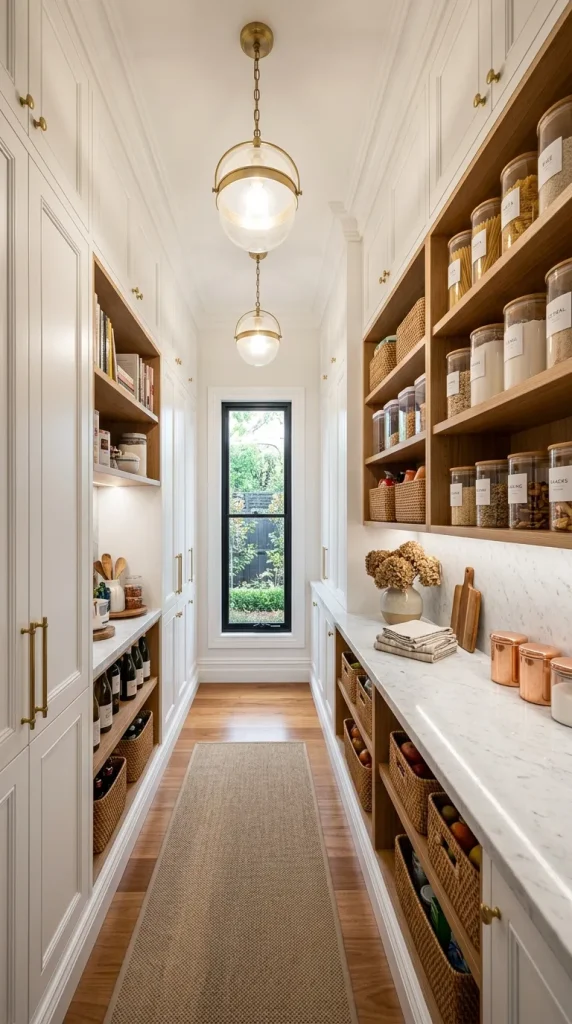
10. Walk-In Pantry Zone Organization
For larger walk-in pantries, divide the space into dedicated storage zones. Assign specific areas for baking supplies, breakfast foods, canned goods, beverages, small appliances, snacks, spices, and bulk purchases.
Use consistent storage containers throughout each zone to maintain a cohesive appearance. Install LED lighting beneath shelves to improve visibility while creating a bright, welcoming atmosphere.
Rolling carts provide additional flexibility for frequently used appliances or seasonal supplies. Clear labels, baskets, and adjustable shelving ensure every item remains easy to locate.
A zoned pantry reduces clutter, improves efficiency, and creates a professional-level organization system that simplifies grocery shopping, meal preparation, and long-term food storage.
Conclusion
A thoughtfully organized pantry improves every aspect of your kitchen, from meal preparation to grocery shopping and everyday cleaning. Whether you prefer clear containers, woven baskets, adjustable shelving, pull-out drawers, labeled jars, or dedicated storage zones, each solution helps maximize available space while creating a calm and visually appealing environment.
By combining practical organization with attractive design elements, you can transform even the smallest pantry into a highly functional storage area that reflects your personal style. These ten pantry storage ideas demonstrate that smart organization isn’t just about keeping things tidy—it’s about creating a beautiful, efficient kitchen that makes daily life simpler, more enjoyable, and ready for every meal.


Leave a Reply