
Introduction
Rustic kitchen design has remained one of the most loved interior styles because it creates a warm, welcoming, and timeless atmosphere that makes every home feel comfortable. Unlike sleek ultra-modern kitchens that often focus on minimalism, rustic kitchens celebrate natural materials, handcrafted details, and earthy textures. They combine the beauty of wood, stone, metal, and vintage-inspired elements to create spaces that feel lived-in, cozy, and full of character.
Whether you live in a countryside farmhouse, a suburban home, or even a modern apartment, rustic design can easily be adapted to fit your space. From reclaimed wood cabinets and exposed ceiling beams to farmhouse sinks and vintage lighting, rustic kitchens blend functionality with classic charm. The style also pairs beautifully with modern conveniences, allowing homeowners to enjoy the warmth of traditional design without sacrificing practicality.

Another reason rustic kitchens continue to trend on Pinterest is their versatility. You can choose a classic farmhouse look, a modern rustic aesthetic, an industrial-inspired space, or a cozy cabin kitchen depending on your personal style. Natural color palettes featuring warm browns, creamy whites, soft grays, muted greens, and black accents create inviting interiors that never go out of style.
In this guide, you’ll discover ten inspiring rustic kitchen design ideas that combine beauty, functionality, and timeless appeal. Each design offers practical decorating tips, material suggestions, and styling advice to help you create a kitchen that’s perfect for cooking, entertaining, and everyday family life.
Why Choose a Rustic Kitchen Design?
Rustic kitchens are more than just visually appealing—they’re designed to create an atmosphere where family and friends naturally gather. Their focus on natural materials and practical layouts makes them both beautiful and highly functional.
Benefits include:
- Creates a warm and welcoming atmosphere.
- Uses timeless natural materials.
- Works with both large and small kitchens.
- Increases visual character and charm.
- Easy to personalize with vintage décor.
- Blends well with modern appliances.
- Adds long-lasting value to your home.
- Never goes out of style.
- Encourages comfortable family living.
- Looks stunning in every season.
Materials Used in Rustic Kitchens
The beauty of rustic interiors comes from authentic materials that age gracefully over time.
Common materials include:
- Reclaimed wood
- Solid oak cabinets
- Pine wood shelves
- Natural stone
- Brick walls
- Butcher block countertops
- Granite countertops
- Quartz countertops
- Copper fixtures
- Black iron hardware
- Wrought iron lighting
- Ceramic tiles
- Terracotta flooring
- Slate flooring
- Farmhouse sinks
- Vintage brass handles
- Open wooden shelving
- Woven baskets
- Linen curtains
- Indoor plants
How to Create a Rustic Kitchen
Creating a rustic kitchen is about combining natural textures with practical design.
Start with Natural Wood
Wood instantly adds warmth. Choose reclaimed beams, wooden cabinets, floating shelves, or butcher block countertops.
Add Stone Elements
Stone backsplashes, countertops, or accent walls create texture and timeless beauty.
Choose Warm Colors
Cream, beige, soft gray, olive green, brown, and white complement rustic interiors beautifully.
Incorporate Vintage Details
Antique lighting, brass hardware, old-style faucets, and vintage décor enhance authenticity.
Keep It Functional
Rustic kitchens should remain practical with plenty of storage, durable materials, and organized workspaces.
1. Classic Farmhouse Rustic Kitchen
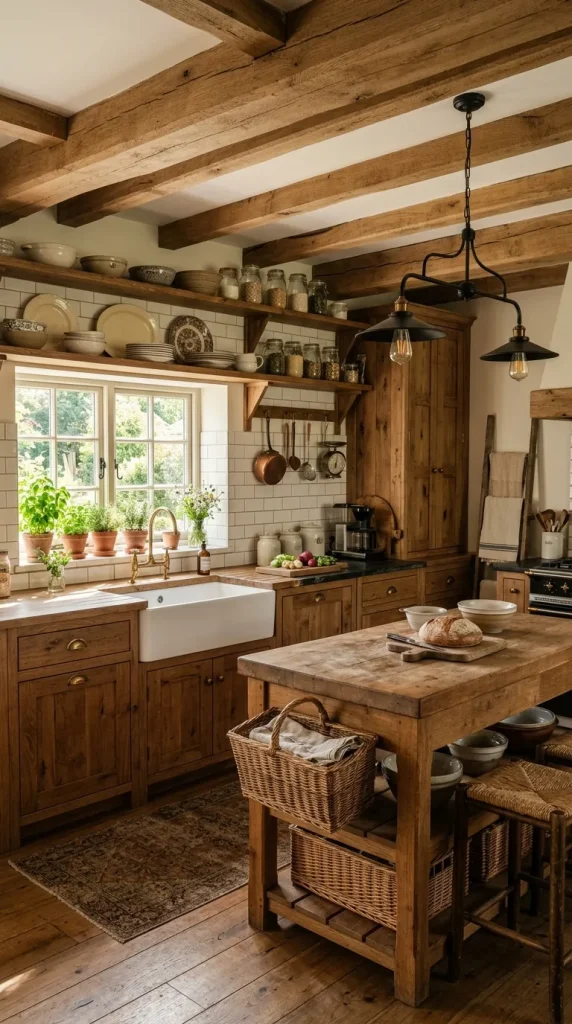
The classic farmhouse rustic kitchen is the perfect blend of warmth, functionality, and timeless charm. It features natural wood cabinetry, exposed ceiling beams, and a large apron-front farmhouse sink that instantly becomes the focal point of the room. Soft white walls paired with warm oak or reclaimed wood create a bright yet cozy atmosphere that feels inviting throughout the year.
A spacious butcher block island serves as both a food preparation area and a gathering place for family and friends. Open wooden shelves display ceramic dishes, glass jars, woven baskets, and vintage cookware, adding personality while keeping essentials within easy reach. Black iron hardware and antique brass fixtures introduce subtle contrast against the light cabinetry, enhancing the rustic aesthetic without overpowering the space.
Lighting plays a significant role in farmhouse kitchens. Oversized lantern pendants or metal industrial lights provide both task lighting and decorative appeal. Fresh herbs planted in terracotta pots near the windows bring life into the room while also offering practical cooking ingredients.
Neutral textiles such as linen curtains, cotton table runners, and woven rugs soften the design and make the kitchen feel more welcoming. Decorative wooden cutting boards leaned against the backsplash add both function and visual interest.
The beauty of a farmhouse rustic kitchen lies in its balance between elegance and simplicity. Every material ages beautifully over time, creating a space that becomes even more charming with daily use. This timeless style continues to inspire homeowners because it combines comfort, practicality, and authentic craftsmanship in one beautiful design.
2. Modern Rustic Kitchen
Modern rustic kitchens combine contemporary simplicity with natural materials, creating interiors that feel both sophisticated and welcoming. Clean white cabinetry provides a bright foundation while reclaimed wood accents introduce warmth and organic texture throughout the space. This combination prevents the kitchen from feeling overly traditional while preserving its cozy character.
Large waterfall quartz islands paired with wooden bar stools become the centerpiece of the room. Matte black faucets, cabinet handles, and pendant lighting add sleek contrast against the soft wood finishes, creating visual balance without overwhelming the design.
Open shelving replaces upper cabinets in selected areas, allowing decorative dishes, cookbooks, plants, and ceramic accessories to become part of the overall décor. Integrated appliances maintain clean lines while ensuring modern functionality.
Natural light enhances the beauty of rustic materials. Large windows framed with simple linen curtains brighten the room while highlighting wood grain, stone surfaces, and handcrafted details. Soft LED lighting beneath shelves further improves both functionality and ambiance.
Decorating should remain minimal. One or two potted plants, handcrafted bowls, and wooden serving trays provide enough personality without creating clutter. Neutral colors such as beige, gray, white, and soft brown maintain the calming atmosphere that defines modern rustic interiors.
This design is ideal for homeowners who appreciate contemporary living but still want the warmth and authenticity of rustic materials. It creates a kitchen that’s elegant, practical, and comfortable enough for everyday family life.

3. Cabin-Style Rustic Kitchen
A cabin-style rustic kitchen captures the peaceful atmosphere of a mountain retreat, surrounding the space with rich wood textures and natural stone details. Log walls, exposed timber beams, and handcrafted cabinetry establish a strong connection to nature while creating an incredibly cozy environment.
Large stone fireplaces often become dramatic focal points in open-concept cabin kitchens. Even in smaller homes, a stone feature wall behind the range adds impressive texture and warmth. Wooden countertops or butcher block islands further reinforce the natural aesthetic.
Copper cookware hanging above the island introduces beautiful metallic accents that complement the surrounding wood tones. Vintage lantern lighting creates a warm glow during evening hours, making family meals feel especially inviting.
Furniture remains sturdy and practical. Solid wood dining tables paired with simple chairs emphasize craftsmanship rather than decoration. Plaid textiles, woven baskets, and handmade pottery complete the cozy atmosphere without appearing overly styled.
Large windows overlooking forests, mountains, or gardens maximize natural light while strengthening the connection between the indoor and outdoor environments. Fresh greenery displayed throughout the kitchen adds softness and vibrant color.
A cabin-style rustic kitchen is perfect for homeowners seeking comfort, authenticity, and timeless beauty. Its emphasis on natural materials and handcrafted details creates a peaceful gathering place that feels welcoming throughout every season.

4. French Country Rustic Kitchen
French country rustic kitchens combine rustic warmth with refined European elegance. Distressed cream cabinetry, antique brass hardware, and weathered wood islands establish a sophisticated yet relaxed atmosphere inspired by traditional countryside homes.
Marble or natural stone countertops complement the aged wood finishes beautifully while adding durability for everyday cooking. Decorative range hoods, ornate crown moldings, and elegant chandeliers introduce subtle luxury without sacrificing the cozy charm that defines rustic interiors.
Open shelves display vintage china, ceramic pitchers, woven baskets, and lavender-filled jars that reflect the relaxed beauty of rural France. Soft pastel colors including cream, sage green, muted blue, and warm beige contribute to the kitchen’s gentle and welcoming appearance.
Fresh flowers arranged in rustic pitchers create seasonal focal points, while linen curtains soften incoming sunlight. Natural wood flooring grounds the entire design, balancing refined decorative details with authentic rustic character.
The French country style encourages comfortable living without excessive formality. Every element feels thoughtfully collected over time rather than purchased all at once. This layered approach gives the kitchen depth, personality, and timeless appeal.
Homeowners who appreciate classic elegance alongside practical family living often find French country rustic kitchens to be the perfect balance of sophistication and comfort.

5. Industrial Rustic Kitchen
An industrial rustic kitchen blends rugged materials with warm natural textures to create a stylish, urban-inspired cooking space. Exposed brick walls, black steel shelving, reclaimed wood cabinetry, and concrete countertops establish a bold foundation while maintaining rustic warmth.
Open metal shelving provides practical storage for dishes, cookware, and decorative accessories. Edison bulb pendant lights suspended above a wooden island contribute vintage industrial charm while delivering functional task lighting.
Matte black appliances integrate seamlessly with iron cabinet hardware and steel-framed windows. Wooden cutting boards, ceramic bowls, and woven baskets soften the industrial elements, preventing the room from feeling too cold.
Concrete flooring or large-format stone tiles enhance durability while complementing the exposed brick textures. Green plants strategically placed throughout the kitchen introduce freshness and natural contrast against darker materials.
Industrial rustic kitchens are ideal for loft apartments and contemporary homes seeking a balance between modern design and traditional craftsmanship. Their combination of raw materials and warm wood creates interiors that feel stylish, practical, and inviting.

6. Rustic Kitchen with Open Shelving
Replacing upper cabinets with open wooden shelving instantly creates a lighter, more spacious rustic kitchen. Thick reclaimed wood shelves showcase beautiful dishware, glass jars, cookbooks, woven baskets, and decorative accessories while keeping frequently used items within easy reach.
The open design encourages thoughtful organization because everything remains visible. Matching ceramic dishes, wooden serving boards, and neatly labeled storage containers contribute to a cohesive appearance. Small potted herbs placed along the shelves introduce greenery and practical cooking ingredients.
White subway tile backsplashes provide a clean background that allows natural wood shelves to stand out. Black iron brackets reinforce the rustic aesthetic while supporting heavier cookware.
Lighting installed beneath the shelves improves visibility during meal preparation and highlights decorative displays. Neutral wall colors maintain brightness while allowing natural materials to become the primary design focus.
Open shelving works particularly well in smaller kitchens by reducing visual heaviness and making the room feel larger. When carefully organized, it creates a welcoming, personalized space filled with warmth and everyday functionality.

7. Rustic Kitchen with Stone Accents
Natural stone adds texture, durability, and timeless beauty to rustic kitchen interiors. Whether incorporated through backsplashes, accent walls, fireplaces, or countertops, stone immediately enhances the room’s authentic character.
Pair rough-cut stone with warm wooden cabinetry to create striking visual contrast. Granite countertops offer durability while complementing earthy color palettes. Wooden ceiling beams reinforce the rustic atmosphere and balance the heavier stone textures.
Decorative accessories should remain simple. Clay pottery, wooden bowls, woven baskets, and fresh greenery allow the natural materials to remain the primary focus. Warm pendant lighting softens the stone surfaces and creates inviting evening ambiance.
Stone flooring provides exceptional durability for busy family kitchens while contributing additional texture underfoot. Neutral wall colors prevent the design from feeling overwhelming and ensure the space remains bright despite the heavier materials.
A rustic kitchen featuring stone accents feels grounded, substantial, and beautifully connected to nature, making it a timeless investment for any home.

8. Rustic Kitchen with Large Wooden Island
A spacious wooden island serves as the heart of a rustic kitchen, providing additional workspace, seating, and storage while becoming the room’s central gathering place. Constructed from reclaimed wood or solid oak, the island introduces warmth and craftsmanship that define rustic interiors.
The countertop can feature butcher block for food preparation or natural stone for enhanced durability. Comfortable bar stools encourage casual meals, conversations, and homework sessions while family members remain connected during cooking.
Pendant lighting suspended above the island creates visual balance and improves task lighting. Open shelving beneath the countertop stores baskets, cookbooks, and serving trays, keeping essentials conveniently accessible.
Decorate the island with fresh flowers, wooden bowls filled with seasonal fruit, or handcrafted pottery to maintain an inviting atmosphere. Neutral color palettes allow the wood grain to remain the design’s focal point.
A large wooden island transforms the kitchen into a multifunctional living space where cooking, dining, entertaining, and everyday family activities naturally come together.

9. Rustic Kitchen with Vintage Décor
Vintage décor introduces personality and history into rustic kitchens by incorporating carefully selected antique-inspired accessories. Weathered clocks, enamel cookware, antique scales, distressed signs, and heirloom dishes contribute character without making the space feel cluttered.
Neutral cabinetry provides a calm backdrop while vintage items become meaningful focal points. Brass faucets, traditional cabinet hardware, and classic pendant lights reinforce the timeless aesthetic.
Open shelving displays collectible ceramics and glass jars filled with pantry staples, combining beauty with functionality. Wooden cutting boards leaned against the backsplash add texture while remaining practical cooking tools.
Fresh flowers and greenery soften vintage elements and prevent the kitchen from appearing overly nostalgic. Mixing old and new creates balance, allowing modern appliances to coexist comfortably with traditional decorative pieces.
This approach is perfect for homeowners who appreciate storytelling through design and enjoy decorating with meaningful collections gathered over time.

10. Rustic Kitchen with Greenery and Natural Elements
Bringing nature indoors completes the rustic kitchen aesthetic by introducing vibrant greenery and organic textures. Herbs growing on windowsills, hanging plants, potted olive trees, and fresh flowers make the kitchen feel alive while improving its welcoming atmosphere.
Natural wood cabinetry pairs beautifully with stone countertops and woven baskets, reinforcing the connection to the outdoors. Large windows maximize daylight, allowing plants to thrive while highlighting the rich textures of wood and stone.
Decorative accessories remain simple and nature-inspired. Linen table runners, wooden serving trays, ceramic planters, and handcrafted pottery complement the greenery without competing for attention.
Earth-toned color palettes featuring olive green, beige, cream, soft brown, and charcoal create a calming environment suitable for everyday living. Open shelving displays plants alongside practical kitchen essentials, blending decoration with functionality.
A rustic kitchen filled with natural elements feels peaceful, healthy, and timeless. It celebrates the beauty of organic materials while creating an inviting space where cooking, dining, and gathering become even more enjoyable.

Final Thoughts
Rustic kitchen design continues to inspire homeowners because it combines timeless beauty, practical functionality, and inviting warmth. Whether you prefer a classic farmhouse kitchen, a modern rustic layout, a cozy cabin retreat, or a French country interior, each style emphasizes natural materials, thoughtful craftsmanship, and comfortable living.
By incorporating wood, stone, vintage accents, warm lighting, and functional storage, you can create a kitchen that is both beautiful and practical. Choose the rustic design that best reflects your personality, and transform your kitchen into a welcoming space where family and friends will love to gather for years to come.





Leave a Reply