
Introduction
The exterior of a home is no longer just about appearance—it reflects innovation, sustainability, and smart living. As architecture continues to evolve, homeowners are embracing futuristic exterior designs that combine cutting-edge technology with clean aesthetics and eco-friendly materials. From sleek geometric facades to solar-integrated roofs and living green walls, future home exteriors are designed to be both beautiful and functional.
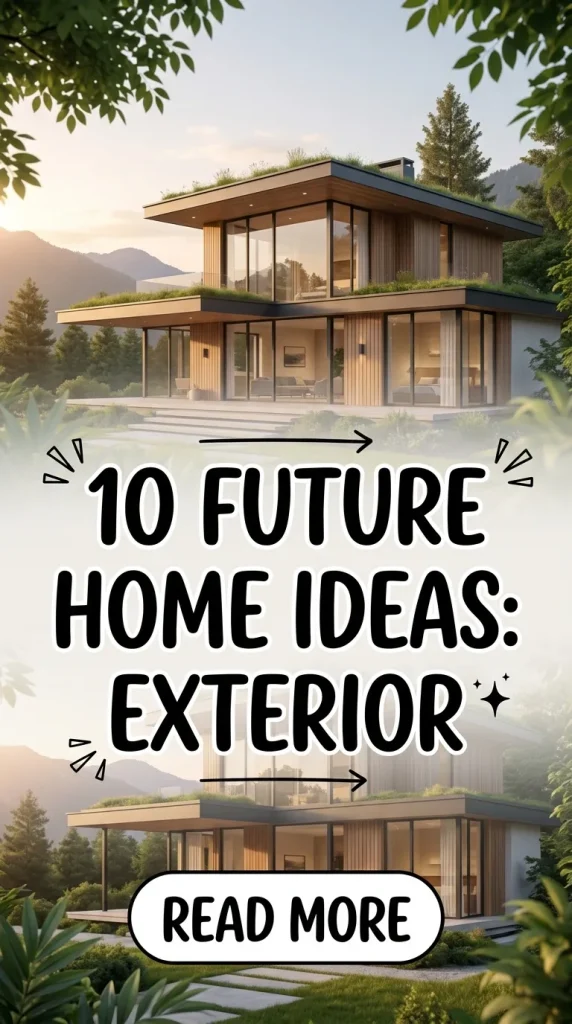
Modern futuristic homes prioritize energy efficiency, low maintenance, and seamless integration with nature. Smart lighting, sustainable building materials, minimalist landscaping, and advanced outdoor technology all contribute to creating homes that are ready for tomorrow. Whether you’re planning a new build or updating your existing property, futuristic exterior ideas can dramatically increase curb appeal while improving your home’s long-term value.
In this guide, you’ll discover ten inspiring future home exterior ideas that showcase innovative architecture, smart technology, and contemporary design trends. Each concept blends practicality with striking visual appeal, helping you create an exterior that stands out today while remaining timeless for years to come.
Materials Used for Future Home Exterior Designs
Choosing durable, sustainable, and modern materials is essential when designing a futuristic home exterior. These materials enhance both aesthetics and performance.
- Fiber cement siding
- Architectural concrete panels
- Aluminum composite cladding
- Natural stone veneer
- Large energy-efficient glass panels
- Steel framing
- Tempered glass railings
- Sustainable timber accents
- Solar roof panels
- Standing seam metal roofing
- LED outdoor lighting
- Smart security cameras
- Motion sensor lighting
- Permeable pavers
- Artificial turf or drought-resistant landscaping
- Vertical garden systems
- Smart garage doors
- Weather-resistant exterior paint
How to Design a Future Home Exterior
Creating a futuristic exterior requires thoughtful planning that balances innovation with functionality.
Step 1: Focus on Simple Geometry
Choose clean architectural lines, flat roofs, cantilevered sections, and large rectangular forms to create a modern silhouette.
Step 2: Incorporate Sustainable Materials
Select eco-friendly cladding, recycled materials, and energy-efficient windows that reduce environmental impact.
Step 3: Maximize Natural Light
Install floor-to-ceiling windows and glass doors to create a seamless connection between indoor and outdoor spaces.
Step 4: Add Smart Technology
Integrate automated lighting, security systems, smart irrigation, and remote-controlled garage doors.
Step 5: Design Minimal Landscaping
Use structured plants, gravel beds, native greenery, and geometric pathways to complement the home’s architecture.
Step 6: Prioritize Energy Efficiency
Install solar panels, insulated roofing, and efficient exterior lighting to reduce energy consumption while maintaining modern aesthetics.
1. Sleek Minimalist Facade
A sleek minimalist facade forms the foundation of futuristic home design by emphasizing simplicity, balance, and clean architectural lines. Instead of decorative moldings and excessive ornamentation, this style focuses on geometric shapes, smooth surfaces, and carefully selected materials. Large rectangular volumes, flat roofs, and seamless transitions between different exterior finishes create a sophisticated appearance that feels timeless rather than trendy.
Neutral colors such as white, charcoal, light gray, and black dominate the palette, allowing the home’s architecture to become the primary visual feature. Combining concrete panels with natural wood accents softens the overall look while maintaining a modern edge. Oversized windows framed in slim black aluminum introduce abundant natural light and strengthen the connection between indoor and outdoor living spaces.
A minimalist facade also simplifies maintenance. Fewer decorative elements mean fewer areas that collect dirt or require frequent repairs. Durable exterior materials like fiber cement siding and weather-resistant concrete ensure long-lasting performance while preserving the home’s sleek appearance.
Landscaping should complement rather than compete with the architecture. Simple pathways, ornamental grasses, sculptural shrubs, and subtle lighting create visual harmony. Warm LED uplighting highlights the home’s clean lines after sunset, transforming the exterior into an elegant nighttime statement.
This design philosophy demonstrates that modern luxury comes from thoughtful proportions, premium materials, and exceptional craftsmanship rather than unnecessary decoration. A sleek minimalist facade remains one of the most influential trends shaping the future of residential architecture.

2. Solar-Integrated Roofing System
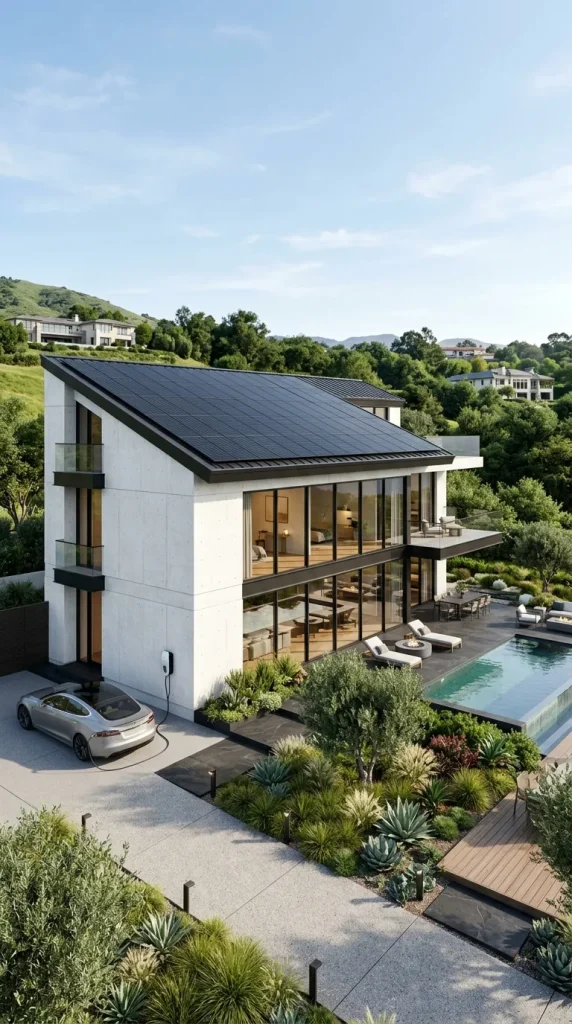
Future homes increasingly treat the roof as an active contributor to sustainability rather than simply a protective covering. Solar-integrated roofing combines clean energy production with contemporary aesthetics, eliminating the bulky appearance of traditional solar panel installations.
Modern photovoltaic roof tiles blend seamlessly with standing seam metal roofs or architectural shingles, maintaining a refined exterior while generating renewable electricity. This approach reduces energy costs and lowers the home’s environmental footprint without compromising visual appeal.
Battery storage systems allow homeowners to store excess energy for nighttime use or emergency backup power. Smart monitoring applications provide real-time insights into energy production and household consumption, making efficiency easier to manage.
Architecturally, solar roofing pairs beautifully with minimalist designs. Dark roof surfaces contrast elegantly against light-colored walls while reinforcing the home’s futuristic identity. Hidden gutters and streamlined rooflines preserve clean geometry.
Complement the roofing system with energy-efficient windows, insulated walls, and smart lighting to maximize overall sustainability. Rainwater harvesting systems can further enhance environmental performance by collecting water for irrigation.
A solar-integrated roof demonstrates how innovative technology can become an attractive design feature instead of an afterthought. As renewable energy becomes increasingly important, homes that embrace this approach remain both environmentally responsible and visually striking.
3. Floor-to-Ceiling Glass Walls
Large glass walls define many futuristic homes because they blur the boundary between interior comfort and outdoor living. Expansive glazing fills interiors with daylight, reduces reliance on artificial lighting, and creates uninterrupted views of surrounding landscapes.
Advancements in insulated low-E glass technology ensure excellent thermal performance while minimizing heat gain and energy loss. Homeowners enjoy bright living spaces without sacrificing efficiency.
Slim aluminum frames reinforce the minimalist aesthetic by maximizing visible glass. Sliding glass doors extend entertaining areas toward patios, pools, or landscaped gardens, encouraging seamless indoor-outdoor lifestyles.
Privacy can still be maintained through smart glass technology that changes opacity with the touch of a button. Exterior landscaping, strategic wall placement, and architectural overhangs also provide discretion without blocking natural light.
Evening illumination transforms glass facades into elegant architectural showcases. Warm interior lighting creates an inviting glow while accentuating the home’s clean geometry.
Floor-to-ceiling glass not only enhances aesthetics but also improves overall quality of life by strengthening the relationship between architecture and nature. This feature has become one of the defining characteristics of future residential design.

4. Vertical Green Living Walls
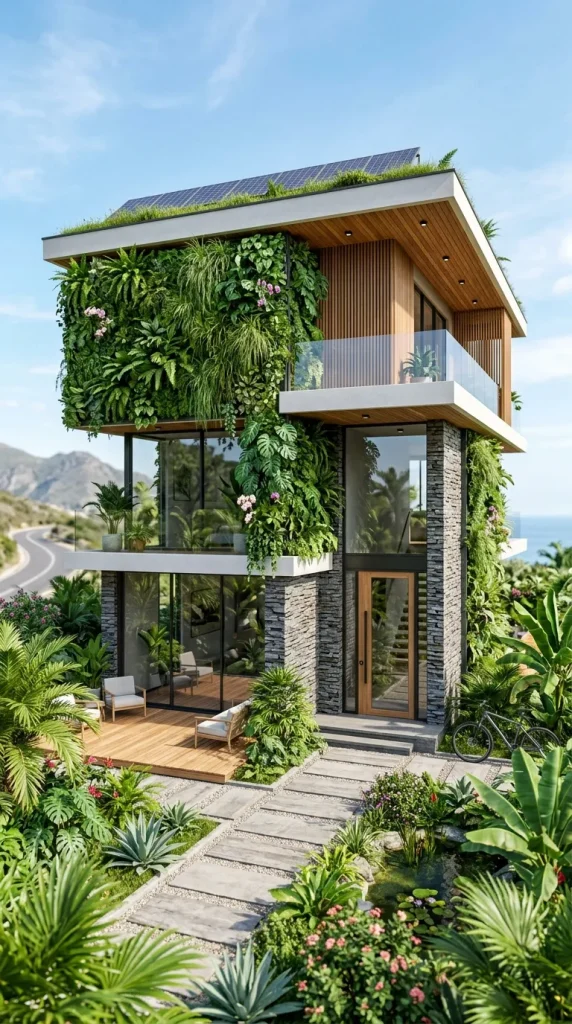
Integrating nature directly into architecture is one of the most exciting developments in modern exterior design. Vertical green walls replace ordinary blank facades with lush living landscapes that improve both beauty and environmental performance.
Living walls help insulate buildings, reduce urban heat, improve air quality, and provide habitats for beneficial insects. Automated irrigation systems simplify maintenance while ensuring plants remain healthy throughout the year.
Suitable plant selections include ferns, ivy, ornamental grasses, succulents, and native flowering species depending on climate conditions. Modular planting systems allow sections to be replaced easily when necessary.
Pairing greenery with concrete, glass, and wood creates striking textural contrast while softening contemporary architecture. Integrated LED lighting highlights plant textures during the evening, making the facade equally attractive after dark.
Living walls also contribute to homeowner wellness by increasing exposure to natural elements. Visitors immediately notice the unique appearance, making the property memorable and environmentally conscious.
As cities become denser, vertical gardens offer an innovative solution for adding greenery without requiring extensive land, making them an essential feature of many future homes.
5. Smart LED Exterior Lighting
Lighting has evolved beyond simple illumination into an intelligent design element that enhances security, efficiency, and architectural beauty. Smart LED systems automatically adjust brightness based on occupancy, time of day, and ambient light levels.
Hidden strip lighting beneath roof overhangs emphasizes clean horizontal lines, while pathway lighting safely guides visitors toward entrances. Uplighting showcases trees, textured walls, and sculptural architectural features.
Smartphone integration allows homeowners to schedule lighting scenes, monitor energy usage, and control fixtures remotely. Motion sensors increase security without wasting electricity.
Warm white lighting creates welcoming curb appeal, whereas customizable RGB systems allow special lighting displays for holidays or celebrations.
Because LED fixtures consume significantly less energy than traditional bulbs while lasting much longer, they contribute to both sustainability and reduced maintenance costs.
Thoughtfully designed exterior lighting ensures the home’s architecture remains equally impressive during the evening, extending visual enjoyment well beyond daylight hours.

6. Mixed Material Contemporary Exterior
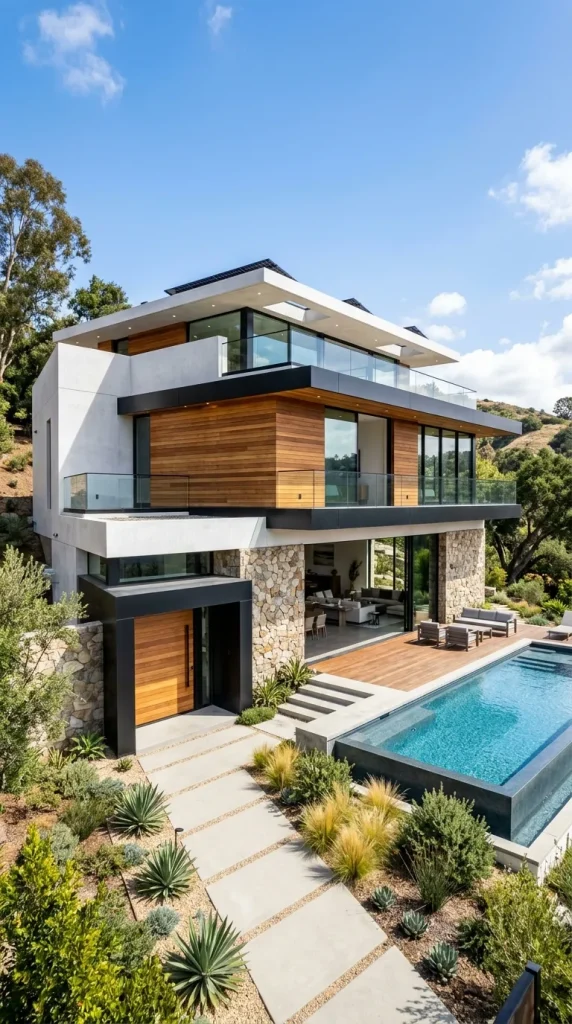
Future homes increasingly embrace layered materials to create visual depth while maintaining minimalist architecture. Combining concrete, wood, stone, glass, and metal produces sophisticated exteriors that feel warm yet contemporary.
Each material contributes unique characteristics. Concrete offers strength and durability, wood introduces natural warmth, glass maximizes daylight, and stone provides timeless texture. Carefully balancing these elements prevents the design from feeling cold or industrial.
Consistent color palettes unify different materials despite varying textures. Neutral tones allow architectural composition to remain the focus while ensuring longevity.
Strategic placement is equally important. Wood accents near entrances create inviting focal points, while stone bases ground the structure visually. Glass dominates areas intended to maximize views.
This layered approach adds richness without excessive ornamentation, proving that modern simplicity can still possess remarkable character.
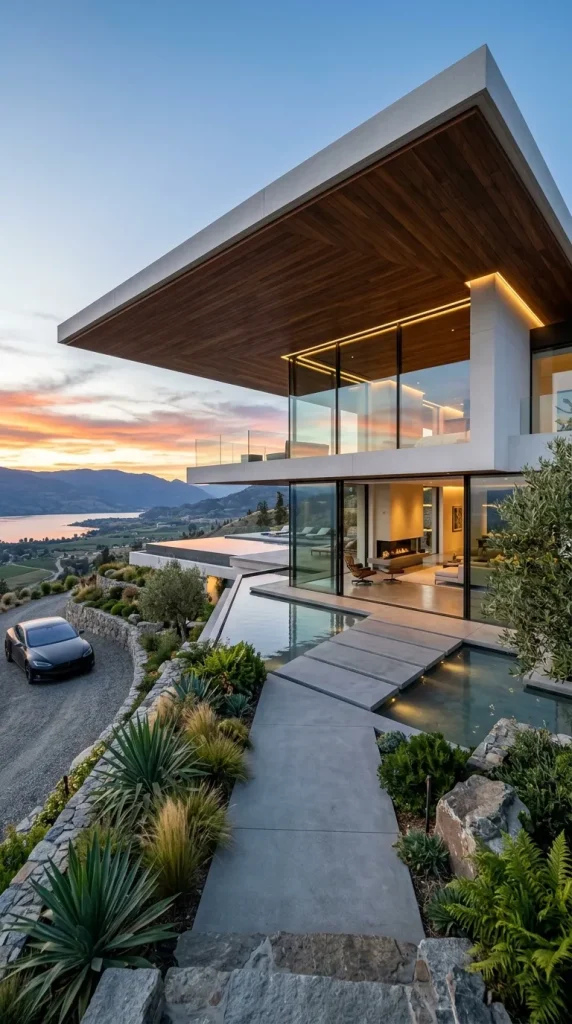
7. Floating Architectural Roof Design
Floating rooflines create dramatic visual impact by extending beyond supporting walls with deep cantilevers. This architectural feature gives homes a lightweight appearance while providing practical shade for windows and outdoor living spaces.
Hidden structural supports enhance the illusion that the roof is hovering effortlessly above the home. Flat roofs reinforce clean geometry and accommodate solar panels, rooftop gardens, or outdoor terraces.
Deep overhangs protect exterior walls from harsh weather while reducing direct summer sunlight entering interior spaces. This passive cooling strategy contributes to improved energy efficiency.
Integrated recessed lighting beneath roof extensions creates beautiful evening ambiance while emphasizing the home’s striking silhouette.
Floating roofs represent the innovative engineering that defines future residential architecture, combining dramatic aesthetics with functional environmental performance.
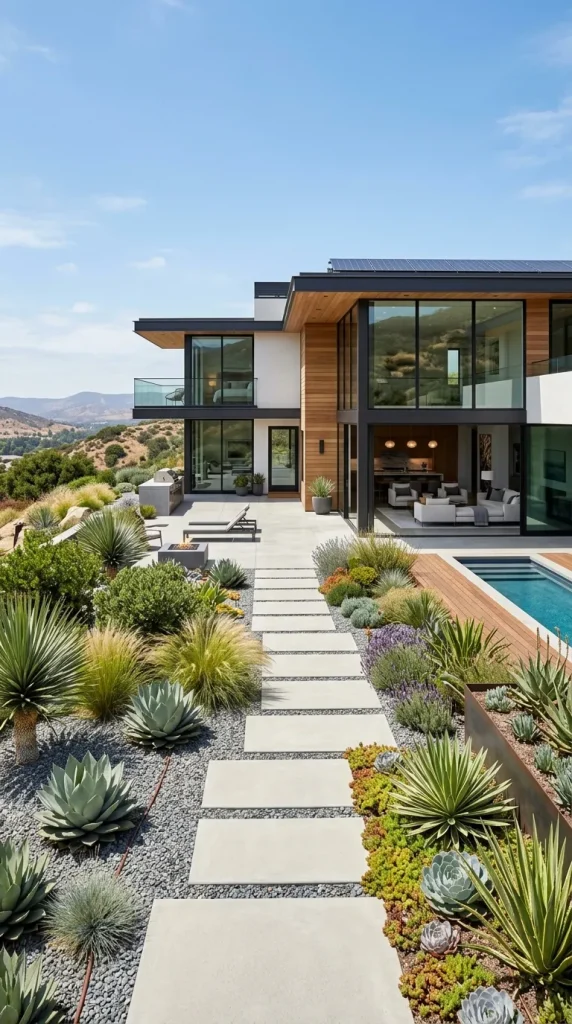
8. Sustainable Modern Landscaping
Landscaping plays an equally important role in futuristic exterior design. Rather than extensive lawns requiring heavy irrigation, modern landscapes emphasize drought-tolerant plants, native species, permeable paving, and geometric planting beds.
Decorative gravel, corten steel edging, ornamental grasses, and sculptural succulents create visually appealing compositions with minimal maintenance. Rain gardens manage stormwater naturally while supporting biodiversity.
Smart irrigation systems monitor weather conditions and soil moisture, ensuring plants receive only the water they actually need. This reduces waste while maintaining healthy landscapes.
Outdoor seating areas integrated into the landscape encourage homeowners to enjoy exterior living spaces year-round.
A sustainable landscape complements contemporary architecture while demonstrating responsible environmental stewardship.
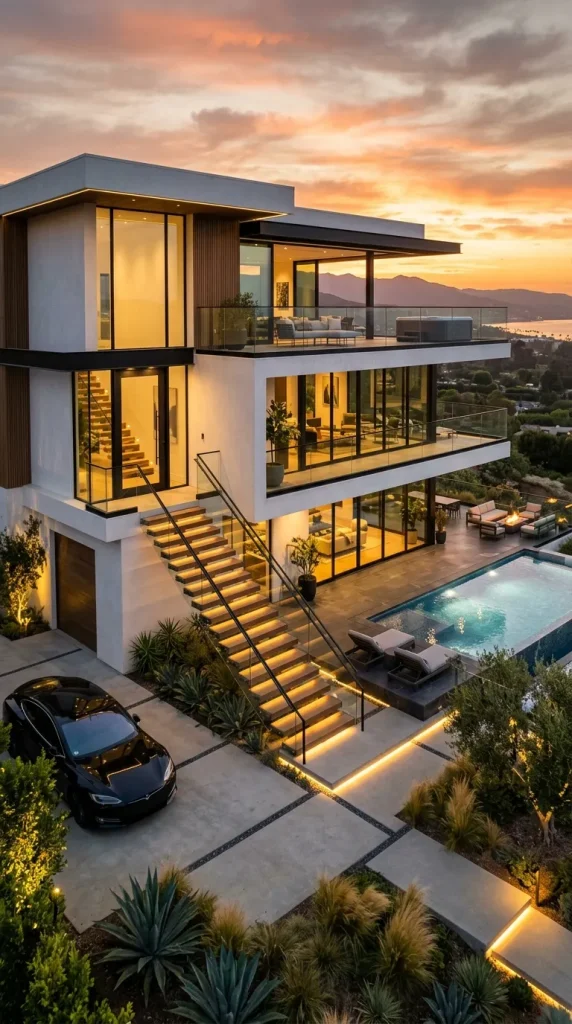
9. Frameless Glass Balcony Design
For multi-level homes, frameless glass balconies preserve unobstructed views while maintaining sleek modern aesthetics. Tempered safety glass panels create the impression of invisible barriers, allowing architecture and surrounding scenery to take center stage.
Glass railings pair exceptionally well with metal framing and minimalist facades. Their transparency helps upper levels appear lighter while maximizing daylight reaching lower floors.
High-quality hardware resists corrosion and requires minimal maintenance. Routine cleaning keeps the glass crystal clear and visually elegant.
Integrated LED handrail lighting improves nighttime safety while enhancing architectural sophistication.
Frameless balconies combine luxury, functionality, and contemporary design, making them a signature feature of future residential architecture.
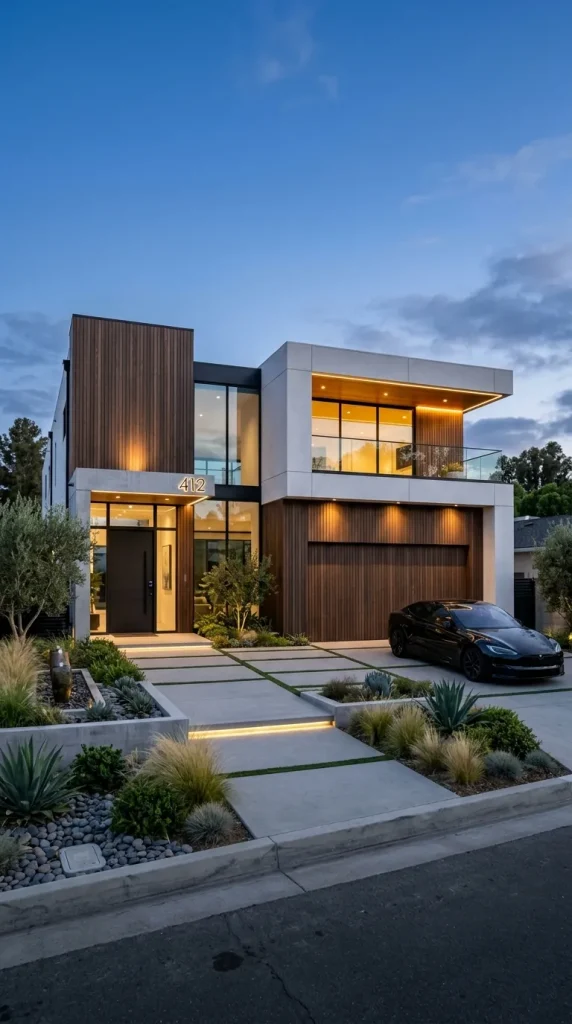
10. Hidden Smart Garage Integration
Traditional garage doors often dominate home exteriors, but future architecture conceals garages within cohesive facade designs. Flush-mounted garage doors finished in matching cladding materials blend almost invisibly into surrounding walls.
Smart automation allows homeowners to operate garage access remotely using mobile applications or voice assistants. Integrated security cameras, license plate recognition, and package delivery systems enhance convenience and safety.
Minimal hardware preserves uninterrupted architectural lines, while insulated construction improves overall energy performance.
Landscape elements positioned near the garage soften its appearance without obstructing access. Carefully aligned lighting ensures the entrance remains functional while maintaining the home’s clean geometry.
By integrating technology seamlessly into architectural design, hidden smart garages contribute to elegant, highly functional exteriors prepared for the future.
Conclusion
Future home exteriors combine innovation, sustainability, and timeless design into one cohesive vision. Clean architectural forms, renewable energy systems, intelligent lighting, expansive glazing, and environmentally responsible landscaping all work together to create homes that are as functional as they are visually stunning.
Whether you’re building a new residence or modernizing your current property, these ten exterior ideas demonstrate how thoughtful design can improve curb appeal, increase efficiency, and prepare your home for the future. By embracing quality materials, smart technology, and minimalist aesthetics, you’ll create an exterior that remains elegant, valuable, and relevant for decades to come.



Leave a Reply