
Introduction
Japandi interior design has become one of the most influential home decor trends in recent years, blending the serene minimalism of Japanese aesthetics with the cozy functionality of Scandinavian living. This fusion creates spaces that feel calm, intentional, and deeply connected to nature. Japandi bedrooms, in particular, are designed to promote relaxation, mindfulness, and balance—qualities that are essential for a restful environment.
Traditionally, Japandi spaces rely heavily on neutral tones such as beige, white, taupe, and soft gray. These colors create a soothing backdrop that allows natural materials and textures to shine. However, introducing a bold color like red into this minimalist framework may seem unconventional at first. Yet, when used thoughtfully, red can elevate a Japandi bedroom by adding warmth, depth, and emotional energy.

In Japanese culture, red symbolizes vitality, protection, and life force. It is often used in temples and traditional decor to create a sense of importance and grounding. Meanwhile, Scandinavian design embraces color sparingly, using it to create visual interest without overwhelming the space. Combining these philosophies allows red to act as a subtle yet impactful accent.
This guide explores 10 Japandi bedroom ideas with red accents, each designed to maintain the calm essence of Japandi while introducing a refined pop of color. Whether you prefer subtle touches or bold statements, these ideas will help you create a Pinterest-worthy bedroom that feels both peaceful and expressive.
Materials Used in Japandi Red Bedroom Design
Creating a Japandi bedroom with red accents requires careful selection of materials that align with the philosophy of simplicity, functionality, and natural beauty. Every element should feel intentional and harmonious.
Wood is the foundation of Japandi interiors. Light-toned woods such as oak, ash, and birch are commonly used for furniture, flooring, and decor. These materials add warmth without overpowering the space. Bamboo is another excellent option, reflecting Japanese craftsmanship and sustainability.
Textiles play a crucial role in softening the room. Linen and cotton are preferred for bedding, curtains, and cushions due to their breathable and natural qualities. When incorporating red, it’s important to choose muted shades like terracotta, rust, or deep crimson rather than bright or synthetic tones.
Ceramics and pottery add an organic, handcrafted touch. Matte finishes and irregular shapes enhance the authenticity of the space.
Lighting should be warm and diffused. Paper lanterns, wooden lamps, and soft pendant lights create a calming ambiance that complements the minimalist design.
Finally, natural elements such as dried branches, bonsai plants, and subtle greenery bring life into the room without cluttering it. These materials work together to create a cohesive and tranquil Japandi environment.
How to Style a Japandi Bedroom with Red Accents
Styling a Japandi bedroom with red accents is all about balance and restraint. The goal is to maintain a calm, uncluttered environment while introducing color in a meaningful way.
Start with a neutral base. Walls should be white, beige, or soft gray, and furniture should feature clean lines and natural wood finishes. This creates a blank canvas that allows red accents to stand out.
Introduce red gradually. Begin with small elements such as pillows, throws, or artwork. Observe how the color interacts with the space before adding more.
Focus on negative space. Japandi design values simplicity, so avoid overcrowding the room with decor. Each piece should have a purpose.
Layer textures instead of adding more items. Combine soft fabrics, smooth wood, and subtle patterns to create depth and interest.
Ensure visual balance by distributing red accents evenly throughout the room. Avoid concentrating color in one area, as this can disrupt harmony.
Finally, keep functionality in mind. Japandi design is not just about aesthetics—it’s about creating a space that feels comfortable and practical for everyday living.
1. Red Accent Pillows on Neutral Bedding
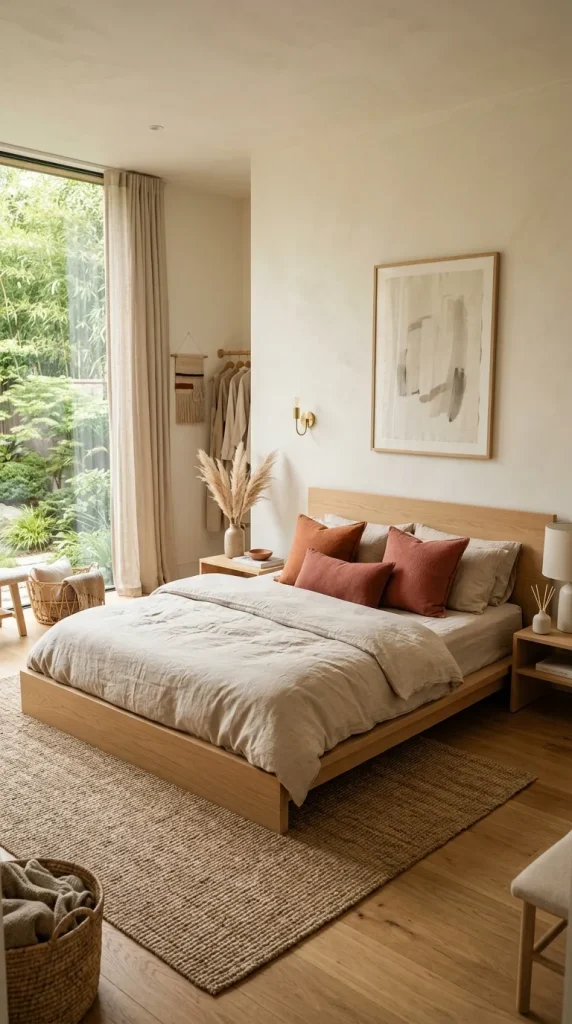
One of the simplest yet most effective ways to incorporate red into a Japandi bedroom is through accent pillows placed on neutral bedding. This approach allows you to introduce color without committing to a major design change, making it perfect for beginners exploring this style. The key lies in maintaining balance and restraint while creating a visually appealing focal point.
Start with a base of neutral bedding—white, beige, or soft gray linen sheets and duvet covers. These tones provide a calm and uncluttered foundation that aligns perfectly with Japandi principles. Once the base is set, introduce two to three red accent pillows in muted tones such as rust, terracotta, or deep burgundy. These shades feel warm and earthy rather than overpowering, ensuring harmony within the space.
The placement of the pillows is equally important. Arrange them symmetrically or in a slightly relaxed composition to maintain a natural, effortless look. Avoid overcrowding the bed, as Japandi design emphasizes minimalism and intentional styling.
Choosing natural fabrics like linen or cotton enhances the authenticity of the design. Subtle textures or woven patterns can add depth without distracting from the simplicity of the overall aesthetic.
This idea works beautifully because it draws attention to the bed as the central element of the room while maintaining a serene atmosphere. The red accents provide just enough contrast to make the space feel dynamic and inviting, proving that even the smallest details can have a significant impact.
2. Minimal Red Wall Art
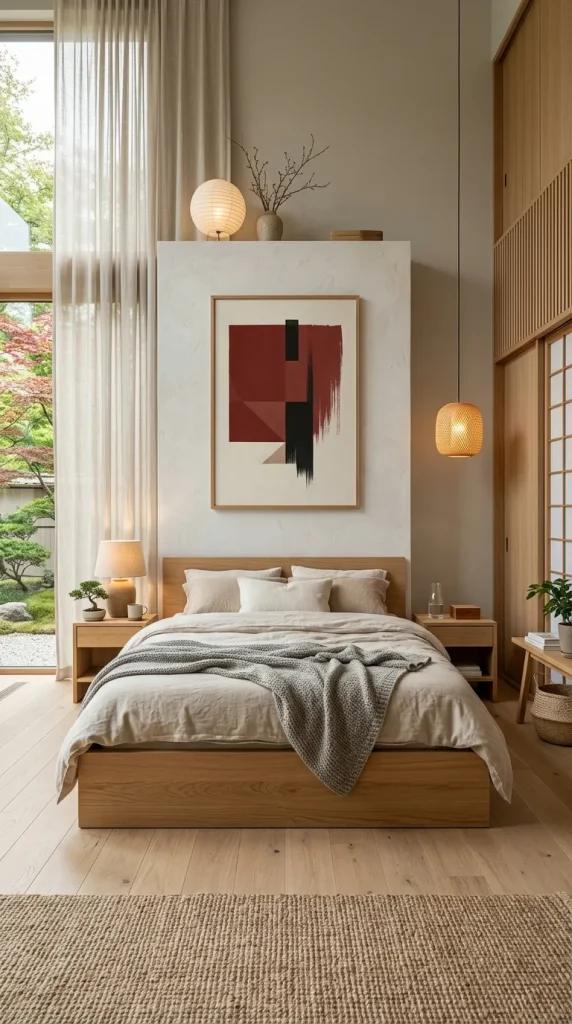
Minimal red wall art is a powerful way to introduce color into a Japandi bedroom while preserving its clean and uncluttered aesthetic. Art in Japandi design is never excessive—it is carefully chosen to reflect simplicity, meaning, and balance. When incorporating red, the goal is to create a focal point that feels intentional rather than overwhelming.
Choose artwork that features red as an accent rather than the dominant color. Abstract designs, Japanese calligraphy, or nature-inspired prints with subtle red elements work particularly well. These styles align with the Japandi philosophy of understated elegance and cultural influence.
The frame plays a crucial role in maintaining harmony. Opt for natural wood frames or simple black frames that complement the rest of the room’s materials. Avoid ornate or overly decorative frames, as they can disrupt the minimalist feel.
Placement should be strategic. Position the artwork above the bed or on a main wall where it can naturally draw attention. Keep the surrounding space uncluttered to allow the piece to stand out and breathe.
The beauty of minimal red wall art lies in its ability to add depth and personality without adding physical clutter. It introduces warmth and visual interest while maintaining the calm, balanced atmosphere that defines Japandi interiors. This idea is perfect for those who want to make a subtle yet impactful design statement.
3. Red Throw Blanket for Layered Texture
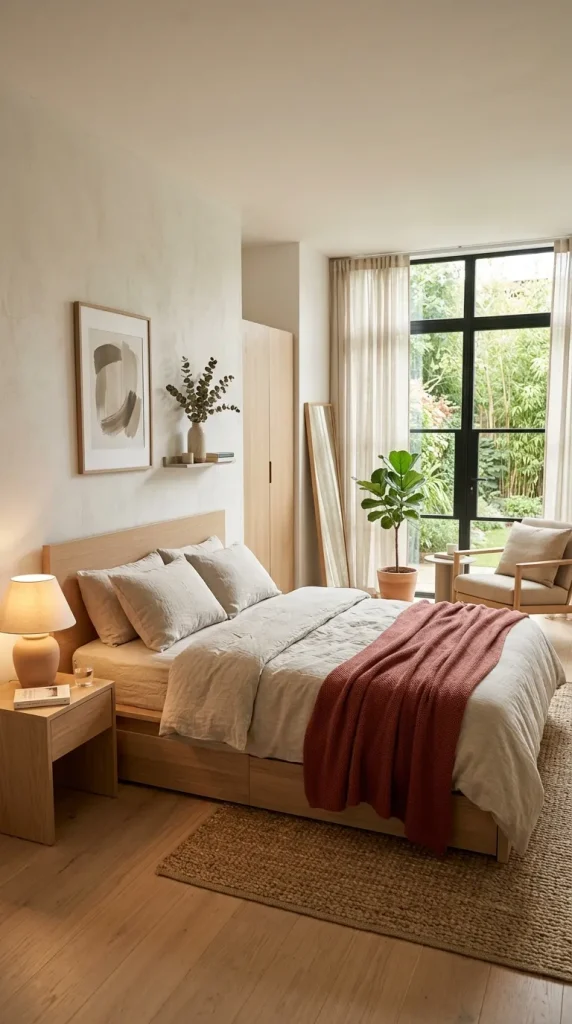
A red throw blanket is a versatile and visually appealing way to incorporate color and texture into a Japandi bedroom. This idea focuses on layering, which is essential for creating depth without adding unnecessary clutter.
Choose a throw blanket in a muted red tone such as burnt red, terracotta, or deep rust. These shades blend seamlessly with neutral palettes and natural materials. Avoid bright or glossy finishes, as they can feel out of place in a Japandi setting.
Drape the blanket casually over the edge of the bed or a wooden chair. The placement should feel relaxed and effortless, reflecting the natural simplicity of the design. The soft folds of the fabric add movement and warmth to the space.
Material selection is key. Opt for natural fibers like wool, cotton, or linen. These materials not only enhance the tactile experience but also align with the sustainable principles of Japandi design.
The throw blanket serves both functional and aesthetic purposes. It provides comfort during colder months while acting as a subtle focal point within the room. When paired with neutral bedding and wooden elements, the red accent creates a balanced and inviting atmosphere.
This idea demonstrates how a single piece can transform the overall look and feel of a bedroom, proving that simplicity and intention are at the heart of great design.
4. Red Ceramic Decor Pieces
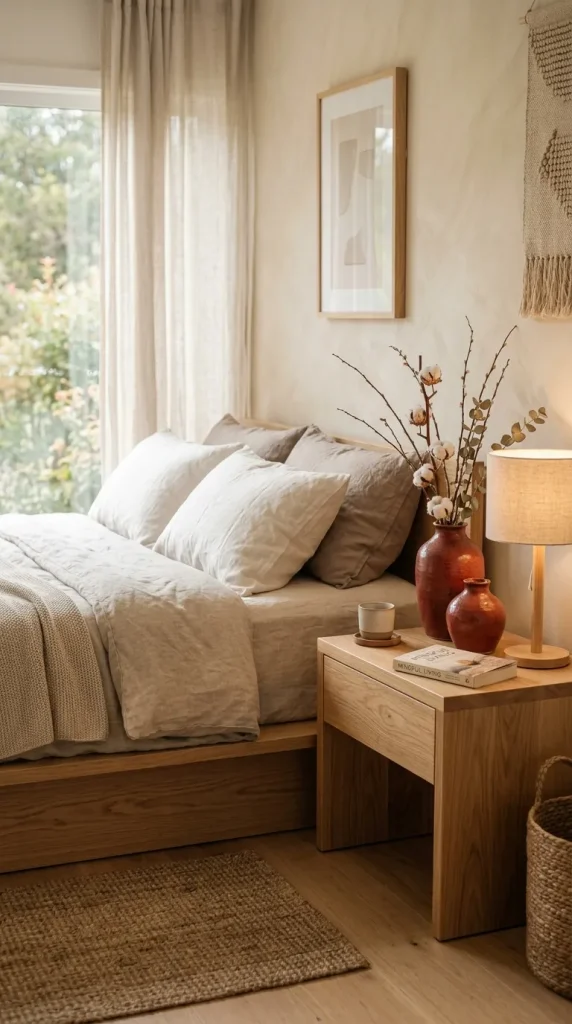
Red ceramic decor pieces bring an artistic and handcrafted element to a Japandi bedroom. Ceramics are deeply rooted in Japanese design traditions, making them a natural fit for this aesthetic. When combined with Scandinavian simplicity, they create a perfect balance of form and function.
Choose ceramic items such as vases, bowls, or small sculptures in earthy red tones. Matte finishes and slightly imperfect shapes enhance the organic feel of the space. These imperfections reflect the Japanese concept of wabi-sabi, which celebrates beauty in imperfection.
Placement should be minimal and intentional. Arrange one or two pieces on a bedside table, shelf, or dresser. Avoid clustering too many items together, as this can disrupt the clean and uncluttered look.
Pair the ceramics with natural elements like dried branches or simple greenery. This combination adds depth and creates a harmonious connection with nature.
The subtle presence of red in ceramic decor adds warmth without dominating the room. It serves as a quiet yet impactful design element that enhances the overall aesthetic.
5. Red Area Rug for Grounding the Space
A red area rug is an excellent way to anchor a Japandi bedroom and create a sense of warmth and stability. Rugs play a crucial role in defining spaces, especially in minimalist interiors where every element must serve a purpose.
Choose a rug in a muted red tone with subtle patterns or textures. Avoid overly intricate designs, as simplicity is key in Japandi decor. A slightly faded or woven look can add character while maintaining a calm aesthetic.
Place the rug under the bed so that it extends outward, creating a soft and inviting surface. This placement not only enhances comfort but also visually grounds the furniture.
The texture of the rug adds depth to the room, complementing the smooth surfaces of wood and the softness of textiles. It creates a balanced interplay of materials that feels cohesive and intentional.
A red area rug works particularly well in neutral spaces, where it can act as a focal point without overwhelming the design. It adds warmth and personality while maintaining the serene atmosphere that defines Japandi interiors.
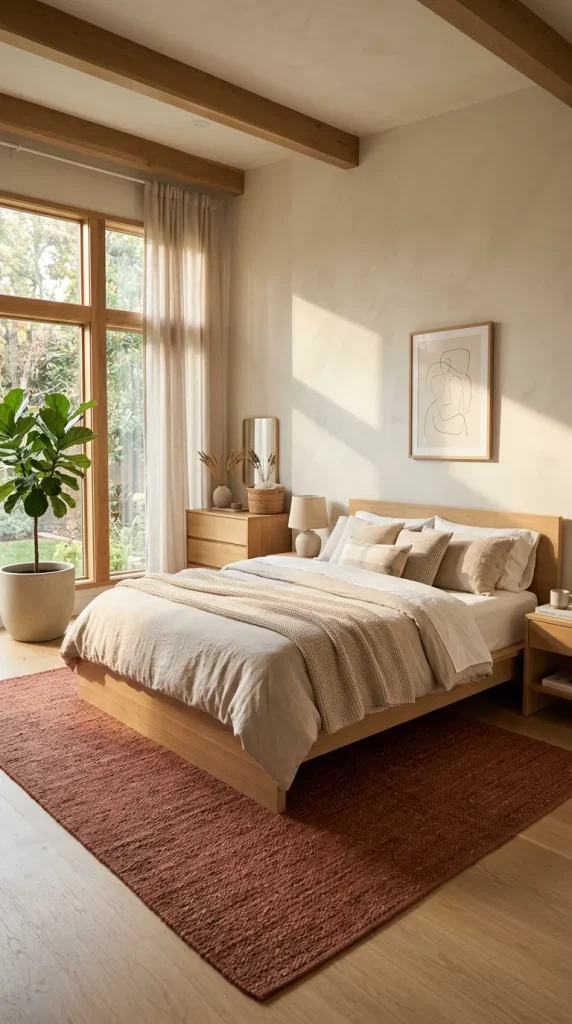
6. Red Linen Curtains for Soft Contrast
Red linen curtains offer a subtle yet impactful way to introduce color into a Japandi bedroom. Curtains are an essential element of interior design, as they influence both light and mood.
Choose lightweight linen curtains in soft red tones such as terracotta or dusty rose. These shades allow natural light to filter through gently, creating a warm and inviting glow.
The fabric’s natural texture enhances the organic feel of the room, while the muted color adds depth without overpowering the space.
Hang the curtains from simple rods, keeping the design clean and minimal. Allow them to fall naturally to the floor for a relaxed and elegant look.
This idea works beautifully because it combines functionality with aesthetics. The curtains provide privacy and light control while contributing to the overall design.
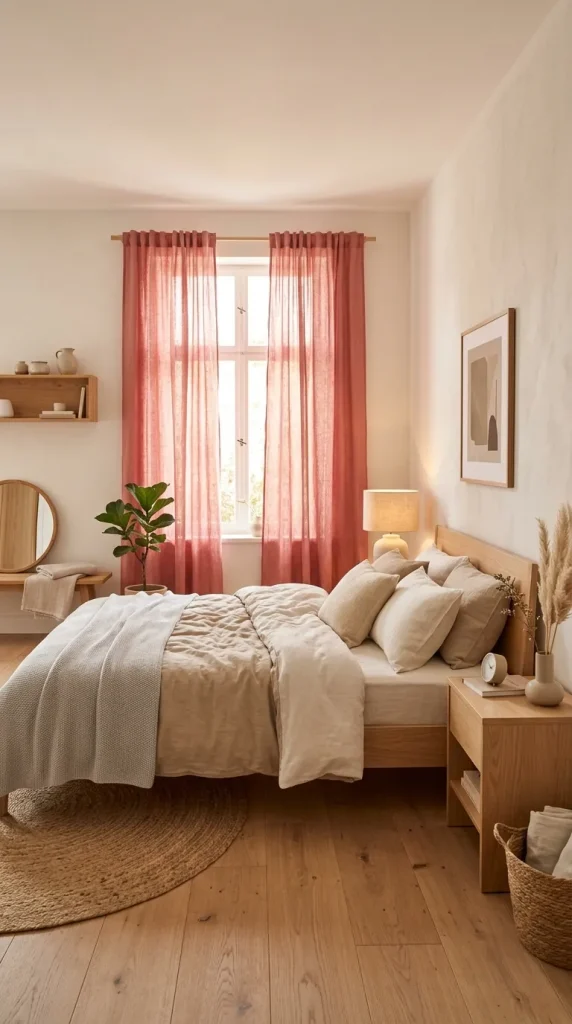
7. Red Accent Chair in a Minimal Corner
A red accent chair can serve as a statement piece in a Japandi bedroom while maintaining the overall minimalist aesthetic. This idea focuses on creating a dedicated corner that feels both functional and visually appealing.
Choose a chair with clean lines and a simple silhouette, preferably made from natural materials such as wood or rattan. The upholstery should feature a muted red tone like rust, terracotta, or deep crimson. Avoid overly bold or glossy finishes, as they can disrupt the calm balance of the space.
Placement is key. Position the chair near a window or in an empty corner to create a cozy reading or relaxation area. Pair it with a small wooden side table or a soft neutral rug to complete the setup. Keep surrounding decor minimal to allow the chair to stand out without overwhelming the room.
The red accent chair works as a focal point while still blending seamlessly with the Japandi design. It introduces warmth and personality while maintaining simplicity and functionality. This idea is perfect for adding depth and character to your bedroom without compromising its serene atmosphere.
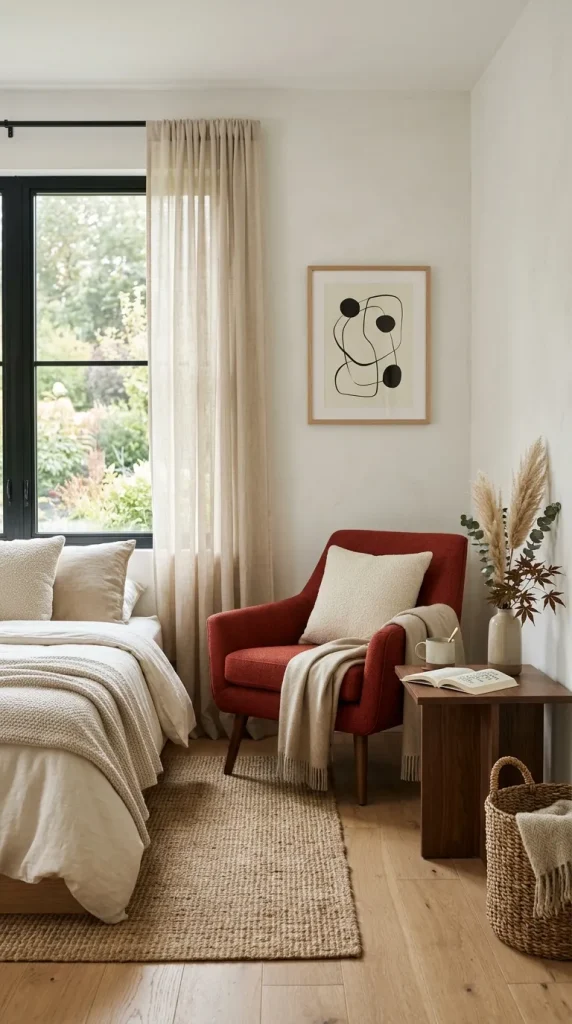
8. Subtle Red Bedding Details and Stitching
Instead of using bold red bedding, incorporating subtle red details such as stitching, trims, or patterns can create a refined and elegant look. This approach aligns perfectly with Japandi principles, where simplicity and restraint are key.
Choose neutral bedding with delicate red accents along the edges or in minimal patterns. These details should be subtle enough to complement the overall design rather than dominate it. The effect is understated yet visually interesting.
The use of fine detailing adds a layer of sophistication to the bedroom. It shows that even the smallest elements can contribute to the overall aesthetic. Pair this bedding with natural wood furniture and soft lighting to enhance the calming atmosphere.
This idea is ideal for those who prefer a minimal approach to color while still wanting to incorporate red into their design.
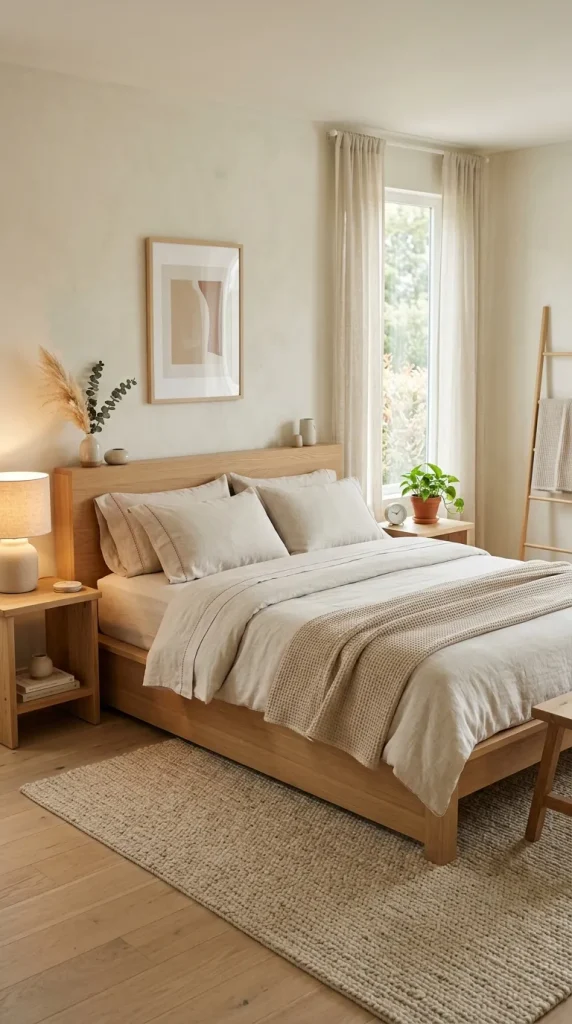
9. Red Lighting Accents for Warm Ambiance
Lighting plays a crucial role in shaping the mood of a Japandi bedroom, and introducing red through lighting elements can create a warm and inviting ambiance. This idea focuses on subtle integration rather than bold statements.
Choose lamps or pendant lights with red bases, shades, or detailing in muted tones. Materials like ceramic, fabric, or paper work best to maintain the natural aesthetic. Avoid harsh or overly bright colors, as they can disrupt the calming atmosphere.
Position the lighting strategically—on bedside tables, in corners, or as a central pendant. The soft glow of the light enhances the warmth of the red tones, creating a cozy and relaxing environment.
This approach allows you to incorporate color in a functional way, ensuring that every element serves a purpose while contributing to the overall design.
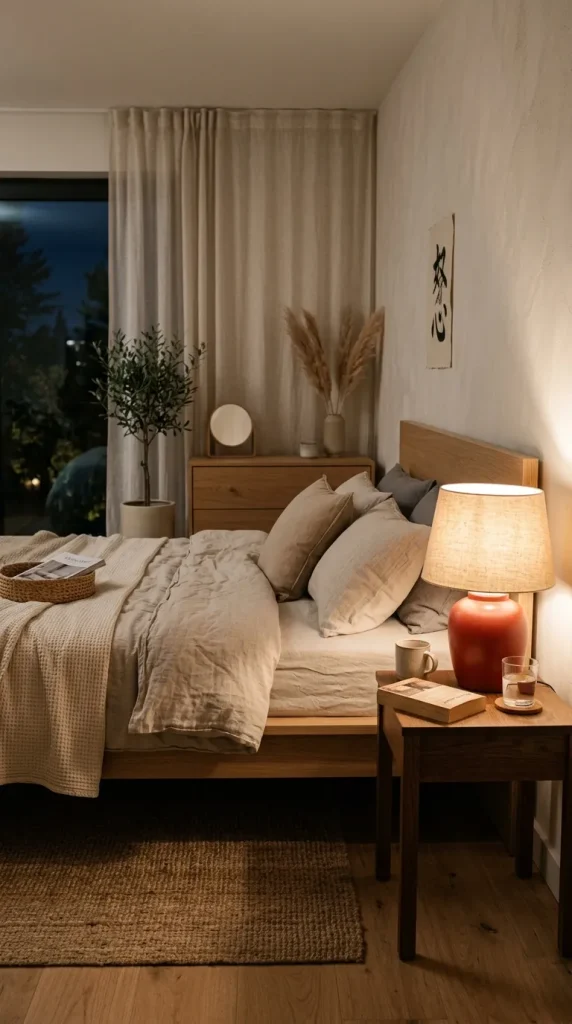
10. Balanced Red and Wood Harmony Design
The final idea focuses on achieving a perfect balance between red accents and natural wood elements. This combination is at the heart of Japandi design, where contrast and harmony coexist beautifully.
Use light wood furniture as the foundation of the room. Bed frames, side tables, and flooring should feature natural finishes that highlight the grain and texture of the wood.
Introduce red accents sparingly through decor items such as cushions, vases, or small accessories. Distribute these elements evenly throughout the space to create a sense of balance.
The interplay between warm wood tones and muted red accents creates a cohesive and inviting atmosphere. It reflects the essence of Japandi design—simple, natural, and thoughtfully curated.
Conclusion
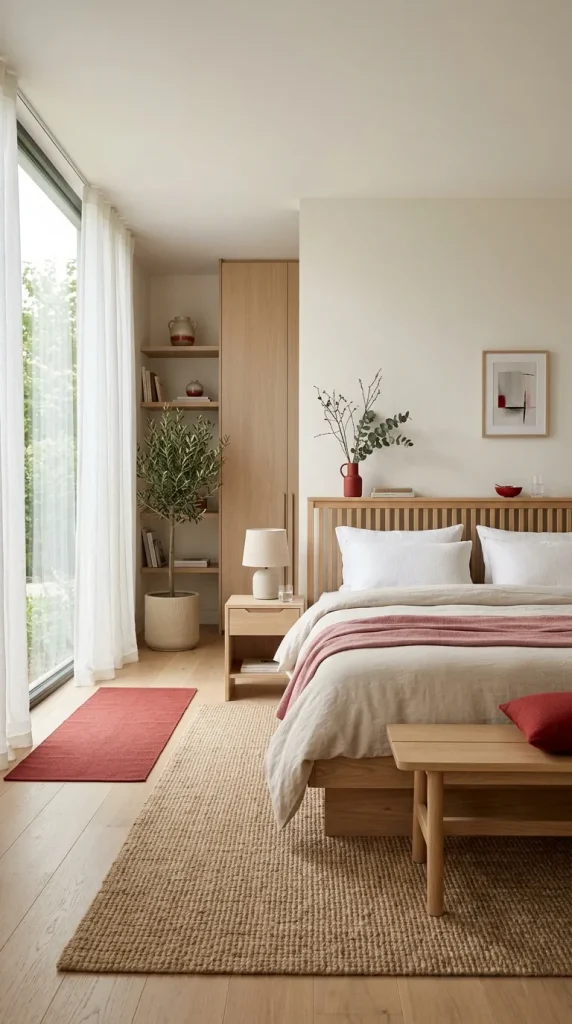
Designing a Japandi bedroom with red accents is all about balance, intention, and simplicity. By combining neutral foundations with carefully placed red elements, you can create a space that feels both calm and expressive.
These 10 Japandi bedroom ideas demonstrate how color can be used thoughtfully to enhance a minimalist design. Each idea offers a unique approach, allowing you to experiment and find what works best for your personal style.
With the right materials, thoughtful styling, and attention to detail, your bedroom can become a peaceful retreat that reflects both beauty and functionality—perfectly aligned with the Japandi philosophy.




Leave a Reply