
Introduction
The space underneath a staircase is one of the most overlooked areas in a home. While it can easily become an awkward empty corner, cluttered storage zone, or forgotten area, the right design can transform it into one of the most useful storage spaces in the house. Under stair storage ideas with closets are especially valuable because they allow homeowners to turn unused square footage into practical, attractive, and highly organized storage.
Whether you live in a small apartment, townhouse, modern family home, or traditional house, the area beneath your stairs can serve many purposes. You can create a built-in coat closet, shoe storage, pantry, mudroom, cleaning closet, book storage, or even a concealed cabinet system. Because staircases naturally create different ceiling heights, this space can be challenging to furnish with standard furniture, which makes custom storage particularly useful.

The best under stair closets combine functionality with the overall style of the home. Instead of making the storage look like an afterthought, you can use matching cabinet doors, attractive hardware, shelving, drawers, lighting, and finishes to make the area look intentional and polished.
In this guide, we will explore ten practical and stylish under stair storage ideas with closets. Each idea focuses on a different way to maximize this unusual space while keeping your home organized. You will also find information about materials, planning, installation, styling, and common mistakes to avoid.
1. Under Stair Storage Ideas with Built-In Closets
A built-in closet is one of the most versatile ways to transform the space underneath a staircase. Rather than leaving the area open or filling it with random storage furniture, you can create a custom closet that follows the exact shape of the stairs. This approach makes the storage look like a permanent part of the architecture while providing valuable hidden space.
One of the biggest advantages of a built-in under stair closet is flexibility. The taller section can accommodate coats, jackets, dresses, vacuum cleaners, or long household items, while the shorter areas can be converted into shelves or drawers. This allows every inch of the space to serve a purpose.
For a polished appearance, consider installing simple cabinet doors across the front. Flat-panel doors work beautifully in modern interiors, while shaker-style doors can complement traditional or farmhouse homes. You can paint the doors the same color as the surrounding walls so that the closet blends seamlessly into the room.
Interior organization is equally important. Add adjustable shelves so that the storage can change as your needs change. Drawers are useful for gloves, scarves, hats, accessories, and other small items. Hooks can be installed inside the taller section for frequently used coats and bags.
Lighting can make the closet even more functional. Battery-powered LED lights or motion-activated lights can illuminate dark corners without requiring complicated electrical work.
For the exterior, choose hardware that matches other finishes in the room. Black handles create a modern look, brass adds warmth, and brushed nickel provides a timeless appearance.
A built-in under stair closet is especially useful near an entrance because it can become a convenient drop zone. Instead of allowing coats, shoes, and bags to accumulate around the doorway, everything can have a dedicated place.

2. Under Stair Closet Ideas for Small Spaces
Small homes require smart storage solutions, and an under stair closet can make a surprisingly large difference. When floor space is limited, the goal should be to maximize vertical and hidden storage without making the room feel crowded.
A compact under stair closet can be designed with shallow shelving, narrow drawers, hooks, and small cabinets. You do not necessarily need a large walk-in closet to make the area useful. Even a shallow storage system can hold everyday essentials when it is properly organized.
One effective approach is to divide the closet according to the shape of the staircase. The tallest portion can be reserved for hanging items or tall cleaning tools. The medium-height section can contain shelves for baskets, shoes, and bags. The lowest section can become a series of pull-out drawers.
Using drawers is particularly useful in small spaces because they allow you to access items without having to reach deep into a cabinet. Pull-out baskets can also work well for shoes, children’s belongings, or seasonal accessories.
For the exterior, consider using doors with a clean, simple design. Large decorative hardware can make a small closet feel visually busy, so streamlined handles are often a better choice.
Color also plays an important role. White, warm beige, light gray, or soft neutral cabinetry can help the storage blend into a small room. If you prefer a dramatic appearance, dark cabinetry can create a beautiful feature, but keeping the surrounding area bright will help maintain balance.
Mirrored doors can also be considered if appropriate for the location. They can visually expand the room while providing a practical mirror near an entryway.
The key to a successful small under stair closet is organization. Avoid filling every shelf simply because space is available. Use matching baskets, labeled containers, and adjustable shelves to keep the interior controlled.
With thoughtful planning, even a very small under stair area can become a highly efficient storage system without sacrificing the style or openness of your home.
3. Under Stair Storage Ideas with Hidden Cabinets
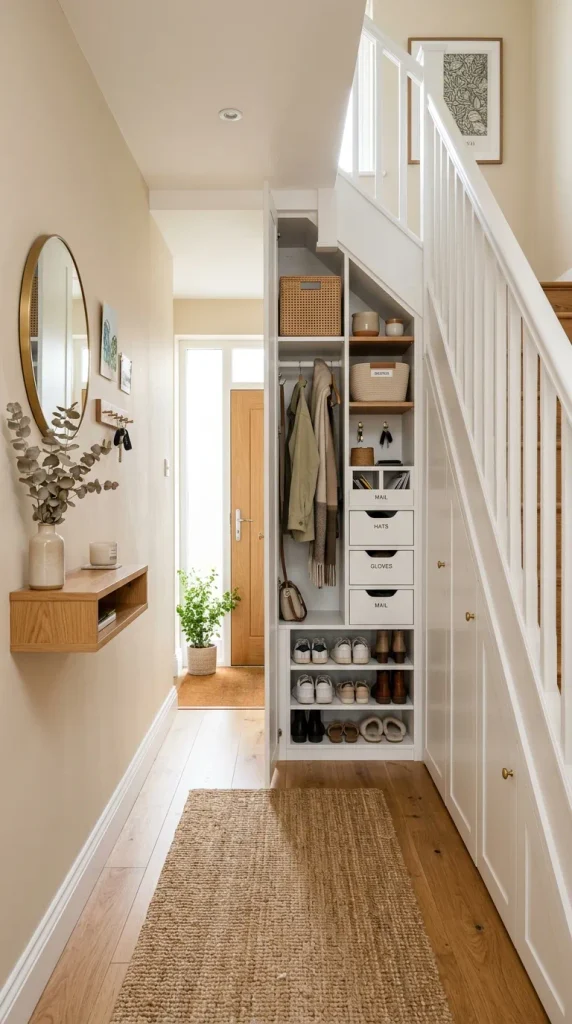
Hidden cabinets are perfect for homeowners who want practical storage without making the staircase area look cluttered. This design focuses on creating storage that visually disappears into the wall or staircase structure.
One of the easiest ways to achieve this effect is by using cabinet doors painted in the same color as the surrounding wall. When the doors are closed, they blend into the architecture and create a clean, uninterrupted appearance.
Push-to-open cabinet mechanisms can make the hidden effect even stronger because they eliminate traditional handles. This works particularly well in contemporary and minimalist homes.
The interior can be customized according to your needs. You might create one cabinet for household supplies, another for shoes, and another for miscellaneous items. Deep cabinets can accommodate larger objects, while shallow compartments are ideal for books, decorative objects, or small accessories.
Another creative option is to use concealed drawers. Drawers can be installed into the lower portion of the staircase where the ceiling is too low for conventional cabinets. These drawers can pull outward and provide convenient access to items that would otherwise be difficult to reach.
Hidden storage is also useful for maintaining a visually calm home. Instead of displaying cleaning supplies, toys, paperwork, or everyday clutter, everything can be tucked away behind closed doors.
If you want the cabinetry to look architectural rather than like furniture, continue the same wall finish across the entire staircase area. Matching trim and consistent door spacing will create a more integrated appearance.
Lighting inside hidden cabinets is another helpful addition. Small LED strips or motion-sensor lights can make it much easier to locate items.
This idea works particularly well in open-plan homes where visual clutter is more noticeable. By concealing storage beneath the stairs, you can keep the room looking spacious and organized.
The result is a clever combination of functionality and minimalism: plenty of storage when you need it, but almost no visual clutter when everything is closed.

4. Under Stair Closet Ideas for Entryway Organization
The space beneath a staircase located near the front door is perfect for creating an entryway closet. This design can dramatically improve everyday organization because the items that normally collect near an entrance can be stored immediately.
An under stair entryway closet can hold coats, jackets, shoes, handbags, umbrellas, hats, scarves, backpacks, and other outdoor essentials. Instead of placing a large freestanding coat rack in the entryway, you can keep everything contained inside the staircase area.
Start by dividing the closet into practical zones. The tallest section should contain hooks or a hanging rail for coats and jackets. Lower areas can contain shoe shelves or pull-out baskets. Small drawers can store keys, sunglasses, gloves, and other accessories.
A small bench can also be incorporated if the staircase design allows enough space. A built-in bench provides a convenient place to sit while putting on shoes. Add a cushion for comfort and install shoe drawers underneath.
For families, individual hooks or baskets can be assigned to each person. This simple organizational system makes it easier for everyone to return belongings to their designated place.
The exterior design should complement the entryway. Shaker-style doors work well with traditional interiors, while flat-panel cabinetry creates a contemporary appearance. Adding attractive handles can make the closet feel more like custom furniture.
Consider installing a mirror nearby or on one of the cabinet doors. A mirror is particularly useful in an entryway for quick appearance checks before leaving the house.
Lighting should be warm but bright enough to help you find belongings quickly. Motion-sensor lighting is especially convenient because the closet lights automatically turn on when the doors are opened.
The best entryway storage systems make leaving and returning home easier. With a well-designed under stair closet, shoes, coats, bags, and accessories no longer need to occupy valuable floor space.
This idea turns an otherwise unused architectural area into a practical entryway command center.
5. Under Stair Storage Ideas with Drawers and Shelves
Combining drawers and shelves is one of the smartest ways to use the different heights created beneath a staircase. Since the ceiling slopes downward, traditional cabinets may leave awkward gaps. Custom drawers and shelves can use these changing dimensions efficiently.
Drawers are ideal for the lower sections of the staircase. Instead of bending down and reaching into a dark cabinet, you can simply pull the drawer toward you. This makes the storage more accessible and allows you to see the entire contents.
Deep drawers can hold shoes, toys, blankets, pet supplies, or seasonal accessories. Shallow drawers are perfect for keys, paperwork, household tools, and smaller items.
Shelves can be installed in the taller portions. Adjustable shelving is especially useful because it allows you to change the spacing as your storage needs develop.
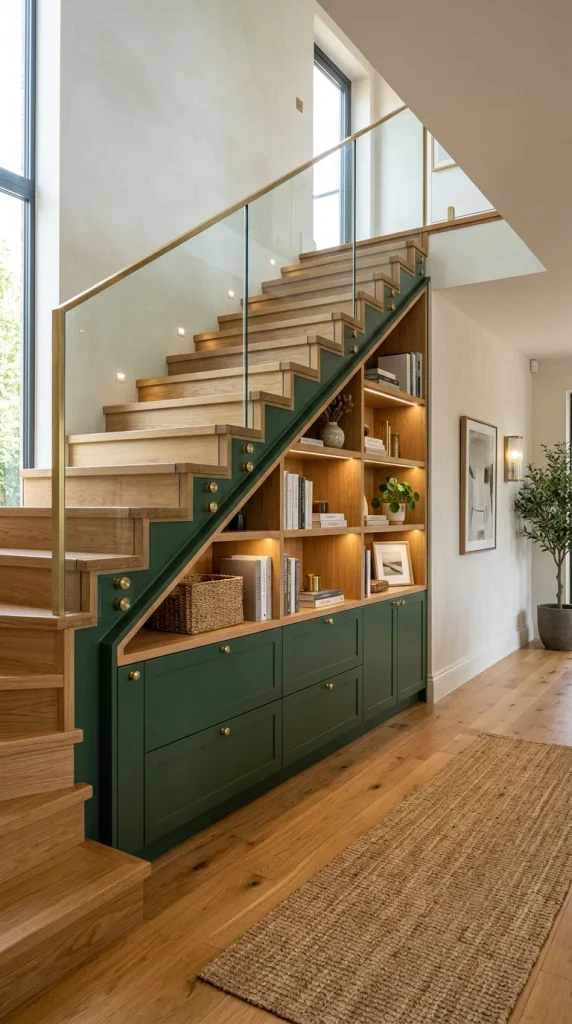
For an attractive appearance, consider combining closed drawers with a few open shelves. Open shelving can display books, baskets, framed artwork, plants, or decorative objects, while closed storage hides less attractive items.
If the staircase is in a living room, this combination can create a stylish built-in feature. Use baskets on open shelves to introduce texture while keeping smaller belongings organized.
If the area is near a kitchen, shelves can store cookbooks or pantry containers. Near an entryway, they can hold baskets and accessories.
The drawer fronts and shelves should match the surrounding architecture. Natural wood adds warmth, while painted cabinetry creates a more seamless appearance.
Soft-close drawer mechanisms are worth considering because they make the storage feel more refined and prevent drawers from slamming.
Labels can also be helpful, especially when several drawers look identical from the outside.
The main advantage of combining drawers and shelves is that it gives you different types of storage within one compact area. Instead of forcing every item into the same cabinet, you can choose the appropriate storage method for each category.
With careful planning, this design makes the unusual shape beneath the staircase feel like an advantage rather than a limitation.

6. Under Stair Pantry Closet Ideas for Extra Kitchen Storage
If your staircase is located close to the kitchen or dining area, the space underneath it can become an excellent pantry closet. This is especially useful in homes where kitchen cabinets are limited.
An under stair pantry can store dry goods, canned foods, baking supplies, snacks, small appliances, serving pieces, and other kitchen essentials. Because the staircase creates different heights, the tallest portion can accommodate larger containers while lower sections can be used for drawers or baskets.
Shelving should be planned carefully. Adjustable shelves allow you to customize the pantry for different container sizes. Pull-out shelves are another excellent option because they allow you to reach items stored toward the back.
Clear containers can make the pantry look organized and make it easier to see what you have. Use matching storage containers for flour, rice, pasta, cereal, and other dry ingredients.
Labels are particularly useful when multiple containers look similar. Simple printed labels can create a clean Pinterest-style pantry appearance.
For lower areas, use pull-out baskets for potatoes, onions, snacks, or packaged foods. Keep heavier items closer to the floor for easier access and safety.
Ventilation should also be considered. A pantry containing food needs to remain clean, dry, and appropriately ventilated. Avoid storing foods in areas exposed to moisture or extreme temperatures.
The exterior can be designed to match the kitchen cabinetry. If the kitchen uses white shaker cabinets, matching white doors can make the pantry look built-in. If your kitchen has natural wood finishes, continue that material beneath the stairs.
Good lighting is essential because stair cavities can be naturally dark. LED lighting can illuminate shelves without producing excessive heat.
An under stair pantry is particularly valuable for entertaining because serving supplies and extra food can remain close to the kitchen without occupying countertop space.
With thoughtful organization, this unused area can become a hidden extension of your kitchen and provide significant additional storage.

7. Under Stair Storage Ideas for Shoes, Coats, and Bags
If your household struggles with shoes, coats, backpacks, and bags accumulating near the entrance, an under stair closet can provide a dedicated storage solution.
This design works particularly well for busy families because it gives every commonly used item a designated location. Instead of expecting everyone to place belongings in separate bedrooms, you can create a convenient storage zone directly where those items are removed.
Start with shoe storage near the bottom. Slanted shelves, pull-out drawers, or open cubbies can keep shoes organized and easy to access. Consider allowing enough space between shelves for boots and taller footwear.
Above the shoe section, install hooks or a hanging rail for coats. The height of the staircase can determine how much hanging storage is possible.
Bags can be stored on individual hooks or in cubbies. If you have children, create lower hooks that they can reach independently. This encourages them to put their belongings away without assistance.
Baskets can be used for hats, scarves, gloves, and other seasonal accessories. Assigning one basket to each family member can make organization even easier.
For a sophisticated appearance, keep the exterior simple and use doors to conceal the storage. If you prefer an open mudroom look, combine hooks and cubbies with a few closed cabinets.
A bench can be added if the dimensions permit. Place drawers or shoe shelves beneath it to maximize the available area.
The interior should be easy to clean because entryway storage naturally collects dirt. Durable shelving materials and washable baskets are practical choices.
Consider adding a small tray or drawer for keys and everyday items. This prevents small objects from being scattered throughout the house.
This under stair storage solution is not only about making the home look tidy. It creates a functional routine: come home, remove shoes, hang coats, place bags away, and keep the entryway clear.
When every item has a home, maintaining organization becomes much easier.

8. Under Stair Closet Ideas with Sliding Doors
Sliding doors are an excellent choice when traditional cabinet doors would interfere with nearby furniture or walking space. Because sliding doors move horizontally rather than outward, they are particularly useful in narrow hallways and compact rooms.
A sliding-door under stair closet can provide full hidden storage while maintaining a clean, modern appearance. The doors can be customized to complement the room.
For a minimalist home, consider smooth flat panels with concealed tracks. For a farmhouse or rustic interior, natural wood sliding doors can add warmth and character. Glass-panel doors can be used when you want the contents to remain partially visible, although frosted or textured glass provides more privacy.
Inside the closet, use a combination of shelves, hooks, drawers, and baskets. Since sliding doors may only reveal part of the storage at one time, organization is especially important.
Frequently used items should be placed in the easiest-to-access areas. Seasonal belongings can be stored farther inside.
The door hardware can become an important decorative feature. Black metal tracks create an industrial appearance, while brass hardware gives the closet a warmer and more sophisticated style.
When designing sliding doors, make sure the track system is strong enough for the door material. The doors should move smoothly without scraping the floor or becoming difficult to operate.
Sliding doors are also visually appealing because they can become a design feature. Instead of trying to hide the staircase storage completely, you can make the doors a focal point.
For example, natural oak doors beneath white stairs can create a beautiful contrast. Alternatively, painting the doors the same color as the wall creates a seamless appearance.
This style is especially useful for under stair closets located in narrow hallways where opening traditional doors could block movement.
The combination of attractive doors and organized interior storage creates a practical solution that looks intentional rather than improvised.

9. Under Stair Storage Ideas for a Small Mudroom
Turning an under stair area into a small mudroom can be one of the most practical upgrades for a busy household. Even if you do not have enough room for a traditional mudroom, the staircase can provide enough space for the essentials.
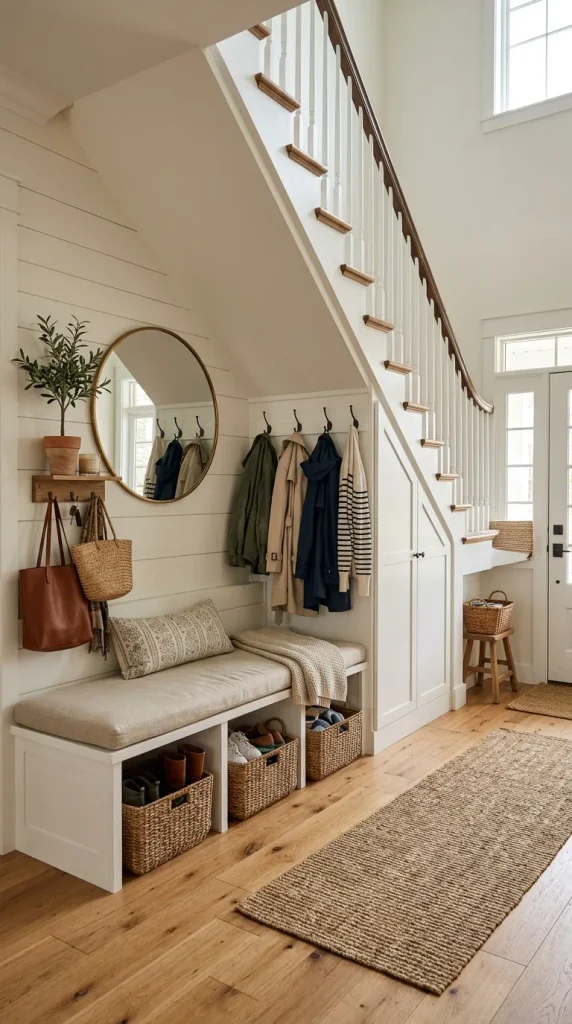
A compact mudroom can include hooks, a small bench, shoe storage, baskets, and cabinets. The key is to use vertical space and select storage pieces that match the available dimensions.
Start with a sturdy bench if there is enough horizontal space. The bench can provide seating while also creating storage underneath. Pull-out drawers or baskets beneath the seat are perfect for shoes and everyday accessories.
Above the bench, install hooks for jackets, backpacks, and handbags. Keep frequently used items at comfortable heights.
The lowest portions of the staircase can become shoe drawers or cubbies. This makes use of areas that are too short for hanging storage.
For a more polished look, add beadboard, wood paneling, or painted cabinetry to the walls. These finishes can make the small mudroom feel intentional and visually attractive.
Use baskets to organize hats, scarves, gloves, pet accessories, and children’s belongings. Woven baskets can introduce texture, while fabric bins create a softer appearance.
Durability is important because mudrooms receive heavy daily use. Choose materials that can handle frequent contact and are easy to clean.
If the area is close to an exterior door, consider adding hooks for umbrellas and a small tray for wet footwear. A washable runner can protect the floor and add color.
Lighting can make the compact space feel more welcoming. Wall lights, recessed lighting, or motion-activated LEDs can brighten the area.
A small mudroom does not need to contain every item your household owns. Focus on the things you use when leaving and returning home.
By concentrating on essentials and using the unusual shape of the staircase efficiently, you can create a compact but highly functional mudroom that keeps the rest of your home much tidier.

10. Stylish Under Stair Closet Ideas with Custom Built-Ins
For homeowners who want their storage to feel completely integrated with the architecture, custom built-ins are the ultimate solution. Instead of adapting standard furniture to fit beneath the stairs, every cabinet, drawer, shelf, and door can be designed specifically for the available space.
Custom built-ins can solve almost any storage challenge. You can combine tall cabinets, small drawers, open shelves, pull-out compartments, and hidden doors into one cohesive system.
The design should begin with accurate measurements. Because every staircase has a unique angle and structure, even a small measurement error can affect the final result.
Consider how the space will be used before deciding on the layout. If it is an entryway, prioritize coats, shoes, bags, and accessories. If it is in a living room, consider books, electronics, games, and decorative storage. If it is near the kitchen, create pantry shelving.
The exterior finish is an opportunity to make the staircase area beautiful. Cabinetry can be painted to match the walls, contrasted with the surrounding color, or finished in natural wood.
Integrated lighting can add a high-end appearance. LED strips beneath shelves or inside cabinets can highlight the storage while making it easier to use.
Hardware should also be selected carefully. Minimal handles create a contemporary appearance, while decorative pulls can add personality to traditional interiors.
For a Pinterest-worthy result, balance closed storage with a small amount of open display space. Open shelves can hold books, baskets, artwork, plants, or carefully selected accessories.
Avoid overcrowding the built-in. The goal is to make the space feel organized and intentional, not simply to fill every available inch.
Custom built-ins may require more planning and investment than simple shelves or freestanding furniture, but they can dramatically increase the usefulness and visual appeal of the area.
The finished result should look as though it was always part of the house. That is what makes custom under stair storage so effective: it transforms an awkward architectural space into a beautiful and highly functional feature.
Materials Used for Under Stair Storage
The materials you need will depend on the type of closet or storage system you choose. However, most under stair storage projects can be created using a combination of the following:
Cabinet Materials
- Plywood
- MDF
- Hardwood
- Melamine panels
- Laminated boards
- Veneer panels
Hardware
- Cabinet hinges
- Drawer slides
- Cabinet handles
- Push-to-open mechanisms
- Sliding door tracks
- Wall anchors
- Mounting brackets
Organization Accessories
- Adjustable shelf pins
- Storage baskets
- Hooks
- Shoe racks
- Pull-out trays
- Drawer organizers
- Hanging rails
- Labels
Finishing Materials
- Interior paint
- Primer
- Wood stain
- Clear protective finish
- Caulk
- Wood filler
- Sandpaper
Lighting
- LED strip lights
- Motion-sensor cabinet lights
- Battery-operated puck lights
- Recessed lighting where appropriate
Choose durable materials because under stair storage is often used frequently. If the area will store shoes, coats, cleaning supplies, or pantry items, prioritize easy-to-clean surfaces.
How to Create Under Stair Storage Step by Step
Step 1: Measure the Space
Measure the total width, depth, and height of the area. Because the ceiling slopes, take measurements at several points rather than assuming the space has a consistent height.
Step 2: Decide What You Will Store
Before designing cabinets, make a list of everything you want to store. This prevents you from creating beautiful storage that does not actually meet your needs.
Step 3: Divide the Space into Zones
Separate the area into sections for hanging items, shelves, drawers, shoes, baskets, or larger objects. Use the tallest areas for tall belongings and shorter sections for low storage.
Step 4: Choose the Cabinet Style
Select a style that matches your home. Shaker doors, flat-panel cabinets, natural wood, painted MDF, sliding doors, and handleless designs can all work beautifully.
Step 5: Plan the Interior
Think about accessibility. Items used every day should be easy to reach, while seasonal or rarely used items can go into higher or deeper storage.
Step 6: Install the Framework
Build or install the cabinet framework securely. Make sure the structure is level and properly anchored.
Step 7: Add Shelves and Drawers
Install adjustable shelves, drawer systems, hooks, hanging rails, and other organizational components according to your plan.
Step 8: Install Doors
Attach cabinet or sliding doors and check that they open and close smoothly. Make sure doors do not interfere with nearby furniture or walkways.
Step 9: Add Lighting
Install suitable LED lighting if the space is dark. Motion-sensor lighting is particularly convenient for closets.
Step 10: Organize and Style
Place items into logical categories. Use matching baskets and containers where possible, and avoid overcrowding the storage.
How to Make Under Stair Storage Look Expensive
A few design decisions can make a basic storage project look much more sophisticated.
First, maintain consistent cabinet spacing. Uneven doors and random shelf heights can make the installation look unfinished.
Second, choose hardware carefully. Quality-looking handles can instantly improve simple cabinetry.
Third, use one cohesive color palette. Matching the cabinetry to nearby walls or furniture creates a custom appearance.
Fourth, add lighting. Even inexpensive LED lights can make the storage feel more luxurious.
Finally, keep the exterior uncluttered. The most beautiful built-ins often rely on simple doors, clean lines, and carefully selected details.
Common Mistakes to Avoid
Ignoring the Staircase Shape
Do not design the storage as if the ceiling were flat. Work with the slope and use different storage types to maximize every section.
Using Only Deep Cabinets
Very deep cabinets can become difficult to organize. Combine deep storage with drawers, pull-outs, and shallow shelves.
Forgetting Accessibility
Storage is only useful if you can easily reach what is inside. Frequently used belongings should remain within comfortable reach.
Poor Lighting
The area underneath stairs can become extremely dark. Add lighting so the storage is easy to use.
Overcrowding the Exterior
Too many handles, decorations, or open shelves can make the staircase look cluttered. Keep the exterior visually simple.
Choosing the Wrong Materials
If the closet will experience heavy daily use, use durable materials and quality hardware.
Final Thoughts
The space beneath a staircase does not have to remain an awkward or wasted corner. With thoughtful planning, it can become a beautiful and practical storage feature that improves the organization of your entire home.
From built-in closets and hidden cabinets to pantry storage, shoe organization, sliding doors, drawers, and custom mudrooms, there are countless ways to make use of this unusual space. The most successful designs are those that combine the right storage solution with the way your household actually lives.
When planning your own under stair closet, begin by identifying your biggest storage problem. Then measure the available space, divide it into useful zones, choose durable materials, and select a finish that complements your existing interior.
Remember that good storage is not simply about creating more cabinets. It is about making everyday life easier. A thoughtfully designed under stair closet can give coats a home, keep shoes organized, hide household clutter, expand kitchen storage, or create a dedicated place for everyday essentials.
With the right combination of custom built-ins, drawers, shelves, baskets, hooks, lighting, and attractive finishes, an overlooked staircase can become one of the most useful features in your home.
The best part is that under stair storage can be both practical and beautiful. When the design blends naturally with your home’s architecture, the storage feels intentional rather than added later. That combination of functionality, organization, and style is what makes under stair closets such a valuable home improvement idea.


Leave a Reply