
Introduction
Mid-century modern homes continue to inspire homeowners, architects, and interior design enthusiasts decades after the style first emerged. Known for clean lines, functional layouts, large windows, and a seamless connection between indoor and outdoor spaces, mid-century modern architecture remains one of the most timeless and desirable home styles today. Its enduring popularity comes from its ability to feel both nostalgic and contemporary at the same time.
Originally developed between the 1940s and 1960s, mid-century modern design emphasized simplicity, practicality, and harmony with nature. Instead of excessive ornamentation, architects focused on open floor plans, natural materials, geometric shapes, and abundant natural light. These principles continue to influence modern home design, making mid-century modern houses a favorite choice for homeowners seeking elegant yet livable spaces.
One of the greatest advantages of a mid-century modern home is its versatility. Whether you’re building a new house, remodeling an existing property, or simply looking for inspiration, the style can be adapted to various climates, budgets, and lifestyles. From iconic flat roofs and glass walls to warm wood accents and minimalist landscaping, there are countless ways to embrace this architectural aesthetic.
In this guide, you’ll discover ten inspiring mid-century modern house ideas that showcase the beauty and practicality of this timeless design movement. Each idea explores a different aspect of the style while maintaining the core principles that make mid-century modern architecture so beloved. Whether your dream home is a compact retreat or a luxurious estate, these ideas will help you create a house that feels sophisticated, functional, and deeply connected to its surroundings.
Materials Used in Mid-Century Modern Houses
The materials used in mid-century modern homes are essential to achieving the style’s signature appearance. Natural materials dominate the design, creating warmth while maintaining clean and modern aesthetics.
Wood is perhaps the most important material. Cedar, walnut, teak, oak, and redwood are frequently used for exterior siding, exposed beams, ceilings, cabinetry, and furniture. These woods provide rich texture and visual warmth while complementing the minimalist architecture.
Glass is another defining feature. Large floor-to-ceiling windows, sliding glass doors, and expansive glass walls allow natural light to flood interior spaces. These elements also blur the boundaries between indoor and outdoor living areas.
Stone and brick are commonly incorporated into fireplaces, accent walls, facades, and landscaping. Natural stone helps ground the structure within its environment and introduces texture that balances smooth modern surfaces.
Concrete is frequently used for flooring, patios, walkways, and architectural elements. Its durability and clean appearance fit perfectly within the modern aesthetic while providing a practical foundation for everyday living.
Metal materials such as steel and aluminum often appear in window frames, railings, roofing details, and decorative accents. These materials enhance the home’s contemporary appeal without overwhelming its organic qualities.
For interiors, designers often choose wool, linen, leather, cotton, and other natural textiles. These materials add comfort and softness while maintaining the simplicity associated with mid-century modern design.
Together, these materials create homes that feel timeless, durable, and deeply connected to nature.
How to Create a Mid-Century Modern House
Creating a mid-century modern house begins with understanding the style’s core principles. Simplicity, functionality, and connection to nature should guide every design decision.
Start by focusing on the architectural structure. Clean horizontal lines, low-pitched roofs, and open floor plans are characteristic features. Avoid excessive ornamentation and instead prioritize simple geometric forms.
Maximize natural light through large windows and glass doors. Natural illumination not only enhances the home’s appearance but also creates a stronger relationship between interior and exterior spaces.
Choose a neutral color palette as the foundation. Whites, creams, warm grays, and earth tones provide a sophisticated backdrop. Accent colors such as mustard yellow, olive green, burnt orange, and navy blue can be introduced through furniture and decor.
Incorporate natural materials throughout the home. Wood, stone, and concrete should be visible rather than hidden. Exposed beams, wood ceilings, and stone fireplaces are excellent examples of this approach.
Keep furnishings simple and functional. Select pieces with clean lines, organic shapes, and practical purposes. Every item should contribute to the overall harmony of the space.
Landscape thoughtfully by integrating native plants, gravel pathways, and minimalist outdoor living areas. The goal is to create a seamless transition between the house and its surroundings.
Finally, embrace quality over quantity. Mid-century modern design values thoughtful curation rather than excessive decoration. A few well-chosen elements will always be more effective than a room filled with unnecessary objects.
1. Classic Flat Roof Mid-Century House
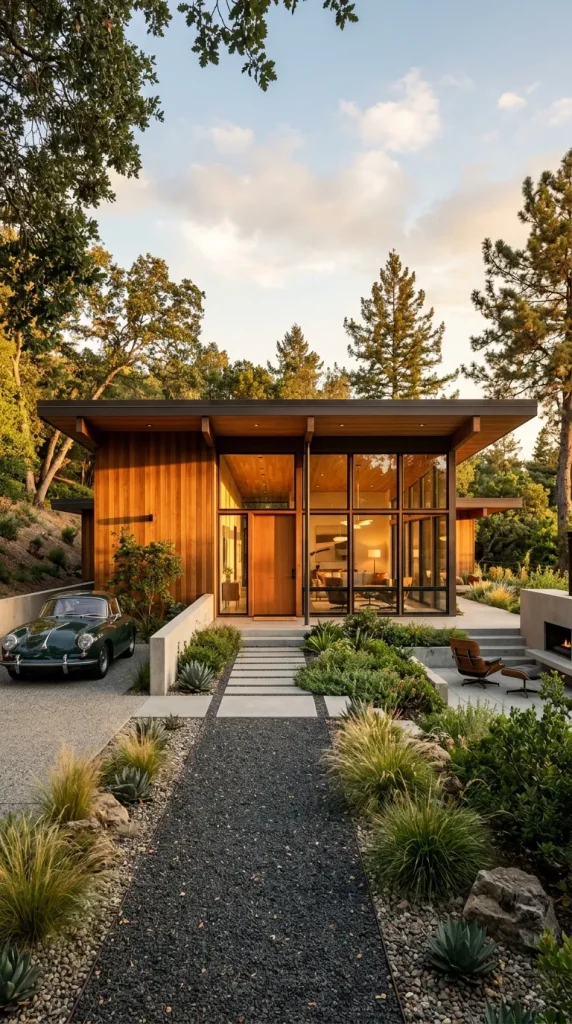
The flat roof is one of the most recognizable elements of mid-century modern architecture. Its clean horizontal profile creates a sleek and sophisticated appearance while emphasizing simplicity and functionality. A classic flat roof house instantly communicates modern elegance and architectural confidence.
The beauty of this design lies in its minimalism. The roofline draws attention to the home’s geometric structure without unnecessary decorative details. This simplicity allows other architectural features, such as large windows and natural materials, to become focal points.
Pairing a flat roof with wood siding creates a warm and inviting exterior. Large glass panels can further enhance the design by allowing sunlight to flood the interior. The result is a bright and airy living environment that feels connected to nature.
Flat roof homes often work particularly well in warm climates, where extended roof overhangs provide shade and reduce heat gain. These overhangs also contribute to the home’s distinctive horizontal emphasis.
Landscaping should remain clean and understated. Gravel pathways, drought-tolerant plants, and sculptural greenery complement the architecture without competing for attention.
Inside, open floor plans maximize the sense of space. Exposed beams and natural finishes reinforce the home’s architectural integrity while creating visual interest.
A classic flat roof mid-century house remains one of the most timeless interpretations of the style. Its balance of simplicity, practicality, and elegance continues to inspire homeowners seeking a sophisticated modern residence.
2. Glass Wall Mid-Century Retreat
A glass wall mid-century house celebrates transparency and connection to the outdoors. Large expanses of glass create stunning visual relationships between interior spaces and surrounding landscapes.
Floor-to-ceiling windows transform the home into a light-filled sanctuary. Natural sunlight becomes a design element, constantly changing throughout the day and enhancing the atmosphere of every room.
This architectural approach works especially well in scenic locations where views become part of the interior experience. Whether overlooking mountains, forests, gardens, or water features, glass walls allow homeowners to enjoy their surroundings from every angle.
Privacy can still be maintained through thoughtful orientation, landscaping, and strategic placement of windows. Modern glazing technologies also improve energy efficiency and comfort.
The interior should remain simple to avoid competing with the views. Neutral furnishings, natural materials, and clean lines help create a cohesive environment where nature remains the star.
Wood ceilings and stone accents provide warmth and balance against the sleekness of the glass surfaces. This contrast creates visual richness while maintaining the modern aesthetic.
A glass wall mid-century retreat offers a unique lifestyle centered on openness, light, and natural beauty. It embodies the architectural philosophy that homes should enhance rather than separate us from the environment.

3. Wood and Stone Modern Residence
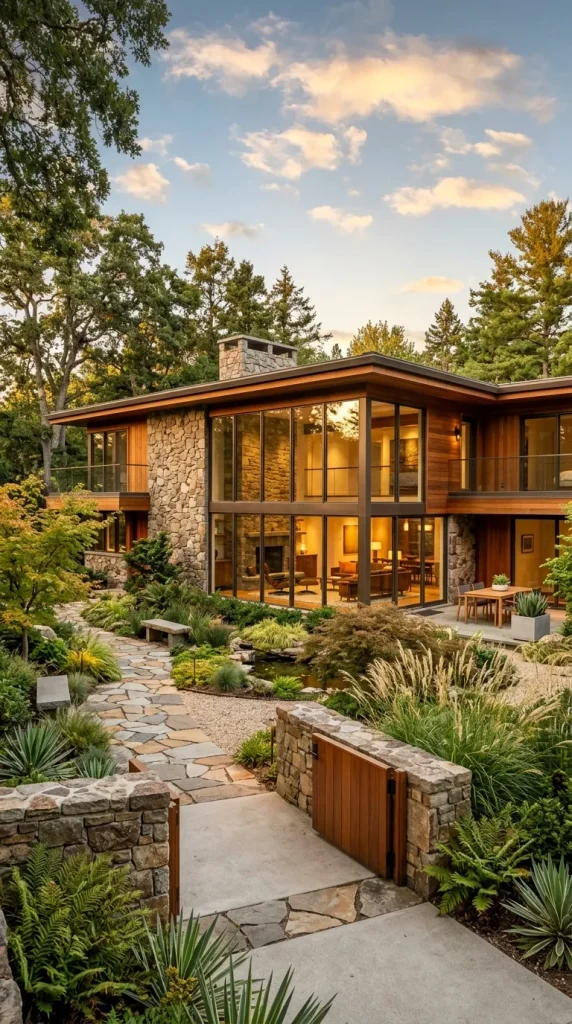
The combination of wood and stone creates one of the most inviting interpretations of mid-century modern architecture. These natural materials bring warmth, texture, and authenticity to contemporary living spaces.
Wood introduces organic beauty through its grain patterns and rich tones. Stone adds permanence and grounding, creating visual balance within the design. Together, they establish a harmonious relationship between modern architecture and nature.
Large stone fireplaces often serve as focal points within these homes. Surrounding them with wood ceilings or walls enhances the cozy atmosphere while preserving architectural sophistication.
Exterior facades featuring both materials feel timeless and durable. The contrast between smooth wood surfaces and rugged stone textures creates visual interest without excessive decoration.
Interior spaces benefit from the same material palette. Wood cabinetry, stone countertops, and exposed structural elements contribute to a cohesive design language throughout the home.
The surrounding landscape should complement these materials through natural plantings, stone pathways, and outdoor living spaces. This integration reinforces the home’s connection to its environment.
A wood and stone mid-century residence feels warm, welcoming, and enduring. It demonstrates how natural materials can create luxury without sacrificing simplicity.
4. Open Concept Family Home
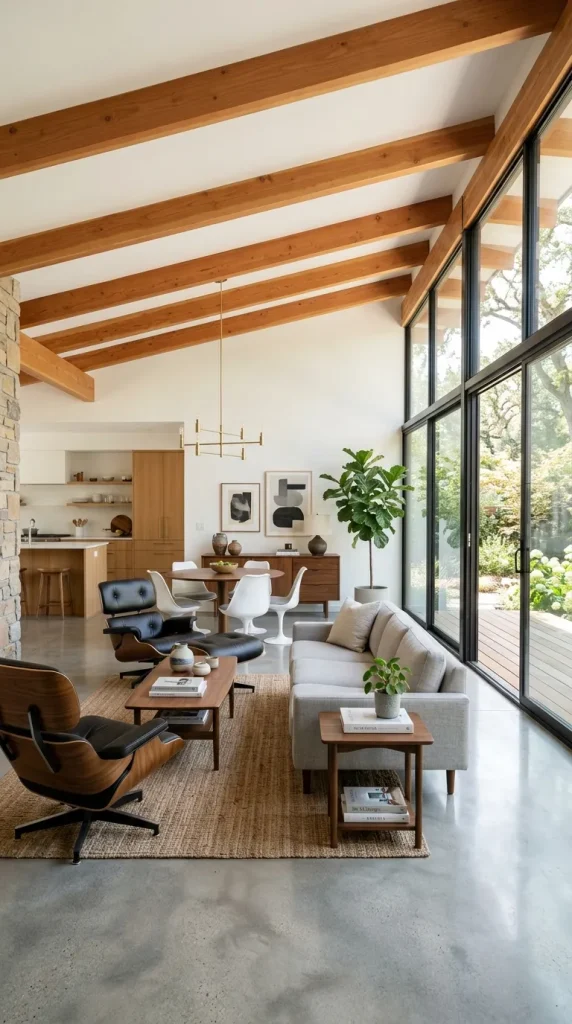
The open concept floor plan revolutionized residential design during the mid-century era and remains highly desirable today. By eliminating unnecessary walls, these homes create flexible and connected living environments.
An open concept layout encourages interaction among family members while improving circulation and functionality. Living rooms, dining areas, and kitchens flow seamlessly together, creating spacious and inviting interiors.
Large windows further enhance the sense of openness by extending views outward and increasing natural light. The resulting environment feels bright, expansive, and welcoming.
Furniture placement becomes particularly important in open layouts. Carefully arranged seating areas help define zones without disrupting visual continuity.
Natural materials such as wood flooring and exposed beams provide warmth and help unify the space. Consistent finishes throughout the home reinforce the cohesive design.
Storage solutions should remain discreet and integrated to preserve the clean aesthetic. Built-in cabinetry and minimalist shelving are excellent choices.
An open concept mid-century family home balances practicality and beauty, making everyday living more enjoyable while maintaining architectural sophistication.
5. Palm Springs Inspired Mid-Century House
Palm Springs is synonymous with mid-century modern architecture. Inspired by desert landscapes and resort living, these homes combine luxury, simplicity, and a strong connection to the outdoors.
Flat roofs, expansive glass walls, and clean geometric forms define the architectural style. Bright white exteriors contrast beautifully with desert vegetation and mountain views.
Outdoor living areas play a central role. Swimming pools, shaded patios, and fire features extend the home’s functionality while embracing the climate.
The interior often incorporates warm wood tones, colorful accents, and iconic mid-century furniture pieces. Large windows ensure every room feels connected to the surrounding environment.
This style emphasizes relaxation and effortless elegance. Every design choice supports comfort while maintaining visual sophistication.
A Palm Springs-inspired house captures the glamour and optimism of mid-century architecture while remaining highly livable for modern homeowners.
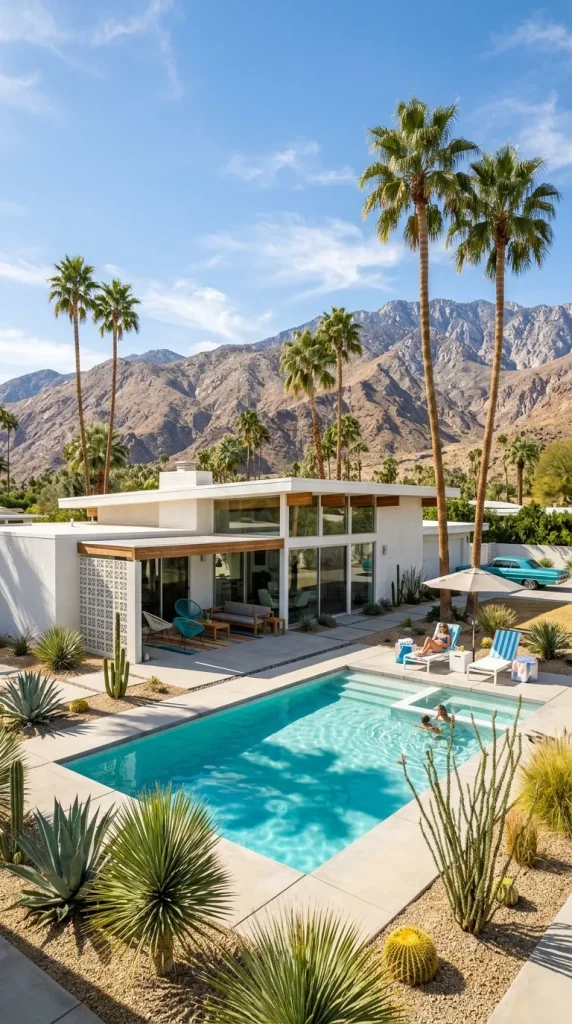
6. Courtyard-Centered Mid-Century Home
A courtyard-centered design creates a private outdoor sanctuary at the heart of the home. This architectural approach enhances natural light, ventilation, and indoor-outdoor living.
Rooms are arranged around a central courtyard, allowing multiple spaces to enjoy direct access to nature. The courtyard becomes an extension of the interior rather than a separate outdoor area.
Landscaping can include native plants, water features, seating areas, and sculptural elements. These features create a peaceful retreat for relaxation and entertaining.
Large glass doors blur the distinction between inside and outside, reinforcing the organic flow of the home.
This layout also improves privacy while maximizing daylight throughout the structure. The result is a calm and balanced living environment.
A courtyard-centered mid-century home offers a unique blend of functionality, beauty, and tranquility.
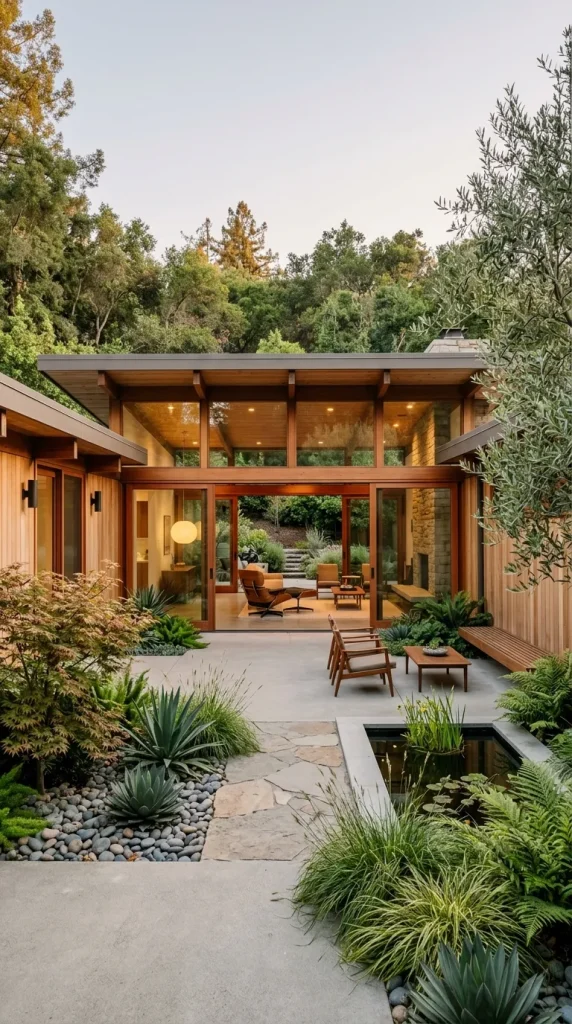
7. Dark Exterior Mid-Century House
A dark exterior gives traditional mid-century architecture a bold contemporary twist. Black or charcoal finishes highlight the home’s clean lines while creating dramatic visual impact.
The dark palette contrasts beautifully with natural wood accents and expansive glass surfaces. Warm interior lighting further enhances the effect during evening hours.
Landscaping should remain simple and architectural, allowing the structure itself to remain the focal point.
Inside, lighter materials help maintain balance and prevent the space from feeling heavy. Neutral furnishings and natural textures complement the exterior aesthetic.
This approach feels modern while respecting classic mid-century design principles.

8. A-Frame Mid-Century Inspired Home
The A-frame silhouette introduces a unique architectural character while maintaining many mid-century principles. Dramatic rooflines, open interiors, and strong connections to nature define this style.
Large glass facades maximize views and natural light. Exposed wood structures add warmth and visual interest throughout the home.
Compact yet efficient layouts make A-frame homes ideal for vacation properties, cabins, and nature retreats.
The combination of simplicity and architectural drama creates a memorable living experience.
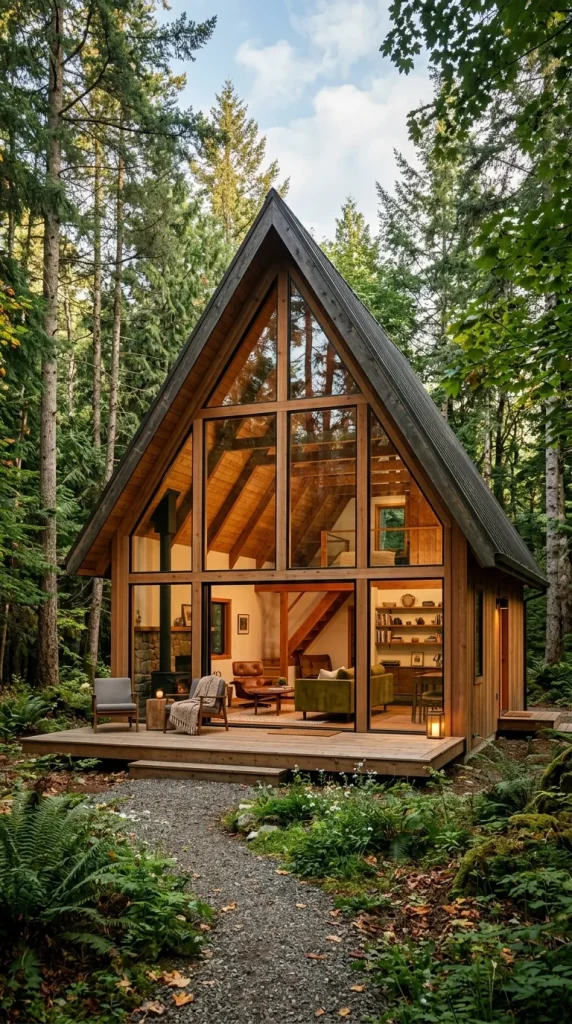
9. Poolside Mid-Century Modern Home
A poolside design enhances the indoor-outdoor lifestyle central to mid-century architecture. The pool becomes both a recreational feature and a visual centerpiece.
Glass walls create direct connections between interior spaces and the water. Reflections add movement and light throughout the home.
Outdoor lounges, dining areas, and landscaping extend the living environment beyond the walls of the house.
This design celebrates leisure, relaxation, and connection with nature.

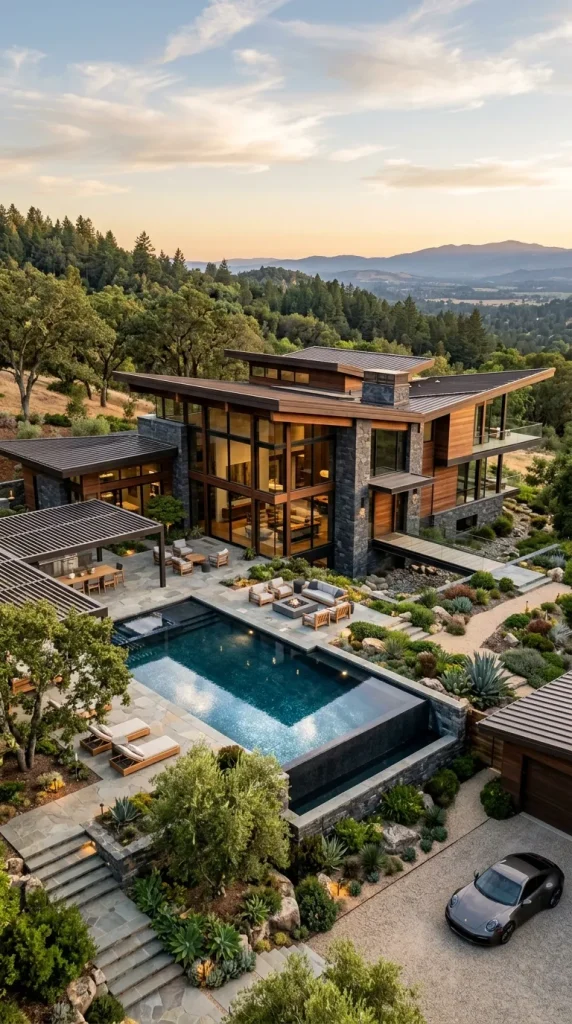
10. Luxury Mid-Century Modern Estate
A luxury mid-century modern estate combines iconic architectural principles with premium materials and expansive living spaces. The result is a residence that feels both sophisticated and timeless.
Large open interiors, dramatic glass walls, custom woodwork, and natural stone finishes define the design. Every detail is carefully curated to balance elegance and functionality.
Outdoor amenities such as pools, courtyards, gardens, and entertainment spaces further enhance the lifestyle experience.
Despite its scale, the home maintains the simplicity and connection to nature that define mid-century modern architecture.
A luxury estate demonstrates how the style can evolve while remaining true to its original vision.
Final Thoughts
Mid-century modern houses continue to inspire because they prioritize simplicity, functionality, and harmony with nature. Whether you prefer a classic flat-roof residence, a glass-walled retreat, or a luxurious estate, these ten ideas demonstrate the enduring beauty of this iconic architectural style. By combining natural materials, clean lines, and thoughtful design, you can create a home that feels timeless, comfortable, and uniquely modern.

Leave a Reply