
Introduction
A living room wall can completely change the atmosphere of a home, and a tapestry is an easy way to add color, texture, personality, and visual interest without committing to permanent architectural changes. Unlike traditional framed artwork, tapestries bring softness to a room and can cover a large wall area while keeping the overall look relaxed.
The best wall tapestry ideas living room designs can work with many decorating styles. A botanical tapestry can bring a natural feeling, while an abstract design can create a modern focal point. Vintage-inspired textiles can add character, and woven neutral tapestries can complement minimalist or bohemian interiors.
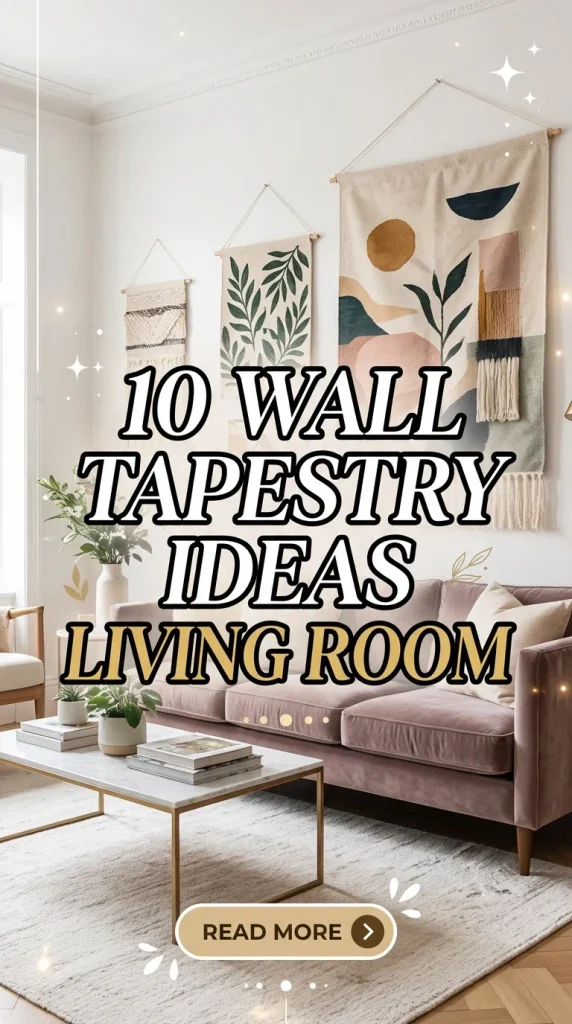
Tapestries are also useful when you have a large blank wall that feels difficult to decorate. Instead of arranging several small pieces of artwork, one appropriately sized tapestry can become the central feature of the room.
Before choosing one, consider the wall size, existing furniture, lighting, and color palette. A tapestry should complement the room rather than compete with the sofa, rug, curtains, and other decorative elements.
Whether you prefer bold colors, subtle neutrals, natural patterns, or artistic designs, these 10 wall tapestry ideas living room can inspire a beautiful and personalized space.
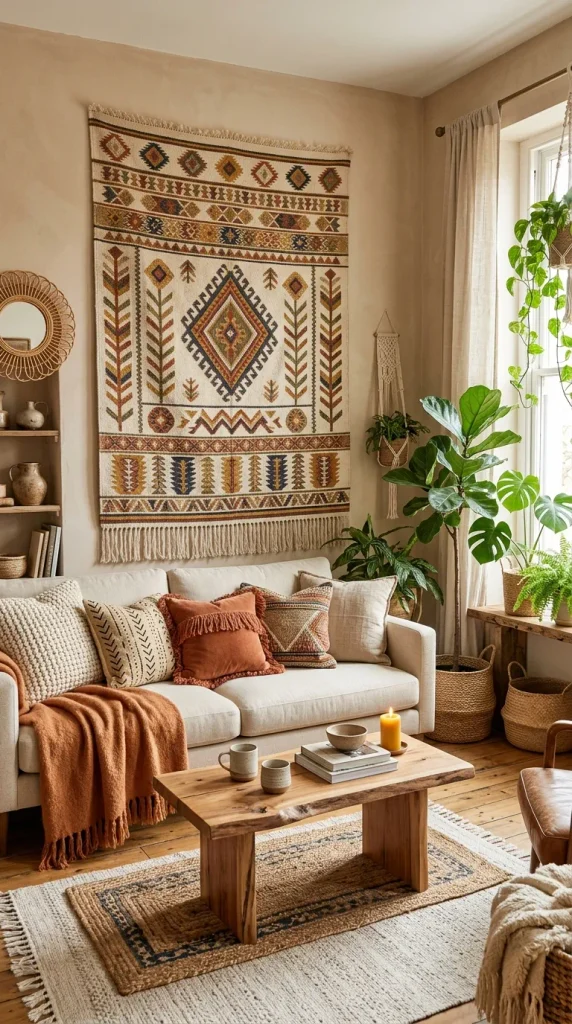
1. Large Bohemian Wall Tapestry
A large bohemian tapestry can instantly create a relaxed and artistic living room.
Materials Used
Use a large woven tapestry, wooden hanging rod or decorative dowel, suitable wall hardware, neutral sofa, cushions, rug, plants, and woven accessories.
How to Style It
Choose a large tapestry with an intricate geometric, botanical, or abstract pattern.
Hang it centrally behind the sofa or on the room’s primary feature wall.
Keep the surrounding furniture relatively simple.
Add woven baskets, textured cushions, indoor plants, and a natural rug.
Use earthy colors such as cream, terracotta, brown, olive, and muted beige.
The combination creates a warm and relaxed bohemian atmosphere.
2. Neutral Macramé Tapestry
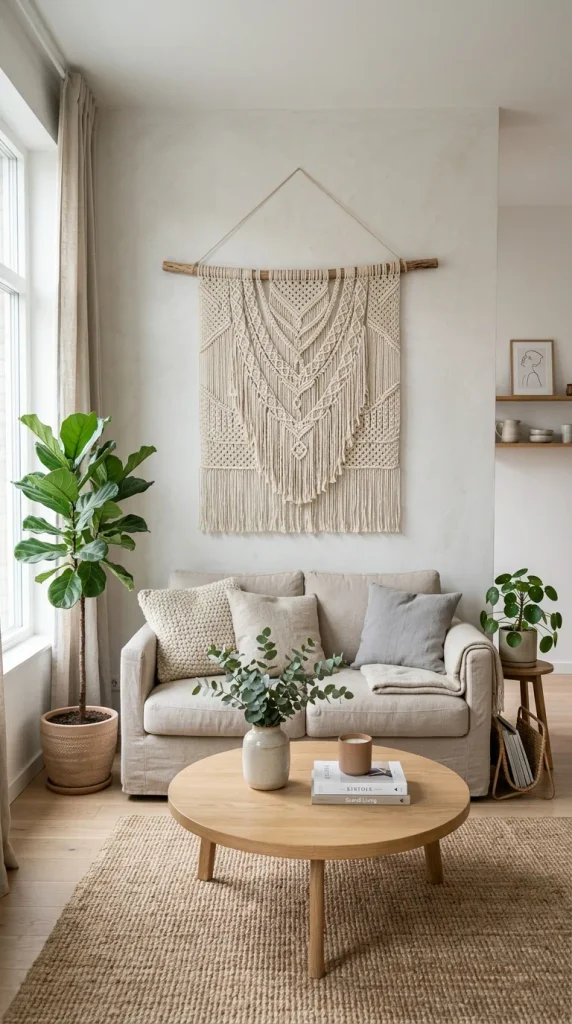
Macramé is a beautiful choice when you want texture without introducing strong color.
Materials Used
Use a large macramé wall hanging, wooden dowel, hanging hardware, neutral sofa, cushions, and natural accessories.
How to Style It
Place the macramé above the sofa or console table.
Choose an oversized design if the wall is large.
Keep the rest of the room in neutral colors.
Combine cream textiles with natural wood furniture.
Add a few plants for contrast.
This style works particularly well with bohemian, Scandinavian, organic-modern, and minimalist interiors.
3. Abstract Art Tapestry
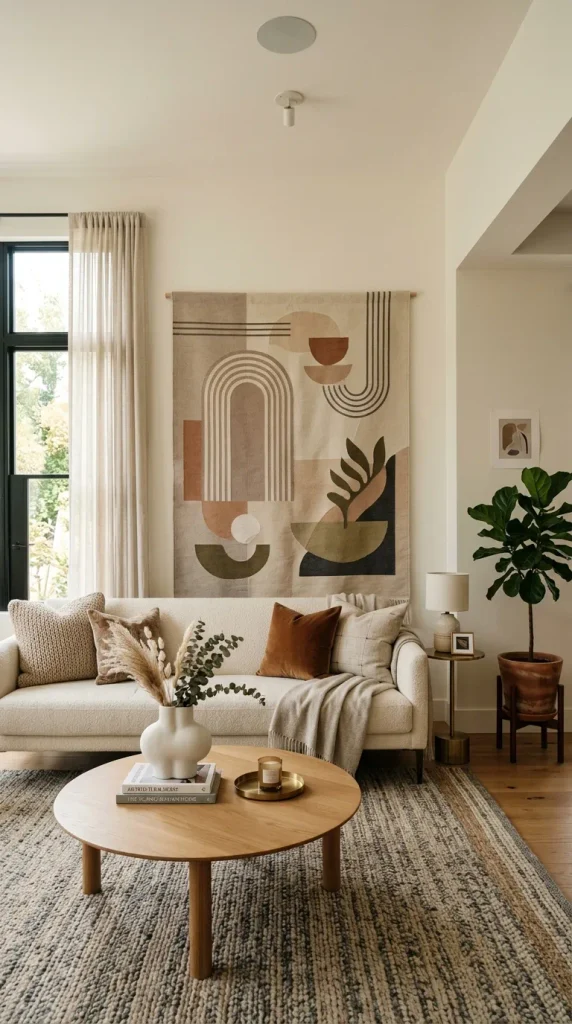
An abstract tapestry can become a statement piece in a contemporary living room.
Materials Used
Use a printed or woven abstract tapestry, hanging rod, wall hardware, modern sofa, coffee table, rug, and minimal décor.
How to Style It
Choose a design featuring colors already present in the room.
Hang it behind the sofa or on a large empty wall.
Use simple furniture so the artwork remains the focal point.
A neutral sofa can provide a calm background for a colorful tapestry.
For a sophisticated appearance, select an abstract design with muted tones rather than too many competing colors.
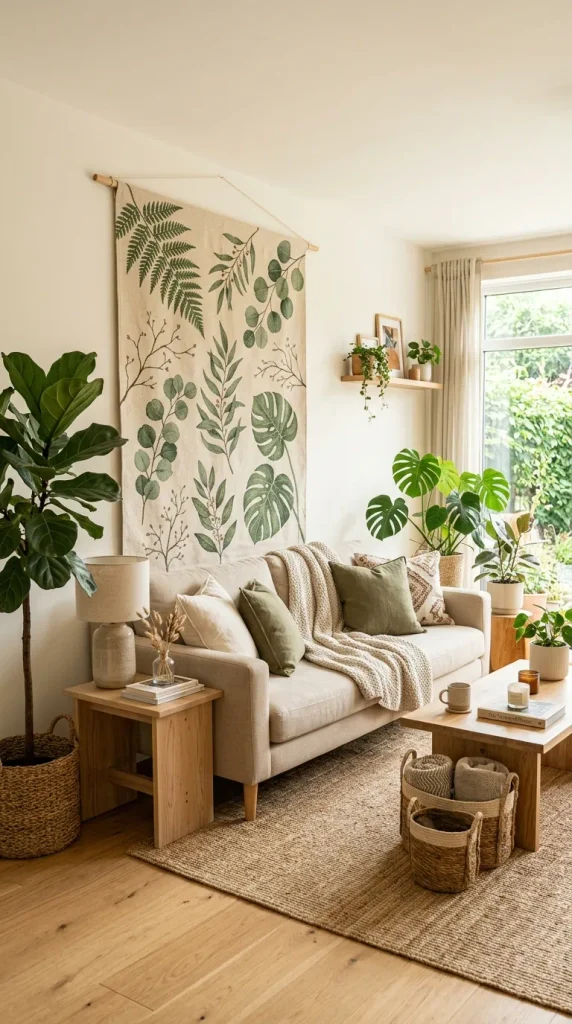
4. Botanical Tapestry
A botanical tapestry can introduce a nature-inspired feeling without requiring a large collection of plants.
Materials Used
Use a botanical tapestry, wooden rod, hanging hardware, plants, natural furniture, and neutral textiles.
How to Style It
Choose a tapestry featuring leaves, flowers, branches, or forest-inspired imagery.
Place it on a main living room wall.
Surround it with real plants to create a layered natural appearance.
Use wood and woven materials throughout the room.
Keep the furniture in earthy neutral shades.
This style works especially well in organic-modern, cottage, bohemian, and tropical-inspired living rooms.
5. Vintage-Inspired Tapestry
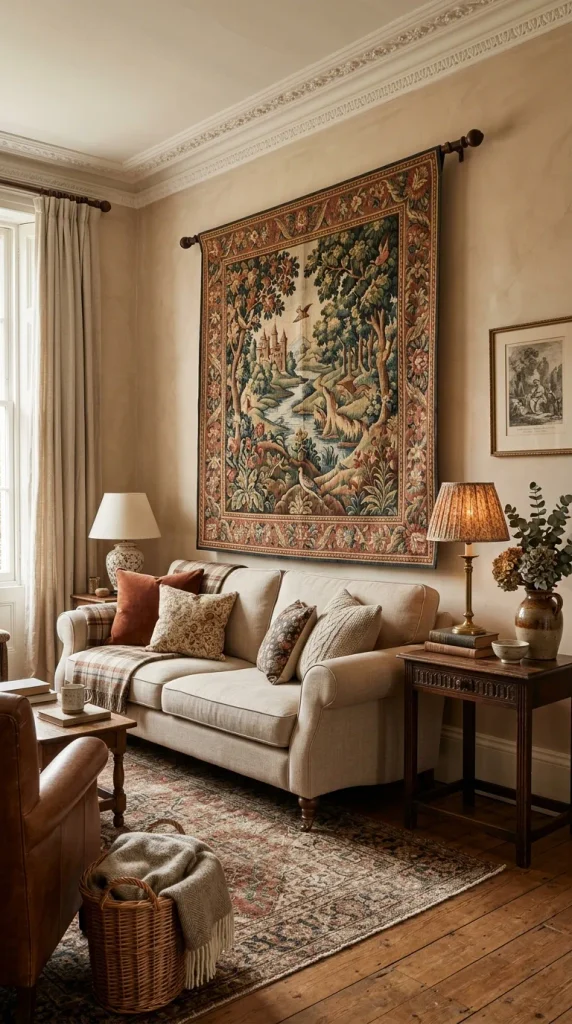
A vintage tapestry can add history and personality to an otherwise modern room.
Materials Used
Use a vintage-style textile, decorative rod, wall hardware, antique-inspired furniture, cushions, and accessories.
How to Style It
Choose a design inspired by traditional patterns, landscapes, floral motifs, or old-world artwork.
Hang it behind a sofa or on a large feature wall.
Pair it with warm wood furniture.
Add vintage-style lamps and decorative objects.
Avoid making every element in the room vintage. Combining an old-world tapestry with modern furniture can create a more balanced and contemporary look.
6. Colorful Statement Tapestry
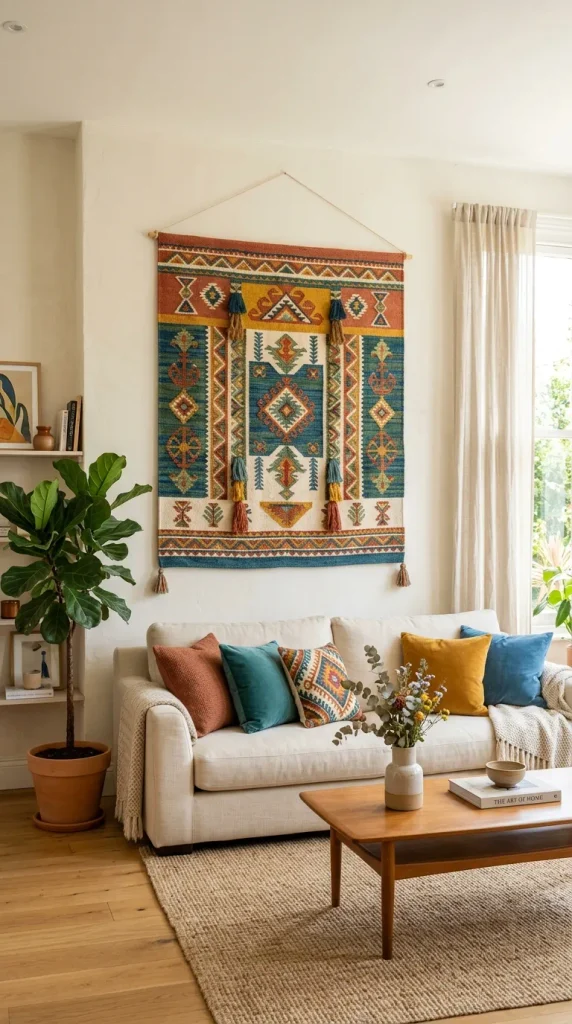
If your living room needs more personality, a colorful tapestry can provide an instant focal point.
Materials Used
Use a vibrant tapestry, hanging rod, suitable wall hardware, neutral furniture, colorful cushions, and coordinating accessories.
How to Style It
Choose one dominant color from the tapestry and repeat it subtly throughout the room.
Keep large furniture pieces neutral.
Add small accents through cushions, flowers, ceramics, or artwork.
Hang the tapestry on the largest available wall.
Avoid introducing too many unrelated colors.
This approach allows the tapestry to become the centerpiece while maintaining visual balance.
7. Tapestry Above the Sofa
The wall above the sofa is one of the most natural places for a tapestry.
Materials Used
Use a medium-to-large tapestry, hanging hardware, sofa, cushions, coffee table, rug, and complementary accessories.
How to Style It
Choose a tapestry that is proportional to the sofa.
Center it horizontally above the seating area.
Leave enough space between the top of the sofa and the bottom of the tapestry.
Use colors that complement the sofa and rug.
A large textile can visually anchor the entire seating arrangement.
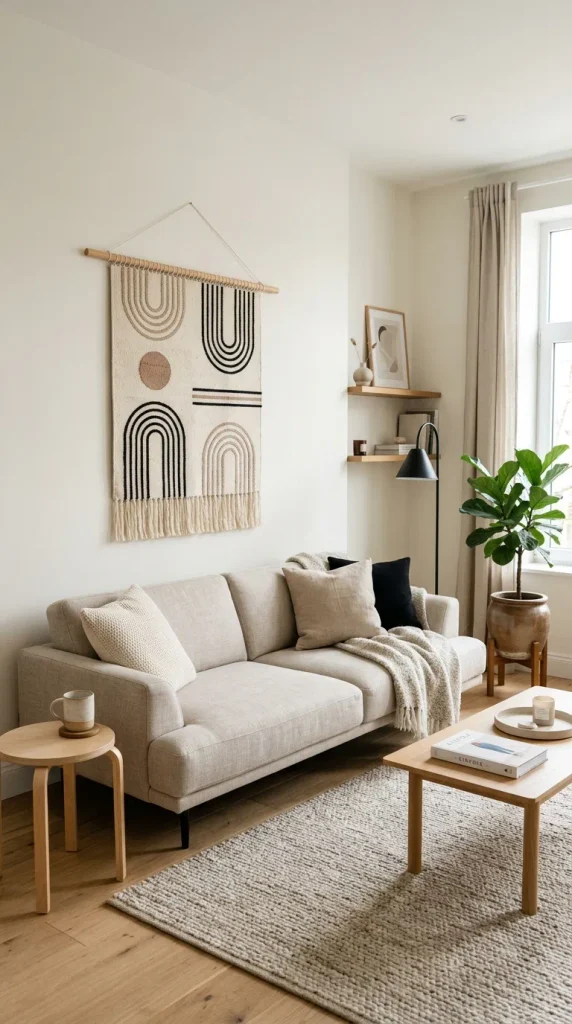
8. Minimalist Geometric Tapestry
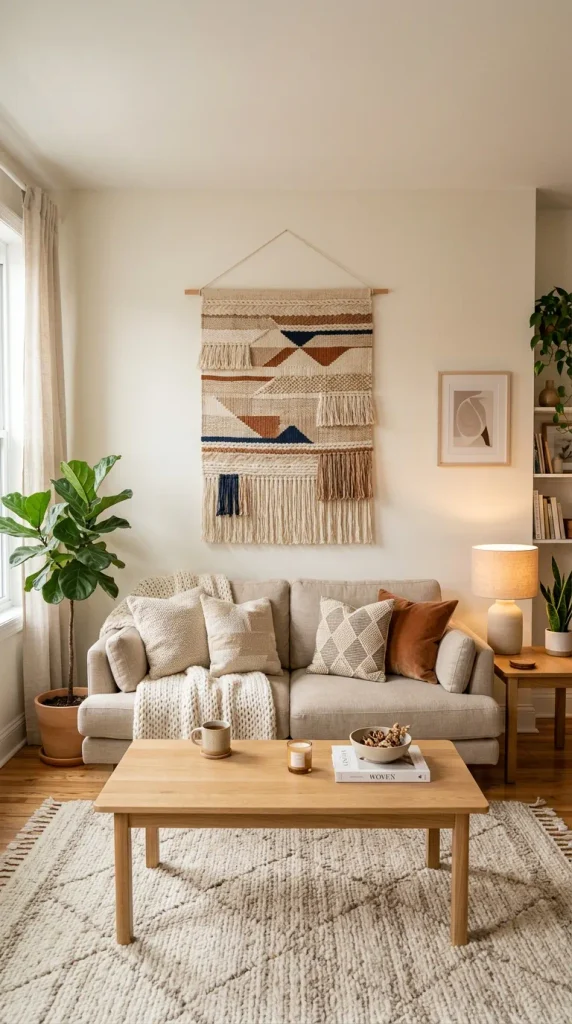
A simple geometric tapestry can add pattern while maintaining a clean aesthetic.
Materials Used
Use a minimalist geometric textile, wooden rod, wall hardware, neutral furniture, simple lighting, and restrained accessories.
How to Style It
Choose a tapestry featuring simple lines, arches, circles, or abstract shapes.
Use neutral colors such as cream, beige, black, gray, or soft brown.
Pair it with streamlined furniture.
Keep decorative objects minimal.
This style is ideal for contemporary, Scandinavian, minimalist, and modern living rooms.
9. Large Landscape Tapestry
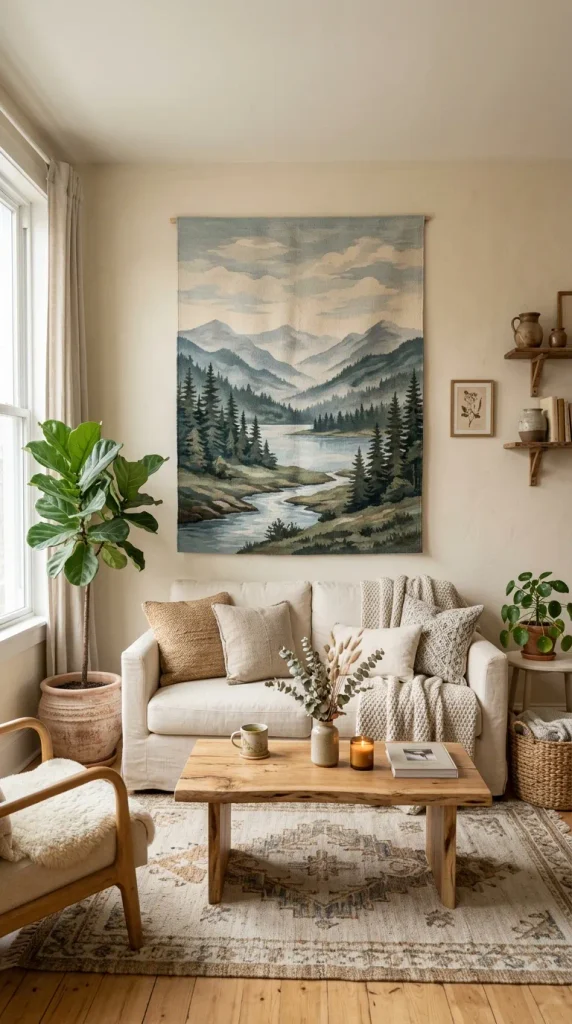
A landscape tapestry can create the feeling of looking through a window into another environment.
Materials Used
Use a large landscape tapestry, hanging rod, wall hardware, neutral sofa, wooden furniture, plants, and soft lighting.
How to Style It
Choose a landscape featuring mountains, forests, fields, beaches, or another peaceful scene.
Hang it on a large wall.
Use natural materials around it.
Add plants to reinforce the outdoor-inspired theme.
Keep the surrounding color palette calm.
This idea can make a living room feel peaceful and visually expansive.
10. Layered Tapestry Gallery Wall
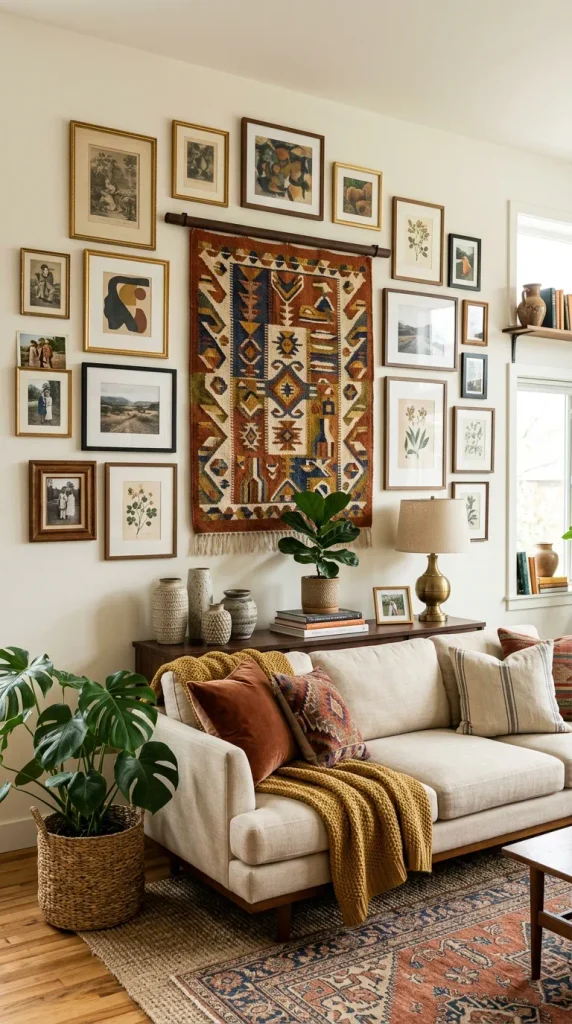
Instead of using one tapestry alone, combine textiles with framed artwork.
Materials Used
Use one main tapestry, smaller framed prints, photographs, wall hardware, decorative shelves, plants, and a console table.
How to Style It
Place the tapestry as the central feature.
Surround it with smaller artwork.
Mix different frame sizes for an intentionally collected appearance.
Keep a consistent color palette throughout the arrangement.
Place a console below the gallery and add a few simple decorative objects.
This creates a personalized gallery wall with the softness of textile art.
How to Choose the Right Tapestry for Your Living Room
Start by measuring the wall.
A tapestry that is too small may look disconnected from the furniture, while one that is too large can overwhelm the room.
Consider the sofa width when choosing a tapestry for the main seating wall.
Color is equally important.
If your furniture is already colorful, choose a neutral tapestry.
If the room is mostly neutral, a colorful tapestry can provide a beautiful focal point.
Texture also matters. Woven and macramé designs create physical depth, while printed textiles can provide more detailed artwork.
How to Hang a Wall Tapestry
There are several ways to display a tapestry depending on its weight and construction.
A wooden dowel or decorative rod provides a simple, visible hanging method.
You can also use a concealed mounting system when you want the textile to appear more integrated with the wall.
For heavier pieces, use appropriate wall anchors and hardware for the wall type.
Always follow the mounting instructions for the specific tapestry and hardware.
Avoid damaging delicate textiles with unsuitable clips or adhesives.
How to Style Tapestry Décor Pinterest-Wise
A Pinterest-worthy tapestry arrangement usually focuses on balance.
Start with one main focal point.
Then layer smaller decorative pieces around it.
Use natural materials such as:
- Wood
- Rattan
- Woven baskets
- Linen
- Ceramic
- Plants
Keep the color palette coordinated.
If the tapestry has a strong pattern, let it remain the star of the wall.
Common Wall Tapestry Decorating Mistakes
Avoid hanging a tapestry too high above the sofa.
It should feel visually connected to the furniture.
Another mistake is choosing a tapestry that clashes with the existing color palette.
Avoid overcrowding a tapestry with too many nearby accessories.
Also consider lighting. A beautiful tapestry can disappear in a poorly lit corner.
Finally, make sure the textile is suitable for the location and can be cleaned or maintained appropriately.
Final Thoughts
These 10 wall tapestry ideas living room can transform an empty wall into a warm and expressive focal point. From oversized bohemian textiles and neutral macramé to colorful abstracts, botanical designs, vintage patterns, landscapes, and minimalist geometry, tapestries offer endless decorating possibilities.
The most important thing is to select a design that works with the existing furniture and color palette.
Use the tapestry as the foundation and build the rest of the room around it. Add natural textures, comfortable furniture, greenery, and simple decorative accessories.
Whether your style is bohemian, modern, coastal, rustic, Scandinavian, or eclectic, a thoughtfully chosen wall tapestry can add personality and softness while making your living room feel more complete and Pinterest-worthy.


Leave a Reply