
Limewash walls have become one of the most beautiful ways to bring warmth, texture, and an organic feel into an interior. Unlike ordinary flat paint, limewash creates a soft, slightly cloudy finish that changes beautifully with natural and artificial light. Its subtle movement and imperfect appearance make a room feel more layered, relaxed, and thoughtfully designed.

Whether you love modern interiors, rustic decorating, European-inspired spaces, Scandinavian simplicity, or warm minimalist homes, limewash can work beautifully with almost any aesthetic. The finish is especially appealing for people who want walls that feel natural rather than perfectly uniform.
In this guide, we will explore 10 limewash walls interiors ideas that can transform bedrooms, living rooms, dining areas, bathrooms, entryways, kitchens, and other spaces. Each idea focuses on a different way to use limewash while keeping the overall interior stylish, comfortable, and Pinterest-worthy.
Why Limewash Walls Are So Popular
Limewash has a distinctive appearance because the finish has natural variation instead of creating a completely consistent painted surface. Depending on the application technique, color, lighting, and number of coats, the wall may have cloudy areas, gentle brush marks, and tonal movement.
This makes limewash particularly attractive in interiors where texture and atmosphere are important.
Another advantage is its versatility. A warm beige limewash can make a contemporary living room feel cozy, while a soft white limewash can create an airy bedroom. Earthy terracotta or clay tones can add drama to a dining room, and muted green can give a bedroom a calm natural character.
The key is to treat limewash as part of the entire interior rather than simply choosing a wall color. Furniture, flooring, textiles, lighting, artwork, and accessories should complement the organic quality of the walls.
1. Warm Beige Limewash Living Room
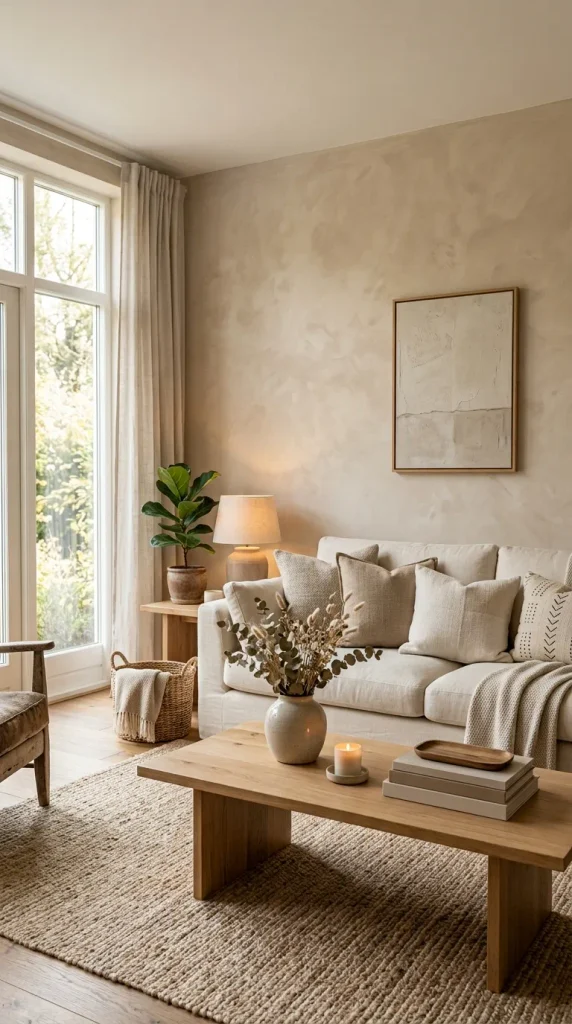
A warm beige limewash living room is one of the easiest ways to create a sophisticated and inviting interior. Beige is naturally versatile, but limewash gives it considerably more depth than ordinary beige paint. Instead of looking completely flat, the wall develops subtle variations that make the room feel warmer and more dimensional.
This idea works particularly well with natural materials. Consider pairing the walls with a linen sofa, a light wood coffee table, woven baskets, ceramic accessories, and a textured area rug. These materials reinforce the relaxed character of limewash without making the space feel overly rustic.
For furniture, choose pieces with simple silhouettes. A curved sofa or rounded accent chair can soften the architectural lines of the room, while a wooden console can add warmth against the textured wall.
Lighting is also important. During the day, sunlight can emphasize the cloudy variations in the limewash. In the evening, warm lamps and wall sconces can create a cozy atmosphere.
Keep decorations relatively simple because the wall itself becomes part of the room’s visual interest. A large neutral artwork, an oversized mirror, or a few carefully selected ceramic pieces can be enough.
For a Pinterest-inspired look, combine beige limewash walls with cream textiles, natural wood, soft lighting, and minimal accessories. The result feels timeless rather than trend-dependent.
This approach is especially useful if you want your living room to feel calm and luxurious without relying on bold colors or excessive decoration.
2. Soft White Limewash Bedroom
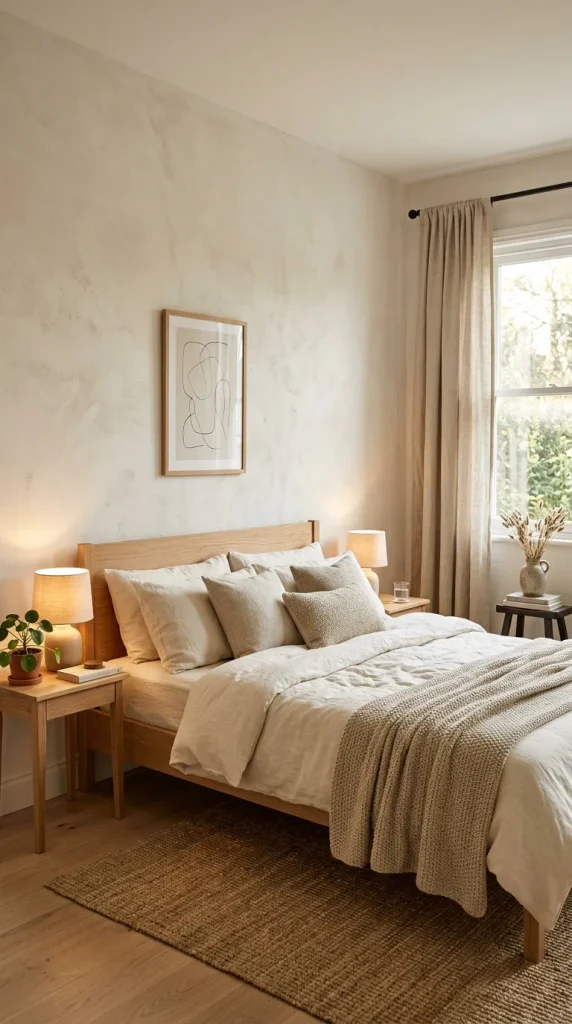
A bedroom with soft white limewash walls can create an incredibly peaceful and airy atmosphere. While conventional white paint can sometimes feel cold or stark, limewash introduces gentle tonal variation that gives white walls warmth and character.
This makes the technique especially suitable for bedrooms where the goal is relaxation.
Choose a soft, warm white rather than an extremely bright blue-toned white. The subtle warmth works beautifully with cream bedding, natural wood furniture, woven textures, and linen curtains.
A wooden bed frame can become the main focal point against the limewashed wall. Alternatively, an upholstered headboard in beige, oatmeal, or light gray can create a sophisticated layered appearance.
Keep the bedding relaxed rather than overly formal. Linen duvet covers, knitted throws, textured cushions, and slightly rumpled fabrics complement the imperfect quality of limewash beautifully.
You can also use bedside lamps with fabric shades to introduce soft pools of warm light. When the lamps are turned on at night, the variations in the wall finish become even more noticeable.
Artwork should remain simple. Black-and-white photography, abstract artwork, botanical prints, or small handmade pieces can work well.
The most important part of this design is avoiding too many competing colors. Soft white limewash looks best when surrounded by a restrained palette.
For additional warmth, add a natural fiber rug beneath the bed, a wooden bench at the foot of the bed, and a few plants.
The final result is a bedroom that feels light, organic, elegant, and restful while still having enough texture to prevent it from looking plain.
3. Earthy Terracotta Limewash Dining Room
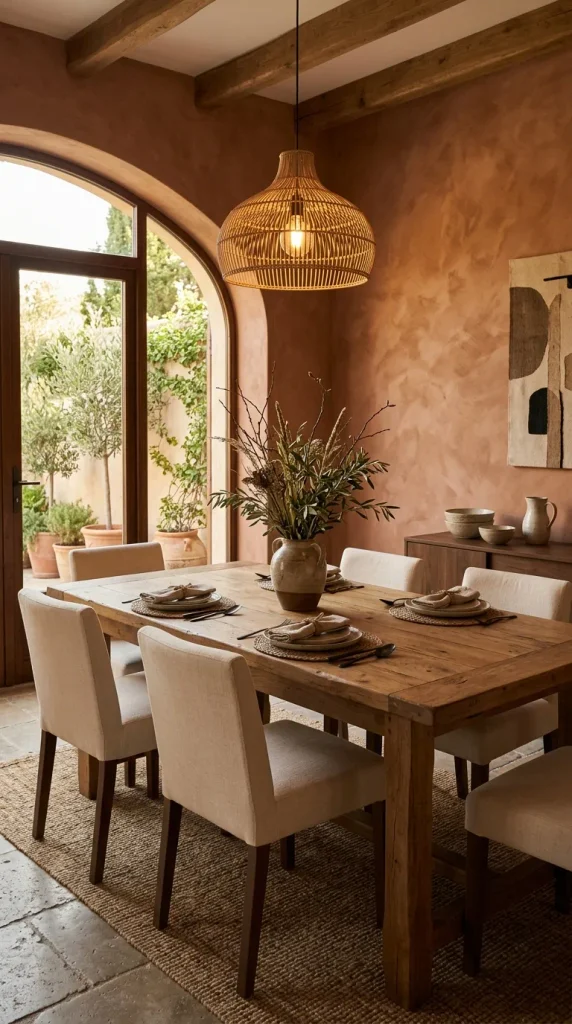
If you want a more dramatic use of limewash, consider earthy terracotta walls in the dining room. Terracotta brings warmth and personality, while the limewash technique prevents the color from appearing too heavy or visually overwhelming.
The natural variation of the finish can make terracotta appear softer and more sophisticated than a solid painted wall.
Pair the walls with a wooden dining table for an earthy and welcoming atmosphere. Light oak, walnut, reclaimed wood, or dark-stained wood can all work depending on the mood you want.
For seating, consider upholstered chairs in cream, beige, tan, or natural fabric. Woven dining chairs can also complement the earthy palette.
Lighting should be a major feature. A pendant light positioned above the dining table can create an attractive focal point and make the textured wall glow during evening meals.
Decorative elements can include ceramic vases, handmade pottery, woven placemats, dried branches, and simple candles. These details enhance the natural character of the room.
Avoid using too many bright colors because they can compete with the terracotta. Instead, build the room around earthy neutrals.
You can also extend the terracotta limewash across multiple walls rather than using it as a single accent wall. This creates a more immersive interior and allows the dining area to feel like a distinct environment.
For a particularly elegant look, combine terracotta walls with dark wood, antique-inspired lighting, cream textiles, and minimal artwork.
This idea is perfect for homeowners who want their dining room to feel intimate and memorable. It can also work beautifully in open-plan homes because the warm color helps visually define the dining zone.
4. Greige Limewash Accent Wall
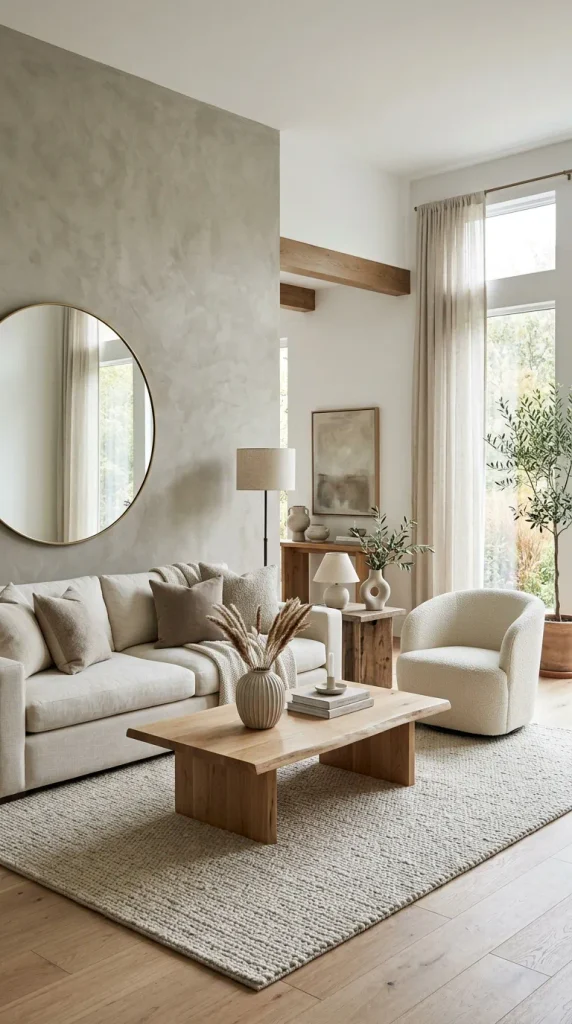
Greige, a combination of gray and beige, is an excellent option for anyone who wants something more neutral than terracotta but more interesting than traditional beige. When applied as a limewash finish, greige becomes soft, sophisticated, and highly versatile.
A greige limewash accent wall can work particularly well behind a sofa, bed, fireplace, or console table.
In a living room, use the limewashed wall as the backdrop for a large piece of artwork or a minimalist television area. The subtle texture can make even a simple wall arrangement look more sophisticated.
For furniture, choose neutral shades such as ivory, taupe, brown, charcoal, or natural wood. Because greige is relatively understated, you have plenty of freedom with furniture and accessories.
This color is also useful in contemporary interiors because it introduces texture without making the room look rustic.
Consider adding black metal accents for contrast. A black-framed mirror, slim floor lamp, or metal side table can create definition against the soft wall.
For textiles, mix different textures instead of adding many colors. Linen, boucle, wool, cotton, and woven materials can make the space feel rich and layered.
If you are hesitant about covering an entire room in limewash, an accent wall is a great starting point. It gives you the visual character of the finish without committing to the technique throughout the entire space.
For Pinterest-worthy styling, place a large neutral artwork or oversized mirror against the wall, add a sculptural vase nearby, and use warm lighting.
Greige limewash is especially suitable for people who want an interior that feels modern, elegant, understated, and easy to update over time.
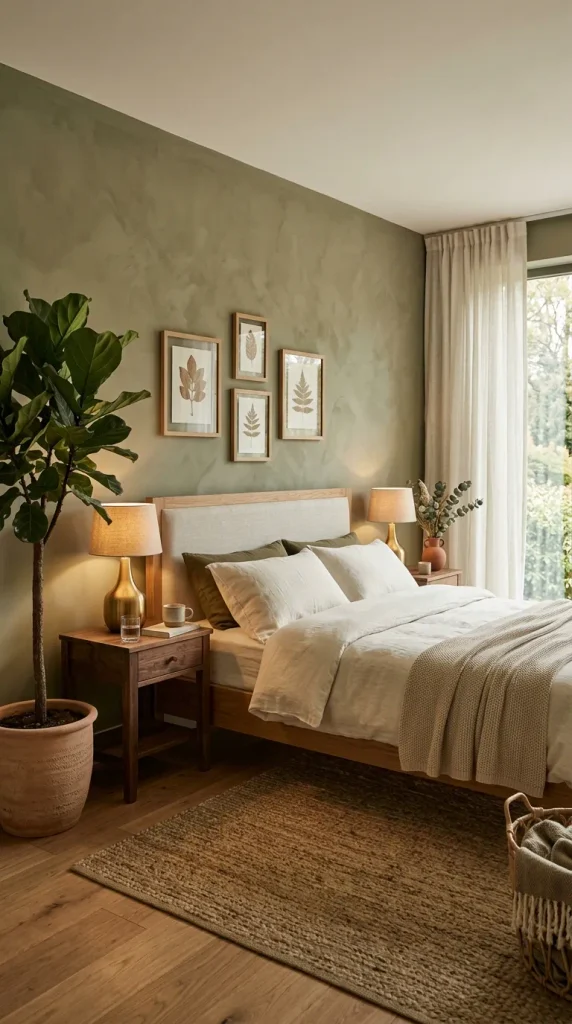
5. Olive Green Limewash Bedroom
Green is naturally associated with nature, making it a wonderful choice for an organic limewash interior. An olive green limewash bedroom can create a cozy, sophisticated environment with a strong connection to natural surroundings.
The key is choosing a muted olive rather than an extremely bright green. Limewash naturally softens the color, allowing the wall to feel atmospheric rather than overpowering.
Pair olive walls with warm wood furniture. A natural oak bed, walnut nightstands, or vintage wooden dresser can create a beautiful contrast.
Cream and beige bedding work particularly well with olive green. You can introduce additional texture through linen sheets, woven blankets, knitted throws, and neutral cushions.
Plants can also enhance this design, although you do not need to fill the room with greenery. One or two carefully placed plants are enough to reinforce the natural theme.
For lighting, choose warm bulbs and fixtures made from materials such as brass, ceramic, wood, or woven fibers. Avoid extremely cool lighting because it can make olive tones appear harsher.
Artwork should be relatively understated. Botanical illustrations, landscapes, abstract pieces, or vintage-style prints can all complement the wall.
An olive limewash finish can also be extended behind the bed to create a dramatic but calming focal point. Instead of using a traditional headboard, allow the textured wall to become part of the bedroom’s visual architecture.
This design is perfect for anyone who wants a bedroom with personality without relying on bright or saturated colors.
The combination of olive green, natural wood, cream fabrics, and soft lighting creates a comfortable retreat that feels sophisticated, earthy, and timeless.
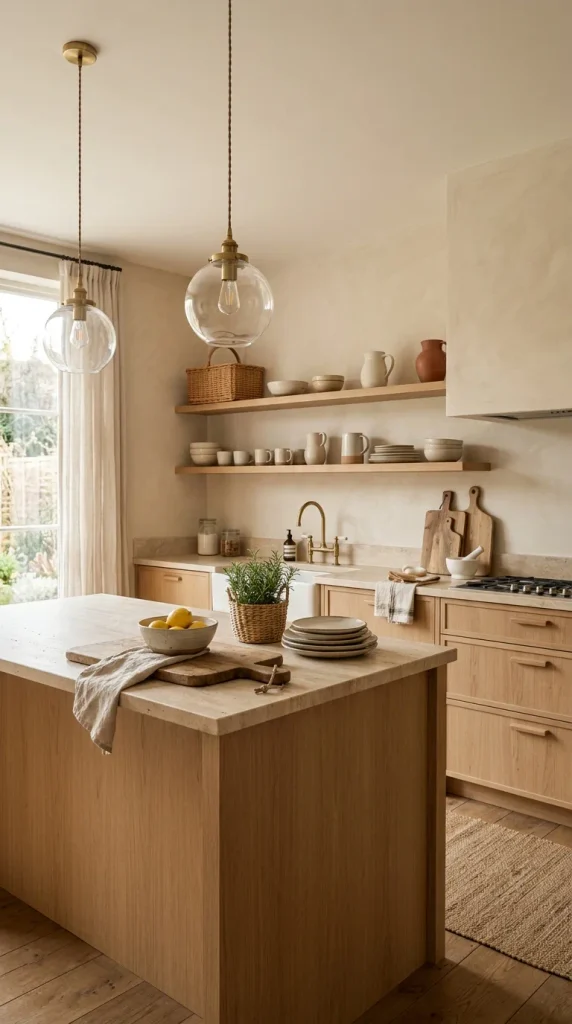
6. Limewash Kitchen Walls with Natural Wood
Limewash is not limited to bedrooms and living rooms. It can also bring warmth and character to kitchens, particularly when combined with natural wood cabinetry.
A kitchen with limewashed walls can feel softer and more welcoming than one dominated by glossy surfaces and perfectly uniform paint.
Choose a neutral limewash shade such as warm white, beige, taupe, or soft gray. These colors allow the cabinetry and countertops to remain visually important while providing an atmospheric backdrop.
Natural wood cabinets are an especially beautiful pairing. Oak, walnut, ash, and other wood tones can complement the organic movement of limewash.
For countertops, natural stone or stone-look materials can reinforce the earthy aesthetic. Simple ceramic backsplash tiles can also work beautifully if you want additional texture.
Keep open shelving minimally styled. Use handmade ceramics, wooden cutting boards, glass jars, and woven baskets instead of filling every shelf with decorations.
Lighting can dramatically change the appearance of limewash in a kitchen. Pendant lights over an island or under-cabinet lighting can emphasize the subtle texture.
Because kitchens are exposed to moisture, grease, and frequent cleaning, make sure the specific limewash product and finish are appropriate for the area where you plan to use it. In high-splash zones, a more durable wall treatment may be necessary.
The overall design should feel practical as well as beautiful.
A warm limewashed kitchen works particularly well in modern farmhouse, Mediterranean-inspired, rustic, European, and organic-modern interiors.
The result is a kitchen that feels less like a purely functional workspace and more like a warm gathering place.
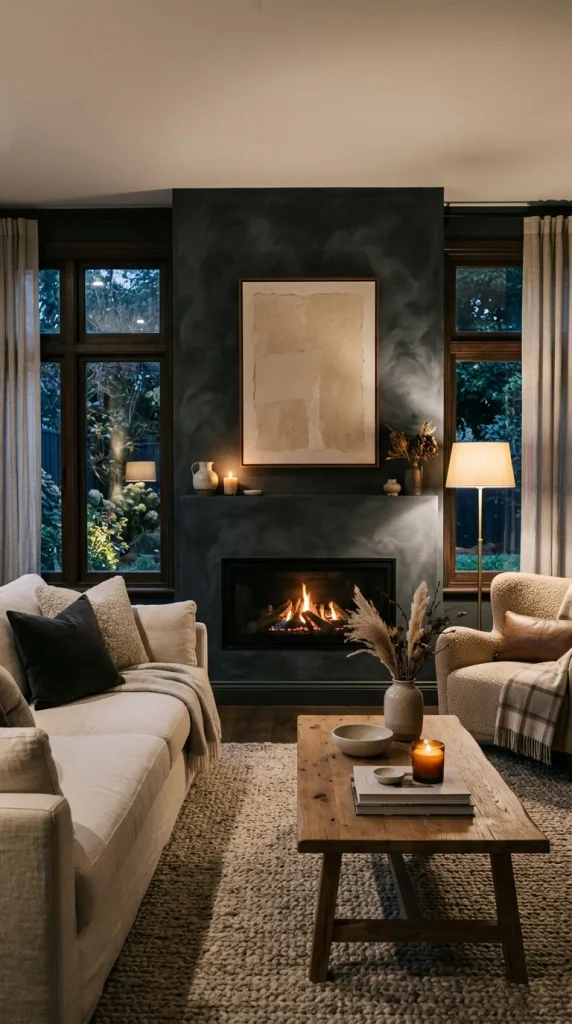
7. Moody Charcoal Limewash Fireplace Wall
For a bold interior, consider using charcoal limewash around a fireplace. Dark limewash has a completely different personality from pale neutral versions, creating a dramatic backdrop with soft, atmospheric depth.
Instead of appearing like a simple dark painted wall, charcoal limewash can have subtle variations that make the surface feel almost stone-like.
This idea works especially well around fireplaces because the darker wall naturally creates a focal point.
Pair the wall with lighter furniture to prevent the room from becoming too heavy. Cream sofas, beige armchairs, natural wood tables, and light rugs can provide balance.
If your fireplace has a traditional surround, the textured wall can help emphasize its architectural character. For modern fireplaces, charcoal limewash can make the fireplace look more integrated into the room.
Use warm lighting rather than harsh overhead illumination. Floor lamps, table lamps, candles, and wall sconces can create a comfortable evening atmosphere.
Decorative accessories should be carefully selected. A large mirror, simple artwork, sculptural vase, or natural wood object can provide visual interest without competing with the dark wall.
This design is particularly effective in rooms with plenty of natural light. During the daytime, sunlight reveals the tonal movement in the limewash, while evening lighting makes the wall feel intimate.
Charcoal limewash can also work with earthy colors such as rust, camel, olive, cream, and tan.
If you want a sophisticated room that feels dramatic without being overly formal, this is an excellent approach.
The important thing is balance. Keep the rest of the room relatively warm and textured so the dark wall feels intentional rather than gloomy.
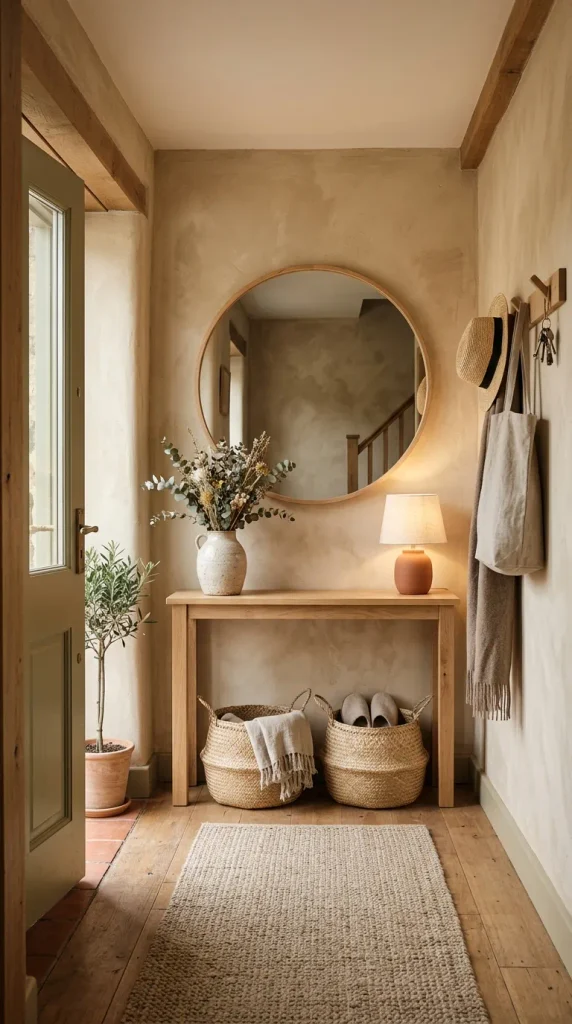
8. Limewash Entryway with Rustic Texture
The entryway is often overlooked, but it provides an excellent opportunity to introduce limewash. Because it is usually a smaller space, you can experiment with color and texture without changing the atmosphere of the entire home.
A warm beige, sandy, creamy white, or muted taupe limewash can create an inviting first impression.
Add a simple wooden console against the wall and style it with a ceramic vase, small lamp, bowl, or framed artwork. A round mirror above the console can make the entryway feel larger while reflecting light.
For storage, woven baskets are both practical and decorative. They can hold shoes, scarves, bags, or other everyday items.
A textured runner can add softness underfoot. Choose natural-looking materials and neutral tones to complement the wall.
Hooks or pegs can provide convenient storage for coats and bags without making the space feel cluttered.
If your entryway has architectural details such as an archway, alcove, or exposed beam, limewash can emphasize them beautifully.
The slightly imperfect finish is particularly effective in entryways because it creates an old-world, handcrafted feeling.
You can also use a slightly darker limewash color than the surrounding rooms to make the entrance feel like its own designed zone.
The goal should be welcoming rather than overly decorated. A few useful pieces with beautiful shapes are often more effective than many small accessories.
For a Pinterest-inspired entryway, combine limewash walls with a wood console, oversized round mirror, woven basket, simple ceramic vase, warm lighting, and a neutral runner.
This combination creates a stylish entrance that feels natural, practical, and full of character from the moment someone walks through the door.
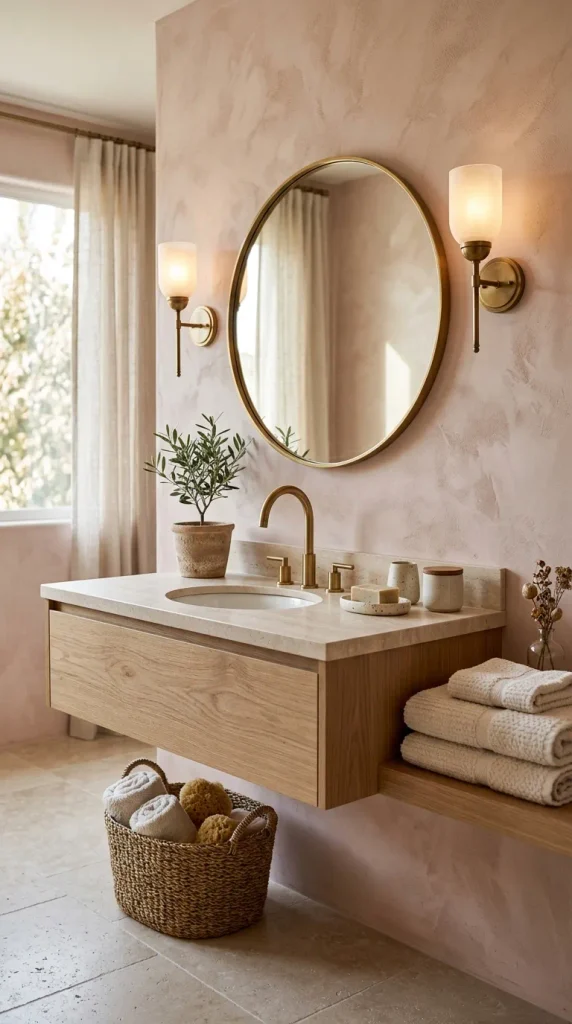
9. Soft Pink Limewash Bathroom
A soft pink limewash bathroom can create a warm and unexpectedly elegant atmosphere. Instead of using a bright or childish pink, choose a muted blush, dusty rose, clay pink, or pale earthy pink.
The limewash finish softens the color even further, giving the bathroom an almost plaster-like appearance.
This approach works beautifully with brass or aged-metal fixtures. Warm metallic details can complement the pink undertones without making the space look overly decorative.
Natural stone, cream tiles, wood accents, and woven accessories can further balance the color.
For example, a pale pink limewashed wall can be paired with a stone vanity countertop, a wooden vanity cabinet, and a round mirror.
Keep accessories minimal because the color and texture of the wall already provide visual interest.
Lighting should be warm and flattering. Wall sconces beside the mirror can create a sophisticated hotel-inspired feeling.
If limewash is being considered in a bathroom, pay particular attention to moisture exposure. The product and finishing system should be suitable for the bathroom environment, and areas directly exposed to water may require a different waterproof surface.
You can use limewash on the less exposed walls while keeping the shower enclosure or wet zone finished with tile or another water-resistant material.
This creates a beautiful contrast between practical wet-area surfaces and atmospheric textured walls.
Soft pink limewash is especially suitable for Mediterranean, European, vintage, organic-modern, and romantic interiors.
The result is a bathroom that feels warm, peaceful, and distinctive without depending on excessive decoration.
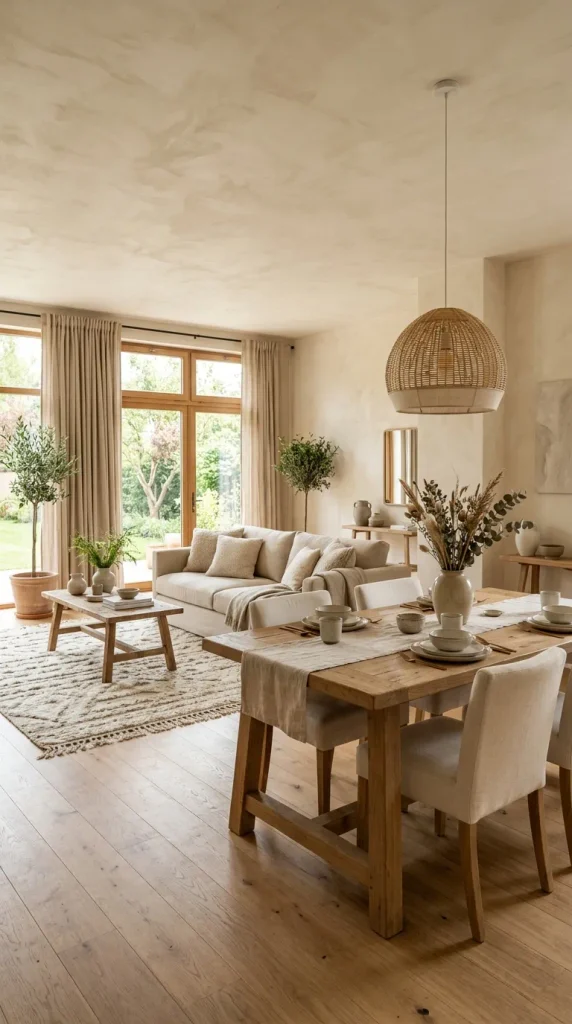
10. Cream Limewash Dining and Open-Plan Interior
Cream limewash is one of the most flexible choices for open-plan interiors. It can create continuity between the dining room, living room, kitchen, and surrounding spaces while adding subtle texture.
Unlike pure white, cream has warmth that works beautifully with wood, stone, brass, linen, and other natural materials.
In an open-plan room, limewash can help unify different functional areas. The same wall finish can visually connect the dining table, seating area, and kitchen while allowing furniture and lighting to define each zone.
Use a large wooden dining table as the centerpiece. Surround it with comfortable chairs in neutral fabric or natural wood.
A large pendant light can anchor the dining zone and create a clear visual center.
In the living area, consider a cream sofa, textured rug, wooden coffee table, and soft accent chairs. Keeping the palette consistent makes the entire room feel intentional.
The limewash itself should remain relatively subtle in an open-plan environment. Strongly contrasting colors can make the space feel fragmented.
Instead, use variations of cream, beige, tan, brown, and muted gray.
You can introduce personality through artwork, cushions, ceramics, plants, and decorative objects while maintaining the overall neutral foundation.
This approach is especially useful for modern homes where you want the interior to feel warm rather than sterile.
Cream limewash can also make architectural features more noticeable because the subtle tonal variation creates depth without adding visual clutter.
For a highly Pinterest-worthy finish, combine cream limewash with natural oak, linen upholstery, woven accessories, sculptural lighting, and handmade ceramics.
The final result is a cohesive, warm, sophisticated interior that feels timeless and comfortable.
How to Limewash Interior Walls
Limewashing is relatively straightforward, but preparation is important if you want a beautiful and durable result.
Step 1: Prepare the Wall
Begin with a clean, smooth, sound surface. Remove dust, grease, loose paint, and debris. Repair cracks or holes before starting.
The condition of the wall will influence the final appearance, so do not rush this stage.
Step 2: Protect the Room
Cover floors, furniture, trim, outlets, and other areas that should remain clean. Limewash can be messy during application.
Use painter’s tape around edges where necessary, but remember that limewash is designed to look naturally imperfect.
Step 3: Choose the Right Product
Select a limewash product designed for interior walls and appropriate for your wall surface.
Traditional limewash and modern limewash-style products can behave differently, so follow the manufacturer’s preparation and application instructions.
Step 4: Test the Color
Always create a sample area before covering the entire room.
The color can look significantly different depending on natural light, artificial lighting, wall texture, and surrounding materials.
Test the finish during different times of the day before committing.
Step 5: Apply the First Coat
Use the recommended brush or application tool and apply the product according to the manufacturer’s directions.
Limewash is typically applied in a way that creates overlapping, irregular movement rather than perfectly straight paint strokes.
Step 6: Allow It to Dry
Give each coat adequate drying time. Avoid judging the final appearance while the surface is still wet because limewash can change significantly as it dries.
Step 7: Add Additional Coats
Multiple thin coats can create more depth and coverage. The number of coats depends on the product, wall surface, desired appearance, and manufacturer’s instructions.
Step 8: Observe the Final Texture
Once completely dry, inspect the wall from different angles and lighting conditions.
The beauty of limewash is its variation, so minor differences are part of the aesthetic rather than flaws.
Materials Used for Limewash Walls
Before beginning your project, prepare the necessary materials.
- Interior limewash paint or appropriate limewash finish
- Application brush
- Paint tray or suitable container
- Drop cloths
- Painter’s tape
- Sandpaper if surface preparation requires it
- Wall filler or repair compound
- Cleaning cloths
- Protective gloves
- Protective eyewear when appropriate
- Ladder or step stool for high areas
- Primer if required by the selected product
- Water or other preparation materials specified by the manufacturer
Always read the specific product instructions because different limewash systems can have different preparation and application requirements.
How to Choose the Best Limewash Color
Choosing the right color is one of the most important parts of the project.
For a calm and timeless room, consider warm white, cream, beige, greige, or soft taupe.
For a more earthy interior, look at terracotta, clay, muted brown, olive, or dusty green.
For dramatic spaces, charcoal, deep brown, or other dark mineral-inspired tones can work beautifully.
Think about your existing furniture before selecting the wall color.
If you already have warm wood furniture, earthy limewash shades can reinforce the warmth. If your furniture is mostly white and cream, a slightly darker limewash can create contrast.
Natural light should also influence your decision. A room with limited sunlight may benefit from warmer and lighter tones, while a bright room can handle deeper colors.
Tips for Styling Limewash Walls
Limewash walls are naturally decorative, so the best interiors usually avoid excessive visual clutter.
Use Natural Materials
Wood, linen, stone, rattan, ceramic, wool, and cotton work particularly well with limewash.
Choose Warm Lighting
Warm lamps and soft lighting can emphasize the depth of the wall finish.
Mix Textures
Instead of adding many colors, combine different textures to create visual interest.
Keep Accessories Intentional
A few large, meaningful pieces often look better than numerous tiny decorations.
Consider Architectural Features
Limewash can highlight fireplaces, arches, niches, alcoves, and other architectural details.
Balance Imperfection
Do not try to make every element perfectly symmetrical. The organic nature of limewash works beautifully with relaxed styling.
Common Mistakes to Avoid
One common mistake is choosing a color without testing it first. Limewash can look completely different depending on lighting.
Another mistake is expecting a perfectly uniform wall. Tonal variation is one of the defining characteristics of limewash.
Skipping surface preparation can also lead to an uneven or disappointing result.
It is also important not to treat every room the same. A kitchen, bathroom, bedroom, and living room have different functional requirements.
In moisture-prone areas, select an appropriate finish and avoid using unsuitable products in locations exposed directly to water.
Finally, avoid overwhelming limewashed walls with too many decorative objects. Allow the wall texture to remain visible.
Final Thoughts
Limewash walls offer a beautiful way to introduce softness, movement, and natural character into modern interiors. From warm beige living rooms and peaceful white bedrooms to earthy terracotta dining rooms and dramatic charcoal fireplace walls, there are countless ways to use this finish.
The most successful limewash interiors usually share one important quality: balance. The textured walls are paired with natural materials, comfortable furniture, warm lighting, and carefully selected accessories.
Whether you want a subtle neutral backdrop or a dramatic statement wall, limewash can help create an interior that feels warm, layered, organic, and timeless.
For a Pinterest-worthy home, focus on creating a complete atmosphere rather than simply following a color trend. Combine the right limewash shade with beautiful textures, natural materials, thoughtful lighting, and functional furniture.
The result can be a home that feels both sophisticated and comfortably lived-in—a style that looks beautiful in photographs while remaining practical for everyday life.





Leave a Reply