
Introduction
Wildflower wedding bouquet ideas are gaining attention for their natural look and flexible design approach. These arrangements focus on seasonal blooms, varied textures, and organic shapes. This article explains how to create them, what materials to use, and how to plan each step clearly for a balanced, visually appealing bouquet.
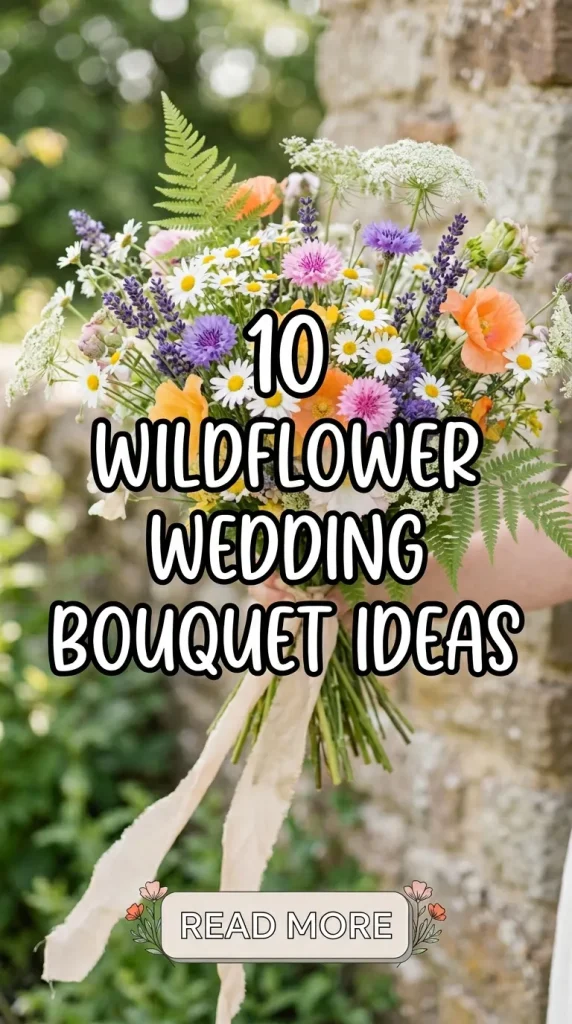
You will learn practical DIY methods, preparation steps, and ten detailed bouquet styles suited for different wedding themes. Each idea is structured to be beginner friendly and easy to follow. The goal is to provide clear guidance for creating aesthetic, handmade floral arrangements using simple materials and thoughtful planning techniques.
Why This Idea Is Trending or Useful
Wildflower bouquets are widely used in modern wedding planning due to their natural composition and adaptable structure. These bouquets do not rely on strict symmetry, making them easier to assemble compared to traditional floral arrangements. This flexibility allows beginners to experiment with shapes, textures, and color combinations while still achieving a cohesive result.
Another reason for their popularity is accessibility. Wildflowers can often be sourced locally or substituted with similar blooms, reducing dependency on specific varieties. This makes them suitable for budget ideas and DIY projects. Their organic appearance also aligns with minimalist style and modern design trends commonly seen in Pinterest ideas and wedding inspiration boards.
Materials and Preparation
Creating a wildflower bouquet requires basic materials and careful preparation. Common materials include fresh or dried wildflowers, greenery, floral tape, pruning shears, ribbon, and twine. Optional elements such as lace, fabric strips, or decorative pins can be added for styling. Choosing flowers with varying heights and textures helps create depth and visual balance.
Preparation begins with selecting a color palette and gathering flowers in similar tones. Trim stems at an angle and remove excess leaves to prevent overcrowding. Arrange flowers loosely before securing them to test composition. Planning the bouquet shape, size, and structure in advance ensures smoother execution and reduces the need for major adjustments during assembly.
Idea 1: Rustic Meadow Bouquet
How to Create
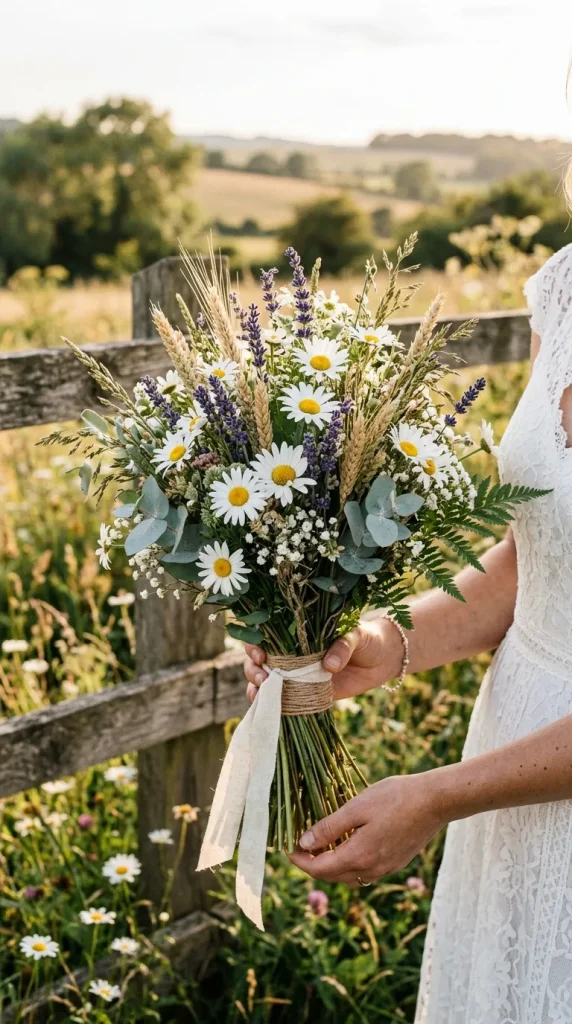
A rustic meadow bouquet focuses on recreating the natural appearance of flowers growing freely in a field. This design includes a mix of daisies, lavender, wheat stalks, and soft greenery. The structure is intentionally loose, allowing stems to extend at different heights. This creates an organic and unstructured look commonly seen in wildflower Pinterest ideas and countryside wedding inspiration.
To create this bouquet, start by selecting a base of greenery and build around it with focal flowers like daisies. Add texture using wheat and smaller filler flowers. Hold the bouquet loosely while rotating it to maintain balance. Once satisfied, secure stems with floral tape and wrap with twine or ribbon. Trim the ends evenly while keeping a slightly uneven natural appearance.
Idea 2: Soft Pastel Wildflower Bouquet
Step-by-Step Guide
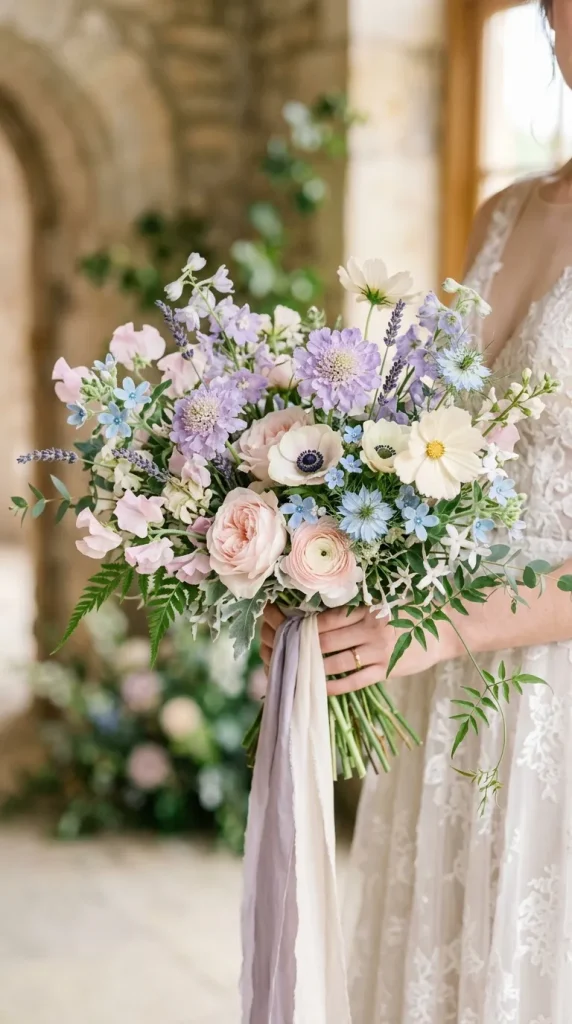
This bouquet uses soft pastel tones such as pale pink, lavender, cream, and light blue. The design emphasizes a delicate and romantic aesthetic suitable for minimalist style weddings. Flowers are arranged in a rounded shape but still maintain slight asymmetry to preserve the wildflower effect.
Begin by grouping flowers by color and size. Place larger blooms at the center and gradually add smaller flowers around them. Keep spacing consistent to avoid overcrowding. Use floral tape to secure the arrangement and wrap with a neutral ribbon. Ensure stems are aligned but not perfectly uniform to maintain a natural finish.
Idea 3: Bright Summer Field Bouquet
How to Make
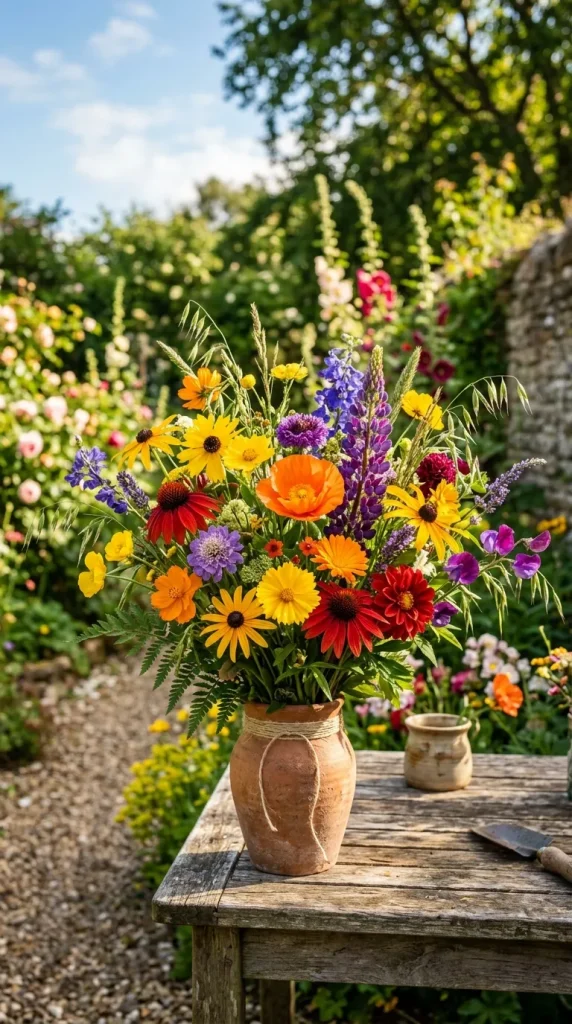
A bright summer bouquet features bold colors such as yellow, orange, red, and vibrant purple. This style creates a lively and energetic appearance, making it ideal for outdoor weddings. The contrast between colors enhances visual interest while maintaining a wildflower aesthetic.
To assemble, start with a dominant color and build outward using complementary shades. Alternate flower placement to distribute colors evenly. Add greenery sparingly to avoid dulling the brightness. Secure the bouquet tightly and wrap with a simple ribbon to keep focus on the flowers.
Idea 4: Minimalist Green and White Bouquet
Execution Process
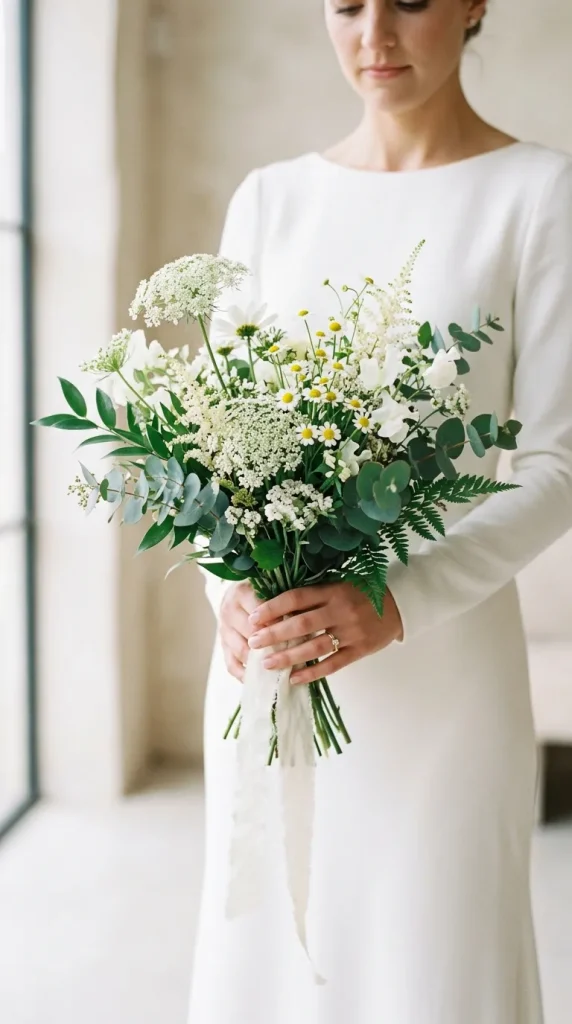
This bouquet focuses on simplicity using white flowers and various shades of green. The design aligns with modern design and minimalist style principles. It emphasizes clean composition and subtle texture differences rather than bold color contrasts.
Start with a base of greenery and add white blooms gradually. Maintain spacing between flowers to create an airy effect. Avoid overfilling the bouquet. Secure stems with floral tape and wrap with a thin ribbon. Trim stems evenly for a clean and organized finish.
Idea 5: Dried Wildflower Bouquet
Setup Method
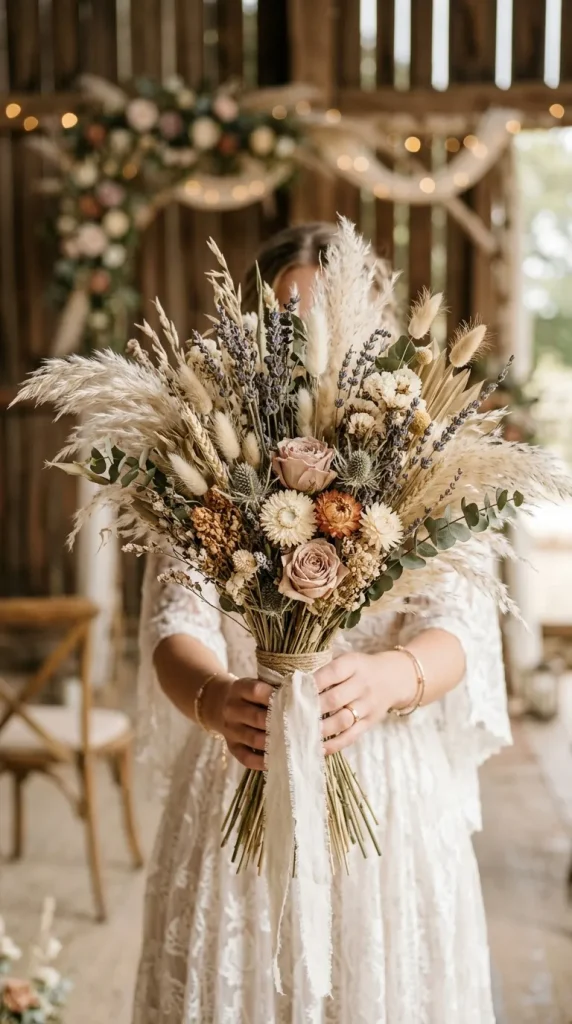
A dried wildflower bouquet offers durability and long-lasting decoration. It includes preserved flowers such as dried lavender, grasses, and seed pods. The texture is more rigid, creating a distinct visual style compared to fresh arrangements.
To create, gather dried stems and arrange them by height. Place larger elements at the center and fill gaps with smaller textures. Secure tightly with twine. Avoid bending stems excessively, as dried materials can break. Wrap with fabric or ribbon for a finished look.
Idea 6: Bohemian Freeform Bouquet
How to Create
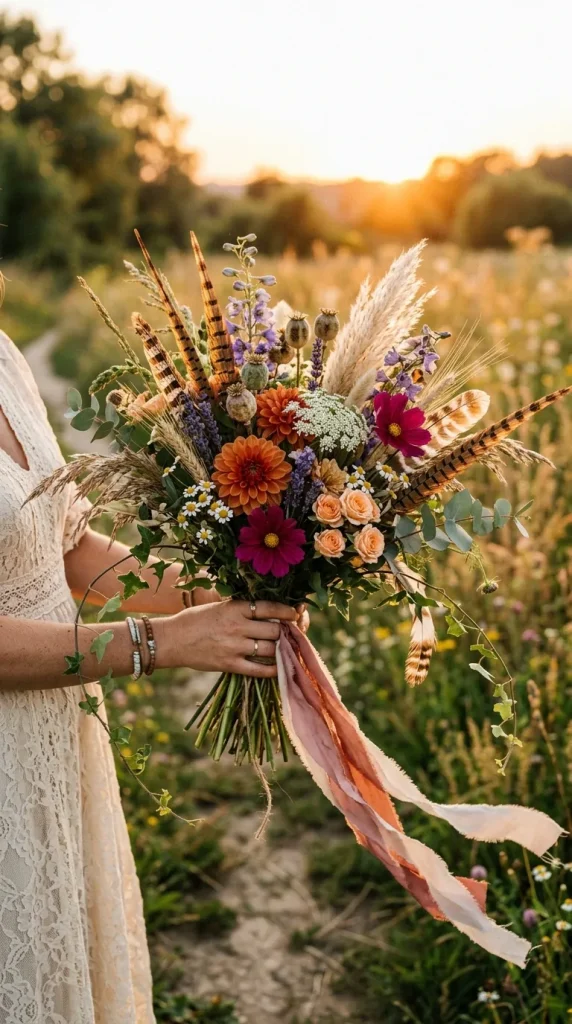
This bouquet embraces a loose, flowing structure with varied textures and unexpected elements. It often includes feathers, grasses, and mixed blooms. The design reflects creative ideas and artistic expression.
Start with a base of long greenery stems. Add flowers at different angles without forcing symmetry. Incorporate unique elements gradually. Secure loosely to maintain flexibility. Wrap with textured fabric such as lace or linen.
Idea 7: Monochrome Wildflower Bouquet
Step-by-Step Guide
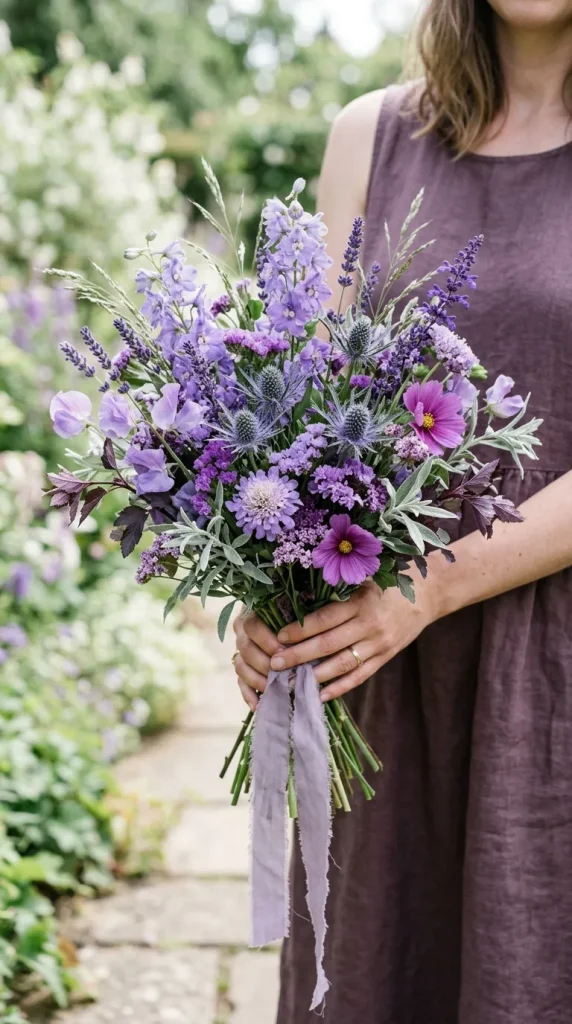
A monochrome bouquet uses different shades of a single color to create depth. This approach maintains visual consistency while still offering variation through tone and texture.
Select flowers in light, medium, and dark shades of one color. Arrange from darkest at the center to lighter tones outward. Add minimal greenery. Secure and wrap with matching ribbon for a cohesive appearance.
Idea 8: Garden-Inspired Wildflower Bouquet
How to Make
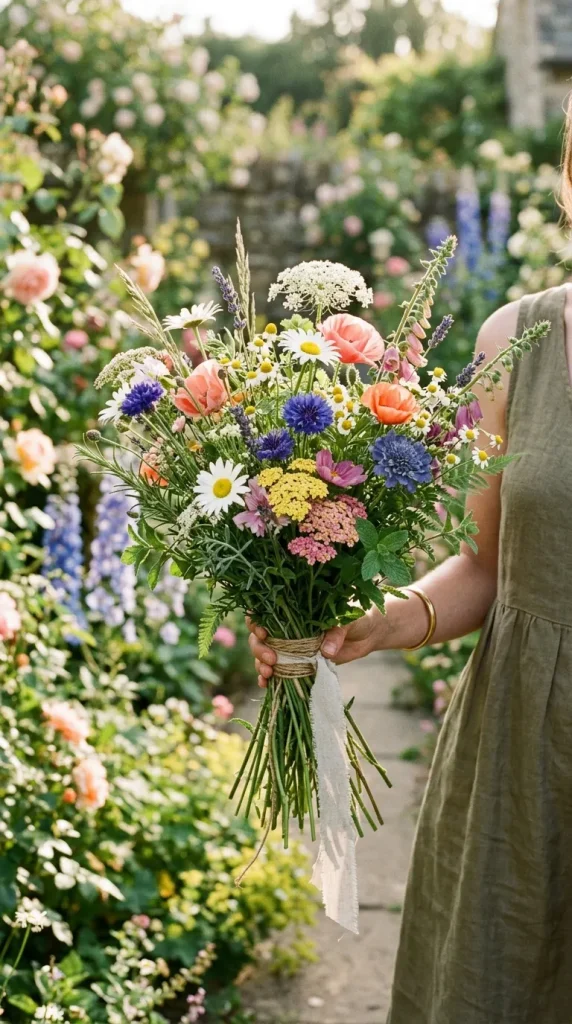
This bouquet mimics a freshly picked garden arrangement with mixed flowers and herbs. It combines structure and looseness for a balanced design.
Start with structured flowers, then add softer elements like herbs and fillers. Rotate the bouquet frequently to maintain even distribution. Secure and wrap with natural twine.
Idea 9: Small Hand-Tied Bouquet
Execution Process
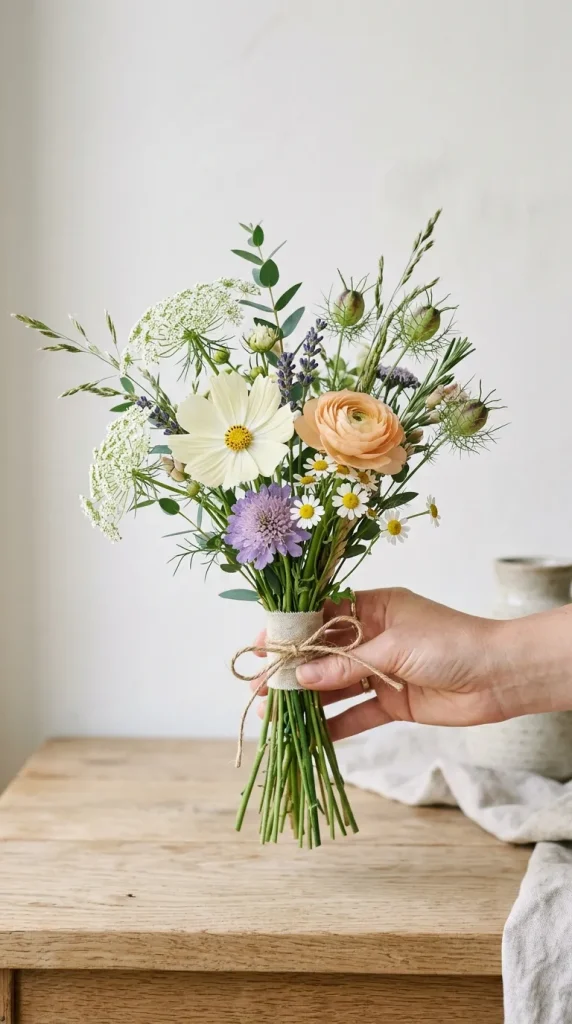
A compact bouquet is ideal for simplicity and ease of handling. It uses fewer flowers but maintains strong composition.
Select a few focal flowers and complement them with small fillers. Arrange tightly in a circular shape. Secure firmly and trim stems short for a neat finish.
Idea 10: Cascading Wildflower Bouquet
Setup Method
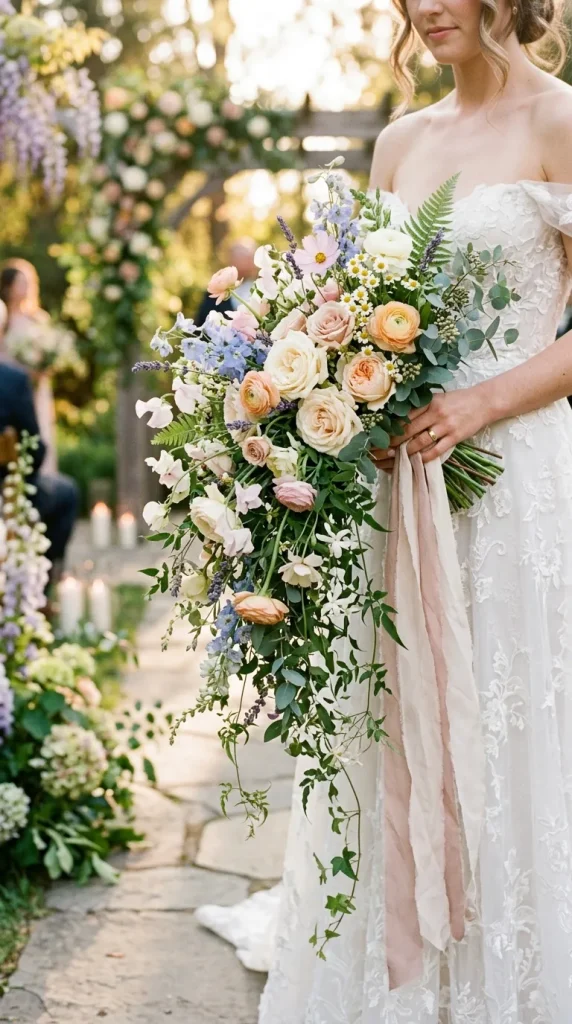
This bouquet features a flowing shape where flowers extend downward. It creates a dramatic and elegant look while maintaining a natural feel.
Start with a central cluster and gradually add trailing elements. Ensure balance between the top and cascading section. Secure tightly and adjust the flow before final wrapping.
Common Beginner Mistakes and How to Avoid Them
One common mistake is overcrowding the bouquet, which reduces its natural appearance. Leaving space between stems helps maintain the wildflower aesthetic. Another issue is uneven stem trimming, which can cause imbalance. Always align stems before securing. Using too many colors without planning can also create a chaotic look. Limiting the palette ensures harmony and improves overall presentation.
Practical Tips for Better Results
Use flowers with different textures to add depth. Rotate the bouquet while assembling to maintain balance. Keep stems slightly loose before final securing to allow adjustments. Always prepare extra materials in case of breakage or design changes. Practicing the arrangement beforehand improves confidence and reduces errors during the final assembly.
Styling, Presentation, or Organization Ideas
Presentation plays a key role in enhancing bouquet aesthetics. Use neutral or textured wraps such as linen or lace to complement the flowers. Store bouquets in a cool place before use to maintain freshness. For display, consider pairing the bouquet with matching floral elements in the venue for a cohesive decorative theme.
Budget or Time Planning
Wildflower bouquets are suitable for budget ideas because they use locally available materials. Planning ahead allows time to gather flowers and test arrangements. Allocate time for preparation, assembly, and adjustments. Working in stages helps avoid last-minute stress and ensures a more refined final result.
Creative Expansion and Advanced Inspiration
Advanced variations include mixing fresh and dried elements or incorporating seasonal materials. Experimenting with asymmetrical shapes or unique textures can create more personalized designs. Expanding into larger floral installations or matching decor pieces can enhance the overall wedding theme while maintaining consistency with the bouquet style.




Leave a Reply