
Introduction
Bedroom wall panels are one of the easiest ways to transform a plain wall into a stylish focal point without completely redesigning the room. They can add depth, texture, warmth, and architectural character while making the bedroom feel more finished and thoughtfully decorated. From elegant fluted panels to cozy wood designs and modern geometric patterns, wall paneling can suit almost every decorating style.
A beautifully paneled bedroom wall can also help define the area behind the bed and create a natural focal point. Instead of relying on multiple pieces of wall art, paneling itself becomes part of the room’s decoration. Depending on the material, color, and pattern you choose, the final result can look modern, luxurious, rustic, minimalist, traditional, or even playful.

Another benefit is versatility. Wall panels can cover an entire wall, occupy only the section behind the headboard, or be used as a decorative accent. You can paint them the same color as the surrounding walls for a subtle architectural effect or choose a contrasting shade to make the feature wall stand out.
In this guide, you will find ten stylish wall panels ideas for bedroom spaces. Each idea explains the design concept, suitable materials, color choices, styling approach, and practical considerations. Whether you are decorating a small bedroom or creating a luxurious master suite, these ideas can help you choose a wall panel design that looks beautiful and feels personal.
1. Vertical Wood Wall Panels for a Warm Bedroom
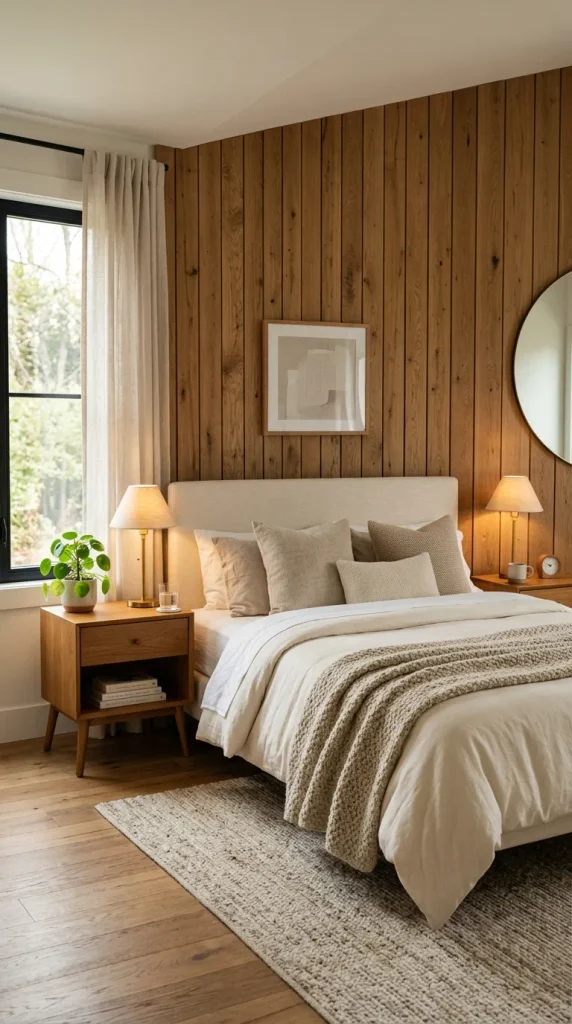
Vertical wood wall panels are a timeless choice for creating a warm and sophisticated bedroom. Their vertical lines naturally draw the eye upward, making the ceiling appear taller and giving the room a more spacious feeling. This makes them particularly useful in bedrooms with average or low ceilings where you want to create a stronger sense of height.
You can choose natural wood panels for an organic appearance or use painted MDF panels for a more affordable and customizable option. Oak, walnut, pine, and other wood finishes can create different moods. Light oak gives the bedroom a Scandinavian or modern look, while darker walnut can produce a luxurious and intimate atmosphere.
For a Pinterest-worthy bedroom, consider installing vertical panels behind the bed rather than covering every wall. This creates a statement feature while keeping the rest of the room visually calm. A simple upholstered bed, neutral bedding, soft lighting, and minimal accessories can complement the wood beautifully.
If using natural wood, allow its grain to remain visible because the texture adds character. For painted panels, shades such as warm white, beige, greige, sage green, or charcoal can create an elegant appearance.
Materials Used
- Wood or MDF wall panels
- Measuring tape
- Level
- Construction adhesive
- Finishing nails
- Wood filler
- Sandpaper
- Paint or wood stain
- Paintbrush or roller
How to Create the Look
Measure the wall and plan the spacing before installation. Mark vertical guide lines with a level. Attach each panel carefully, keeping the spacing consistent. Fill nail holes if necessary, sand the surface, and apply paint or stain. Finish the room with warm bedding and simple furniture so the wall remains the main focal point.
2. Fluted Wall Panels Behind the Bed
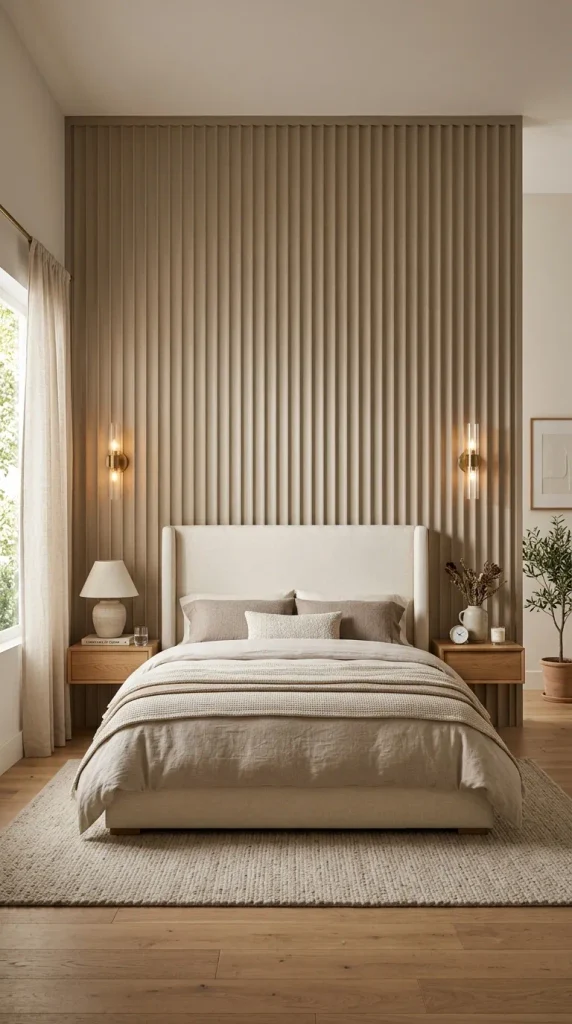
Fluted wall panels have become a popular choice for modern bedrooms because they combine texture with a clean, sophisticated appearance. The repeated vertical grooves create shadows and dimension, allowing the wall to look interesting even when it uses a single color.
Installing fluted panels behind the bed can create an instant feature wall. The design works especially well with upholstered beds because the soft fabric contrasts with the structured lines of the panels. You can use natural wood fluting for a warm appearance or choose painted panels for a contemporary look.
Neutral colors are particularly effective. Beige, taupe, cream, warm gray, and soft brown can create a calming bedroom atmosphere. If you prefer something dramatic, deep green, navy, charcoal, or chocolate brown can make the wall feel luxurious.
Lighting can make fluted paneling even more attractive. Wall sconces or pendant lights positioned on either side of the bed can create shadows between the grooves and emphasize the texture.
When styling the room, avoid too many competing patterns. Solid bedding, simple artwork, textured cushions, and minimal bedside accessories allow the fluted wall to remain the star.
Materials Used
- Fluted wall panels
- Measuring tape
- Level
- Adhesive
- Finishing nails
- Caulk
- Sandpaper
- Paint or stain
- Installation tools
How to Create the Look
Start by centering the paneling behind the bed. Measure the width of the bed and decide how far the feature should extend on both sides. Install the panels vertically and maintain consistent alignment. Paint the finished surface if needed, then add symmetrical bedside lighting to highlight the texture.
3. Geometric Wall Panels for a Modern Bedroom
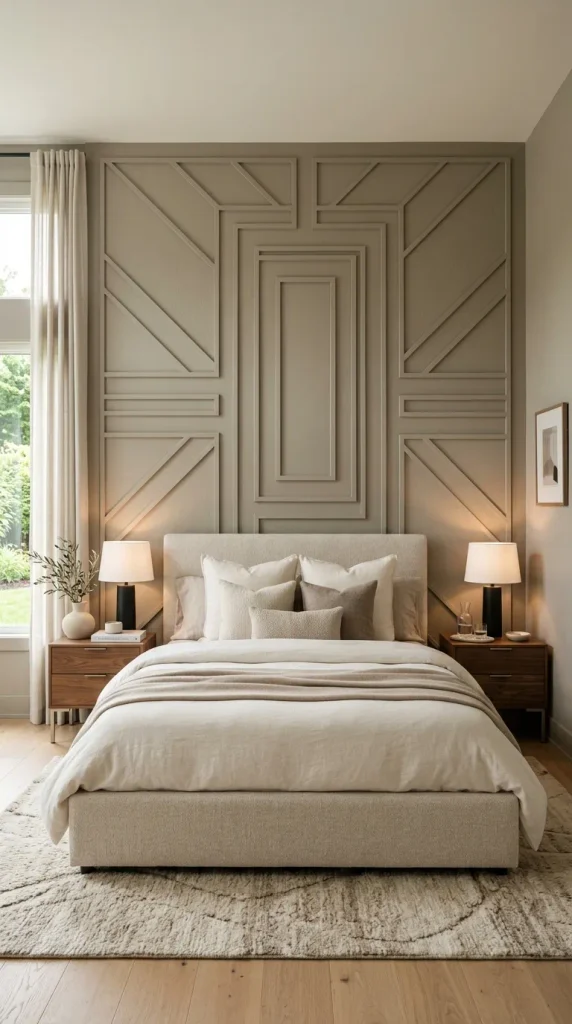
Geometric wall panels are perfect for creating a bold contemporary bedroom. Instead of simple vertical or horizontal lines, this design uses shapes such as rectangles, squares, diamonds, arches, or intersecting patterns to create visual interest.
A geometric feature wall works especially well behind a bed because it gives the bedroom an artistic focal point without requiring numerous decorative pieces. The pattern can be subtle or dramatic depending on the panel layout and color.
For an elegant Pinterest-inspired design, consider using one color throughout the entire wall. Painting both the panels and the wall in the same shade creates depth through shadows rather than strong color contrast. Soft beige, greige, cream, dusty blue, and muted green are excellent choices for a calming bedroom.
For a more dramatic room, use a darker shade such as charcoal, navy, forest green, or deep brown. Combine it with warm lighting and neutral bedding to maintain balance.
Careful planning is essential with geometric paneling. Uneven spacing can make the design look unfinished. Create the complete layout on paper before attaching anything to the wall.
Materials Used
- MDF or decorative molding
- Measuring tape
- Pencil
- Level
- Miter saw
- Construction adhesive
- Finishing nails
- Caulk
- Paint
How to Create the Look
Draw the desired geometric pattern on the wall using light pencil marks. Measure every section carefully before cutting the molding. Install the pieces according to the design, checking alignment frequently. Fill gaps with caulk, allow everything to dry, then paint the entire feature wall for a seamless finish.
4. Board and Batten Wall Panels for a Cozy Bedroom
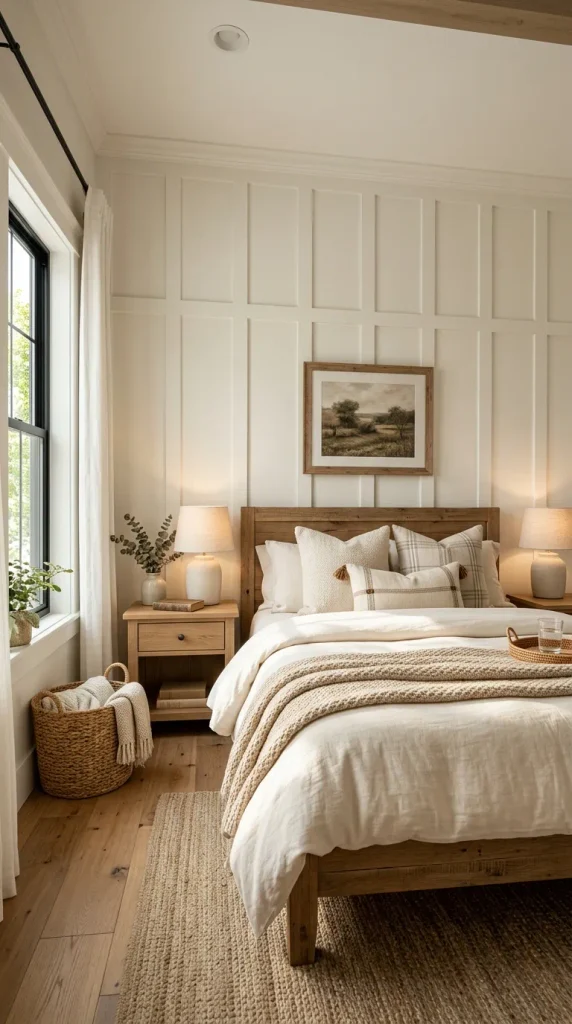
Board and batten paneling offers a classic architectural appearance that can make a bedroom feel cozy, polished, and timeless. The design typically combines vertical boards with horizontal or framing pieces to create a structured pattern.
This style works beautifully in farmhouse, cottage, transitional, and modern bedrooms. It can cover the entire wall or be installed as half-wall paneling with paint or wallpaper above it.
For a traditional appearance, white board and batten is an excellent choice. If you want something more contemporary, paint the entire feature wall in one rich color. Sage green, dusty blue, beige, warm gray, and muted terracotta can create an inviting atmosphere.
Behind the bed, board and batten can create a beautiful architectural backdrop without requiring a large headboard. Add matching bedside tables and simple lamps for symmetry.
The spacing between the boards should be planned according to the wall size. Narrow spacing creates a more detailed appearance, while wider spacing feels modern and less busy.
Materials Used
- MDF boards or trim
- Measuring tape
- Level
- Pencil
- Construction adhesive
- Finishing nails
- Caulk
- Wood filler
- Sandpaper
- Paint
How to Create the Look
Measure the wall and decide how many vertical sections you want. Mark their positions evenly. Attach the vertical boards first, followed by the horizontal framing pieces. Fill nail holes and gaps, sand the surface, and paint everything in the chosen color. Add soft bedding and natural textures to complete the cozy look.
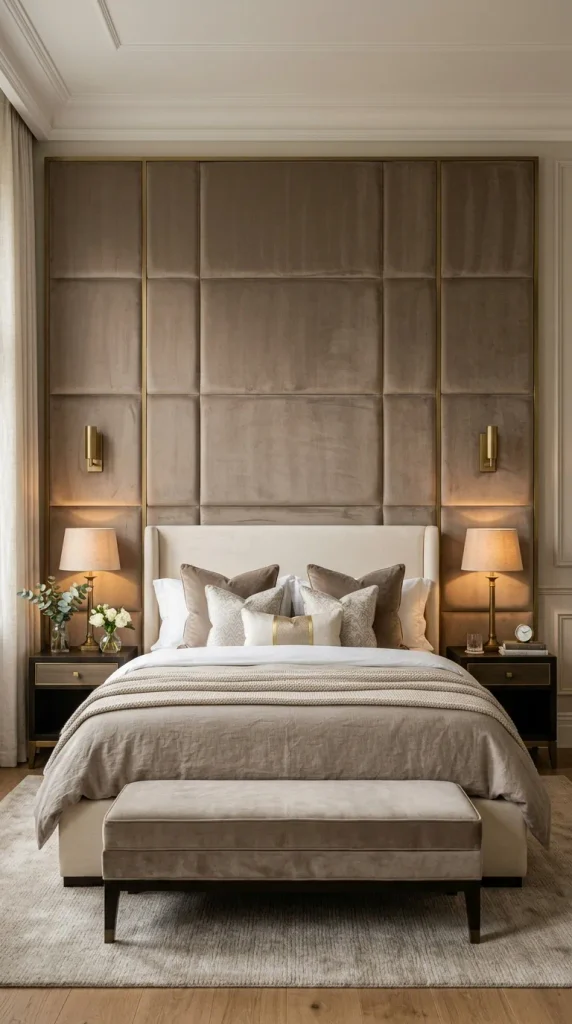
5. Luxurious Upholstered Wall Panels
Upholstered wall panels can turn an ordinary bedroom into a luxurious and comfortable retreat. Instead of using hard materials, this approach adds padded fabric panels to the wall, creating softness and visual richness.
This design is especially beautiful behind the bed because it can function as an oversized decorative headboard. Depending on the fabric and panel shape, the result can look glamorous, contemporary, classic, or hotel-inspired.
Velvet is an excellent option for a dramatic luxury bedroom. Linen and textured cotton are better choices for a relaxed and sophisticated look. Popular colors include cream, taupe, beige, dusty rose, gray, navy, and deep green.
Large rectangular panels create a modern appearance, while smaller individual panels can produce a more traditional look. Vertical upholstered panels can also emphasize ceiling height.
To keep the room elegant, combine upholstered wall panels with simple furniture and layered bedding. Warm bedside lamps and metallic accents can add additional sophistication without making the room feel excessive.
Materials Used
- Plywood or MDF backing
- Upholstery foam
- Fabric
- Batting
- Staple gun
- Staples
- Measuring tape
- Mounting hardware
- Adhesive
How to Create the Look
Measure the wall and determine the number and size of panels. Cut the backing boards and foam to matching dimensions. Wrap each panel with batting and fabric, securing the material tightly on the back. Mount the finished panels securely behind the bed and style them with coordinated bedding.
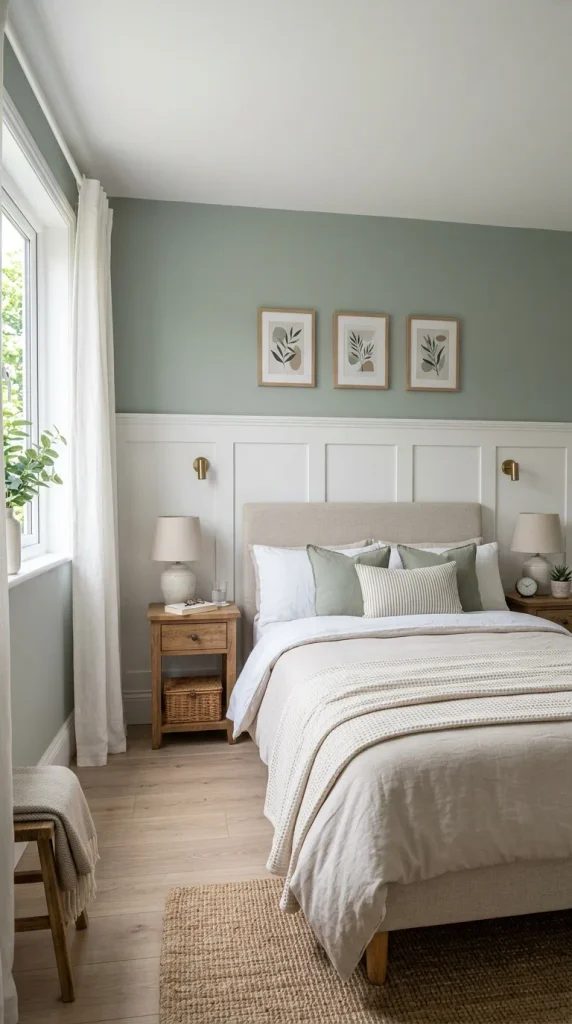
6. Half-Wall Paneling for a Small Bedroom
Half-wall paneling is an excellent choice when you want architectural character without overwhelming a small bedroom. Instead of covering the entire wall, the panels occupy the lower portion while the upper section remains painted or decorated with wallpaper.
This technique visually divides the wall and can make the room feel more interesting while maintaining an open atmosphere. It works especially well in small bedrooms, guest rooms, children’s rooms, and cottage-style interiors.
Classic white paneling paired with a soft colored upper wall creates a fresh and timeless combination. For a modern appearance, paint both sections in complementary neutral shades.
The height of the paneling can vary. A traditional approach places it around one-third to halfway up the wall, while taller paneling can create a more dramatic effect.
You can use board and batten, beadboard, shaker-style molding, or simple rectangular trim. Choose the style according to your existing furniture and overall decor.
Keep the upper wall relatively simple if the paneling already contains strong detail. A single artwork piece, mirror, or small gallery arrangement can be enough.
Materials Used
- MDF panels or decorative molding
- Measuring tape
- Level
- Pencil
- Adhesive
- Finishing nails
- Caulk
- Paint
- Roller and brushes
How to Create the Look
Choose the desired panel height and mark a horizontal line around the room. Install the panels below this line and keep spacing consistent. Fill gaps, sand the surface, and paint. Use a complementary wall color above the paneling to create a balanced bedroom design.
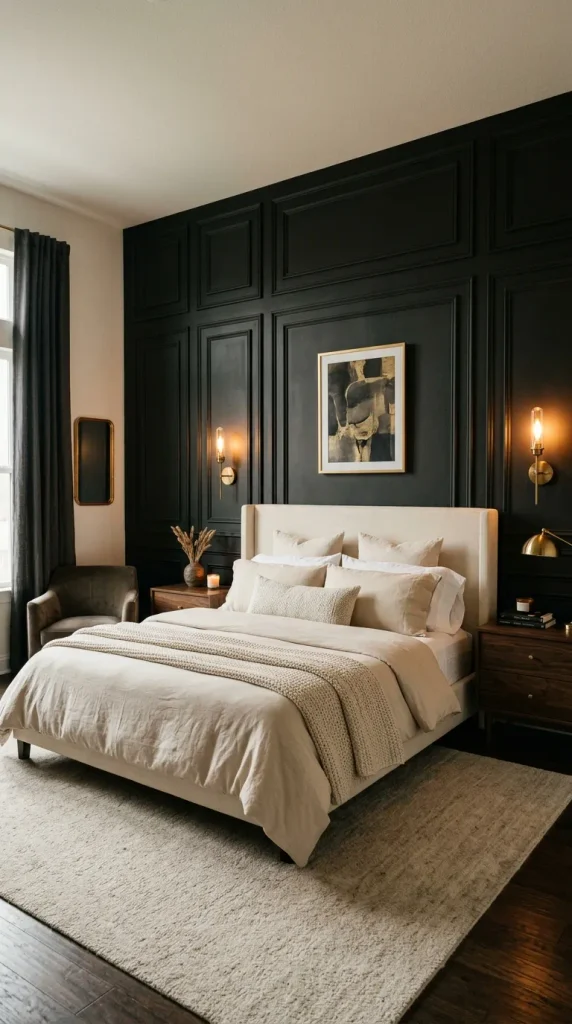
7. Dark Wall Panels for a Dramatic Bedroom
Dark wall panels can create an intimate and sophisticated bedroom with a strong designer-inspired appearance. Deep colors such as charcoal, navy, forest green, chocolate brown, and black can make the bed wall feel dramatic while adding depth to the room.
Although dark walls can sometimes make a space feel smaller, using paneling adds architectural texture that prevents the wall from looking flat. The combination can actually create a cozy atmosphere, especially in bedrooms designed for relaxation.
For the best result, use warm lighting. Bedside sconces, pendant lights, or table lamps with warm bulbs can soften the dark color and highlight the panel details.
Light bedding is an effective way to create contrast. Cream, ivory, beige, and soft gray bedding can stand out beautifully against a dark feature wall. Natural wood furniture also helps introduce warmth.
The panel style can be simple vertical slats, rectangular molding, shaker panels, or fluted designs. Keep the pattern relatively controlled because the dark color already provides plenty of visual impact.
Materials Used
- MDF or wood panels
- Measuring tape
- Level
- Adhesive
- Nails
- Caulk
- Sandpaper
- Dark interior paint
- Painting tools
How to Create the Look
Select a dark shade that complements your furniture. Install the panels carefully and make sure all lines are level. Fill imperfections before painting the entire wall. Add warm lighting and light-colored bedding to create contrast and keep the bedroom inviting.
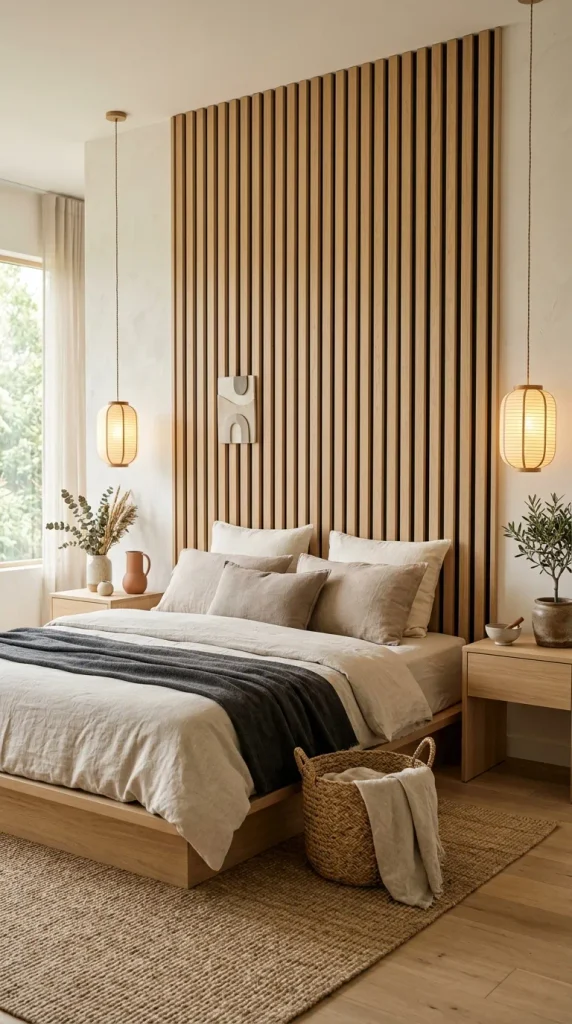
8. Natural Wood Slat Wall Panels
Natural wood slat panels are an excellent choice for bedrooms inspired by Scandinavian, Japandi, contemporary, or organic modern design. The narrow wooden slats create rhythm and texture while bringing natural warmth into the room.
This style is particularly attractive behind the bed. The repeated lines provide a clean backdrop without looking overly decorative. Light oak and ash finishes are ideal for bright Scandinavian interiors, while darker walnut tones create a richer atmosphere.
Some slat panel systems include a dark backing between the wooden strips, which makes each slat stand out more clearly. This creates a modern architectural effect.
Pair the wall with neutral bedding, low-profile furniture, woven accessories, ceramic decor, and indoor plants. Keep the color palette natural and understated.
Lighting is another important feature. Warm wall sconces or concealed LED lighting can highlight the spaces between the slats and create a beautiful evening atmosphere.
Materials Used
- Wood slat panels
- Acoustic backing, if desired
- Measuring tape
- Level
- Adhesive
- Screws
- Drill
- Wood finish or protective coating
How to Create the Look
Measure the feature wall and determine the panel arrangement. Begin from the center if the wall is symmetrical around the bed. Install each panel carefully and maintain consistent alignment. Apply the recommended wood finish and complete the space with natural textiles and warm lighting.
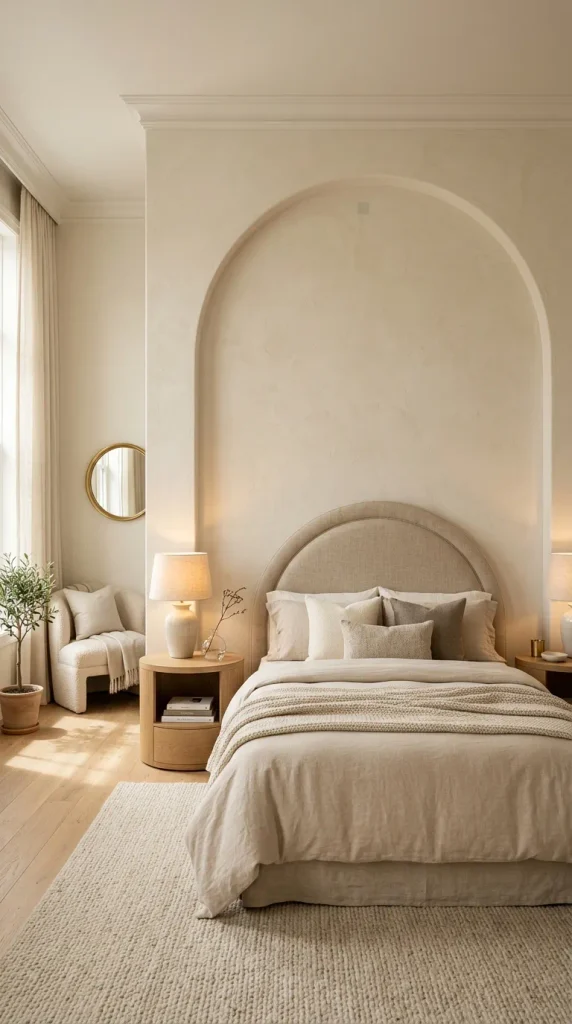
9. Arched Wall Panel Design for an Elegant Bedroom
Arched wall panels can give a bedroom a softer and more elegant architectural character. Unlike straight rectangular paneling, curved details introduce movement and create a distinctive focal point behind the bed.
An oversized arch can frame the bed beautifully. You can create one large arched panel behind the headboard or combine several smaller arches to create a decorative composition.
Soft neutral colors are particularly effective for this style. Warm white, cream, beige, blush, dusty rose, and muted sage can create an elegant and calming environment. For a bolder effect, a deep green or navy arch can become the main feature.
The arch can be created using MDF, flexible molding, plaster-style materials, or other decorative wall products. The exact construction method depends on the wall and desired design.
Keep the rest of the bedroom relatively simple so the curved feature remains visible. Rounded bedside tables, curved lamps, soft textiles, and an upholstered bed can reinforce the gentle shapes.
Materials Used
- MDF or flexible molding
- Measuring tape
- Pencil
- Level
- Template material
- Adhesive
- Finishing nails
- Caulk
- Paint
How to Create the Look
Create a full-size arch template before cutting materials. Mark the center of the wall and position the arch around the bed. Install the panel or molding carefully, checking symmetry. Fill gaps and paint the design in a complementary shade.
10. Minimalist Shaker-Style Wall Panels
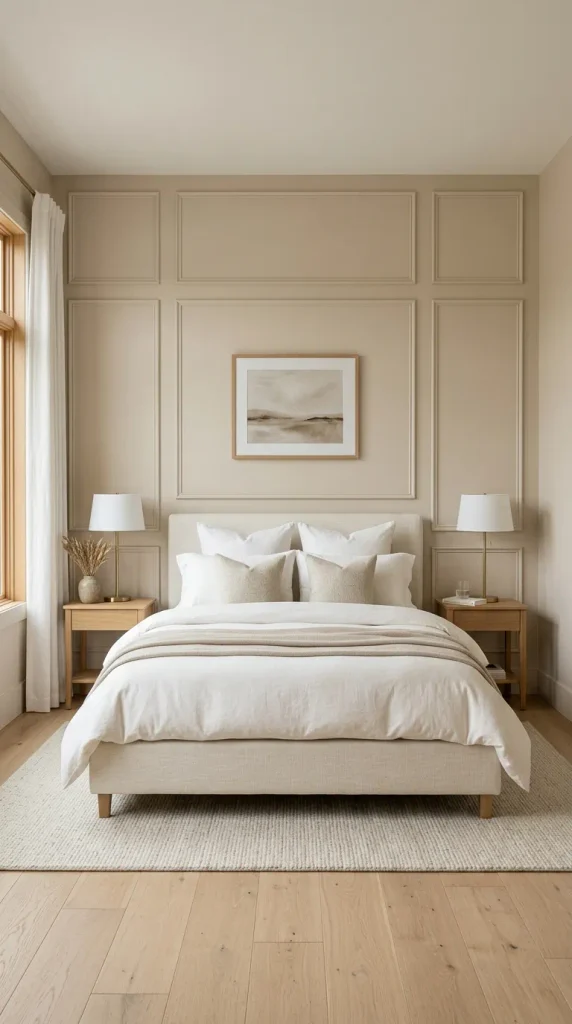
Minimalist shaker-style wall panels are ideal for homeowners who want an elegant bedroom without overly decorative details. The simple rectangular frames create subtle architectural interest while maintaining a clean and timeless appearance.
This style works beautifully in modern, transitional, traditional, and minimalist bedrooms. The key is to keep the panel arrangement symmetrical and the colors understated.
A monochromatic design can be especially beautiful. Paint the entire wall and panels in warm white, soft beige, greige, muted gray, or another neutral shade. The panel shapes will remain visible through subtle shadows rather than strong contrast.
For a stronger focal point, use a darker color behind the bed and keep the surrounding walls lighter. This makes the paneling more noticeable while preserving the clean design.
Shaker-style paneling also pairs well with almost any furniture. It can complement an upholstered bed, wooden bed frame, metal bed, or simple platform bed.
Add minimal artwork, symmetrical lamps, textured bedding, and a neutral rug to complete the look.
Materials Used
- MDF trim
- Measuring tape
- Level
- Pencil
- Miter saw
- Adhesive
- Finishing nails
- Caulk
- Wood filler
- Paint
How to Create the Look
Plan the rectangular frames before installation. Measure each section carefully and cut the molding at precise angles. Attach the pieces to the wall, keeping every rectangle symmetrical. Fill gaps and nail holes, sand the surface, and paint the wall and molding in your chosen color.
How to Choose the Best Wall Panels for Your Bedroom
Before choosing a wall panel design, consider the size and layout of your bedroom. A small room may benefit from vertical panels or a half-wall design, while a large bedroom can accommodate a full feature wall with more dramatic detailing.
Your existing furniture should also influence the choice. If your bed has a detailed headboard, simple paneling may be more appropriate. If the bed is minimalist, a more decorative wall can provide the visual interest.
Color is equally important. Neutral paneling creates a calm environment, while dark or colorful paneling can create a stronger statement. Think about the mood you want to experience every evening.
Also consider maintenance. Smooth painted MDF panels are generally easier to clean than heavily textured surfaces. Natural wood may require occasional maintenance depending on the finish.
Finally, consider lighting. Paneling becomes much more attractive when light creates shadows across the texture. Bedside lamps, wall sconces, and indirect lighting can all emphasize the architectural details.
How to Install Bedroom Wall Panels
Start by preparing the wall. Remove loose paint, dust, nails, and other imperfections. A clean, reasonably smooth surface will make installation easier.
Measure the wall carefully and create a layout before purchasing or cutting materials. Use a pencil and level to mark the positions of the panels.
If using decorative molding, cut each piece according to your measurements. Dry-fit the pieces before applying adhesive. This allows you to correct mistakes before permanently attaching them.
Apply construction adhesive according to the manufacturer’s instructions and secure the pieces with finishing nails when appropriate. Check each section with a level as you work.
Once the paneling is installed, fill nail holes and visible gaps with wood filler or caulk. Allow everything to dry before sanding.
Finally, prime and paint the wall if required. Two thin coats often produce a more even finish than one heavy coat.
Always choose materials and adhesives suitable for your specific wall surface, and use appropriate safety equipment when cutting or installing panels.
Bedroom Styling Tips After Adding Wall Panels
Once the wall paneling is complete, avoid overcrowding the room. The panels already provide architectural decoration, so you can often use fewer accessories.
Choose bedding that complements the panel color. If the wall is highly detailed, solid bedding can create balance. If the wall is simple, you can introduce patterned pillows or a textured throw.
Lighting should be positioned to emphasize the wall. Symmetrical sconces on either side of the bed are particularly effective for feature walls.
Natural materials such as wood, linen, wool, rattan, and ceramics can make paneled bedrooms feel warmer and more inviting.
Keep the color palette cohesive. Repeating the panel color in small accessories, cushions, rugs, or artwork can make the entire bedroom feel professionally coordinated.
Common Mistakes to Avoid
One of the biggest mistakes is installing panels without creating a detailed layout first. Uneven spacing can immediately make the wall look unfinished.
Another common problem is choosing a panel style that is too detailed for the room. If your bedroom already has patterned wallpaper, decorative furniture, and bold textiles, highly elaborate paneling may create visual clutter.
Incorrect measurements can also lead to unnecessary material waste. Measure twice before cutting.
Do not forget the position of electrical outlets, switches, wall sconces, and other fixtures. Plan around them before installation.
Finally, avoid choosing a trendy design solely because it is popular. The best wall paneling is one that complements your bedroom architecture and personal style and can remain attractive for years.
Final Thoughts
Bedroom wall panels can completely change the character of a space by adding texture, depth, warmth, and architectural interest. Whether you prefer natural wood slats, elegant arches, luxurious upholstery, classic board and batten, or minimalist shaker panels, there are countless ways to create a beautiful feature wall.
The most successful bedroom paneling designs are thoughtfully planned. Consider the room’s size, ceiling height, furniture, lighting, color palette, and overall decorating style before selecting your design.
A well-designed paneled wall can become the perfect backdrop for your bed and transform an ordinary bedroom into a cozy, stylish retreat. With careful measurements, suitable materials, balanced styling, and attention to detail, these ten wall panels ideas for bedroom spaces can provide plenty of inspiration for creating a Pinterest-worthy home.





Leave a Reply