
Brown bedrooms are having a beautiful moment in interior design because they create a feeling of warmth, comfort, and timeless elegance. From deep chocolate brown walls to soft beige-brown bedding, this versatile color can completely transform a bedroom into a cozy retreat. Brown works especially well when combined with natural wood, cream fabrics, warm lighting, woven textures, and earthy accessories.

An aesthetic brown bedroom does not have to feel dark or heavy. By choosing the right shades, textures, furniture, and lighting, you can create anything from a bright minimalist bedroom to a moody luxury retreat. Brown can also complement many decorating styles, including modern, rustic, vintage, Scandinavian, bohemian, farmhouse, contemporary, and organic interiors.
If you are looking for inspiration to create a warm and Pinterest-worthy sleeping space, these 10 brown bedroom ideas aesthetic will give you plenty of ways to incorporate brown into your design. Each idea focuses on a different combination of colors, textures, furniture, and decorative details so you can find a look that matches your personal style.
Why Brown Works So Well in a Bedroom
Brown is an earthy color that naturally creates a sense of warmth and stability. Unlike some brighter colors, brown can make a bedroom feel grounded and relaxing. Its connection with natural materials such as wood, leather, clay, and stone also makes it easy to create an organic atmosphere.
The biggest advantage of brown is its range. You can choose light shades such as caramel, tan, taupe, and warm beige, or create a dramatic interior using espresso, walnut, chocolate, and dark brown.
Brown also pairs beautifully with other neutral colors. Cream, ivory, white, beige, gray, black, and muted green can all work with brown.
The secret to an attractive brown bedroom is layering. Rather than using exactly the same shade of brown everywhere, combine several tones and textures. A chocolate-colored headboard can be paired with light brown bedding, a walnut nightstand, a beige rug, and caramel-colored cushions.
Lighting is equally important. Warm lighting enhances brown tones and makes the room feel cozy, while natural daylight prevents darker brown rooms from feeling too enclosed.
1. Chocolate Brown Accent Wall Bedroom
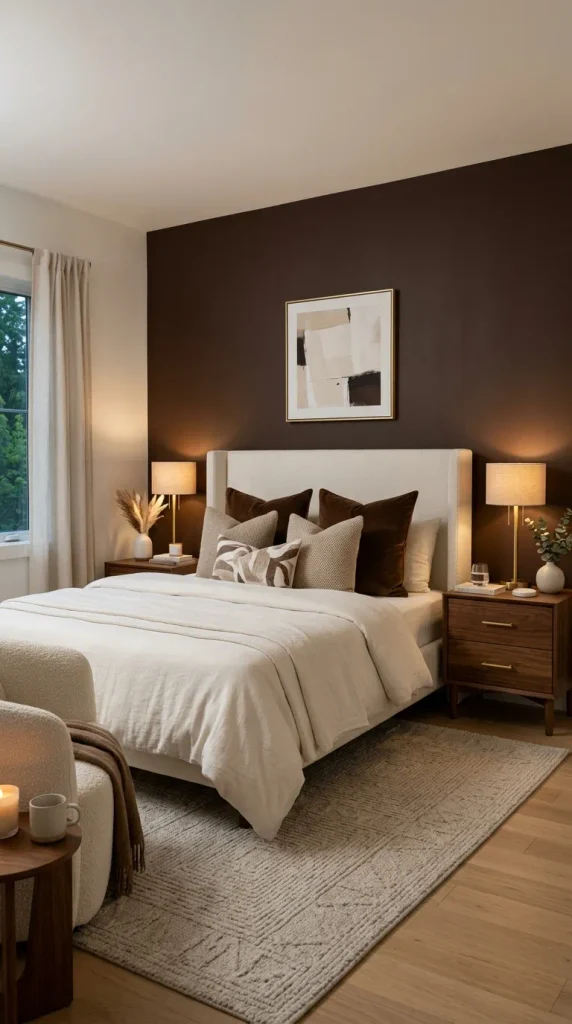
A chocolate brown accent wall can instantly become the focal point of a bedroom. This idea is perfect if you love dark, cozy interiors but do not want to paint every wall a deep shade.
The wall behind the bed is usually the best location because it naturally functions as the bedroom’s main focal point. A rich chocolate or espresso brown can create a dramatic backdrop for a light-colored bed and bedding.
To balance the darkness, choose cream, ivory, or beige bedding. A large upholstered headboard in a lighter neutral shade can create additional contrast.
Natural wood furniture works particularly well with chocolate brown. Consider walnut nightstands, a wooden bench, or a simple dresser with warm wood grain.
For textiles, layer several neutral textures. A chunky knitted blanket, linen duvet cover, velvet cushions, and a soft area rug can make the room feel luxurious without appearing overly decorated.
Lighting should be warm and soft. Bedside lamps with fabric shades, wall sconces, or a small pendant can create a beautiful glow against the dark wall.
Artwork should be kept relatively simple. Neutral abstract prints, vintage photography, or minimalist artwork can add personality without competing with the accent wall.
You can also add small touches of brass or antique gold through lighting fixtures, drawer handles, or decorative objects. These warm metallic details look particularly elegant against chocolate brown.
The finished bedroom should feel intimate and sophisticated rather than gloomy. By keeping the remaining walls lighter and using plenty of warm textiles, the dark brown accent wall becomes a stylish centerpiece.
This is an excellent option for creating a dramatic Pinterest-style bedroom while keeping the overall design comfortable and timeless.
2. Light Brown and Cream Cozy Bedroom
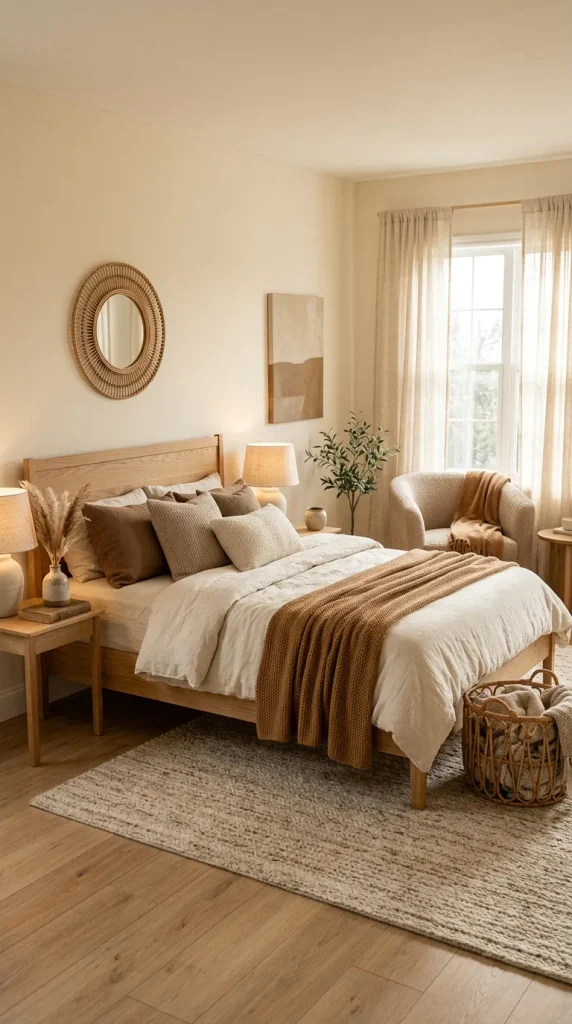
If dark brown feels too intense, a combination of light brown and cream is an easy way to create a softer aesthetic. This color palette is warm, peaceful, and extremely versatile.
Start with cream or warm white walls and introduce brown through the furniture, bedding, curtains, rugs, and accessories. A wooden bed frame can provide the main brown element, while caramel or tan bedding adds additional warmth.
Layer different shades rather than choosing one exact brown. For example, use light tan sheets, a warm caramel throw, medium-brown cushions, and a darker wooden nightstand.
Texture is especially important in a neutral bedroom. Linen, cotton, boucle, wool, woven materials, and knitted fabrics can prevent the room from looking flat.
A cream upholstered chair in the corner can create a comfortable reading area. Add a small wooden side table and a warm table lamp to complete the space.
For flooring, natural wood or a neutral carpet can complement the palette. If the floor is already dark, use a lighter rug to create contrast around the bed.
Decorative accessories can include ceramic vases, framed artwork, dried branches, woven baskets, and small plants.
The beauty of this design is that it can easily be updated. If you want to introduce seasonal colors, simply change the cushions or throw blanket.
During autumn, add rust or burnt-orange accents. During spring and summer, introduce softer green or muted floral details.
This brown and cream bedroom is perfect for anyone who wants a cozy aesthetic without creating a very dark environment.
The overall effect is calm, inviting, and naturally elegant, making it ideal for a bedroom where relaxation is the main priority.
3. Brown Bedroom with Natural Wood Furniture
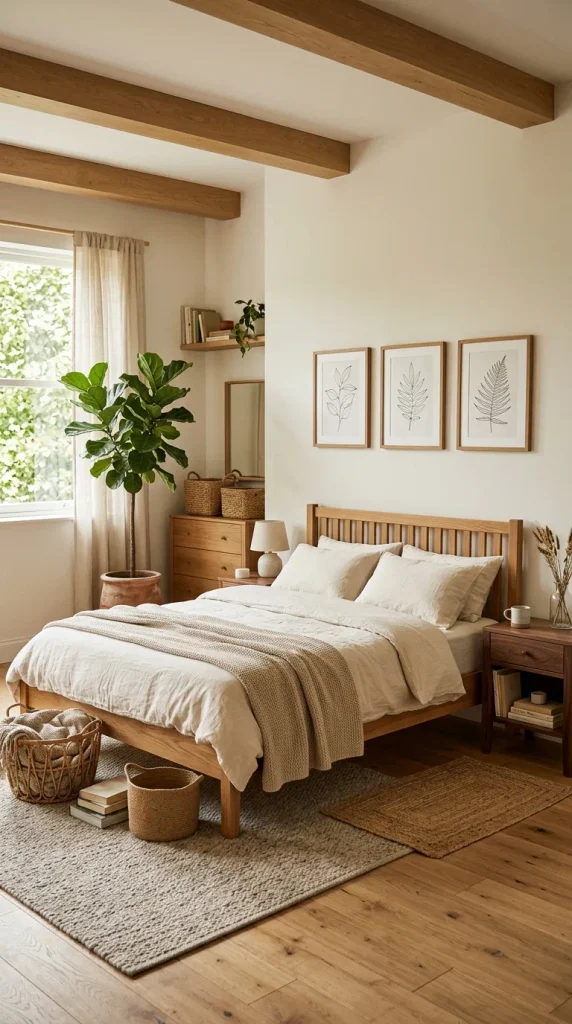
One of the easiest ways to create a brown bedroom aesthetic is to let natural wood become the main source of brown. Wood adds warmth, texture, and natural character without making the room feel overly coordinated.
A wooden bed can act as the centerpiece. Depending on your preferred style, choose light oak, medium walnut, or darker wood.
If you want a Scandinavian-inspired bedroom, light wood works particularly well with cream walls and neutral bedding. For a more luxurious or traditional aesthetic, walnut and darker wood can create a richer appearance.
Keep the walls relatively neutral so that the wood grain remains visible. Warm white, beige, cream, and soft taupe are excellent choices.
Layer the bed with neutral textiles. A beige duvet, cream pillows, brown throw, and textured blanket can create a comfortable appearance.
Matching furniture is not necessary. In fact, combining different wood tones can make the room look more collected and natural. You might pair a walnut bed with a slightly lighter wooden nightstand and a vintage wooden dresser.
Add woven baskets for practical storage. A rattan laundry basket or woven storage box can reinforce the organic aesthetic.
Plants are another useful addition. Green foliage creates a beautiful contrast against brown wood while adding freshness.
Lighting should complement the warm tones. Choose fixtures made from wood, ceramic, brass, or fabric rather than extremely shiny modern materials if you want a softer appearance.
Artwork can include nature photography, botanical prints, landscapes, or minimalist abstract pieces.
This style is particularly attractive because it does not rely on a strong paint color. Instead, the combination of wood grain, neutral fabrics, and earthy accessories creates the brown aesthetic naturally.
The result is a warm bedroom that feels timeless, comfortable, and connected to nature.
4. Dark Brown Moody Luxury Bedroom
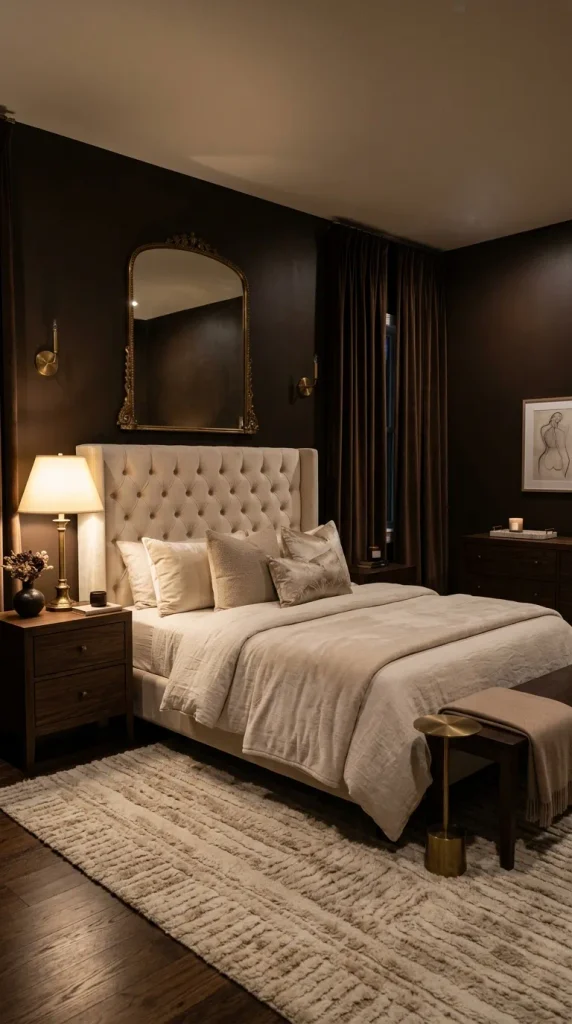
For those who love dramatic interiors, a dark brown bedroom can create an incredibly sophisticated atmosphere. Deep chocolate, espresso, coffee, and walnut shades can make the bedroom feel intimate and luxurious.
One approach is to use dark brown walls throughout the room. This creates a cocoon-like environment that works particularly well in larger bedrooms with sufficient natural light.
To keep the space from feeling too heavy, introduce lighter bedding. Cream, ivory, oatmeal, and warm beige create beautiful contrast against dark walls.
A large upholstered bed can enhance the luxurious appearance. Velvet, linen, or boucle upholstery can add softness.
Lighting is critical in a moody bedroom. Instead of depending on one overhead fixture, use multiple light sources. Bedside lamps, wall sconces, floor lamps, and accent lighting can create layers of warm illumination.
Metallic accents can add a subtle luxury element. Brass, bronze, or antique gold details can look stunning against deep brown.
For flooring, dark wood can create a dramatic appearance, while a lighter rug can provide contrast. If the floor is already dark, use cream or beige textiles to keep the room balanced.
Decor should remain sophisticated and intentional. A large mirror, elegant artwork, sculptural vase, or decorative tray can be enough.
Avoid filling every surface with small objects. The beauty of a moody bedroom comes from the overall atmosphere rather than excessive decoration.
This aesthetic is especially effective for people who prefer boutique-hotel-inspired interiors.
The combination of dark brown walls, soft neutral fabrics, warm lighting, and metallic accents can create a bedroom that feels elegant, intimate, and expensive without requiring overly ornate furniture.
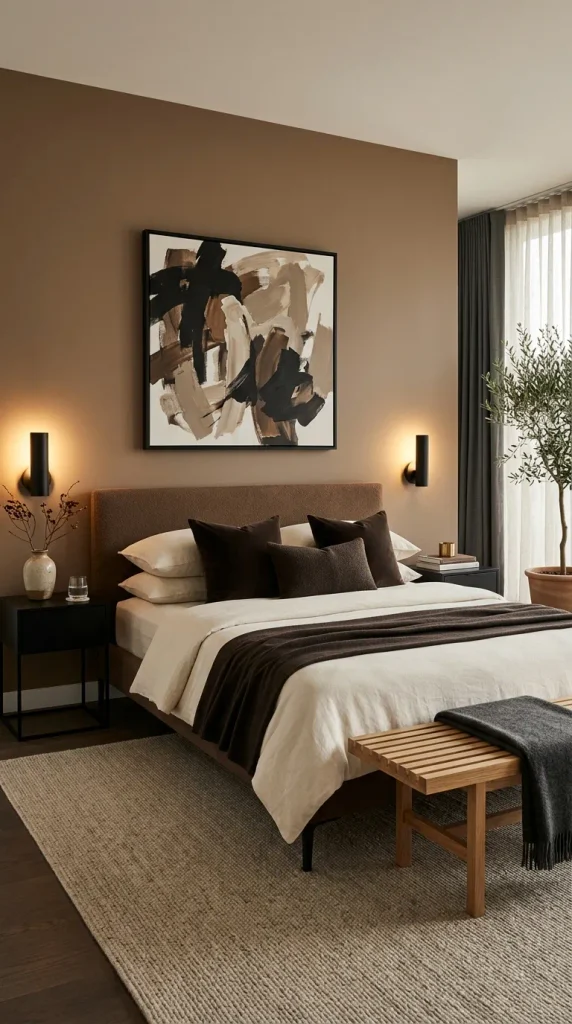
5. Brown and Black Modern Bedroom
Brown and black create a striking combination for a contemporary bedroom. Brown brings warmth while black adds contrast and definition.
The key is to avoid using too much black at once. Instead, use black strategically through furniture frames, lighting fixtures, artwork, handles, and decorative details.
Start with warm brown walls or a neutral background. A medium chocolate, coffee, or taupe shade can work well.
Choose a simple bed with clean lines. A brown upholstered headboard can become the main focal point, while black bedside tables or lamps create contrast.
Bedding can remain neutral. Cream or beige sheets can soften the combination, while dark brown pillows and a black throw can reinforce the palette.
For artwork, black-and-white prints are an easy choice. Large abstract artwork with brown, cream, black, and beige tones can also tie everything together.
Lighting fixtures are an excellent way to introduce black. A simple black pendant or wall-mounted reading lamp can provide a modern architectural detail.
Use natural wood wherever possible because it helps prevent the black accents from feeling too cold. A wooden bench, dresser, or small side table can introduce additional warmth.
A textured rug can help visually connect the furniture. Choose a neutral rug with subtle brown or charcoal patterns.
Plants can also soften the overall design. Green leaves provide a natural contrast against brown and black.
The final look should be clean rather than cluttered. Use a limited color palette and focus on shapes, textures, and materials.
This is a great option if you want an aesthetic bedroom that feels modern, masculine, sophisticated, and Pinterest-worthy without looking overly formal.
6. Brown Boho Bedroom with Layered Textures
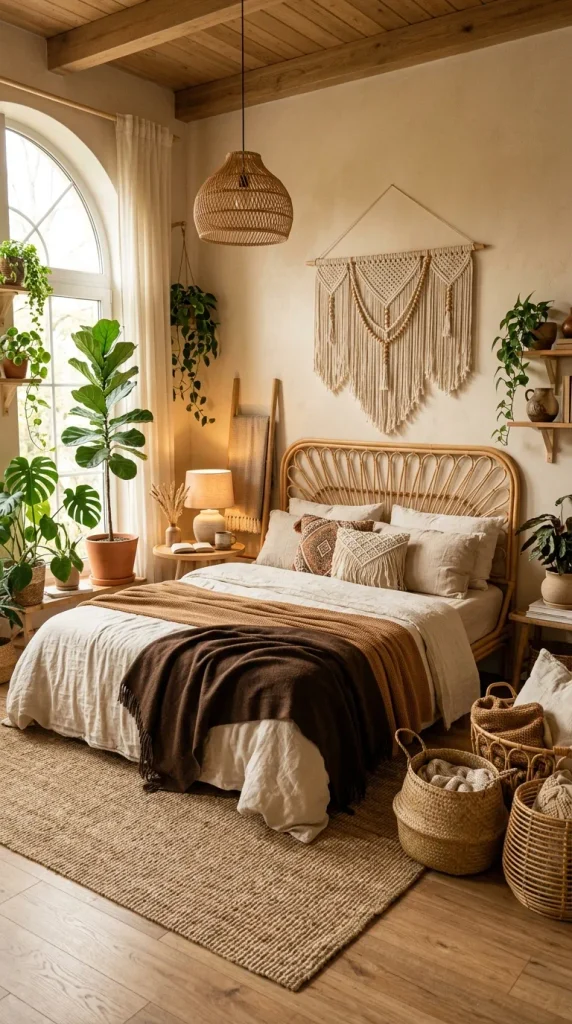
Brown is a natural foundation for a bohemian bedroom because it works beautifully with woven materials, plants, handmade accessories, and earthy colors.
Begin with a warm brown or neutral wall color. You can also keep the walls cream and introduce brown through furniture and textiles.
A wooden or rattan bed works particularly well for this aesthetic. Add layered bedding in cream, tan, caramel, and muted brown shades.
The goal is to create visual richness through texture rather than excessive color.
Add woven baskets, macramé details, rattan lighting, jute rugs, and handmade ceramics. These materials create the relaxed character associated with boho interiors.
Plants are another important element. Large leafy plants can be placed beside the bed or in an empty corner. Smaller plants can be displayed on shelves or nightstands.
For the bed, combine different cushions with a patterned throw. The patterns should remain earthy and relatively muted.
A floor cushion or small woven pouf can create additional seating without taking up much space.
Lighting can include a rattan pendant, woven lampshade, or warm floor lamp.
Wall decoration can include macramé, woven wall art, botanical prints, or handmade pieces.
Do not worry about making every piece match perfectly. Boho interiors often look better when they feel collected over time.
Brown provides a grounding base that allows all these different materials to work together.
For a Pinterest-worthy result, keep the palette centered around brown, cream, tan, rust, muted green, and natural wood.
The final bedroom should feel relaxed, artistic, warm, and personal rather than overly polished.
7. Brown Vintage-Inspired Bedroom
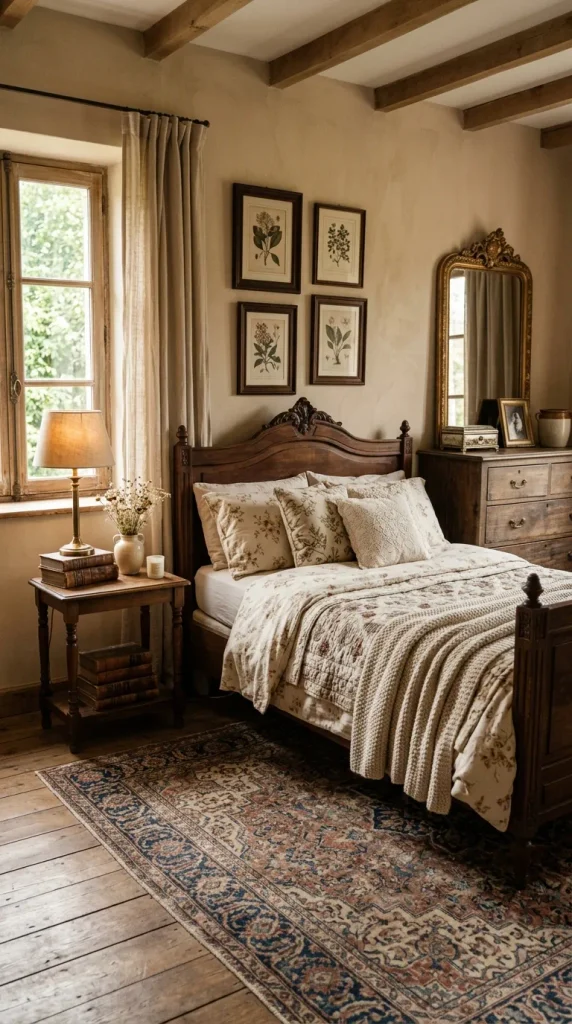
A brown vintage bedroom can combine nostalgic details with modern comfort. Brown naturally complements antique wood, vintage fabrics, traditional furniture, and aged decorative finishes.
Begin with warm beige, cream, or muted brown walls. If you want more drama, use a deeper brown behind the bed.
A vintage wooden bed or antique-style headboard can become the main focal point. Pair it with a traditional nightstand, vintage dresser, or small wooden chest.
Do not be afraid to mix old and new. A vintage dresser can look beautiful beside a contemporary lamp, while modern bedding can make antique furniture feel fresh.
Choose bedding in cream, ivory, muted brown, or subtle floral patterns. Avoid overly bright colors if you want to maintain the vintage atmosphere.
Lighting can make a major difference. Look for fixtures with traditional silhouettes, fabric shades, brass finishes, or antique-inspired details.
Decorative accessories might include an old-style mirror, framed botanical illustrations, vintage books, ceramic vases, or a small decorative clock.
A patterned area rug can add character while helping to connect the different brown tones.
Curtains should be soft and substantial enough to create warmth. Linen, cotton, or vintage-inspired patterned fabric can work beautifully.
The goal is not to make the room look like a museum. Instead, combine vintage elements with comfortable modern pieces.
Brown provides the perfect background because it already feels connected to aged wood and traditional materials.
This bedroom style is ideal for anyone who loves nostalgic interiors but still wants a space that feels comfortable and contemporary.
8. Caramel Brown Minimalist Bedroom
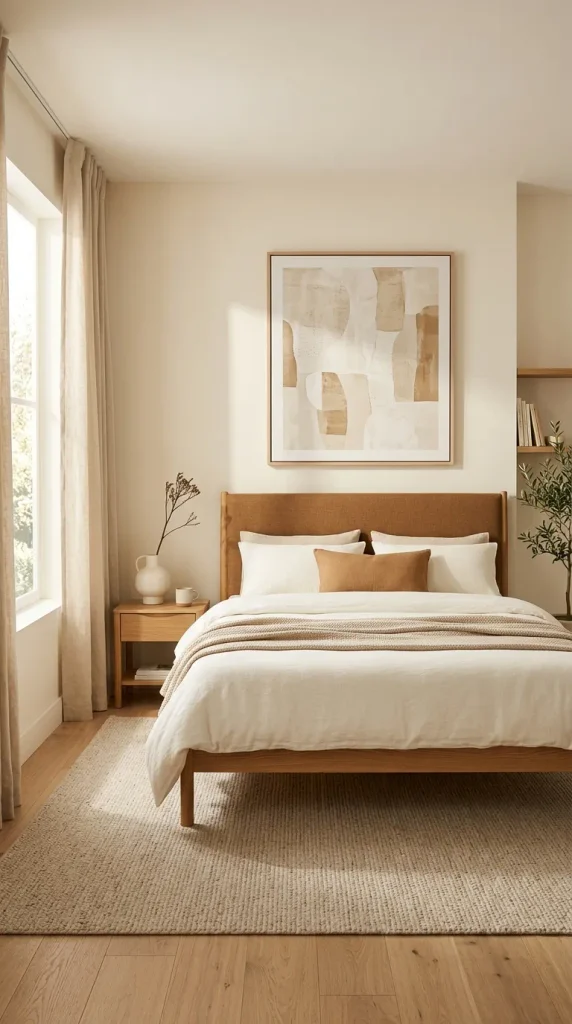
A caramel brown minimalist bedroom demonstrates that brown does not have to mean cluttered or dark. Caramel is warm enough to create personality while remaining light and sophisticated.
Use caramel as an accent through the bed, bedding, curtains, or feature wall.
Keep the furniture simple and functional. A low-profile wooden bed, slim nightstands, and a clean-lined dresser can create a minimalist foundation.
Instead of using many decorations, choose a few statement pieces.
For example, one large piece of artwork above the bed can be more effective than a gallery wall filled with small frames.
Use cream and off-white as supporting colors. These lighter shades keep the room bright while allowing caramel brown to stand out.
Texture remains important even in minimalist interiors. Linen bedding, a wool rug, wooden furniture, and a woven basket can create depth without visual clutter.
Lighting should be simple and sculptural. A minimalist pendant or small wall sconces can provide both function and style.
Keep surfaces relatively clear. One ceramic vase, a small lamp, or a single book can be enough for a nightstand.
Natural daylight should be allowed into the room whenever possible. Sheer curtains can soften sunlight while keeping the space bright.
This design is ideal if you want a clean Pinterest aesthetic that still feels warm.
Caramel brown works especially well with natural wood, cream, black accents, and muted beige.
The finished bedroom feels modern, calm, warm, and intentional.
Rather than depending on lots of decoration, the beauty comes from the combination of simple forms, carefully selected materials, and a warm neutral palette.
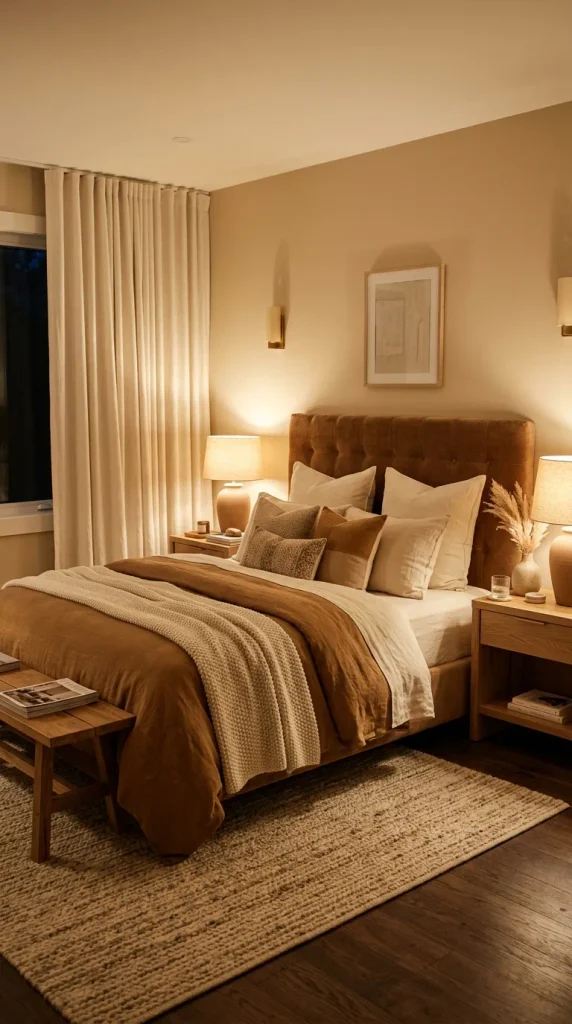
9. Brown Bedroom with Cream Bedding and Cozy Lighting
Sometimes the easiest way to create a brown bedroom aesthetic is to make the walls and furniture relatively simple while using brown textiles as the main design feature.
Start with neutral walls and introduce a brown upholstered headboard or wooden bed.
Then make the bedding the star of the room. Layer cream sheets with a medium-brown duvet, caramel throw, and different shades of brown cushions.
The combination of cream and brown creates a hotel-inspired appearance that feels both sophisticated and comfortable.
Use multiple textures to make the bed look inviting. Linen, cotton, knitted fabrics, velvet, and boucle can all be layered together.
Warm lighting should surround the bed. Two matching bedside lamps can create symmetry, while additional accent lighting can make the room feel even more intimate.
A large area rug beneath the bed can add softness and visually anchor the furniture.
Choose curtains in cream, beige, or light brown. Floor-length curtains can make the room appear taller and more luxurious.
For decoration, use natural materials such as ceramic, wood, woven baskets, and dried branches.
You can also introduce a small amount of black or brass for contrast. For example, black picture frames or brass lamp bases can add definition.
The advantage of this approach is flexibility. If you want to change the bedroom aesthetic later, you can replace the bedding and accessories without repainting the room.
This makes it particularly practical for renters or anyone who likes to refresh their decor seasonally.
The final effect is cozy, elegant, and highly photogenic, with the bed becoming the main focal point.
10. Brown and Sage Green Nature-Inspired Bedroom
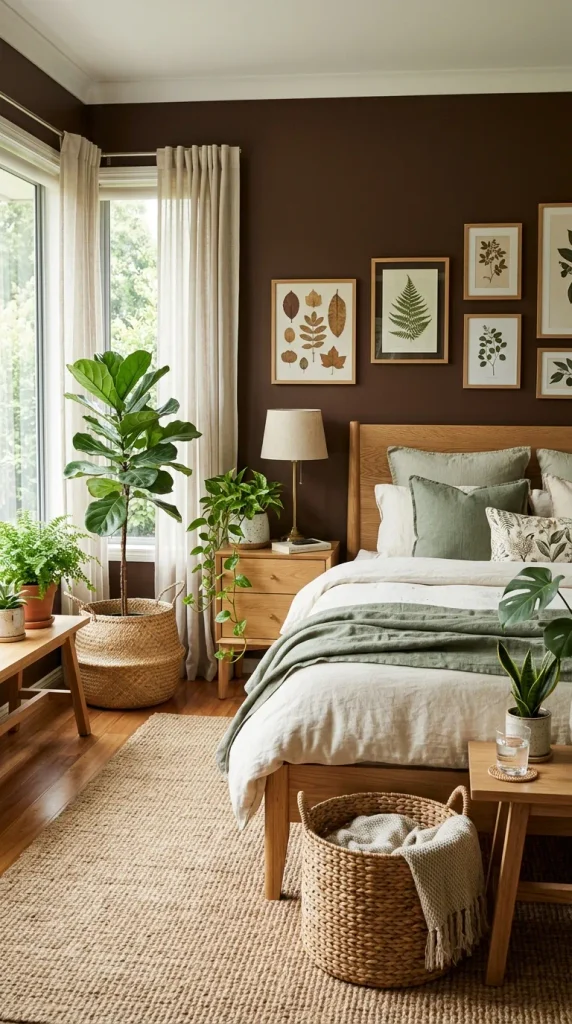
Brown and sage green are a beautiful combination for creating a nature-inspired bedroom. Brown provides an earthy foundation, while sage green introduces freshness and softness.
You can use brown on the walls, furniture, or bedding and introduce sage green through cushions, curtains, artwork, or plants.
For a balanced appearance, avoid extremely dark green. Soft muted sage works particularly well with warm brown because it keeps the room calm.
Natural wood furniture is an obvious choice. A wooden bed, dresser, or nightstand can connect the color palette to nature.
Choose cream or oatmeal bedding as the neutral middle layer between the brown and green.
Plants can become an important part of the room. Use a mixture of leafy plants and smaller greenery, but avoid overcrowding the space.
For accessories, consider ceramic planters, woven baskets, stone objects, and natural fiber rugs.
Lighting should remain warm. Wooden or woven lampshades can reinforce the organic theme.
Artwork featuring botanical shapes, landscapes, leaves, or abstract earthy forms can complete the design.
If the room has large windows, allow plenty of natural light to enter. Natural daylight enhances both brown and sage green and makes the room feel fresh.
This color combination works beautifully in modern organic, farmhouse, bohemian, Scandinavian, and rustic bedrooms.
The overall atmosphere should feel peaceful and connected to nature.
For a Pinterest-worthy arrangement, keep the furniture simple, layer brown and cream textiles, add muted sage accents, and use natural materials throughout the room.
The result is a calming bedroom that feels warm, fresh, sophisticated, and timeless.
How to Create a Brown Bedroom Aesthetic
Creating a beautiful brown bedroom is not simply about adding brown paint. The most successful design combines several elements to create a cohesive atmosphere.
Step 1: Choose Your Brown Shade
First decide whether you want your bedroom to feel light, warm, dramatic, or earthy.
For a light aesthetic, consider caramel, tan, beige-brown, or warm taupe.
For a dramatic look, choose chocolate, espresso, or deep walnut.
Step 2: Select a Supporting Color
Brown works best when combined with another color or neutral.
Cream and white create brightness.
Sage green creates an earthy atmosphere.
Black creates modern contrast.
Terracotta creates warmth.
Beige creates a soft monochromatic appearance.
Step 3: Choose the Main Brown Element
Decide where brown will appear most strongly.
It could be the walls, bed, headboard, bedding, curtains, rug, or furniture.
You do not necessarily need brown everywhere.
Step 4: Layer Textures
Add linen, cotton, wool, velvet, boucle, wood, rattan, ceramic, and woven materials.
Texture prevents a brown room from looking flat.
Step 5: Add Warm Lighting
Use bedside lamps, sconces, floor lamps, and pendant lights to create multiple layers of illumination.
Step 6: Style the Walls
A large mirror, oversized artwork, textured wall hanging, or simple gallery arrangement can complete the room.
Step 7: Add Natural Elements
Plants, wooden furniture, woven baskets, stone accessories, and handmade ceramics can enhance the earthy character of brown.
Materials Used for a Brown Bedroom
You do not need every material listed below, but combining several of them can create a richer aesthetic.
- Brown or neutral interior paint
- Wooden bed frame
- Upholstered headboard
- Cotton bedding
- Linen duvet covers
- Velvet cushions
- Knitted blankets
- Wool or textured area rug
- Wooden nightstands
- Wooden dresser
- Woven baskets
- Rattan accessories
- Ceramic vases
- Decorative mirrors
- Framed artwork
- Indoor plants
- Linen curtains
- Table lamps
- Wall sconces
- Pendant lighting
- Brass or black decorative hardware
- Natural wood accessories
Choose materials according to the aesthetic you want. For example, wood and rattan work beautifully for boho bedrooms, while velvet and brass can create a more luxurious appearance.
How to Make a Small Brown Bedroom Feel Larger
Dark colors can sometimes make small bedrooms feel enclosed, but brown can still work beautifully in a compact space.
Choose a lighter brown shade instead of extremely dark chocolate.
Keep the ceiling and some walls lighter to create visual height.
Use a large mirror to reflect natural light.
Choose furniture with exposed legs rather than extremely bulky pieces.
Avoid overcrowding the floor with unnecessary furniture.
Use light cream bedding to create contrast.
Curtains should ideally extend from near the ceiling to the floor because this can make the room feel taller.
Another useful trick is to use similar shades throughout the room. A limited palette creates visual continuity and can make the space feel less fragmented.
Brown Bedroom Lighting Tips
Lighting can completely change how brown looks.
Natural daylight is ideal during the day because it reveals the different undertones in brown.
At night, warm lighting usually works best.
Place lamps on both sides of the bed for balanced illumination. Wall sconces can save space in smaller bedrooms.
A floor lamp in an empty corner can create a soft secondary light source.
Pendant lighting can become a decorative focal point, especially when positioned above the bedside tables.
Avoid relying entirely on bright overhead lighting. Multiple smaller sources create a much more comfortable bedroom atmosphere.
Brown Bedroom Styling Mistakes to Avoid
Using Only One Brown Shade
A room covered entirely in one identical brown can look flat. Mix lighter and darker tones.
Making Everything Dark
If your walls, furniture, bedding, and curtains are all dark brown, the room may feel unnecessarily heavy. Add cream, beige, or white.
Ignoring Texture
Brown becomes much more attractive when combined with different tactile materials.
Using Cold Lighting
Cool white bulbs can make warm brown shades look less inviting.
Adding Too Many Decorations
Brown bedrooms generally look better when accessories are intentional rather than excessive.
Forgetting Contrast
Even a monochromatic bedroom needs some contrast. Use cream, black, green, brass, or lighter wood to break up the brown.
Final Thoughts
A brown bedroom can be much more than a simple neutral sleeping space. With the right combination of shades, textures, furniture, and lighting, brown can create an interior that feels cozy, sophisticated, natural, dramatic, or minimalist.
From a chocolate brown accent wall to a light brown and cream bedroom, there are countless ways to make this color work. Natural wood can provide an organic foundation, while sage green can bring a nature-inspired touch. For a luxurious atmosphere, combine deep brown with cream bedding and warm metallic accents. If you prefer simplicity, caramel brown and neutral tones can create a clean minimalist retreat.
The most important principle is balance. Brown should be layered rather than simply repeated. Mix different shades and materials, introduce lighter neutrals, and use warm lighting to enhance the atmosphere.
Whether you are redesigning an entire bedroom or simply looking for a few affordable updates, these 10 brown bedroom ideas aesthetic can help you create a warm and Pinterest-worthy space that feels beautiful while remaining comfortable for everyday living.
With natural textures, thoughtful lighting, cozy bedding, and carefully chosen brown tones, your bedroom can become the relaxing retreat you have always wanted.





Leave a Reply