
Introduction
Dark cottagecore interiors combine vintage countryside charm with deep earthy colors, layered textures, and cozy decorative details. This Pinterest-inspired aesthetic creates warm living spaces filled with antique character, handmade decoration, and natural materials. The style blends rustic comfort with dramatic interior design elements that feel calm, timeless, and visually rich.

This article explores practical dark cottagecore house interior ideas using beginner friendly methods, DIY inspiration, budget ideas, and step by step styling techniques. Readers will learn how to use lighting, furniture, textiles, wall colors, and organization methods to create aesthetic spaces that reflect modern design while maintaining traditional cottage warmth and creative project appeal.
Why This Idea Is Trending or Useful
Dark cottagecore interiors continue gaining attention across Pinterest ideas boards because the style combines comfort, nostalgia, and modern design balance. Many homeowners prefer spaces that feel warm and personal instead of minimal interiors with empty decorative layouts. Deep tones, vintage textures, and layered decoration create rooms that appear inviting throughout every season. The aesthetic also supports handmade decor, DIY creativity, and personalized organization ideas that suit apartments, cottages, and suburban homes equally well.
Another reason this trend remains popular is its accessibility for beginners. Most dark cottagecore spaces rely on affordable materials, secondhand furniture, natural fabrics, and easy project upgrades rather than expensive renovations. Small changes such as darker paint colors, warm lighting, botanical prints, and rustic shelves can completely shift the atmosphere of a room. Pinterest inspiration often highlights realistic styling methods that combine practicality with aesthetic appeal. This allows people to experiment gradually while maintaining functionality. The style also works well with sustainable decorating methods because older furniture, handmade decoration, and repurposed materials naturally fit the cottagecore visual identity.
Materials and Preparation
Creating a dark cottagecore interior requires thoughtful planning before decorating begins. Start by selecting a consistent color palette using deep greens, charcoal, brown, burgundy, muted black, or warm earthy neutrals. These colors create the foundation for the aesthetic atmosphere. Gather natural materials such as wood, linen, cotton, wicker, ceramic, iron, and dried botanical decoration. Vintage inspired furniture, layered textiles, framed artwork, candles, and soft lighting fixtures also contribute to the final design. Many DIY tutorials recommend using secondhand items because worn textures enhance the authentic cottage appearance.
Preparation should focus on balancing darkness with warmth to avoid making the room appear heavy or crowded. Measure spaces carefully before purchasing furniture or wall decoration. Plan lighting placement early because dark interiors require layered illumination from lamps, candles, sconces, and window treatments. Organization also plays an important role since cottagecore spaces can become visually cluttered without intentional arrangement. Before beginning the project, remove unnecessary modern accessories that interrupt the rustic atmosphere. Create a mood board using Pinterest ideas for inspiration and compare textures, patterns, and furniture shapes before finalizing the room layout. Careful planning helps maintain visual consistency throughout the entire interior design process.
Idea 1: Forest Green Reading Corner
How to Create
A forest green reading corner creates a quiet retreat filled with layered textures, vintage details, and dark cottagecore warmth. Start by selecting a corner near a window or soft lighting source. Paint surrounding walls deep green or use removable wallpaper with botanical patterns for a more beginner friendly approach. Wooden bookshelves, antique framed art, and dark floral textiles help establish the cozy atmosphere associated with cottage interiors. Add a vintage armchair with linen or velvet fabric in muted earthy tones. Layer knitted blankets and patterned cushions to increase warmth while maintaining visual texture throughout the space.
Lighting plays a major role in achieving the correct aesthetic. Use warm toned lamps instead of bright overhead lighting to create softer shadows across the room. Candles, brass sconces, and small lanterns strengthen the rustic environment while improving comfort during evening hours. Organize books horizontally and vertically to create variation on shelves. Decorative objects such as ceramic vases, dried flowers, and woven baskets enhance the handmade decoration style without overwhelming the layout. A small wooden side table provides practical functionality for drinks, journals, or additional candles. This easy project works well in apartments, bedrooms, and living rooms because it requires limited materials while producing a dramatic transformation.

Idea 2: Moody Cottagecore Kitchen
Step-by-Step Guide
A moody cottagecore kitchen combines practical organization with dark vintage styling that feels warm and timeless. Begin by introducing darker cabinet colors such as matte charcoal, deep olive, or muted navy. If repainting cabinets is not possible, focus on smaller upgrades including wooden shelves, antique style hardware, and textured fabrics. Open shelving works especially well because it allows decorative ceramics, glass jars, and copper cookware to become part of the visual design. Natural wood surfaces balance darker colors and prevent the room from appearing overly heavy. Layered textiles such as patterned curtains and linen table runners strengthen the rustic atmosphere.
Functional organization remains essential within cottagecore kitchen design. Store ingredients in labeled glass containers and arrange frequently used tools inside wicker baskets for both practicality and aesthetic consistency. Add warm lighting under shelves or near countertops to soften darker tones and improve visibility. Botanical prints, hanging herbs, and vintage cutting boards create additional decorative detail without reducing workspace efficiency. DIY tutorials often recommend distressing wood lightly for an aged appearance that complements antique inspired interiors. Small dining tables with mismatched wooden chairs help maintain an authentic cottage feeling while supporting comfortable daily use. This creative project allows homeowners to combine decoration and practicality in a balanced and beginner friendly way.

Idea 3: Candlelit Vintage Bedroom
How to Make
A candlelit vintage bedroom creates a peaceful dark cottagecore atmosphere through layered fabrics, muted colors, and warm lighting. Begin with a dark neutral wall color such as warm brown, dusty plum, or charcoal gray. Soft bedding materials including linen sheets, quilted blankets, and velvet cushions create visual depth while maintaining comfort. Choose wooden or wrought iron bed frames with vintage inspired shapes to strengthen the traditional cottage aesthetic. Floral wallpaper accents or framed botanical artwork add decorative detail without disrupting the calm atmosphere. Thick curtains in earthy tones help soften natural light during daytime hours.
Lighting should focus on warmth rather than brightness. Use bedside lamps with soft yellow bulbs alongside candles, lanterns, or wall sconces to create a cozy environment. Arrange furniture carefully to avoid overcrowding the room because dark interiors require balanced spacing to maintain comfort. Decorative trays, stacked books, and ceramic accessories provide subtle organization while reinforcing the handmade aesthetic. A distressed wooden dresser or vintage vanity introduces texture and practical storage. Layer rugs beneath the bed to create additional warmth and sound absorption. This easy project works particularly well for people seeking a relaxing retreat that combines modern design comfort with timeless countryside inspiration and aesthetic decoration.

Idea 4: Rustic Dark Bathroom Retreat
Execution Process
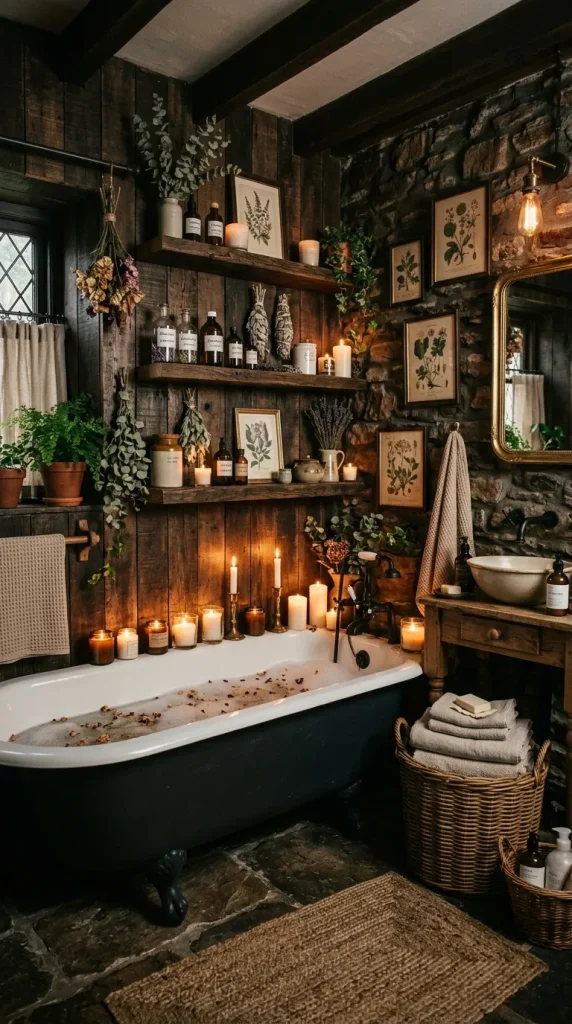
A rustic dark bathroom retreat transforms an ordinary space into a calming cottage inspired environment using natural textures and deep earthy tones. Begin by selecting dark paint colors or stone inspired wall finishes that create warmth instead of harsh contrast. Matte black fixtures, aged brass details, and wooden shelving contribute to the rustic appearance while remaining functional. Floating shelves made from reclaimed wood provide storage for towels, soaps, candles, and glass containers. Natural materials help soften the darker palette and prevent the bathroom from appearing cold or overly modern.
Lighting and texture are essential for creating balance inside smaller bathrooms. Install warm wall sconces or hanging pendant lights to create softer illumination across reflective surfaces. Add woven baskets for organization and include linen curtains or textured bath mats for visual softness. Dried flowers, eucalyptus bundles, and ceramic containers strengthen the cottagecore aesthetic while adding subtle decorative layers. DIY tutorials often recommend using peel and stick wallpaper with vintage botanical patterns for affordable upgrades that require minimal tools. Keep countertops organized by limiting modern plastic accessories and using matching storage containers instead. This beginner friendly project creates a spa-like environment while maintaining practical daily functionality and cohesive home decor styling.
Idea 5: Antique Inspired Dining Space
Setup Method
An antique inspired dining space combines dark cottagecore elegance with functional gathering areas suitable for everyday use. Start by selecting a wooden dining table with visible grain, distressed texture, or vintage inspired detailing. Dark stained wood creates a grounded focal point that supports the overall moody atmosphere. Mismatched chairs, vintage candle holders, and layered table linens help create a collected appearance rather than a perfectly coordinated modern layout. Deep wall colors such as forest green or dark brown strengthen the intimate environment while highlighting decorative elements more effectively.
Decorative styling should emphasize warmth and texture. Use linen runners, ceramic dishware, and brass accents to add visual variety across the table surface. Warm pendant lighting positioned directly above the table creates focused illumination that enhances the cozy atmosphere during meals. Wall shelves displaying old books, framed paintings, and handmade pottery reinforce the cottagecore identity while adding personal character. Seasonal decoration such as dried flowers, branches, or natural greenery keeps the room visually dynamic throughout the year. Organization remains important because excessive decoration can make dining spaces appear cluttered. Carefully spaced accessories maintain balance while preserving the rustic aesthetic. This creative project combines practical dining functionality with timeless Pinterest inspiration suitable for both small and large homes.

Idea 6: Botanical Dark Hallway Design
How to Create
A botanical dark hallway design transforms transitional spaces into visually rich interior features using layered greenery, dark paint, and vintage decoration. Hallways often receive minimal attention during home decor planning, yet they offer strong opportunities for creative styling. Begin by painting walls deep olive, charcoal, or muted black to establish the moody foundation associated with dark cottagecore interiors. Narrow wooden tables, antique mirrors, and framed botanical illustrations help fill empty wall space while maintaining a balanced layout. Soft runners with faded patterns create texture and improve visual continuity throughout the hallway.
Lighting placement becomes especially important in narrow spaces because darker walls absorb more light. Use wall sconces, lantern style fixtures, or table lamps to create softer illumination rather than relying entirely on overhead lighting. Hanging dried herbs, ivy, or preserved flowers introduces natural elements that connect the space with cottage inspired decoration. Small baskets and wooden trays provide organization for keys, mail, and daily accessories while maintaining aesthetic consistency. DIY projects such as repainting old frames or distressing wooden furniture add handmade character without requiring advanced skills. This beginner friendly project creates a dramatic visual transition between rooms while reinforcing the cohesive atmosphere of the entire home interior.

Idea 7: Dark Cottagecore Fireplace Area
Step-by-Step Guide
A dark cottagecore fireplace area creates a central gathering space filled with warmth, layered decoration, and rustic texture. Whether the fireplace is functional or decorative, it can become the visual centerpiece of a living room through thoughtful styling. Start by painting the surrounding wall a deep earthy color that contrasts gently with natural wood or stone textures. Vintage mirrors, framed artwork, and candle arrangements placed above the mantel create height and visual depth. Wooden shelves filled with books, pottery, and woven baskets strengthen the countryside inspired atmosphere.
Arrange seating to encourage comfort and conversation. Linen armchairs, textured cushions, and knitted blankets create a welcoming environment suitable for reading or relaxation. Use layered rugs to define the area and soften hard flooring surfaces. Candles and lanterns placed near the fireplace increase warmth while supporting the dark aesthetic during evening hours. Organization remains essential because excessive accessories can reduce visual clarity around the focal point. Rotate seasonal decoration carefully to maintain balance throughout the year. DIY tutorials often recommend repainting outdated fireplace surrounds or adding reclaimed wood mantels for affordable transformation. This creative project works effectively in both traditional homes and modern apartments because it combines timeless cottage inspiration with practical interior styling methods.

Idea 8: Layered Textile Living Room
How to Make
A layered textile living room focuses on softness, texture, and dark earthy colors to create a comfortable cottagecore environment. Begin with foundational pieces such as dark sofas, wooden furniture, and neutral walls with warm undertones. Introduce layered fabrics gradually using quilts, knitted blankets, linen curtains, and patterned cushions. Combining multiple textile textures creates depth without requiring large decorative changes. Vintage rugs with faded floral designs strengthen the rustic atmosphere while helping define seating areas within open layouts.
Balance becomes important when mixing patterns and materials. Choose a limited color palette featuring earthy greens, brown, cream, burgundy, or charcoal to maintain visual consistency. Soft lighting from table lamps and candles prevents darker textiles from appearing heavy or flat. Storage baskets, wooden trunks, and open shelving help maintain organization while contributing to the handmade aesthetic. Wall art featuring botanical illustrations or countryside imagery reinforces the cottagecore identity without overwhelming the room. DIY projects such as sewing pillow covers or repurposing old blankets increase personalization while supporting budget ideas. This beginner friendly design approach allows homeowners to create cozy and visually detailed interiors through gradual layering instead of expensive renovations or large furniture replacements.

Idea 9: Vintage Inspired Home Office
Execution Process
A vintage inspired home office combines productivity with dark cottagecore decoration to create a workspace that feels calm and visually cohesive. Start by selecting a sturdy wooden desk with antique inspired detailing or distressed finishes. Dark walls in muted green, brown, or charcoal create focus while reducing the sterile feeling often associated with modern offices. Wooden shelves filled with books, journals, and ceramic containers provide practical organization while contributing to the rustic atmosphere. Vintage style lamps and brass accessories strengthen the timeless aesthetic without reducing workspace functionality.
Comfort and efficiency should remain priorities during the planning process. Choose supportive seating with natural fabric textures that match the room palette. Organize paperwork using wooden trays, baskets, and labeled containers instead of brightly colored plastic storage systems. Add botanical artwork, dried flowers, or candle holders to soften the workspace visually while maintaining professional structure. Warm lighting improves focus and reduces harsh contrast against darker walls. DIY tutorials frequently recommend refinishing secondhand desks or repainting bookshelves to create cohesive furniture sets on a budget. This creative project works particularly well for remote workers seeking an environment that supports concentration while maintaining strong aesthetic character and Pinterest inspired interior styling.

Idea 10: Cozy Dark Cottagecore Entryway
How to Create
A cozy dark cottagecore entryway creates a welcoming first impression while establishing the atmosphere for the entire home interior. Begin by selecting deep paint colors such as earthy brown, dark olive, or muted charcoal for the walls or trim. Wooden benches, vintage hooks, and woven baskets create practical organization areas for coats, shoes, and bags. Layered textures through rugs, cushions, and linen accessories help soften the darker palette while maintaining warmth. Antique mirrors and framed artwork add decorative detail while increasing visual depth inside smaller entry spaces.
Lighting should remain soft and inviting rather than overly bright. Wall sconces, lantern fixtures, and candles create warm illumination that complements rustic materials and vintage finishes. Decorative trays and baskets help maintain organization without disrupting the aesthetic layout. Seasonal elements such as dried flowers, branches, or woven wreaths introduce natural texture while supporting the cottagecore identity. DIY projects including repainting furniture, distressing wood surfaces, or creating handmade wall decor strengthen personalization within the space. Keep layouts simple enough to maintain practical movement through the entryway while preserving visual consistency. This beginner friendly project demonstrates how even small transitional areas can contribute significantly to a cohesive dark cottagecore home decor design.

Common Beginner Mistakes and How to Avoid Them
One common mistake in dark cottagecore interior design involves using excessive dark colors without balancing them through lighting and texture. Rooms can quickly appear heavy or visually closed if deep tones dominate every surface. To avoid this issue, combine darker walls with warm wood, layered fabrics, candles, and soft lighting. Another frequent mistake involves overcrowding rooms with too many vintage accessories. While cottagecore styling embraces collected decoration, excessive clutter reduces comfort and organization. Carefully select decorative items that contribute meaningfully to the aesthetic rather than filling every surface unnecessarily.
Many beginners also overlook consistency when mixing modern and rustic furniture styles. Strong contrast between sleek contemporary pieces and antique inspired decor can disrupt the atmosphere. Maintain visual harmony by repeating similar textures, colors, and materials throughout the room. Poor lighting placement is another common problem because dark interiors require multiple soft light sources instead of relying entirely on ceiling fixtures. Planning before purchasing materials helps avoid unnecessary expenses and mismatched decoration. Creating a Pinterest inspiration board before beginning the project improves organization and supports clearer decision making during the decorating process.
Practical Tips for Better Results
Successful dark cottagecore interiors rely heavily on layering rather than single dramatic changes. Introduce colors, textiles, and decorative materials gradually to create natural visual depth. Start with foundational elements such as paint colors, furniture placement, and lighting before adding smaller accessories. Using natural textures like linen, wood, wicker, and ceramic creates warmth that balances darker tones effectively. Soft fabrics and aged finishes help rooms feel inviting rather than overly formal or theatrical.
Lighting should always remain warm and distributed throughout the room. Table lamps, candles, wall sconces, and lanterns create more comfortable environments than bright overhead fixtures alone. Maintain organization carefully because cottagecore interiors can appear cluttered without intentional storage solutions. Woven baskets, wooden trays, and open shelving support both functionality and decoration. Incorporating handmade projects such as painted frames, sewn textiles, or refinished furniture increases authenticity within the design. Budget ideas become easier when secondhand materials are repurposed creatively instead of purchasing entirely new furniture collections. Gradual decorating also allows homeowners to refine the aesthetic naturally over time.
Styling, Presentation, or Organization Ideas
Styling dark cottagecore interiors successfully requires thoughtful arrangement of textures, colors, and decorative layers. Begin by grouping objects with similar materials or tones to create visual consistency. Wooden furniture pairs effectively with ceramic accessories, woven baskets, and linen textiles because these materials share natural textures. Decorative presentation should appear intentional while maintaining the relaxed atmosphere associated with countryside interiors. Open shelving works particularly well because it allows books, candles, pottery, and botanical decoration to become part of the room styling.
Organization should support the aesthetic instead of hiding it completely. Use visible storage solutions such as wicker baskets, wooden crates, and glass containers to maintain functionality while contributing to the visual design. Layer rugs, curtains, and blankets strategically to increase warmth and texture without overwhelming the room. Seasonal decoration updates help maintain freshness throughout the year while preserving the overall cottagecore identity. Position larger furniture pieces first and distribute smaller accessories gradually to maintain balanced spacing. Pinterest ideas often demonstrate how negative space improves readability within darker interiors by preventing overcrowded decorative layouts.
Budget or Time Planning
Dark cottagecore interior projects can remain affordable through careful planning and gradual implementation. Start by identifying the most important visual elements within the room such as paint color, lighting, or furniture arrangement. Prioritizing foundational upgrades prevents unnecessary spending on decorative details before the overall design direction is established. DIY projects such as repainting furniture, sewing pillow covers, or creating handmade wall art significantly reduce costs while increasing personalization. Secondhand stores and antique markets also provide budget friendly materials that naturally suit cottagecore aesthetics.
Time planning helps prevent unfinished projects and inconsistent room styling. Divide larger decorating goals into smaller phases such as painting, furniture placement, lighting installation, and decorative layering. Completing one stage at a time improves organization and reduces stress during the decorating process. Many beginner friendly projects require minimal tools and can be completed over weekends instead of requiring extensive renovations. Repurposing existing furniture also saves time compared with replacing entire room layouts. Creating mood boards and material lists before purchasing items helps maintain consistency while preventing impulse buying. Gradual decorating often produces more cohesive results because each element receives careful consideration.
Creative Expansion and Advanced Inspiration
Once the foundational dark cottagecore aesthetic is established, additional creative ideas can expand the design into more personalized directions. Some homeowners incorporate gothic influences through darker artwork, dramatic candle arrangements, and antique mirrors while maintaining rustic warmth. Others combine minimalist style principles with cottagecore decoration by reducing clutter and focusing on fewer high texture elements. Layering seasonal botanical decoration also creates visual variation throughout the year without requiring major redesigns.
Advanced inspiration can include DIY built in shelving, reclaimed wood ceiling beams, or handcrafted furniture refinishing projects. Mixing historical influences from Victorian, farmhouse, or woodland aesthetics creates more unique interiors with stronger personality. Creative lighting installations such as hanging lantern clusters or wall mounted candle displays increase dramatic atmosphere while maintaining functionality. Pinterest inspiration boards often showcase artistic combinations of vintage textiles, handmade ceramics, and dark floral patterns that elevate ordinary rooms into immersive aesthetic environments. Experimenting gradually with textures, organization methods, and decorative layering helps homeowners refine their own interpretation of dark cottagecore style while maintaining comfort, practicality, and long term visual consistency.


Leave a Reply