
Introduction
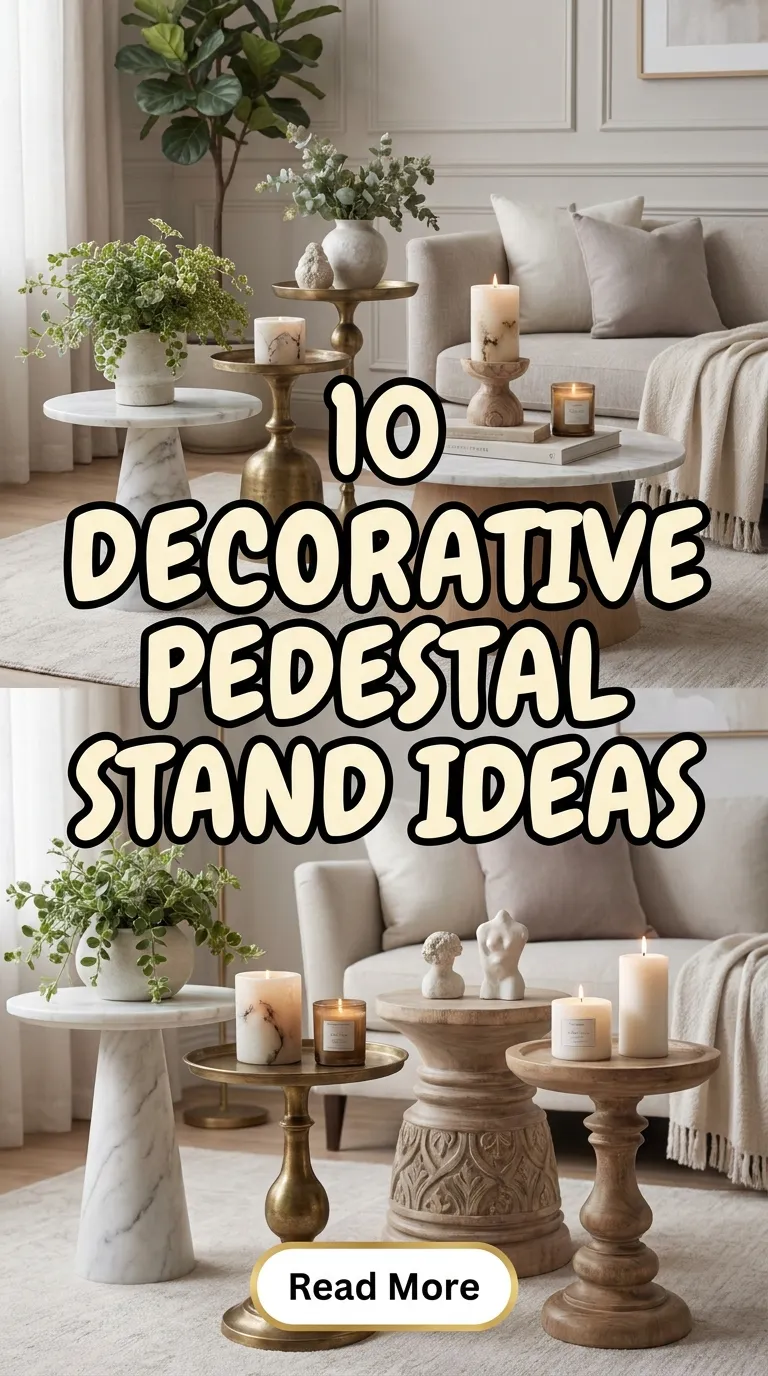
Decorative pedestal stands are a stylish way to add height, elegance, and personality to any room. Whether you want to decorate an empty corner, enhance your entryway, display a beautiful vase, or create a sophisticated living room accent, a pedestal stand can transform an ordinary space into something special. These stands are available in various materials, shapes, sizes, and finishes, making them suitable for modern, traditional, minimalist, rustic, and luxurious interiors.
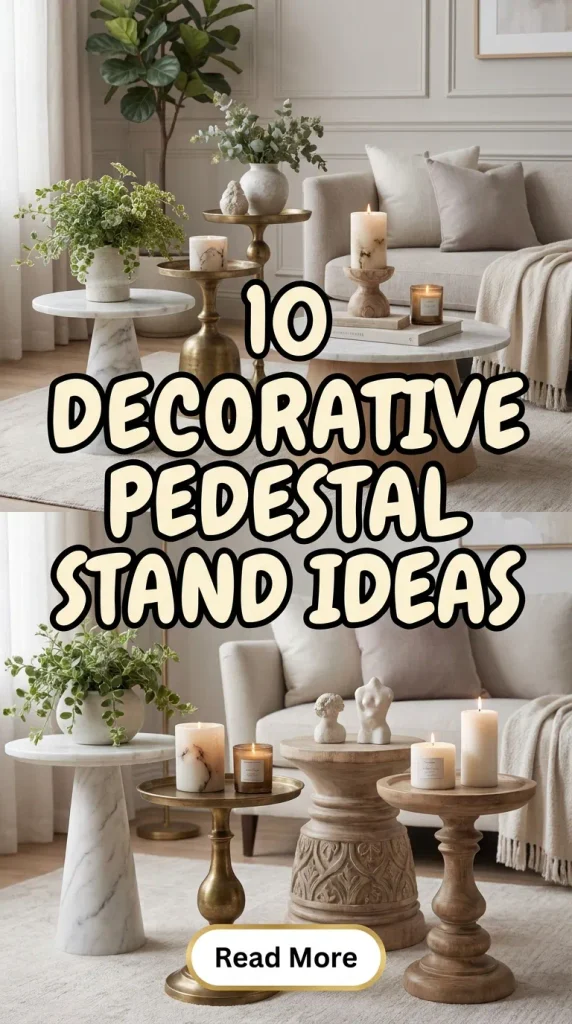
One of the best things about decorative pedestal stands is their versatility. You can use them to display flowers, sculptures, candles, decorative bowls, indoor plants, and seasonal accessories. They can also serve as standalone decorative pieces, adding visual interest even when left empty.
If you are looking for creative ways to refresh your home, these 10 decorative pedestal stand ideas will help you discover beautiful designs and practical styling techniques for different rooms and decorating styles.
Materials Used for Decorative Pedestal Stands
Choosing the right material is essential for creating a cohesive look in your home. Consider these popular options before selecting a pedestal stand.
- Wood: Perfect for farmhouse, rustic, traditional, and Scandinavian interiors. Natural wood adds warmth and texture.
- Marble: An elegant choice for luxurious, contemporary, and classic spaces.
- Metal: Ideal for modern and industrial interiors, especially in black, gold, brass, or silver finishes.
- Concrete: Works well in minimalist and industrial spaces because of its simple appearance and textured finish.
- Ceramic: Suitable for artistic, contemporary, and sophisticated interiors.
- Resin: Offers flexibility in shapes, decorative details, and finishes.
- Glass: Creates a light, airy appearance that complements modern interiors.
- Reclaimed materials: An affordable, sustainable option for rustic decor and DIY projects.
Before buying or making a pedestal, consider its height, stability, surface area, and the weight of the decorative objects you intend to display.
1. Modern Minimalist Pedestal Stand
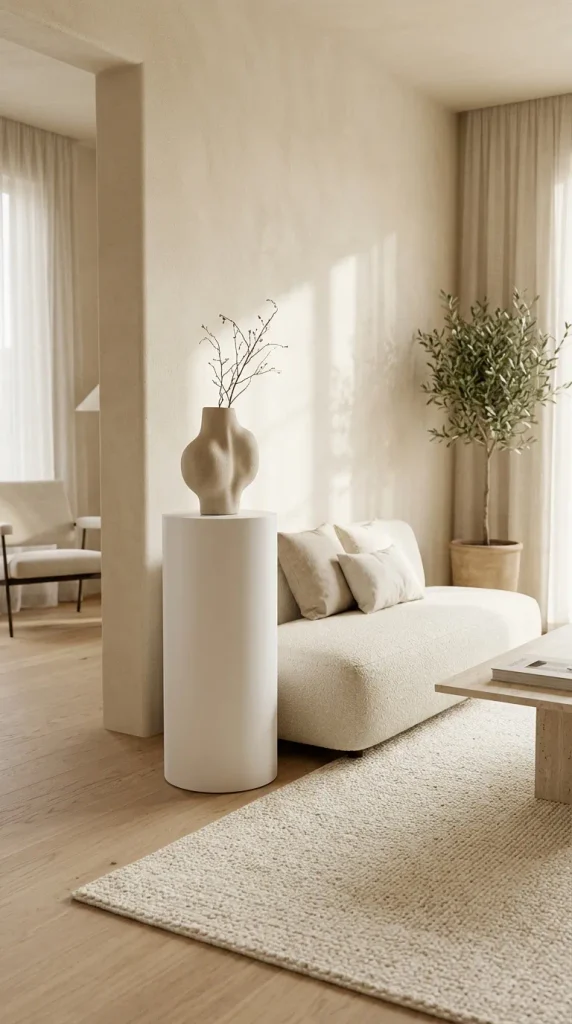
A modern minimalist pedestal stand is an excellent choice for homeowners who appreciate clean lines, simple shapes, and uncluttered spaces. These stands often feature geometric designs, smooth surfaces, and neutral colors such as white, beige, gray, and black.
A cylindrical or rectangular pedestal can create an elegant display area without competing with your other furniture. Place it beside a sofa, in an empty living room corner, or near a large window. A sculptural vase, an abstract art piece, or a single decorative bowl can complete the arrangement.
For a cohesive look, choose a pedestal that complements your existing furniture without matching every piece exactly. A white stand looks beautiful against warm beige walls, while a matte-black design creates contrast in a light-colored room.
How to style it: Place one statement accessory on top and leave the surrounding area relatively uncluttered. This allows the pedestal’s shape and proportions to stand out.
Minimalist pedestal stands are particularly useful in small homes because they introduce visual interest without making a room feel crowded. Choose a sturdy design with a stable base if you plan to display a heavy sculpture or vase.
2. Marble Decorative Pedestal Stand
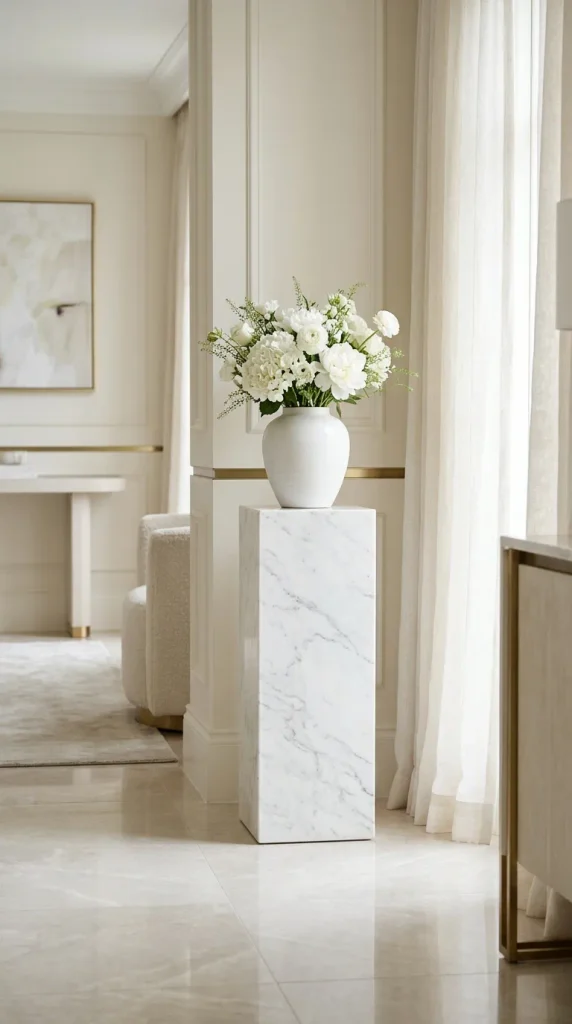
A marble decorative pedestal stand brings timeless elegance to a living room, hallway, bedroom, or formal sitting area. Its natural veining and sophisticated finish can make even a simple design look luxurious.
White marble with subtle gray veins is a classic option, while black marble creates a dramatic statement. Cream and beige stone finishes work beautifully in warm, neutral interiors. If natural marble is outside your budget, consider marble-effect ceramic, resin, or engineered stone.
A marble pedestal looks especially attractive when paired with a decorative vase, a glass sculpture, or a carefully selected art object. You can also use it to display a small floral arrangement in an entryway or beside an accent chair.
How to style it: Combine a marble pedestal with metallic accessories, soft lighting, or neutral-colored furnishings. Gold accents add warmth, while black accessories create a more contemporary appearance.
Because marble can be heavy, consider its placement before moving it into position. Use protective pads beneath the stand to prevent scratches on delicate flooring, and avoid placing it where people may accidentally bump into it.
This design is ideal for anyone who wants to introduce a luxurious detail without renovating an entire room.
3. Rustic Wooden Pedestal Stand
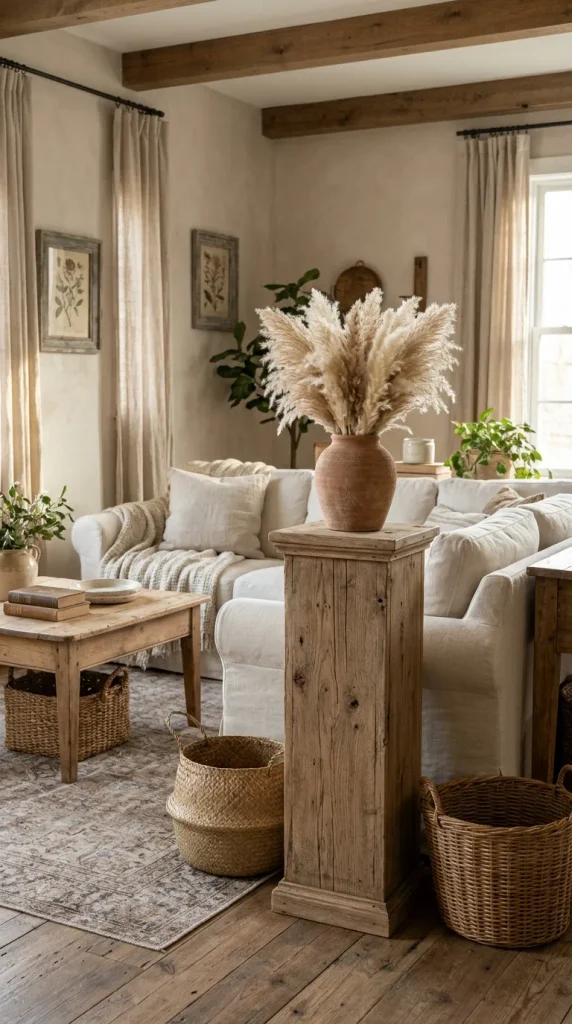
A rustic wooden pedestal stand adds natural warmth and character to your home. Its organic grain, textured finish, and earthy appearance make it especially suitable for farmhouse, cottage, bohemian, and country-inspired interiors.
You can choose a pedestal made from solid oak, pine, walnut, or reclaimed wood. Natural finishes highlight the wood’s grain, while distressed paint creates a charming vintage appearance. Chunky wooden bases and carved details can make the stand feel more traditional, whereas simple wooden blocks suit contemporary rustic spaces.
Place a wooden pedestal beside a fireplace, in an entryway, or near a living room window. It can hold a terracotta vase, a woven basket, a ceramic sculpture, or a small decorative plant.
How to style it: Combine natural wood with linen, jute, wicker, and soft neutral colors. These materials create a warm and inviting atmosphere without making the space feel overly decorated.
For a DIY version, repurpose a sturdy wooden stool or construct a simple pedestal from timber pieces. Sand the surface carefully and apply a suitable wood stain or protective finish.
A rustic wooden pedestal is a practical option for homeowners who prefer natural materials and timeless decor. Every piece of wood has slightly different grain patterns, giving the stand a distinctive appearance.
4. Gold Metal Pedestal Stand
A gold metal pedestal stand introduces glamour and sophistication to a room. Its reflective finish catches the light and creates a decorative accent that works especially well in contemporary, art deco, and elegant traditional interiors.
Gold stands may feature slender legs, geometric frames, circular tops, or sculptural bases. Brushed gold and antique brass provide a subtle, understated effect, while polished gold creates a more dramatic statement.
Place a gold pedestal in an entryway, beside a console table, or near an accent chair. It can display a small floral arrangement, a decorative candle, a glass ornament, or a striking sculpture.
How to style it: Pair the stand with cream, white, charcoal, emerald green, or deep navy. A small amount of gold repeated in picture frames, lamps, or cabinet handles helps create a coordinated appearance.
If your room already contains several metallic finishes, choose a gold tone that complements them rather than introducing too many competing colors.
For an affordable DIY project, repaint a simple wooden or metal stand using suitable metallic paint. Prepare the surface properly and apply a protective topcoat according to the product instructions.
A gold pedestal works best when it enhances the surrounding decor rather than competing with multiple bold accessories.
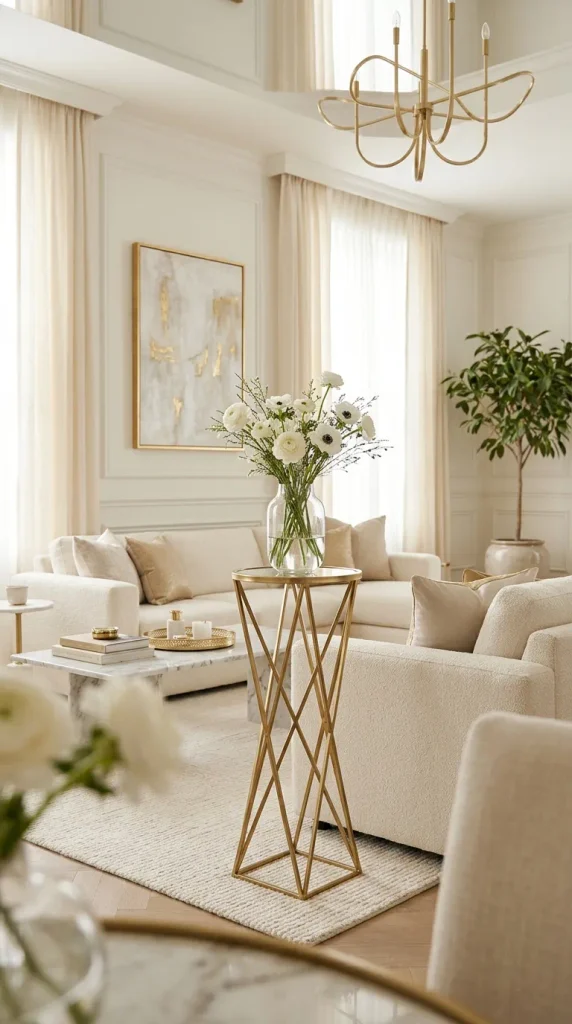
5. Tall Pedestal Stand for Entryway Decor
A tall decorative pedestal stand can make an entryway feel more welcoming and thoughtfully designed. Since the entrance is the first area visitors see, a carefully styled pedestal can establish the overall decorating style of your home.
Choose a design that suits the proportions of your entryway. A slim pedestal works well in a narrow hallway, while a wider design can fill an empty corner in a spacious foyer. Wood, stone, metal, and painted finishes are all suitable options.
Place a tall vase of fresh flowers, artificial branches, or dried foliage on top. Alternatively, display a decorative sculpture or an elegant bowl that complements the colors of your hallway.
How to style it: Position the pedestal near a mirror, wall artwork, or console table, leaving enough room for people to walk comfortably. A wall sconce or nearby table lamp can highlight the display and create a warm atmosphere.
Avoid placing fragile accessories near the edge of the stand, especially in busy entrances. If children or pets use the space, select a stable pedestal and securely position lightweight decorative objects.
This idea is particularly effective when an entryway feels empty but does not have enough space for additional furniture.
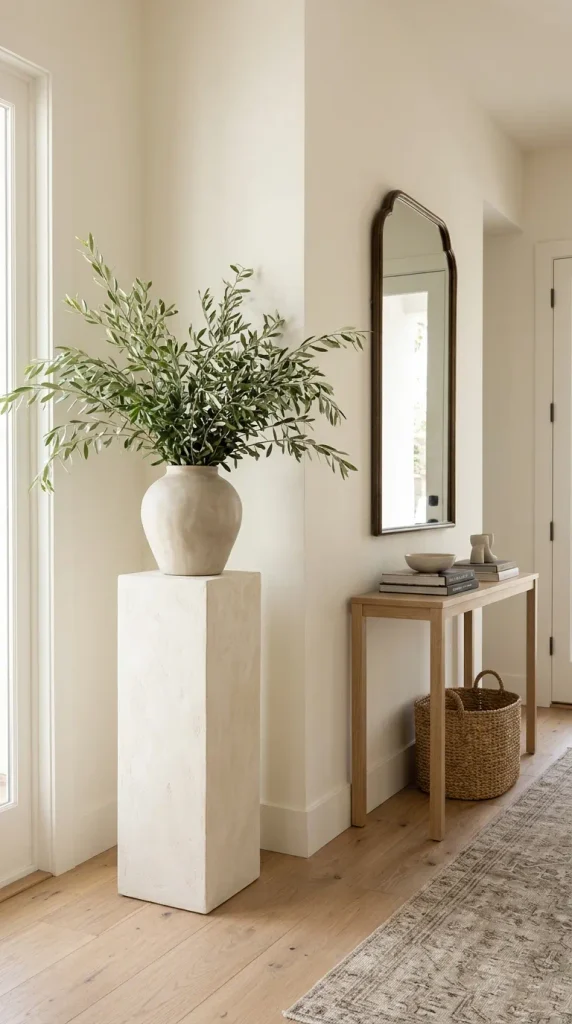
6. Concrete Pedestal Stand for Industrial Interiors
A concrete pedestal stand offers a bold, contemporary look with a simple architectural appearance. Its matte surface, solid form, and understated color make it suitable for industrial, minimalist, and modern interiors.
Concrete stands are commonly available in gray, charcoal, off-white, and sand-colored finishes. Some feature rough, textured surfaces, while others have smooth, polished exteriors. Cylindrical and block-shaped designs are especially popular because they emphasize the material’s natural simplicity.
Place a concrete pedestal in a living room, beside a large window, or in a spacious bedroom. It can support a sculptural object, a ceramic vase, or a small decorative arrangement.
How to style it: Combine concrete with warm wood, black metal, natural linen, and greenery. These contrasting textures prevent the space from feeling cold or overly industrial.
For a DIY project, you can use a suitable concrete casting mix and a mold designed for decorative objects. Follow the manufacturer’s safety instructions, allow the material to cure fully, and finish the surface appropriately.
Concrete can be heavy, so check the flooring and the pedestal’s intended placement before moving it. For easier rearrangement, a lightweight concrete-effect material may be more practical.
This design is ideal for homeowners who want an understated statement piece with a strong architectural presence.
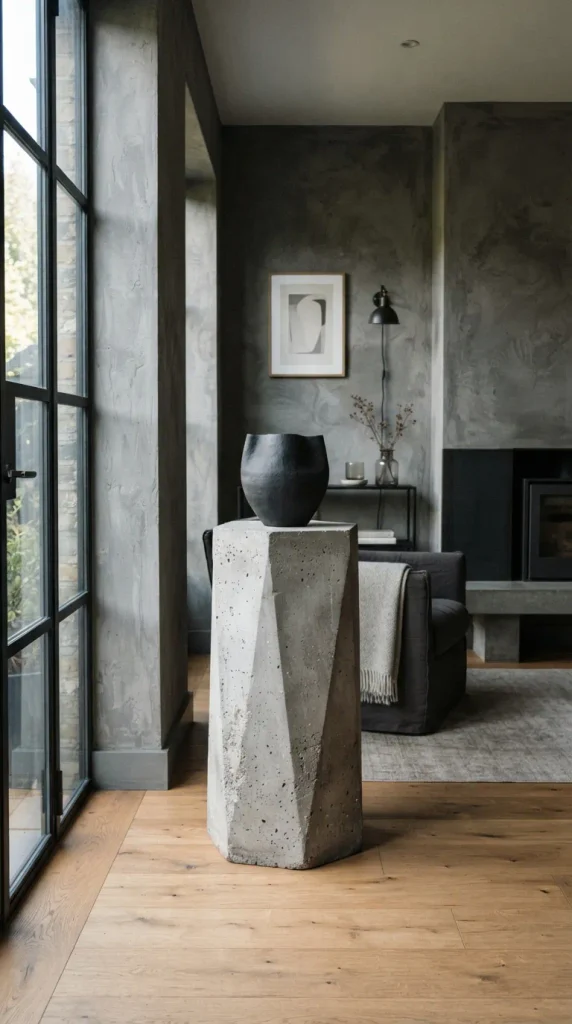
7. Ceramic Pedestal Stand with Artistic Details
A ceramic pedestal stand is a beautiful choice for adding artistic character to your home. Unlike simple geometric stands, ceramic designs can feature curved shapes, sculptural bases, hand-painted patterns, or glossy glazed finishes.
Choose a white or cream ceramic pedestal for a calm, elegant interior. Colorful glazed designs can add personality to eclectic spaces, while earthy terracotta tones complement Mediterranean and bohemian decor.
A ceramic pedestal can become a decorative focal point in a living room, bedroom, or reading nook. Display a small sculpture, a flower arrangement, or a decorative bowl on top to create a curated appearance.
How to style it: Use a single color from the pedestal in nearby cushions, artwork, or accessories. This creates a visual connection without requiring every item in the room to match.
If the pedestal has an intricate pattern or unusual shape, keep the displayed object simple. For a plain ceramic design, a more expressive sculpture or floral arrangement can provide contrast.
Ceramic stands vary considerably in weight and durability, so check whether the design is intended to support your chosen accessories. Place delicate pieces away from busy walkways and protect them from accidental impacts.
This idea works especially well for people who appreciate handmade objects, artistic interiors, and distinctive decorative details.
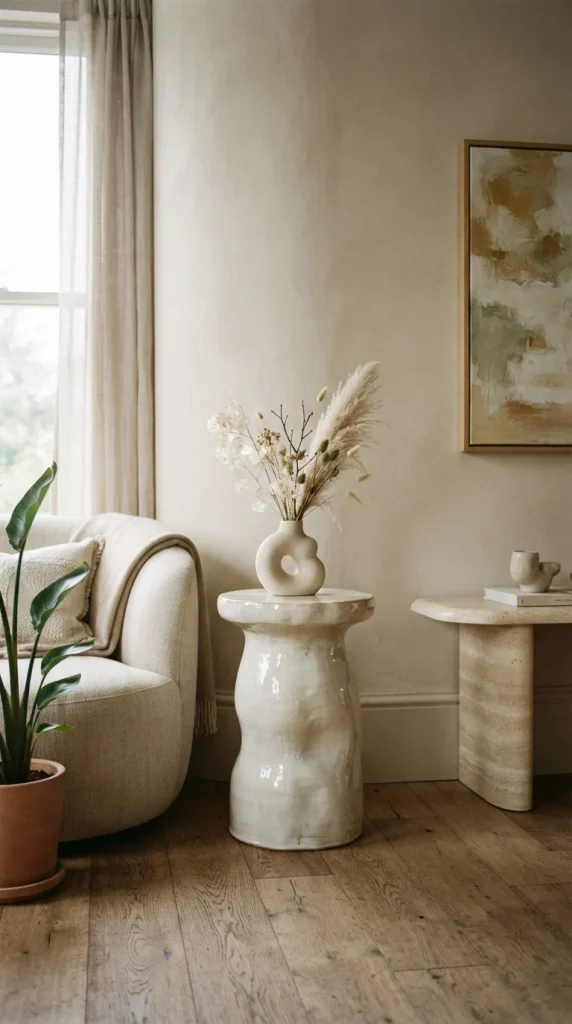
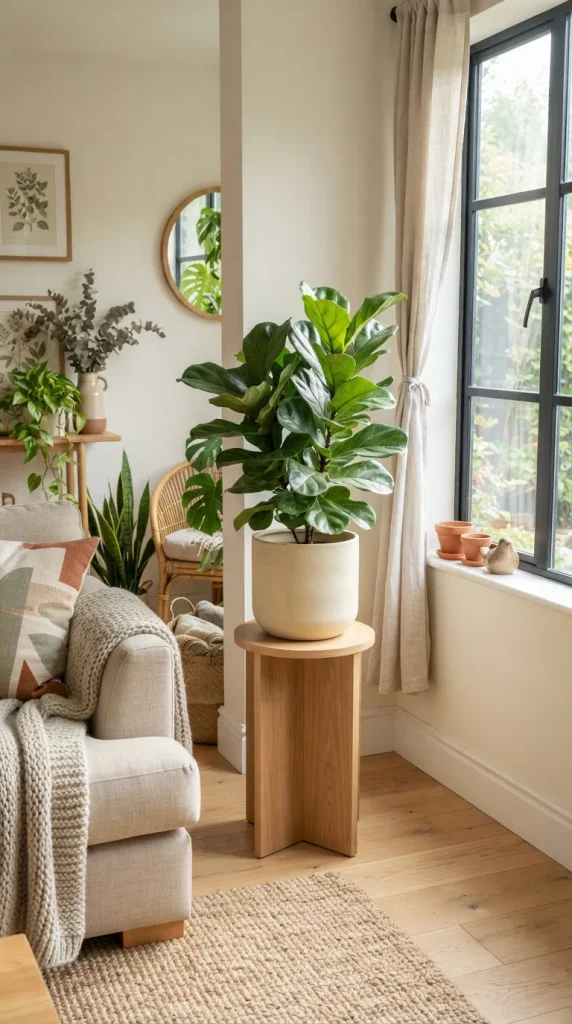
8. Pedestal Stand with Indoor Plants
Using a pedestal stand to display indoor plants is an easy way to introduce greenery at different heights. Plants can soften hard furniture lines, add natural color, and make a room feel more lively.
Choose a pedestal that complements your plant and its container. Wooden stands work beautifully with leafy greenery, black metal designs suit contemporary spaces, and concrete-effect pedestals create a modern botanical display.
Consider plants such as pothos, snake plants, compact palms, or other varieties suited to the lighting conditions in your room. A trailing plant can soften the edges of a stand, while an upright plant creates a clean, structured appearance.
How to style it: Use a single plant as a focal point or arrange two pedestals of different heights to create a layered display. Keep enough distance between the plants and nearby furniture so leaves have room to grow.
Always place a waterproof saucer beneath the plant pot to protect the pedestal from moisture. Check that the stand can support the combined weight of the pot, soil, and water, particularly when using ceramic planters.
Avoid placing a plant in a dark corner if it requires bright light. Choose a plant suited to the location rather than relying on decorative appearance alone.
This idea is perfect for plant lovers who want to display greenery without filling every available surface with pots.
9. Vintage Carved Pedestal Stand
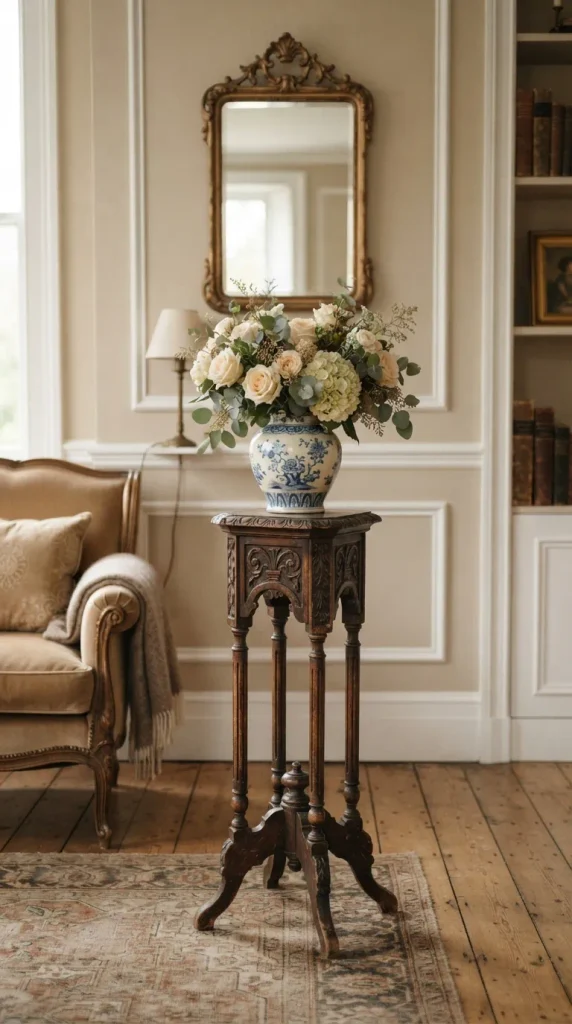
A vintage carved pedestal stand adds timeless charm and decorative detail to traditional, classic, and eclectic interiors. These stands may feature turned legs, ornate carvings, decorative molding, distressed finishes, or antique-inspired silhouettes.
Dark wood creates a rich, traditional appearance, while white or cream painted finishes can produce a softer vintage look. A distressed finish is especially suitable for cottage-style and shabby-chic interiors.
Place a carved pedestal in a formal living room, beside a fireplace, or near an antique mirror. It can display a porcelain vase, a framed decorative object, a small sculpture, or a floral arrangement.
How to style it: Combine the pedestal with traditional artwork, textured fabrics, vintage lamps, or classic decorative accessories. To prevent the area from appearing dated or cluttered, balance ornate details with a few simple modern pieces.
You can also transform an older wooden stand with careful sanding, fresh paint, and new hardware or decorative detailing. Preserve interesting original features whenever possible, as they contribute to the piece’s character.
Before purchasing a vintage pedestal, inspect it for loose joints, cracks, or unstable legs. Repair structural issues before using it to display valuable or fragile objects.
This design is an excellent choice for homeowners who enjoy antique-inspired interiors and furniture with a sense of history.
10. DIY Painted Pedestal Stand
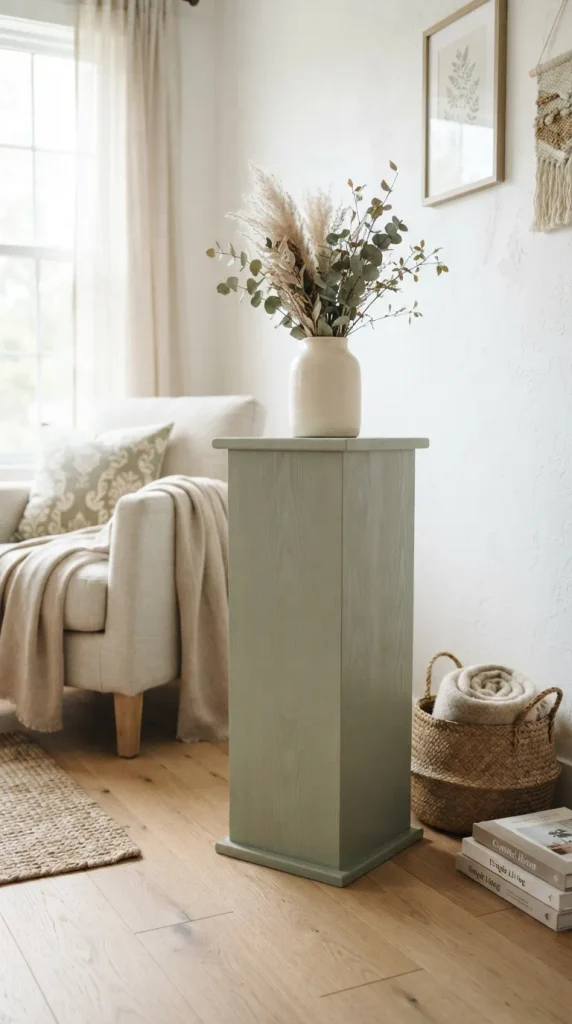
A DIY painted pedestal stand is an affordable way to customize your home decor. Instead of buying an expensive decorative piece, you can transform a simple wooden stand, sturdy stool, or suitable secondhand furniture item into a personalized display.
Start by choosing a shape that suits your room. A cylindrical form creates a modern look, a square pedestal feels architectural, and a turned wooden stand can complement traditional decor.
Select a paint color that fits your interior. White and beige create a subtle appearance, sage green adds a natural touch, and deep navy or black produces a dramatic accent. A muted terracotta finish can introduce warmth into bohemian or Mediterranean-inspired spaces.
How to make it: Clean the surface, sand it where appropriate, and apply a compatible primer. Once the primer dries, add thin, even coats of paint and finish with a protective coating suitable for the material and intended use. Follow the product instructions throughout the process.
After the stand is completely dry, decorate it with a vase, a sculpture, or a small arrangement of accessories.
How to style it: Keep the decorative object simple if the pedestal has a bold color. If you choose a neutral finish, use flowers, artwork, or a sculptural accessory to introduce more personality.
Ensure that the base is stable and the top is strong enough to hold the intended object. Avoid using an ordinary stool as a pedestal if it has loose joints or an uneven surface.
A DIY painted pedestal gives you the freedom to experiment with color, height, and finish while creating a decorative piece that suits your home and budget.
Tips for Decorating with Pedestal Stands
A well-chosen pedestal can enhance a room, but thoughtful placement and styling are important.
1. Choose the Right Height
Consider the height of nearby furniture and the object you intend to display. A pedestal should elevate the decorative piece without blocking sightlines or making the arrangement feel awkward.
2. Match the Interior Style
Choose materials and finishes that complement your room. Marble suits elegant spaces, wood adds warmth, metal introduces a contemporary touch, and concrete creates an architectural effect.
3. Create Visual Balance
A tall pedestal may work well in an empty corner, while a shorter stand can sit beside an accent chair. Avoid placing several tall objects close together unless you are deliberately creating a layered display.
4. Use One Main Decorative Object
A vase, sculpture, or decorative bowl can make a strong statement on its own. Too many small accessories may hide the pedestal’s design and make the arrangement look cluttered.
5. Consider Color Coordination
Repeat one or two colors from the pedestal or displayed accessory elsewhere in the room. This helps the arrangement feel connected to the overall decor.
6. Pay Attention to Stability
Check the pedestal’s weight capacity and base design. Keep fragile or valuable objects away from edges, and use suitable anti-slip pads where necessary.
7. Keep the Display Fresh
Change the accessories seasonally to refresh your home without replacing the pedestal itself. Flowers, branches, decorative bowls, and small sculptures can all create different looks.
Common Mistakes to Avoid
- Choosing the wrong size: A pedestal that is too tall or too wide may overwhelm the room. Measure the available area before buying.
- Overdecorating the top: Too many objects can make the display feel messy. Start with one main accessory.
- Ignoring stability: Lightweight or poorly balanced stands may tip over when supporting heavy objects.
- Mixing too many finishes: Combining numerous competing materials and colors can weaken the overall design.
- Blocking walkways: Avoid placing pedestals where they interfere with doors, seating, or everyday movement.
- Neglecting maintenance: Dust, water marks, and scratches can affect the appearance of wood, metal, marble, and ceramic finishes.
- Using the wrong material outdoors: Indoor pedestals may deteriorate when exposed to rain, humidity, or direct sunlight. Choose weather-appropriate materials for outdoor use.
Conclusion
Decorative pedestal stands offer a versatile way to add height, texture, and visual interest to your home. From minimalist white designs and luxurious marble stands to rustic wooden pieces, gold metal accents, and creative DIY projects, there is an option for almost every decorating style and budget.
The key is to choose a pedestal that complements your space, provides adequate stability, and showcases an object you genuinely enjoy. Whether you place it in your entryway, living room, bedroom, or an empty corner, a thoughtfully styled pedestal can turn an overlooked area into an attractive focal point.
Start with one design that suits your home’s style, keep the display balanced, and experiment with different decorative objects as your preferences change. With the right combination of materials, colors, and accessories, a decorative pedestal stand can become a timeless feature in your home.


Leave a Reply