
Introduction
Transitional interior design is a timeless decorating style that combines the elegance of traditional interiors with the simplicity of modern design. It creates a balanced look that feels sophisticated, comfortable, and welcoming without appearing overly formal or too minimalist. This style is popular among homeowners who appreciate classic details but also want clean lines, practical furniture, and a fresh atmosphere.
One of the best things about transitional design is its versatility. It works beautifully in living rooms, bedrooms, dining rooms, kitchens, and even small apartments. Neutral colors, natural materials, elegant lighting, and carefully selected accessories help create a cohesive interior that remains attractive as decorating trends change.

Unlike strictly traditional interiors, transitional spaces usually avoid excessive ornamentation. Instead, they focus on quality furniture, subtle patterns, balanced proportions, and a mixture of old and new elements. For example, a classic upholstered sofa can look beautiful beside a contemporary coffee table, while a traditional chandelier can add character to a room with modern furniture.
In this article, you will discover 10 transitional interior design ideas, along with practical decorating suggestions, materials to consider, and common mistakes to avoid.
Materials and Elements Used in Transitional Interior Design
Before exploring the ideas, consider the materials and decorative elements that help establish a transitional look.
- Neutral paint colors: Warm white, beige, greige, taupe, and soft gray create a versatile foundation.
- Natural wood: Oak, walnut, and other wood finishes add warmth and timeless appeal.
- Upholstered furniture: Linen, cotton, velvet, and textured woven fabrics make rooms feel comfortable and refined.
- Stone surfaces: Marble, quartz, and natural stone add understated sophistication.
- Metal accents: Brushed brass, polished nickel, matte black, and bronze can complement furniture and lighting.
- Layered textiles: Curtains, rugs, cushions, and throws introduce texture without overwhelming the space.
- Classic accessories: Mirrors, framed artwork, ceramic vases, and carefully chosen decorative objects complete the design.
- Modern lighting: Pendant lights, table lamps, wall sconces, and contemporary chandeliers combine function with visual appeal.
The key is to select a consistent color palette and repeat a few finishes throughout the room.
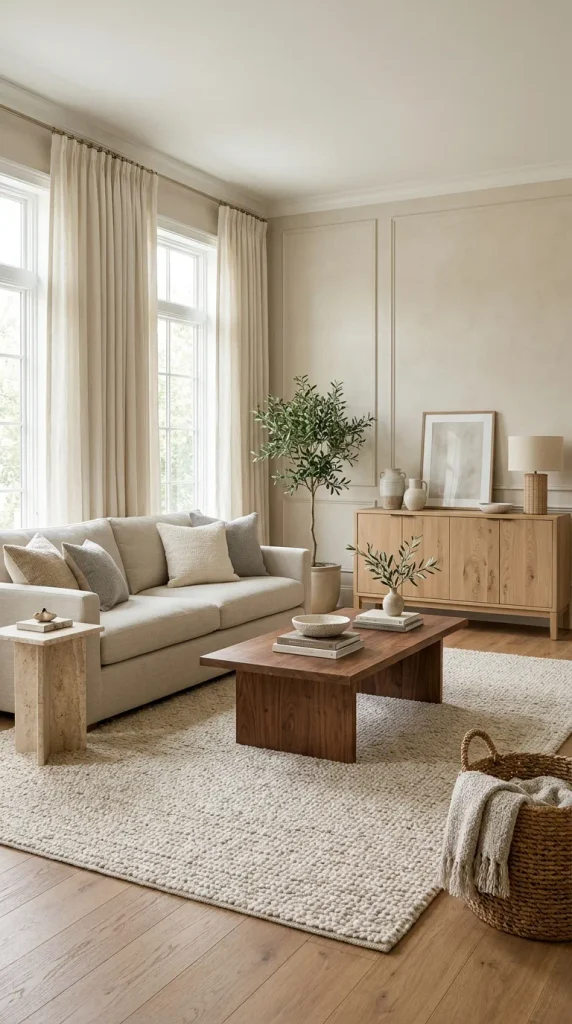
1. Create a Neutral Transitional Living Room
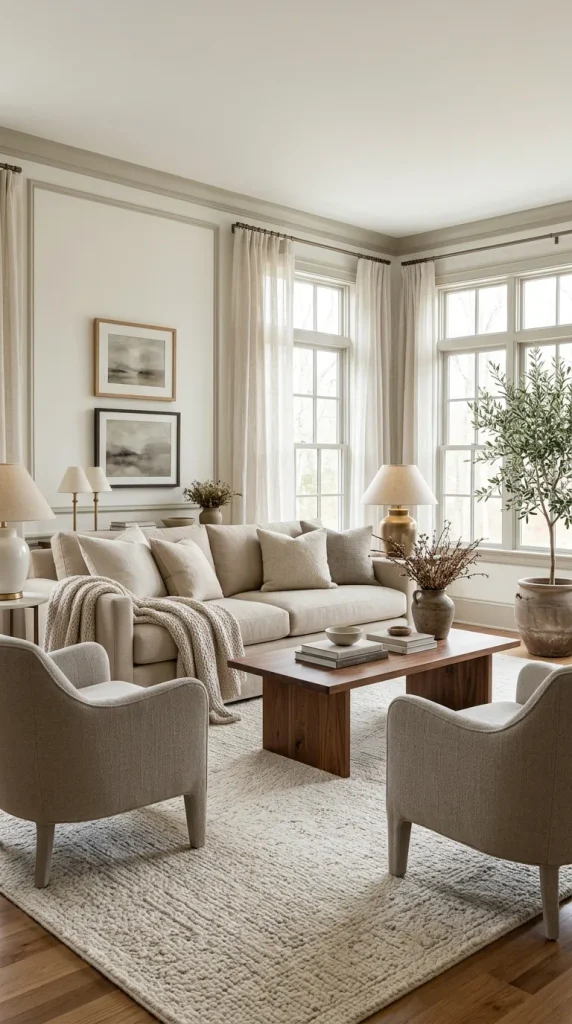
A neutral living room is one of the easiest ways to introduce transitional interior design. Soft beige, warm white, taupe, and greige create a calm background that allows traditional and contemporary furnishings to work together naturally.
Start with a comfortable sofa featuring clean lines and classic upholstery. A beige or ivory sofa is particularly versatile because it can complement both traditional wooden furniture and modern accent pieces. Add a pair of upholstered armchairs with gently curved silhouettes to introduce a subtle traditional influence.
Choose a coffee table with a simple shape and attractive natural material. A walnut table, for example, adds warmth to a light-colored room, while a contemporary stone table creates a more modern appearance. A large area rug can anchor the seating arrangement and help define the living space.
Layering is essential to making a neutral room feel inviting rather than plain. Use cushions in different fabrics, such as linen, cotton, and velvet. A textured throw draped over the sofa adds softness without introducing too many colors.
For lighting, combine a central ceiling fixture with table lamps or floor lamps. This creates a comfortable atmosphere in the evening and makes the room feel more thoughtfully designed.
Practical tip: Repeat two or three main colors throughout the space. For example, combine ivory, warm beige, and walnut wood for a cohesive result.
2. Mix Traditional and Modern Furniture
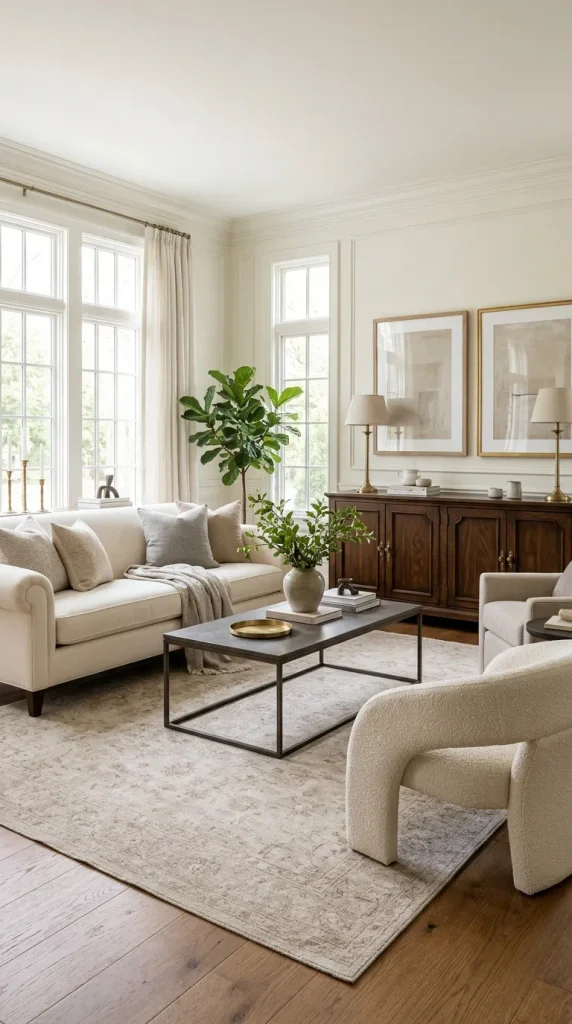
The defining feature of transitional design is the balance between traditional and contemporary furniture. Rather than choosing everything from one design period, combine pieces that share complementary colors, proportions, or materials.
For example, place a classic rolled-arm sofa beside a modern rectangular coffee table. The sofa introduces softness and traditional character, while the coffee table keeps the arrangement feeling current. Alternatively, pair a contemporary dining table with upholstered chairs featuring elegant curved backs.
The key is to avoid making the room feel like a random collection of unrelated furniture. Look for a visual connection between the pieces. Similar wood tones, coordinated upholstery, or complementary metal finishes can help different styles work together.
You can also combine vintage furniture with newer pieces. A traditional wooden sideboard can look striking against a simple modern wall, while a contemporary accent chair can refresh a room filled with antique-inspired furnishings.
Pay attention to scale as well. A large traditional sofa may overwhelm a small modern coffee table, while several oversized furniture pieces can make a room feel crowded. Maintain comfortable walking paths and allow each important piece enough space.
Practical tip: Choose one or two traditional statement pieces and balance them with simpler contemporary furniture. This creates contrast while keeping the overall room harmonious.
3. Use Warm White and Greige Color Palettes
Color plays a major role in transitional interior design. Although the style often relies on neutrals, the goal is not to make every surface identical. Instead, combine related shades to create depth, warmth, and subtle contrast.
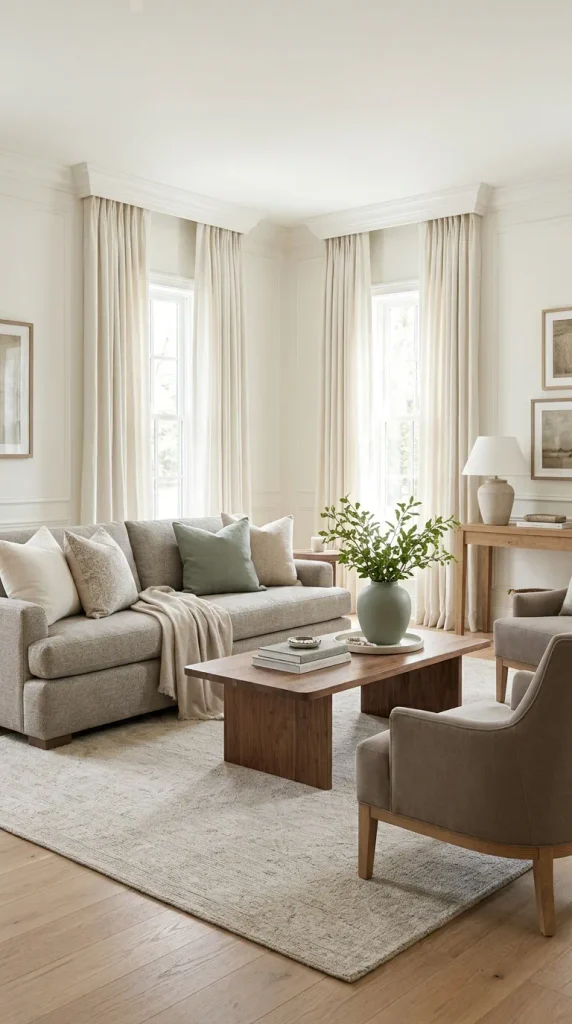
Warm white is ideal for walls, ceilings, and trim because it provides a fresh background without looking too stark. Greige, which combines gray and beige, works well for larger upholstered pieces or accent walls. Taupe adds richness, while soft gray can introduce a slightly cooler element.
To create a balanced palette, choose one dominant neutral, one secondary shade, and one or two accent colors. For example, warm white walls, greige upholstery, walnut furniture, and muted sage-green cushions can create a sophisticated living room.
If you prefer a more dramatic appearance, introduce navy blue, deep olive, or muted charcoal through artwork, cushions, or a single accent chair. These colors add personality without overpowering the room.
Consider the lighting in your space before selecting paint. A color may appear warmer in a sunny room and cooler in a room with limited natural light. Test paint samples on different walls and observe them throughout the day.
Practical tip: Use different textures to distinguish similar neutral shades. Linen, wool, wood, and stone prevent a neutral palette from appearing flat.
4. Design an Elegant Transitional Bedroom
A transitional bedroom should feel restful, comfortable, and quietly sophisticated. The easiest way to achieve this is to combine classic furniture shapes with streamlined bedding and a restrained color palette.
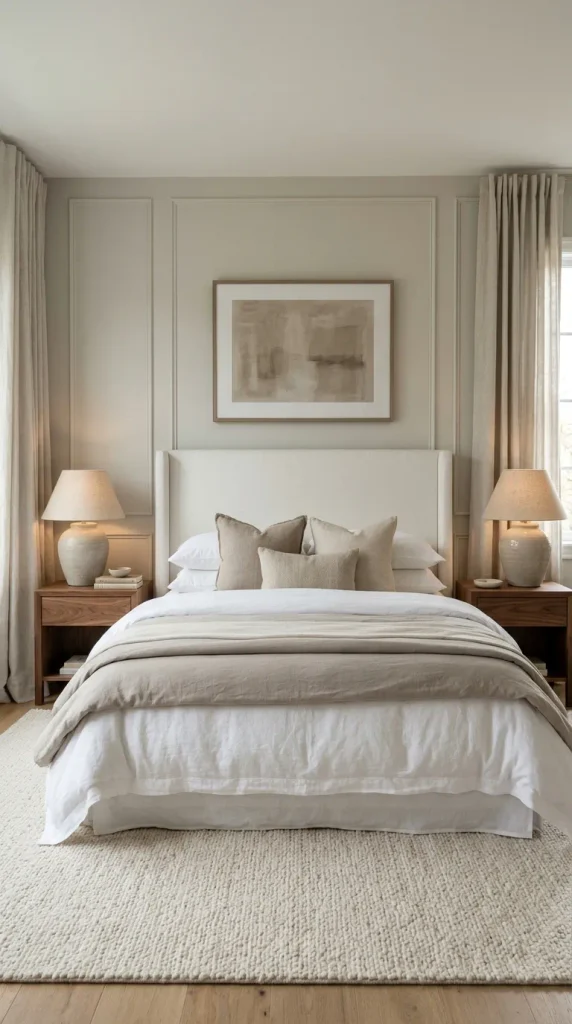
Begin with a bed featuring a simple upholstered headboard. A rectangular or gently curved design works well because it provides traditional softness without excessive decoration. Choose upholstery in beige, ivory, taupe, or soft gray.
Layer the bed with high-quality bedding in complementary shades. Crisp white sheets, a neutral duvet, textured cushions, and a soft throw create a welcoming arrangement. Instead of using many contrasting patterns, focus on subtle differences in fabric and texture.
Bedside tables can introduce another design element. Traditional wooden nightstands pair beautifully with a modern upholstered bed, while contemporary bedside tables can refresh a more classic headboard.
Lighting should be both practical and decorative. Place matching table lamps on either side of the bed for a balanced look, or use wall-mounted sconces if space is limited. Soft, warm lighting makes the bedroom more relaxing.
Finish the room with understated artwork, a large area rug, and full-length curtains. Keep decorative objects limited to a few meaningful pieces so the bedroom remains uncluttered.
Practical tip: Symmetry is especially effective in transitional bedrooms. Matching bedside tables and coordinated lamps create a polished appearance without requiring identical decorative accessories.
5. Add Timeless Wood Furniture and Natural Materials
Natural materials help transitional interiors feel warm and grounded. Wood furniture is particularly useful because it connects the classic side of the style with the clean simplicity of modern design.
Walnut offers a rich, sophisticated finish, while oak provides a lighter and more casual appearance. Darker wood can add contrast to a neutral room, whereas pale wood makes a small space feel more open.
You do not need to match every wooden item exactly. A walnut coffee table, oak dining chairs, and a medium-toned wooden sideboard can work together if their undertones and finishes complement one another. The overall combination should feel intentional rather than perfectly uniform.
Stone, ceramic, woven fibers, and natural fabrics can provide additional texture. Consider a stone-topped coffee table, ceramic table lamps, linen curtains, or a woven basket beside the sofa.
These materials also help prevent neutral interiors from feeling sterile. A room with white walls and beige furniture becomes much more interesting when it includes visible wood grain, textured upholstery, and tactile decorative objects.
Practical tip: Limit the number of dominant wood finishes in one room. Two or three complementary finishes are usually easier to coordinate than many unrelated tones.
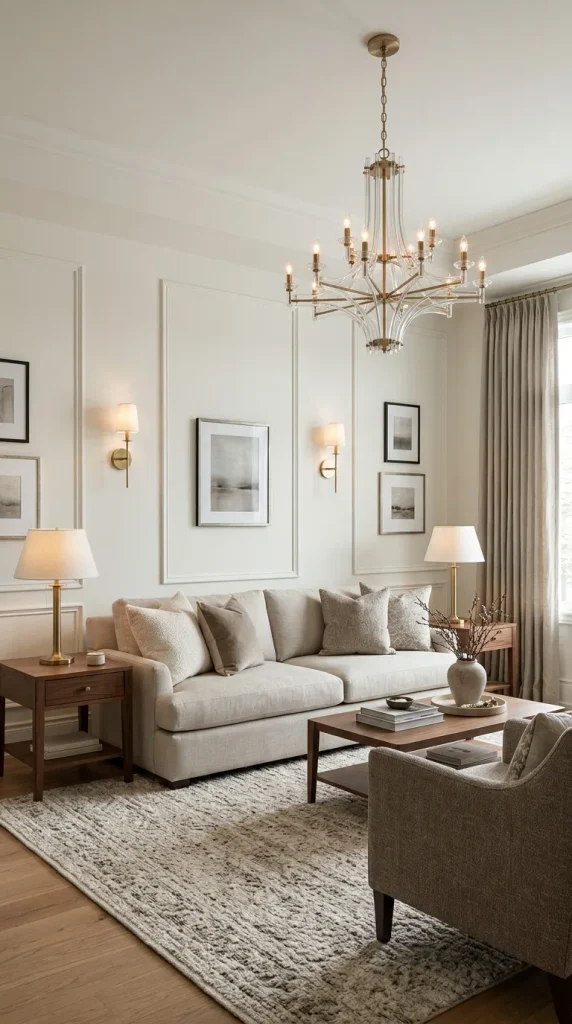
6. Choose Statement Lighting With Classic Elegance
Lighting can transform a transitional interior by combining traditional decorative appeal with modern simplicity. Instead of treating fixtures as purely functional, use them as carefully selected design features.
A chandelier with a clean silhouette can look beautiful above a dining table or in a living room. Traditional-inspired fixtures with simplified shapes are especially suitable because they provide elegance without excessive ornamentation.
Pendant lights work well in kitchens, dining areas, and entryways. Choose fixtures with materials that complement the rest of the interior, such as brushed brass, polished nickel, glass, or matte black metal.
Layering different light sources is just as important as selecting the right fixture. A ceiling light provides general illumination, table lamps create a softer atmosphere, and wall sconces can highlight artwork or architectural details.
Use warm-white bulbs in living rooms and bedrooms to create a welcoming mood. In kitchens and work areas, choose lighting that provides enough brightness for practical tasks while remaining consistent with the overall design.
The scale of the fixture matters, too. A tiny pendant may look insignificant over a large dining table, while an oversized chandelier can overwhelm a compact room.
Practical tip: Repeat the same metal finish in a few places, such as lighting, cabinet handles, and picture frames. This creates continuity without requiring every fixture to match.
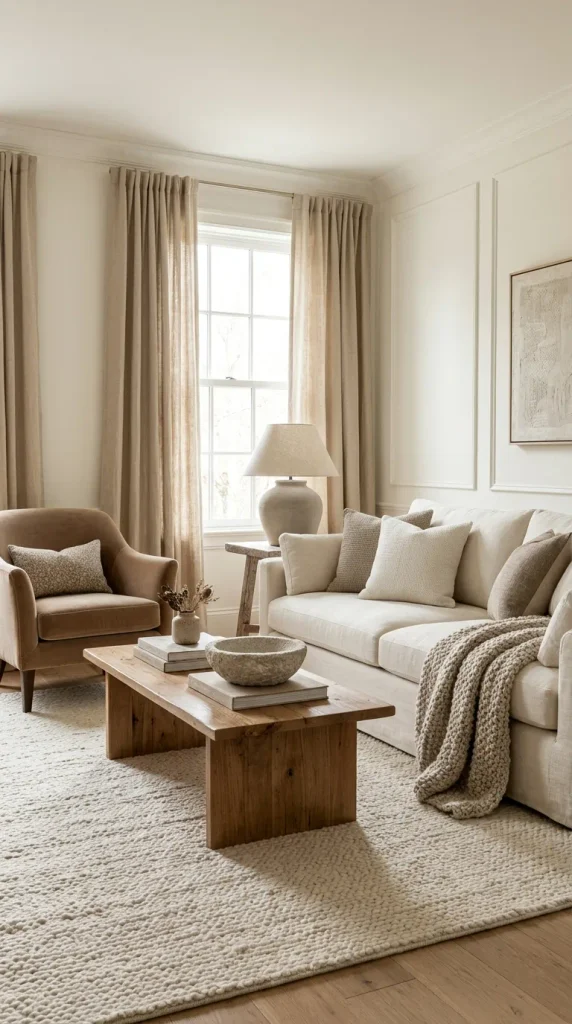
7. Layer Textures for a Comfortable Interior
Transitional interiors often rely on subtle texture rather than bold colors or excessive decoration. Layering different materials gives the room depth while preserving its calm, elegant appearance.
Start with a large area rug to anchor the furniture arrangement. Wool, cotton, and textured synthetic rugs can all work well, depending on your budget and maintenance needs. Choose a subtle pattern or a solid neutral shade if the room already contains several decorative elements.
Next, introduce different upholstery fabrics. A linen sofa, velvet accent chair, and woven cushions can create a sophisticated combination because each material reflects light differently and feels distinct to the touch.
Curtains are another important layer. Floor-length linen or cotton curtains soften windows and make ceilings appear taller when hung close to the ceiling. For a more formal appearance, consider a heavier fabric with a simple drape.
Wood, stone, ceramic, and glass provide additional contrast. For example, a smooth stone coffee table can be balanced with a woven basket and a soft wool throw.
Texture should be distributed throughout the room rather than concentrated in one corner. Repeat a few materials in different locations to make the design feel cohesive.
Practical tip: When using a neutral color scheme, prioritize differences in texture and finish. They help create visual interest without introducing unnecessary colors.
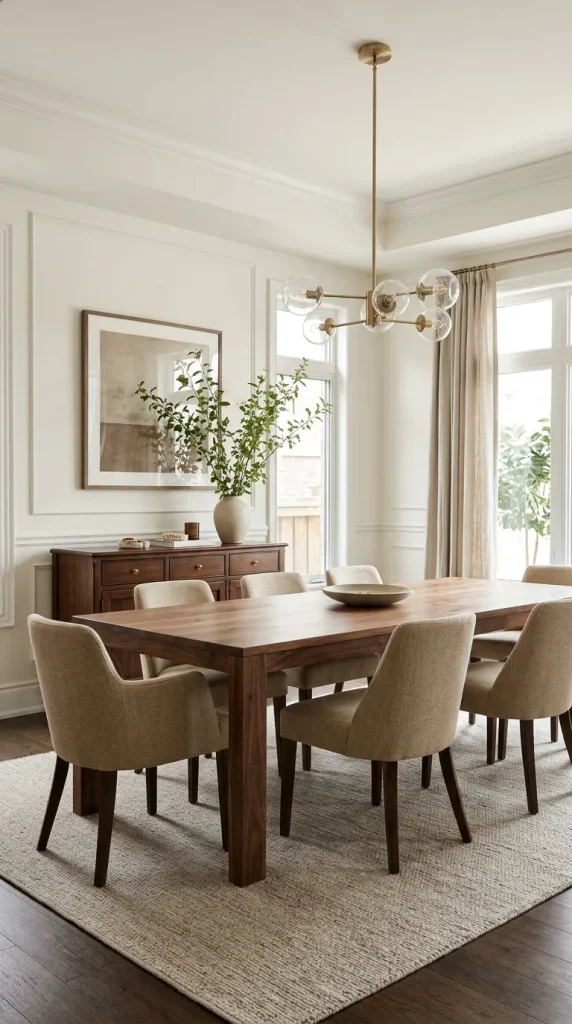
8. Create a Sophisticated Transitional Dining Room
A transitional dining room combines the elegance of traditional dining furniture with a fresh, contemporary atmosphere. It should feel suitable for everyday meals while remaining polished enough for guests and special occasions.
Begin with a dining table that suits the size of your room. A solid wooden table creates warmth and a traditional foundation, while a simpler table with a stone or smooth wood top introduces a modern touch.
Pair the table with upholstered dining chairs or chairs featuring clean, sculptural lines. You can use matching chairs for a classic appearance or introduce subtle variation at the ends of the table. The important thing is to maintain a coordinated overall look.
A pendant light or chandelier above the dining table creates a focal point. Choose a fixture that is proportionate to the table and hang it at a comfortable height so it illuminates the surface without obstructing views across the room.
A sideboard provides storage for tableware and can also display a few decorative objects. A large mirror or a piece of understated artwork above it adds visual interest.
Keep the table styling relatively simple. A ceramic vase, a low floral arrangement, or a pair of candleholders can create an elegant centerpiece without making everyday dining difficult.
Practical tip: Leave enough space around the table for chairs to move comfortably. Good circulation is essential to a functional dining room.
9. Incorporate Classic Architectural Details
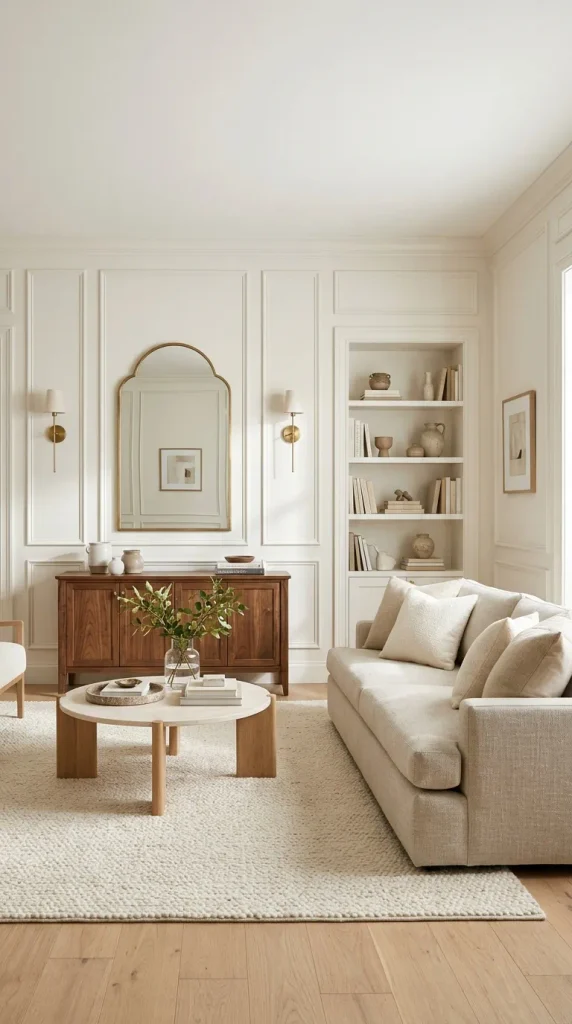
Architectural details can make a transitional interior feel established, elegant, and thoughtfully designed. Features such as wall molding, simple paneling, decorative trim, and framed doorways introduce traditional character without requiring heavily ornamented furniture.
Wall molding is particularly effective in living rooms, dining rooms, and bedrooms. Simple rectangular panels painted the same color as the wall create subtle depth and sophistication. For a more contemporary result, keep the profiles clean and avoid overly elaborate designs.
Built-in shelving can also work beautifully in transitional interiors. Use a balanced combination of books, ceramic objects, framed artwork, and a few decorative accessories. Leaving some shelf space empty helps prevent the arrangement from looking crowded.
Fireplace surrounds, window trim, and interior doors provide additional opportunities to introduce architectural character. Classic proportions combined with simple finishes allow these elements to complement modern furniture.
If your home has limited architectural features, you can introduce the look through removable molding, carefully planned trim work, or built-in-style shelving. Always measure accurately and consider how the details will relate to the room’s existing dimensions.
Practical tip: Repeat architectural lines where possible. For example, rectangular wall panels can complement a rectangular mirror or a simple framed artwork arrangement.
10. Style a Small Space With Transitional Design
Transitional design works particularly well in small homes and apartments because it emphasizes balance, useful furniture, and restrained decoration. A compact room can feel elegant without requiring expensive renovations or excessive accessories.
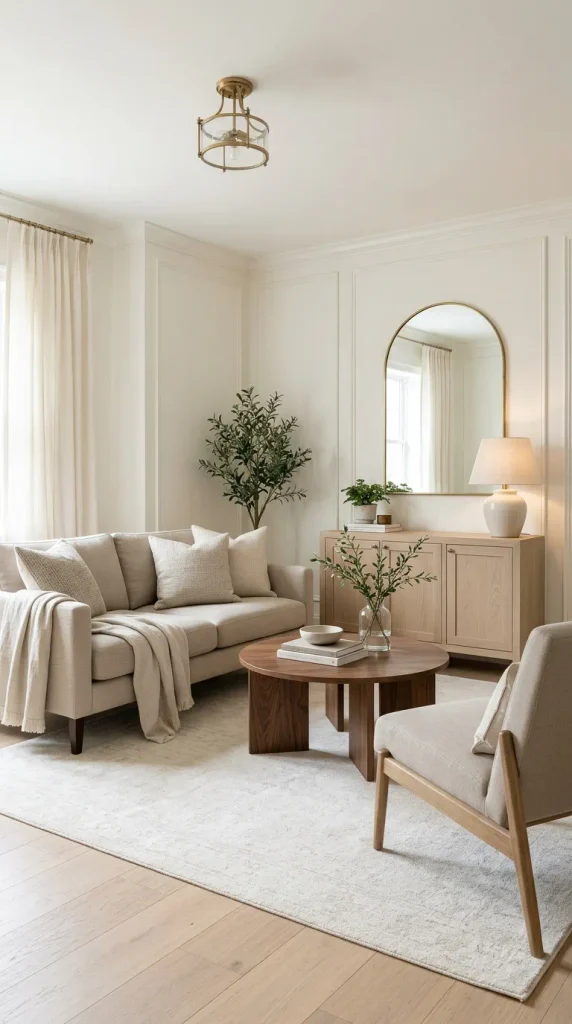
Start with a light, cohesive color palette. Warm white walls, beige upholstery, and pale wood furniture help maintain an open appearance. You can introduce deeper shades through cushions, artwork, or a single accent chair.
Choose furniture according to the room’s proportions. A compact sofa with clean lines, a round coffee table, and slim side tables can provide functionality without overwhelming the available space. Furniture with visible legs can also help the room feel less visually heavy.
Mirrors are useful for reflecting natural light and creating a greater sense of depth. Place one where it can reflect a window or another bright part of the room.
Storage should be attractive as well as practical. Consider a coffee table with hidden storage, a sideboard with closed cabinets, or baskets that coordinate with the color palette. Keeping everyday items organized helps preserve the uncluttered appearance associated with transitional design.
Use lighting in layers to make the space feel more flexible. A ceiling fixture, a floor lamp, and a small table lamp can provide different levels of illumination throughout the day.
Practical tip: Avoid filling every available surface with accessories. A few well-chosen items will have more impact than a crowded collection of decorative objects.
Practical Tips for Successful Transitional Interior Design
- Choose a consistent color palette. Start with two or three neutrals and introduce accent colors sparingly.
- Balance old and new. Pair traditional silhouettes with contemporary finishes rather than mixing unrelated styles randomly.
- Prioritize comfort. Select furniture that looks elegant but remains practical for everyday use.
- Use texture strategically. Combine wood, stone, linen, wool, and ceramic to create depth.
- Repeat selected finishes. Coordinated metals and wood tones help connect separate rooms and furniture pieces.
- Pay attention to proportions. Furniture, rugs, artwork, and lighting should suit the dimensions of the room.
- Layer your lighting. Combine general lighting with task lighting and softer ambient sources.
- Keep accessories intentional. Display a few meaningful pieces instead of filling every surface.
- Test paint colors first. Natural and artificial light can significantly affect how neutral colors appear.
- Decorate gradually. Add pieces over time so you can evaluate how each item contributes to the overall design.
Common Mistakes to Avoid
1. Making everything beige. Neutral colors are important, but a room can feel flat if every surface has the same color and finish. Introduce wood, contrasting textiles, and a few deeper accents.
2. Mixing too many styles. Transitional design combines traditional and modern elements, but the result should still feel coordinated. Use shared colors, materials, or shapes to connect different pieces.
3. Choosing furniture that is too large. Oversized furniture can make a room uncomfortable and restrict movement. Measure the space before purchasing major items.
4. Overdecorating the room. Too many cushions, accessories, and decorative objects can undermine the clean appearance of transitional interiors. Edit the arrangement and keep the most useful or meaningful items.
5. Ignoring lighting. A beautiful room can feel cold or impractical if it relies on one harsh overhead light. Use multiple light sources to improve comfort and flexibility.
6. Matching every finish exactly. A coordinated interior does not need identical furniture or hardware throughout. Complementary finishes often create a more natural and sophisticated result.
7. Following trends too closely. Transitional design is intended to remain versatile over time. Invest in durable foundational pieces and use easily replaceable accessories to experiment with current trends.
Conclusion
Transitional interior design offers an appealing balance between traditional elegance and modern simplicity. By combining neutral colors, comfortable furniture, natural materials, layered textures, and carefully chosen decorative details, you can create a home that feels timeless without appearing old-fashioned.
Whether you are decorating a spacious living room, refreshing a bedroom, styling a dining area, or improving a small apartment, the key is to maintain balance. Mix classic and contemporary elements thoughtfully, pay attention to scale, and allow each material and furnishing to contribute to the overall atmosphere.
You do not need to redesign your entire home at once. Start with a consistent color palette, update a few key furniture pieces, improve the lighting, and add texture through rugs, curtains, and cushions. With a few intentional choices, transitional interior design can make your home feel more refined, welcoming, and comfortable for years to come.




Leave a Reply