
Opalescent glass windows are a beautiful way to bring softness, elegance, and visual interest into your home. Known for their milky appearance, subtle color variations, and gentle light diffusion, opalescent glass can transform ordinary windows into decorative features. Unlike completely transparent glass, it allows natural light to enter while creating a softer, more private atmosphere.

Whether you love modern interiors, vintage-inspired spaces, traditional architecture, or artistic home decor, opalescent glass can complement many design styles. It comes in different colors, textures, and patterns, making it suitable for kitchens, bathrooms, bedrooms, living rooms, entryways, and even interior partitions.
If you are planning a renovation or simply looking for a distinctive window upgrade, these ten opalescent glass window ideas will help you discover practical and stylish ways to use this decorative material.
What Is Opalescent Glass?
Opalescent glass is a type of decorative glass that displays a milky, luminous appearance and may contain cloudy patterns, soft color transitions, or layered tones. Depending on its composition and finish, it can look white, cream, pale blue, blush pink, green, or multicolored.
Its main appeal is the way it interacts with light. Instead of providing a completely clear view, it diffuses incoming daylight and creates a gentle glow. Some varieties are translucent, while others are more opaque. The level of privacy and light transmission depends on the specific glass product.
Opalescent glass is often used in stained-glass designs, decorative panels, artistic windows, and architectural accents. Modern versions can also work beautifully in contemporary homes, especially when paired with clean frames and simple interior finishes.
Before choosing a design, consider whether you want the glass to provide privacy, serve as a decorative focal point, brighten a darker room, or complement an existing architectural style.
Materials and Design Elements to Consider
The materials surrounding opalescent glass influence the final appearance of your window. Choosing the right combination will help create a cohesive and long-lasting design.
- Opalescent glass panels: Choose the color, texture, and opacity according to the room’s lighting and privacy needs.
- Window frames: Black metal, white-painted wood, natural oak, and bronze finishes can all complement decorative glass.
- Wood trim: Natural or painted trim can make an opalescent window feel warmer and more integrated into the room.
- Metal framing: Slim black, brass, or bronze frames can create a refined architectural appearance.
- Decorative glazing bars: These divide a window into smaller sections and are especially effective for vintage and geometric designs.
- Privacy glazing: For bathrooms and bedrooms, choose a product specifically suited to your desired level of privacy.
- Weatherproof window systems: Exterior installations need glazing systems designed for outdoor exposure, thermal performance, and water resistance.
For exterior windows, always confirm that the selected glass is suitable for the location and complies with applicable building and safety requirements. Decorative glass should not automatically be assumed to provide the same insulation, security, or impact resistance as a standard insulated window unit.
1. Classic White Opalescent Glass Windows
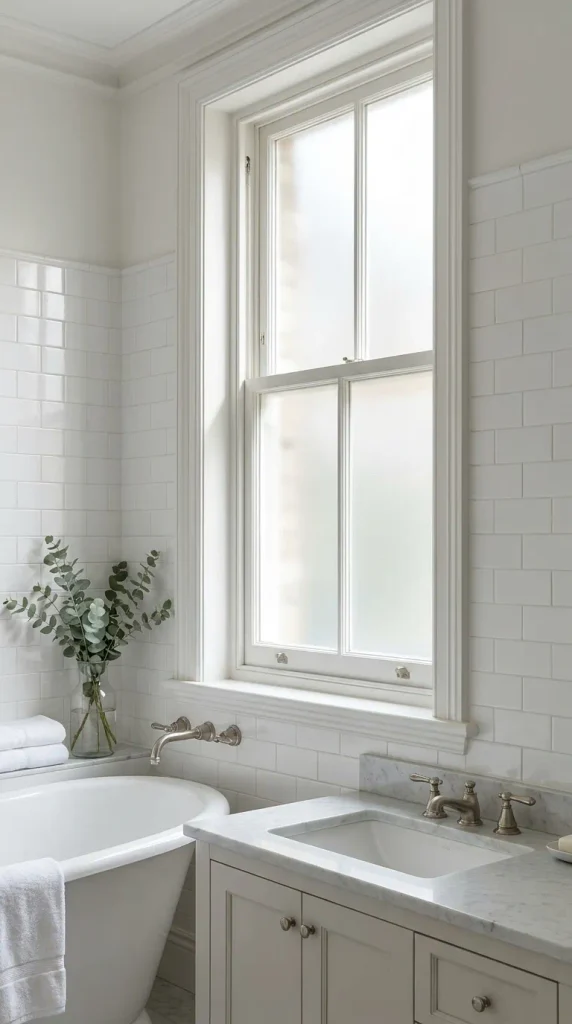
Classic white opalescent glass windows are an excellent choice for homeowners who want a bright, timeless, and elegant interior. Their soft milky appearance allows daylight to filter into a room without the sharp transparency of ordinary clear glass. The result is a gentle glow that works well with both traditional and contemporary decor.
Best for: Bathrooms, kitchens, hallways, and traditional interiors.
White opalescent glass looks especially beautiful when installed in white-painted wooden frames. The combination creates a clean, seamless appearance that feels calm rather than visually busy. In a traditional home, decorative muntins or small divided panes can add architectural character. In a modern home, a large uninterrupted panel can make the window appear more minimal and sophisticated.
For bathrooms, white opalescent glass can soften the view of outdoor surroundings while helping maintain privacy. It can also work in a kitchen window above the sink, where the diffused daylight creates a pleasant atmosphere for everyday tasks.
Pair this style with white walls, pale stone countertops, light oak cabinets, or brushed-nickel hardware. These materials reinforce the bright, understated appearance without competing with the glass.
If you prefer a warmer interior, consider cream-colored opalescent glass instead of a cool white variation. Warm white tones work particularly well with beige walls, natural wood, and brass fixtures.
When selecting the glass, check a sample in both natural daylight and artificial light. Some white opalescent varieties can look brighter during the day and more opaque at night. Also, do not assume that every white glass product provides complete privacy; choose the opacity that suits the window’s position.
2. Opalescent Glass Windows with Soft Blue Tones
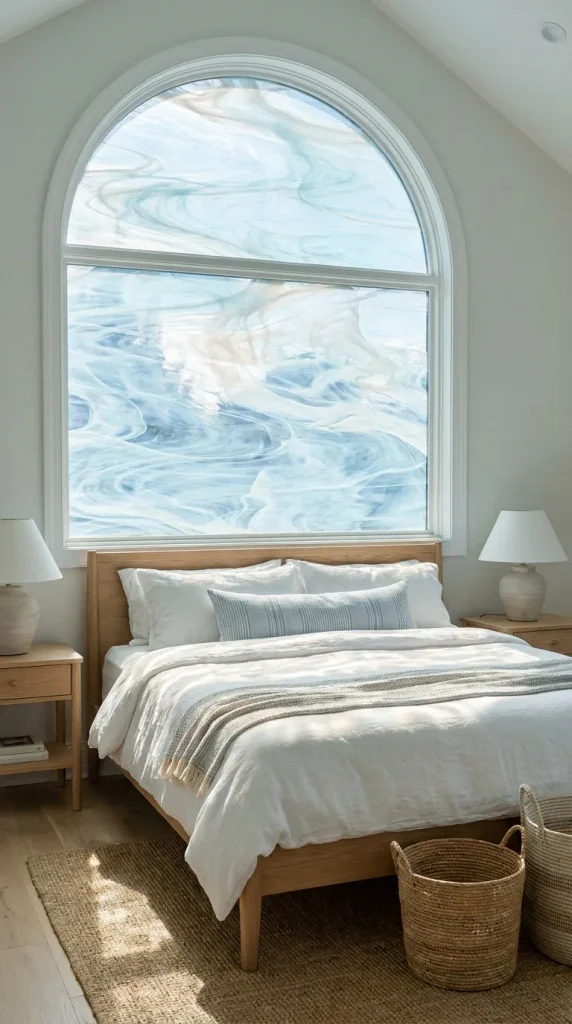
Soft blue opalescent glass windows introduce a subtle hint of color while maintaining a light and airy feeling. Their cloudy blue appearance can resemble sea glass, pale skies, or delicate watercolor washes. This makes them a wonderful option for interiors inspired by coastal, Scandinavian, or contemporary design.
Best for: Coastal bathrooms, bedrooms, sunrooms, and relaxed living spaces.
One effective approach is to install pale blue opalescent glass in a simple rectangular window with slim white or charcoal frames. The restrained framing allows the glass to become the main decorative feature. If your room already contains blue accents, the window can connect these details and create a more coordinated interior.
In a coastal-style bathroom, pair blue opalescent glass with white tile, pale wood, and brushed-metal fixtures. The diffused light can help create a peaceful atmosphere without requiring bold wall colors or complicated decorations.
For bedrooms, a smaller blue glass panel can be used as an accent window beside a bed or near a reading corner. Combine it with white bedding, neutral curtains, and natural textures to keep the overall design balanced.
You can also introduce blue opalescent glass into an interior partition between a hallway and a living area. This allows light to move between spaces while adding a distinctive architectural detail.
When planning this look, remember that strong blue tones can change the way daylight appears in the room. If you want a gentle effect, choose pale blue or blue-white glass rather than a saturated shade. Test the glass sample in the room before ordering a complete window, especially if the space receives limited natural light.
3. Vintage Opalescent Glass Windows with Wooden Frames
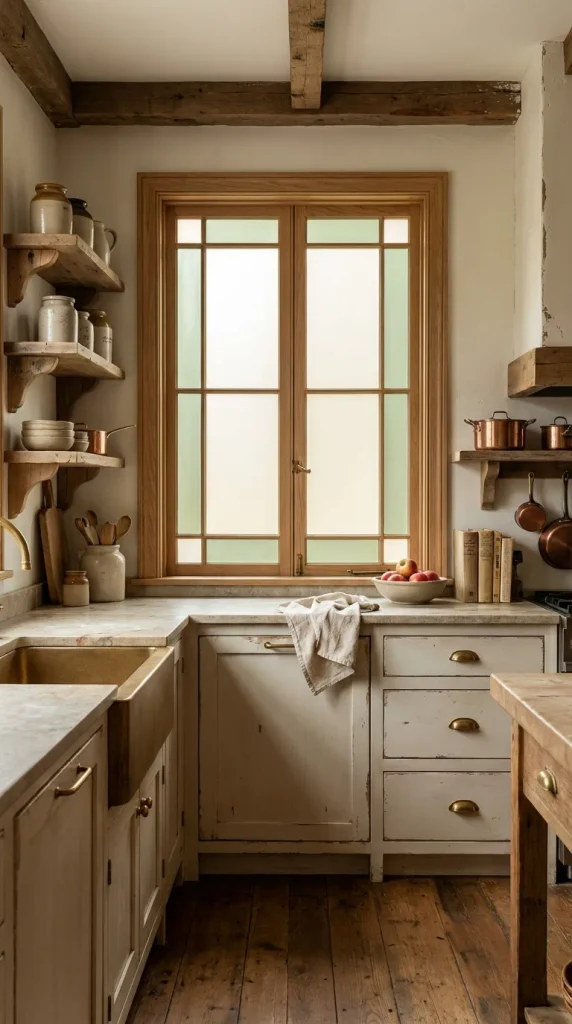
Vintage-inspired opalescent glass windows are perfect for homes that celebrate traditional craftsmanship, antique details, and timeless architectural character. The combination of softly colored glass and wooden frames creates a warm, collected appearance that feels distinctive without being overly decorative.
Best for: Cottage interiors, heritage homes, farmhouse kitchens, and vintage-inspired bedrooms.
To achieve this look, choose opalescent glass in milky white, pale green, soft amber, or a subtle combination of muted tones. Install the glass within a wooden frame finished in natural oak, walnut, or painted cream. The wood provides warmth, while the glass adds light and visual texture.
Small divided panes can make the window feel more traditional. If your home already has original timber windows, decorative opalescent inserts may complement the existing architecture. However, replacing historic glazing should be approached carefully to preserve the original character and comply with any applicable heritage requirements.
In a farmhouse kitchen, a vintage opalescent window can sit above a sink or beside open wooden shelving. Pair it with ceramic containers, natural stone, warm metal hardware, and simple linen curtains. In a bedroom, the same style can complement an antique dresser, a wooden bed frame, and neutral bedding.
For a more understated interpretation, use one color of opalescent glass rather than several contrasting shades. A single soft white or pale green finish often looks more authentic and less visually crowded.
If you are renovating an older home, consider the condition of the existing window frame before installation. Damaged wood may need repair, and the glazing system should be suitable for the building’s exposure and insulation requirements.
The goal is to make the glass feel like a natural part of the architecture rather than a decorative feature added without consideration for the rest of the room.
4. Geometric Opalescent Glass Window Designs
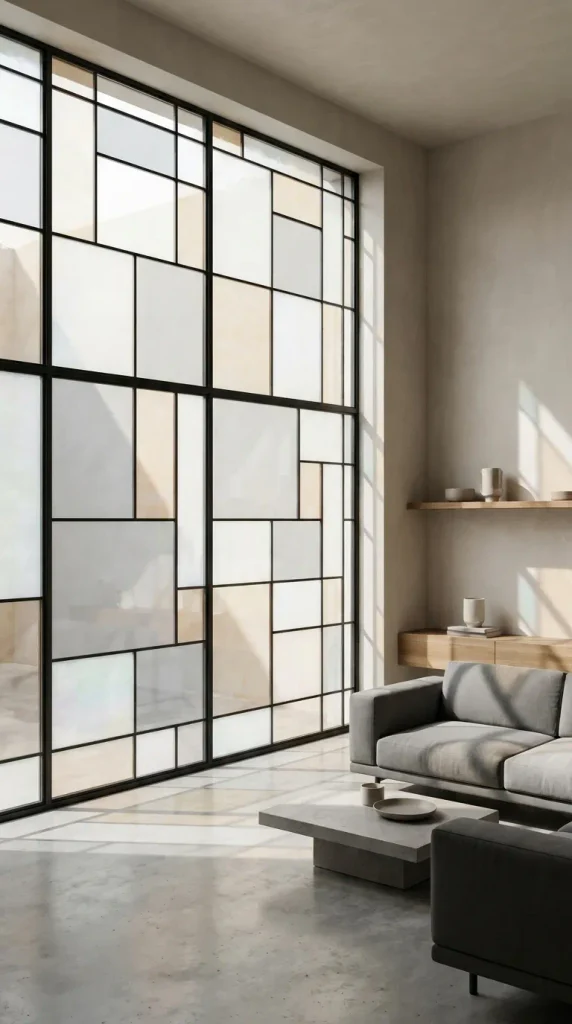
Geometric opalescent glass windows offer a modern way to combine decorative glass with structured architectural patterns. Squares, rectangles, diamonds, and other simple shapes create visual interest while allowing the luminous quality of opalescent glass to remain the main attraction.
Best for: Contemporary homes, entryways, living rooms, and renovated interiors.
A popular approach is to arrange white and pale gray opalescent glass within a black metal grid. The dark framing provides contrast and makes the softer glass tones stand out. For a warmer appearance, consider bronze framing with cream or pale amber glass.
You can also experiment with asymmetrical arrangements. For example, a large central panel surrounded by smaller rectangular sections can create a distinctive feature without making the window look overly complicated.
Geometric designs work particularly well in entryways, where a decorative window can make the entrance feel more welcoming and architecturally interesting. They are also useful in living rooms that need a focal point but do not have enough wall space for large artwork.
To keep the room balanced, repeat one or two colors from the glass elsewhere in the interior. A black window grid might coordinate with cabinet handles or light fixtures, while pale amber glass could complement warm wood furniture.
Avoid using too many different colors or shapes in one small window. Excessive variation can make the pattern difficult to appreciate and may clash with existing decor. A limited palette usually creates a more refined result.
If you want a custom geometric design, work with a qualified glazing professional to determine the correct panel dimensions, framing system, and installation method. Decorative patterns should be planned alongside the window’s functional requirements, not treated as a purely visual decision.
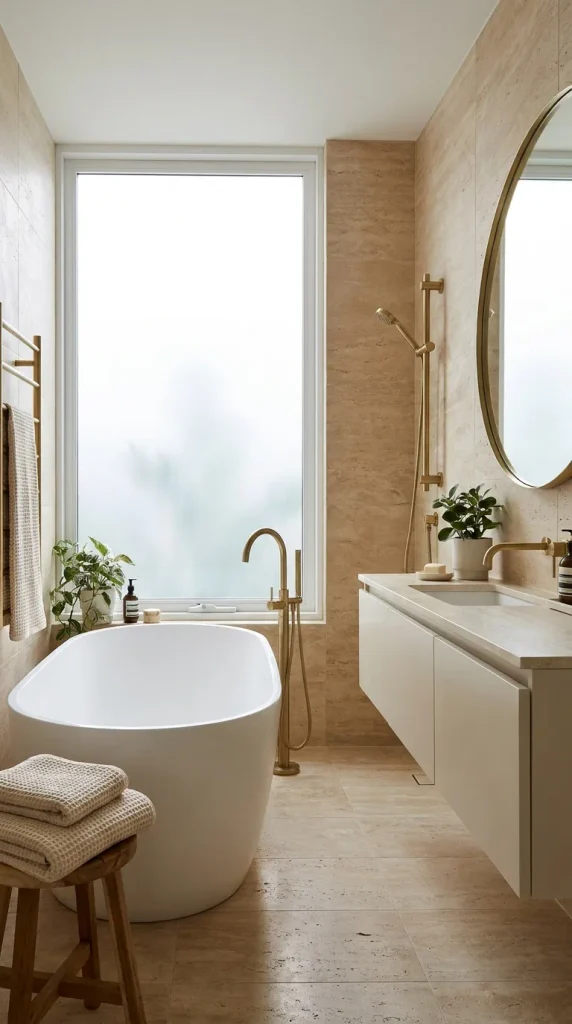
5. Opalescent Glass Windows for Bathroom Privacy
Bathrooms are among the most practical places to use opalescent glass. Its softly diffused appearance can provide a decorative alternative to clear glazing, making the space feel brighter and more refined while reducing direct visibility.
Best for: Shower-adjacent windows, bathrooms facing neighboring properties, and powder rooms.
For a classic bathroom, consider white opalescent glass in a simple window frame. It pairs naturally with white tile, marble-look surfaces, light-colored walls, and polished or brushed metal fixtures. If your bathroom has warmer finishes, cream or pale beige glass can create a softer and more inviting atmosphere.
A narrow vertical window can bring daylight into a small bathroom without dominating the wall. Larger panels can be effective in bathrooms with freestanding tubs, particularly when positioned to take advantage of natural light while maintaining the necessary privacy.
Opalescent glass can also be used in a high-level window above a bathtub or vanity. This placement can provide daylight while reducing direct sightlines from outside. However, privacy depends on the actual glass construction, viewing angles, and nighttime lighting conditions.
For bathrooms that experience frequent condensation, choose a suitable window frame and glazing system designed for moisture exposure. Proper ventilation is also essential because decorative glass alone will not prevent dampness or mold.
Before purchasing, examine a sample under realistic conditions. Turn on the bathroom lights after dark and check whether silhouettes or shapes remain visible from the outside. If privacy is particularly important, choose a product tested for the required level of obscuration rather than relying on its appearance in a showroom.
The best bathroom design combines attractive glass with appropriate privacy, ventilation, and durable materials.
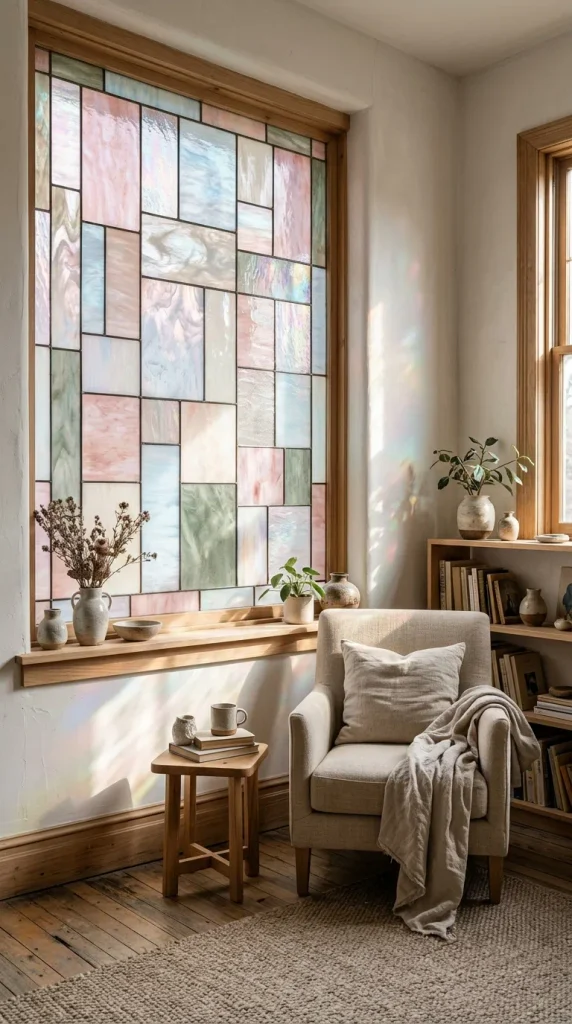
6. Colorful Opalescent Glass Windows for Artistic Interiors
Colorful opalescent glass windows are ideal for homeowners who want their windows to function as works of art. Instead of choosing a single neutral tone, this approach combines several softly colored glass panels to create a luminous and expressive design.
Best for: Creative living rooms, stairwells, reading nooks, and artistic homes.
Consider a palette of blush pink, pale blue, creamy white, and soft green. When arranged in carefully planned sections, these colors create a gentle decorative effect rather than a bright, overwhelming display. Another option is to use amber, honey, and warm ivory for a richer appearance.
A colorful opalescent window can be installed in a stairwell where sunlight changes throughout the day. The shifting light can emphasize the different tones and make the space feel more personal. A smaller decorative window can also add character to a reading nook or a quiet corner of the living room.
For a contemporary interior, keep the surrounding finishes simple. Neutral walls, clean furniture lines, and understated accessories help the colored glass stand out. In a more eclectic home, you can repeat the glass colors in cushions, pottery, artwork, or small decorative objects.
The most successful designs usually have a clear color plan. Choose two to four complementary shades and decide which one should dominate. If every panel has a different strong color, the window may compete with the rest of the room.
Think carefully about the direction of sunlight, too. Some colors appear more intense in direct light, while others look subtle under overcast conditions. Ask to see samples in natural light before finalizing the design.
For complex multicolored windows, professional design and installation can help ensure that the pattern is cohesive, the panels are properly supported, and the finished window meets the building’s functional needs.
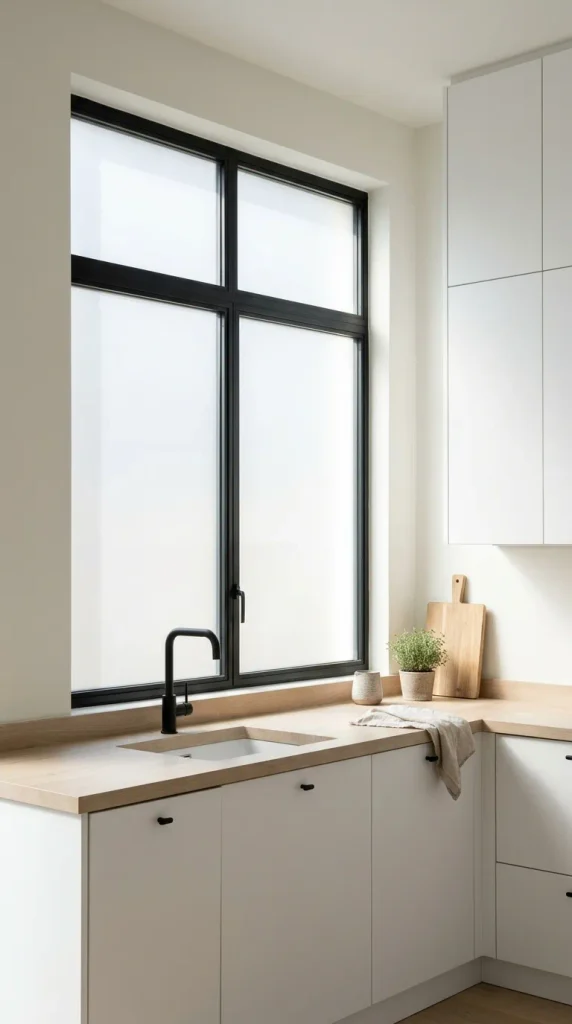
7. Minimalist Opalescent Glass Windows with Black Frames
Minimalist opalescent glass windows with black frames offer a striking balance between soft light and crisp architectural lines. The milky glass introduces a gentle texture, while the dark frame creates definition and contrast.
Best for: Modern apartments, contemporary homes, kitchens, and home offices.
The simplest version features a large opalescent glass panel within a slim black frame. This combination looks clean and sophisticated, particularly when installed against white walls or pale gray finishes. It can also work well with concrete-look surfaces, light oak cabinetry, and restrained furnishings.
In a modern kitchen, a black-framed opalescent window can become an elegant focal point above a countertop. Pair it with simple cabinet fronts, subtle hardware, and a limited color palette. In a home office, a decorative glass panel can separate two areas without introducing a heavy visual barrier.
If you want a more architectural appearance, choose a grid-style frame that divides the window into several rectangular sections. The repeated lines can coordinate with black metal lighting, shelving supports, or door hardware.
This design is especially useful when you want a contemporary look but find clear glass too exposed for the window’s location. The opalescent surface softens the view and changes the character of incoming daylight.
When selecting the frame, remember that appearance is only one consideration. Exterior windows need appropriate weather sealing, thermal performance, and durable finishes. If you are replacing an existing window, check that the new frame and glass assembly are compatible with the opening.
To maintain the minimalist aesthetic, avoid adding too many decorative objects around the window. A few carefully selected accessories will allow the contrast between black framing and luminous glass to remain the main feature.
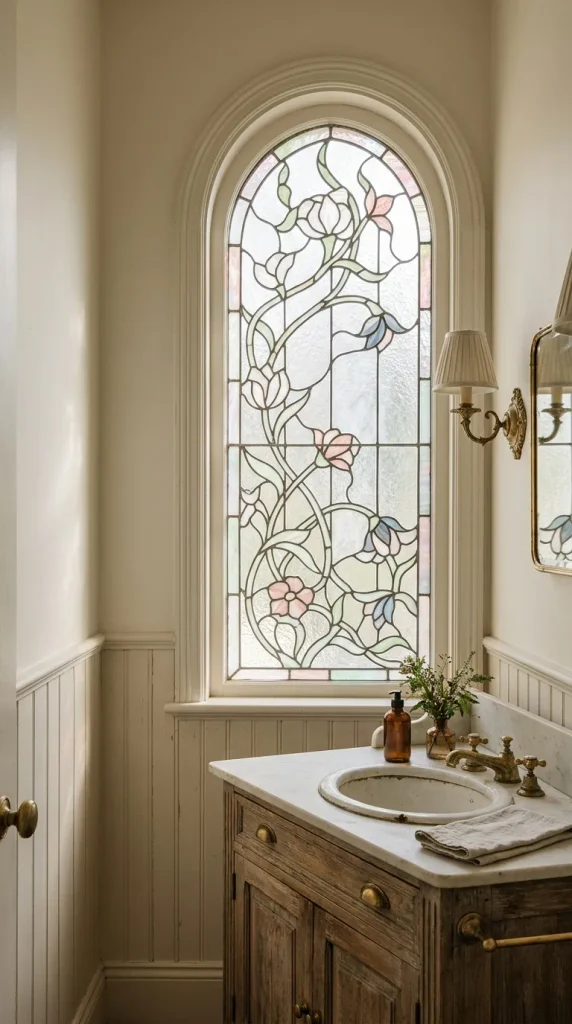
8. Opalescent Glass Windows with Floral Patterns
Floral opalescent glass windows bring a decorative, nature-inspired touch to interiors. They combine the soft glow of opalescent glass with botanical motifs such as leaves, petals, vines, and stylized flowers. Depending on the pattern, the finished design can feel traditional, romantic, or contemporary.
Best for: Cottage-style homes, powder rooms, sunrooms, and traditional entryways.
For a delicate appearance, choose a pale background with simple floral details in soft green, blush, or muted blue. This creates a subtle decorative window that complements light-colored interiors. If you prefer a more traditional look, consider a symmetrical floral pattern with carefully arranged leaves and curved lines.
A floral opalescent window can add character to a small powder room, especially when paired with a simple vanity, warm metal fixtures, and neutral wall finishes. In a sunroom, botanical patterns can connect the interior with the garden outside, even when the glass itself obscures a direct view.
For bedrooms, a small floral panel can introduce a romantic accent without requiring heavily patterned wallpaper or elaborate curtains. Keep nearby textiles and furnishings relatively simple so that the window remains the central decorative element.
You can choose between a pattern created from individual decorative glass pieces and a manufactured glass product featuring a printed, embossed, or otherwise integrated design. The visual effect and maintenance requirements may differ, so ask the supplier about the specific product.
Avoid overly intricate patterns if the window is small. A few clearly defined botanical forms are often easier to appreciate than a crowded design with many competing details.
When working with custom stained-glass-style designs, confirm that the finished assembly is suitable for its intended location. Exterior installations require appropriate weather protection, support, and safety considerations.
9. Opalescent Glass Windows for Interior Partitions
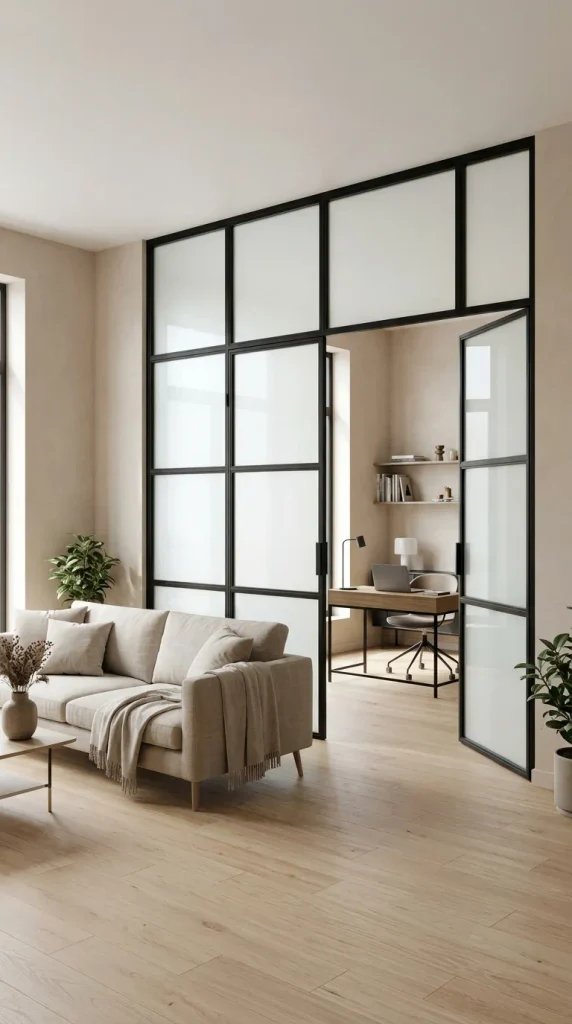
Opalescent glass is not limited to exterior windows. It can also be used in interior partitions to divide spaces while maintaining a sense of openness. This is especially helpful in smaller homes where solid walls can make rooms feel darker or more enclosed.
Best for: Open-plan homes, home offices, hallways, and kitchen-dining areas.
One option is a black-framed partition with opalescent glass panels between a living room and a home office. The glass creates a visual boundary while allowing light to pass between the spaces. Compared with a solid wall, the partition can make the overall layout feel lighter and more connected.
In a kitchen, a decorative glass partition can separate a cooking area from a dining space without completely closing off the room. White or pale cream glass works well when you want a subtle effect, while soft blue or green tones can introduce a more distinctive decorative element.
For a hallway, a half-height partition topped with opalescent glass may help brighten a darker transition area. Wooden framing can make the design feel warm and traditional, while slim metal framing creates a contemporary appearance.
If the partition is intended to provide visual privacy, choose the glass opacity carefully. If it must also reduce sound, remember that ordinary decorative glass partitions do not automatically provide meaningful acoustic isolation. A suitable frame, sealed construction, and specialized glazing may be necessary.
Interior partitions should also be planned around safety. Large glass panels may need safety glazing, particularly near doors, circulation routes, or areas where accidental impact is possible.
Before installation, decide whether the partition is purely decorative or must meet additional requirements such as acoustic separation, privacy, or safety. This will help you choose the right construction without compromising the design.
10. Custom Opalescent Glass Windows with Mixed Textures
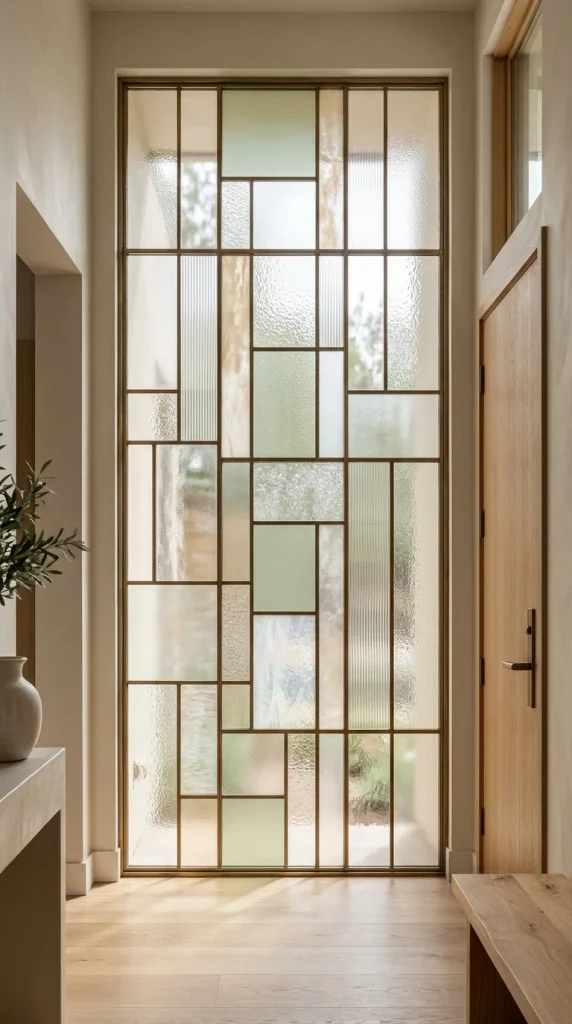
Custom opalescent glass windows with mixed textures are an excellent choice for homeowners who want a unique design. Combining smooth, cloudy, ribbed, or subtly patterned glass can create depth and variation while preserving the soft, luminous quality of opalescent glazing.
Best for: Feature windows, modern renovations, entryways, and personalized interiors.
A sophisticated approach is to use smooth white opalescent glass in the center and textured panels along the edges. This arrangement creates a layered effect without requiring a large number of colors. Another possibility is to alternate pale green and cream panels with different surface finishes.
In a modern entryway, a custom window with mixed textures can make the entrance feel distinctive while filtering incoming daylight. In a living room, a large decorative panel can serve as an architectural focal point, particularly when paired with restrained furniture and neutral walls.
Texture can also help define different parts of a window. For example, a more opaque lower section and a lighter upper section may create a visually balanced composition. However, the actual privacy and light transmission depend on the specific glass products used, so each section should be selected according to its purpose.
When planning a custom design, start by deciding on the window’s main function. If privacy is the priority, focus on suitable opacity. If the window is primarily decorative, you may have more freedom to experiment with colors and textures. If it faces strong sunlight, consider the effects of solar heat gain and the suitability of the complete glazing system.
Request physical samples from your supplier and view them together before committing to a final design. Different textures can look very different under direct sunlight, indirect daylight, and indoor lighting.
Custom mixed-texture windows are most successful when they follow a consistent design plan. Repeating a small number of colors and finishes creates a polished result that feels intentional rather than random.
Tips for Choosing the Right Opalescent Glass Window
Choosing the right opalescent glass involves more than selecting an attractive color. The glass should suit the room’s purpose, available daylight, privacy requirements, and overall interior style.
1. Consider the Room’s Natural Light
Observe how sunlight enters the room throughout the day. A darker space may benefit from a lighter, more translucent glass, while a bright room may offer more flexibility with color and texture.
2. Match the Glass to Your Interior Style
White and cream glass suit classic and minimalist interiors. Pale blue works well in coastal spaces, while vintage colors and floral patterns can complement cottage or traditional decor. Black frames can help modernize almost any of these designs.
3. Check Privacy Before Buying
A milky appearance does not guarantee complete privacy. Test the actual product from both sides, especially if it will be used in a bathroom, bedroom, or window facing neighboring properties.
4. Choose Suitable Frames
Wood adds warmth, while black metal creates contrast. White frames offer a seamless appearance, and bronze can introduce a more traditional or luxurious feeling. Select a frame that suits the glass and the room’s existing finishes.
5. Use Samples Before Ordering
Glass can look different in a showroom than it does in your home. Ask for samples and view them in morning light, afternoon light, and artificial lighting before making a final decision.
6. Consider Maintenance
Textured and patterned glass may collect dust or require more careful cleaning than smooth surfaces. Choose a finish that fits your maintenance preferences and the window’s accessibility.
7. Work with a Qualified Installer
For exterior windows, custom glazing, and large panels, professional advice helps ensure that the selected glass is installed safely and performs as intended. Confirm insulation, weather resistance, and any applicable safety-glazing requirements.
Common Mistakes to Avoid
Even a beautiful opalescent glass design can disappoint if the material is chosen without considering its practical use.
- Choosing glass based only on appearance: A product may look attractive but provide insufficient privacy or unsuitable light transmission.
- Using too many colors: A crowded palette can overwhelm a small room. Start with a few complementary tones.
- Ignoring the window frame: The wrong frame finish can make decorative glass look disconnected from the rest of the interior.
- Assuming all opalescent glass is opaque: Different products have different levels of transparency. Check the exact specification.
- Forgetting nighttime privacy: Indoor lighting can change how visible a window appears from outside.
- Overlooking energy efficiency: Decorative glass does not automatically provide good thermal insulation. Consider the performance of the complete window unit.
- Installing unsuitable glass in high-risk areas: Some locations require safety glazing or specialized assemblies. Confirm the relevant requirements before installation.
Avoiding these mistakes will help you create a window that looks attractive and functions properly for years to come.
Conclusion
Opalescent glass windows offer a distinctive way to combine decorative beauty, softened daylight, and architectural character. From classic white panels and soft blue designs to vintage wooden frames, geometric patterns, and colorful custom installations, there are many ways to introduce this material into your home.
The best design depends on your interior style and the purpose of the window. White opalescent glass can create a timeless appearance, while geometric designs and black frames suit contemporary spaces. Floral patterns and vintage finishes add charm, and interior partitions can help connect rooms without relying on solid walls.
Before making a final choice, consider the amount of natural light, the level of privacy required, the window frame, and the suitability of the glazing for its intended location. With thoughtful planning and appropriate installation, opalescent glass can turn an ordinary window into a beautiful architectural feature that enhances the character of your home.





Leave a Reply