
Introduction
Tray ceiling lighting is a stylish way to add depth, elegance, and visual interest to your home’s interior. A tray ceiling features a recessed central section that creates a layered appearance, making it an excellent architectural detail for bedrooms, living rooms, dining rooms, and other spaces. With the right lighting, this ceiling design can become a stunning focal point while making the room feel warmer, brighter, and more sophisticated.
From hidden LED strips to elegant chandeliers, tray ceiling lighting offers countless possibilities for different decorating styles. You can choose soft ambient lighting for a relaxing bedroom, dramatic statement fixtures for a formal living room, or modern recessed lights for a clean and minimalist interior. Combining multiple lighting types can also help you create a balanced atmosphere that works for everyday activities and special occasions.

The best part is that tray ceiling lighting can complement almost any interior style. Warm lighting enhances traditional and rustic spaces, while crisp architectural lighting suits contemporary and modern homes. Whether you are renovating an existing ceiling or planning a new interior, selecting the right lighting design can make a significant difference.
In this article, you will discover 10 tray ceiling lighting ideas, the materials commonly used, practical installation considerations, and helpful styling tips to create a beautiful and functional space.
Materials Used for Tray Ceiling Lighting
Before choosing a tray ceiling lighting design, consider the materials and equipment needed for your preferred setup. Requirements vary depending on whether you are installing concealed lighting, recessed fixtures, a chandelier, or a combination of different lighting styles.
- LED strip lights for concealed perimeter illumination
- Recessed ceiling lights or downlights
- Chandeliers and decorative pendant fixtures
- Cove lighting channels and compatible diffusers
- Dimmable LED drivers and compatible dimmer switches
- Electrical wiring and connectors
- Ceiling-rated mounting brackets
- Suitable plasterboard or ceiling finishing materials
- Decorative ceiling mouldings
- Aluminum LED channels for heat management and neat installation
- Measuring tape and a layout plan
- Compatible smart lighting controls, if desired
Electrical work should be completed by a qualified electrician in accordance with local regulations. Choose fixtures and drivers compatible with the ceiling construction, available electrical supply, and intended dimming system.
10 Tray Ceiling Lighting Ideas
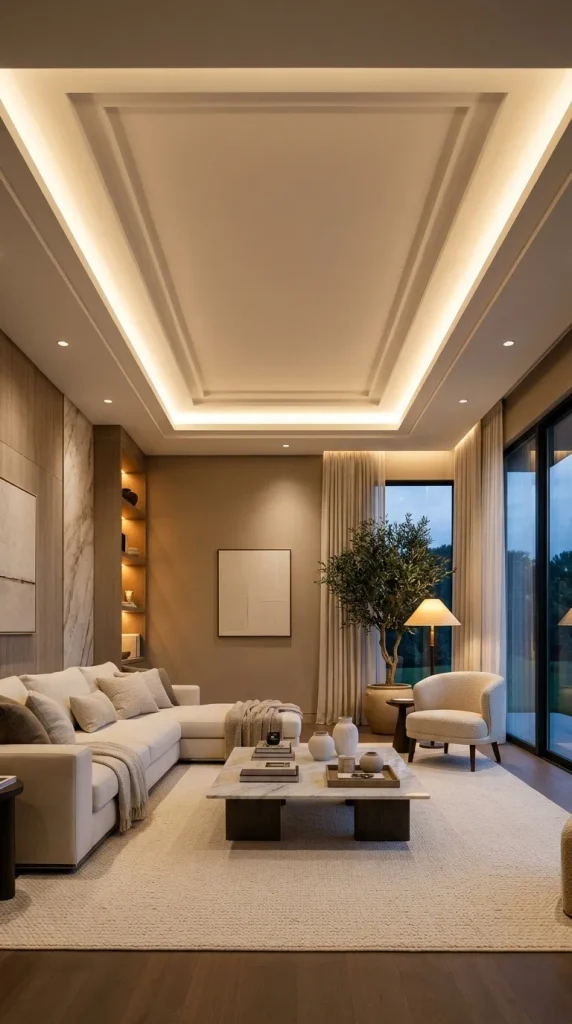
1. Hidden LED Strip Lighting
Hidden LED strip lighting is one of the most popular choices for tray ceilings because it creates a soft glow without making the light source itself the main attraction. The LED strips are concealed within the recessed ceiling’s perimeter, allowing light to wash across the upper surfaces and highlight the layered architectural design.
This style works beautifully in living rooms, bedrooms, and open-plan interiors. It can make a tray ceiling appear deeper and more defined while providing gentle ambient illumination. Warm white lighting is especially suitable for cozy spaces, while neutral white can create a fresher, more contemporary appearance.
For the best result, install the LED strips inside a purpose-built cove or aluminum channel. A diffuser can help produce a more continuous glow and reduce visible bright spots. The placement of the strip should allow light to reflect off the ceiling rather than shine directly into the room.
In a bedroom, hidden lighting can create a peaceful atmosphere for winding down in the evening. In a living room, it can emphasize architectural details and complement floor lamps or table lamps.
Consider installing dimmable LED strips so you can adjust the brightness according to the time of day. A lower setting is suitable for relaxing, while a brighter setting can provide additional ambient light when needed.
This idea is particularly effective if you prefer elegant lighting that enhances the room without creating a cluttered ceiling.
2. Tray Ceiling with Recessed Spotlights
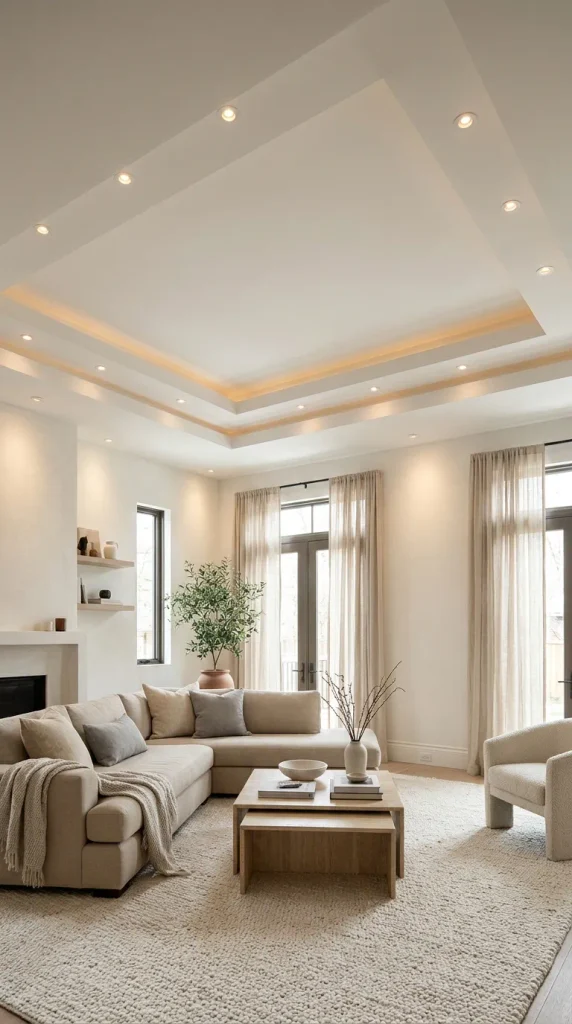
Recessed spotlights provide a clean, modern appearance because the fixtures sit within the ceiling rather than hanging below it. When arranged around the recessed section of a tray ceiling, they can highlight the room’s architecture while providing useful general illumination.
Choose small, low-profile LED downlights that suit the dimensions of the ceiling. Evenly spaced fixtures usually create a balanced appearance, although the exact arrangement should depend on the room’s size, furniture layout, and lighting requirements.
In a living room, recessed spotlights can illuminate seating areas and circulation spaces. In a bedroom, they can provide useful general lighting when combined with bedside lamps or concealed perimeter lighting.
The color temperature also affects the atmosphere. Warm white lighting tends to feel welcoming and comfortable, while neutral white can suit work areas or interiors with a crisp, contemporary palette.
Avoid placing spotlights solely for decorative symmetry without considering their practical purpose. Fixtures should illuminate the intended areas without creating excessive glare or unwanted shadows.
A combination of recessed spotlights and hidden LED strips can produce an especially attractive layered effect. The spotlights provide more direct illumination, while the perimeter lighting highlights the recessed ceiling shape.
This design is ideal for homeowners who want a refined ceiling with practical, understated lighting.
3. Tray Ceiling with a Statement Chandelier
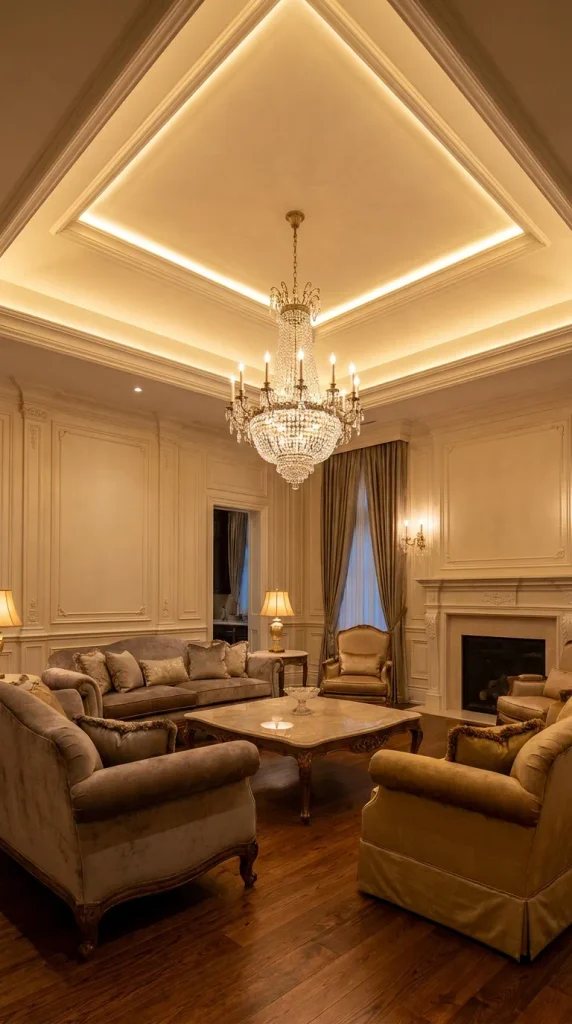
A chandelier can turn a tray ceiling into a dramatic focal point. The recessed central section provides a natural visual frame for a decorative fixture, making the combination particularly suitable for living rooms, formal dining rooms, and spacious bedrooms.
Choose a chandelier that complements the interior style. Crystal fixtures suit glamorous and traditional spaces, while sculptural metal designs work well in modern interiors. A brass or bronze chandelier can add warmth to transitional and classic rooms.
Scale is important. A fixture that is too small may look lost within a large tray ceiling, while an oversized chandelier can overwhelm the space. Consider the ceiling height, room dimensions, furniture arrangement, and the chandelier’s hanging clearance before selecting a design.
For a more luxurious result, combine the chandelier with concealed LED strip lighting around the tray’s perimeter. The chandelier becomes the central feature, while the indirect lighting adds depth and highlights the ceiling’s layered shape.
A dimmer can help adjust the atmosphere, provided the chandelier bulbs and controls are compatible. This allows the room to feel bright during gatherings and softer during quieter evenings.
Ensure the chandelier is attached to suitable structural support rather than relying on decorative ceiling material alone. Heavy fixtures may require reinforced mounting.
This idea works best when you want the ceiling to feel elegant, memorable, and visually connected to the rest of the interior.
4. Warm Cove Lighting for a Cozy Bedroom
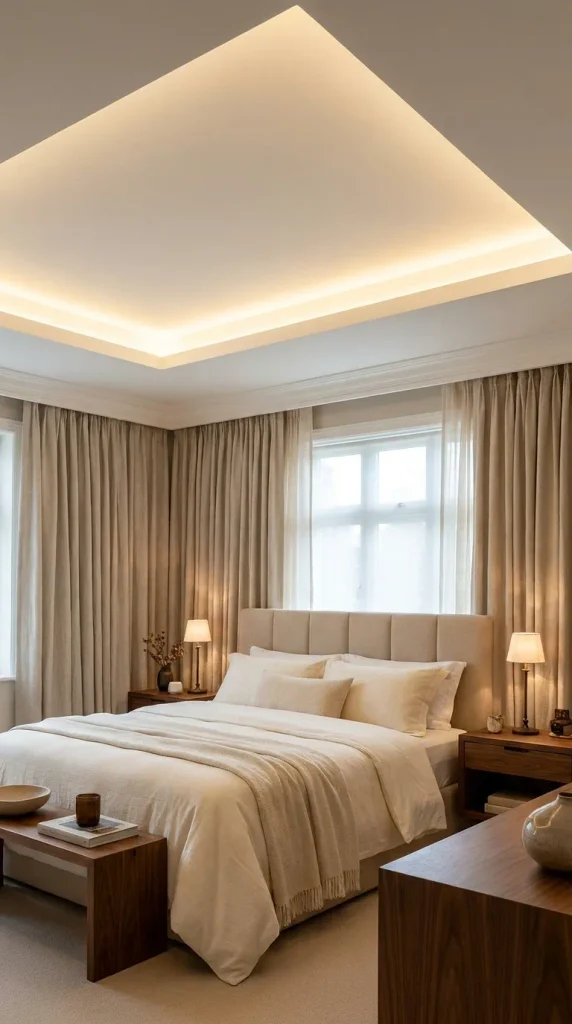
Warm cove lighting is an excellent choice for bedroom tray ceilings because it creates a soft, relaxing atmosphere. The light source is concealed within a recessed ledge, allowing the illumination to spread gently across the ceiling and walls.
Use warm-white LED strips to create a comfortable glow that complements upholstered headboards, wooden furniture, soft bedding, and neutral wall colors. Shades such as cream, beige, taupe, and warm gray work especially well with this type of lighting.
The concealed arrangement helps prevent the ceiling from feeling visually crowded. Instead of relying on a large central fixture, you can use the indirect lighting as a subtle architectural feature and add bedside lamps for reading.
For a more layered design, combine cove lighting with small recessed downlights. The cove lighting provides ambient illumination, while the downlights can supply additional brightness when needed.
Install the LED strips so they are hidden from direct view when standing or sitting in the room. A suitable channel and diffuser can improve the appearance of the light and help maintain a neat finish.
Dimmable controls are especially useful in bedrooms because they allow you to reduce the brightness before sleeping.
This idea is ideal for creating a calm, hotel-inspired bedroom that feels sophisticated without being overly decorative.
5. Double-Layer Tray Ceiling Lighting
A double-layer tray ceiling features more than one recessed or stepped level, giving the ceiling additional depth and creating several opportunities for lighting. When carefully planned, this design can make a living room or master bedroom feel architectural and luxurious.
One option is to install concealed LED strips along the outer recessed edge and add another lighting channel closer to the central section. This creates multiple layers of indirect illumination that emphasize the ceiling’s geometry.
You can use the same color temperature throughout for a harmonious look. Alternatively, separate independently controlled lighting zones can provide flexibility for different activities. For example, the outer perimeter may remain softly illuminated while the inner layer is brighter for entertaining.
The design should remain balanced. Too many visible light sources or excessively bright strips can make the ceiling look busy rather than elegant. Plan the positions of the light channels before completing the ceiling finish to ensure consistent spacing and a clean appearance.
Double-layer tray ceilings can work particularly well in larger living rooms with high ceilings. They can also be used in spacious bedrooms where the ceiling needs to become a defining design feature.
Pair this lighting with restrained furniture and coordinated wall colors so the ceiling remains the main architectural attraction.
This idea is best suited to new construction or renovations where the ceiling structure can be planned to accommodate multiple lighting layers.
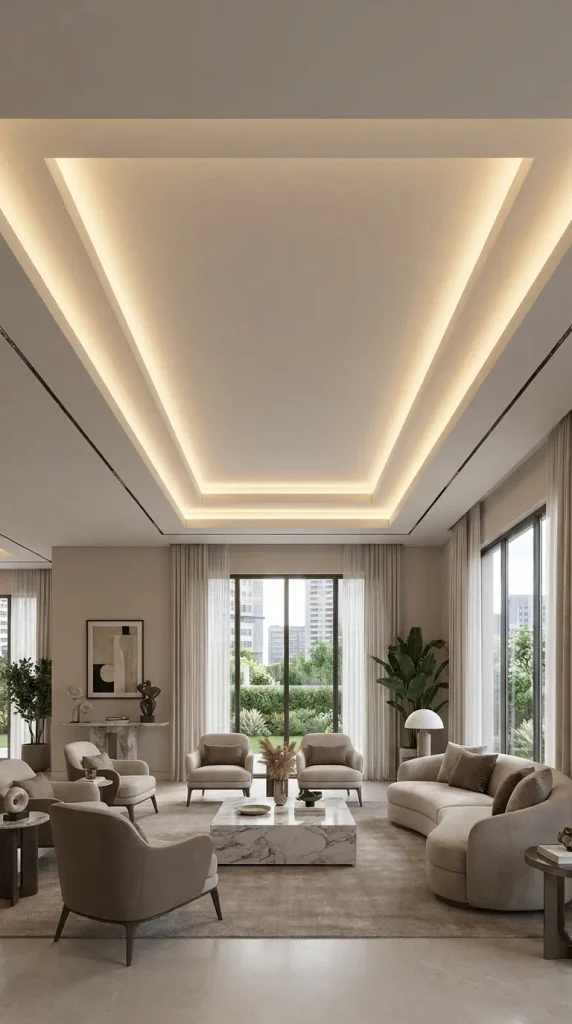
6. Modern Geometric Tray Ceiling Lighting
Geometric lighting introduces contemporary character to a tray ceiling by emphasizing straight lines, angular shapes, or symmetrical patterns. This approach is suitable for modern living rooms, minimalist interiors, and homes with clean architectural details.
You can use concealed LED strips along rectangular ceiling edges or arrange recessed fixtures in a deliberate geometric pattern. A large rectangular tray can be emphasized with continuous perimeter lighting, while a more complex ceiling may incorporate carefully planned linear light channels.
Keep the design consistent with the room’s other architectural features. Straight ceiling lines can complement modern furniture, simple wall panels, and streamlined cabinetry. In a minimalist interior, a restrained lighting arrangement usually looks more sophisticated than a complicated pattern.
Neutral white or warm white lighting can both work well. The right choice depends on the room’s finishes and the atmosphere you want to create.
For an especially clean result, hide LED strips inside suitable channels and ensure the lighting lines appear continuous. Plan the corners and transitions carefully to avoid visible gaps or uneven brightness.
Geometric lighting should also serve a practical purpose. Make sure the room has adequate illumination for its activities instead of relying entirely on decorative strips.
This idea is ideal for homeowners who want a tray ceiling that feels modern, structured, and visually distinctive.
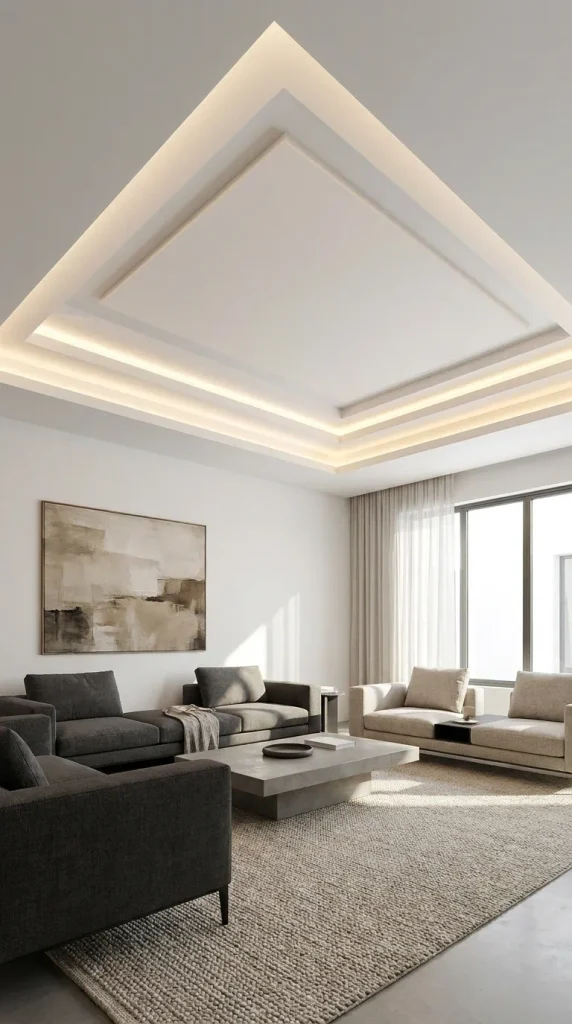
7. Tray Ceiling with Pendant Lights
Pendant lights offer a stylish alternative to a traditional chandelier. Their varied shapes and sizes allow you to create a personalized lighting arrangement that complements the proportions of the tray ceiling.
For a living room, consider a sculptural pendant with a metal, glass, or fabric shade. In a dining area, a pendant centered over the table can create a clear focal point within the recessed ceiling. In a bedroom, a decorative pendant may work as a central feature when its size and hanging height are appropriate.
The pendant’s design should complement the tray’s shape. A simple rounded fixture can soften a geometric ceiling, while a linear pendant can reinforce the room’s modern architectural lines.
Concealed perimeter lighting can be added to create a layered effect. The pendant provides a decorative focal point and downward illumination, while the concealed lighting emphasizes the ceiling edges.
Check the pendant’s dimensions and suspension height before installation. In rooms with lower ceilings, a compact or semi-flush design may be more practical than a long hanging fixture.
Use a compatible dimmer when possible to adjust the brightness for different activities. Also ensure the pendant is securely fixed to suitable structural support.
This idea works well when you want a decorative lighting feature that feels lighter or more contemporary than a traditional chandelier.
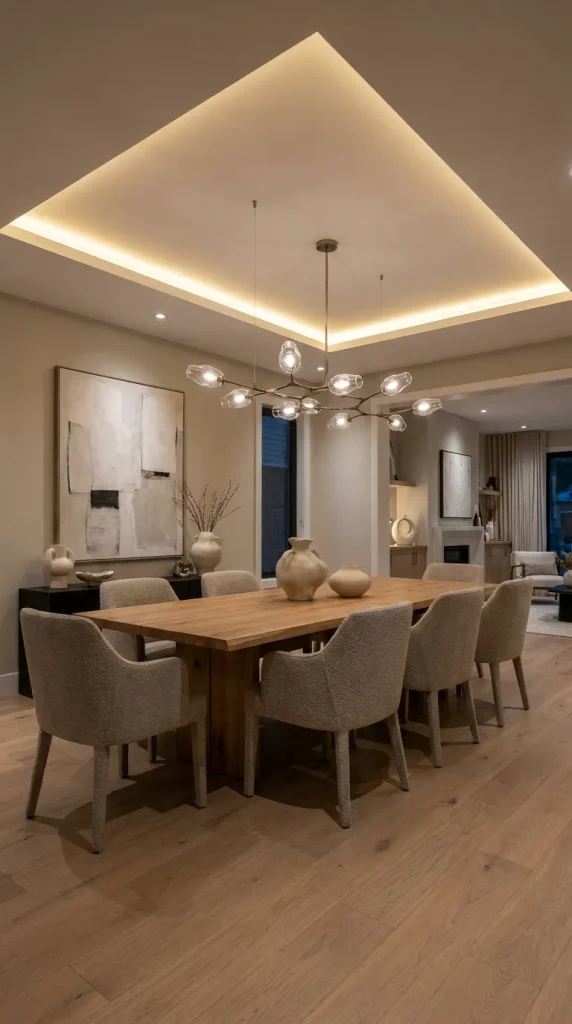
8. Tray Ceiling Lighting with Decorative Mouldings
Decorative ceiling mouldings can enhance a tray ceiling by emphasizing its edges and adding traditional architectural detail. When combined with concealed lighting, they create a refined look that works particularly well in classic, transitional, and French-inspired interiors.
Choose mouldings that match the room’s scale. Simple profiles suit modern transitional spaces, while more elaborate designs can complement formal living rooms with traditional furniture and decorative wall panels.
LED strips can be concealed behind a suitable ledge or within a purpose-designed cove so that the light washes across the ceiling. This creates a subtle outline around the tray and makes the moulding details more noticeable.
White mouldings against a white ceiling create a soft, understated effect. For greater contrast, you could use a slightly different ceiling color, such as pale beige or warm gray, while keeping the trim lighter.
Avoid placing LED strips where individual diodes are directly visible from normal viewing angles. Proper positioning and diffusers help create a smooth, attractive glow.
Before installing decorative trim, plan the lighting channels, wiring routes, and access to drivers. These details are easier to coordinate before the final painting and finishing work.
This idea is particularly effective when you want your tray ceiling to look elegant and architectural rather than purely modern.
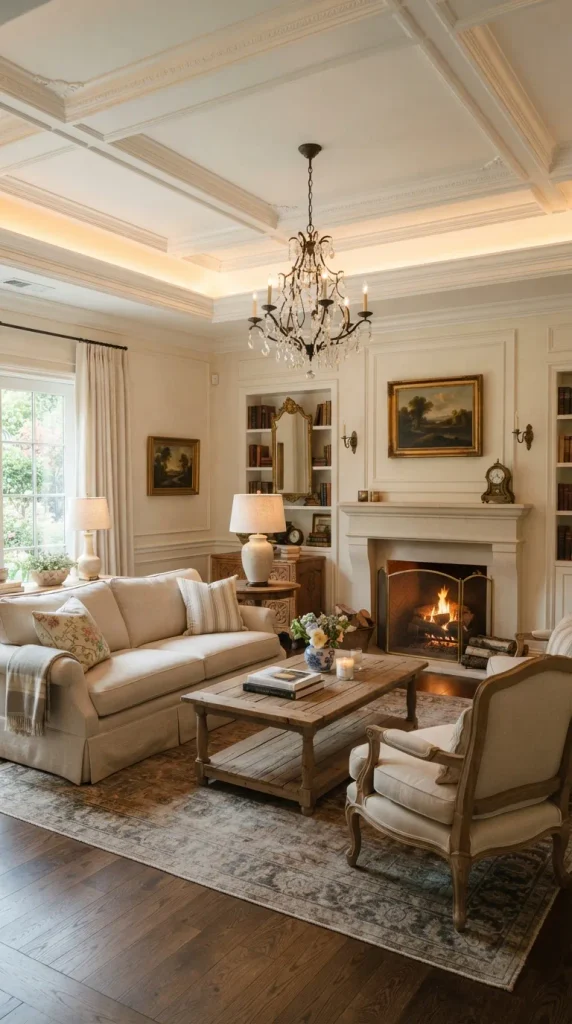
9. Smart Color-Changing Tray Ceiling Lighting
Smart LED lighting gives you the flexibility to change the appearance of your tray ceiling according to your mood, activities, or preferred interior style. Many compatible systems allow you to adjust brightness and, depending on the product, choose between warm white, cool white, and a range of colors.
Install smart LED strips within the tray ceiling’s perimeter or combine them with compatible recessed fixtures. A warm white setting can provide everyday ambient lighting, while softer colors can create a more decorative atmosphere for movie nights or social gatherings.
For a contemporary living room, you might choose subtle warm white lighting most of the time and use a restrained color accent occasionally. In a gaming or media room, more expressive colors may be appropriate, provided they do not cause distracting glare.
Consider choosing a system that supports dimming and scheduling. You may be able to create a brighter daytime setting and a softer evening setting, depending on the system’s features.
Make sure the LED strips, power supply, controller, and dimmer are compatible with one another. Some smart LEDs cannot be used with traditional wall dimmers, so check the manufacturer’s instructions before installation.
Color-changing lighting should be used thoughtfully. Bright saturated colors can quickly overpower a sophisticated interior, while subtle changes can add atmosphere without distracting from the room’s design.
This option is ideal if you value flexibility and want your lighting to adapt to different occasions.
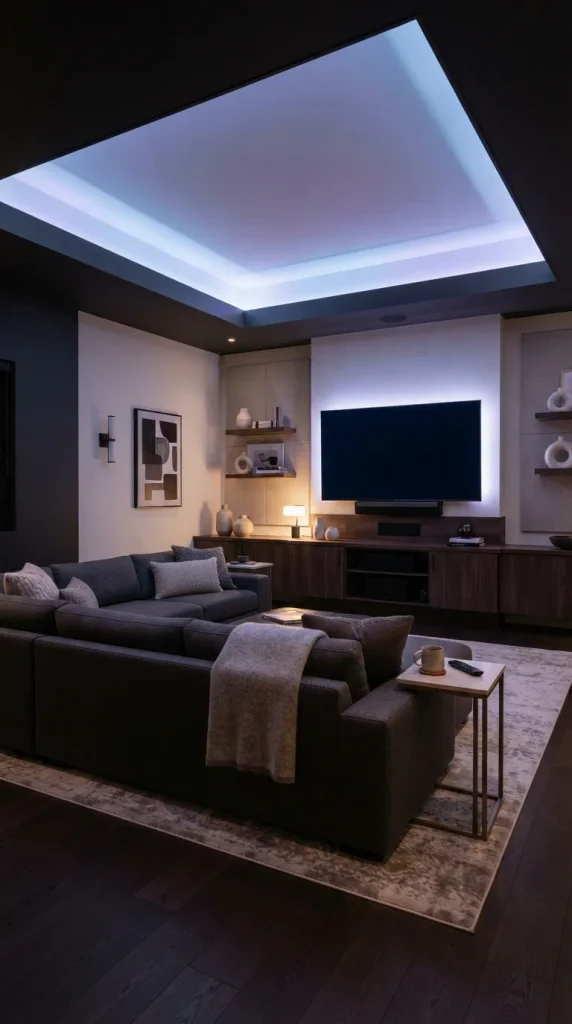
10. Layered Tray Ceiling Lighting with Multiple Fixtures
Layered lighting combines different types of fixtures to make a tray ceiling both attractive and practical. Rather than depending on a single light source, this approach uses ambient, task, and accent lighting to support different needs.
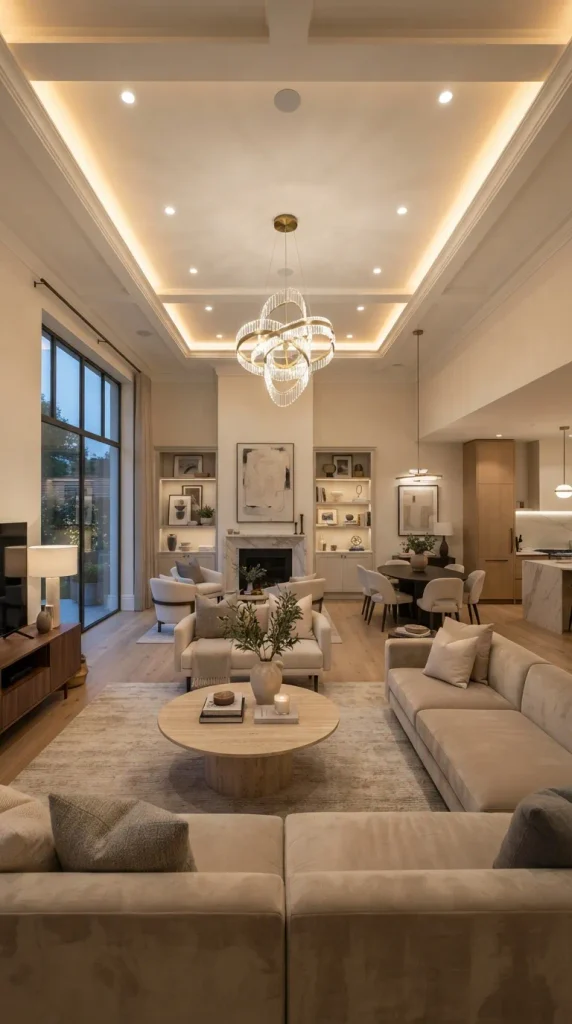
For example, you could combine concealed LED perimeter strips with recessed downlights and a central chandelier. The LED strips highlight the recessed ceiling, the downlights provide general illumination, and the chandelier acts as a decorative focal point.
In a living room, add floor lamps or table lamps to illuminate reading areas and seating corners. In a bedroom, use bedside lamps for reading and keep the ceiling lighting adjustable for general use.
The key is to create a clear hierarchy. The decorative fixture should complement the room rather than compete with every other light source. Concealed lighting can remain subtle, while recessed fixtures provide practical brightness.
Choose compatible dimmers or separate lighting controls for each layer so that you can adjust the room according to the activity. For instance, you might use all three ceiling layers when cleaning or entertaining, but rely on the cove lighting and table lamps during a quiet evening.
Pay attention to color temperature. Using similar white-light tones across fixtures generally creates a more cohesive result, although intentional differences can work when carefully planned.
This idea is ideal for larger rooms and homeowners who want a ceiling that combines architectural beauty with everyday functionality.
How to Choose the Right Tray Ceiling Lighting
Selecting the right design involves more than choosing an attractive fixture. Consider the following factors before making your final decision.
1. Consider the ceiling height. Recessed lights and concealed LED strips are useful for lower ceilings because they do not hang far into the room. Chandeliers and pendants are often better suited to spaces with sufficient clearance.
2. Match the lighting to the room. Bedrooms usually benefit from warm, adjustable lighting, while living rooms often need a combination of general illumination and decorative accent lighting.
3. Select the right color temperature. Warm white creates a cozy atmosphere, while neutral white can feel brighter and more contemporary. Consistency between fixtures helps the overall design feel coordinated.
4. Plan the lighting layers. Combine indirect lighting with recessed fixtures or decorative pendants when you need both atmosphere and practical brightness.
5. Think about maintenance. Choose accessible drivers and fixtures that can be serviced without damaging finished ceiling surfaces.
6. Set a realistic budget. Concealed LED lighting may be relatively straightforward in an existing suitable cove, while multi-layer ceilings, decorative mouldings, and major electrical changes can require more extensive work.
Common Mistakes to Avoid
- Using excessive brightness: Too much light can make a room feel harsh. Dimmers and carefully selected output levels provide better control.
- Ignoring light placement: Poorly positioned strips can create uneven illumination or visible bright spots.
- Mixing incompatible controls: LED strips, drivers, and dimmers must be compatible to avoid flickering or unreliable operation.
- Choosing fixtures that are too large: An oversized chandelier can overwhelm the tray ceiling and disrupt the room’s proportions.
- Forgetting practical lighting needs: Decorative perimeter lighting may not provide enough brightness for every activity.
- Using too many different color temperatures: Uncoordinated lighting tones can make the room feel visually inconsistent.
- Neglecting installation access: Concealed lighting drivers should remain accessible for future maintenance.
- Overcomplicating the design: Too many lighting layers can make the ceiling look busy rather than sophisticated.
Conclusion
Tray ceiling lighting can transform an ordinary ceiling into a beautiful architectural feature. From hidden LED strips and recessed spotlights to statement chandeliers, decorative mouldings, and smart color-changing systems, there are many ways to create a lighting design that suits your home.
The best solution depends on your ceiling height, room size, interior style, and practical lighting needs. For a simple and elegant appearance, concealed LED strips can highlight the recessed shape without adding visual clutter. If you prefer a more dramatic design, a chandelier or a layered combination of lighting fixtures can create a striking focal point.
Focus on balanced illumination, suitable color temperatures, compatible controls, and professional installation. With thoughtful planning, your tray ceiling can become a stylish feature that enhances the atmosphere and functionality of your living space.





Leave a Reply