
Introduction
Sculptural wall relief art is a beautiful way to bring depth, texture, and artistic expression into your home. Unlike traditional flat paintings or printed wall art, relief artwork features raised surfaces that interact with light and shadow, creating a dimensional effect. These decorative pieces can make an ordinary wall feel like a carefully designed architectural feature.
From abstract plaster compositions to carved wooden panels, ceramic wall sculptures, and three-dimensional botanical designs, sculptural wall relief art offers endless possibilities for personalizing your interior. It works particularly well in living rooms, bedrooms, entryways, dining areas, and hallways where you want to create a distinctive focal point.

One of the biggest advantages of wall relief art is its versatility. Minimalist interiors can benefit from monochromatic plaster designs, while rustic spaces look beautiful with textured wood and natural materials. For a more luxurious appearance, metallic finishes and sculptural panels can introduce elegance without requiring an elaborate gallery wall.
You can purchase ready-made relief artwork or create your own designs using suitable materials and simple techniques. The key is to choose textures, shapes, and colors that complement your existing furniture and architectural details.
In this guide, you will discover 10 sculptural wall relief art ideas, the materials commonly used, practical styling tips, and ways to display dimensional artwork beautifully throughout your home.
Materials Used for Sculptural Wall Relief Art
The materials you need depend on the type of relief artwork you want to create. Some designs use lightweight materials for simple DIY projects, while others require professional fabrication and secure installation.
- Modeling paste or suitable sculpting compound
- Plaster or decorative wall-relief material
- Air-dry clay for small decorative pieces
- Wood panels and carved wooden elements
- Ceramic relief tiles or sculptural components
- Acrylic paints and compatible primers
- Textured wall paint and decorative finishes
- Palette knives and sculpting tools
- Brushes, sponges, and finishing tools
- Sandpaper suitable for the selected material
- Protective sealant where appropriate
- Measuring tape and level
- Strong mounting hardware and wall anchors
- Backing boards for lightweight relief panels
Choose materials according to the wall surface, intended size, and weight of the finished artwork. For large or heavy installations, use a suitable support system and professional installation when necessary.
10 Sculptural Wall Relief Art Ideas
1. Minimalist Plaster Wall Relief Art
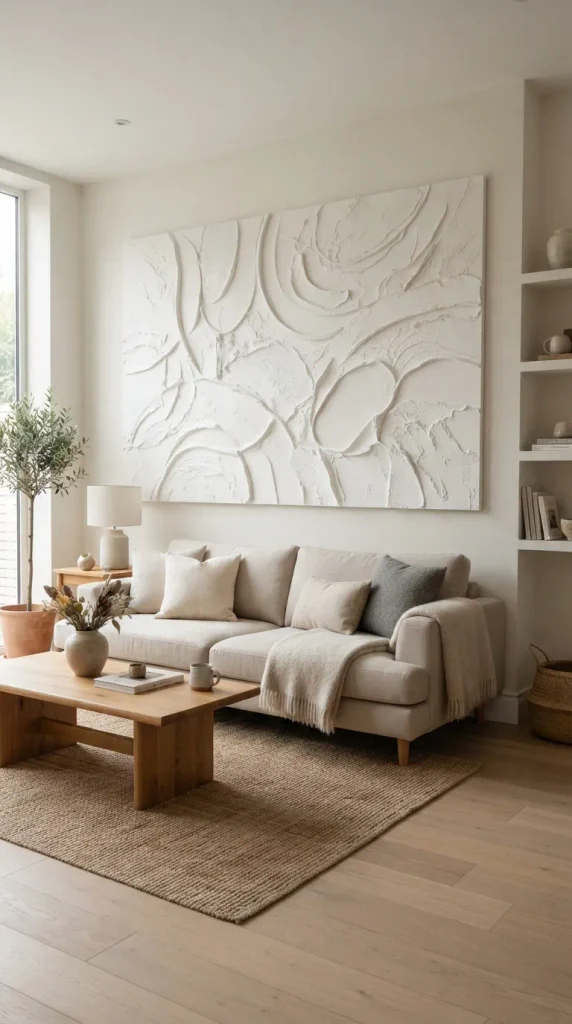
Minimalist plaster relief art is an excellent choice if you want to add texture without introducing too many colors or decorative details. These designs use raised plaster shapes, subtle curves, and sculpted surfaces to create a sophisticated focal point.
Popular compositions include overlapping arches, flowing organic lines, circular forms, and abstract geometric patterns. The entire artwork can be finished in white, ivory, cream, or a soft beige tone. Keeping the color palette restrained allows the changing shadows to become the main visual feature.
This style works particularly well in modern living rooms, bedrooms, and minimalist interiors. A large plaster relief panel above a sofa can provide the impact of a painting while adding more depth and architectural interest.
For a DIY version, start with a rigid, properly prepared backing panel and a modeling material designed for dimensional artwork. Apply the material in thin layers, shaping it with palette knives or sculpting tools. Allow each layer to dry according to the manufacturer’s instructions before adding further details.
Once the surface is dry, use a compatible primer and paint to achieve a smooth, consistent finish. Some artists prefer a slightly irregular surface because it adds a handcrafted quality.
Position the artwork where natural or directional lighting can reveal its contours. Side lighting is especially effective because it creates gentle shadows across the raised forms.
Minimalist plaster relief art is ideal for homeowners who appreciate understated decoration, natural textures, and contemporary design.
2. Abstract Geometric Wall Relief Panels
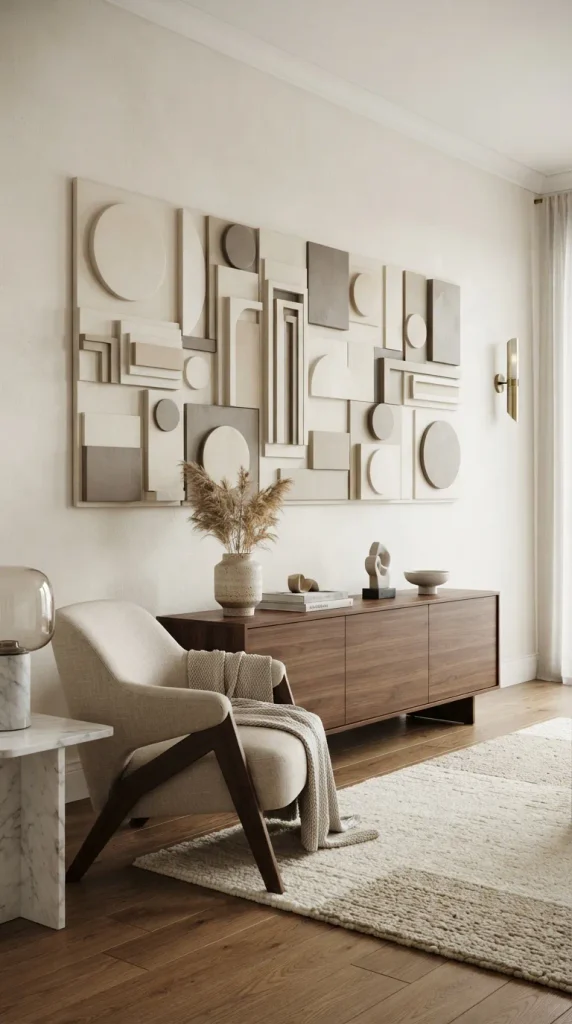
Abstract geometric relief panels combine three-dimensional shapes with structured compositions. They can feature raised squares, circles, rectangles, arches, and intersecting lines arranged to create a balanced yet visually interesting design.
This style is especially suitable for contemporary living rooms, home offices, and modern entryways. Unlike traditional artwork that relies on color or imagery, geometric relief panels create interest through their arrangement, proportions, and surface depth.
You can choose a monochromatic design in white, gray, or sand tones for a minimalist interior. Alternatively, a combination of terracotta, muted olive, charcoal, and cream can make the artwork more expressive.
One approach is to arrange several individual relief panels together as a coordinated installation. Use consistent spacing and a shared color palette to make the group feel intentional. Another option is to choose one oversized panel with multiple raised geometric forms.
For a DIY project, lightweight wooden shapes or suitable sculpting materials can be attached to a stable backing board. Make sure all elements are firmly secured and that the finished panel remains appropriate for your wall’s load capacity.
Hang the artwork above a console table, sofa, or desk. Keep surrounding decorations relatively simple so the geometric composition remains the focal point.
This idea is perfect for people who want their wall decor to feel architectural, modern, and carefully composed.
3. Organic Wave Sculptural Wall Art
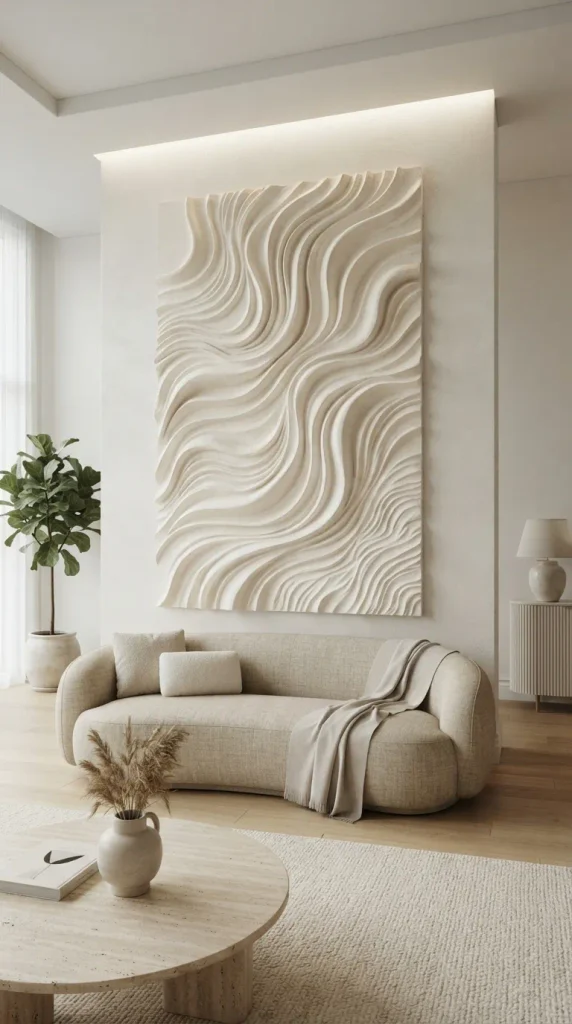
Organic wave relief art introduces flowing shapes and movement into a room. Inspired by rippling water, rolling dunes, and natural rock formations, these designs use curved ridges and smooth transitions to create a calming visual effect.
The artwork may feature a series of raised parallel lines, broad flowing curves, or irregular undulating surfaces. Neutral colors such as ivory, warm white, sand, and pale taupe enhance the natural appearance.
A large wave relief panel can look beautiful behind a sofa or above a bed. It can also add interest to a hallway where a traditional painting might feel too flat or predictable.
For a DIY version, use a suitable modeling compound on a stable backing panel. Sketch the overall movement lightly before applying the material, then build up the raised sections with sculpting tools. Aim for a balanced flow rather than making every curve identical.
Allow the material to dry completely before applying paint or sealant. Follow the product’s instructions to avoid cracking, especially when creating thicker raised areas.
Lighting can dramatically improve this design. A wall-mounted light or ceiling spotlight positioned to one side can emphasize the wave-like contours and create delicate shadows.
Organic wave relief art is particularly attractive in modern organic, coastal, minimalist, and contemporary interiors.
4. Botanical Sculptural Wall Relief
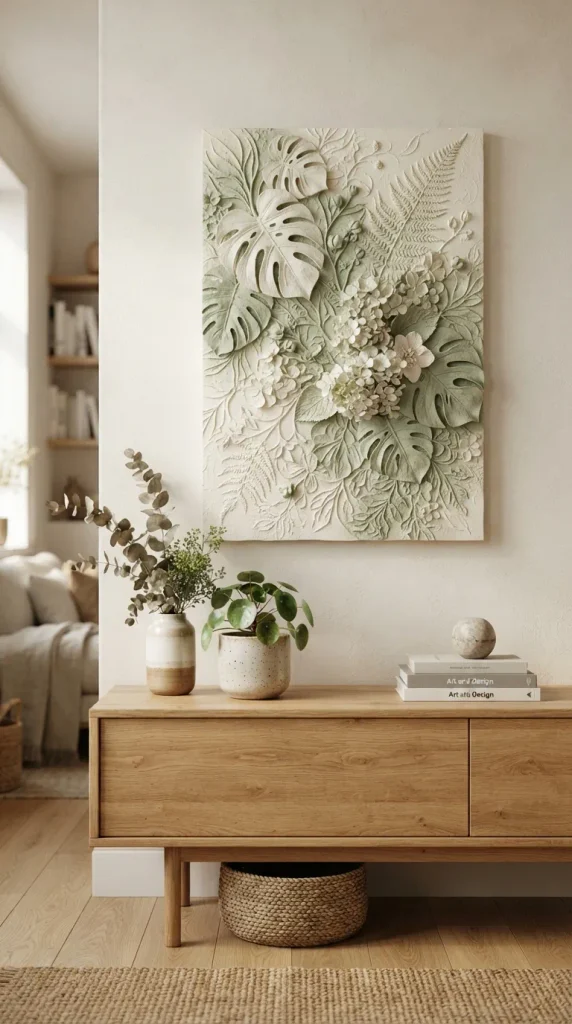
Botanical wall relief art brings the shapes of leaves, flowers, branches, and other natural forms into a three-dimensional decorative arrangement. It offers a way to introduce nature-inspired detail without relying on framed botanical prints or living plants.
Popular designs include raised monstera leaves, sculpted palm fronds, delicate floral patterns, and overlapping leaf forms. Some pieces use realistic botanical details, while others interpret plants through simplified abstract shapes.
For a sophisticated look, choose relief artwork in white, cream, sage green, or muted terracotta. A monochromatic finish can make the raised leaves appear elegant and architectural, while gentle color variations can create a more naturalistic effect.
A botanical relief panel works beautifully in living rooms, sunrooms, bedrooms, and entryways. Place it above a wooden console table or near natural materials such as linen, rattan, and solid wood.
For DIY artwork, air-dry clay or a suitable modeling compound can be used to create smaller leaves and petals on a stable backing. Add vein details with sculpting tools before the material dries. Make sure the finished components are securely attached.
Avoid making the composition excessively dense. Leaving negative space around individual leaves allows their shapes to remain clear.
This idea is ideal for nature-inspired interiors, especially when you want decorative greenery without the maintenance required by real plants.
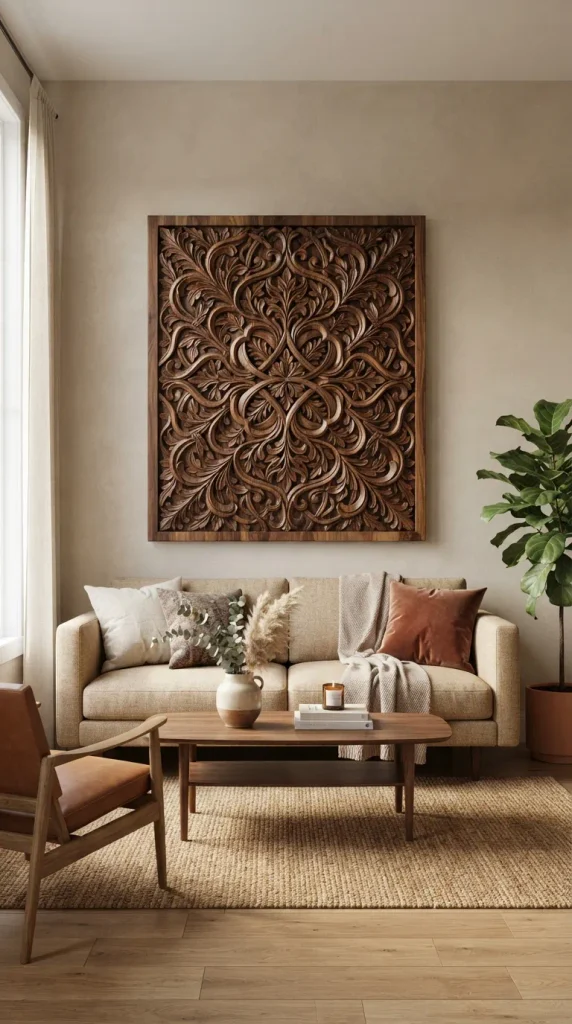
5. Carved Wooden Wall Relief Art
Carved wooden relief art adds warmth, craftsmanship, and natural texture to an interior. Unlike flat wooden wall panels, carved relief pieces feature raised or recessed patterns that create depth and reveal the beauty of the wood grain.
Designs may include geometric carvings, flowing botanical motifs, repeating lines, abstract forms, or traditional decorative patterns. Light oak, walnut, teak, and other wood finishes can each create a different atmosphere.
Lighter wood tones complement Scandinavian and modern organic interiors, while darker woods suit traditional, mid-century, and richly layered spaces.
A large carved wooden panel can become the focal point above a sofa or fireplace. Smaller pieces can be arranged in a symmetrical grouping along a hallway or above a console table.
When selecting a wooden relief, consider the depth of the carving and the overall scale. Deeply carved patterns can create dramatic shadows, while shallow reliefs offer a more subtle effect.
If you want to create a DIY version, begin with a design intended for your skill level and use appropriate tools and protective equipment. For intricate or deep carvings, professional craftsmanship may produce a safer and more refined result.
Apply a suitable finish that protects the wood without obscuring its natural character. Keep the panel away from excessive moisture and direct heat.
Carved wooden wall relief art is a timeless option for adding natural elegance and a handcrafted appearance to your home.
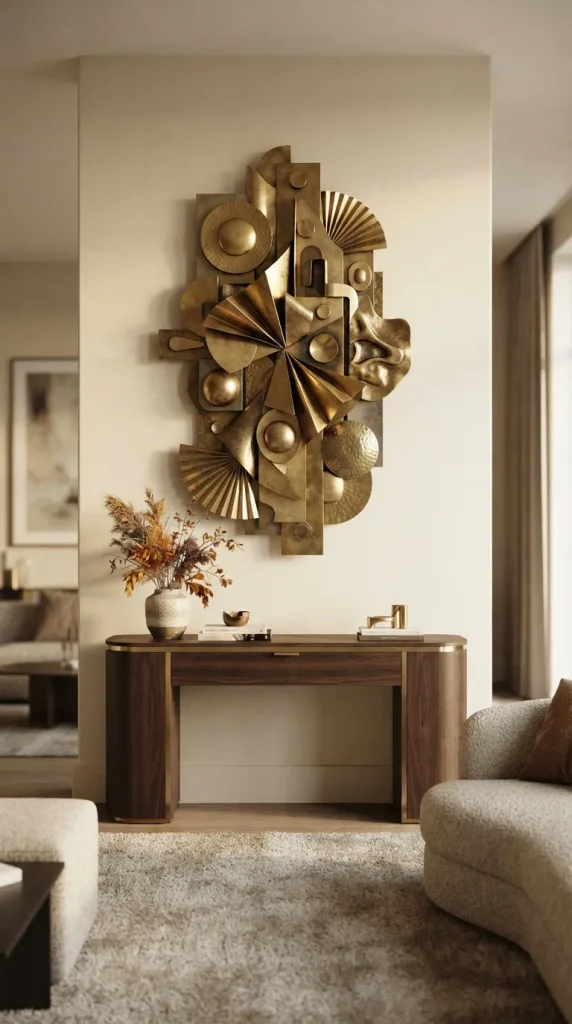
6. Metallic Sculptural Wall Relief
Metallic wall relief art introduces a luxurious and dramatic quality through reflective surfaces, sculpted forms, and changing highlights. Gold, bronze, brass, copper, and silver finishes can all work beautifully, depending on your interior palette.
Some designs feature abstract folded shapes, layered circular forms, textured metallic surfaces, or sculptural botanical motifs. Others use repeated geometric elements to create a more architectural composition.
For a warm, elegant living room, consider a bronze or antique brass finish against a cream or taupe wall. Gold relief art can complement warm neutral interiors, while silver and brushed steel often suit cooler, contemporary palettes.
Metallic relief artwork is particularly effective when illuminated from the side. The raised details catch the light, creating variations in brightness and shadow throughout the day.
You can display one large metallic sculpture above a console table or arrange several smaller pieces in a balanced grouping. Avoid surrounding it with too many shiny accessories, as excessive reflection can make the room feel visually crowded.
When purchasing a piece, consider its material, weight, and mounting requirements. Some decorative metallic finishes are applied to lightweight backing materials, while solid metal sculptures may require stronger support.
This idea works well in contemporary, art deco-inspired, transitional, and glamorous interiors.
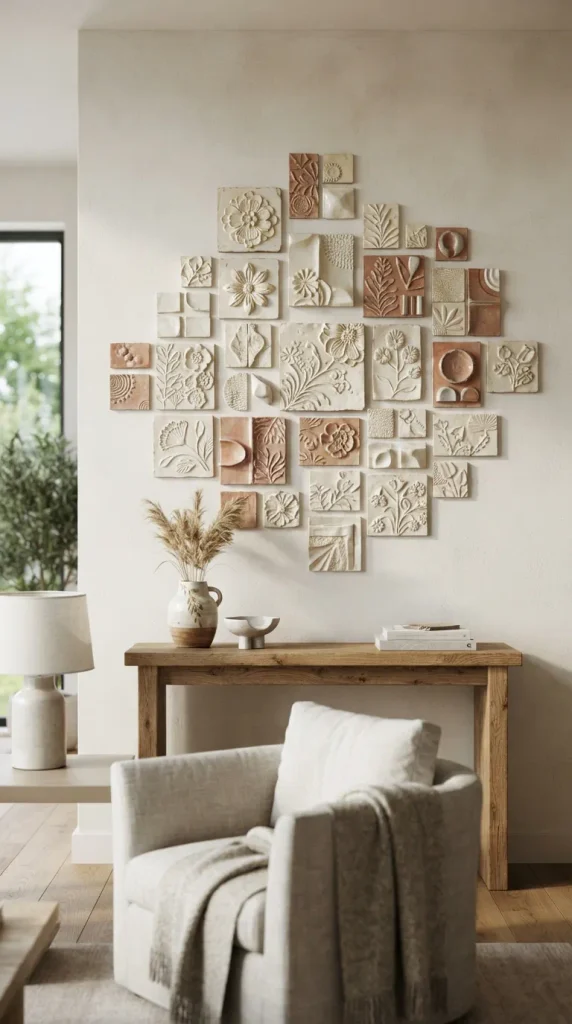
7. Ceramic Sculptural Wall Relief Tiles
Ceramic relief tiles combine the durability of fired clay with the beauty of three-dimensional design. They can feature raised flowers, abstract patterns, flowing lines, geometric shapes, or handcrafted textures.
Unlike a single sculptural panel, ceramic relief tiles can be arranged into a larger wall composition. Repeating the same tile creates a cohesive pattern, while mixing complementary shapes introduces variety.
Neutral ceramic finishes such as ivory, chalk white, and warm beige are particularly versatile. Glazed blue, green, or terracotta tiles can add stronger color and character.
A ceramic relief installation can work as a focal point in a living room, dining area, hallway, or decorative niche. It is especially attractive when natural or directional light emphasizes the raised surfaces.
For a small-scale DIY project, lightweight ceramic decorative pieces can be arranged on a suitable backing panel. Large or heavy installations should use a properly designed support and mounting system. If tiles are being permanently attached to a wall, the surface preparation and adhesive must be appropriate for the tile weight and wall substrate.
Keep the layout balanced by testing the arrangement before installation. Consistent spacing can make the final design look more polished.
Ceramic relief art is a beautiful option if you appreciate handcrafted objects, tactile surfaces, and the combination of traditional materials with modern design.
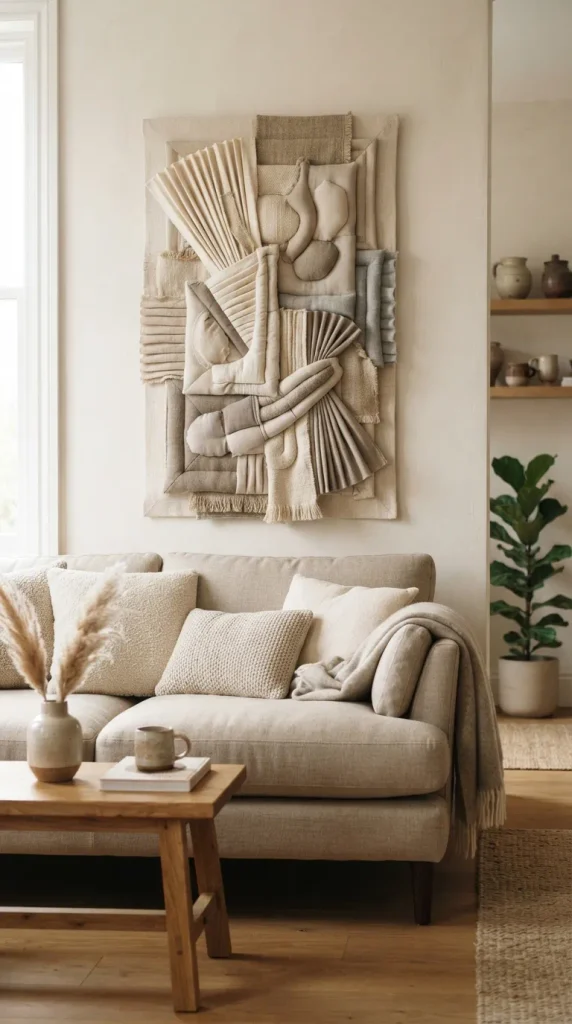
8. Layered Fabric and Textured Wall Relief
Layered fabric relief art combines soft materials with sculptural arrangement to create a tactile alternative to traditional framed artwork. It can feature folded fabric, padded forms, layered textile shapes, or textured fibers mounted on a backing panel.
This style is particularly suitable for bedrooms, reading corners, and living rooms where you want the decoration to feel soft and inviting. Linen, cotton, wool, and other textured textiles can add visual warmth.
Choose neutral shades such as cream, oatmeal, taupe, and warm gray for a subtle appearance. Alternatively, deep olive, rust, burgundy, or navy can create a stronger decorative statement.
A textile relief panel can be positioned above a bed, sofa, or upholstered bench. It works especially well alongside natural materials and soft furnishings because it extends the room’s texture palette onto the wall.
For a DIY version, arrange fabric folds or padded shapes on a sturdy backing panel. Use materials and adhesives appropriate for the textile and backing, and make sure the finished panel is securely mounted.
Keep the overall design intentional. Too many competing fabrics or patterns may make the artwork appear cluttered, while a limited palette emphasizes its sculptural qualities.
Because textiles can collect dust, choose a design that can be cleaned or maintained according to the fabric manufacturer’s recommendations.
Layered textile relief art is ideal for creating a softer, more tactile interior without sacrificing artistic interest.
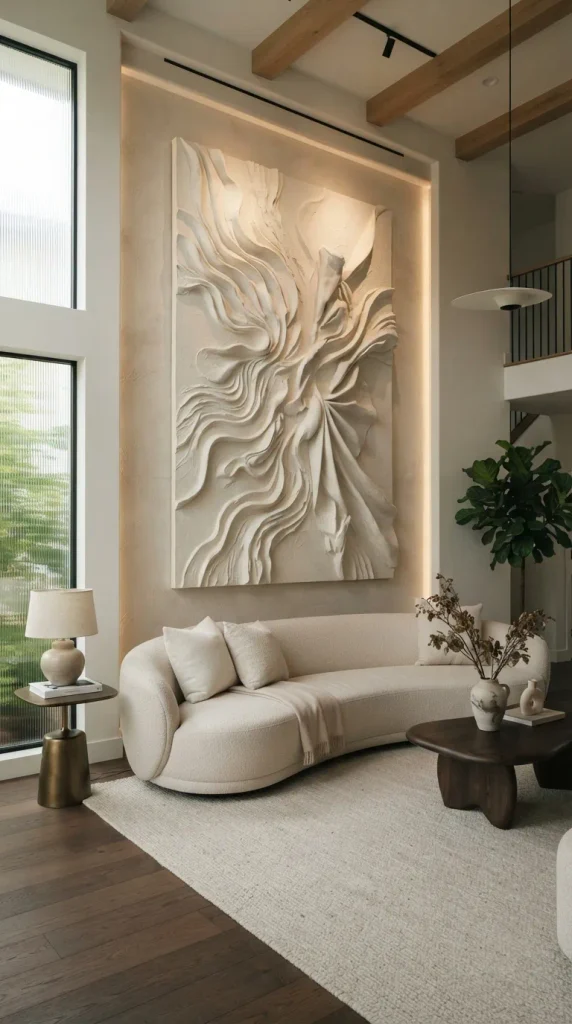
9. Oversized Statement Wall Relief Sculpture
An oversized sculptural wall relief can transform a plain wall into a dramatic architectural feature. Rather than displaying several small decorative objects, this approach uses one large artwork to establish the room’s visual identity.
Statement reliefs may feature abstract organic shapes, oversized floral forms, layered geometric panels, or irregular sculptural surfaces. Their appeal comes from their scale, depth, and interaction with light.
For a modern living room, choose an oversized neutral relief with raised curves and a matte finish. In a more expressive interior, consider a bold color, metallic surface, or intricate carved pattern.
Before selecting the piece, measure the wall and the furniture beneath it. Artwork above a sofa should generally relate to the width of the seating arrangement rather than occupying the entire wall indiscriminately.
Large sculptures also require careful installation. Confirm the total weight, backing construction, wall type, and mounting requirements before hanging the piece. Some installations may need professional support or multiple secure fixing points.
To keep the design balanced, avoid crowding the surrounding wall with numerous small frames or accessories. A console table beneath the sculpture can be styled with a few simple objects, but the artwork should remain the main attraction.
This idea is especially effective in spacious living rooms, high-ceiling interiors, and entryways that benefit from a strong focal point.
10. Two-Tone Sculptural Wall Relief Art
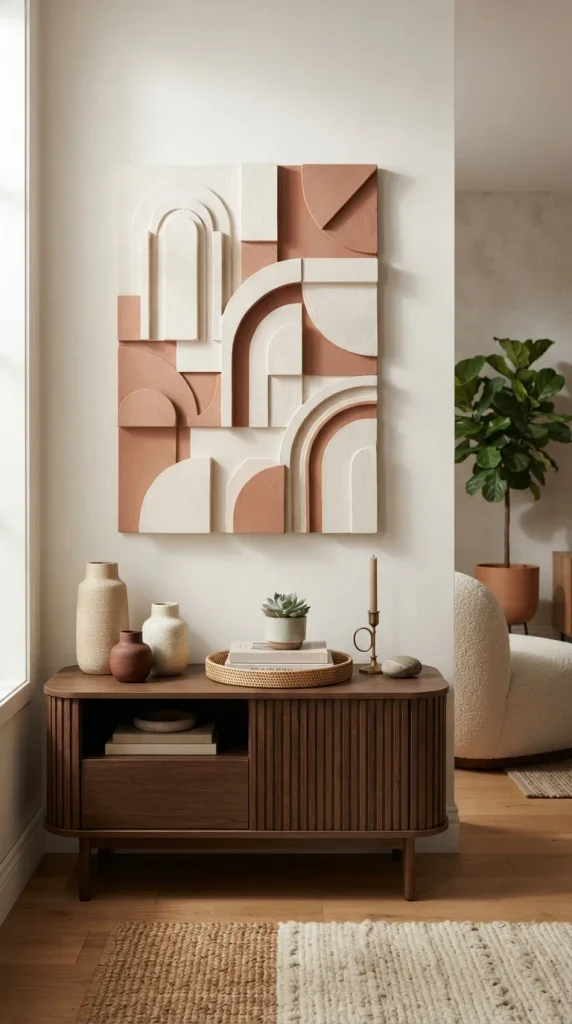
Two-tone relief art combines dimensional shapes with contrasting colors to emphasize the structure of the design. It can be subtle and sophisticated or bold and contemporary, depending on the selected shades.
Popular combinations include white and beige, cream and terracotta, charcoal and gray, sage green and ivory, or black and warm white. The lighter color can highlight raised areas, while the darker shade emphasizes recessed sections or creates a contrasting background.
This technique works with geometric panels, abstract curves, botanical shapes, and layered sculptural compositions. The color contrast makes the relief easier to appreciate from a distance while adding visual interest to the wall.
A two-tone panel can be displayed above a sofa, in a bedroom, or along an entryway wall. Choose colors that repeat elsewhere in the room to create a cohesive interior scheme.
For a DIY project, prepare the backing and modeling material according to the manufacturer’s instructions. Once the relief is fully dry, apply a compatible primer and paint the sections in your chosen colors. Use painter’s tape where appropriate to achieve clean edges, but avoid placing tape on fragile surfaces.
A matte finish often works well because it emphasizes the shape without producing excessive reflections.
Two-tone sculptural wall relief art is a versatile option for homeowners who want dimensional artwork with a more distinctive color story.
How to Style Sculptural Wall Relief Art
Choosing the artwork is only part of creating a beautiful display. Its placement, scale, lighting, and relationship with surrounding decor all influence the final result.
1. Choose the right wall. Select a wall where the artwork can be appreciated without competing with windows, doors, or other major architectural features.
2. Match the scale to the room. A large relief panel can anchor a spacious living room, while a smaller sculpture may be better suited to a narrow hallway or reading corner.
3. Use lighting to reveal texture. Side lighting and directional spotlights can create attractive shadows across raised surfaces. Avoid excessive glare on glossy or metallic finishes.
4. Coordinate colors with your interior. The artwork does not need to match everything exactly, but repeating one or two colors from the furniture, rug, or accessories can help create a unified look.
5. Balance texture with simplicity. If the wall relief is highly detailed, keep nearby accessories relatively understated. This allows the sculptural surface to remain the focal point.
6. Consider the mounting system. Relief artwork can be heavier than it appears. Use hardware suited to the object’s weight and the construction of the wall.
Common Mistakes to Avoid
- Choosing artwork that is too small: A tiny relief panel may look lost on a large wall, especially above substantial furniture.
- Overcrowding the surrounding area: Too many competing decorations can distract from the dimensional artwork.
- Ignoring lighting: Poor lighting may hide the sculptural depth that makes relief art attractive.
- Mixing too many finishes: Combining numerous textures, metallics, and strong colors can make the interior feel disjointed.
- Using unsuitable DIY materials: Not every modeling compound is suitable for thick reliefs, large panels, or permanent wall installations.
- Neglecting mounting safety: Heavy ceramic, wooden, plaster, or metal pieces require appropriate structural support.
- Overlooking maintenance: Textured surfaces can collect dust, so choose a finish and location that are practical to maintain.
Conclusion
Sculptural wall relief art offers a distinctive way to bring texture, depth, and artistic expression into your home. From minimalist plaster compositions and abstract geometric panels to carved wood, ceramic relief tiles, metallic sculptures, and layered textile artwork, each approach creates a different visual effect.
The best choice depends on your interior style, available wall space, preferred materials, and desired level of detail. Neutral plaster reliefs can create a calm, contemporary atmosphere, while carved wood and botanical forms introduce natural warmth. Metallic finishes and oversized sculptures can make a stronger statement.
Focus on proportion, carefully chosen materials, suitable lighting, and secure installation. With thoughtful planning, sculptural wall relief art can turn an ordinary wall into a memorable feature that adds lasting character to your living space.





Leave a Reply