
Introduction
Fluted wall panels are a beautiful way to transform an ordinary bedroom into a stylish, sophisticated, and inviting space. With their distinctive vertical grooves and textured surfaces, these panels add depth, dimension, and architectural interest without requiring complicated decorative accessories. Whether you prefer a modern minimalist bedroom, a luxurious hotel-inspired retreat, or a cozy contemporary interior, fluted wall panels can complement almost any design style.
One of the most popular ways to incorporate fluted panels is behind the bed, where they create an attractive focal point and enhance the overall appearance of the headboard. However, these panels can also be installed on bedroom feature walls, around dressing tables, beside wardrobes, or along partial walls to introduce texture without overwhelming the room.

Fluted panels are available in various materials, including MDF, wood, PVC, and decorative composite boards. They also come in a wide range of colors, from natural oak and warm walnut to cream, beige, charcoal, sage green, and deep brown. This versatility makes it easy to choose a design that suits your furniture, flooring, and existing color palette.
In this article, you’ll discover 10 fluted wall panel ideas for bedrooms, including luxurious headboard walls, minimalist designs, colorful feature walls, and creative combinations with lighting and other materials. You’ll also learn about the materials needed, installation tips, common mistakes, and ways to maintain your panels.
Materials Used for Fluted Bedroom Wall Panels
Before choosing a design, consider the materials, wall condition, and overall style of your bedroom. The right materials can help you achieve a beautiful finish while keeping the project practical and durable.
- MDF fluted panels: Suitable for painted finishes and contemporary bedroom designs.
- Natural wood panels: Ideal for adding warmth, visible wood grain, and organic texture.
- PVC fluted panels: Lightweight and often easier to clean, depending on the product.
- Decorative composite panels: Available in different textures, colors, and finishes.
- Construction adhesive: Used for suitable wall surfaces and panel systems.
- Measuring tape and level: Essential for accurate placement and straight vertical lines.
- Saw or panel-cutting tool: Used to cut panels to the required dimensions.
- Primer and paint: Helpful when installing paintable MDF panels.
- Finishing trim: Creates clean edges around the panel installation.
- LED lighting: Optional for creating a soft glow behind or beside the feature wall.
Always follow the manufacturer’s installation instructions and confirm that the chosen adhesive, fixings, and panels are appropriate for your wall surface. If you are installing panels around electrical outlets or switches, have any required electrical work completed safely.
1. Full-Height Fluted Headboard Wall
A full-height fluted headboard wall is one of the most striking ways to incorporate this design into a bedroom. Instead of limiting the panels to the area immediately behind the bed, extend them from the floor to the ceiling to create a continuous architectural feature.
The vertical grooves naturally draw the eye upward, helping the bedroom feel taller and more visually structured. This design works particularly well in modern, contemporary, and luxury-inspired interiors.
Choose warm walnut or natural oak for a cozy appearance, or use painted beige, cream, or soft gray panels for a more understated finish. A full-height installation can also make a simple upholstered bed look more substantial without requiring an elaborate headboard.
To create this look, measure the entire wall behind the bed and determine how the panels will align with the bed frame, bedside tables, and ceiling. Install the panels in evenly spaced vertical sections, ensuring that the grooves remain consistent across the wall.
For a cohesive appearance, coordinate the panel color with the bedroom’s flooring or furniture. For example, walnut panels look attractive with cream bedding, dark bedside tables, and warm metallic accents. Lighter oak panels pair beautifully with white linens, beige upholstery, and natural woven accessories.
You can further enhance the wall with matching bedside lamps or wall-mounted lighting. Keep decorative accessories simple so the fluted texture remains the main attraction.
Styling tip: Use a full-height fluted wall when you want a dramatic bedroom transformation. If your bedroom is small, choose a lighter finish and avoid combining too many dark colors.

2. Natural Oak Fluted Wall Panels
Natural oak fluted panels are an excellent choice for creating a warm, comfortable, and timeless bedroom. The combination of vertical grooves and visible wood grain introduces texture without making the room feel overly decorative.
This design is particularly suitable for Scandinavian, Japandi, contemporary, and modern farmhouse interiors. Natural oak offers a balance between a clean modern appearance and the warmth of traditional wood.
Install oak panels behind the bed to create a subtle focal point. You can cover the full wall or use a wide panel section that extends slightly beyond the bed on both sides. A wider installation helps frame the bed and creates a balanced composition.
Pair the panels with white, cream, or light beige bedding to emphasize their natural color. Linen curtains, wooden bedside tables, and simple ceramic lamps can reinforce the relaxed atmosphere. If you prefer a more contemporary look, add black bedside sconces or slim dark metal furniture legs for contrast.
When selecting oak panels, consider the undertone of the wood. Honey oak introduces warmth, while pale oak creates a lighter and more minimalist appearance. Matching the undertone with the floor and furniture helps the bedroom feel coordinated.
For an affordable alternative, consider oak-effect decorative panels that reproduce the appearance of natural wood. Compare samples in your bedroom’s lighting before purchasing, as finishes can look different under daylight and warm artificial light.
Styling tip: Combine natural oak fluting with soft textiles, neutral colors, and restrained accessories to create a calm bedroom that feels stylish without looking crowded.
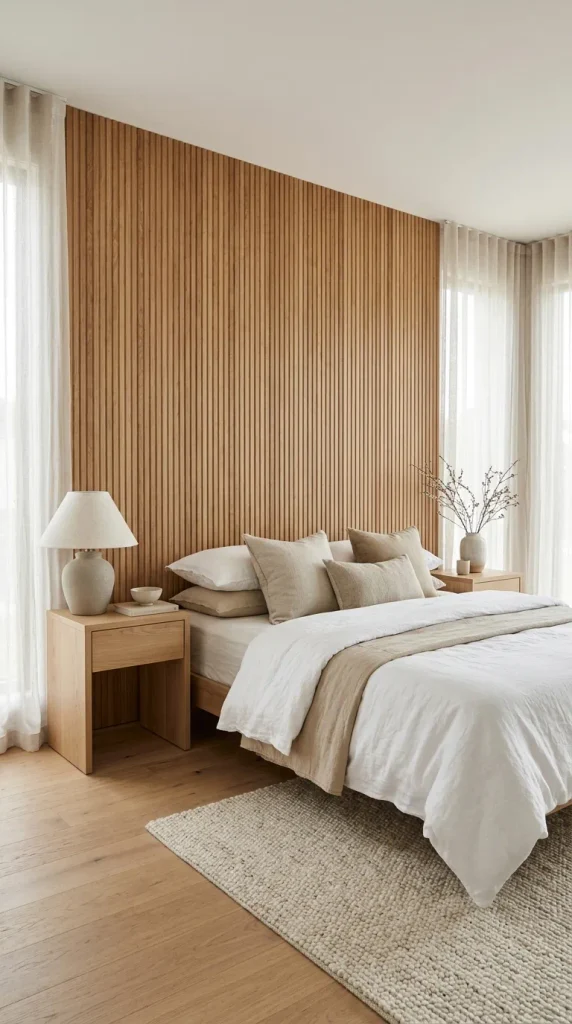
3. Beige Fluted Wall Panels for a Soft Neutral Bedroom
Beige fluted panels are ideal for bedrooms where comfort, subtle elegance, and visual harmony are priorities. Their soft color creates a soothing backdrop, while the vertical grooves add dimension that prevents the wall from appearing flat.
This design works beautifully in modern minimalist, contemporary, transitional, and hotel-inspired bedrooms. It is especially effective when you want a sophisticated feature wall without introducing bold colors or heavy visual contrast.
Start by choosing a beige shade that complements your flooring, curtains, and bedding. Warm beige works well with cream, tan, and light oak, while cooler greige shades pair nicely with gray upholstery and muted metallic finishes.
Install the panels behind the bed, either across the entire wall or in a wide rectangular section. For a refined result, align the panel edges with the bed and bedside furniture. A symmetrical layout makes the room feel organized and thoughtfully designed.
Layer the space with cream bedding, textured cushions, a soft upholstered headboard, and warm bedside lighting. You can also introduce a darker accent through a walnut dresser, bronze hardware, or a charcoal throw.
If you want additional depth, combine beige fluted panels with a smooth painted section above or beside them. The contrast between the grooved surface and the flat wall creates visual interest without requiring extra decoration.
Styling tip: Use two or three closely related neutral shades rather than many competing colors. This keeps the bedroom calm while allowing the fluted texture to stand out.
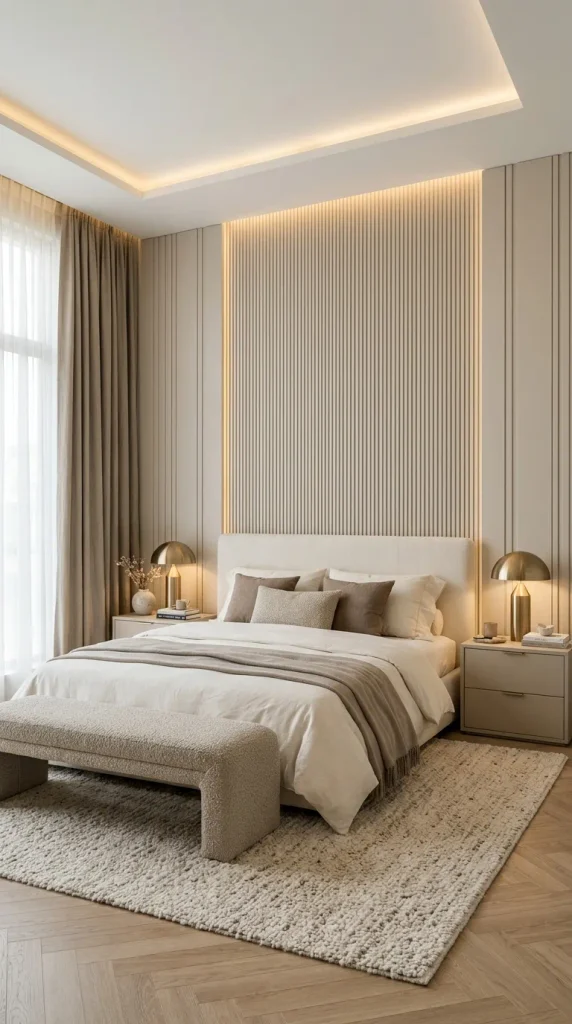
4. Dark Walnut Fluted Wall for a Luxury Bedroom
Dark walnut fluted panels can create a dramatic and sophisticated bedroom inspired by boutique hotels and contemporary luxury interiors. The deep brown finish emphasizes the vertical grooves, giving the wall a rich, architectural appearance.
This design is especially attractive in medium-sized or spacious bedrooms where the dark surface can become a deliberate focal point. It also works well in rooms with layered lighting, contrasting bedding, and carefully selected furniture.
Install walnut panels behind the bed to anchor the sleeping area. A full-height wall produces a bold effect, while a partial-height installation offers a more restrained alternative. If you choose dark panels, consider the amount of natural light available before deciding how much wall space to cover.
Pair walnut with cream, ivory, or light beige bedding to create contrast. Upholstered headboards in taupe or warm gray can soften the strong lines of the panels. Black or bronze bedside lamps, simple framed artwork, and understated accessories complete the luxurious appearance.
Lighting is particularly important with dark fluted walls. Warm wall sconces or bedside lamps can highlight the grooves and bring out the richness of the wood finish. Avoid relying on a single harsh ceiling light, which may flatten the texture and make the room feel less inviting.
For smaller bedrooms, use walnut panels behind the bed rather than throughout the room. Keep the remaining walls light and use mirrors strategically to maintain a balanced atmosphere.
Styling tip: Pair dark walnut panels with warm lighting and light-colored textiles. This combination creates a luxurious focal point without making the bedroom feel excessively dark.
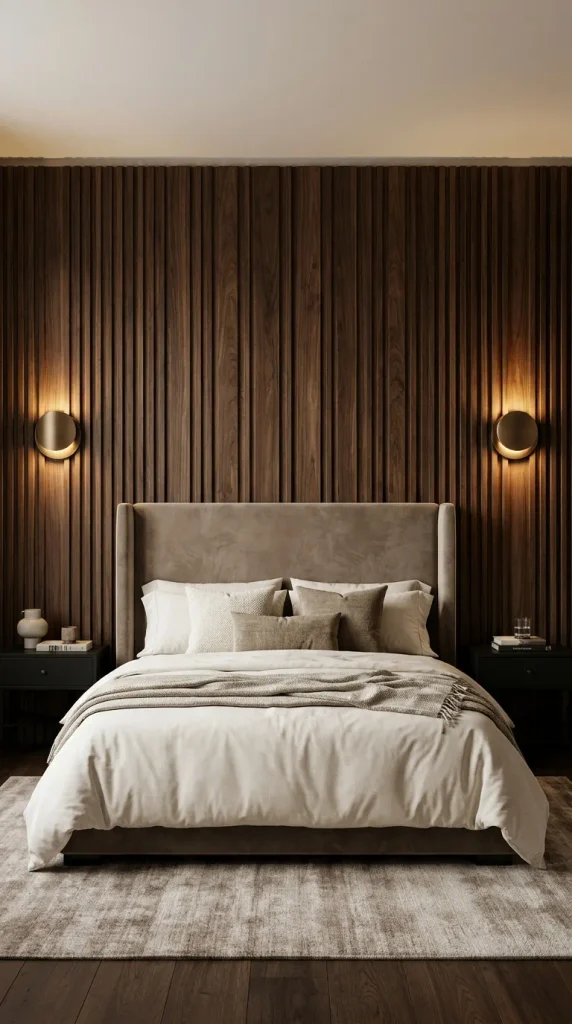
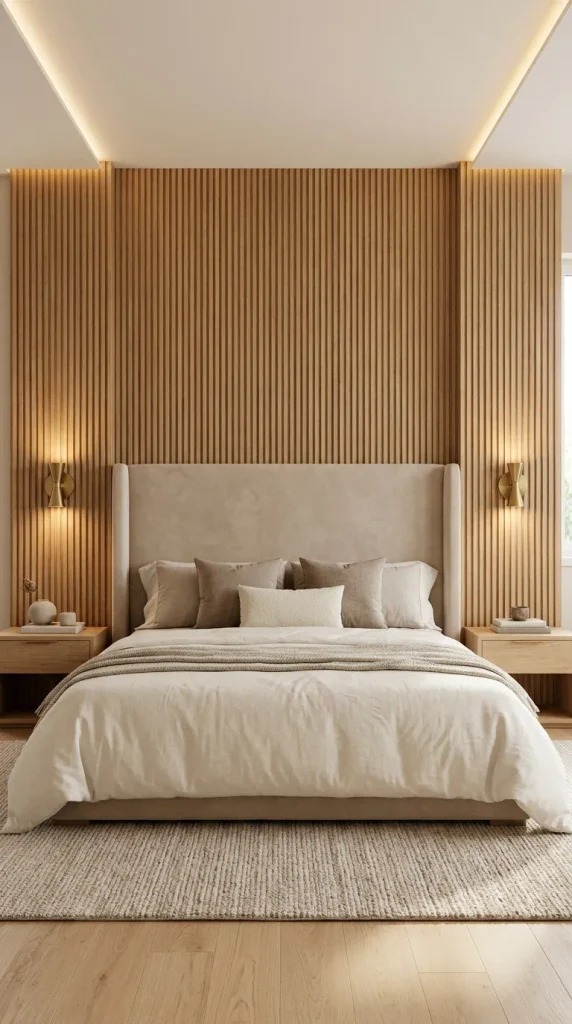
5. Fluted Wall Panels with LED Strip Lighting
Combining fluted wall panels with LED strip lighting creates a contemporary bedroom feature wall that feels architectural and atmospheric. The light highlights the vertical grooves, emphasizing the panel texture and adding depth to the room after dark.
This idea works especially well in modern bedrooms, minimalist interiors, and hotel-inspired spaces. It can also be adapted to smaller rooms by using a limited section of panels behind the headboard.
There are several ways to incorporate lighting. You can install concealed LED strips along the top edge of the panels, create a soft glow behind a projecting panel section, or use integrated lighting within a professionally designed wall system.
Warm-white lighting usually creates a relaxing bedroom atmosphere, while neutral-white lighting produces a cleaner, more contemporary effect. Select dimmable lighting if you want to adjust the brightness for reading, relaxing, or preparing for sleep.
To achieve a polished result, plan the lighting and panel installation together. Decide where the LED strips, power supply, wiring, and any access points will be located before fixing the panels to the wall. Use products rated for the intended installation and have electrical work completed by a qualified professional when necessary.
Pair the illuminated wall with simple bedding and streamlined furniture. The light itself becomes a decorative feature, so excessive wall art or multiple competing light sources are usually unnecessary.
Styling tip: Choose warm, indirect lighting and conceal the LED strips where possible. A soft, even glow generally looks more elegant than visible points of light or overly bright illumination.
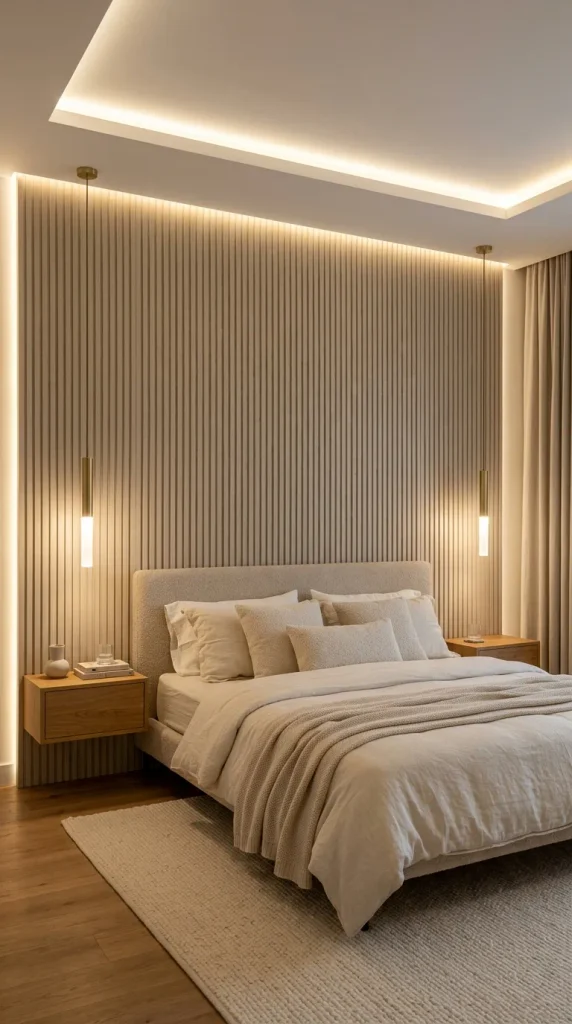
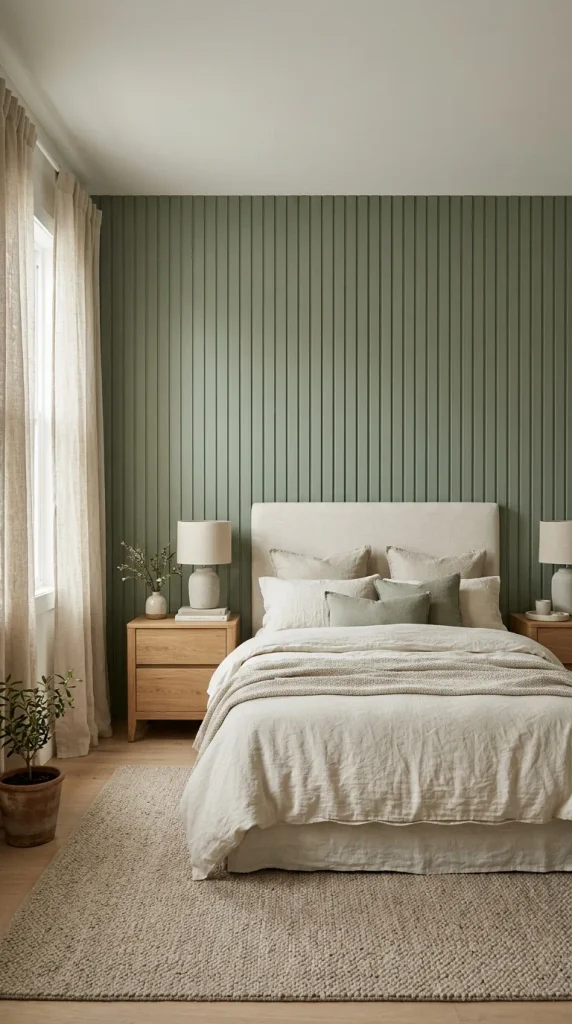
6. Sage Green Fluted Wall Panels
Sage green fluted panels introduce a gentle touch of color while maintaining the calming atmosphere most people want in a bedroom. The muted green shade feels connected to nature and works beautifully with natural wood, cream textiles, and warm neutral accessories.
This design is suitable for contemporary, cottage-inspired, Scandinavian, and nature-inspired bedrooms. It provides more personality than a neutral wall while remaining relatively easy to coordinate with other furnishings.
For a balanced layout, install sage green panels behind the bed and keep the remaining walls cream, warm white, or pale beige. This allows the green feature wall to stand out without dominating the entire room.
Choose a muted sage shade rather than a highly saturated green if you prefer a relaxed appearance. Depending on your interior style, you can select a matte painted finish or a ready-made panel in a soft green tone.
Pair the wall with light oak bedside tables, white or oatmeal bedding, and natural-fiber rugs. Small black accents can introduce contrast, while brushed brass hardware adds a subtle decorative touch.
You can also incorporate greenery through a plant near the window or a small arrangement on the dresser. Avoid filling every surface with green accessories, as a few carefully chosen details usually create a more cohesive result.
For a slightly more dramatic design, use sage panels with a matching upholstered headboard and cream bedside lamps. The repeated color creates continuity while the different textures keep the room visually interesting.
Styling tip: Sage green works best when balanced with warm neutrals and natural materials. Test a sample in both daylight and evening lighting before committing to the final shade.
7. Half-Wall Fluted Panels with Painted Upper Walls
Half-wall fluted panels offer an attractive solution for bedrooms where a full-height feature wall would feel too dominant. By installing panels across the lower portion of the wall and painting the upper section in a complementary color, you create a layered look with architectural character.
This design works well in traditional, transitional, contemporary, and modern farmhouse bedrooms. It can also be a practical option for renters or homeowners who want a smaller decorative project, depending on the panel system and installation method.
Start by deciding how high the paneling should extend. A height around one-third to one-half of the wall can be a useful starting point, but the best proportion depends on the ceiling height, bed size, and overall room layout.
Install the fluted panels along the wall behind the bed or continue them around the room for a more traditional treatment. Add a slim finishing trim at the top if the panel system requires one, and ensure that the edges are clean and level.
For a soft look, combine beige panels with warm-white walls. For more contrast, choose walnut panels beneath a pale neutral wall or sage green panels beneath cream paint.
The upper wall can remain simple, or you can add framed artwork or wall sconces where appropriate. Be mindful of furniture placement and the height of the headboard so the composition does not feel crowded.
Styling tip: Keep the panel color and upper wall shade coordinated. A clear division between the textured lower section and smooth upper wall makes this design feel intentional.

8. Fluted Panels Combined with an Upholstered Headboard
Combining fluted wall panels with an upholstered headboard creates a bedroom that balances architectural texture with softness. The panels establish a structured backdrop, while the upholstered surface adds comfort and a luxurious layered appearance.
This design is particularly effective in contemporary and hotel-inspired bedrooms. It allows you to introduce two distinct textures without relying on decorative wallpaper or elaborate wall art.
To create the look, install fluted panels across the wall behind the bed, then position an upholstered headboard in front of the panels. Alternatively, install the panels on either side of a wider upholstered headboard to frame the bed symmetrically.
Choose materials that complement each other. Natural oak panels pair beautifully with beige or cream upholstery, while walnut panels work well with taupe, gray, or ivory fabrics. If you prefer a softer palette, combine painted beige panels with a headboard in textured linen.
The proportions are important. A headboard that is too narrow may appear disconnected from the panels, while an excessively tall headboard can hide much of the fluted texture. Measure the bed and wall carefully before selecting the final arrangement.
Complete the design with coordinated bedside tables, soft bedding, and simple wall lighting. You can introduce contrast through cushions or a throw, but avoid too many competing patterns.
For an especially cohesive appearance, repeat the headboard fabric color in the curtains, cushions, or an upholstered bench at the foot of the bed.
Styling tip: Let the panels provide vertical texture and the headboard provide softness. Using contrasting but complementary materials gives the bedroom a polished, layered look.
9. Two-Tone Fluted Wall Panel Design
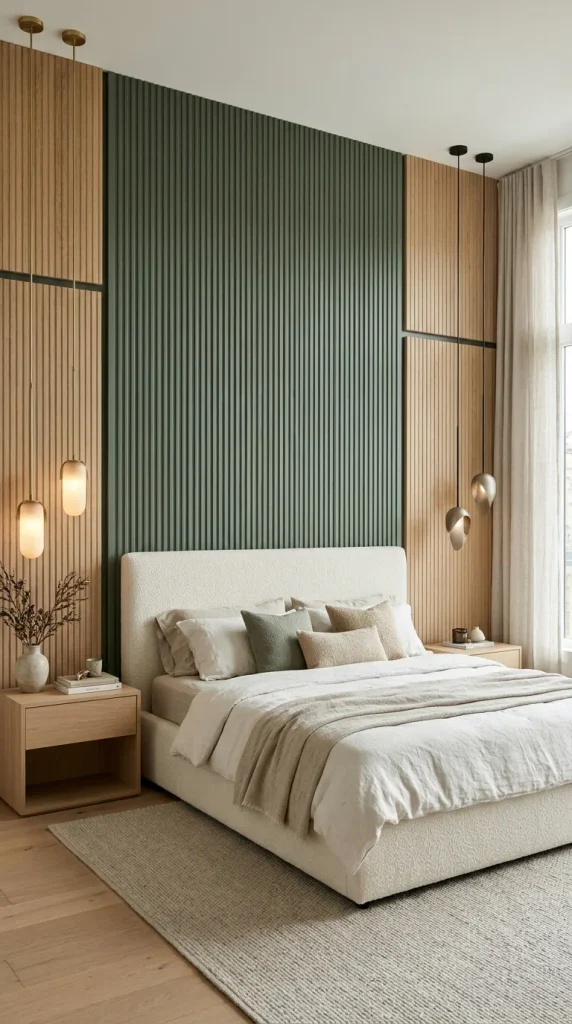
Two-tone fluted wall panels are a creative way to introduce contrast and personality into a bedroom. By combining two complementary panel colors or pairing fluted panels with a contrasting smooth section, you can create a custom feature wall that feels distinctive and modern.
This design suits contemporary, eclectic, and transitional interiors. It is particularly useful if you want a colorful bedroom without painting every wall in a bold shade.
One approach is to use a darker fluted section behind the bed and lighter panels on either side. For example, deep walnut can be paired with light oak, or sage green can be combined with warm beige. Another option is to use a single fluted panel color with a contrasting painted strip above or beside it.
Before installation, plan the division between the two colors. A symmetrical design often works well behind a centered bed, while an asymmetrical layout can feel more contemporary. Ensure that the transition lines align with important features such as the headboard, bedside tables, or wall edges.
Choose colors that relate to the rest of the bedroom. If the furniture is already dark, lighter panels may help balance the room. If the space is mostly neutral, a darker or colored section can provide a striking focal point.
Keep the remaining decor relatively simple. Neutral bedding, understated lighting, and a few carefully selected accessories will help the two-tone wall remain the main feature.
Styling tip: Limit the design to two main finishes. A restrained combination generally looks more refined than using several competing panel colors.
10. Fluted Panels Around a Bedroom Dressing Area
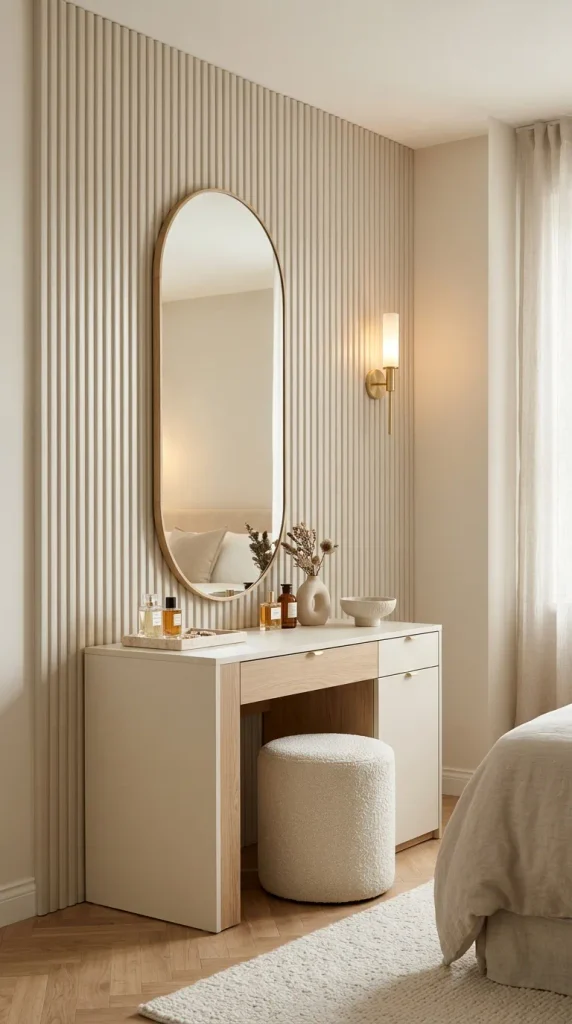
Fluted panels can also transform a bedroom dressing area into a stylish, coordinated corner. Instead of placing all the decorative attention behind the bed, use fluted surfaces around a dressing table, vanity, or compact wardrobe section.
This idea is ideal for bedrooms with a dedicated dressing corner or a small area that needs visual definition. The vertical grooves help the space feel designed rather than like a collection of unrelated furniture pieces.
Install a section of fluted panels behind the dressing table or along the side of a wardrobe. A full-height panel creates a strong architectural feature, while a smaller panel behind the mirror provides a more subtle treatment.
For a refined finish, pair light beige panels with a rounded mirror, a compact dressing table, and a comfortable upholstered stool. Natural oak panels look attractive with white furniture, while walnut panels can complement a darker vanity and warm metallic handles.
Lighting is important around a dressing table. Choose suitable task lighting that illuminates the face evenly, and consider decorative wall lights if they fit the layout. Do not rely solely on concealed LED strips for tasks that require accurate visibility.
Keep the surface organized with a tray, a small vase, or a few everyday essentials. The fluted panels already provide texture, so excessive accessories can make a small dressing corner feel crowded.
Styling tip: Use the same panel finish in the dressing area and behind the bed if you want a unified bedroom design. Alternatively, introduce a complementary finish to create subtle zoning between sleeping and dressing spaces.
Practical Tips for Installing Fluted Wall Panels
A successful fluted wall installation depends on accurate measurements, suitable materials, and careful finishing. Keep these practical considerations in mind before starting your project.
- Measure the wall carefully: Record the wall width and height, and account for sockets, switches, skirting boards, and other obstacles.
- Plan the layout first: Mark the panel positions and check how the grooves will align behind the bed and around the edges.
- Check the wall condition: The surface should be suitable for the chosen panel system. Repair major defects and address moisture problems before installation.
- Choose the right material: MDF is suitable for many painted interiors, while natural wood provides distinctive grain and warmth. PVC and composite options may be useful where their specific properties suit the room.
- Consider panel thickness: Thicker panels may create a stronger visual effect but can project farther from the wall and affect furniture placement.
- Use appropriate fixings: Follow the panel manufacturer’s guidance for adhesive, screws, wall plugs, and any supporting framework.
- Finish the edges neatly: Properly aligned corners and clean edge details make a major difference to the finished appearance.
- Coordinate the colors: Compare panel samples with the flooring, bedding, curtains, and existing furniture.
- Plan lighting in advance: Decide where lamps, switches, and any integrated LED strips will sit before installation.
- Maintain access where needed: Do not permanently conceal electrical connections or other components that require access.
If you are installing heavy panels, working with uneven walls, or cutting around electrical fittings, consider professional help. The additional planning can prevent costly mistakes and produce a cleaner finish.
Common Mistakes to Avoid
Even attractive fluted panels can look disappointing when the layout, finish, or proportions are not carefully considered. Avoid these common problems.
1. Choosing panels that are too dark for the room
Dark walnut and charcoal panels can look luxurious, but using them across every wall in a small, poorly lit bedroom may make the space feel heavy. Consider a single feature wall and lighter surrounding finishes.
2. Ignoring the bed’s proportions
A panel feature that is too narrow or poorly aligned can make the bed look disconnected from the wall. Plan the panel width around the bed and bedside furniture.
3. Using too many competing textures
Fluted panels already introduce a strong pattern. Combining them with busy wallpaper, heavily patterned bedding, and numerous decorative accessories can make the room feel cluttered.
4. Skipping measurements
Uneven spacing, awkward cuts, and poorly aligned grooves are highly visible on a fluted wall. Measure carefully and check the layout before attaching the panels.
5. Forgetting about lighting
A beautifully textured wall may look flat under harsh lighting or in a dark corner. Use suitable ambient lighting and consider how daylight will fall across the grooves.
6. Selecting the wrong finish
A high-gloss finish may not suit a soft, relaxed bedroom, while a delicate natural wood finish may clash with strongly contrasting furniture. Test samples before purchasing materials for the entire wall.
7. Neglecting maintenance
Dust can collect inside the grooves. Choose a finish that suits your cleaning routine and follow the manufacturer’s instructions for care.
Conclusion
Fluted wall panels offer a versatile way to add texture, depth, and architectural character to a bedroom. Whether you choose a full-height walnut headboard wall, natural oak panels, soft beige finishes, sage green accents, or a contemporary two-tone design, the right treatment can transform the entire atmosphere of the room.
For a luxurious appearance, consider dark walnut panels combined with warm lighting and light bedding. If you prefer a calm and natural bedroom, oak and beige finishes are excellent options. For a more distinctive look, experiment with sage green panels, upholstered headboards, or a fluted dressing area.
The most important factors are proportion, color coordination, material selection, and careful installation. Choose a design that complements your existing furniture and the amount of natural light in your bedroom. With thoughtful planning, fluted wall panels can create a stylish feature that feels both modern and timeless.





Leave a Reply