
Introduction
A picture frame wall can instantly transform an empty wall into a meaningful focal point. Instead of leaving photographs and artwork scattered around the home, a carefully planned gallery wall brings everything together in one visually interesting display.
Picture frame walls work beautifully in living rooms, bedrooms, hallways, staircases, dining rooms, entryways, and home offices. They can be completely personalized according to your decorating style. A minimalist arrangement might use identical black frames and simple artwork, while a cozy eclectic wall can combine different frame colors, family photographs, botanical prints, mirrors, and decorative objects.

The secret to a Pinterest-worthy picture frame wall is balance. The arrangement does not necessarily need to be perfectly symmetrical, but it should feel intentional. Repeating colors, frame finishes, or artwork themes helps create visual consistency.
Before hanging anything, measure the available wall and plan your arrangement. You can arrange the frames on the floor first or use paper templates to test the layout.
For renters, removable picture-hanging strips and hooks can provide flexible options, depending on the wall surface and housing rules.
Below are ten creative picture frame wall ideas that can help turn an ordinary wall into a beautiful decorative feature.
Materials Used
Depending on the design, you may need:
- Wooden picture frames
- Black metal frames
- White frames
- Gold or brass-look frames
- Acrylic frames
- Glass frames
- Canvas prints
- Family photographs
- Art prints
- Botanical prints
- Travel photographs
- Mirrors
- Mat boards
- Removable adhesive strips
- Picture hooks
- Measuring tape
- Level
- Pencil
- Paper templates
- Double-sided mounting tape
- Small decorative objects
Choose frame materials and hanging methods appropriate for the wall and the weight of the artwork.
How to Create a Picture Frame Wall
Start by choosing the wall and deciding how large you want the gallery to be. A picture wall does not always need to cover the entire surface.
Choose a central piece first. This could be a large photograph, painting, mirror, or favorite artwork.
Then select supporting frames around it. Repeat one or two colors to make the arrangement feel cohesive.
Before hanging the pieces, place them on the floor. Experiment with different layouts until you find one that feels balanced.
Maintain relatively consistent spacing between frames. For a clean gallery wall, use similar gaps throughout. For an eclectic arrangement, slightly varied spacing can create a relaxed appearance.
Use a level to ensure the final arrangement does not appear crooked.
1. Classic Symmetrical Gallery Wall
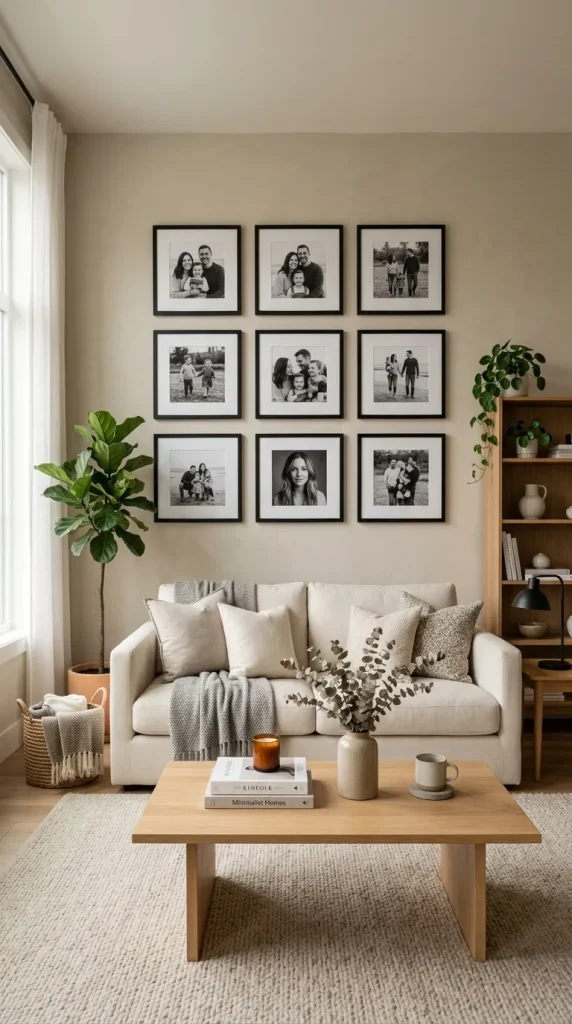
A symmetrical picture frame wall is ideal if you prefer an organized and sophisticated appearance.
Use identical frames arranged in rows and columns. Black, white, walnut, or gold frames can all work depending on your interior.
For example, six or nine frames can be arranged into a simple rectangular grid.
Use photographs with similar editing or artwork from the same collection to maintain consistency.
Black-and-white family photographs are particularly effective because they create a timeless appearance.
Place the gallery above a sofa, console table, bed, or dining sideboard.
Keep the spacing between frames consistent. A small measuring mistake can make a symmetrical arrangement look uneven, so measure carefully before installation.
This style works especially well in modern, transitional, Scandinavian, and minimalist homes.
2. Eclectic Mixed-Frame Gallery Wall
If you prefer a more relaxed and collected appearance, combine different frame styles.
Mix wood, black, white, brass-look, and vintage-style frames. Combine photographs with artwork, botanical prints, sketches, and small mirrors.
The frames can vary in size as well.
Start with your largest pieces and build the arrangement outward. Avoid placing all the largest frames together because the composition can become visually heavy.
Use a common color or theme to connect everything. For example, warm wood frames and neutral artwork can unify an otherwise varied collection.
This style works particularly well in boho, vintage, cottage, eclectic, and traditional interiors.
The goal is not perfect symmetry. Instead, aim for visual balance.

3. Black and White Photo Wall
A black-and-white picture wall creates a timeless and elegant appearance.
Choose photographs of family, travel, architecture, landscapes, pets, or meaningful moments and convert them into black-and-white images.
Place them inside matching black or white frames.
A large grid arrangement can create a clean modern effect, while an asymmetrical gallery can feel more artistic.
This design works beautifully above a sofa or along a hallway.
Use white mat boards inside the frames to create additional breathing room around the photographs.
Keep surrounding décor relatively simple so the photographs remain the focus.
Black-and-white photography also works with many different color palettes, making it a versatile choice for changing interiors.

4. Staircase Picture Frame Wall
A staircase provides a naturally vertical wall that is perfect for a gallery arrangement.
Instead of creating a traditional rectangular grid, arrange frames so they gradually follow the angle of the staircase.
Start near the bottom with a few smaller pieces and continue upward. You can mix different frame sizes while maintaining a consistent visual rhythm.
Family photographs are especially popular for staircase galleries because the arrangement can document different moments and generations.
For a traditional appearance, use matching wooden frames. For a modern home, try black frames with white matting.
Before drilling holes, use paper templates to test the arrangement on the wall.
This method helps prevent mistakes and allows you to see whether the gallery follows the staircase naturally.

5. Large Statement Frame with Smaller Frames
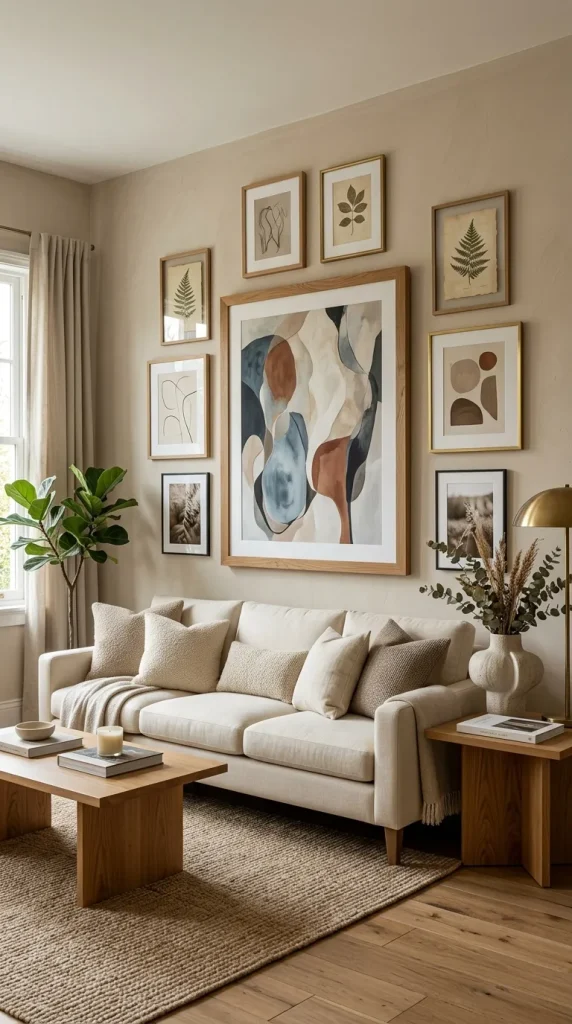
Create one dramatic focal point by placing a large artwork or photograph in the center and surrounding it with smaller frames.
The central piece should be noticeably larger than the supporting pieces.
Choose an artwork that reflects the main colors of the room. Surround it with photographs, botanical prints, or smaller artworks.
This arrangement works well above a sofa, console, or bed.
The larger central frame creates a clear visual anchor, while the smaller frames add personality.
For a sophisticated appearance, keep all frames within the same color family.
For an eclectic room, deliberately mix frame finishes while repeating one or two colors in the artwork.
6. Picture Frames with Mirrors
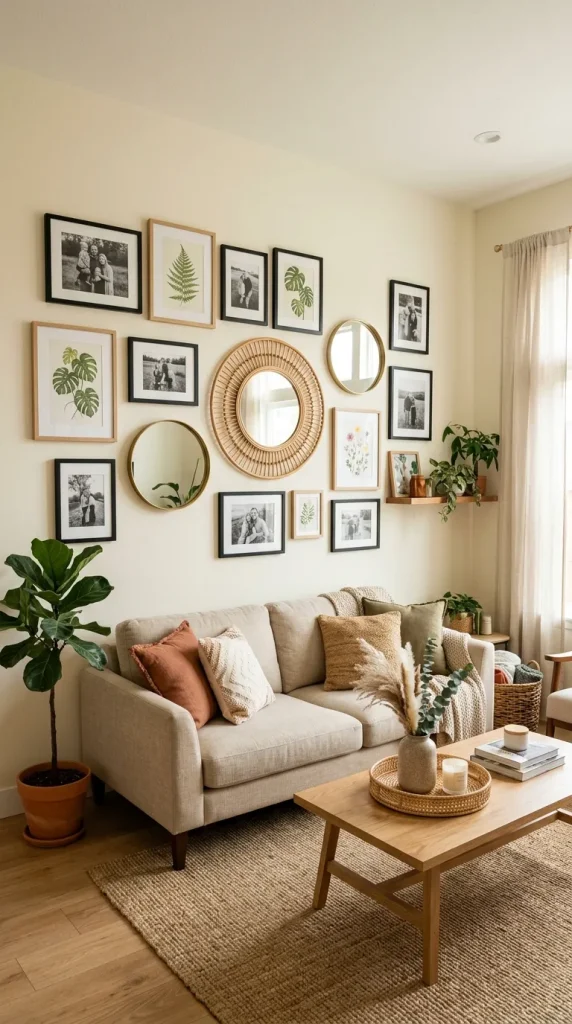
Combining picture frames with mirrors creates a more dimensional gallery wall.
Use a mixture of photographs, artwork, small mirrors, and decorative frames.
Round mirrors can soften the rectangular shapes of picture frames.
Place the mirror slightly off-center or use it as the main central element.
The reflective surface can help bounce light around the room and make the wall feel more dynamic.
This approach works beautifully in entryways, dining rooms, bedrooms, and living rooms.
Choose mirrors with frames that coordinate with the picture frames. For example, black frames with a black-framed mirror create a cohesive modern appearance.
Keep the composition balanced without making every object symmetrical.
7. Minimalist Floating Picture Ledge
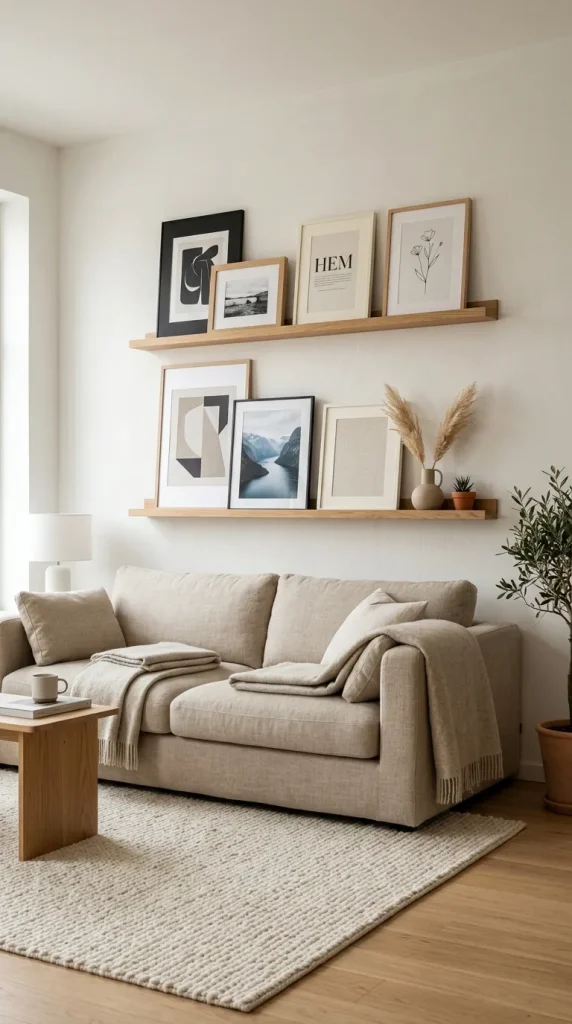
Instead of attaching every picture directly to the wall, use one or two narrow picture ledges.
Place framed artwork and photographs on the ledges and layer them against the wall.
This method allows you to change the display easily whenever you want a new look.
Use frames in similar neutral colors for a clean minimalist appearance.
You can layer larger frames behind smaller ones to create depth.
Add a small plant, candle, or decorative object between the frames.
Picture ledges work particularly well above desks, sofas, beds, and consoles.
They are also useful for renters because the wall arrangement can be changed without repeatedly creating new holes.
8. Travel Memory Gallery Wall
Turn your favorite travel memories into a personalized picture wall.
Combine vacation photographs with maps, postcards, ticket-style artwork, landscape prints, and small souvenirs.
Use matching frames to keep the collection visually organized.
You could arrange the images chronologically or group them according to destinations.
A large world map can become the central piece, surrounded by photographs from different places.
Natural wood frames work beautifully with travel-themed décor, especially in rustic, boho, and eclectic interiors.
Add a few handwritten captions or small location labels for extra personality.
This type of gallery wall tells a story and becomes a conversation piece rather than simply decorative artwork.

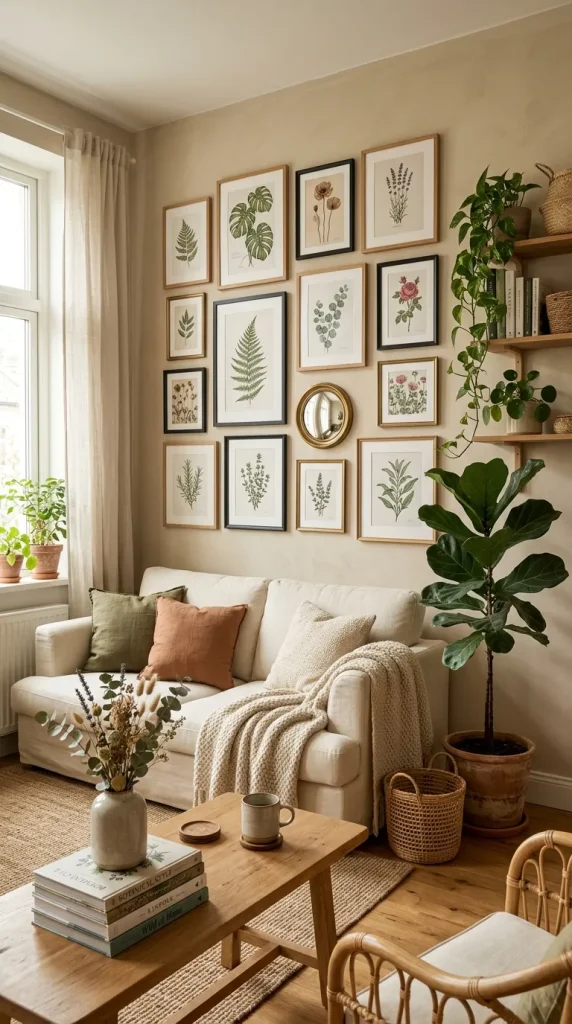
9. Botanical Picture Frame Wall
A botanical gallery wall brings a natural feeling indoors.
Use framed illustrations or photographs of leaves, flowers, herbs, trees, and other plants.
Choose frames in natural wood, cream, black, or muted green.
Arrange larger botanical prints alongside smaller ones.
You can add one or two small mirrors to break up the artwork.
For additional texture, place a real or artificial plant beneath the gallery wall.
This design works especially well with earthy interior palettes featuring beige, cream, brown, olive, and terracotta.
A botanical picture wall is suitable for living rooms, bedrooms, home offices, hallways, and entryways.
10. Floor-to-Ceiling Picture Frame Wall
For a dramatic statement, extend your picture gallery vertically from near the floor toward the ceiling.
This works especially well on a large blank wall or in a hallway with significant vertical space.
Mix large and small frames while keeping the overall arrangement balanced.
Use a consistent frame color if you want the display to look sophisticated. Black, walnut, or white frames are particularly versatile.
You can combine family photographs, artwork, mirrors, botanical prints, and meaningful objects.
Keep the center of the overall composition around eye level so the wall remains comfortable to view.
A floor-to-ceiling gallery can make the room feel taller and turn a plain wall into a major decorative feature.

Extra Pinterest Styling Tips
Choose a Theme
A consistent theme can make a gallery wall look more intentional. Try family photographs, travel memories, botanical artwork, abstract art, or black-and-white photography.
Repeat Frame Colors
Even when mixing frame styles, repeating one or two colors helps create visual unity.
Mix Sizes
Combining large, medium, and small frames creates more visual interest than using identical sizes everywhere.
Use Matting
White or neutral mat boards can make photographs look more polished and give smaller images more presence.
Test the Arrangement
Lay everything on the floor before mounting it to the wall.
Keep Spacing Consistent
Similar gaps between frames create a cleaner appearance.
Add One Unexpected Element
A mirror, small woven piece, or sculptural object can make the gallery feel more creative.
Consider the Furniture Below
A gallery wall should visually connect with the sofa, console, bed, or table underneath it.
Conclusion
Picture frame walls are one of the most flexible ways to personalize an interior. They can showcase family memories, favorite artwork, travel experiences, botanical illustrations, or meaningful objects while transforming a blank wall into a decorative focal point.
The ten ideas in this guide offer different approaches, from classic symmetrical grids and minimalist picture ledges to eclectic galleries, staircase displays, botanical arrangements, and dramatic floor-to-ceiling compositions.
The most important principle is balance. Your frames do not have to match perfectly, but the overall arrangement should feel intentional. Repeat colors, materials, themes, or artwork styles to create cohesion.
Whether you prefer a clean modern gallery or a relaxed bohemian collection, a thoughtfully designed picture frame wall can make your home feel more personal, finished, and visually interesting.





Leave a Reply