
Introduction
Aubergine color kitchen ideas are perfect for anyone who wants to create a kitchen that feels bold, sophisticated, and full of character. Inspired by the deep purple skin of an aubergine, this rich shade combines purple undertones with hints of burgundy and brown, creating a dramatic color that works beautifully in both traditional and contemporary interiors.
Unlike brighter purple shades, aubergine has a deeper, more refined appearance. It can make kitchen cabinets look luxurious, add depth to kitchen islands, and create an elegant contrast with materials such as marble, natural wood, brushed brass, and stainless steel. Whether you prefer a modern minimalist kitchen or a cozy traditional design, aubergine can adapt to different decorating styles.
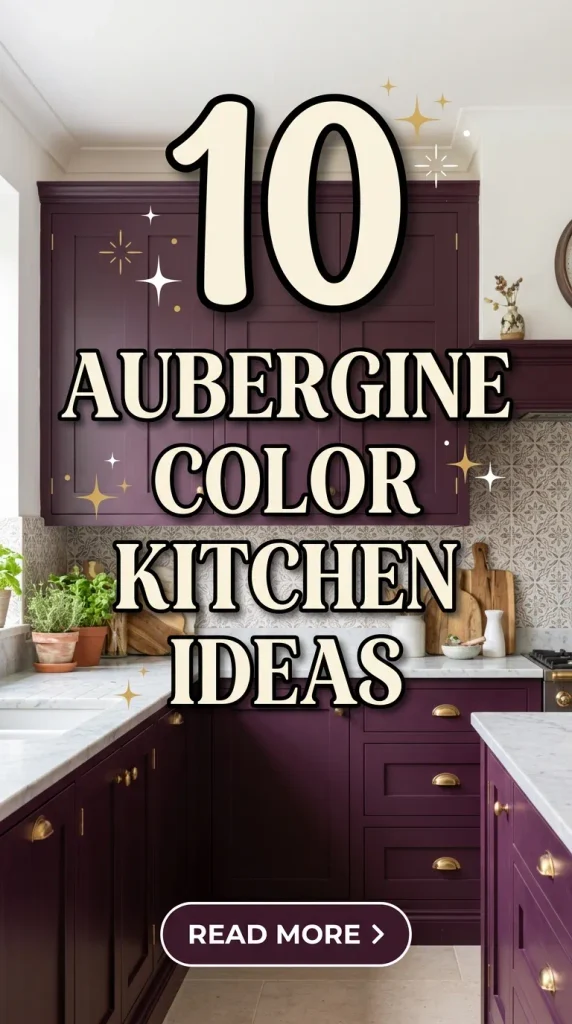
One of the best things about this color is its versatility. You can use it across all your cabinets for a dramatic statement, introduce it through a kitchen island, or incorporate smaller accents through bar stools, backsplashes, and decorative accessories. Pairing aubergine with warm neutrals creates a balanced look, while combining it with gold or brass finishes adds a glamorous touch.
Lighting is especially important when decorating with darker colors. Natural daylight, under-cabinet lighting, and carefully chosen pendant lights can help aubergine surfaces look rich rather than dull.
In this article, you will discover 10 aubergine color kitchen ideas, along with practical styling tips, suitable materials, and ways to incorporate this distinctive shade into your home.
Materials and Decor Items You Can Use
Before updating your kitchen, consider which materials and finishes will complement aubergine.
- Cabinet finishes: Matte aubergine paint, satin finishes, or deep purple-burgundy cabinetry.
- Countertops: White marble, cream quartz, warm beige stone, or light-colored composite surfaces.
- Metal finishes: Brushed brass, antique gold, polished chrome, or stainless steel.
- Backsplashes: White subway tiles, marble-effect panels, cream ceramic tiles, or patterned tiles.
- Wood finishes: Natural oak, walnut, dark wood, or warm-toned timber.
- Lighting: Brass pendant lights, warm LED strips, recessed lighting, and under-cabinet lights.
- Furniture: Wooden dining chairs, upholstered bar stools, and compact kitchen benches.
- Accessories: Ceramic bowls, decorative vases, wooden chopping boards, and coordinated kitchen textiles.
Choose a consistent palette before purchasing materials. Aubergine pairs particularly well with cream, warm white, muted sage green, natural wood, and metallic accents.
1. Aubergine Kitchen Cabinets With Brass Hardware
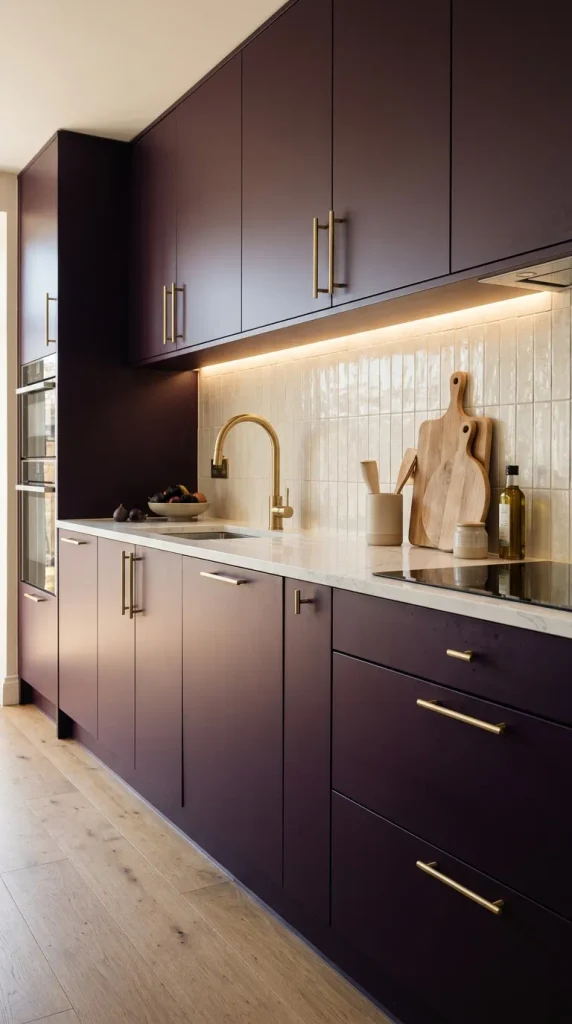
Aubergine kitchen cabinets create a dramatic focal point while giving the kitchen a luxurious, sophisticated appearance. This is one of the most effective ways to introduce the color because cabinetry covers a significant portion of the room and establishes the overall design.
Choose a deep aubergine shade with subtle burgundy undertones. Matte or satin finishes work particularly well because they create a refined appearance without excessive shine. If your kitchen has traditional cabinetry, the color can emphasize decorative paneling and classic door profiles. For a contemporary kitchen, flat-front aubergine cabinets provide a clean, modern look.
Brass hardware is an excellent complement to this rich purple shade. Brushed brass handles and drawer pulls introduce warmth and create a striking contrast against the dark cabinetry. You can continue the metallic finish through the kitchen faucet, pendant lights, or small decorative details.
To prevent the kitchen from feeling too dark, pair the cabinets with a light countertop. White quartz or cream-colored stone creates a bright surface that balances the depth of the aubergine. A pale backsplash can further enhance the contrast.
Natural oak flooring or wooden accessories add another layer of warmth. If your kitchen receives limited daylight, consider using aubergine on the lower cabinets while keeping the upper cabinets cream or warm white.
Materials to use:
- Matte aubergine cabinet paint or finished cabinetry
- Brushed brass cabinet handles
- White quartz countertop
- Cream ceramic backsplash
- Natural oak flooring
- Warm under-cabinet lighting
Styling tip: Use matching brass finishes in two or three places rather than introducing several competing metal colors.
2. Aubergine Kitchen Island With Neutral Cabinets
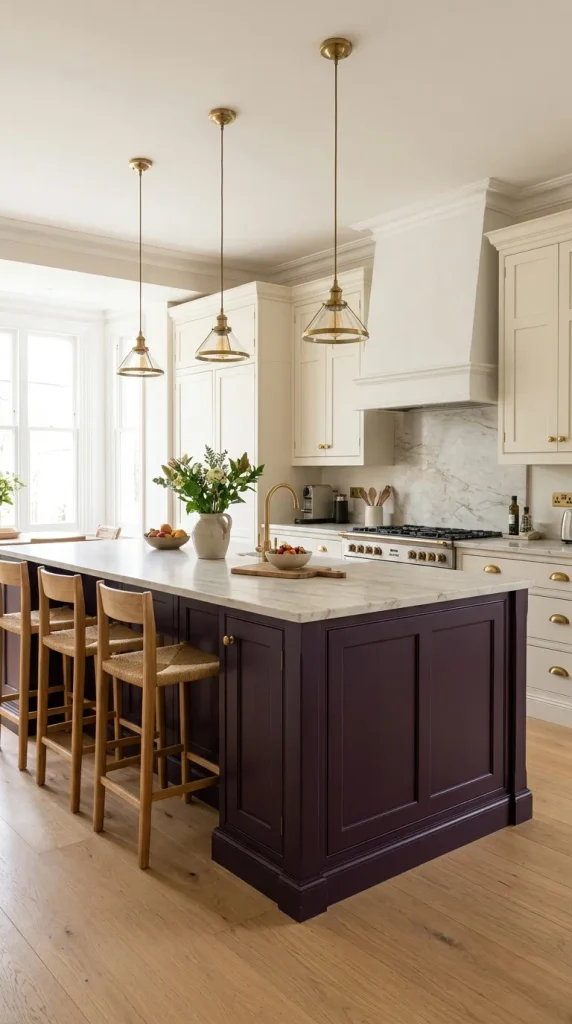
If you love aubergine but do not want to commit to dark cabinetry throughout the kitchen, an aubergine island is an excellent alternative. It creates a distinctive centerpiece while allowing the rest of the kitchen to remain bright and understated.
Start with cream, warm white, or light beige cabinets around the perimeter of the kitchen. Then choose a deep aubergine finish for the island. This contrast makes the island stand out without overwhelming the room.
A light marble-effect countertop can connect the island to the surrounding surfaces. Subtle gray or beige veining adds visual interest while preserving the clean, elegant appearance. For a warmer style, consider a cream quartz countertop paired with natural wood stools.
Pendant lights above the island can help define the area. Brass fixtures complement aubergine beautifully, while black metal pendants create a more contemporary appearance. Choose lighting that provides enough illumination for food preparation and dining.
The island can also serve multiple purposes. Depending on its size, it may include additional drawers, storage cabinets, a preparation surface, or seating for casual meals.
Keep the surrounding decor relatively simple so that the island remains the main focal point. A bowl of fresh fruit, a wooden chopping board, or a small ceramic vase can provide a finishing touch without creating clutter.
Materials to use:
- Aubergine island cabinetry
- Cream or white perimeter cabinets
- Light quartz countertop
- Brass or black pendant lights
- Wooden bar stools
- Coordinated cabinet hardware
Styling tip: Repeat a small amount of aubergine elsewhere, such as in a decorative bowl or kitchen textile, to connect the island to the overall design.
3. Aubergine and White Kitchen for a Bright, Modern Look
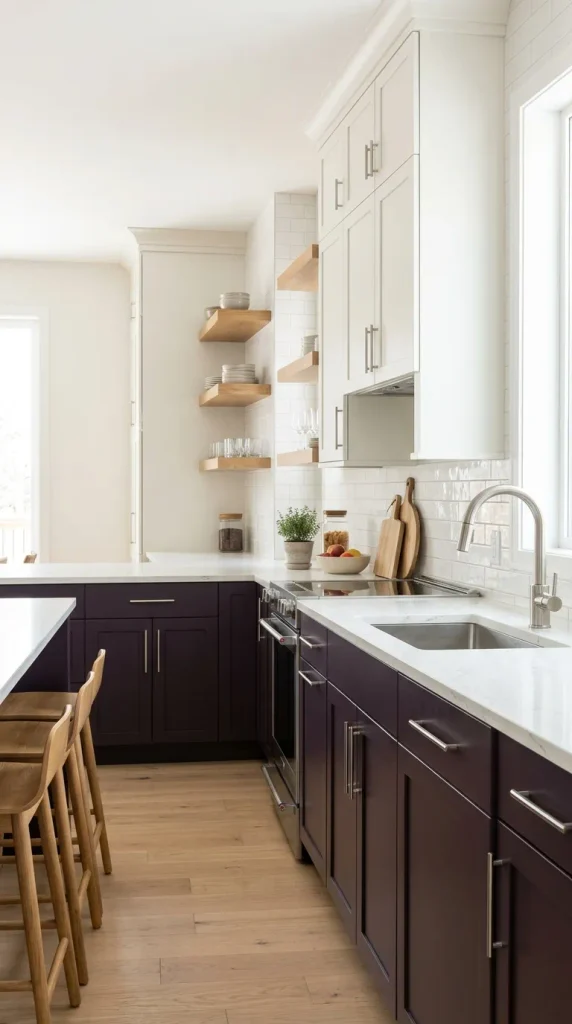
Combining aubergine with white is an effective way to achieve a kitchen that feels bold without appearing overly dark. White provides a clean backdrop, while aubergine adds depth and personality.
For a balanced arrangement, use aubergine on the lower cabinets and white on the upper cabinets. This grounds the design visually while keeping the upper half of the room light. You can also reverse the arrangement if you want a more distinctive look, although darker upper cabinets may make a low ceiling feel more enclosed.
A white countertop and backsplash can help reflect natural light. Simple white subway tiles create a classic appearance, while large-format white tiles provide a more contemporary finish. If you prefer a luxurious look, choose a marble-effect surface with subtle gray veining.
Hardware can influence the overall mood. Brushed brass creates a warm, elegant atmosphere, while chrome or stainless steel offers a cleaner, more modern finish.
To soften the contrast between white and aubergine, introduce a small amount of natural wood. Oak shelves, wooden chopping boards, or a timber dining table can make the kitchen feel warmer and more inviting.
This combination works particularly well in apartments and smaller kitchens because the white surfaces help maintain a sense of openness.
Materials to use:
- Aubergine lower cabinets
- White upper cabinets
- White quartz countertop
- White tile backsplash
- Chrome or brass hardware
- Natural wood accessories
Styling tip: Keep the white elements warm rather than icy if you want a softer, more welcoming appearance.
4. Aubergine Cabinets With Marble Countertops
Aubergine cabinets paired with marble countertops create an elegant kitchen with a timeless, luxurious feel. The rich cabinet color contrasts beautifully with the lighter stone, while natural veining introduces movement and texture.
Choose a deep aubergine cabinet finish that complements the undertones of your marble. Some aubergine shades lean toward burgundy, while others appear closer to violet. Testing paint samples beside the countertop is useful because the lighting can change how these colors appear.
White marble with soft gray veining creates a classic combination. Cream marble with warmer veining can produce a more traditional atmosphere. If you prefer lower-maintenance surfaces, consider quartz with a marble-inspired pattern rather than natural marble.
You can extend the countertop material up the wall to create a full-height backsplash. This makes the stone a decorative feature and reduces visual interruptions between the countertop and wall.
Brass faucets, elegant cabinet pulls, and simple pendant lights can complete the look. Avoid adding too many competing patterns because the marble and aubergine cabinetry already provide plenty of visual interest.
Consider the practical requirements of your chosen stone. Natural marble is porous and can stain or etch, so it requires appropriate sealing and care. Quartz may be a more convenient choice for busy households.
Materials to use:
- Deep aubergine cabinetry
- White or cream marble
- Marble-effect quartz alternative
- Brass faucet and handles
- Under-cabinet lighting
- Simple ceramic accessories
Styling tip: Allow the countertop to remain the main decorative surface by keeping small appliances and accessories organized.
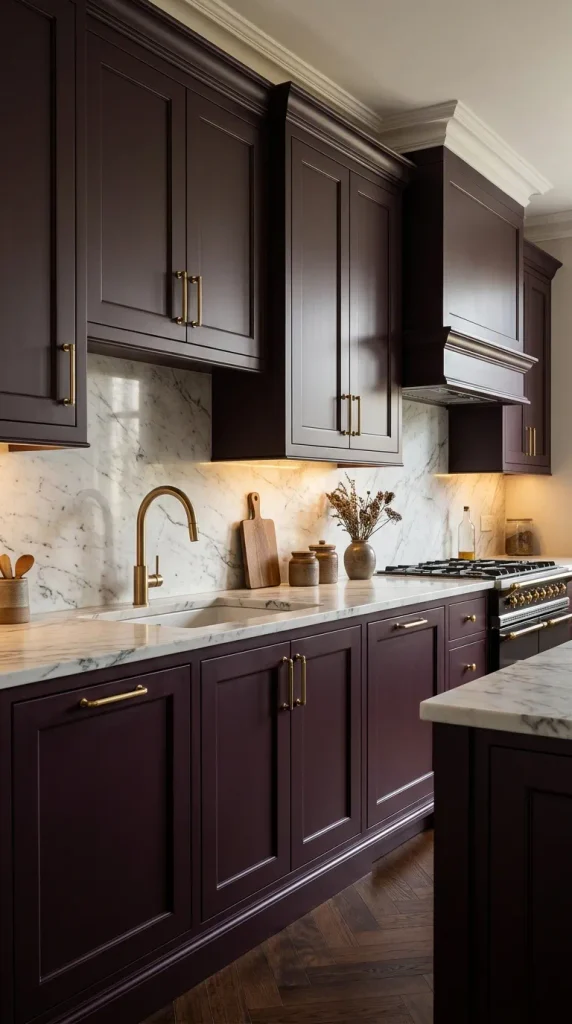
5. Two-Tone Aubergine and Natural Wood Kitchen
Aubergine and natural wood create a beautiful balance between rich color and organic warmth. This combination is ideal for homeowners who want a kitchen that feels distinctive but not overly formal.
Use aubergine on the lower cabinets, kitchen island, or a selected bank of tall cabinets. Introduce natural oak or walnut through open shelving, upper cabinet doors, a breakfast bar, or a dining table.
Light oak creates a fresh, Scandinavian-inspired appearance, while walnut adds a deeper, more traditional character. Both work well with aubergine, although the final effect depends on the wood’s undertones and the amount of natural light in the room.
A neutral countertop can connect the two materials. Cream quartz, pale beige stone, or a light solid surface helps prevent the darker cabinetry and wood from competing visually.
Open wooden shelves are useful for displaying everyday dishes, ceramic mugs, cookbooks, and small plants. Keep the arrangement practical so that frequently used items remain accessible.
For hardware, consider brushed brass or matte black. Brass adds warmth, while black creates a more contemporary contrast.
Materials to use:
- Aubergine lower cabinets
- Natural oak or walnut shelves
- Cream quartz countertop
- Brass or black handles
- Neutral backsplash tiles
- Wooden stools or dining chairs
Styling tip: Choose one main wood tone and repeat it in several places, such as shelves, stools, and chopping boards, to create a connected look.
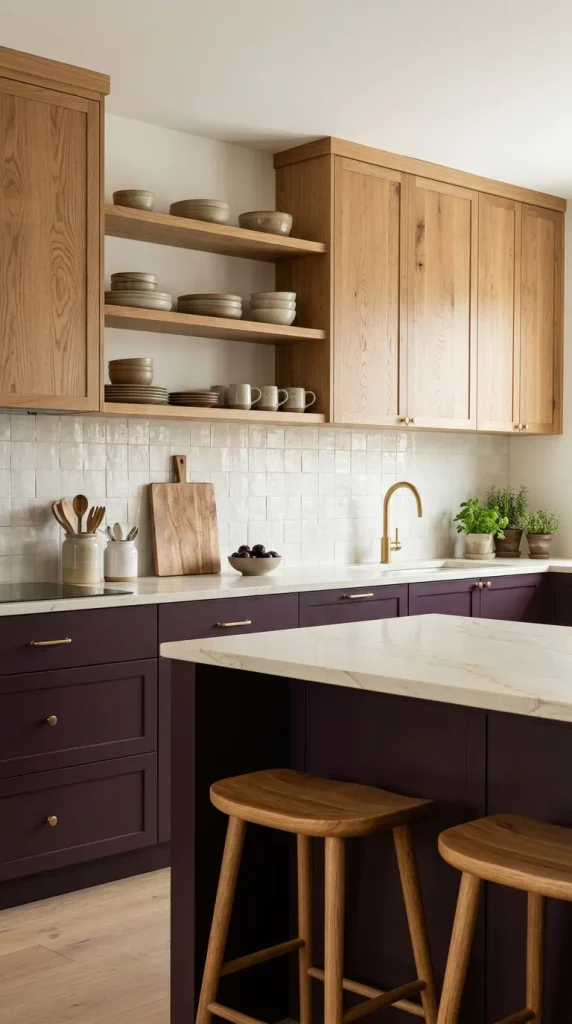
6. Aubergine Kitchen With Gold and Brass Accents
Gold and brass details can make an aubergine kitchen feel particularly glamorous. The warm metallic tones complement the purple-burgundy undertones and create a striking contrast against dark cabinetry.
Begin with aubergine cabinets or a statement island. Then introduce brushed brass handles, a matching faucet, and pendant lights with warm metallic finishes. These repeated details help the design feel cohesive.
If you prefer a subtle approach, use brass only on the cabinet hardware and faucet. For a more dramatic look, incorporate a brass-framed glass cabinet, metallic lighting, or decorative trim where appropriate.
A cream or pale stone countertop balances the darker surfaces. You can also add a warm neutral backsplash to prevent the combination from looking too formal.
Lighting is especially important because brass reflects light and can emphasize the richness of aubergine. Warm-white illumination usually complements this palette better than very cool lighting.
Avoid mixing too many highly reflective finishes. A consistent brushed or satin metallic finish often creates a more refined appearance than combining several different shades of shiny gold.
Materials to use:
- Aubergine cabinetry
- Brushed brass cabinet handles
- Brass faucet
- Metallic pendant lights
- Cream countertop
- Warm under-cabinet lighting
Styling tip: Use brass as an accent rather than covering every surface in metallic finishes. A few coordinated details will have a stronger impact.
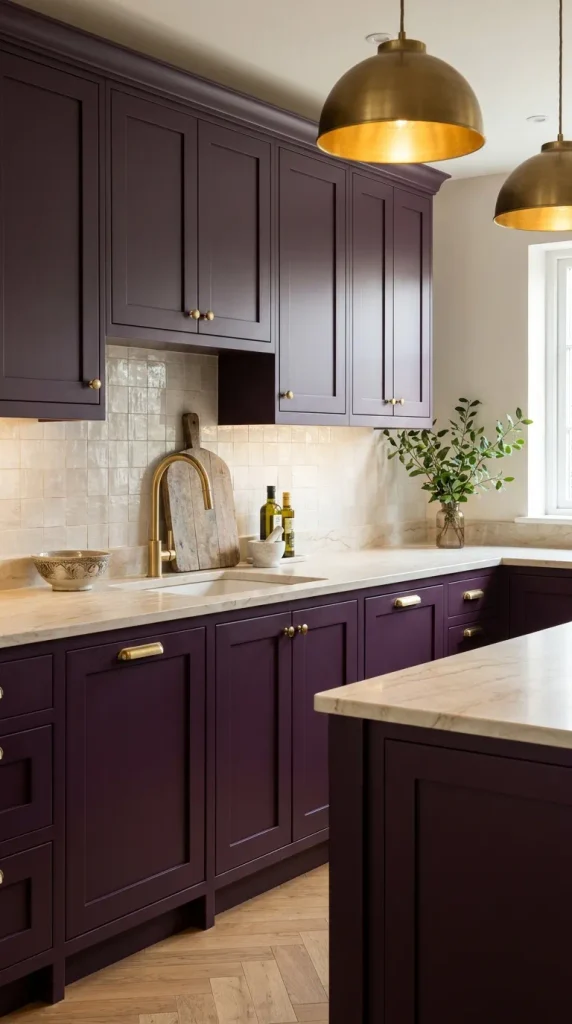
7. Aubergine Kitchen With a Patterned Backsplash
A patterned backsplash is an excellent way to add personality to an aubergine kitchen. The combination can feel artistic and distinctive, especially when the tiles introduce colors that complement the cabinetry.
Consider cream-and-green patterned tiles, geometric designs with muted gold details, or decorative tiles featuring subtle burgundy and lavender tones. The goal is to select a pattern that works with the aubergine rather than competing with it.
If your cabinets are a solid deep purple, the backsplash can become the main decorative feature. For example, a cream backsplash with a delicate geometric pattern creates visual interest while keeping the overall palette balanced.
You can also use patterned tiles behind the cooker or sink and choose simpler tiles elsewhere. This creates a focal point without making the entire kitchen feel visually busy.
Countertops should generally remain relatively simple when the backsplash has a strong pattern. White quartz, cream stone, or a neutral solid surface provides a calm background.
Remember to select tiles that are suitable for kitchen use and easy to clean. The backsplash behind a cooker may need to withstand grease, moisture, and frequent wiping.
Materials to use:
- Aubergine cabinets
- Patterned ceramic or porcelain tiles
- Neutral countertop
- Brass or chrome hardware
- Simple pendant lighting
- Coordinated decorative accessories
Styling tip: Pick one or two colors from the backsplash and repeat them in small accessories for a coordinated finish.
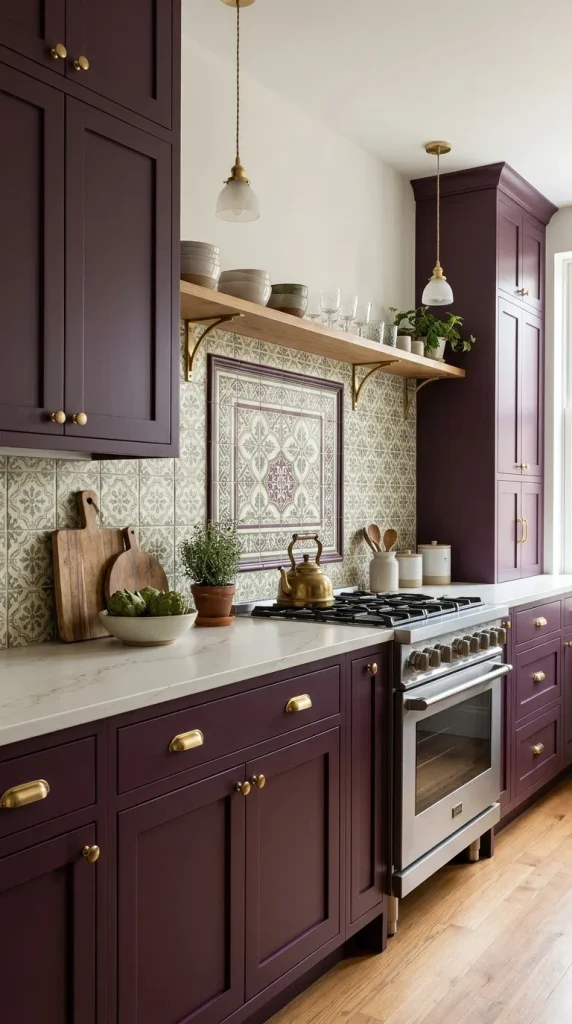
8. Small Aubergine Kitchen With Smart Storage
Aubergine can work beautifully in a small kitchen when it is introduced thoughtfully. Although dark colors can make a room feel more enclosed, combining them with light surfaces and practical storage creates a stylish, functional space.
Start by using aubergine on the lower cabinets or a small kitchen island. Keep upper cabinets and walls in warm white, cream, or pale beige. This arrangement preserves brightness while allowing the rich color to stand out.
Choose cabinets that maximize available storage. Full-height cupboards, pull-out drawers, corner organizers, and internal cabinet dividers can help keep utensils and cookware organized. A clutter-free countertop makes a significant difference in a compact kitchen.
Reflective or light-colored surfaces can help distribute natural light. A pale backsplash, light countertop, and strategically positioned task lighting balance the darker cabinetry.
If you have limited wall space, consider a narrow open shelf for a few everyday dishes or decorative items. Avoid filling every shelf with accessories because excessive display objects can make a small room feel crowded.
A simple backsplash and understated hardware allow the aubergine color to remain the main design feature.
Materials to use:
- Aubergine lower cabinets
- White or cream upper cabinets
- Light-colored countertop
- Pull-out storage organizers
- Compact task lighting
- Minimal decorative accessories
Styling tip: Use aubergine on one main area and maintain lighter finishes elsewhere to create contrast without sacrificing the feeling of space.
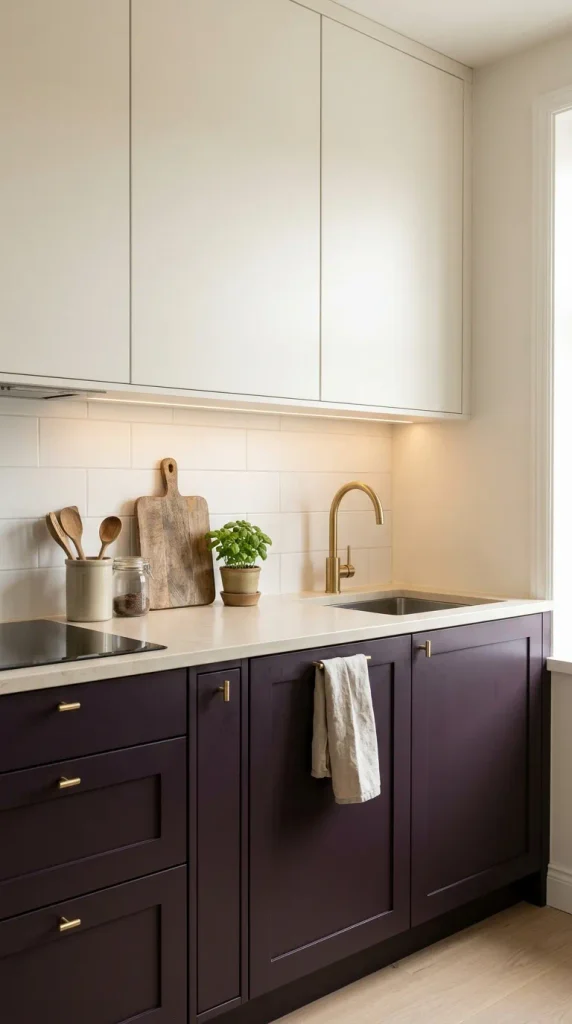
9. Modern Minimalist Aubergine Kitchen
For a contemporary interior, aubergine can create a sophisticated statement without requiring decorative details or elaborate patterns. A minimalist aubergine kitchen focuses on clean lines, streamlined cabinetry, and a restrained material palette.
Choose flat-front cabinets in a matte aubergine finish. Handleless doors or discreet integrated pulls create a smooth appearance, allowing the color and proportions of the cabinetry to become the main focus.
Pair the cabinets with a light countertop in white quartz, pale stone, or a subtle concrete-effect finish. A simple backsplash with minimal grout lines reinforces the contemporary style.
Stainless steel appliances can introduce a practical, understated contrast. Alternatively, integrated appliances help maintain a seamless cabinet arrangement.
Lighting should be functional and carefully positioned. Recessed ceiling lights, under-cabinet LED strips, and one or two simple pendant fixtures provide illumination without introducing unnecessary decorative elements.
Keep countertop accessories to a minimum. A wooden chopping board, a ceramic utensil holder, and a small vase are often enough to make the kitchen feel lived-in.
Materials to use:
- Matte aubergine flat-front cabinets
- Light quartz countertop
- Simple backsplash
- Integrated or stainless steel appliances
- Minimalist lighting
- Under-cabinet LED strips
Styling tip: Use clean lines and a limited number of materials so that the aubergine cabinetry remains the defining feature.
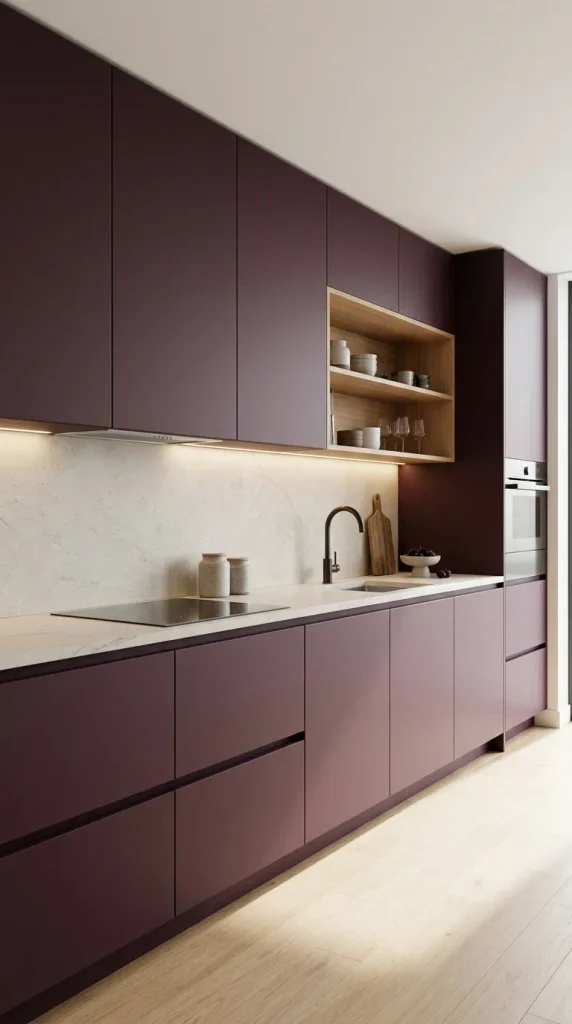
10. Traditional Aubergine Kitchen With Classic Details
Aubergine is also an excellent choice for a traditional kitchen. Its deep, complex color complements decorative cabinet doors, classic hardware, natural stone, and timeless furniture.
Choose cabinets with shaker-style doors, framed panels, or subtle decorative detailing. A rich aubergine finish adds depth to these traditional profiles and creates a distinctive alternative to navy blue or forest green.
Pair the cabinets with cream countertops, a traditional ceramic backsplash, and warm wooden flooring. Brass or antique bronze handles can reinforce the classic character.
If the kitchen has enough space, consider a farmhouse-style dining table or a small breakfast nook with upholstered chairs. Neutral upholstery with a subtle floral or striped pattern can soften the darker cabinetry.
Decorative details should feel purposeful. A ceramic fruit bowl, a traditional wall clock, or a few open shelves displaying everyday dishes can provide personality without overcrowding the room.
For lighting, choose traditional pendant fixtures or brass wall lights. Make sure the work surfaces remain adequately illuminated, particularly around the cooker and sink.
Materials to use:
- Shaker-style aubergine cabinets
- Cream stone countertop
- Antique brass or bronze hardware
- Traditional ceramic backsplash
- Natural wood flooring
- Classic pendant lights
Styling tip: Combine the richness of aubergine with warm cream and natural wood to create a traditional kitchen that feels elegant rather than overly dark.
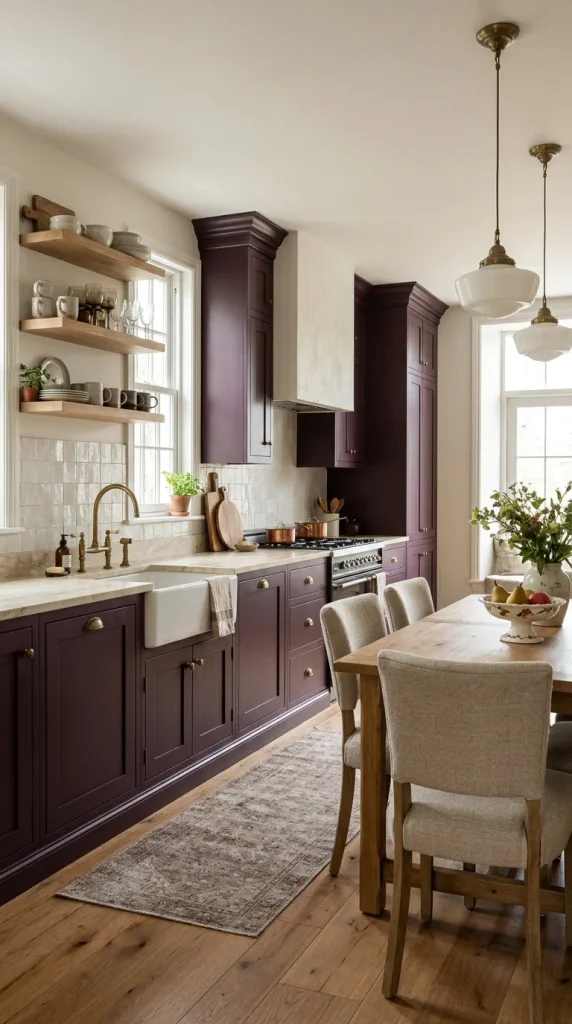
Practical Tips for Decorating With Aubergine
Once you have selected your preferred design, use these tips to ensure the finished kitchen is both attractive and practical.
Test the Color Before Committing
Aubergine can appear more purple, red, or brown depending on the lighting and surrounding materials. Test paint samples beside your countertop, flooring, and cabinet hardware before making a final decision.
Balance Dark and Light Surfaces
If most of your cabinetry is aubergine, consider a lighter countertop or backsplash. The contrast creates visual depth and helps maintain a comfortable atmosphere.
Choose Coordinated Metal Finishes
Brass, antique gold, chrome, and stainless steel can all complement aubergine. Select a main finish and repeat it throughout the kitchen for a cohesive appearance.
Consider Your Kitchen’s Lighting
Natural daylight and warm artificial lighting can influence how aubergine looks. Use task lighting where food is prepared and ambient lighting for a comfortable overall atmosphere.
Keep Countertops Functional
Aubergine cabinetry is visually striking, so organized countertops help the design remain elegant. Store small appliances and everyday utensils in convenient cabinets or drawers whenever possible.
Select Durable Materials
Kitchen cabinets, countertops, and backsplashes need to withstand daily use. Choose finishes suitable for kitchen environments and follow the manufacturer’s cleaning and maintenance instructions.
Common Mistakes to Avoid
When designing an aubergine kitchen, avoid these common decorating mistakes:
- Using too much dark color in a poorly lit room: Balance aubergine with cream, white, or pale stone.
- Choosing clashing undertones: Test the cabinet color beside your flooring, countertops, and backsplash.
- Mixing too many metal finishes: Repeat one main hardware finish to create a cohesive design.
- Ignoring countertop maintenance: Select a surface that suits your cooking habits and cleaning preferences.
- Overdecorating the kitchen: Use a few coordinated accessories instead of filling every available surface.
- Choosing lighting based only on appearance: Ensure that work areas have adequate illumination.
- Following trends without considering practicality: Choose a layout and materials that fit your household’s needs.
Conclusion
These 10 aubergine color kitchen ideas demonstrate how a rich purple-burgundy shade can transform a kitchen into a stylish, distinctive, and welcoming space. Whether you choose full aubergine cabinetry, a statement island, a two-tone design, or a modern minimalist layout, this color offers plenty of opportunities for creative expression.
The key is to balance aubergine with complementary materials such as cream stone, natural wood, brass hardware, and light-colored backsplashes. Thoughtful lighting and practical storage will help the kitchen remain comfortable and functional while highlighting its distinctive color palette.
You do not need to renovate the entire kitchen to enjoy this look. Start with a smaller feature, such as an island, a selected group of cabinets, or coordinated accessories, and build the design gradually.
With the right combination of colors, finishes, and lighting, an aubergine kitchen can feel timeless, luxurious, and beautifully suited to your home.




Leave a Reply