
Introduction
Afrohemian living room decor combines the soulful beauty of African-inspired design with the relaxed, artistic character of bohemian style. This unique interior aesthetic celebrates natural materials, expressive patterns, handcrafted accessories, earthy colors, cultural artwork, and comfortable textures. The result is a living room that feels warm, collected, creative, and full of personality.
Afrohemian style is not about following strict decorating rules. Instead, it focuses on creating a meaningful space through layered textiles, woven baskets, wood furniture, handmade ceramics, plants, and artwork inspired by African culture and global craftsmanship. You can design an Afrohemian living room with bold colors and dramatic patterns or choose a softer neutral palette with subtle tribal-inspired details.
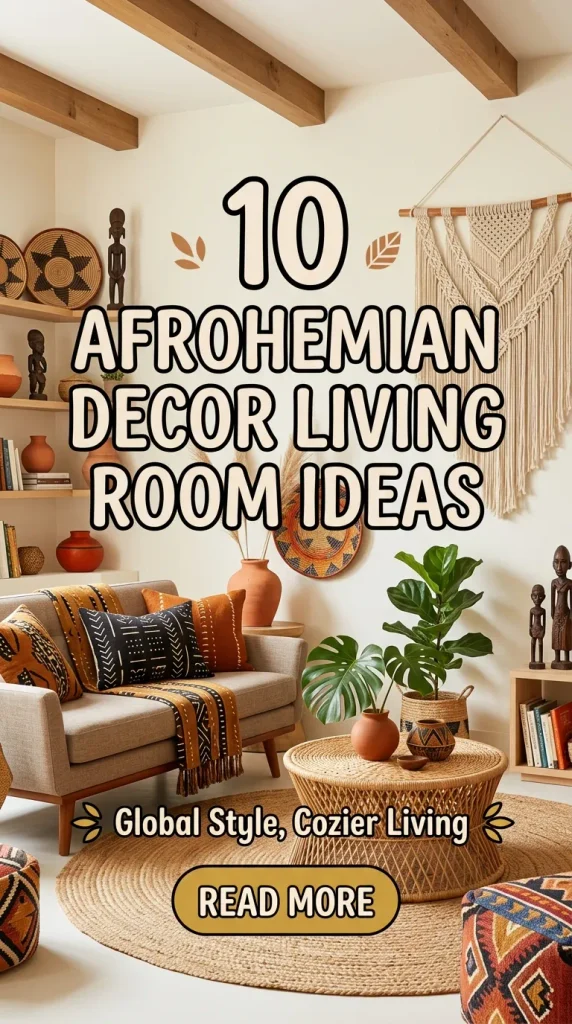
The key is balance. Combine statement pieces with simple furniture, mix different textures, and allow each accessory to contribute to the overall story of the room. Whether you live in a small apartment or a spacious home, these 10 Afrohemian living room decor ideas can help you create a welcoming space that feels stylish, natural, and deeply personal.
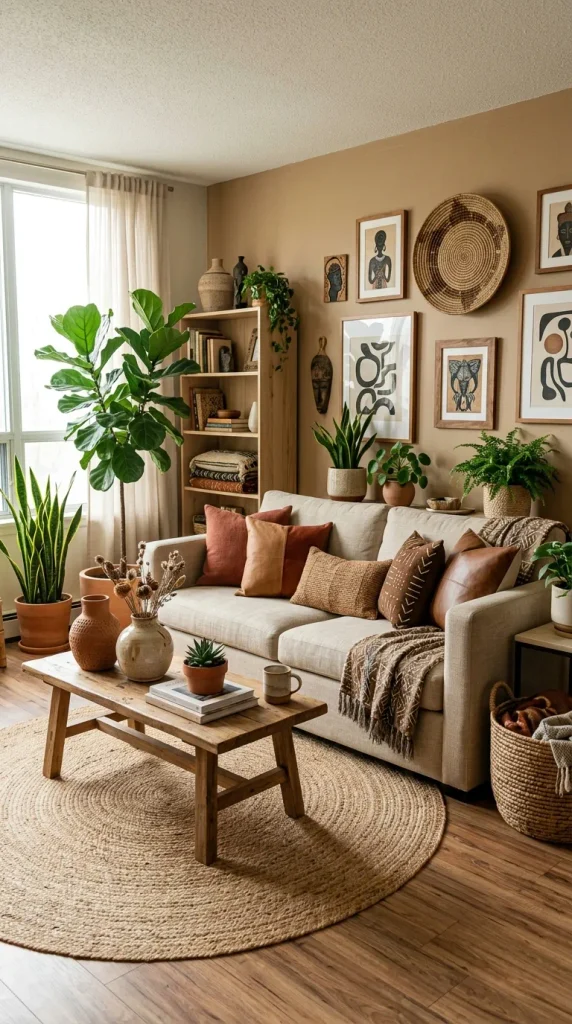
1. Create a Warm Earth-Tone Afrohemian Living Room
One of the easiest ways to introduce Afrohemian style into your living room is by building your design around warm, earthy colors. Shades such as terracotta, caramel, clay, sand, chocolate brown, rust, ochre, beige, and muted olive green create a natural foundation for this aesthetic.
Begin with a neutral base for your walls, sofa, or flooring. Cream, warm white, and sandy beige work particularly well because they allow colorful accessories and textured materials to stand out. If you prefer a more dramatic atmosphere, consider a clay-colored accent wall or a warm brown paint shade.
Choose a comfortable sofa in beige, tan, or soft brown. Add cushions in rust, mustard, burnt orange, and deep green to introduce depth. You can also use patterned pillows featuring geometric shapes, abstract motifs, or African-inspired designs. Avoid using too many competing colors at once. Select three or four main shades and repeat them throughout the room.
Natural wood furniture is an excellent match for earthy colors. A wooden coffee table, carved side table, or open shelving unit can add warmth and character. Complete the look with a jute rug, woven baskets, linen curtains, and handmade pottery.
Plants are another important element. Large leafy plants, olive trees, palms, or hanging greenery can soften the room and create a connection to nature.
The final result should feel layered rather than overly coordinated. Let the colors appear naturally in different materials and accessories, creating a relaxed and inviting Afrohemian atmosphere.
Materials and Decor Elements
- Earth-tone wall paint
- Beige or brown sofa
- Terracotta and rust-colored cushions
- Natural wood furniture
- Jute or sisal rug
- Woven baskets
- Handmade ceramic accessories
- Green indoor plants
- Linen curtains
How to Style It
Start with neutral furniture and gradually add warm accessories. Repeat the same earthy tones in cushions, artwork, rugs, and decorative objects to create a cohesive look.
2. Style the Room With African-Inspired Wall Art
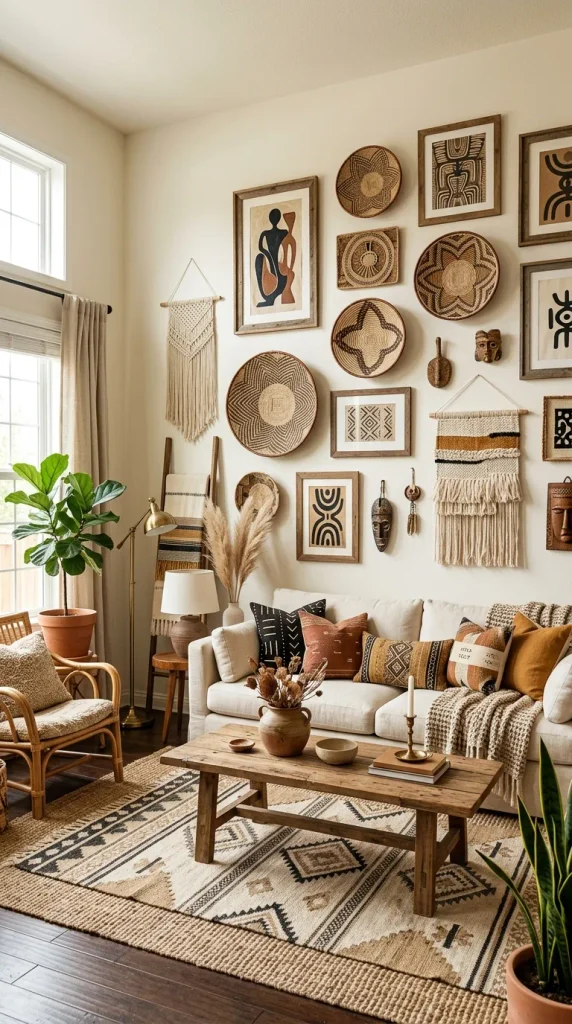
Artwork can become the focal point of an Afrohemian living room. Large-scale wall art adds personality, visual interest, and cultural depth without requiring a complete furniture makeover.
Choose artwork that reflects African-inspired patterns, abstract forms, organic shapes, or traditional artistic influences. You might display a large abstract painting with earthy colors, a framed textile, a woven wall hanging, or a collection of artistic prints. Black, cream, brown, ochre, and terracotta artwork can complement an earthy living room beautifully.
A gallery wall is another excellent option. Combine different frame sizes and artwork styles to create a collected appearance. For example, pair abstract line drawings with geometric prints, textured artwork, botanical illustrations, and handmade fiber art. Wooden frames can make the arrangement feel warmer, while black frames create a stronger contrast.
If you want a more authentic handcrafted look, consider using woven wall baskets or decorative fiber pieces as part of the display. Arrange them in different sizes to create movement and dimension. A large circular basket above the sofa can act as a central statement, while smaller woven pieces can be arranged around it.
When displaying culturally inspired artwork, choose pieces thoughtfully and learn about their origins whenever possible. Supporting artists and purchasing handmade work can make your decor more meaningful.
Keep the rest of the room relatively simple if your artwork is bold. A neutral sofa and minimal coffee table will allow the wall display to remain the main attraction.
Materials and Decor Elements
- Abstract African-inspired artwork
- Framed textile art
- Woven wall baskets
- Handmade fiber wall hangings
- Wooden or black frames
- Picture ledges
- Decorative wall plates
- Neutral wall paint
How to Style It
Place the largest piece at the center of the arrangement. Add smaller artwork around it, maintaining consistent spacing while mixing shapes, textures, and frame styles.
3. Add Woven Baskets and Natural Fiber Decor
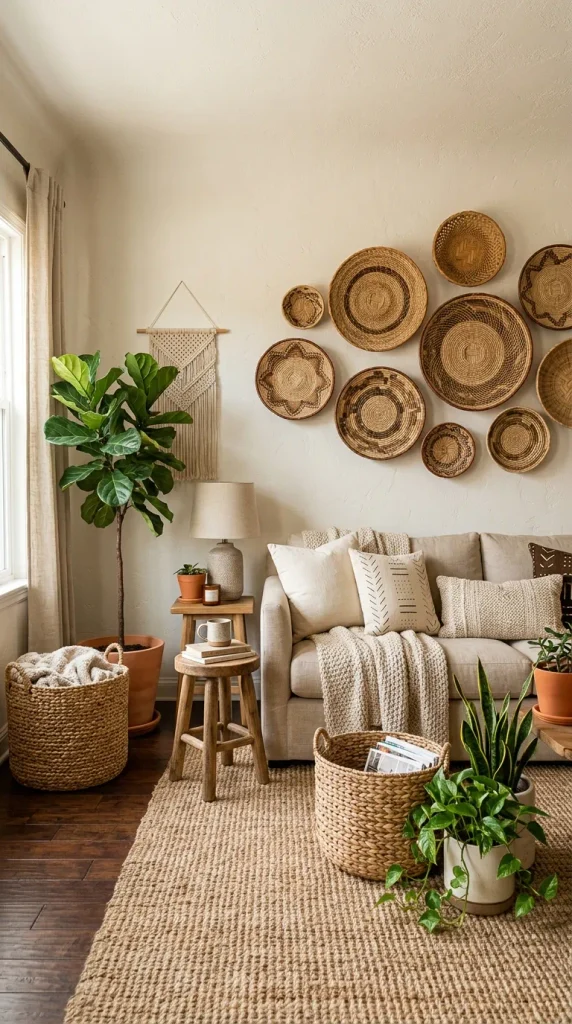
Woven baskets are essential accessories for an Afrohemian living room because they add texture, craftsmanship, and natural warmth. They can be used for both decorative and practical purposes, making them ideal for creating a relaxed but organized space.
Large woven baskets can be placed beside the sofa or in an empty corner. Use them to store blankets, cushions, magazines, or children’s toys. Baskets made from seagrass, raffia, sisal, bamboo, or other natural fibers can introduce an organic element to the room.
You can also use woven baskets as wall decor. Choose several baskets in different sizes and shapes, then arrange them above the sofa or on a large empty wall. Round baskets create a soft, flowing appearance, while angular woven designs add a more graphic look.
For a layered effect, combine baskets with other natural materials. Place a woven basket next to a wooden stool, a ceramic vase, or a tall plant. This mixture of textures makes the room feel thoughtfully designed without appearing too formal.
Try to select baskets with different weaving patterns. Some may have a simple natural finish, while others can feature black, brown, cream, or muted colored details. These variations create visual interest while maintaining a unified style.
Avoid filling every surface with woven accessories. A few carefully placed pieces are often more effective than an overcrowded collection. Leave some negative space around the baskets so their shapes and textures can be appreciated.
Materials and Decor Elements
- Raffia baskets
- Seagrass storage baskets
- Woven wall baskets
- Bamboo containers
- Natural fiber trays
- Jute accessories
- Wooden stools
- Neutral throw blankets
- Decorative plants
How to Style It
Use large baskets for storage, medium baskets for decorative displays, and smaller baskets as wall art. Mix different weaving patterns while keeping the color palette consistent.
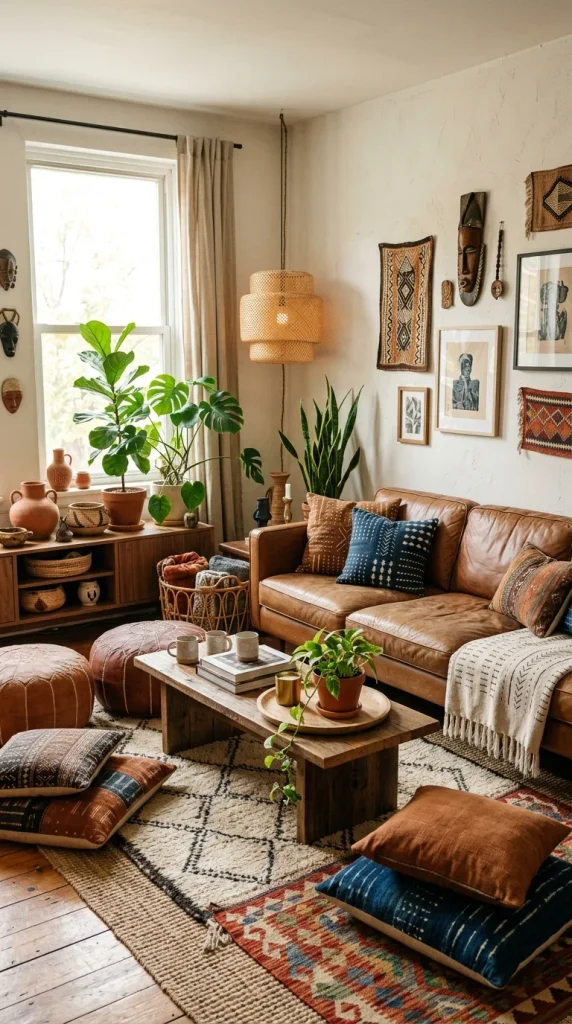
4. Combine Low-Slung Furniture With Bohemian Comfort
Afrohemian interiors often feel relaxed because they use comfortable furniture, soft textiles, and informal arrangements. Low-slung furniture is an excellent way to create this atmosphere in your living room.
Choose a sofa with a deep seat, relaxed cushions, or a simple natural fabric finish. Linen, cotton, boucle, and textured upholstery can make the room feel comfortable and welcoming. If you prefer a more distinctive look, select a sofa in caramel, chocolate brown, cream, or muted olive.
Add low wooden coffee tables, floor cushions, poufs, or woven ottomans. These pieces create a casual seating arrangement that encourages conversation and relaxation. Moroccan-inspired poufs, leather ottomans, and handwoven floor cushions can blend beautifully with Afrohemian decor.
A large area rug helps define the seating area and adds softness underfoot. Choose a rug with geometric patterns, subtle stripes, faded tribal-inspired motifs, or a neutral texture. If you enjoy layering, place a smaller patterned rug over a larger natural-fiber rug.
Arrange the furniture so the room feels open and easy to use. Instead of pushing every piece against the wall, create a central conversation area around the coffee table. Include a comfortable accent chair or a wooden lounge chair to add variety.
Decorative throws should be casually draped over the sofa or folded inside a basket. Cushions can be arranged in different sizes to create a relaxed, layered appearance.
The goal is to make the living room feel comfortable and lived-in rather than overly polished.
Materials and Decor Elements
- Deep-seated sofa
- Linen or cotton upholstery
- Wooden coffee table
- Woven poufs
- Floor cushions
- Leather or fabric ottomans
- Textured area rug
- Cotton throws
- Patterned cushions
How to Style It
Start with one comfortable sofa, then build a flexible seating arrangement using poufs, accent chairs, and floor cushions. Keep enough space for movement around the furniture.
5. Decorate With Carved Wood and Handmade Furniture
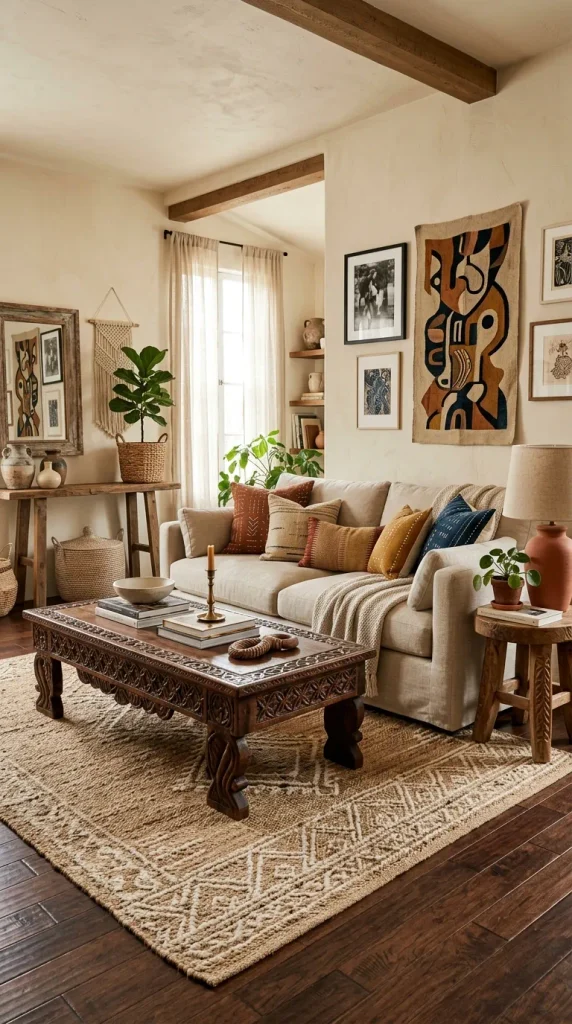
Carved wood furniture can give an Afrohemian living room a strong sense of craftsmanship and individuality. Handmade wooden pieces often have natural imperfections, visible grain, and distinctive shapes that make the room feel authentic and collected.
A carved wooden coffee table can serve as the centerpiece of your seating area. Look for tables with sculptural legs, geometric details, hand-carved patterns, or a raw wood finish. If the table is highly decorative, keep the surrounding accessories simple so its design remains visible.
Wooden stools can be used as side tables, plant stands, or additional seating. A carved stool beside the sofa can hold a small lamp, ceramic vase, or stack of books. You can also include a wooden bench beneath a window or along an empty wall.
For a more dramatic look, consider a carved wood room divider or an intricately detailed console table. These pieces can add architectural interest without requiring permanent changes to the room.
Mix different wood tones carefully. Dark walnut, medium teak, honey oak, and reclaimed wood can work together when the rest of the room contains neutral fabrics and natural textures. Too many unrelated wood finishes may make the space appear visually busy, so repeat one or two tones throughout the room.
Handmade furniture does not have to look perfectly finished. Small variations in texture and shape can make the design feel more personal.
Pair carved wood with soft textiles, woven accessories, and simple ceramics to create a balanced Afrohemian living room.
Materials and Decor Elements
- Carved wooden coffee table
- Handcrafted wooden stools
- Reclaimed wood console
- Teak or walnut furniture
- Wooden room divider
- Sculptural side tables
- Handmade ceramic objects
- Linen upholstery
- Natural fiber rugs
How to Style It
Choose one or two carved wooden statement pieces and let them become the main focus. Balance their visual weight with soft cushions, neutral walls, and simple accessories.
6. Introduce Bold African-Inspired Textiles
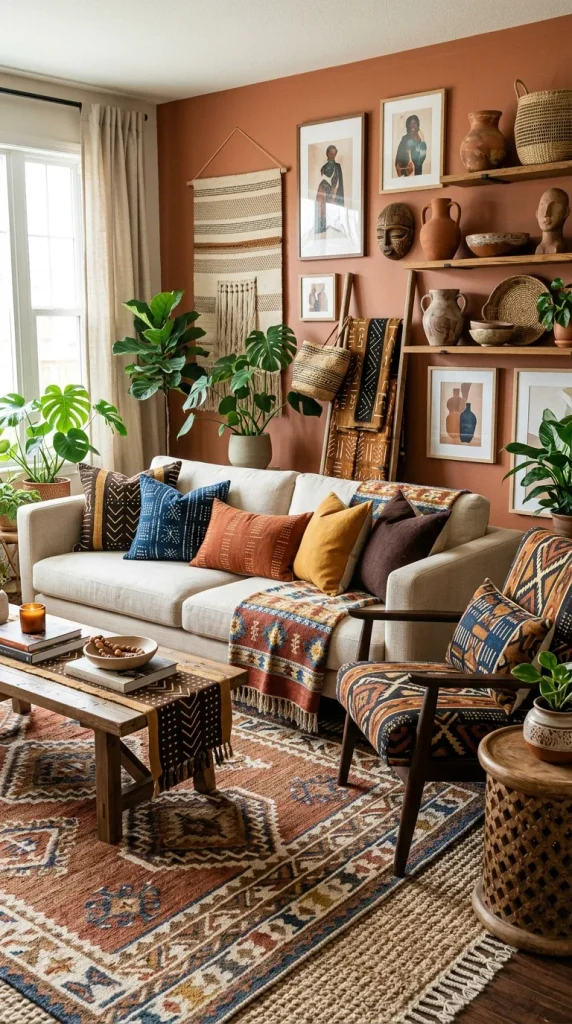
Textiles are one of the most effective ways to bring color, pattern, and personality into an Afrohemian living room. Cushions, rugs, curtains, throws, and upholstered furniture can transform a plain space into a rich and expressive interior.
Look for textiles featuring geometric patterns, stripes, abstract motifs, mudcloth-inspired designs, woven textures, or bold color combinations. Black and white patterns can create a striking contrast, while rust, mustard, indigo, and brown textiles add warmth.
A patterned accent chair can become a focal point in an otherwise neutral room. Alternatively, use a bold throw blanket across a beige sofa or arrange patterned cushions in different shapes and sizes.
You can also use textiles as wall decor. A large woven textile or fabric wall hanging can add softness and visual interest behind the sofa. This is especially useful in rental homes where painting or making permanent changes may not be possible.
When mixing patterns, vary their scale. Pair a large geometric pattern with smaller motifs and solid-colored fabrics. This prevents the room from feeling overwhelming. Use repeated colors to connect different patterns and create harmony.
Natural materials such as cotton, linen, wool, and handwoven fibers work particularly well in Afrohemian interiors. Their slightly irregular textures make the space feel warm and handcrafted.
Remember that cultural patterns should be used respectfully. When possible, choose authentic handmade textiles from artisans and learn about the techniques and traditions behind the designs.
Materials and Decor Elements
- Patterned cushions
- Handwoven throws
- Geometric area rugs
- Mudcloth-inspired fabrics
- Textile wall hangings
- Patterned accent chairs
- Cotton curtains
- Linen upholstery
- Woven blankets
How to Style It
Select one dominant textile pattern and support it with smaller patterns and solid colors. Repeat two or three shades throughout the room for a cohesive result.
7. Create a Green Afrohemian Living Room With Abundant Plants
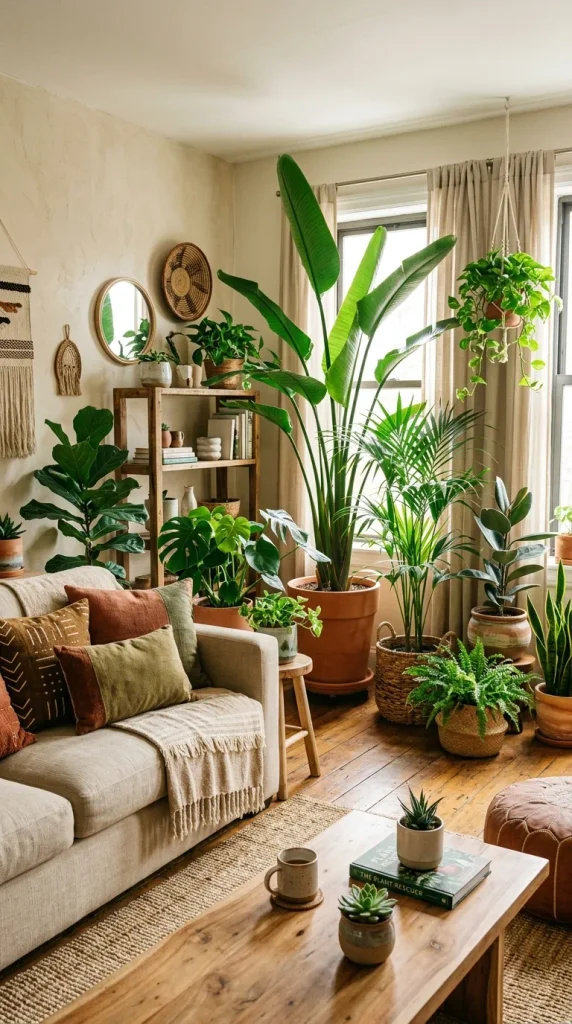
Plants bring life, movement, and freshness into an Afrohemian living room. They also complement the natural materials and earthy color palette commonly associated with this style.
Begin with one large statement plant, such as a bird of paradise, fiddle-leaf fig, rubber plant, or palm. Place it in a woven basket or a textured ceramic planter near a window. Large plants can fill empty corners and create a sense of height.
Add smaller plants to shelves, side tables, and window ledges. Snake plants, pothos, spider plants, and philodendrons are useful for creating layers of greenery. Hanging plants can be placed in macramé planters to introduce vertical interest.
Use planters made from terracotta, stoneware, woven fibers, or carved wood. A collection of different planter textures can make the room feel more artistic. Choose planters in neutral, earthy shades so they complement rather than compete with the plants.
Plants can also be used to soften strong architectural features. Place greenery beside a dark wooden cabinet, near a large mirror, or next to a sculptural chair. Tall plants can frame a seating area, while trailing plants can make shelves feel more organic.
Avoid placing too many plants in one small area. Instead, distribute them around the room to create a balanced flow. Make sure each plant receives the appropriate amount of light and care.
For a low-maintenance arrangement, use dried grasses, preserved foliage, or realistic artificial plants. These can still provide the natural appearance associated with Afrohemian interiors.
Materials and Decor Elements
- Large tropical plants
- Palm trees
- Rubber plants
- Hanging plants
- Terracotta pots
- Woven plant baskets
- Macramé hangers
- Wooden plant stands
- Dried grasses
How to Style It
Place one tall plant in a corner, medium plants near furniture, and smaller plants on shelves. Mix plant heights to create a natural layered arrangement.
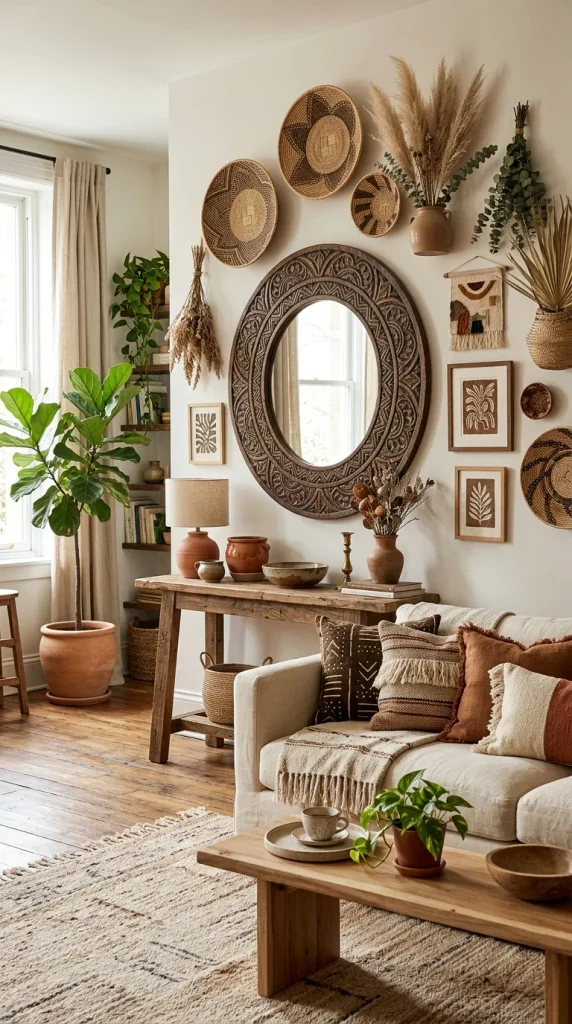
8. Add a Statement Mirror With Organic Details
Mirrors are practical accessories that can also become beautiful focal points in an Afrohemian living room. They reflect light, make a space feel larger, and provide an opportunity to introduce handcrafted texture.
Choose a mirror with a natural wood frame, woven border, carved details, or an organic shape. Round mirrors are especially suitable for Afrohemian interiors because their curved forms soften the room’s lines. Sunburst designs, irregular shapes, and arched mirrors can also create visual interest.
A large round mirror above the sofa or console table can act as the centerpiece of a wall arrangement. Pair it with woven baskets, small artwork, or dried botanical arrangements to create a layered display.
If you prefer a more artistic appearance, group several small mirrors together. Use different frame textures while keeping the overall color palette coordinated. Mirrors with dark wood, light rattan, and aged metal frames can work well together.
Place mirrors where they can reflect natural light or an attractive part of the room. Avoid positioning them where they reflect clutter, television screens, or an unappealing view.
A carved wooden mirror can add depth to a neutral wall, while a woven mirror can reinforce the room’s natural textures. If your living room already contains several bold patterns, choose a simple mirror to maintain balance.
Mirrors can also be used in smaller Afrohemian living rooms to create the illusion of additional space. A large floor mirror leaning against the wall can provide a relaxed, informal look.
Materials and Decor Elements
- Round wooden mirror
- Woven rattan mirror
- Carved wood frame
- Aged metal mirror
- Organic-shaped mirror
- Console table
- Dried grasses
- Woven baskets
- Decorative ceramics
How to Style It
Use one large mirror as a focal point or create a small collection of mirrors on an empty wall. Keep surrounding accessories simple to emphasize the mirror’s shape.
9. Design a Cozy Afrohemian Reading and Relaxation Corner
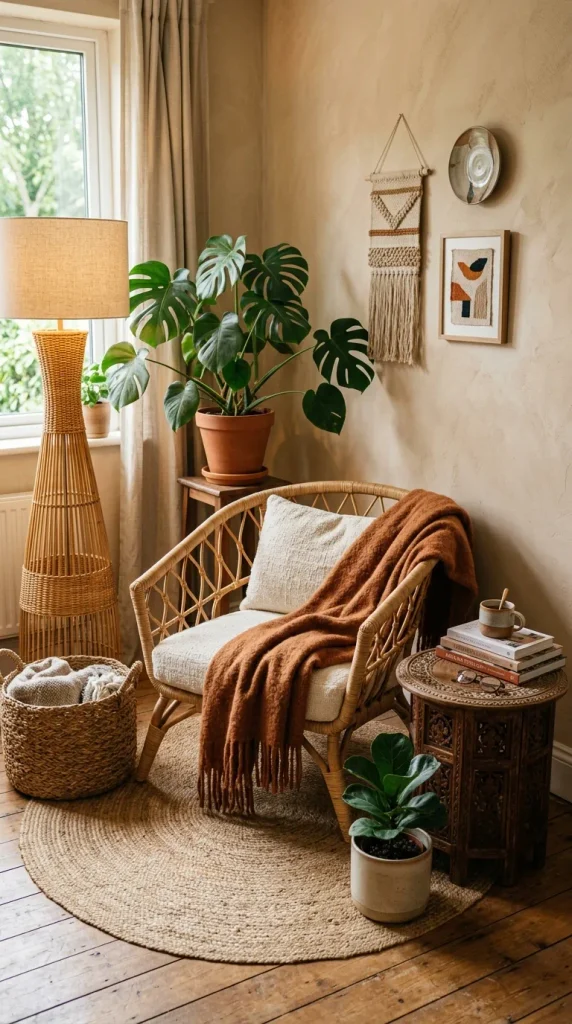
An Afrohemian living room should include a comfortable area where you can read, relax, listen to music, or enjoy a quiet moment. A dedicated relaxation corner adds function while enhancing the room’s cozy, artistic atmosphere.
Start with a comfortable lounge chair made from wood, leather, rattan, or textured fabric. A sling chair, woven accent chair, or low-profile armchair can work beautifully. Add a soft cushion and a textured throw to make the chair more inviting.
Place a small side table next to the chair. A carved wooden stool, vintage table, or handmade ceramic-topped stand can hold books, a cup of tea, or a decorative lamp.
Lighting is important for creating a relaxing atmosphere. Choose a floor lamp with a woven shade, a ceramic table lamp, or a warm-toned light fixture. Soft lighting can highlight textures and create a peaceful evening mood.
A small rug beneath the chair helps define the corner. Add a basket nearby for books, blankets, or magazines. A plant placed beside the chair can bring freshness and height to the arrangement.
You can personalize the corner with art books, travel books, handmade objects, or items that reflect your interests. The area should feel collected over time rather than decorated with identical accessories.
If space is limited, use a floor cushion and a low wooden table instead of a full chair. This creates a casual bohemian seating area without taking up much room.
Materials and Decor Elements
- Comfortable lounge chair
- Rattan or wooden chair
- Textured cushions
- Soft throw blanket
- Small wooden side table
- Woven floor lamp
- Area rug
- Decorative books
- Indoor plant
- Storage basket
How to Style It
Choose a quiet corner near a window or beside a bookshelf. Layer a rug, chair, throw, lamp, and small table to create a comfortable personal retreat.
10. Finish the Room With Vintage and Collected Accessories
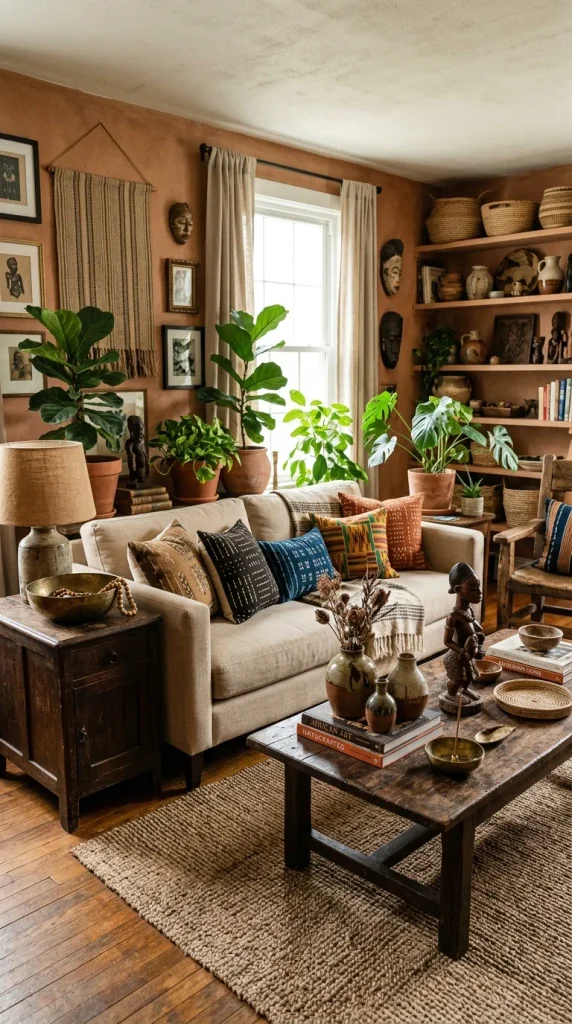
The final element of an Afrohemian living room is a collection of meaningful accessories. Vintage pieces, handmade objects, travel-inspired finds, and artistic decorations help create a space that feels personal rather than mass-produced.
Begin with a few carefully selected objects instead of decorating every surface. A vintage ceramic vase, brass bowl, carved sculpture, woven tray, or handmade candleholder can add character to a coffee table or console.
Books are another excellent styling tool. Stack a few art books, design books, or travel books on the coffee table. Place a small ceramic object or sculptural accessory on top to create height.
Vintage furniture can also bring depth to the room. An antique side table, old wooden chest, or weathered cabinet can contrast beautifully with a modern sofa. The combination of old and new is central to the collected Afrohemian aesthetic.
Use trays to organize small objects. A wooden or woven tray can hold candles, stones, ceramics, and other decorative items without making the surface look messy.
Consider adding accessories with different finishes, such as aged brass, terracotta, wood, stone, and woven fibers. These materials work together to create visual richness.
Most importantly, choose objects that have meaning to you. Handmade pieces, family heirlooms, travel souvenirs, and artwork from independent artists can make the living room feel more authentic.
Avoid copying every trend at once. Afrohemian design works best when the room reflects your personality, interests, and appreciation for craftsmanship.
Materials and Decor Elements
- Vintage side tables
- Handmade ceramic vases
- Wooden trays
- Brass bowls
- Sculptural accessories
- Art and travel books
- Carved decorative objects
- Woven storage boxes
- Antique cabinets
- Handmade candleholders
How to Style It
Arrange accessories in groups of three or five, varying their heights and textures. Leave some empty space so the display feels intentional rather than cluttered.
Essential Materials for Afrohemian Living Room Decor
To create a cohesive Afrohemian living room, consider incorporating the following materials:
- Natural wood
- Rattan and bamboo
- Raffia and jute
- Terracotta
- Linen and cotton
- Woven textiles
- Leather
- Aged brass
- Stone and ceramic
- Reclaimed wood
- Macramé
- Dried grasses
- Handcrafted fiber art
These materials create the tactile, organic atmosphere that makes Afrohemian interiors feel warm and inviting.
How to Create an Afrohemian Living Room on a Budget
You do not need to replace all your furniture to achieve this style. Start by working with the pieces you already own and introduce Afrohemian details gradually.
- Change the textiles: Add patterned cushions, earthy throws, and a textured rug.
- Use natural accessories: Introduce woven baskets, wooden trays, and ceramic vases.
- Create a gallery wall: Display affordable prints, handmade art, or woven wall pieces.
- Add greenery: Use plants or dried grasses to soften the room.
- Shop vintage: Look for secondhand wooden furniture and unique decorative objects.
- Rearrange your furniture: Create a relaxed seating arrangement with a clear conversation area.
- Use warm lighting: Replace harsh white bulbs with softer, warmer lighting.
- Decorate slowly: Collect meaningful pieces over time instead of buying everything at once.
The most important part of Afrohemian design is layering. Add different textures, colors, and materials gradually until the room feels balanced and expressive.
Common Mistakes to Avoid
While decorating an Afrohemian living room, avoid making the space feel overly crowded or visually confusing.
- Do not use too many unrelated patterns.
- Avoid filling every corner with accessories.
- Do not rely only on artificial “tribal” decorations without considering their cultural origins.
- Avoid using too many dark colors in a small room without enough natural light.
- Do not make every piece match perfectly.
- Avoid choosing style over comfort.
- Do not ignore the importance of storage and organization.
A successful Afrohemian living room should feel relaxed, personal, artistic, and functional.
Final Thoughts
Afrohemian living room decor is a beautiful combination of natural textures, expressive artwork, warm colors, comfortable furniture, and handcrafted details. From woven baskets and carved wood furniture to bold textiles and abundant greenery, every element can contribute to a welcoming and meaningful space.
Whether you prefer a neutral earthy interior or a colorful room filled with patterns, the key is to decorate with intention. Mix old and new pieces, support artisans when possible, and choose accessories that reflect your personal story.
With thoughtful layering and a balance of textures, you can create an Afrohemian living room that feels comfortable, creative, soulful, and uniquely yours.



Leave a Reply