
Introduction
A bookshelf can be one of the most useful and beautiful features in a living room. It provides a practical place for books while also creating an opportunity to display artwork, plants, photographs, ceramics, collectibles, and meaningful objects. With the right design, a bookshelf can turn an empty wall into a warm focal point without making the room feel cluttered.
Modern living room bookshelf ideas are no longer limited to traditional tall bookcases. Floating shelves, built-in cabinets, arched shelving, ladder shelves, media walls, corner bookcases, and mixed-material designs can all provide different visual effects.

When decorating a bookshelf, the goal should be balance. A shelf filled entirely with books may feel heavy, while a shelf filled only with accessories may not provide enough practical storage. Combining books with decorative objects creates a more collected and personalized appearance.
The materials you choose also influence the character of the room. Natural wood creates warmth, black metal introduces a contemporary or industrial feeling, painted cabinetry provides a refined built-in appearance, and glass can make a display feel lighter.
The following ten bookshelf ideas can work with modern, rustic, minimalist, traditional, Scandinavian, and cozy living room styles.
Materials Used
Depending on your preferred bookshelf design, you may use:
- Solid wood
- Oak
- Walnut
- Pine
- Plywood
- MDF
- Wood veneer
- Bamboo
- Metal
- Steel
- Glass
- Rattan
- Reclaimed wood
For finishing:
- Exterior or interior wood stain
- Paint
- Clear protective finish
- Wood oil
- Wood wax
For styling:
- Books
- Ceramic vases
- Picture frames
- Indoor plants
- Decorative baskets
- Sculptures
- Candles
- Small lamps
- Bookends
- Artwork
- Decorative boxes
- Travel souvenirs
For DIY installation:
- Measuring tape
- Drill
- Screwdriver
- Level
- Screws
- Wall anchors
- Stud finder
- Sandpaper
- Wood glue
- Paintbrush
Always use appropriate wall anchors and structural support for the size and weight of the bookshelf.
How to Style a Living Room Bookshelf
Before decorating, decide whether the bookshelf will primarily be used for books, storage, decoration, or a combination of all three.
Measure the available wall carefully. Consider windows, doors, furniture, electrical outlets, and walking paths.
When arranging books, combine vertical rows with horizontal stacks. This creates variation and gives you platforms for displaying small decorative pieces.
Try grouping objects rather than placing one item on every shelf. A group of books, a small vase, and a framed photograph can look more intentional than several unrelated objects.
Vary heights and shapes. Place taller objects beside smaller ones and combine straight book spines with curved ceramics or organic plants.
Leave some shelves partially empty. Negative space helps prevent the bookcase from feeling overcrowded.
Finally, repeat colors and materials from the rest of your living room. This makes the bookshelf feel integrated rather than visually disconnected.
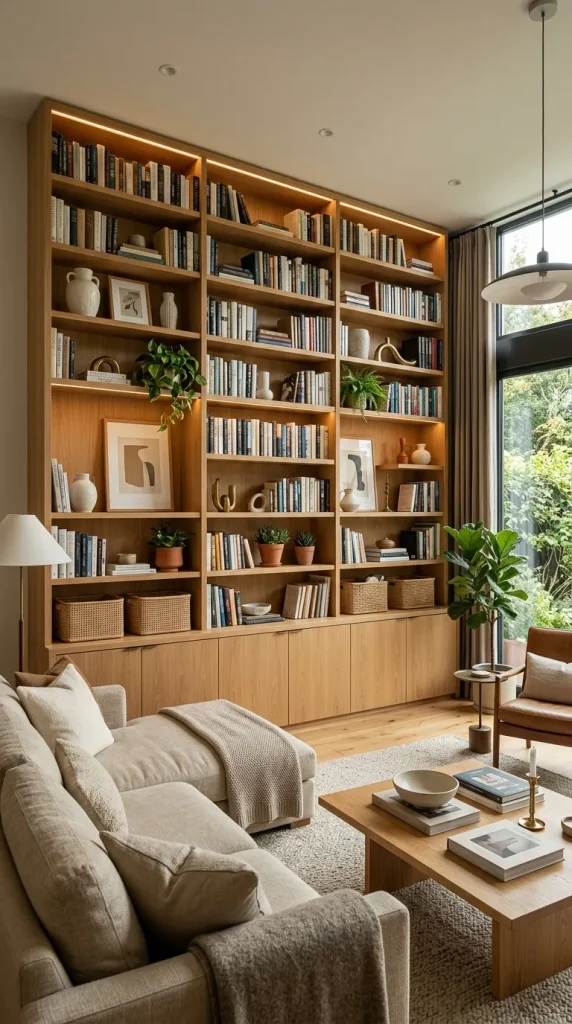
1. Floor-to-Ceiling Built-In Bookshelf
A floor-to-ceiling built-in bookshelf can transform an entire living room wall into an architectural feature. It is especially effective in spacious rooms where a large wall might otherwise feel empty.
The bookshelf can include open shelves, drawers, cabinets, or a combination of all three. Closed storage at the bottom is useful for hiding electronics, blankets, games, and everyday clutter.
Natural oak or walnut creates a warm, sophisticated appearance. Painted built-ins can look more traditional or contemporary depending on the color.
For styling, divide the bookshelf visually into different zones. Fill some sections with books and use others for artwork, plants, ceramics, or photographs.
Avoid filling every shelf completely. Leaving some open areas makes the large structure feel lighter.
Integrated lighting can further enhance the design. Small LED lights installed beneath selected shelves can highlight decorative pieces and create a warm evening atmosphere.
This style works beautifully in modern, transitional, traditional, and contemporary living rooms.
2. Minimalist Floating Bookshelves
Floating shelves are ideal for homeowners who want book storage without the visual weight of a large freestanding bookcase.
Because the mounting hardware is hidden, the shelves appear to float directly from the wall. This creates a clean, contemporary appearance.
Natural wood floating shelves work well in Scandinavian and Japandi interiors. White shelves can blend seamlessly with the wall, while dark wood creates stronger contrast.
Arrange several shelves vertically or use an asymmetrical composition for a more artistic effect.
Keep the styling simple. Place a few books beside small ceramic vases, framed artwork, or tiny plants.
Avoid placing too many heavy objects on floating shelves. Their minimalist appearance works best when the display has breathing room.
Floating shelves are particularly useful in smaller living rooms because they preserve floor space and keep the room feeling open.

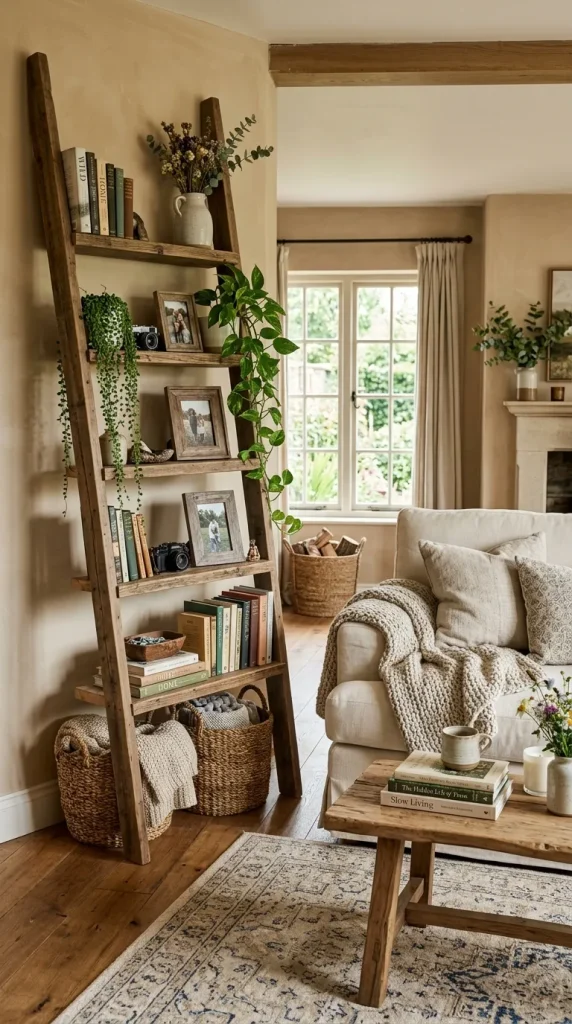
3. Rustic Ladder Bookshelf
A ladder-style bookshelf adds casual character to a living room while occupying relatively little floor space.
Choose a natural wood ladder shelf for a rustic, farmhouse, cottage, or bohemian interior.
Use the lower shelves for larger books, baskets, and heavier decorative pieces. Place smaller accessories and plants toward the top.
A trailing plant can add movement as its leaves cascade downward.
Woven baskets can hold magazines, blankets, remotes, or other small items.
Position the ladder beside a sofa, reading chair, or floor lamp to create a cozy reading corner.
Because ladder shelves are relatively lightweight visually, they are useful when you want storage without making the room feel dominated by furniture.
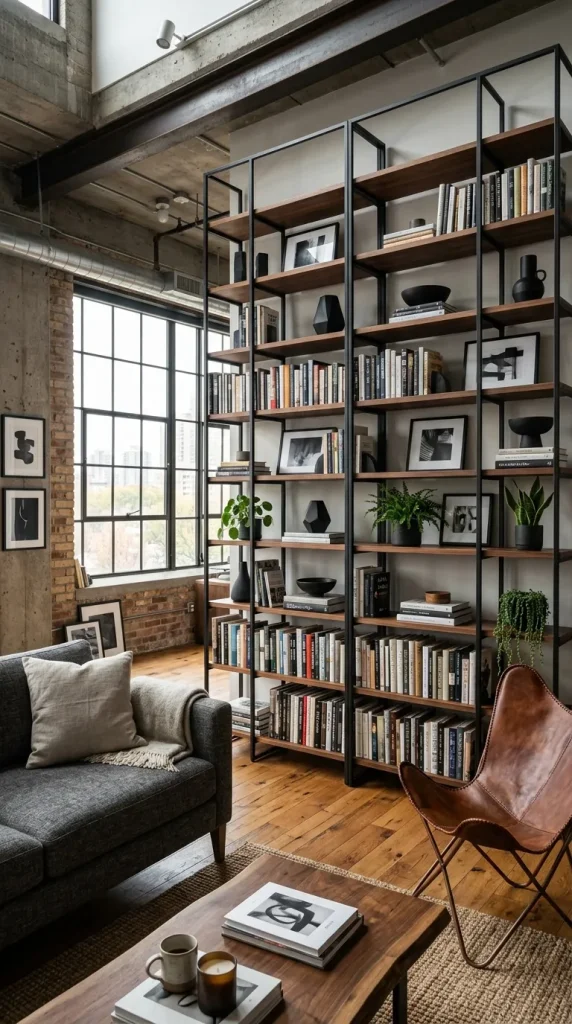
4. Black Metal and Wood Bookshelf
A combination of black metal and natural wood can create a stylish industrial bookshelf.
The black frame provides structure and contrast, while the wooden shelves add warmth.
Choose walnut or dark wood for a dramatic industrial appearance, or pair black metal with pale oak for a softer contemporary look.
Style the shelves with books, black-framed artwork, ceramic pieces, plants, and sculptural objects.
Repeat the black finish elsewhere in the room through lighting, picture frames, furniture legs, or curtain hardware.
Green plants are especially effective against dark metal because their natural shapes soften the geometric structure.
This bookshelf style works particularly well in modern apartments, lofts, industrial interiors, and contemporary living rooms.
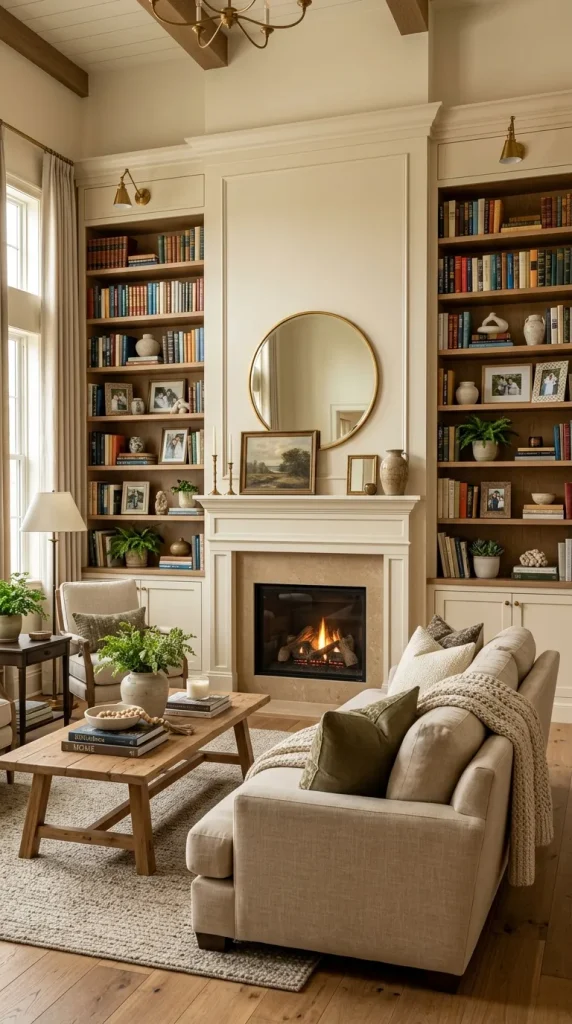
5. Fireplace and Bookshelf Combination
A fireplace surrounded by bookshelves can create a sophisticated living room focal point.
Install matching shelves on either side of the fireplace for a symmetrical appearance. This can make the fireplace feel larger and more architectural.
Use painted cabinetry for a classic built-in appearance or natural wood for a warmer modern design.
Style the shelves with books, photographs, ceramics, artwork, plants, and meaningful objects.
Closed cabinets beneath the shelves provide hidden storage for items you do not want displayed.
Wall sconces or integrated shelf lighting can add additional warmth.
When using a real fireplace, keep combustible décor and accessories safely away from heat sources.
This idea works particularly well in traditional, transitional, farmhouse, and contemporary homes.
6. Glass and Wood Display Bookshelf
Glass and wood create an elegant combination for living room storage.
Glass shelves or glass cabinet doors allow light to move through the structure, making the bookshelf feel lighter than a fully enclosed cabinet.
Natural walnut or oak framing can provide warmth.
Use this type of bookshelf to display favorite books, collectibles, artwork, travel souvenirs, ceramics, and other special objects.
Keep the arrangement relatively minimal because glass already adds visual complexity through reflections.
Positioning the shelf near a window can allow natural light to interact with the glass.
Neutral ceramics, warm wood, and simple artwork can create an elegant contemporary appearance.
This design is particularly suitable for sophisticated minimalist and transitional living rooms.

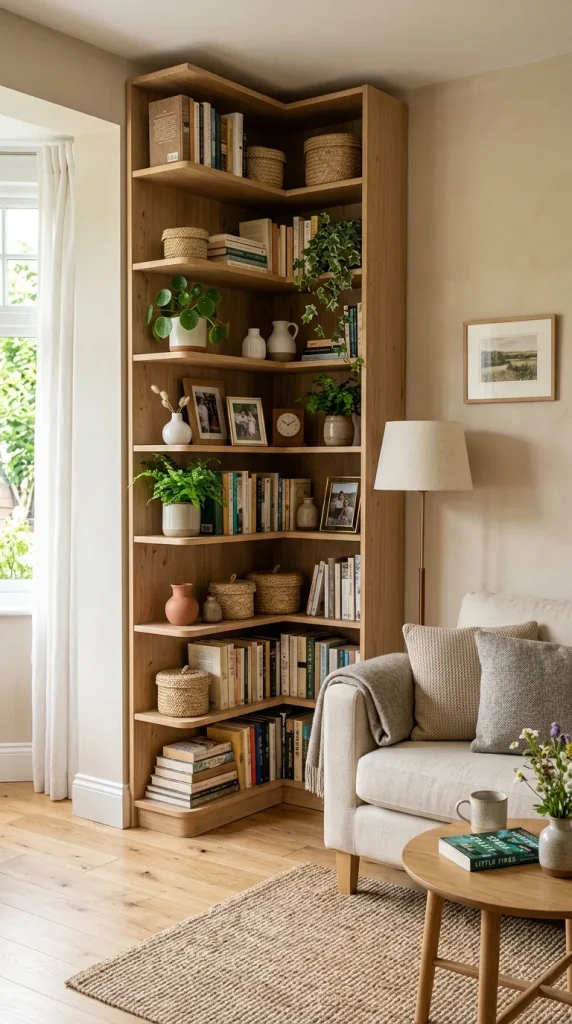
7. Corner Bookshelf for Small Living Rooms
A corner bookshelf makes use of an area that might otherwise remain unused.
Choose a tall, narrow design that fits comfortably into the corner without blocking furniture or walkways.
Light oak, white, or beige shelves can help a small room feel more spacious.
Use the lower shelves for books and baskets, while higher shelves can display smaller decorative pieces.
Add a small plant to soften the corner.
A floor lamp positioned beside the shelf can turn the area into a cozy reading zone.
You can also create a custom corner arrangement using floating shelves installed on two adjoining walls.
This approach is especially useful for apartments and compact living rooms where every square foot matters.
8. Arched Bookshelf
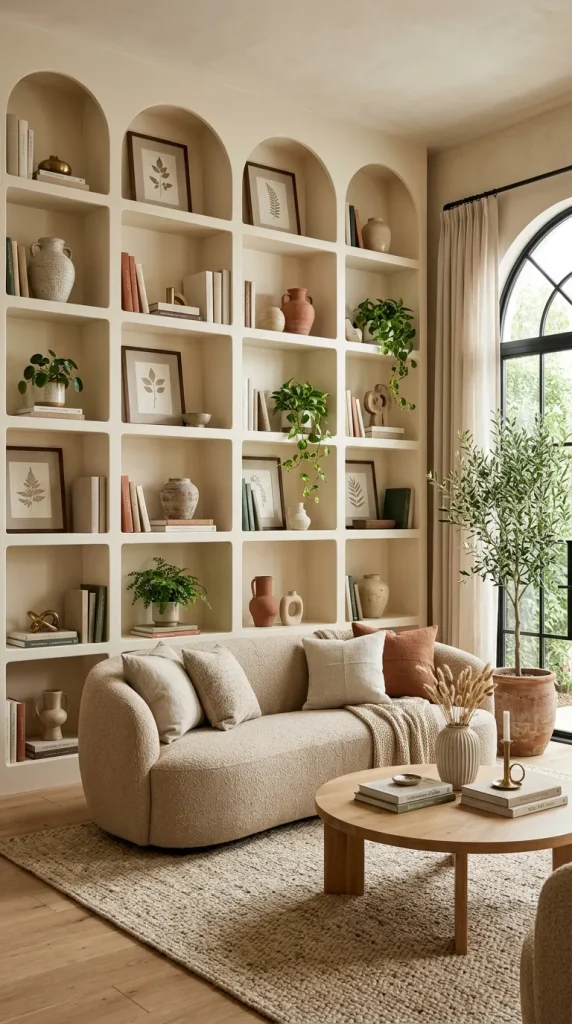
An arched bookshelf adds architectural interest through its curved shape.
Rounded corners and arches soften the straight lines typically found in living rooms and create a more organic appearance.
Choose a cream, beige, muted green, or warm white finish for a soft contemporary aesthetic.
Natural wood can create a warmer interpretation.
Style the shelves with books, ceramic vases, small plants, framed artwork, and sculptural accessories.
Avoid filling the entire structure so that the curved silhouette remains visible.
An open-backed arched bookshelf can also work as a room divider between a living room and dining area.
Pair it with other curved furniture, such as a round coffee table or curved sofa, to reinforce the design language.
9. Color-Coordinated Bookshelf
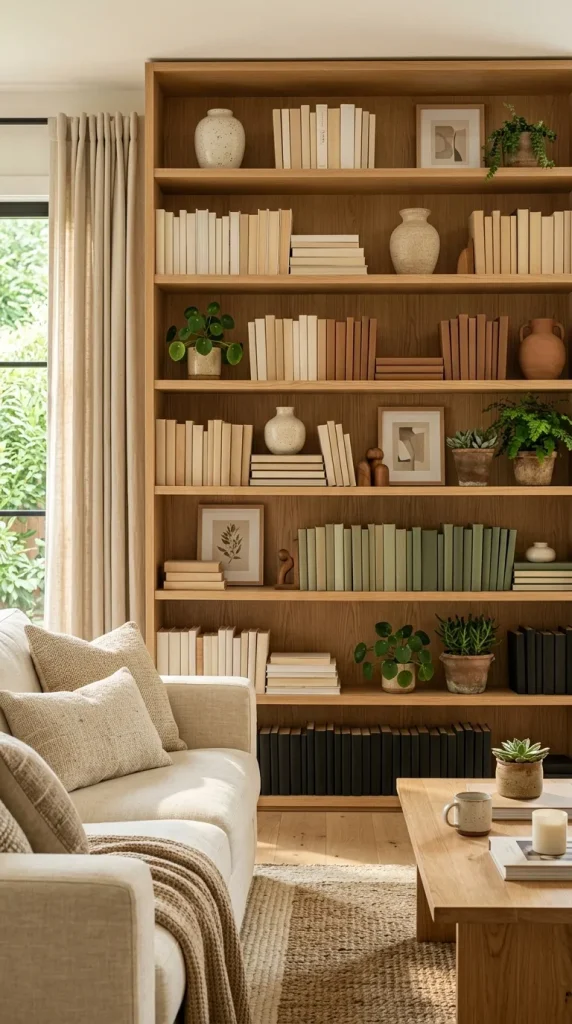
A color-coordinated bookshelf turns books into part of the living room’s overall color scheme.
Arrange books according to broad color groups rather than trying to make every spine perfectly match.
A neutral living room might use cream, beige, brown, black, and muted green books.
For a more colorful interior, coordinate books with the sofa, rug, curtains, or artwork.
Mix vertical books with horizontal stacks.
Place decorative objects beside the books using similar colors.
For example, a group of green books can be paired with a green ceramic vase, while warm brown books can sit beside a wooden sculpture.
Indoor plants can break up the color blocks and add natural contrast.
This styling technique can make an ordinary bookshelf look highly curated without requiring expensive accessories.
10. Bookshelf Media Wall
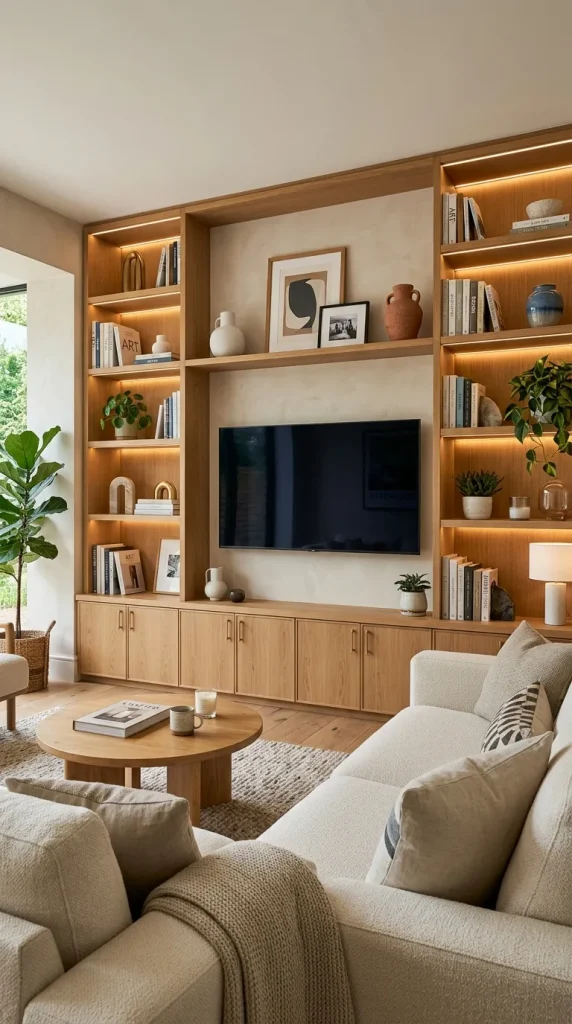
A media wall combined with bookshelves creates a complete living room feature.
Place the television in the center and surround it with open shelves and lower cabinets.
Use the shelves for books, plants, framed artwork, ceramics, and decorative objects.
Lower cabinets can conceal gaming equipment, remote controls, cables, speakers, and other electronics.
Natural oak cabinetry can make the television area feel warmer, while painted cabinetry can create a more traditional built-in appearance.
Integrated lighting beneath selected shelves can create a beautiful evening glow.
Keep the immediate area around the television relatively simple so the screen does not compete with excessive decoration.
This approach combines entertainment, storage, books, and décor into one cohesive wall.
Extra Pinterest Styling Tips
Mix Vertical and Horizontal Books
Vertical rows provide structure, while horizontal stacks create platforms for decorative objects.
Use Different Textures
Combine wood, ceramic, glass, metal, woven baskets, and greenery.
Vary Object Heights
Tall vases, short books, medium frames, and small sculptures can create visual movement.
Group Accessories
Small groups generally look more intentional than individual objects scattered randomly.
Leave Negative Space
Empty shelf sections help the overall arrangement breathe.
Repeat Colors
Use colors already present in the room to create visual cohesion.
Add Personal Items
Photographs, souvenirs, favorite books, and handmade objects give the bookshelf personality.
Avoid Overcrowding
A bookshelf should be functional and beautiful. Do not sacrifice usability just to fill every shelf.
Conclusion
The right bookshelf can transform a living room from a simple seating area into a personalized and highly functional space. Whether you prefer a dramatic floor-to-ceiling built-in, minimalist floating shelves, a rustic ladder design, an industrial metal-and-wood unit, or an elegant arched bookcase, there is a solution for almost every interior style.
For small rooms, floating and corner bookshelves maximize storage without taking up much floor space. For larger homes, built-in bookshelves and media walls can become architectural focal points.
The styling is just as important as the structure. Combine books with plants, artwork, ceramics, photographs, baskets, and meaningful objects. Mix horizontal and vertical arrangements, vary heights, repeat colors, and leave enough empty space to keep the display visually balanced.
A well-designed bookshelf should not simply store books. It should tell a story about the people who live in the home while making the living room more organized, comfortable, and beautiful.




Leave a Reply