
Introduction
A beautiful living room is not only about choosing attractive furniture. How you arrange that furniture can completely change the way the room feels and functions. Even expensive furniture can make a room feel uncomfortable when it is positioned poorly, while a simple collection of pieces can look polished when arranged with good proportions and clear pathways.
The best living room furniture arrangement ideas balance comfort, movement, conversation, and visual harmony. A sofa should not simply be pushed against a wall because there is space there. Instead, think about the room’s focal point, natural traffic flow, windows, doors, television placement, fireplace, and the activities you want the room to support.
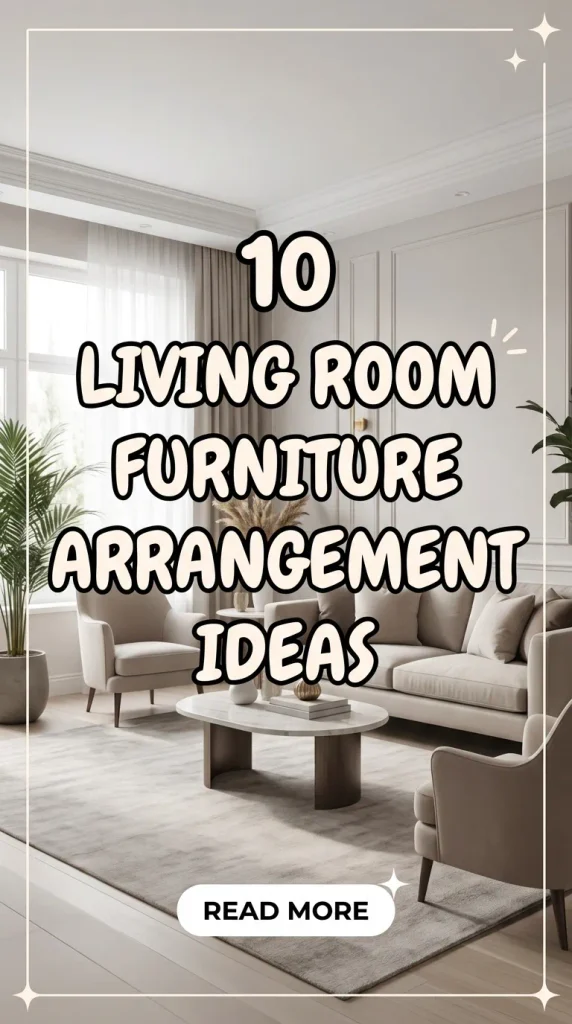
Some living rooms are designed primarily for conversation, while others need to accommodate television viewing, family gatherings, reading, working, or entertaining. Open-plan rooms may need furniture to visually divide different zones, while small rooms require careful placement to avoid making the space feel crowded.
Furniture arrangement can also influence how large or small a room appears. Floating furniture away from walls can create a more intentional layout, while carefully chosen rugs and tables can connect separate pieces into one cohesive seating area.
Below are 10 living room furniture arrangement ideas that can help you create a comfortable, stylish, and Pinterest-worthy space.
1. Sofa and Two Accent Chairs Facing Each Other
A sofa paired with two accent chairs is one of the most versatile living room arrangements. It creates a natural conversation area and works particularly well when social interaction is more important than television viewing.
Materials Used
Use one sofa, two accent chairs, a coffee table, large area rug, side tables, floor lamp, cushions, and decorative accessories.
How to Style It
Place the sofa along one side of the seating area and position the two accent chairs opposite or slightly angled toward it.
Leave enough space between the seating pieces for people to move comfortably.
Place a coffee table in the center so that everyone can reach it easily.
A large rug should extend underneath the front legs of the furniture to visually connect the arrangement.
Use matching or complementary chairs rather than necessarily choosing identical pieces.
Add a side table beside each chair if space permits.
This layout works especially well in traditional, transitional, modern, and conversational living rooms.
It also creates a balanced appearance without requiring every piece of furniture to match.

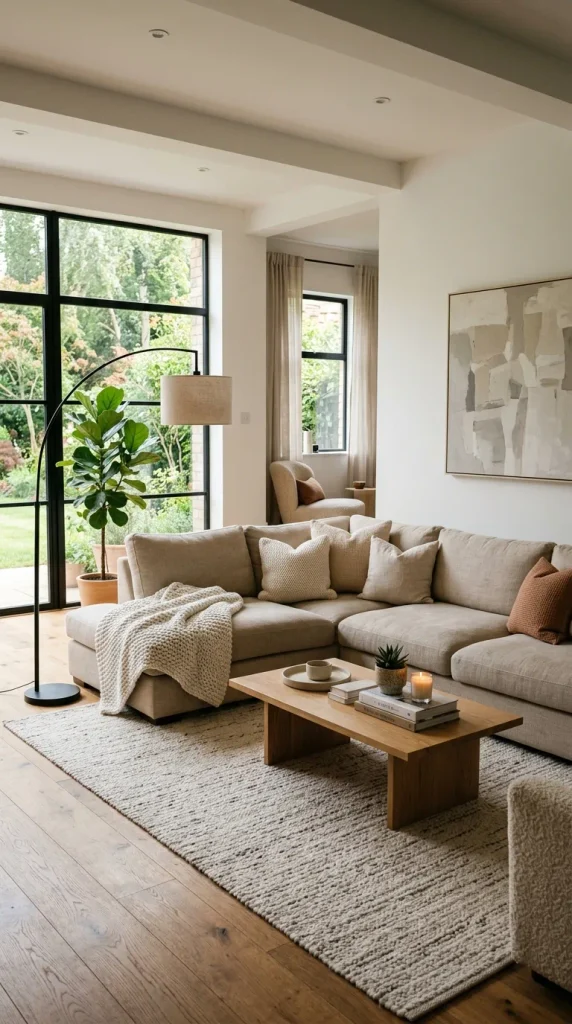
2. L-Shaped Sectional with Coffee Table
An L-shaped sectional is an excellent choice for families and larger living rooms because it provides generous seating while naturally defining a corner.
Materials Used
Use an L-shaped sectional, coffee table, area rug, side table, floor lamp, cushions, and throw blankets.
How to Style It
Place the sectional along two walls or allow it to float slightly away from the walls depending on the room’s dimensions.
Position the coffee table centrally within the seating zone.
Choose a rug large enough to connect the sectional with the coffee table.
If the sectional faces a television, leave enough distance for comfortable viewing.
Add a floor lamp near the corner or chaise area.
For a softer Pinterest-style appearance, layer neutral cushions and one textured throw.
This layout is especially effective for movie nights, family gatherings, and relaxed everyday use.
3. Two Sofas Facing Each Other
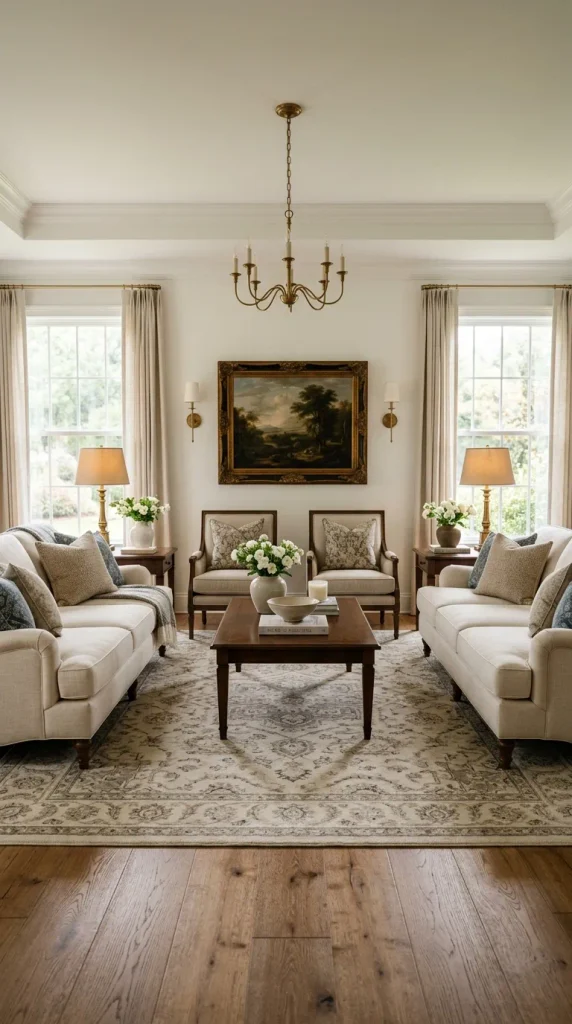
Two sofas facing each other create a symmetrical and sophisticated arrangement. This layout is particularly useful when the living room is designed for conversation.
Materials Used
Use two sofas, a coffee table, area rug, side tables, lamps, cushions, and artwork.
How to Style It
Place the sofas directly opposite one another with a coffee table between them.
Keep a comfortable distance between the seating and table.
The sofas can be identical for a formal symmetrical appearance or complementary for a more relaxed look.
A large rug underneath the seating arrangement can visually unify the entire space.
Place matching side tables and lamps at the ends of the sofas if you want a balanced traditional look.
A fireplace, large artwork, or architectural feature can serve as the focal point.
This arrangement is ideal for entertaining because people naturally face each other rather than focusing on a television.
4. Floating Sofa in the Center of the Room
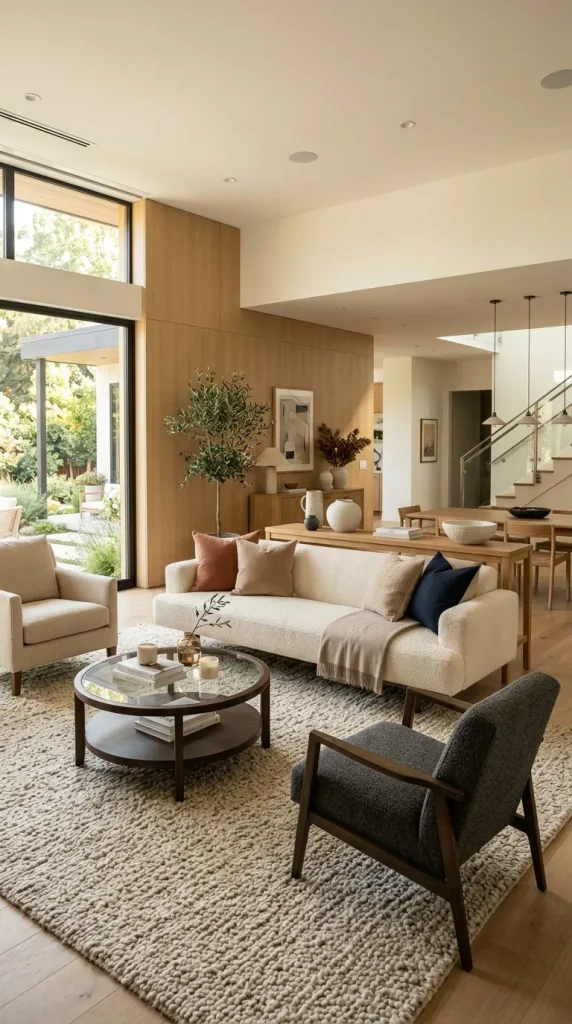
Floating a sofa away from the wall can make a large living room feel more intentional and professionally designed.
Materials Used
Use a sofa, console table, area rug, coffee table, accent chairs, and floor or table lamps.
How to Style It
Instead of pushing the sofa against the wall, position it toward the center of the room.
Place a narrow console table behind it. This creates a decorative surface and helps the sofa feel intentionally positioned.
Use a large rug underneath the seating arrangement.
Place accent chairs opposite or perpendicular to the sofa.
Make sure there is enough room behind and around the furniture for comfortable circulation.
This layout is especially effective in open-plan homes because the sofa can help divide the living area from dining or kitchen zones.
The result feels more layered and architectural than a room where every piece of furniture is pushed against the walls.
5. Fireplace-Focused Furniture Arrangement
A fireplace can become the natural focal point of a living room. Arranging furniture around it can create a cozy and inviting environment.
Materials Used
Use a sofa, two chairs or loveseat, coffee table, area rug, fireplace, side tables, lamps, and decorative accessories.
How to Style It
Position the main seating pieces toward the fireplace without placing furniture so close that it interferes with the hearth.
Two chairs angled toward the sofa can create a welcoming conversation zone.
Place a coffee table in the center.
Use a rug to anchor the furniture.
Keep the fireplace surround visually clean so it remains the focal point.
If a television is mounted above or beside the fireplace, make sure the seating also provides comfortable viewing angles.
Warm lighting, soft textiles, and natural wood can enhance the cozy atmosphere.
This arrangement works beautifully in traditional, farmhouse, cottage, and modern organic homes.

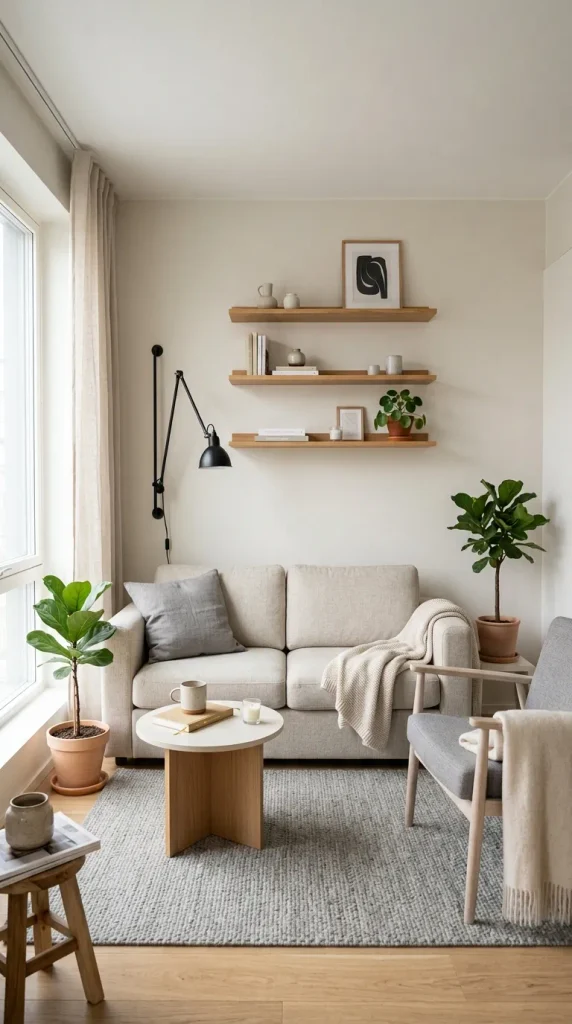
6. Small Living Room with Sofa Against the Wall
Small rooms require careful furniture placement. Keeping the main sofa against the wall can preserve valuable floor space when floating furniture would make the room feel crowded.
Materials Used
Use a compact sofa, small coffee table, narrow accent chair, compact rug, wall-mounted lighting, and minimal accessories.
How to Style It
Choose a sofa with a relatively shallow depth and simple silhouette.
Place it against the longest suitable wall.
Use a small round coffee table to make movement around the seating area easier.
Instead of multiple large chairs, choose one compact accent chair.
A wall-mounted lamp can provide lighting without requiring a floor lamp.
Use a rug that is large enough to connect the furniture without overwhelming the room.
Keep decorative accessories limited and choose furniture with visible legs to maintain a lighter visual appearance.
This layout can make a compact living room comfortable without sacrificing essential seating.
7. TV-Focused Living Room Arrangement
For households that frequently watch television, furniture should be arranged to provide comfortable viewing angles while maintaining a welcoming overall layout.
Materials Used
Use a sofa or sectional, accent chairs, media console, television, coffee table, rug, side tables, and lighting.
How to Style It
Place the television on a focal wall and position the main sofa opposite it.
Add one or two chairs at angles to provide additional seating without blocking the screen.
Keep the coffee table centered between the sofa and seating.
A large rug can connect all of the furniture.
Avoid placing chairs directly in front of the television.
Use floor lamps or table lamps positioned to reduce glare rather than placing bright lighting directly opposite the screen.
This arrangement works especially well in family rooms and casual living spaces.

8. Open-Plan Living Room Furniture Arrangement
Open-plan homes require furniture to define the living area without physically closing it off.
Materials Used
Use a sofa or sectional, accent chairs, large area rug, coffee table, console table, floor lamps, and decorative accessories.
How to Style It
Float the main sofa so that its back helps distinguish the living room from the kitchen or dining area.
Use a large rug underneath the living room furniture to establish a clear visual boundary.
A console table behind the sofa can provide storage and decoration.
Position chairs to create a conversational shape.
Keep colors and materials coordinated with the nearby dining and kitchen areas.
For example, repeat wood finishes or accent colors across zones.
This arrangement allows the space to feel open while still giving each area a clear purpose.

9. Reading-Focused Living Room Arrangement
A living room does not have to revolve around television. Creating a dedicated reading area can make the space more relaxing and multifunctional.
Materials Used
Use a comfortable sofa, reading chair, floor lamp, side table, bookshelf, rug, cushions, and throw blanket.
How to Style It
Place the main sofa in the central seating zone.
Position a comfortable chair near a window or bookshelf.
Add a floor lamp directly beside the reading chair.
Place a small side table within easy reach for books or drinks.
Use soft textiles and warm neutral colors to create a relaxing environment.
A small bookshelf nearby can make the area feel intentional.
This layout works particularly well in large living rooms where there is enough space for multiple activity zones.

10. Large Living Room with Multiple Seating Zones
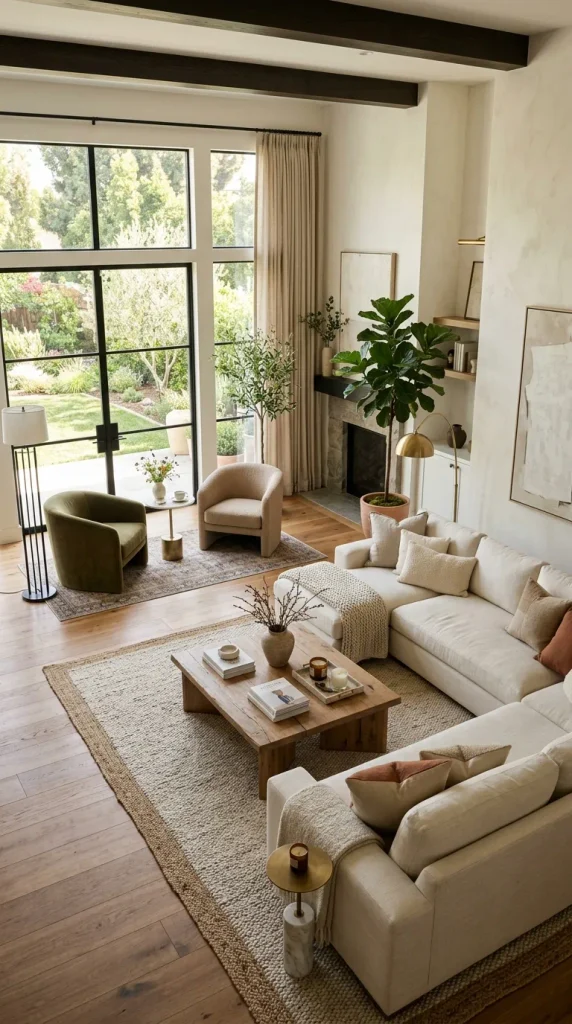
Large living rooms can sometimes feel empty when all the furniture is pushed toward the walls. Creating multiple seating zones can make the space feel more balanced and functional.
Materials Used
Use a large sofa or sectional, accent chairs, secondary chairs, multiple small tables, area rugs, floor lamps, and decorative accessories.
How to Style It
Divide the room into two or more functional areas.
One zone can focus on television viewing, while another can provide a quiet conversation or reading area.
Use rugs to visually distinguish the different zones.
Avoid placing all furniture around the perimeter.
Instead, create intentional groupings with enough space between them for movement.
Use consistent colors and materials throughout the room so the zones feel connected.
Large plants, consoles, lamps, and artwork can help fill vertical space without adding excessive furniture.
This arrangement is ideal for large family rooms, open-plan homes, and spacious entertaining areas.
How to Choose the Best Furniture Arrangement
Before moving furniture, identify the room’s focal point. This could be a fireplace, television, large window, artwork, architectural feature, or beautiful view.
Next, consider traffic flow. People should be able to move between doors and important areas without constantly walking through the center of the seating arrangement.
Measure the room and furniture before committing to a layout.
Think about the purpose of the room. A television-focused room requires different positioning from a formal conversation room.
Also consider the relationship between furniture pieces. Chairs should generally feel connected to the sofa rather than scattered randomly around the room.
How to Create a Pinterest-Worthy Living Room Layout
Pinterest-inspired living rooms usually look polished because every piece has a visual relationship with another piece.
Start with a large area rug. The rug should anchor the furniture rather than appear like a small island underneath the coffee table.
Add a coffee table that is proportional to the sofa.
Use a mixture of seating styles when appropriate. A sofa paired with two different-looking chairs can feel more curated than a complete matching set.
Layer lighting through floor lamps, table lamps, wall lights, and ceiling fixtures.
Add cushions and throws for texture.
Finally, leave enough negative space around furniture. A beautiful room should feel comfortable to move through, not packed with objects.
Final Thoughts
These 10 living room furniture arrangement ideas demonstrate that good furniture placement can transform an ordinary room into a comfortable and stylish space.
Whether you prefer a classic sofa-and-chair conversation area, an L-shaped sectional, symmetrical sofas, a floating sofa, a fireplace-focused arrangement, a compact layout, a TV-centered room, an open-plan zone, a reading corner, or multiple seating areas, the key is to create a layout that supports the way you actually use your home.
Always consider scale, traffic flow, focal points, lighting, and proportion before adding decorative details.
Once the basic furniture arrangement is right, rugs, coffee tables, cushions, lamps, artwork, and greenery can bring the entire design together.
The best living room is not necessarily the one with the most expensive furniture. It is the one where every piece feels intentional, comfortable, and connected to the way you live.



Leave a Reply