
Introduction
Maximalist home decor ideas are perfect for anyone who loves bold colors, expressive patterns, layered textures, statement furniture, and rooms filled with personality. Unlike minimalist interiors that focus on simplicity and fewer belongings, maximalist design celebrates abundance, creativity, and the art of combining different styles. It allows you to showcase your favorite collections, mix unexpected colors, and transform ordinary rooms into visually exciting spaces.
The beauty of maximalism is that there are no strict rules about keeping everything neutral or matching every decorative element. You can combine floral wallpaper with geometric rugs, display colorful artwork alongside vintage mirrors, or style open shelves with books, plants, ceramics, and treasured collectibles. The goal is to create a space that feels intentional, welcoming, and uniquely yours.
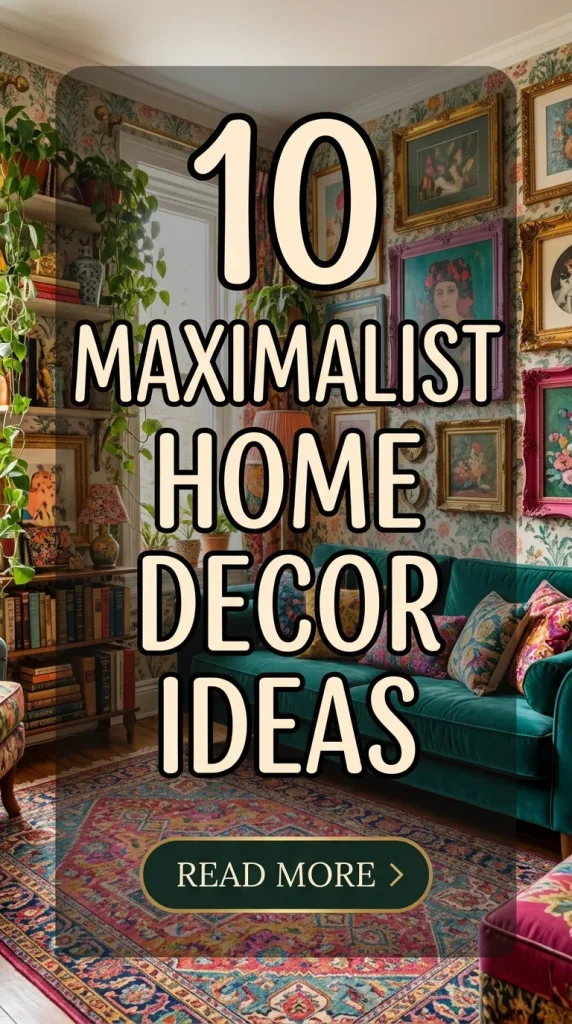
However, maximalism does not mean filling every available corner with random objects. Successful maximalist interiors use thoughtful color combinations, repeated patterns, balanced furniture arrangements, and carefully curated accessories. Each element contributes to the overall atmosphere without making the room feel completely chaotic.
Whether you want to transform your living room, bedroom, dining area, or an entire home, these 10 maximalist home decor ideas will help you create an expressive and beautifully layered interior.
Materials and Decor Items You Can Use
Before decorating your home, gather a selection of items that complement your preferred maximalist style. You can reuse existing furniture and accessories instead of purchasing everything new.
- Colorful paint and wallpaper: Emerald green, cobalt blue, mustard yellow, terracotta, hot pink, and patterned wallpaper.
- Statement furniture: Velvet sofas, colorful accent chairs, painted cabinets, vintage dressers, and decorative coffee tables.
- Decorative textiles: Patterned rugs, embroidered cushions, velvet curtains, colorful throws, and floral upholstery.
- Wall decorations: Gallery wall frames, oversized artwork, decorative mirrors, wall plates, and framed illustrations.
- Lighting: Sculptural table lamps, colorful pendant lights, ornate chandeliers, and vintage floor lamps.
- Display accessories: Ceramic vases, decorative bowls, collectible figurines, books, and travel souvenirs.
- Natural elements: Indoor plants, patterned planters, dried flowers, and fresh floral arrangements.
- Storage and organization: Decorative baskets, bookcases, display cabinets, and trays for grouping small objects.
Choose a few colors that you love and repeat them throughout the room. This creates a visual connection between different objects and helps even the boldest decor feel cohesive.
1. Mix Bold Colors for a Vibrant Living Room
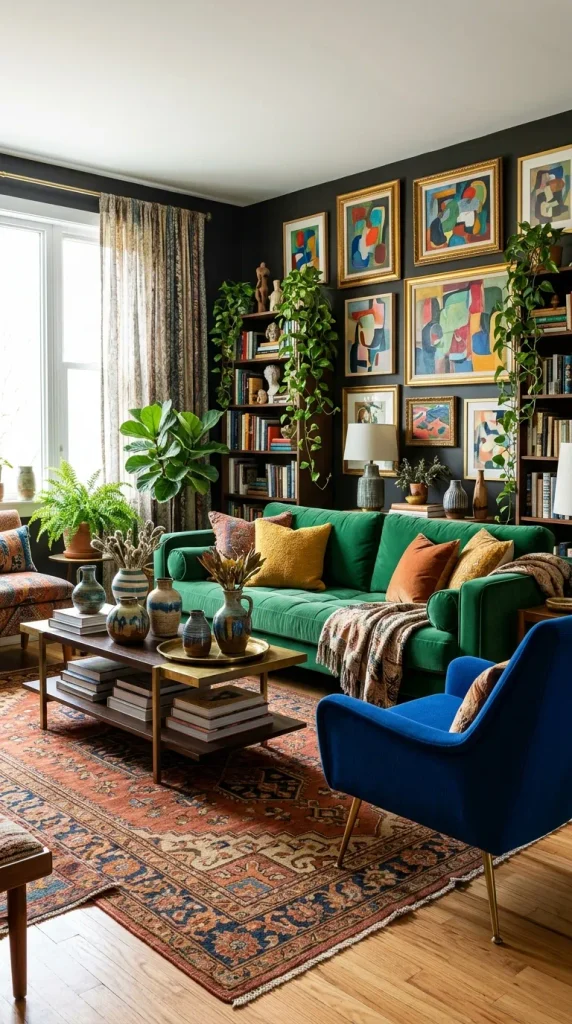
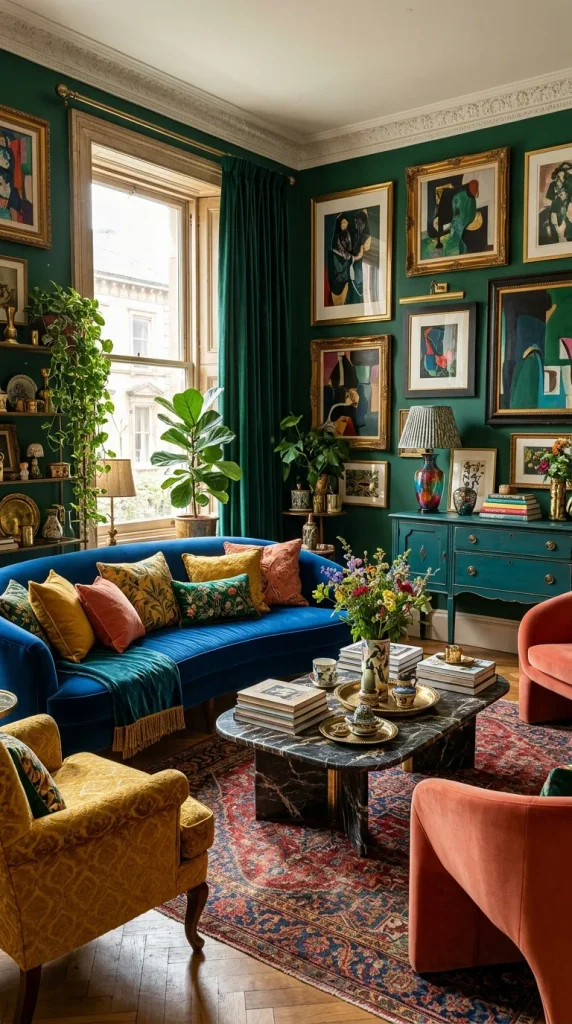
One of the easiest ways to embrace maximalist home decor is to create a living room filled with bold, complementary colors. Instead of relying on neutral walls and matching furniture, use rich shades to establish a lively atmosphere that reflects your personality.
Start with a statement color for the largest element in the room. An emerald green sofa, cobalt blue armchair, or mustard yellow accent chair can serve as the foundation for your color palette. You can then introduce additional shades through cushions, rugs, curtains, artwork, and decorative accessories.
For example, an emerald green sofa can look beautiful with pink cushions, a terracotta rug, and colorful abstract artwork. Alternatively, a cobalt blue sofa can be paired with mustard yellow accents, warm orange details, and cream-colored curtains. The contrast between these colors creates visual energy without requiring every item to match.
If you prefer a more dramatic look, consider painting the walls in a saturated shade such as deep teal, burgundy, or warm terracotta. Colorful walls provide a strong backdrop for statement furniture and decorative collections.
Balance is important when working with several strong colors. Repeat selected shades in different parts of the room so that the design feels connected. For instance, if your sofa is green, incorporate green into a framed print, a ceramic vase, or a patterned cushion.
You can also use neutral elements strategically. Wooden flooring, cream curtains, or a natural fiber rug can provide visual breathing room while allowing the colorful furniture to stand out.
Materials to use:
- Colorful sofa or accent chair
- Bold paint or wallpaper
- Patterned cushions
- Vibrant area rug
- Colorful framed artwork
- Decorative ceramic accessories
Styling tip: Choose three main colors and repeat them throughout the room. Add smaller accent shades gradually to create a rich but coordinated appearance.
2. Create a Maximalist Gallery Wall
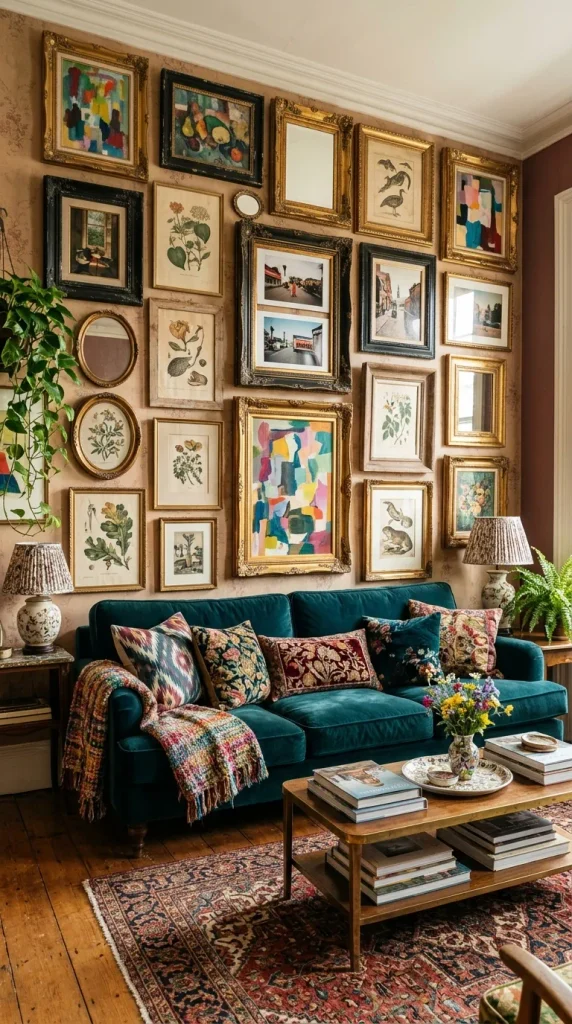
A gallery wall is an excellent way to express your personality through maximalist home decor. It allows you to combine artwork, photographs, prints, mirrors, and decorative objects into a distinctive arrangement that becomes a focal point in your home.
Start by selecting a wall above your sofa, behind your dining table, or along a hallway. Collect artwork that you genuinely enjoy, including abstract paintings, botanical prints, vintage illustrations, travel photographs, and colorful graphic designs.
Maximalist gallery walls often look best when they include a variety of frame sizes and styles. Combine ornate gold frames with simple black frames, natural wood, and colorful painted frames. This mixture creates a collected-over-time appearance rather than a perfectly coordinated display.
Before hanging anything, arrange the pieces on the floor to experiment with different layouts. You can create a symmetrical arrangement with similar-sized frames or a more relaxed composition with artwork of varying dimensions.
Color can help tie the collection together. Even if the artwork features different subjects, repeating shades such as pink, green, blue, or orange can make the display feel cohesive.
Consider adding a decorative mirror or a small sculptural wall piece to introduce variety. However, leave enough space between objects to ensure that each piece remains visible.
For renters, removable picture-hanging strips can be useful when compatible with the wall surface and the weight of the artwork. Always follow the manufacturer’s installation instructions.
Materials to use:
- Artwork and colorful prints
- Photographs and illustrations
- Mixed-style picture frames
- Decorative mirrors
- Picture hooks or suitable hanging strips
- Paper templates for planning
Styling tip: Mix personal photographs with artwork and vintage finds. This makes your gallery wall feel meaningful instead of looking like a collection purchased all at once.
3. Layer Patterns With Rugs, Cushions, and Curtains
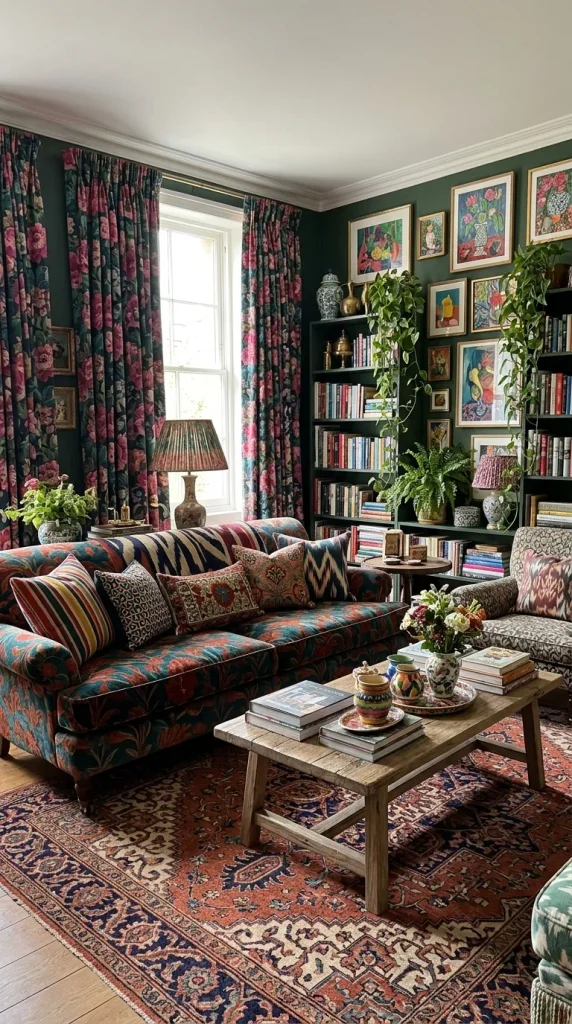
Pattern mixing is a defining feature of maximalist interiors. Floral prints, geometric designs, stripes, checks, and traditional motifs can work together to create a room that feels rich, dynamic, and visually interesting.
The secret is to vary the scale of the patterns. Large floral curtains can be paired with smaller geometric cushions, while a traditional patterned rug provides another layer of detail. When every pattern has the same scale, the room can feel visually crowded.
Start with one dominant pattern, such as a floral sofa or a colorful area rug. Use its colors to guide your choices for the remaining textiles. For example, if your rug features blue, rust, cream, and green, select cushions that repeat some of those shades in different patterns.
Stripes can help balance more intricate designs. A striped cushion or a simple checked throw provides a visual contrast to detailed floral or paisley prints.
Texture is equally important. Combine velvet cushions, woven throws, linen curtains, and embroidered fabrics to create a layered appearance that feels inviting as well as decorative.
Do not feel obligated to use every pattern you like in the same room. Select a few that complement one another and allow solid-colored textiles to provide contrast.
Materials to use:
- Floral or geometric curtains
- Patterned area rug
- Striped and printed cushions
- Embroidered throw pillows
- Velvet or woven fabrics
- Solid-colored blankets
Styling tip: Repeat at least one color across different patterns. This creates a visual connection even when the prints themselves are very different.
4. Decorate With Statement Furniture
Statement furniture is an effective way to make a maximalist interior feel distinctive. Instead of choosing every piece for its ability to blend into the background, select furniture with bold colors, unusual shapes, decorative finishes, or vintage character.
A velvet sofa in a rich jewel tone can become the centerpiece of a living room. Alternatively, a painted sideboard, sculptural coffee table, or pair of colorful accent chairs can introduce personality without requiring a complete furniture replacement.
Vintage furniture works particularly well in maximalist interiors because it adds individuality and a sense of history. A traditional wooden cabinet can be paired with contemporary artwork, while a colorful modern chair can complement an antique-style coffee table.
You can also experiment with furniture finishes. A painted dresser in deep blue, a mustard yellow side table, or a cabinet with decorative hardware can become an attractive focal point.
When combining several statement pieces, pay attention to their proportions. A large sofa may need a substantial rug and a coffee table with enough visual weight to balance it. In smaller rooms, use one prominent furniture piece and keep the remaining items more compact.
Comfort and functionality should remain priorities. A visually striking chair is most valuable when it is also comfortable, and a beautiful cabinet is more useful when it provides practical storage.
Materials to use:
- Velvet sofa or colorful armchair
- Painted wooden cabinets
- Sculptural coffee table
- Vintage sideboard
- Decorative furniture hardware
- Colorful upholstered stools
Styling tip: Choose one main statement furniture piece first. Build the rest of the room around its color, shape, and style instead of introducing several competing focal points.
5. Style Open Shelves With Books, Plants, and Collectibles
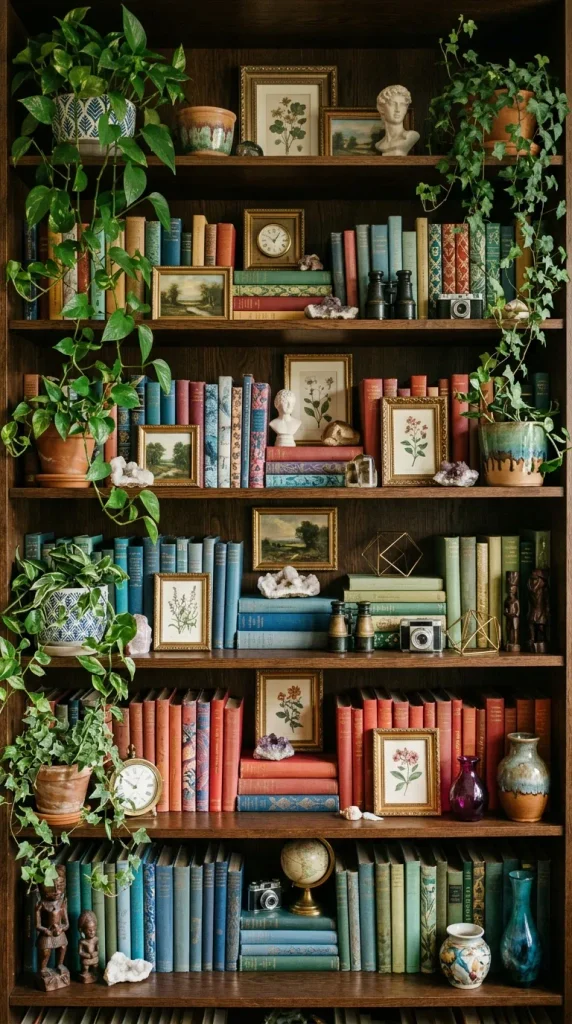
Open shelving provides an opportunity to display the objects that make your home unique. In a maximalist interior, shelves can become colorful arrangements of books, plants, ceramics, framed prints, and meaningful collectibles.
Begin with a sturdy bookcase or floating shelves that suit the room. Dark wood creates a traditional, layered appearance, while painted shelving in green, blue, or pink can make the display feel more playful.
Arrange books both vertically and horizontally. Horizontal stacks can support a small decorative object, while upright books provide structure and visual height. You can organize them by color for a coordinated appearance or mix their spines for a more eclectic style.
Plants help soften the arrangement. Place trailing plants on upper shelves and smaller potted plants between books or decorative objects. Choose planters in different materials, such as ceramic, terracotta, or glazed stoneware, to add texture.
Display collections in small groups rather than scattering individual objects everywhere. For example, a collection of ceramic vases can occupy one shelf, while framed photographs and travel souvenirs can form another arrangement.
Vary the height and shape of objects to keep the display interesting. A tall vase, a stack of books, and a small sculptural accessory create more visual movement than several identical objects lined up together.
Remember to leave some space between groupings. Maximalism celebrates abundance, but a shelf still needs a clear structure to remain attractive and easy to maintain.
Materials to use:
- Wooden or painted bookcase
- Books and magazines
- Indoor plants
- Decorative ceramic vases
- Framed photographs
- Collectibles and souvenirs
Styling tip: Arrange objects in small groups of different heights and repeat a few colors across the shelves to create a cohesive display.
6. Use Bold Wallpaper and Decorative Walls
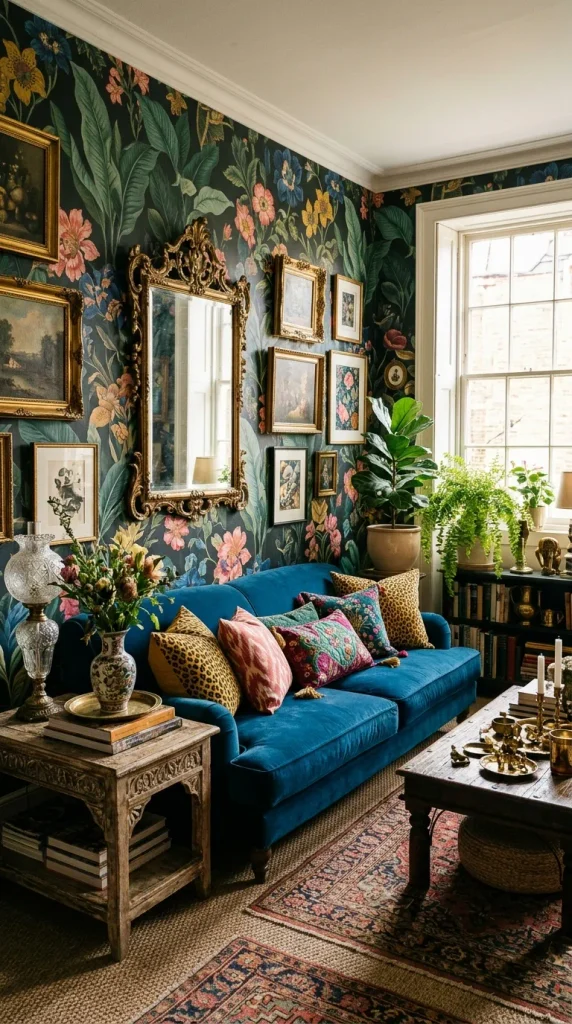
Bold wallpaper can transform an ordinary room into a striking maximalist space. Floral motifs, tropical leaves, geometric shapes, dramatic landscapes, and vintage-inspired prints all offer opportunities to introduce color and personality.
Choose wallpaper that reflects the mood you want to create. Large botanical prints can bring a romantic, traditional atmosphere, while oversized geometric patterns feel contemporary and energetic. Tropical designs are ideal for a vibrant interior inspired by nature.
You can apply wallpaper to all the walls for an immersive effect or use it on a single accent wall. A statement wall behind the bed, sofa, or dining table can establish the room’s style without overwhelming the entire space.
The furniture and accessories should complement the wallpaper rather than compete with it. For example, a colorful floral wall can be paired with a solid-colored sofa and cushions that repeat two or three shades from the print.
If you enjoy layering patterns, you can combine wallpaper with patterned textiles. Choose prints with different scales and a shared color palette so that the room feels intentional.
Painted walls are another option. A rich color such as emerald green, deep teal, or terracotta can provide a strong backdrop for framed artwork, decorative mirrors, and statement furniture.
Before purchasing wallpaper, consider the room’s lighting and dimensions. Large patterns can feel dramatic in spacious rooms, while smaller-scale prints may be easier to manage in compact areas.
Materials to use:
- Floral or botanical wallpaper
- Geometric or tropical prints
- Paint in a saturated color
- Decorative wall trim
- Coordinating curtains and cushions
- Framed artwork
Styling tip: If you are nervous about bold patterns, start with one accent wall and keep nearby furniture relatively simple.
7. Combine Vintage and Modern Decor
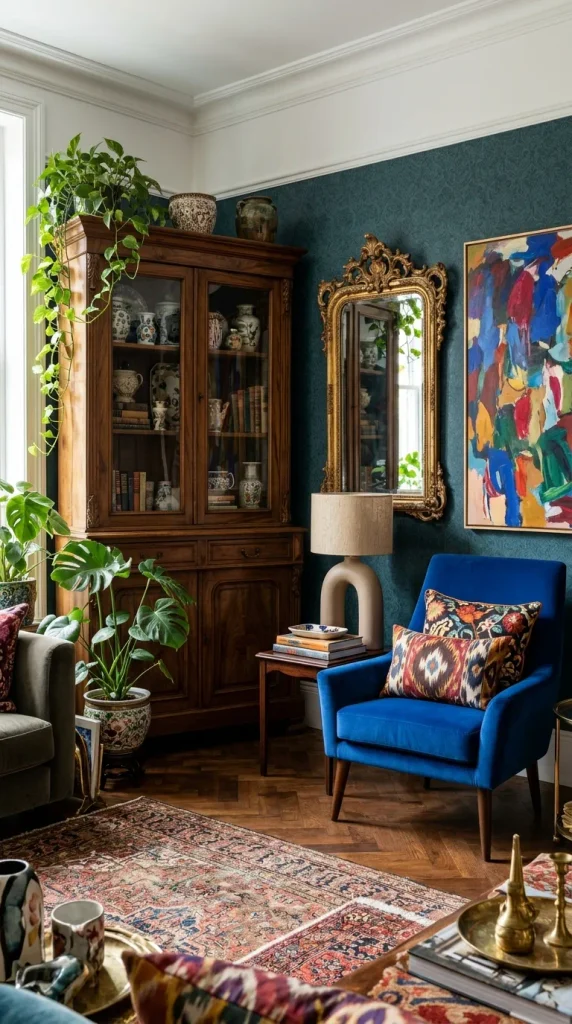
Mixing vintage and modern pieces creates a layered maximalist interior that feels personal rather than overly coordinated. The contrast between old and new adds character and allows you to incorporate treasured furniture alongside contemporary designs.
Start with a piece that has a distinctive history or appearance, such as an antique dresser, traditional wooden cabinet, or vintage mirror. Pair it with modern artwork, a sculptural lamp, or a contemporary accent chair.
You can also reverse the approach. A modern sofa can look beautiful beside a traditional wooden coffee table, vintage ceramic vases, and an ornate framed painting.
The goal is not to make every item match. Instead, look for connections through color, material, scale, or shape. A contemporary blue chair might complement an antique cabinet if both share a similar undertone or are balanced by matching accessories.
Vintage items often introduce warm wood, aged metal, and intricate details, while modern pieces provide cleaner shapes and visual contrast. Together, they create a layered environment that feels collected over time.
Shopping secondhand is a practical way to build this look. Flea markets, charity shops, antique stores, and local resale platforms can offer distinctive furniture and accessories at different price points.
Avoid purchasing vintage objects solely because they look old. Choose pieces that fit your home, serve a purpose, or have personal meaning.
Materials to use:
- Vintage wooden furniture
- Contemporary accent chair
- Modern table or floor lamp
- Antique-style mirror
- Colorful contemporary artwork
- Decorative secondhand accessories
Styling tip: Connect vintage and modern pieces through a shared color palette. This creates harmony without sacrificing the contrast that makes the room interesting.
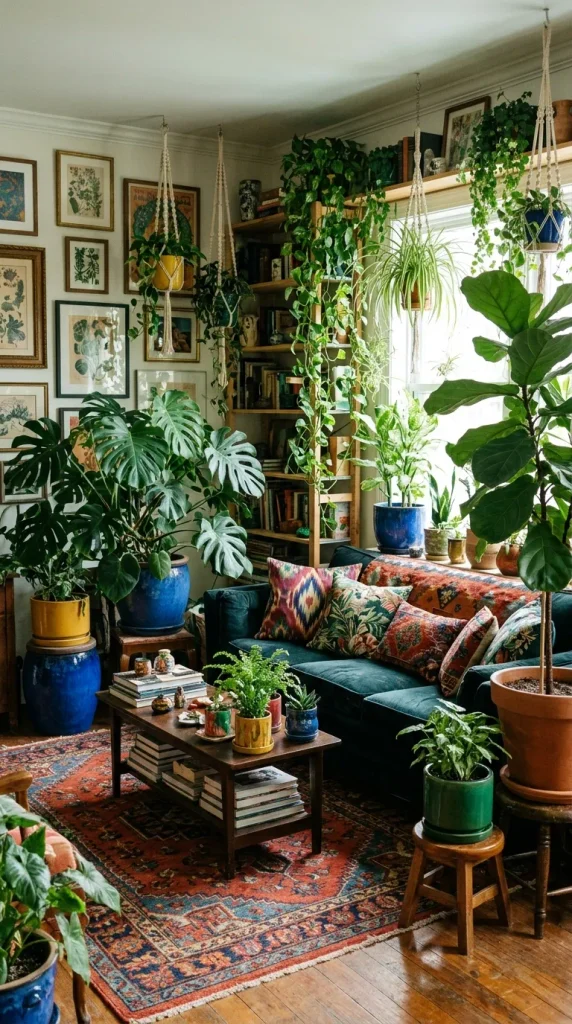
8. Add Indoor Plants and Colorful Planters
Plants bring natural movement, fresh color, and organic shapes into a maximalist home. They complement bold interiors by softening furniture edges and adding another layer of visual interest.
Start by choosing plants that suit your home’s natural light and your ability to care for them. Trailing plants can work well on high shelves, while larger floor plants can fill an empty corner. Smaller plants are useful for decorating side tables, windowsills, and bookshelves.
Colorful planters are an opportunity to extend your interior palette. Choose glazed ceramic pots in cobalt blue, mustard yellow, terracotta, or emerald green. You can also mix patterned planters with simple solid-colored ones to create variety.
Group plants at different heights to create a natural arrangement. For example, place a tall floor plant beside a smaller plant on a stool and a trailing plant on a nearby shelf. The different heights make the display feel dynamic.
Plants also work well with other maximalist elements. A leafy plant can balance a colorful gallery wall, while a collection of small potted plants can add softness to shelves filled with books and ceramics.
Be careful not to overcrowd areas that need to remain functional. Leave enough space around windows, walkways, and furniture so that plants enhance the room rather than obstruct it.
Materials to use:
- Indoor plants suited to available light
- Colorful ceramic planters
- Terracotta pots
- Plant stands
- Decorative trays
- Hanging planters where suitable
Styling tip: Mix different leaf shapes and plant heights, but group them in planters that repeat colors or materials from the surrounding decor.
9. Create a Maximalist Bedroom With Layered Textiles
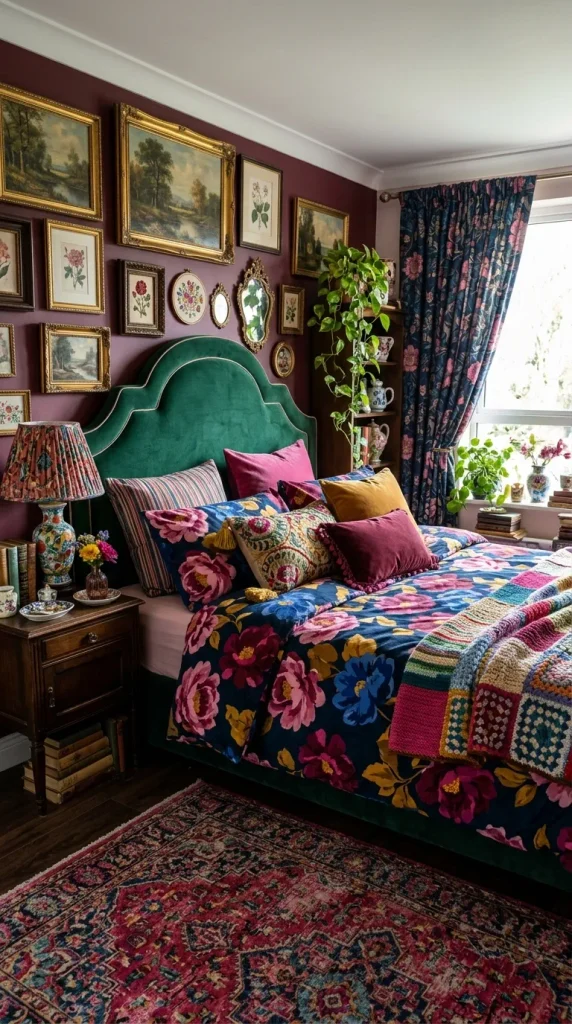
A maximalist bedroom offers the perfect opportunity to experiment with expressive colors, patterned fabrics, and decorative accessories. By layering bedding, cushions, curtains, and rugs, you can create a space that feels cozy, personal, and visually rich.
Begin with a main color palette. You might choose pink and green for a playful botanical look, blue and mustard for a bold contrast, or burgundy and orange for a warmer atmosphere.
Use your duvet cover or bedspread as the foundation. A floral duvet can be paired with striped cushions, a solid-colored throw, and a patterned rug. Alternatively, begin with plain bedding and introduce bold patterns through decorative pillows and curtains.
Vary the textures as well as the prints. Velvet cushions, embroidered pillows, woven blankets, and cotton sheets create a more interesting appearance than using the same fabric throughout the bed.
The wall behind the bed can become another focal point. Hang a colorful gallery wall, use statement wallpaper, or place a large decorative mirror above a dresser.
Bedside tables are ideal for displaying small accessories. A colorful lamp, a stack of books, and a ceramic vase can add personality while remaining practical.
Although maximalist bedrooms can feature many decorative elements, comfort should always come first. Ensure that the bedding feels pleasant, curtains provide the desired privacy, and the room has enough storage to prevent everyday clutter.
Materials to use:
- Patterned duvet cover or bedspread
- Colorful cushions
- Textured throw blankets
- Statement curtains
- Patterned bedside rug
- Decorative bedside lamps
Styling tip: Repeat the colors of your bedding in the curtains, artwork, or rug so the room feels layered but coordinated.
10. Display Personal Collections and Meaningful Decor
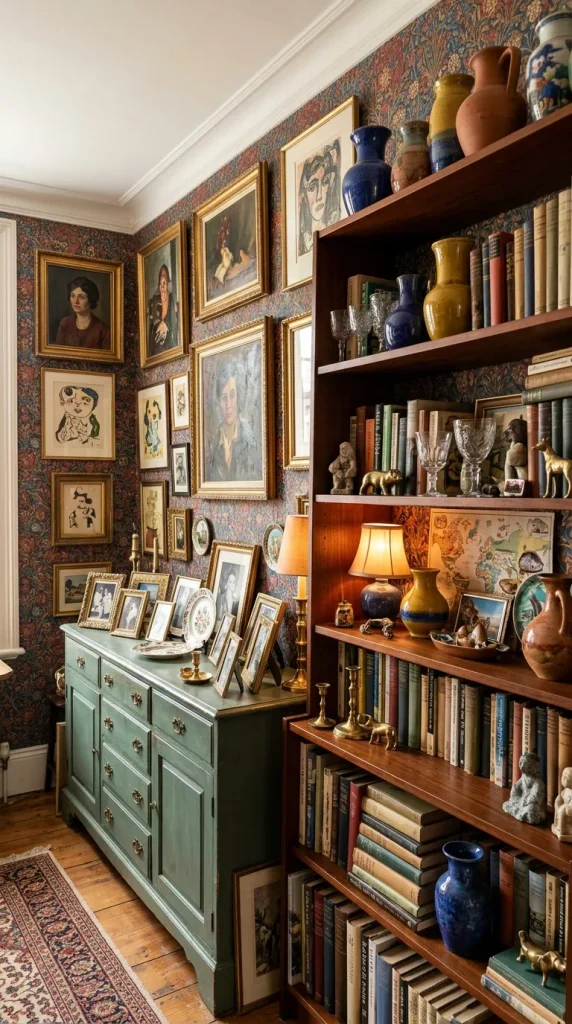
Maximalist interiors are especially effective when they tell a story about the people who live in them. Personal collections, travel souvenirs, books, family photographs, ceramics, and meaningful objects give your home character that cannot be replicated by purchasing an entire matching decor set.
Start by selecting a few collections you genuinely enjoy displaying. These might include vintage teacups, decorative plates, colorful glassware, small sculptures, framed postcards, or travel souvenirs.
Use shelves, display cabinets, wall ledges, or sideboards to arrange your collections. Group similar objects together so that they read as a deliberate display rather than scattered belongings.
For example, a collection of ceramic vases can be arranged by height and color on a sideboard. Decorative plates can be displayed on a dining room wall, while travel souvenirs can be placed among books and framed photographs on a shelf.
Consider combining objects with different textures and materials. Glass, wood, ceramics, metal, and textiles create variety and help the display feel visually rich.
Lighting can also make a difference. A table lamp beside a collection or a display cabinet with appropriate lighting can draw attention to special pieces. Make sure the light does not expose delicate objects to excessive heat.
Not everything needs to be displayed at once. Rotate seasonal accessories or collections occasionally to refresh your interior while preserving storage space.
Materials to use:
- Personal collections and souvenirs
- Decorative display shelves
- Ceramic bowls and vases
- Vintage glassware
- Framed photographs
- Wooden trays and display cabinets
Styling tip: Display items that have meaning to you. Personal collections make maximalist decor feel authentic, expressive, and connected to your life.
Practical Tips for Decorating a Maximalist Home
Once you have chosen your favorite ideas, use these tips to bring the different elements together.
Choose a Color Story
Select a few main colors and repeat them throughout the room. You can still incorporate contrasting shades, but a consistent palette helps connect different patterns, furniture pieces, and accessories.
Vary Pattern Sizes
Combine large prints with smaller patterns and solid colors. This creates visual movement while allowing individual elements to stand out.
Balance Statement Pieces
If you have a bold sofa, dramatic wallpaper, and a large gallery wall, avoid positioning all three as competing focal points in one small area. Spread statement elements around the room to create a more balanced composition.
Layer Different Textures
Combine velvet, linen, wood, ceramic, metal, woven fabrics, and glass. Contrasting materials make a room feel more inviting and add depth to a colorful interior.
Use Grouped Displays
Arrange smaller objects in intentional groups on shelves, sideboards, and coffee tables. Trays and decorative boxes can help organize items without removing the layered character of the room.
Keep Practical Storage Available
Use baskets, cabinets, drawers, and bookcases to store everyday belongings. This allows you to enjoy decorative abundance without allowing ordinary clutter to take over.
Decorate Gradually
Maximalism works best when it reflects your taste. Start with the furniture and accessories you already own, then add pieces that genuinely improve the space instead of buying everything at once.
Common Maximalist Home Decor Mistakes to Avoid
Maximalist design encourages creativity, but a few common mistakes can make a room feel chaotic rather than thoughtfully layered.
- Using too many unrelated colors: Repeat a few shades across furniture, artwork, and textiles to create visual connections.
- Mixing patterns without a plan: Vary pattern sizes and use shared colors to maintain balance.
- Overcrowding every surface: Leave some breathing room around important furniture and decorative displays.
- Ignoring furniture proportions: Large statement pieces should suit the room’s dimensions and allow comfortable movement.
- Displaying too many small accessories: Group similar objects together and store items that do not contribute to the overall design.
- Forgetting practical lighting: Include appropriate task lighting alongside decorative lamps and statement fixtures.
- Copying a style without personal touches: Incorporate objects, collections, and colors that reflect your own interests.
Remember that maximalism is not about purchasing the most decor possible. It is about creating an expressive environment where colors, patterns, textures, and meaningful belongings work together.
Conclusion
These 10 maximalist home decor ideas demonstrate how bold colors, layered patterns, statement furniture, vintage accents, indoor plants, and personal collections can transform an ordinary home into a vibrant and expressive space.
Whether you begin with a colorful living room, a gallery wall, patterned textiles, decorative shelving, or a bedroom filled with layered fabrics, each idea offers a way to showcase your personality through interior design.
The key is to combine abundance with intention. Choose a color palette that connects your decor, mix patterns in different scales, balance statement pieces with practical furniture, and display objects that have meaning to you.
You do not need to redecorate your entire home at once. Start with one room or a single focal point, then gradually introduce additional colors, textures, and accessories as your style develops.
With thoughtful layering and creative choices, maximalist home decor can make your home feel warm, imaginative, welcoming, and uniquely yours.


Leave a Reply