
Introduction
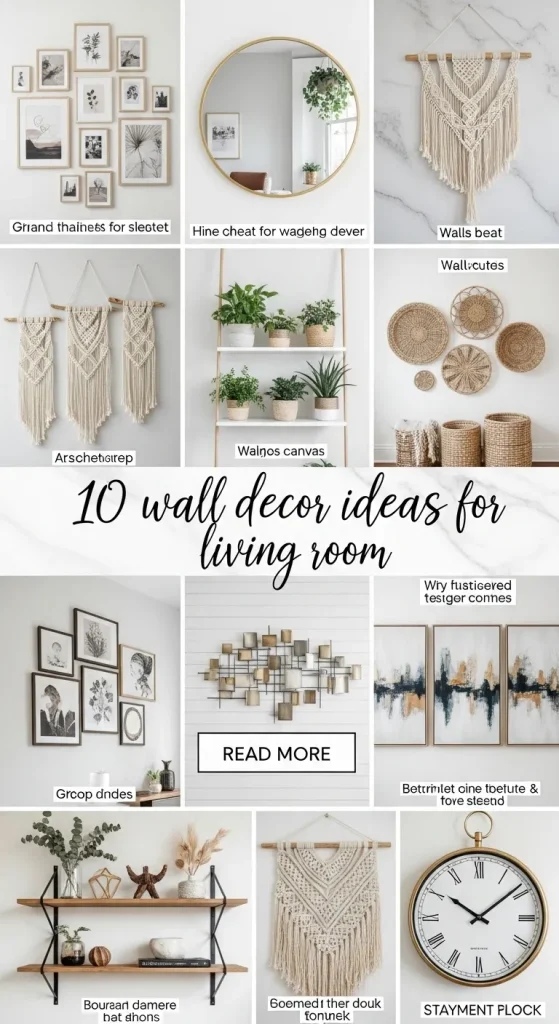
Living room walls play a central role in defining the overall atmosphere of a home. They provide a large visual surface that can transform a simple space into a well-designed, functional, and aesthetically balanced environment. Thoughtful wall decor is not only about appearance but also about creating a cohesive look that reflects structure, organization, and purpose. This article presents a complete set of Pinterest ideas focused on wall decor that are practical, beginner friendly, and aligned with modern design preferences. Readers will learn how to approach wall styling with clear planning, proper material selection, and step-by-step execution methods. Each idea is structured to offer both conceptual understanding and hands-on guidance, making it suitable for DIY enthusiasts and those exploring creative ideas for the first time. These solutions focus on accessible materials, simple techniques, and adaptable layouts that can work in different living room sizes and styles. By following these ideas, readers can create a balanced combination of decoration, functionality, and visual appeal without relying on complex tools or expensive resources.
Why This Idea Is Trending or Useful
Wall decor has become a key focus in modern home decor because it offers high visual impact without requiring major structural changes. Many homeowners and renters prefer solutions that are flexible, affordable, and easy to implement, which makes wall decoration a highly practical option. Pinterest ideas in this category are trending due to their strong emphasis on minimalist style, organization, and creative expression using simple materials. These ideas are particularly useful because they allow individuals to personalize their space while maintaining a clean and structured look. DIY wall decor also appeals to beginners because it does not require advanced skills or specialized equipment. The ability to reuse materials, experiment with layouts, and adjust designs over time adds to its accessibility. Additionally, wall decor contributes to better space utilization by turning empty surfaces into functional and decorative zones. This approach aligns with modern living trends that prioritize efficient planning, aesthetic balance, and creative project execution within limited space and budget constraints.
Materials and Preparation
Before starting any wall decor project, proper preparation ensures smooth execution and consistent results. The first step involves selecting suitable materials based on the chosen design. Common materials include wooden frames, canvas panels, adhesive hooks, wall-safe tapes, lightweight shelves, mirrors, fabric pieces, and printable artwork. Tools may include measuring tape, level tools, pencil markers, scissors, and basic mounting equipment. Planning plays a crucial role in achieving a balanced layout. Begin by measuring the wall area and identifying the central focal point of the living room. Consider furniture placement, lighting direction, and color coordination with existing decor. Creating a rough layout on paper or using digital planning tools helps visualize the final arrangement before installation. Surface preparation is also important, as clean and smooth walls improve adhesion and alignment accuracy. If painting or adding background elements, complete those steps before mounting decor pieces. Organizing materials in advance reduces interruptions during the process and ensures a more efficient workflow. Careful preparation supports better results, especially for beginners following a step-by-step approach.
Idea 1: Gallery Wall Layout with Frames
How to Create
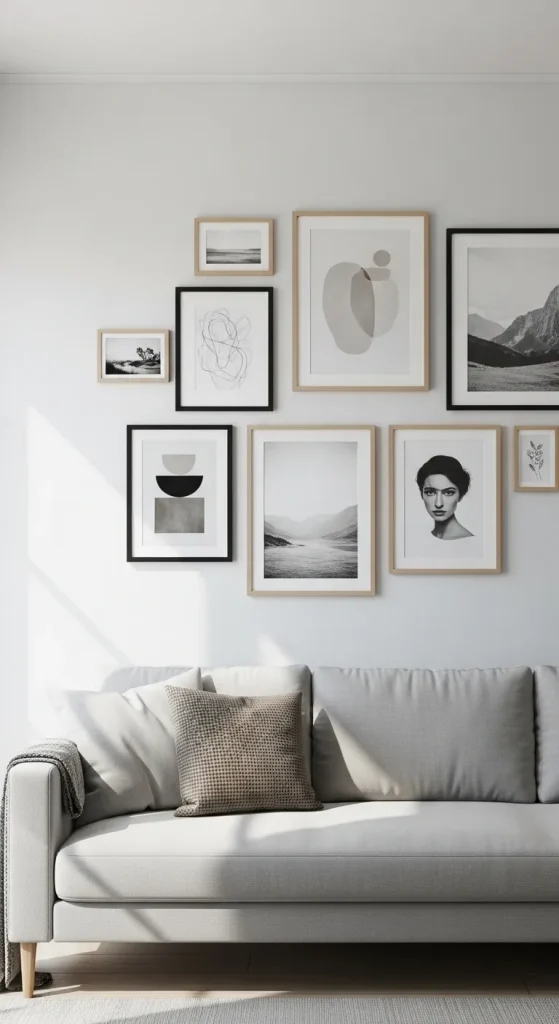
A gallery wall layout is a structured arrangement of multiple frames that together create a cohesive visual story. This idea focuses on combining different sizes and styles of frames while maintaining balance and alignment. It works well in modern design spaces because it allows flexibility in content, such as artwork, photography, or abstract prints. The key concept behind a gallery wall is consistency in spacing and visual flow rather than uniformity in frame size. A minimalist style approach uses neutral tones and simple frames, while a more dynamic layout incorporates varied colors and textures. This type of wall decor is particularly effective for large empty walls that require structured organization without overwhelming the space. Proper planning ensures that the arrangement feels intentional and visually connected, making it a popular Pinterest inspiration for living rooms.
The execution process begins by selecting frames and arranging them on the floor to test different layouts. Measure equal spacing between frames, typically maintaining a gap of two to three inches. Use a measuring tape and level tool to mark positions on the wall before installation. Lightweight frames can be mounted using adhesive hooks or wall-safe strips, making this an easy project for beginners. Start placing frames from the center and expand outward to maintain symmetry. Adjust positioning as needed to ensure alignment. This step-by-step method helps avoid uneven placement and improves overall visual balance. Once completed, the gallery wall becomes a focal point that enhances both decoration and organization within the living room.
Idea 2: Floating Shelves with Decor Accents
How to Create
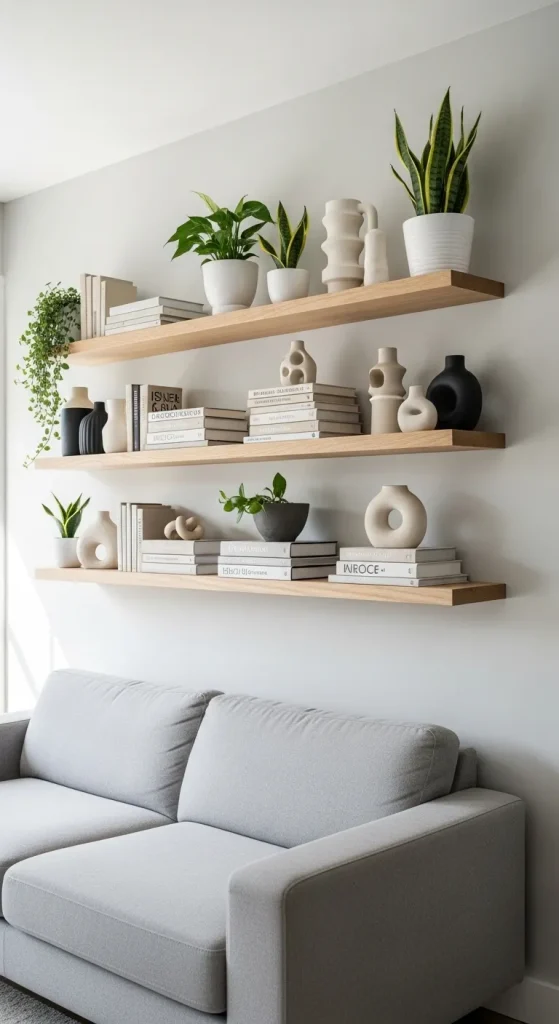
Floating shelves provide both decorative and functional value by combining storage with wall styling. This idea focuses on using shelves to display curated items such as books, small plants, and decorative objects. The concept supports organization while maintaining a clean aesthetic, which aligns with modern home decor trends. Shelves create horizontal lines that visually expand the space and add structure to the wall. A minimalist approach involves using neutral-colored shelves and limited decorative items to avoid clutter. This makes the setup suitable for small living rooms where efficient space usage is essential. Floating shelves also allow easy updates, making them adaptable for seasonal decoration or evolving design preferences.
To create this setup, begin by measuring the wall and determining the number of shelves required. Mark positions carefully to ensure even spacing and alignment. Install the shelves using appropriate mounting hardware, ensuring they are securely fixed. Once installed, arrange decorative elements with a balanced composition. Place larger items first, followed by smaller accents to create layering. Avoid overcrowding the shelves, as negative space enhances the overall aesthetic. This step-by-step approach ensures that the shelves remain functional while contributing to the visual appeal of the living room. The result is a well-organized and visually structured wall decor solution.
Idea 3: Statement Mirror Arrangement
How to Create
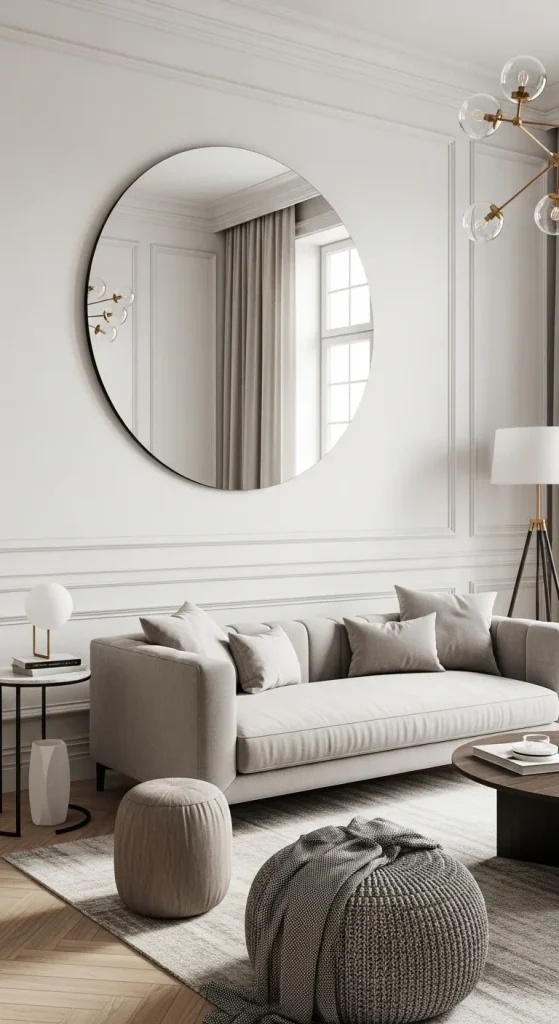
Statement mirrors serve as both decorative elements and functional tools that enhance light and space perception. This idea focuses on using one large mirror or a combination of smaller mirrors to create a focal point on the living room wall. Mirrors reflect natural light, making the room appear brighter and more spacious. The concept works well in modern design settings, especially in smaller spaces where maximizing light is important. Aesthetic variations include circular mirrors for a soft look or geometric designs for a more structured appearance. This idea is popular among Pinterest ideas due to its simplicity and immediate visual impact.
The setup process begins by selecting mirrors that complement the room’s style. Measure the wall area and mark the placement position, ensuring the mirror is centered or aligned with furniture below it. Use secure mounting tools suitable for the mirror’s weight. For multiple mirrors, arrange them symmetrically or in a pattern before installation. Start with the central piece and expand outward to maintain balance. Ensure proper alignment using a level tool. This step-by-step method ensures stability and visual consistency. Once installed, the mirrors enhance the room’s lighting and create a refined decorative effect without requiring complex materials or techniques.
Idea 4: Wall Art Panels with Canvas Prints
How to Create
Canvas panels offer a clean and modern approach to wall decor by presenting artwork in a structured format. This idea focuses on using multiple canvas prints arranged in a coordinated layout to create a unified design. The concept emphasizes simplicity and visual continuity, making it suitable for minimalist style interiors. Canvas panels can feature abstract designs, landscapes, or geometric patterns, depending on the desired aesthetic. This method provides a polished look without requiring frames, which simplifies installation and reduces material requirements.
To execute this idea, select a set of canvas prints that share a common theme or color palette. Measure the wall and determine spacing between panels, typically maintaining equal gaps. Mark positions using a pencil and level tool. Lightweight canvas panels can be mounted using adhesive strips, making the process beginner friendly. Start with the center panel and align the remaining pieces accordingly. Ensure consistent spacing to maintain symmetry. This step-by-step approach results in a balanced and visually appealing arrangement. The final outcome enhances the living room’s aesthetic while maintaining a clean and organized appearance.
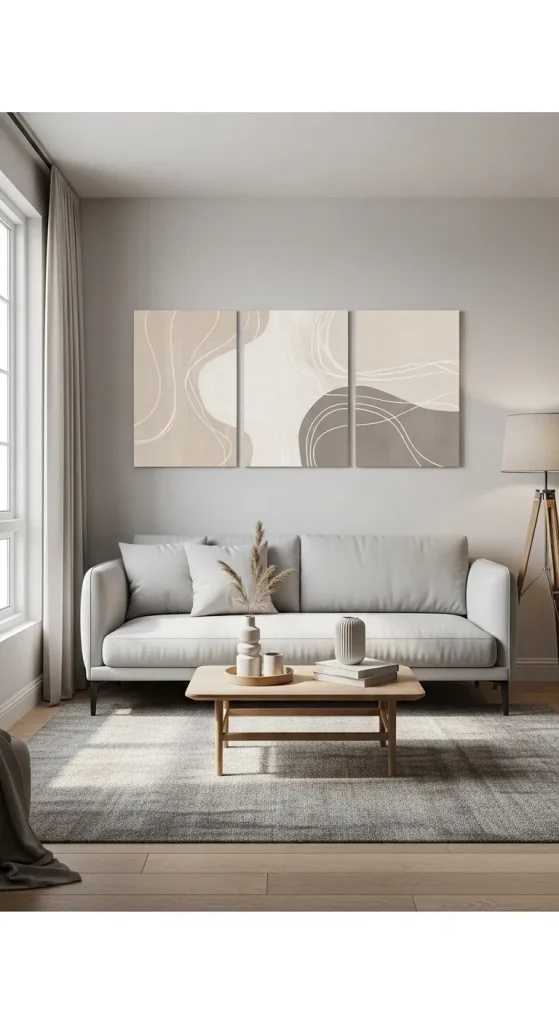
Idea 5: Textured Wall Hangings
How to Create
Textured wall hangings introduce depth and tactile variation to living room decor. This idea focuses on incorporating materials such as fabric, woven elements, or macrame designs to create a layered aesthetic. Unlike flat artwork, textured decor adds dimension and softens the overall look of the space. This approach is especially effective in minimalist interiors where subtle variation enhances visual interest. It also aligns with handmade and DIY trends, making it accessible for beginners interested in creative projects.
To create this setup, select or make a wall hanging using fabric or woven materials. Determine placement by measuring the wall and identifying a focal point. Install a simple rod or hook system to support the hanging. Ensure the piece is centered and aligned with surrounding furniture. If combining multiple hangings, maintain equal spacing to create a cohesive layout. This step-by-step process ensures proper positioning and balance. The result is a warm and textured decorative element that enhances the overall atmosphere of the living room.
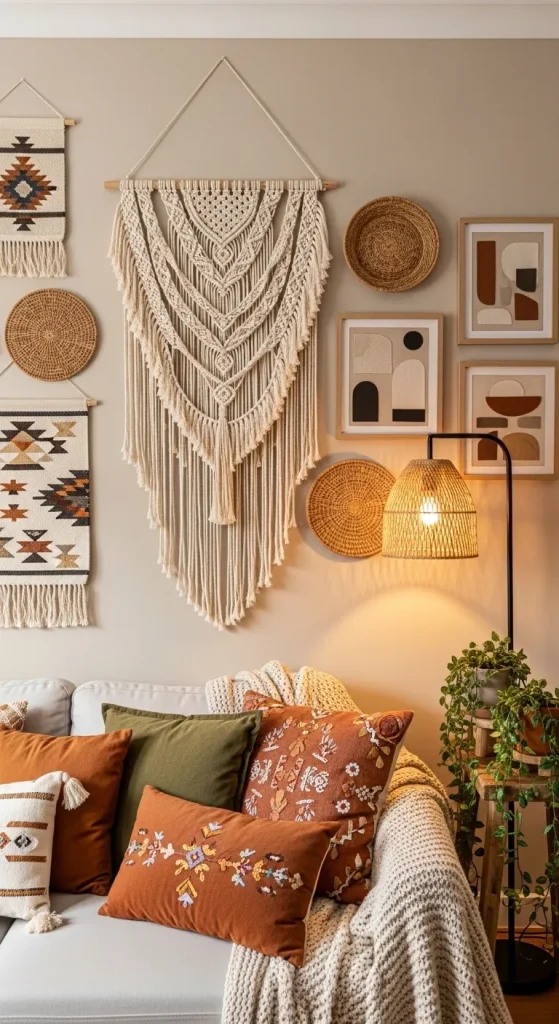
Idea 6: Geometric Wall Decals
How to Create
Geometric wall decals provide a modern and customizable approach to wall decoration. This idea focuses on using adhesive shapes to create patterns directly on the wall surface. The concept is based on simplicity and flexibility, allowing users to experiment with layouts without permanent changes. Geometric designs add structure and visual rhythm, making them suitable for contemporary interiors. This method is highly accessible and requires minimal materials, making it an easy project for beginners.
The execution begins by selecting decal shapes and planning the pattern layout. Use a measuring tape to ensure consistent spacing between elements. Lightly mark positions on the wall before applying decals. Start from one corner and gradually build the pattern across the surface. Press each decal firmly to ensure proper adhesion. Adjust alignment as needed during application. This step-by-step method ensures accuracy and consistency. The final result is a clean and modern design that enhances the living room’s visual appeal without requiring extensive tools or preparation.
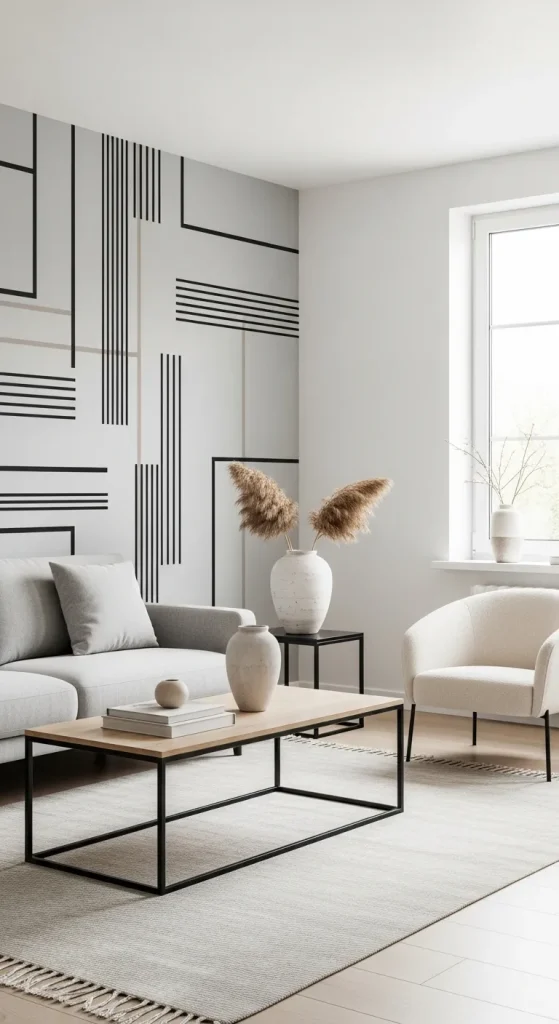
Idea 7: Large Statement Artwork
How to Create
Large statement artwork creates a strong focal point by occupying a significant portion of the wall. This idea focuses on using one oversized piece to anchor the room’s design. The concept simplifies decoration by reducing the need for multiple elements while maintaining visual impact. This approach works well in modern design settings where minimalism is emphasized. A single artwork can define the room’s color palette and overall aesthetic direction.
To implement this idea, select a large artwork that complements the room’s color scheme. Measure the wall and mark the center point for placement. Ensure the artwork is positioned at eye level for optimal viewing. Use secure mounting hardware to support the piece. Align the artwork carefully using a level tool. This step-by-step process ensures stability and proper positioning. The result is a clean and impactful wall decor solution that enhances the living room without overcrowding the space.
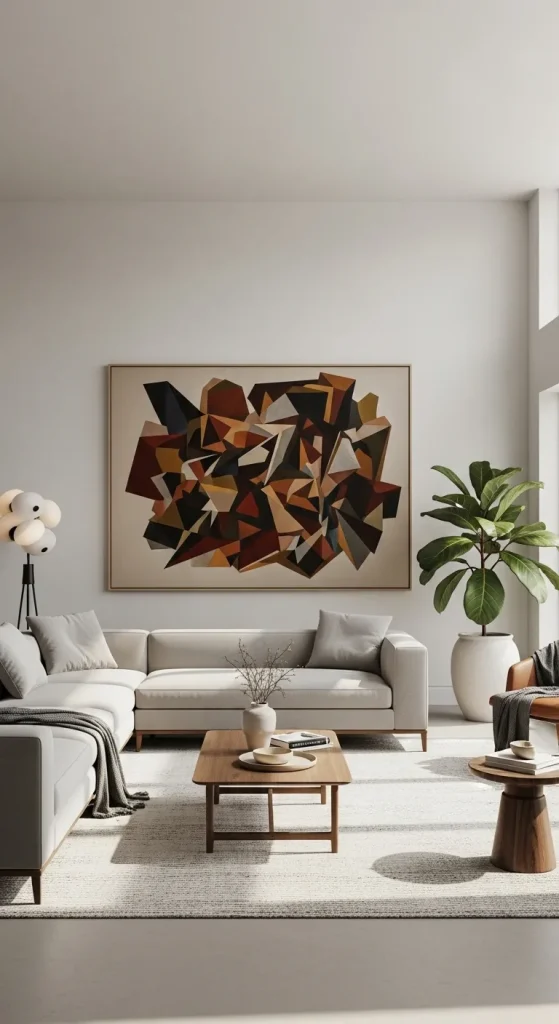
Idea 8: Wall Grid Organizer Display
How to Create
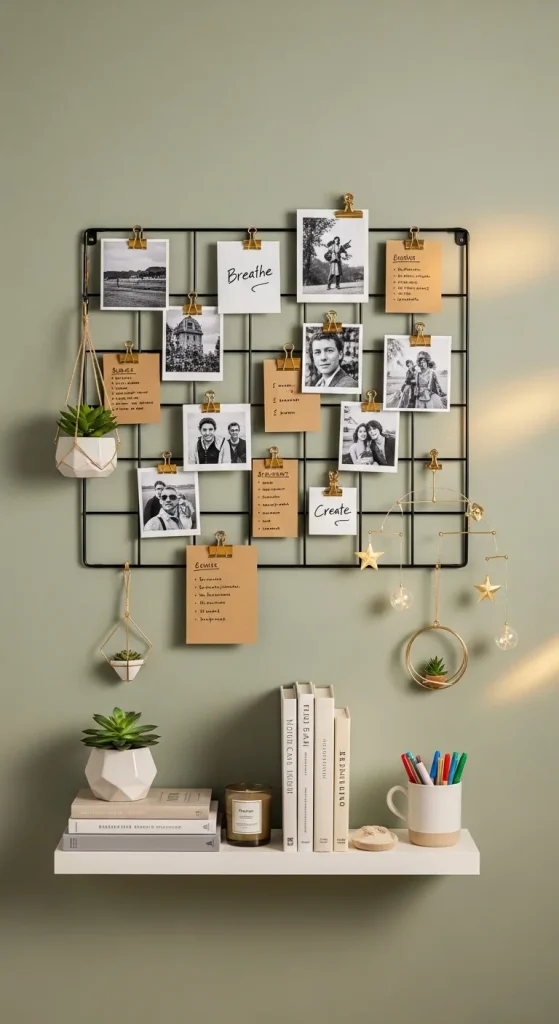
A wall grid organizer combines decoration with functionality by providing a structured display system. This idea focuses on using a metal or wire grid to hold photos, notes, and small decor items. The concept supports organization while maintaining a visually appealing layout. This method is particularly useful for individuals who prefer flexible and adjustable decor solutions. It aligns with modern trends that prioritize efficiency and creative expression.
To create this setup, install the grid panel securely on the wall using mounting hooks. Arrange clips or small holders on the grid to attach items. Begin by placing larger elements and fill in smaller pieces around them. Maintain balanced spacing to avoid clutter. This step-by-step method ensures a structured and organized display. The result is a functional wall decor solution that allows continuous updates and customization.
Idea 9: Layered Frame and Shelf Combination
How to Create
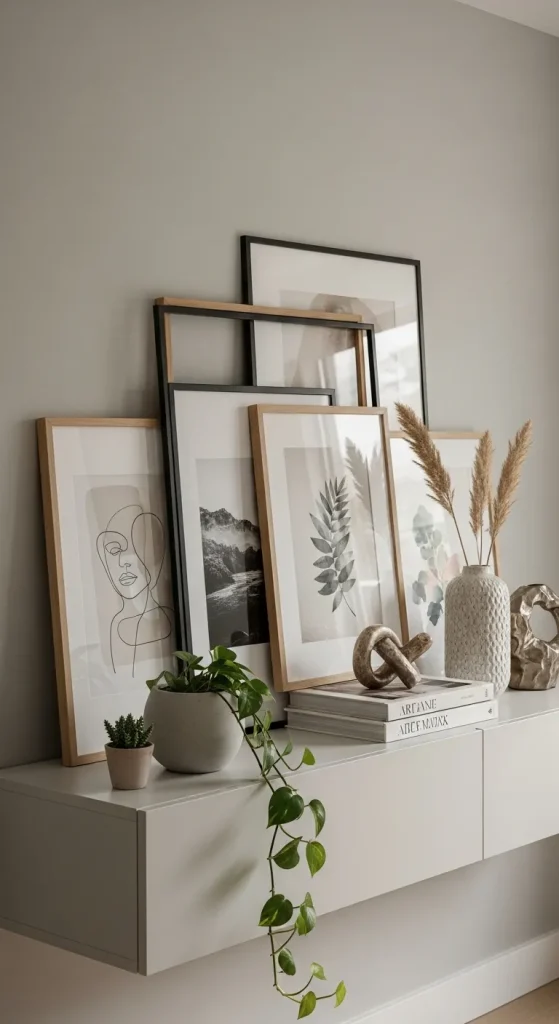
This idea combines frames and shelves to create a layered wall design. The concept focuses on overlapping elements to add depth and dimension. This approach enhances visual interest while maintaining organization. It works well in modern interiors where layering creates a curated look. The combination allows flexibility in arranging decor elements.
To execute this idea, install a floating shelf and place frames leaning against the wall. Add small decorative items to complement the frames. Adjust placement to create a balanced composition. This step-by-step approach ensures proper layering and alignment. The final result is a dynamic and visually engaging wall decor setup.
Idea 10: Painted Accent Wall with Minimal Decor
How to Create
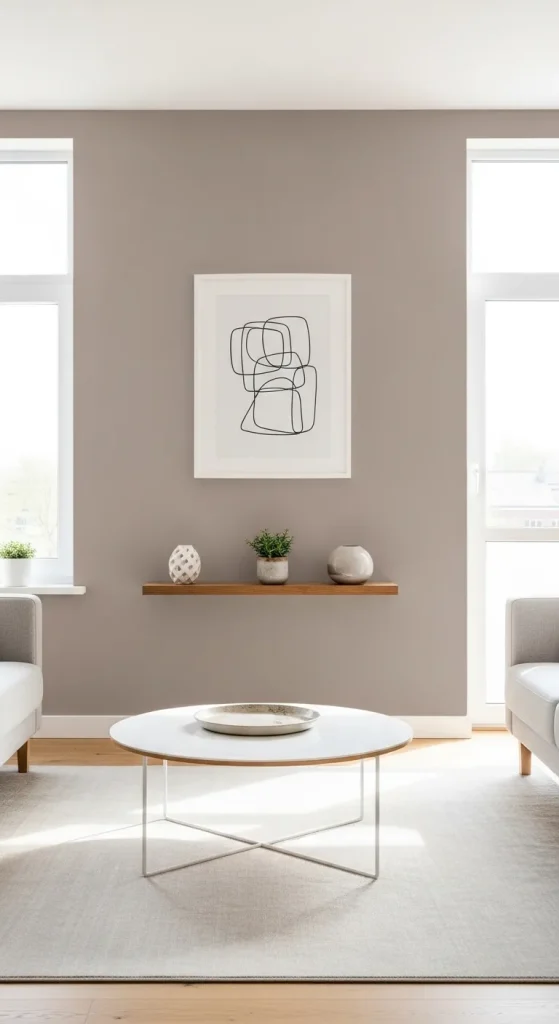
A painted accent wall serves as a foundation for minimal decoration. This idea focuses on using color to create visual impact while keeping decor elements simple. The concept emphasizes balance between color and structure. This approach is effective for creating a focal point without overcrowding the space.
To create this setup, select a paint color that complements the room’s palette. Apply paint evenly and allow it to dry completely. Add minimal decor such as a single frame or shelf. Ensure alignment and spacing are consistent. This step-by-step method ensures a clean and cohesive design. The result is a modern and visually balanced living room wall.
Common Beginner Mistakes and How to Avoid Them
One common mistake is improper measurement, which leads to uneven spacing and misalignment. Always measure and mark positions before installation. Another issue is overcrowding the wall with too many elements, which reduces visual clarity. Maintaining negative space improves balance. Using incorrect mounting tools can also cause instability, so selecting appropriate materials is essential. Planning the layout in advance prevents unnecessary adjustments. Avoid mixing too many styles without a clear theme, as this disrupts cohesion. Following a structured step-by-step approach ensures better results and reduces errors.
Practical Tips for Better Results
Start with a clear plan and stick to a consistent design theme. Use neutral colors for a minimalist style or coordinated palettes for a cohesive look. Test layouts on the floor before installing items on the wall. Invest time in accurate measurements to ensure alignment. Use lightweight materials for easy installation and flexibility. Keep the design simple to maintain a clean aesthetic. Regularly update decor elements to keep the space fresh and organized. These practical steps improve both functionality and visual appeal.
Styling, Presentation, or Organization Ideas
Arrange wall decor in a way that complements furniture placement. Align elements with sofas or tables to create visual harmony. Use symmetry for a structured look or asymmetry for a more dynamic arrangement. Incorporate lighting to highlight key features. Keep frequently used items within reach if the decor includes functional elements. Maintain consistency in color and texture for a cohesive presentation. These styling methods enhance the overall appearance of the living room.
Budget or Time Planning
Wall decor projects can be completed efficiently with proper planning. Set a budget by selecting affordable materials and prioritizing essential elements. Break the project into stages to manage time effectively. Start with larger elements and gradually add details. Use DIY methods to reduce costs. Allocate time for preparation, installation, and adjustments. This structured approach ensures a smooth and cost-effective process.
Creative Expansion and Advanced Inspiration
Once the basic setup is complete, consider expanding the design with additional layers or seasonal updates. Experiment with lighting effects, mixed materials, or custom artwork. Incorporate storage elements to combine functionality with decoration. Explore advanced layouts such as asymmetrical gallery walls or mixed media displays. Continuously refine the design to match evolving preferences. This approach allows the living room wall decor to remain dynamic and adaptable over time.


Leave a Reply