
Introduction
A well-designed TV wall can define the entire look of a living room while also improving functionality and organization. Instead of leaving the television as a plain focal point, thoughtful decoration transforms it into a cohesive part of the interior design. This article presents practical Pinterest ideas that combine aesthetic appeal with usability, making your living room feel intentional and balanced. You will learn how to create visually appealing TV wall setups using simple materials, beginner friendly DIY methods, and modern design concepts that fit different budgets and spaces.
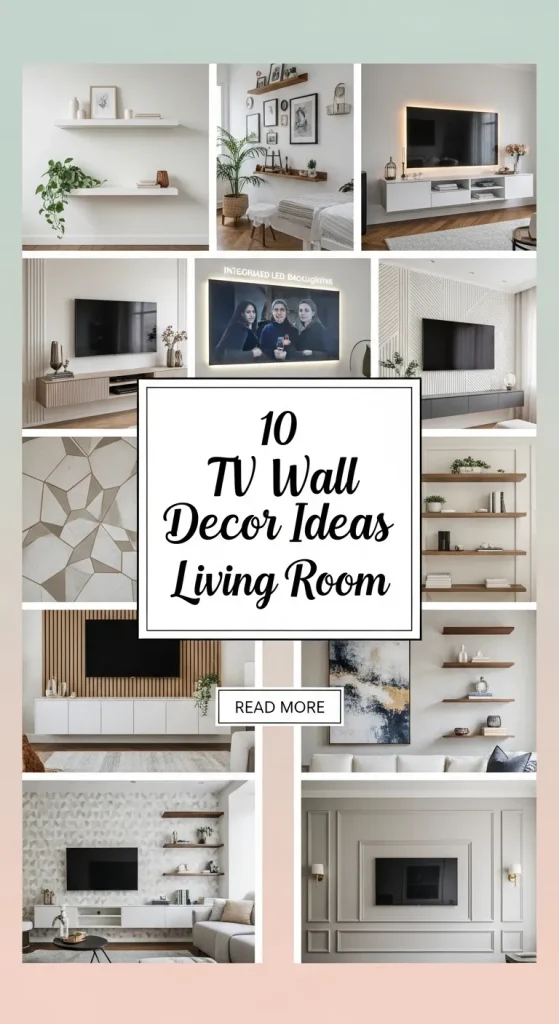
From minimalist arrangements to creative feature walls, each idea focuses on step by step execution and clear planning. These approaches are suitable for small apartments, large living rooms, and multipurpose spaces. The goal is to provide actionable inspiration that blends decoration, organization, and functionality without unnecessary complexity.
Why This Idea Is Trending or Useful
TV wall decor has become one of the most shared Pinterest ideas because it directly impacts both style and space efficiency. Modern living rooms often center around the television, making it important to integrate it seamlessly into the overall design rather than treating it as a separate element. This trend reflects a shift toward intentional home decor where every feature serves both aesthetic and practical purposes.
Another reason for its popularity is accessibility. Many of these ideas are DIY-friendly and require basic materials, making them suitable for beginners. People are increasingly looking for budget ideas that still achieve a high-end appearance, and TV wall projects offer strong visual impact without requiring full renovations. The flexibility of these designs also allows homeowners to adapt them based on space, lighting, and personal style preferences.
Additionally, TV wall decor supports better organization. It helps hide cables, incorporate storage, and create a clutter-free environment. This aligns with the growing interest in minimalist style and clean living spaces. As a result, these creative ideas continue to trend as both decorative and functional solutions.
Materials and Preparation
Before starting any TV wall decor project, proper planning and preparation are essential. Begin by measuring the wall space and determining the position of the television. Consider viewing height, distance, and lighting conditions to ensure comfort and usability. Planning also includes choosing a style, such as modern design, rustic, or minimalist, to guide material selection and layout decisions.
Common materials include wall panels, wood boards, paint, floating shelves, LED strip lights, brackets, and cable management tools. Basic tools such as a drill, level, measuring tape, and screws are usually required for installation. For DIY projects, adhesive materials and peel-and-stick options can simplify the process.
Preparation also involves organizing cables and ensuring access to power outlets. This step improves both safety and aesthetics. Sketching a layout or using digital planning tools can help visualize the final result before starting. By preparing thoroughly, you reduce errors and ensure a smooth execution process for your creative project.
Idea 1: Minimalist Floating Shelf TV Wall
How to Create
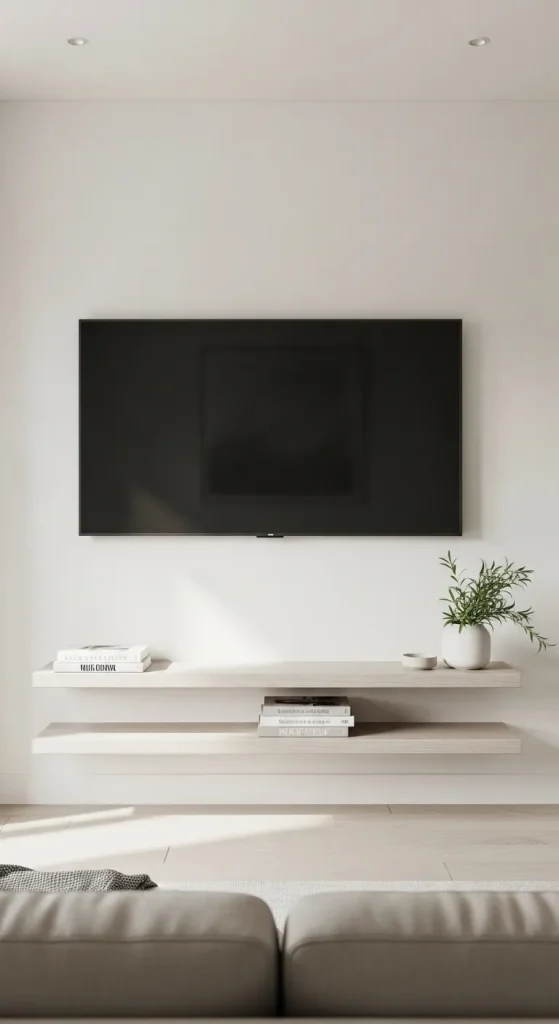
A minimalist floating shelf TV wall focuses on simplicity and clean lines. The concept is to mount the television on the wall and place a single or a few floating shelves beneath it. This design removes visual clutter and highlights a modern aesthetic while still providing functional storage. Neutral colors such as white, gray, or soft wood tones are typically used to maintain a balanced and calm environment.
The arrangement allows space for small decorative items like books, plants, or subtle decorative objects. The goal is to keep everything organized without overcrowding the area. This idea works well in small living rooms where space efficiency is important. It also aligns with minimalist style principles by emphasizing openness and reducing unnecessary elements.
To execute this project, begin by securely mounting the TV at eye level. Install floating shelves using a level to ensure straight alignment. Choose materials like engineered wood or solid wood depending on your budget. Use cable management covers to hide wires behind the wall or along the shelf edges. Arrange decorative items sparingly to maintain a clean appearance. This easy project requires minimal materials and offers a polished result suitable for beginners.
Idea 2: Wood Panel Accent TV Wall
Step-by-Step Guide
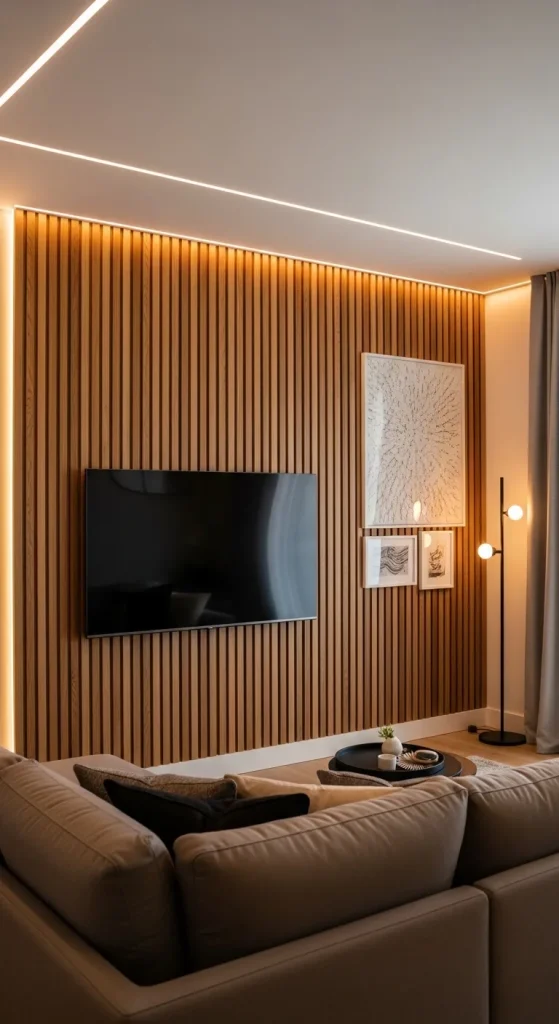
A wood panel accent wall adds warmth and texture to the living room while making the TV area more visually appealing. This design uses vertical or horizontal wooden panels to create depth and structure behind the television. It complements modern design and rustic interiors, making it a versatile option.
The panels can be painted or left in natural wood tones depending on the desired aesthetic. This idea enhances the visual importance of the TV wall while maintaining a cohesive look with the rest of the room. It is particularly effective in large spaces where plain walls may feel empty.
To create this design, measure the wall and cut wood panels accordingly. Attach the panels using adhesive or screws, ensuring even spacing between each piece. Sand and finish the surface if needed. Mount the TV over the panels and conceal cables using channels or hidden compartments. This DIY project requires careful alignment but remains beginner friendly with proper planning and preparation.
Idea 3: Built-In Storage TV Wall
How to Make
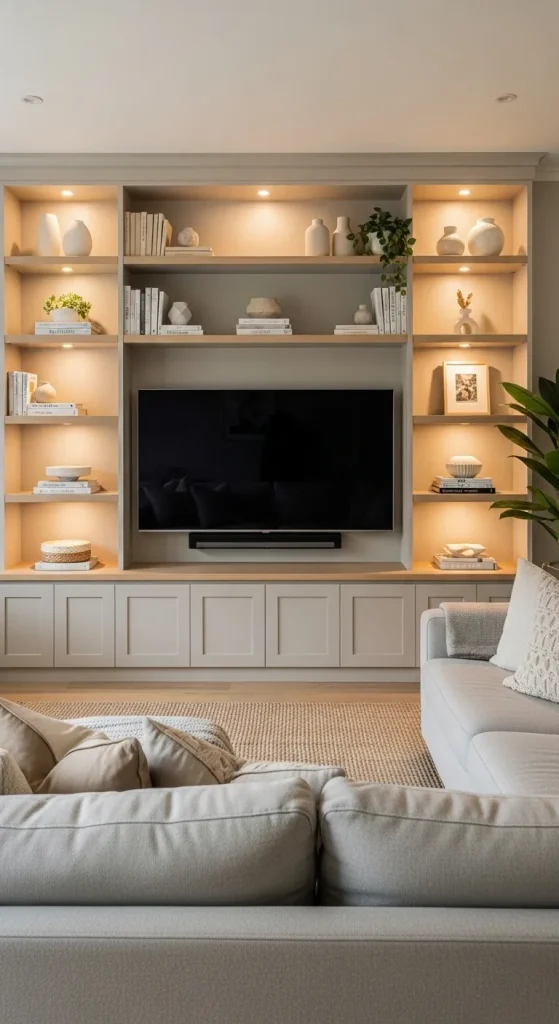
A built-in storage TV wall combines decoration and organization in one cohesive structure. This idea integrates shelves, cabinets, and compartments around the television, creating a functional centerpiece for the living room. It is ideal for storing books, electronics, and decorative items while maintaining a clean layout.
The design can be customized based on available space. Symmetrical arrangements are commonly used to create balance, while open shelving adds visual interest. Neutral tones or consistent color schemes help maintain a modern aesthetic.
To execute this setup, start by designing a layout that includes storage sections on both sides of the TV. Use plywood or modular units to build the structure. Secure all components firmly to the wall. Install shelves and cabinets according to your plan, ensuring even spacing. Mount the TV in the center and organize items neatly within the compartments. This project requires more effort but provides long-term functionality and improved organization.
Idea 4: Gallery Wall Around TV
How to Create
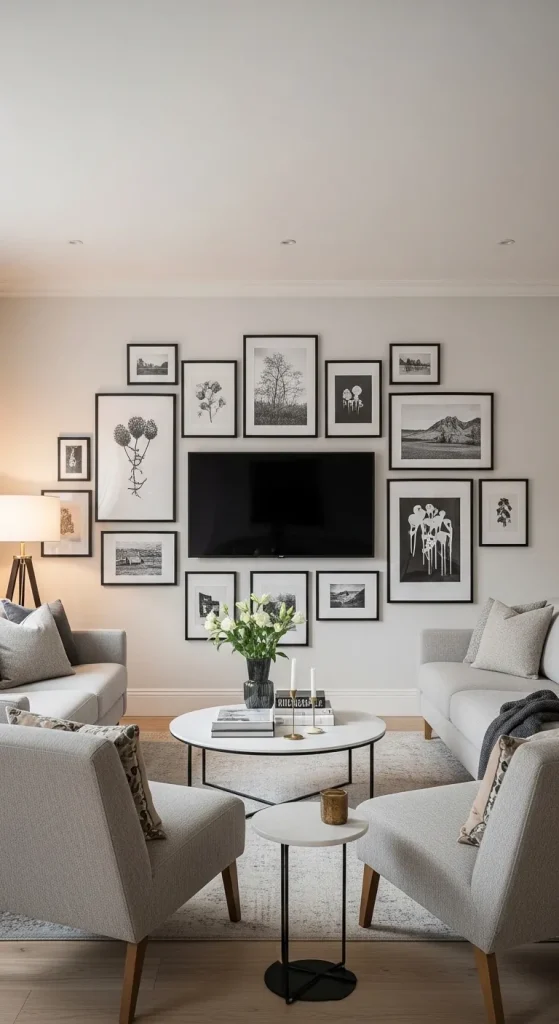
A gallery wall transforms the TV area into an artistic display by surrounding it with framed artwork or photos. This approach blends entertainment with decoration, making the television part of a larger visual composition. It works well in creative and personalized living spaces.
The key is to maintain a balanced layout without overwhelming the space. Frames should vary in size but follow a consistent color palette. This creates a cohesive look while adding visual depth. The TV acts as the central anchor within the arrangement.
To create this design, plan the layout on the floor before installing frames. Use measuring tools to ensure equal spacing. Mount the TV first, then arrange frames around it symmetrically or in a structured pattern. Use lightweight frames and proper wall anchors for safety. This beginner friendly tutorial offers a simple yet impactful way to enhance your living room decor.
Idea 5: LED Backlit TV Wall
Execution Process
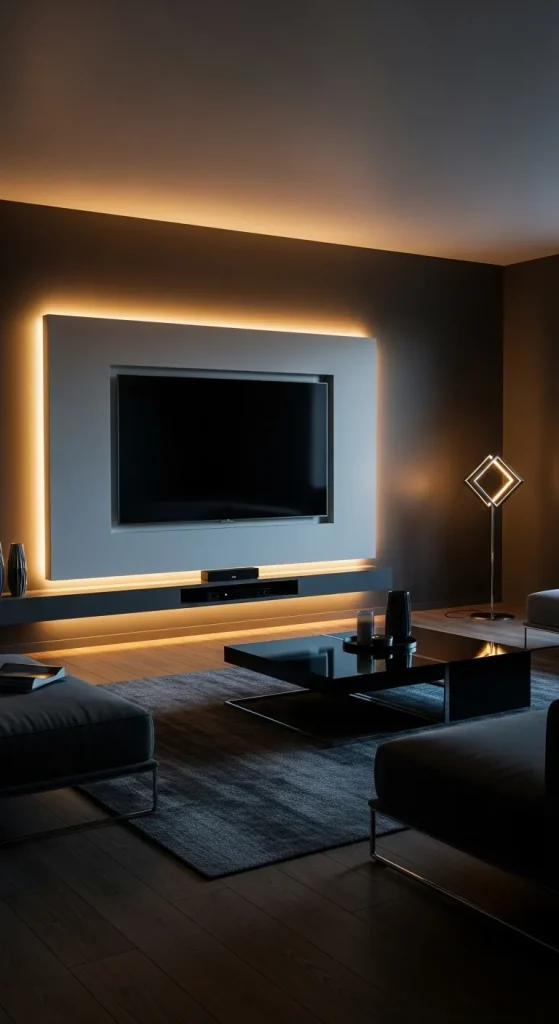
An LED backlit TV wall introduces ambient lighting that enhances both aesthetics and viewing comfort. This design uses LED strips behind the television or along the wall edges to create a soft glow. It is a popular choice in modern design due to its sleek and futuristic appearance.
The lighting reduces eye strain and adds depth to the wall, making the TV area stand out without harsh brightness. Different colors or adjustable lighting modes can be used to match the mood of the room.
To set up this design, attach LED strips to the back of the TV or along the wall perimeter. Ensure proper power connections and secure placement. Use adhesive-backed strips for easy installation. Hide cables carefully for a clean finish. This easy project requires minimal tools and delivers a strong visual impact, making it one of the most trending ideas for home decor.
Idea 6: Stone or Brick Feature Wall
How to Create
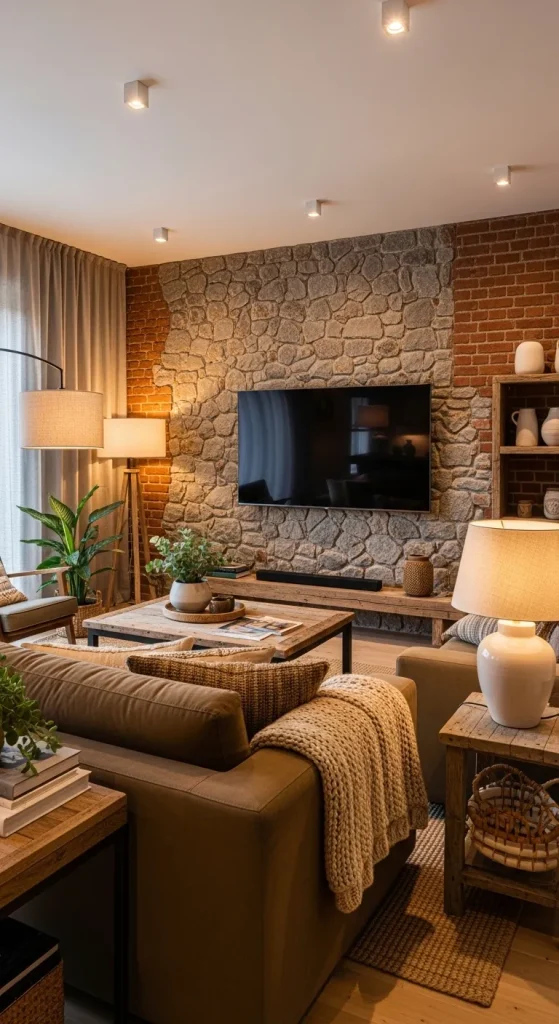
A stone or brick feature wall adds texture and character to the TV area. This design creates a bold focal point and works well in both rustic and industrial interiors. The natural texture enhances the visual appeal of the living room.
Faux panels can be used for a lightweight and budget friendly alternative to real stone or brick. These panels are easy to install and maintain, making them suitable for beginners.
To execute this idea, prepare the wall surface and apply adhesive to attach panels. Align each piece carefully to create a seamless look. Mount the TV securely over the surface and conceal cables using channels. This project requires attention to detail but offers a dramatic transformation with relatively simple materials.
Idea 7: Floating Cabinet TV Wall
Setup Method
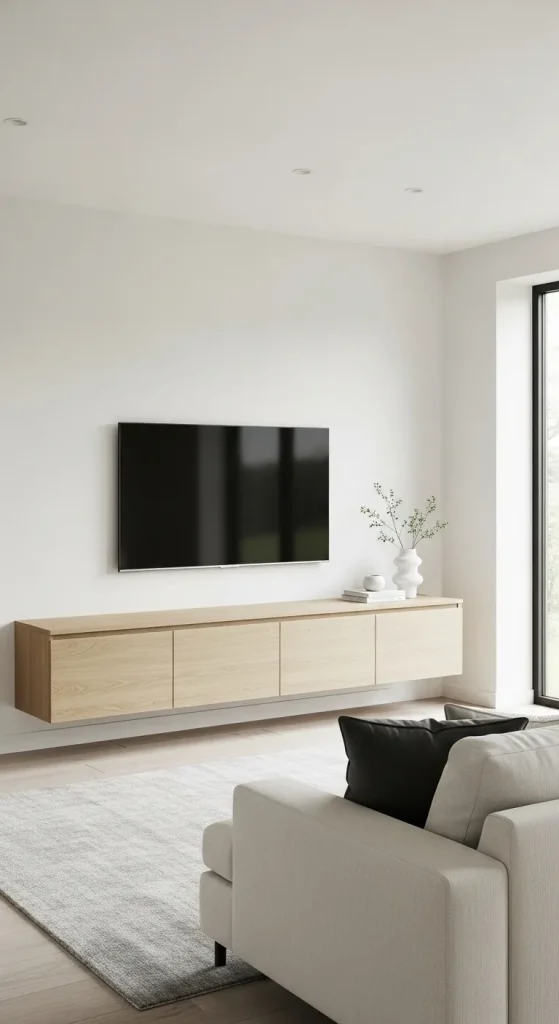
A floating cabinet TV wall combines storage and clean design by placing a suspended cabinet below the television. This design keeps the floor clear and creates a modern, organized look. It is especially useful in small spaces.
The cabinet provides storage for media devices while maintaining a minimalist style. Choosing a sleek finish enhances the overall aesthetic.
To create this setup, install wall-mounted cabinets using sturdy brackets. Ensure proper alignment and weight support. Mount the TV above the cabinet and organize cables inside the unit. This practical design improves both functionality and visual appeal.
Idea 8: Painted Accent Wall
How to Make
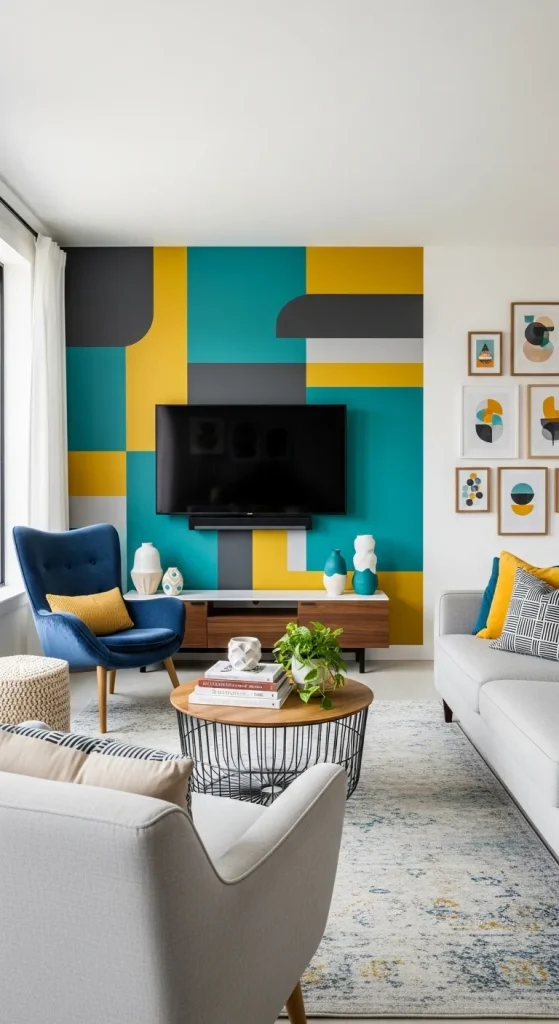
A painted accent wall is one of the simplest DIY TV wall decor ideas. It involves using bold or contrasting colors to highlight the TV area. This approach adds personality without requiring complex materials.
Geometric patterns or color blocks can create a modern design effect. Neutral tones can also be used for a subtle aesthetic.
To execute this idea, tape off sections of the wall and apply paint evenly. Allow drying time between coats. Mount the TV after the paint is fully dry. This beginner friendly project is cost-effective and easy to customize.
Idea 9: Wall Mounted Panel Grid
Step-by-Step Guide
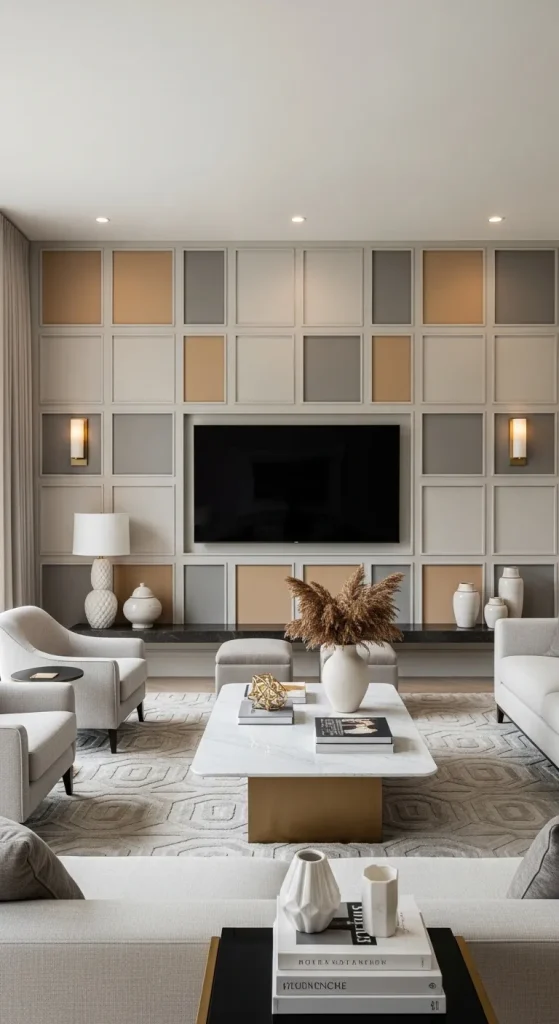
A panel grid design uses evenly spaced panels to create a structured and elegant TV wall. This design adds dimension while maintaining a clean and organized appearance. It works well in both classic and modern interiors.
The grid pattern provides a subtle decorative effect without overwhelming the space. It enhances symmetry and balance.
To create this design, measure and mark the wall for panel placement. Attach panels using adhesive or nails. Paint or finish the panels as desired. Mount the TV in the center and ensure proper alignment. This project requires precision but delivers a refined result.
Idea 10: Mixed Material TV Wall
How to Create
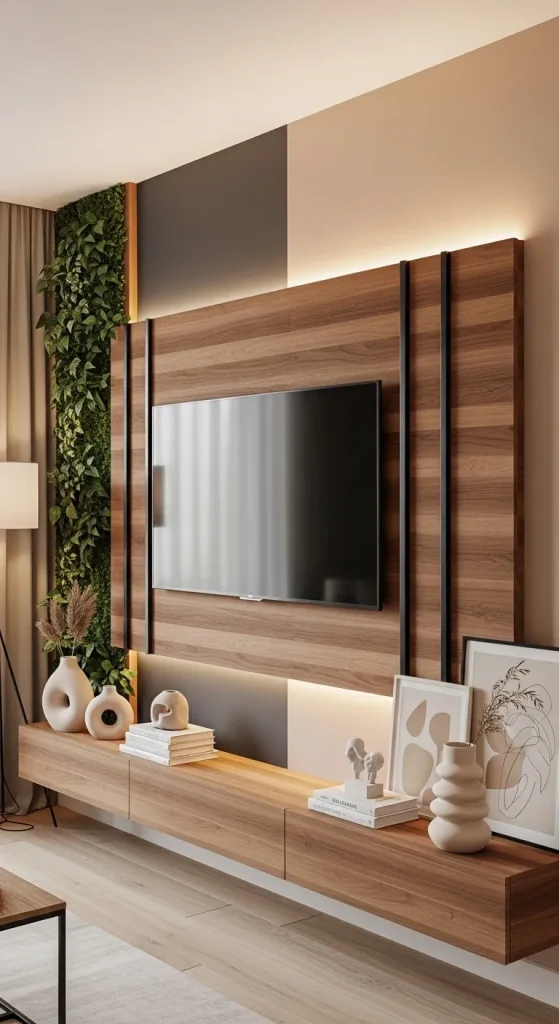
A mixed material TV wall combines elements such as wood, metal, and paint to create a layered design. This approach allows for creative expression while maintaining functionality. It is ideal for those looking for unique and customized decor.
The combination of textures adds depth and visual interest. Careful planning ensures that the materials complement each other rather than clash.
To execute this idea, select materials that match your overall design theme. Install each component in sections, ensuring proper alignment and secure attachment. Mount the TV and organize cables neatly. This creative project requires thoughtful planning but offers a distinctive result.
Common Beginner Mistakes and How to Avoid Them
One common mistake is improper measurement, which leads to uneven layouts and misaligned elements. Always measure twice before installation. Another issue is poor cable management, which disrupts the aesthetic. Use cable covers or in-wall solutions to maintain a clean look. Overcrowding the TV wall with too many decorations can also reduce visual clarity. Focus on balance and simplicity. Choosing incompatible materials or colors can create a disjointed appearance, so maintain consistency in design planning. Lastly, inadequate wall support can cause safety issues. Ensure all mounts and fixtures are securely installed.
Practical Tips for Better Results
Start with a clear design plan before purchasing materials. This prevents unnecessary spending and ensures a cohesive result. Use a level during installation to maintain straight lines. Choose durable materials that match your lifestyle needs. Test lighting conditions before finalizing the layout. Keep the design functional by incorporating storage where possible. Regularly step back and review your progress to ensure alignment with your original vision.
Styling, Presentation, or Organization Ideas
Keep decorations minimal and purposeful to maintain a clean aesthetic. Use symmetry when arranging shelves or frames for a balanced look. Incorporate small plants or neutral decor items to add warmth. Use hidden storage solutions to reduce clutter. Maintain consistent color schemes throughout the design. Proper styling enhances both visual appeal and functionality.
Budget or Time Planning
Set a realistic budget before starting the project. Prioritize essential materials and consider DIY alternatives to reduce costs. Plan the project timeline in stages, allowing time for preparation, installation, and finishing. Simple projects like painting or floating shelves can be completed quickly, while built-in designs may require more time. Efficient planning ensures a smooth process.
Creative Expansion and Advanced Inspiration
Once the basic design is complete, consider adding advanced features such as integrated lighting, custom cabinetry, or decorative textures. Experiment with layered materials or unique layouts to create a personalized look. Explore different styles to match seasonal changes or evolving preferences. Expanding your project gradually allows for continuous improvement and creativity.


Leave a Reply