
Introduction
Concrete patio ideas continue to shape modern outdoor spaces through practical design and durable materials. This article presents clear, structured guidance on using color effectively in patios. Readers will learn how to plan, design, and execute projects that balance aesthetics with functionality using accessible DIY approaches.
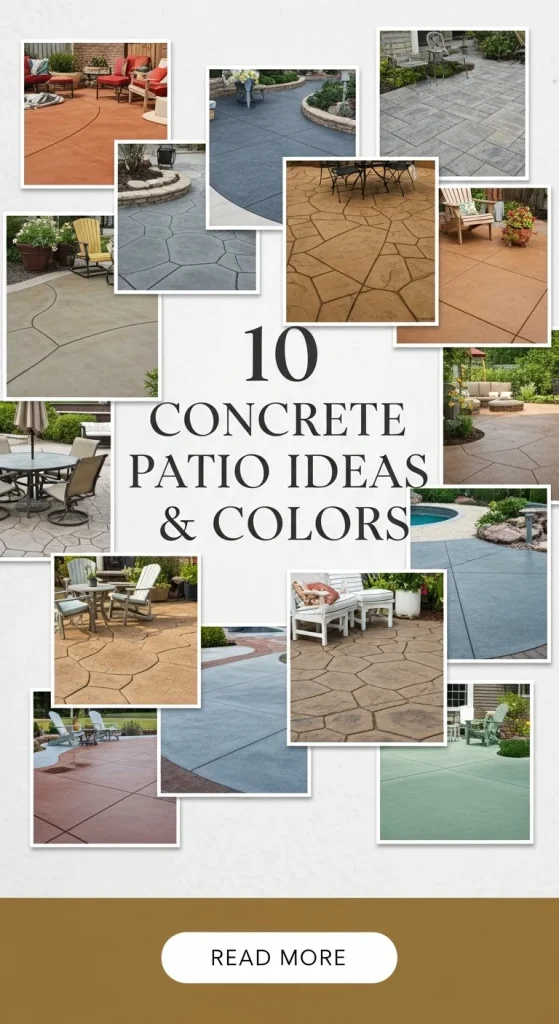
Color selection in patio design influences atmosphere, usability, and visual cohesion with surrounding home decor. This guide explains trending ideas, preparation methods, and step by step creation processes. It supports beginner friendly execution while maintaining a professional standard suitable for long-term outdoor use and consistent organization.
Why This Idea Is Trending or Useful
Concrete patio color ideas remain popular because they combine durability with strong visual flexibility. Unlike traditional flooring options, concrete allows multiple finishes, stains, and textures that support both minimalist style and bold aesthetic expression. This makes it suitable for a wide range of home decor preferences while staying cost-effective and accessible. The ability to customize color directly into the material adds long-term value without requiring frequent replacement or maintenance.
These projects also align with the growing interest in DIY and creative ideas that enhance outdoor living spaces. Many homeowners seek budget ideas that deliver a modern design without complex construction processes. Colored concrete patios meet this demand by offering an easy project format that beginners can follow with proper planning. The visual impact is significant, while the process remains manageable using standard tools and materials. This balance between creativity and practicality makes these ideas highly relevant in Pinterest inspiration boards focused on outdoor organization and decoration.
Materials and Preparation
Before starting any concrete patio coloring project, proper preparation ensures consistent results and long-term durability. Essential materials include concrete mix, bonding agents, color stains or pigments, sealers, and finishing tools such as trowels and rollers. Surface preparation tools like pressure washers or grinders may also be required depending on whether the patio is newly poured or being refinished. Each material plays a specific role in achieving a uniform and stable finish that withstands weather exposure.
Planning is equally important as material selection. The patio area must be measured accurately to calculate quantities and avoid waste. Surface cleaning removes dust, oil, or debris that could interfere with adhesion. Weather conditions should also be considered, as temperature and humidity affect drying time and color consistency. Creating a step by step plan helps maintain organization throughout the process. Testing colors on a small section before full application ensures the final aesthetic matches the intended design. This preparation stage sets the foundation for a successful and beginner friendly creative project.
Idea 1: Soft Gray Minimalist Patio
How to Create
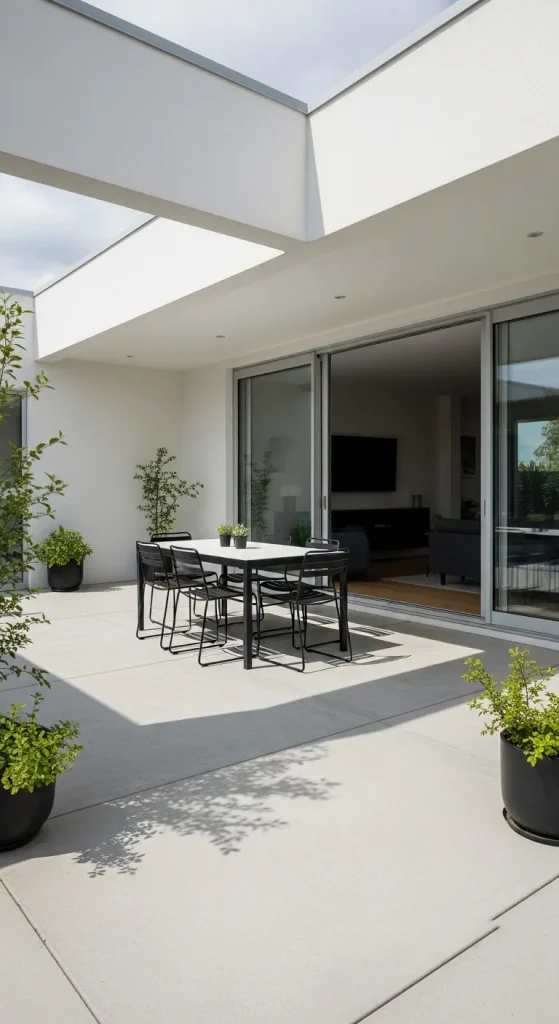
A soft gray concrete patio supports a clean and minimalist style that aligns with modern design principles. This approach uses neutral tones to create a calm and balanced outdoor environment. Gray works well with natural elements such as wood furniture, greenery, and stone features. It also reflects light evenly, making the space appear larger and more organized. This idea is suitable for those seeking subtle elegance without overwhelming decorative elements.
To create this patio, begin by preparing the concrete surface thoroughly. Apply a light gray stain evenly using a roller or sprayer. Work in sections to maintain consistency and avoid visible overlaps. After drying, apply a protective sealer to enhance durability and color depth. Ensure each layer dries fully before adding the next. This step by step method keeps the project beginner friendly while delivering a polished finish suitable for long-term use.
Idea 2: Warm Beige Natural Patio
Step-by-Step Guide
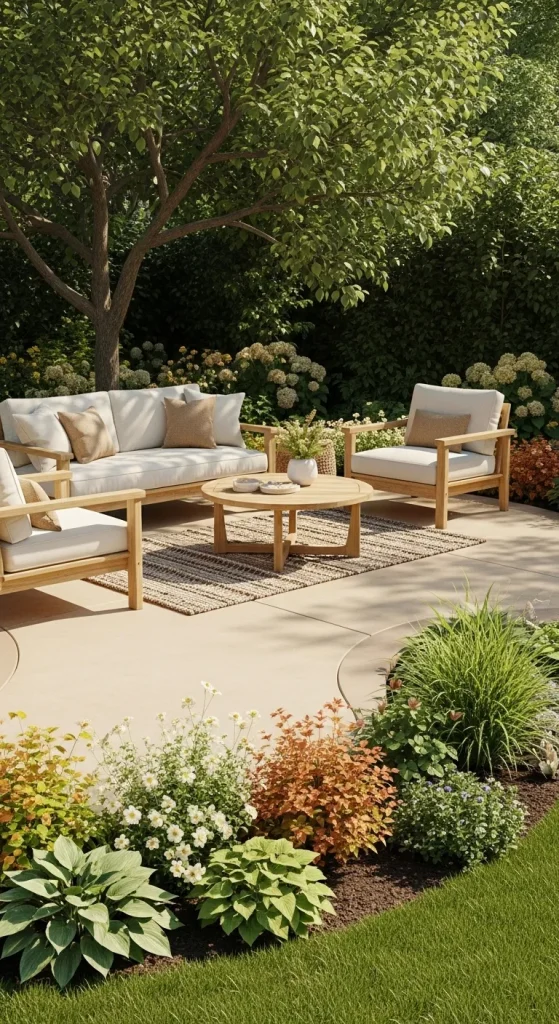
A warm beige patio creates a natural and inviting atmosphere that blends seamlessly with outdoor surroundings. This color choice works well in gardens or spaces with earthy tones. It enhances sunlight reflection without appearing harsh, making it ideal for relaxing environments. Beige patios also support versatile decoration options, allowing easy pairing with various furniture styles.
Start by selecting a beige-toned concrete stain that complements nearby elements. Clean the surface and ensure it is completely dry before application. Apply the stain in thin layers to achieve gradual color buildup. Use a brush for edges and a roller for larger areas. Seal the surface after the desired tone is achieved. This process ensures even coverage and long-lasting results.
Idea 3: Charcoal Modern Contrast Patio
How to Make
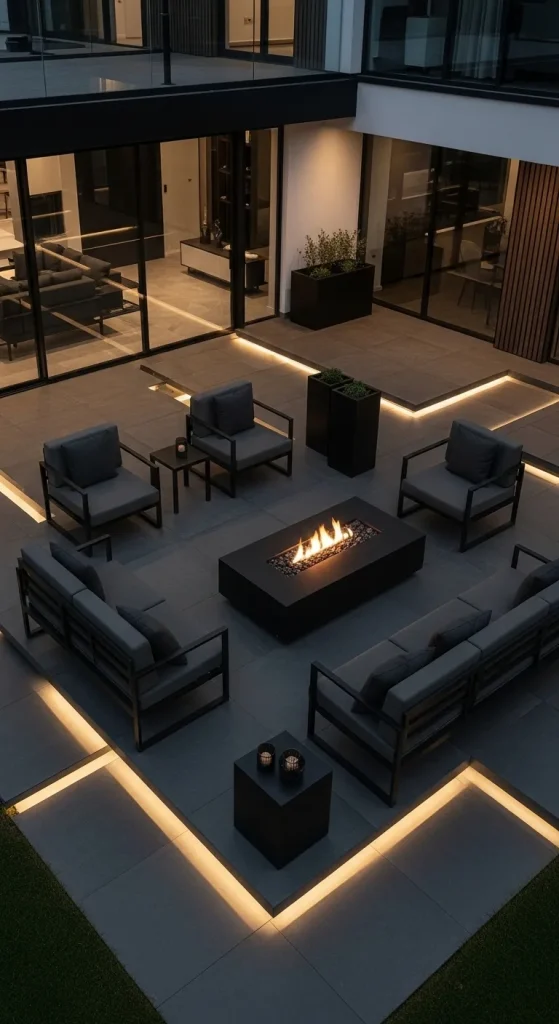
Charcoal patios provide strong contrast and bold visual structure. This color works especially well in modern design settings where sharp lines and defined spaces are emphasized. It highlights surrounding furniture and greenery, creating a balanced yet striking outdoor area.
To achieve this look, use a dark charcoal stain applied in multiple thin layers. Ensure each layer dries before applying the next to avoid uneven patches. Use consistent strokes to maintain uniformity. Finish with a matte sealer for a refined appearance. This method ensures durability while maintaining the intended aesthetic.
Idea 4: Terracotta Rustic Patio
Execution Process
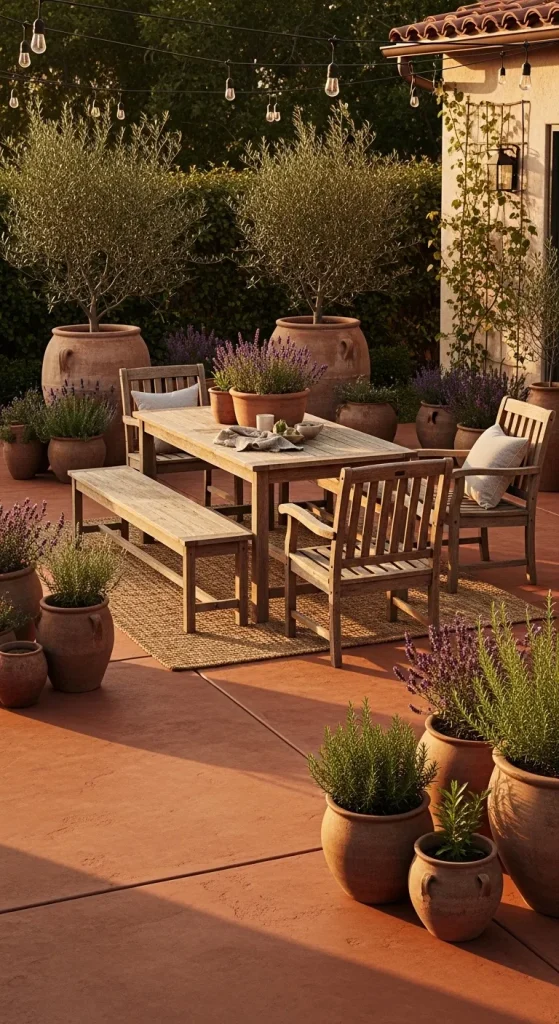
Terracotta tones introduce warmth and a rustic aesthetic inspired by traditional outdoor spaces. This color works well with clay pots, wooden furniture, and natural textures. It creates a welcoming environment suitable for social gatherings.
Prepare the concrete surface and apply a terracotta stain using a sponge or brush for a textured finish. Layer the color gradually to achieve depth. Seal the surface to protect against fading. This approach enhances the handmade appearance while maintaining structural strength.
Idea 5: Whitewashed Bright Patio
How to Create
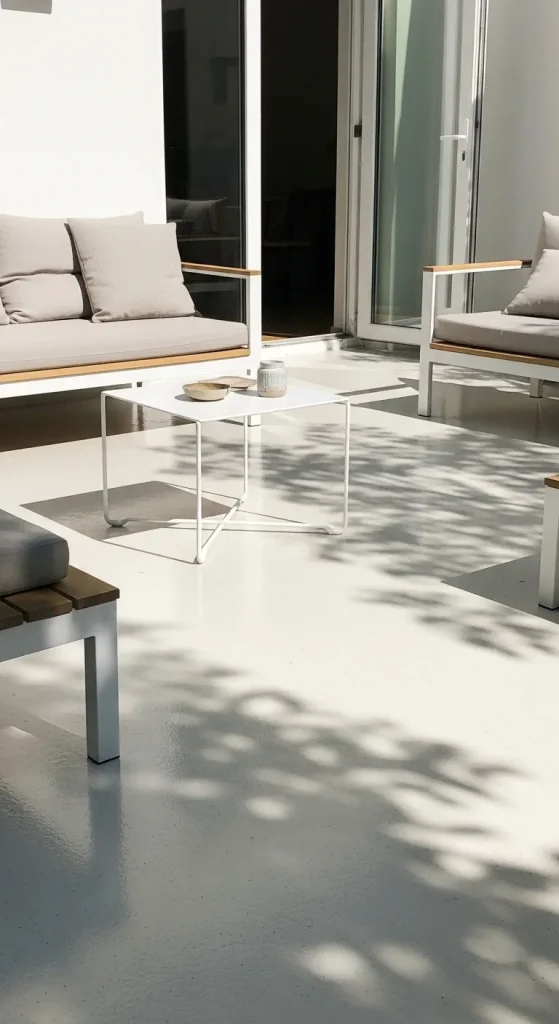
A whitewashed patio enhances brightness and creates a clean, open feel. It reflects sunlight effectively, making it ideal for smaller spaces. This style supports a minimalist aesthetic and works well with modern home decor.
Apply a diluted white stain over the concrete surface to achieve a soft wash effect. Use a wide brush to spread the color evenly. Allow partial visibility of the original surface for texture. Seal the patio to maintain the finish and prevent discoloration.
Idea 6: Blue Coastal Patio
Setup Method
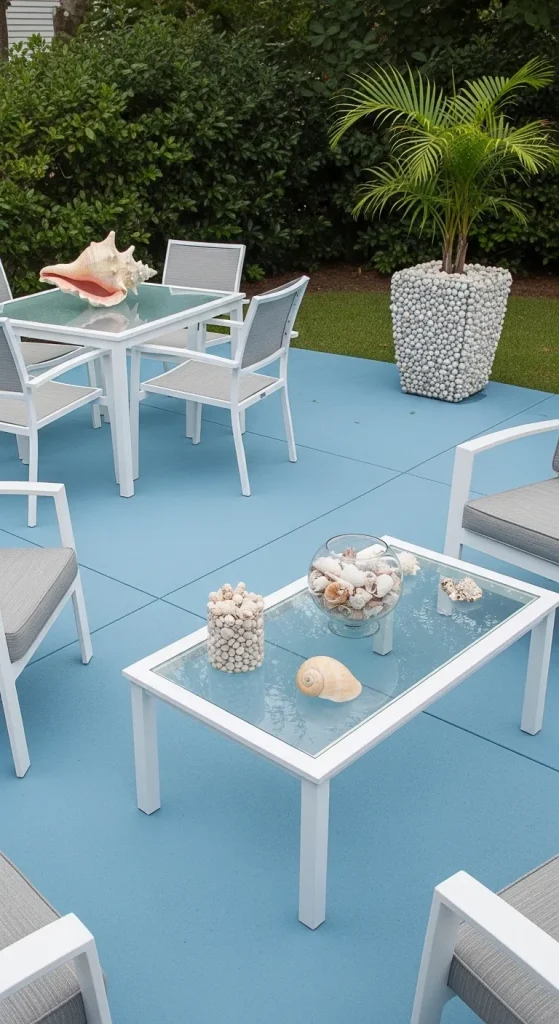
Blue tones bring a coastal feel that evokes calm and relaxation. This design works well in outdoor areas focused on leisure and visual comfort. It pairs effectively with light furniture and natural textures.
Apply a blue stain evenly across the surface, ensuring consistent coverage. Blend lighter and darker shades for variation. Seal the patio to protect against weather conditions. This method creates a refreshing and visually appealing outdoor space.
Idea 7: Two-Tone Pattern Patio
How to Create
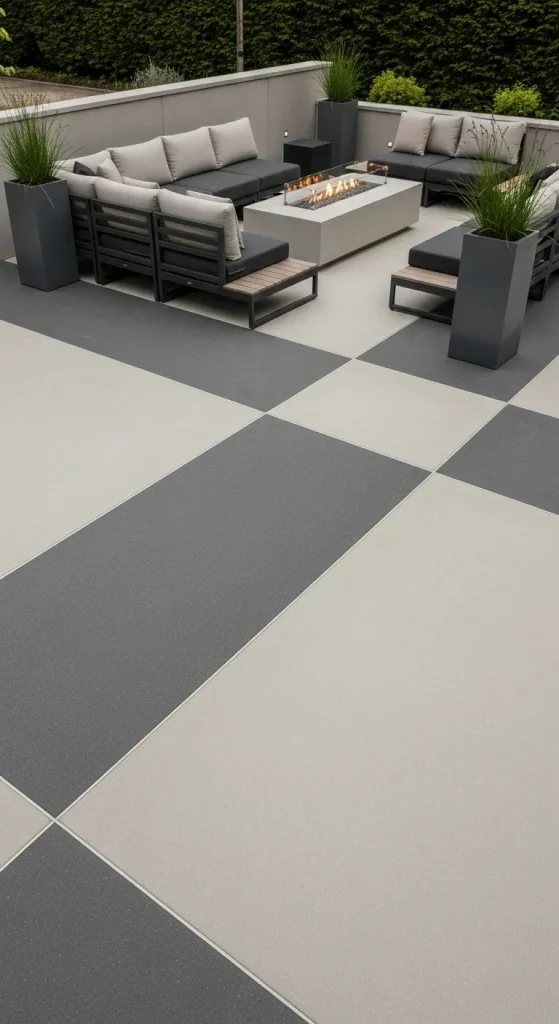
A two-tone patio introduces visual interest through contrasting colors. This approach adds structure and organization to the space while maintaining a modern aesthetic. It is suitable for defining zones within larger patios.
Use tape to divide sections before applying different colors. Apply each stain carefully within its designated area. Remove tape after drying to reveal clean lines. Seal the entire surface for durability. This method ensures precision and professional results.
Idea 8: Stamped Stone Color Patio
Step-by-Step Guide
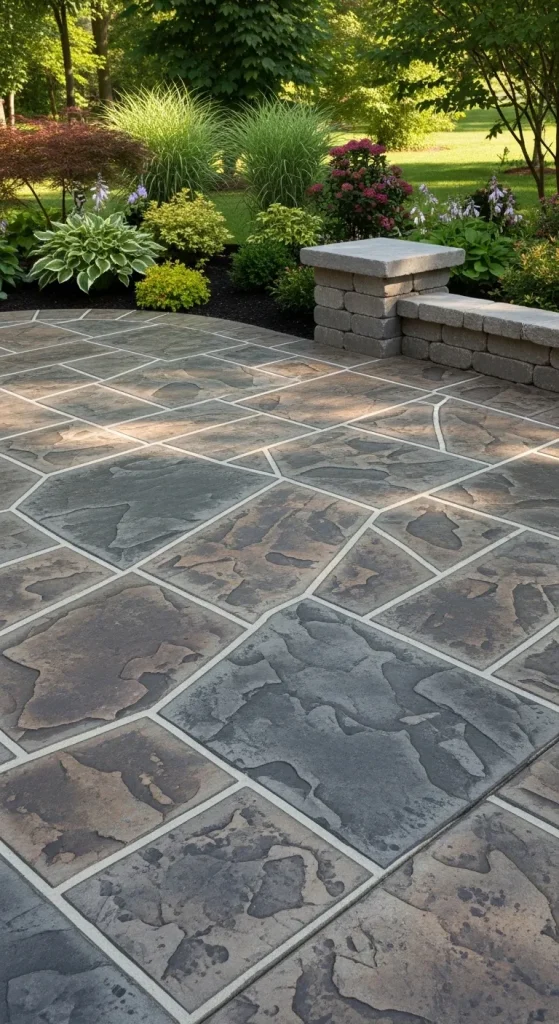
Stamped concrete with stone colors replicates natural materials while maintaining affordability. This design offers texture and depth without requiring actual stone installation. It enhances outdoor aesthetics significantly.
Use stamping tools on freshly poured concrete to create texture. Apply color hardeners to mimic stone shades. Seal the surface after curing. This process creates a realistic and durable finish suitable for long-term use.
Idea 9: Green Garden Blend Patio
How to Make
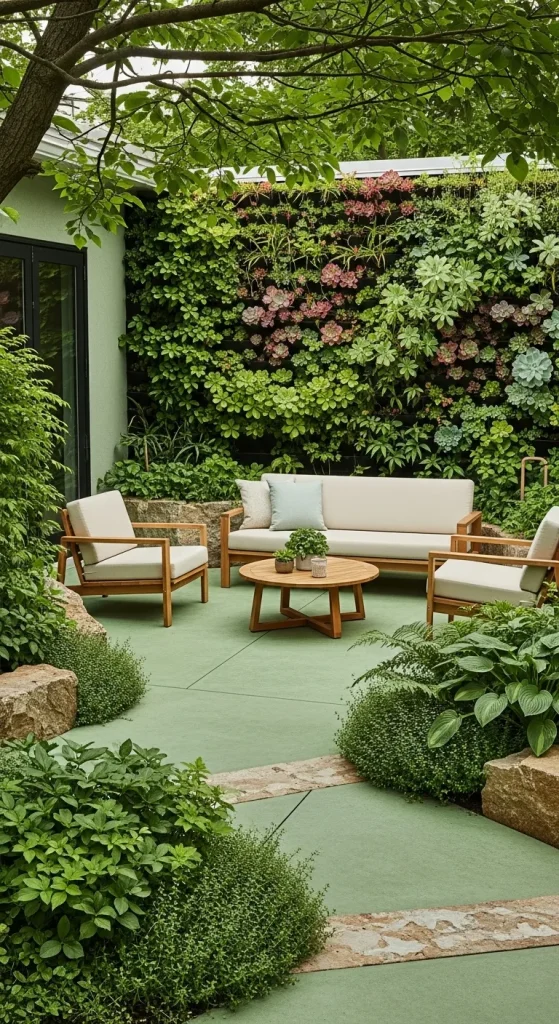
Green tones blend patios with surrounding vegetation, creating a cohesive outdoor environment. This idea supports nature-focused designs and enhances garden integration.
Apply a soft green stain in layers to achieve a natural look. Blend with subtle brown or gray tones for realism. Seal the surface to maintain color stability. This method creates harmony between patio and landscape.
Idea 10: Black and White Geometric Patio
Execution Process
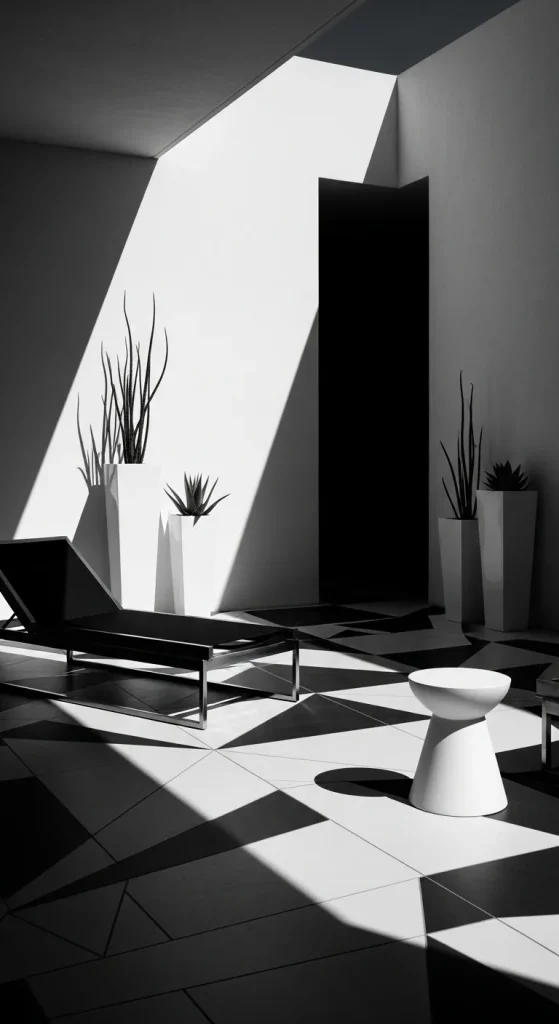
A black and white geometric patio delivers a bold and structured aesthetic. This design emphasizes symmetry and modern style, making it visually striking and organized.
Use stencils to create geometric patterns. Apply black and white stains carefully within the design. Remove stencils after drying and seal the surface. This approach ensures clean lines and long-lasting visual impact.
Common Beginner Mistakes and How to Avoid Them
One common mistake in concrete patio projects is skipping proper surface preparation. Dust, moisture, or oil residues can prevent stains from adhering correctly, resulting in uneven color distribution. Cleaning and drying the surface thoroughly ensures consistent application. Another issue involves applying thick layers of stain, which can lead to blotchy finishes and longer drying times. Using thin, controlled layers allows better color control and smoother results.
Incorrect sealing is another frequent problem. Applying sealer too early or unevenly can trap moisture or create glossy patches. Following recommended drying times between steps prevents these issues. Beginners also often overlook weather conditions, which can affect drying and curing. Planning the project during stable weather improves outcomes. These precautions make the process more predictable and beginner friendly.
Practical Tips for Better Results
Achieving a professional finish requires attention to detail and consistency. Testing color on a small section before full application helps avoid unexpected results. Using high-quality tools ensures even distribution and reduces streaking. Working in sections maintains control and prevents visible overlaps. Maintaining a steady pace throughout the process improves uniformity.
Proper sealing enhances durability and protects against environmental damage. Applying multiple thin coats instead of one thick layer improves performance. Regular maintenance, such as cleaning and resealing when necessary, extends the life of the patio. These practical steps improve both appearance and longevity.
Styling, Presentation, or Organization Ideas
Once the patio is completed, styling enhances its overall impact. Furniture selection should complement the chosen color palette to maintain visual balance. Neutral tones work well with bold patio colors, while vibrant furniture can enhance minimalist designs. Adding plants introduces natural contrast and improves the overall aesthetic.
Organizing the space into functional zones increases usability. Seating areas, dining spaces, and decorative sections can be defined using rugs or layout arrangement. Lighting also plays a key role in presentation, highlighting textures and colors during evening use. These styling techniques elevate the final result.
Budget or Time Planning
Concrete patio projects can be completed efficiently with proper planning. Estimating material quantities accurately prevents unnecessary expenses. Choosing simple designs reduces both cost and time requirements, making the project more accessible for beginners. Scheduling work in stages helps manage workload effectively.
Time management is essential, especially when working with drying and curing periods. Allowing sufficient time between steps ensures quality results. Budget ideas such as using basic stains and tools help keep costs low while maintaining visual appeal. This structured approach ensures a smooth and efficient project.
Creative Expansion and Advanced Inspiration
Advanced variations of concrete patio designs offer opportunities for further creativity. Combining multiple techniques such as stamping, staining, and patterning creates unique and personalized results. Experimenting with layered colors adds depth and complexity to the design.
Incorporating additional elements such as embedded materials or decorative borders enhances visual interest. Expanding the patio design into surrounding areas creates a cohesive outdoor layout. These creative ideas provide inspiration for more complex projects while building on foundational skills developed through beginner friendly approaches.


Leave a Reply