
Introduction
Small studio apartments can feel challenging to decorate because one open room often needs to function as a bedroom, living room, dining area, workspace, and sometimes even an entryway. The key is not to fill the space with more furniture, but to make every piece work harder. Smart layouts, multifunctional furniture, vertical storage, light colors, and intentional decorative details can make a small studio apartment feel comfortable, stylish, and surprisingly spacious.
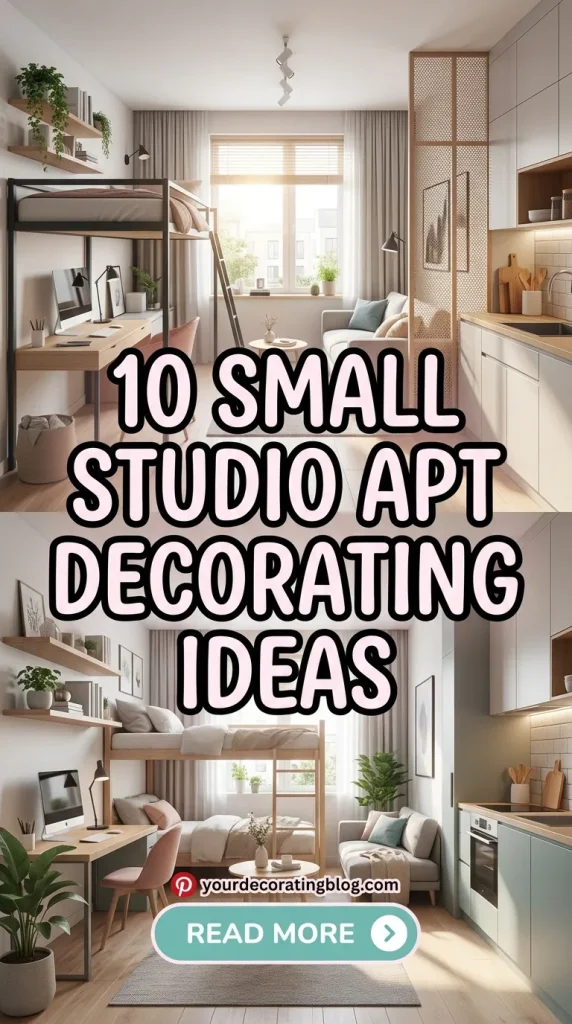
Pinterest-worthy studio apartments usually combine practicality with personality. Instead of treating the limited square footage as a restriction, think of it as an opportunity to create a carefully edited home where every item has a purpose. A small sofa can define the living area, a narrow console can create an entryway, and a storage bed can provide hidden organization without requiring another large cabinet.
The following ten small studio apartment decorating ideas focus on different ways to maximize space while maintaining a cozy and beautiful atmosphere.
Materials Used
For a small studio apartment, choose lightweight and visually simple materials that do not make the room feel crowded.
- Light oak or natural wood
- Plywood
- MDF
- Rattan
- Woven baskets
- Glass
- Acrylic
- Metal
- Linen
- Cotton
- Bouclé
- Mirrors
- Neutral textiles
- Removable wallpaper
- Peel-and-stick hooks
- Floating shelves
- Modular storage cubes
For accessories, consider ceramic vases, framed prints, indoor plants, decorative trays, cushions, rugs, baskets, table lamps, and compact mirrors.
How to Decorate a Small Studio Apartment
Start by measuring the entire apartment and identifying the areas that need separate functions. Decide where you will sleep, relax, work, eat, and store belongings before buying furniture.
Choose furniture that is appropriately scaled. A huge sectional may consume most of the available floor space, while a compact loveseat can leave room for a coffee table and walking path.
Use rugs, lighting, shelving, and furniture placement to visually divide the studio into zones. Keep the main walkway open and avoid placing large pieces directly in front of windows.
Vertical space is extremely valuable. Wall-mounted shelves, tall cabinets, hooks, and floor-to-ceiling curtains can draw the eye upward while providing useful storage.
Finally, maintain a consistent color palette. Similar colors throughout the apartment help the different zones feel connected instead of visually fragmented.
1. Cozy Studio with a Room-Dividing Bookshelf
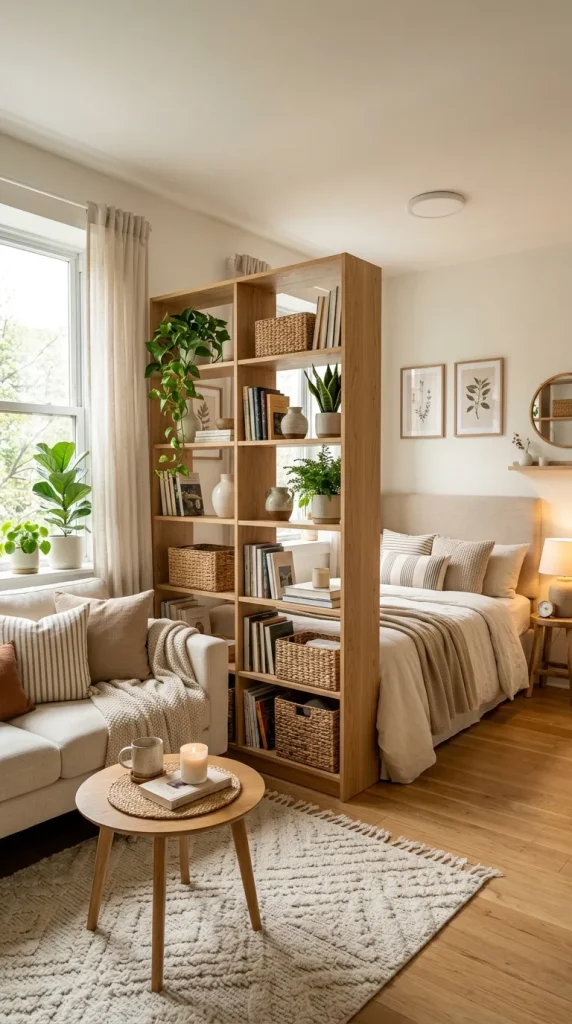
A large open bookshelf can be one of the smartest ways to divide a studio apartment without completely closing it off. Position an open shelving unit between the bed and living area to create a subtle boundary while allowing natural light to pass through.
Choose a bookshelf with a slim profile and open compartments rather than a solid cabinet. This prevents the apartment from feeling boxed in.
Use some compartments for books, while others can hold baskets, plants, ceramics, and decorative objects. Keep several sections empty so the divider remains visually light.
Place the sofa on the living-room side and the bed on the opposite side. A small rug beneath the sofa can further define the lounge area.
For a cohesive Pinterest-style look, repeat the same wood finish throughout the apartment. Natural oak shelving can coordinate beautifully with a wooden coffee table and bed frame.
This arrangement provides privacy without requiring permanent construction. It can also be changed later if your needs change.
2. Platform Bed with Built-In Storage
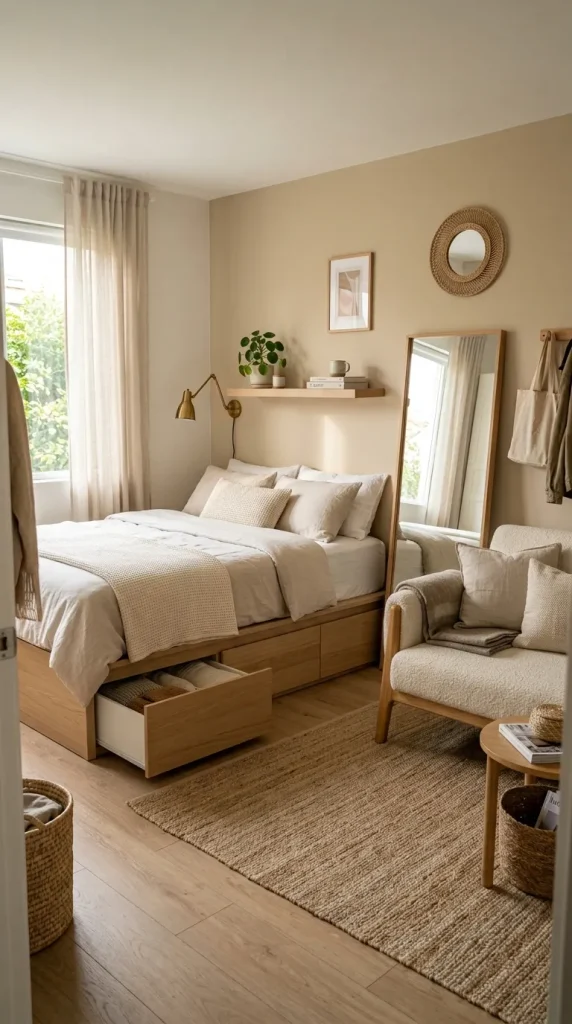
A storage bed is an excellent solution when floor space is limited. Instead of using a traditional bed frame that occupies valuable space without providing storage, choose a platform bed with drawers or compartments underneath.
The hidden storage can hold clothing, extra bedding, shoes, seasonal accessories, or luggage.
Choose a simple wooden platform with clean lines to keep the sleeping area visually calm. Add neutral bedding in cream, beige, white, or soft gray to create a restful atmosphere.
Use wall-mounted bedside shelves instead of bulky nightstands. A small pendant light or wall sconce can provide bedside lighting without taking up floor space.
A large mirror positioned nearby can reflect light and make the studio feel more open.
This decorating idea is particularly useful for apartments with limited closet space. By using the area beneath the bed, you gain storage without adding another large piece of furniture.
The result is a bedroom zone that feels organized, comfortable, and intentionally designed.
3. Light and Airy Scandinavian Studio
A Scandinavian-inspired design can make a small studio feel bright, calm, and spacious. The style relies on light colors, natural materials, simple furniture, and carefully selected accessories.
Begin with a palette of warm white, cream, pale beige, and light wood. Choose a compact sofa with simple lines and pair it with a small round coffee table.
A pale area rug can visually define the living zone without making the room feel heavy.
Use a narrow wooden dining table or wall-mounted drop-leaf table for meals and working. Add two simple chairs that can be pushed completely underneath when not needed.
Keep decorations minimal. A few ceramic vases, framed prints, and indoor plants can provide personality without creating clutter.
Use sheer curtains to maximize daylight. If privacy is necessary, combine them with simple roller shades.
The overall effect should feel relaxed rather than empty. Textures such as wool, linen, cotton, and woven baskets add warmth while maintaining the clean Scandinavian aesthetic.

4. Studio Apartment with a Lofted Bed
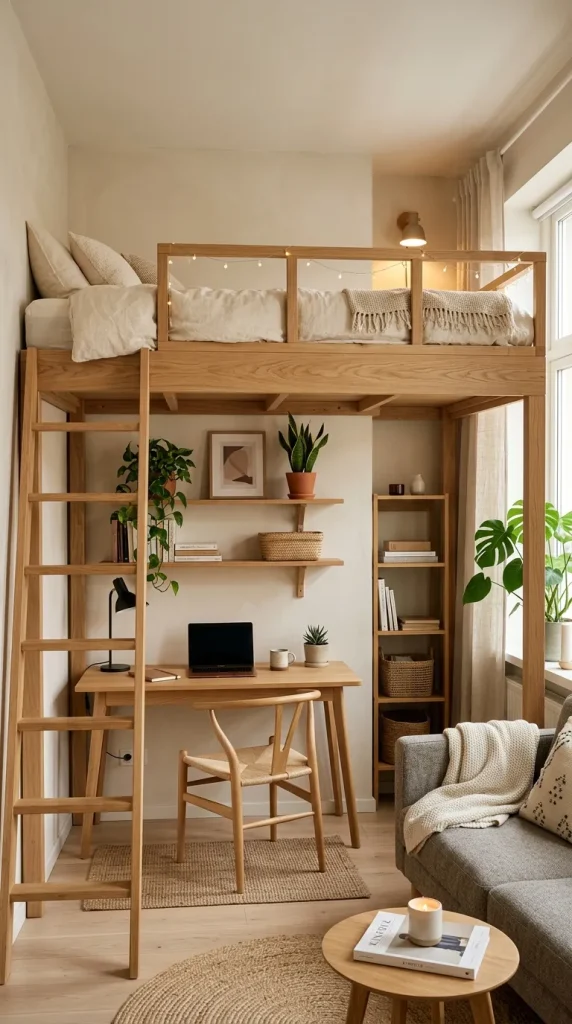
If ceiling height allows, a lofted bed can dramatically increase usable floor space. Raising the bed creates an area underneath that can become a workspace, lounge, dressing area, or storage zone.
The lower area can accommodate a compact desk with wall-mounted shelves. Alternatively, you could create a cozy reading nook with a small chair and floor lamp.
Keep the loft structure visually simple. Natural wood or white-painted finishes can make it feel less imposing.
Use the wall around the loft strategically. Install hooks, shelves, or slim storage cabinets rather than placing bulky furniture underneath.
A lofted bed is particularly useful for very small apartments where separating sleeping and working areas would otherwise be difficult.
Add soft bedding, a small reading light, and a few decorative pieces to make the elevated sleeping area feel cozy.
Because the bed is visually elevated, use a consistent color palette throughout the studio so the loft does not dominate the room.
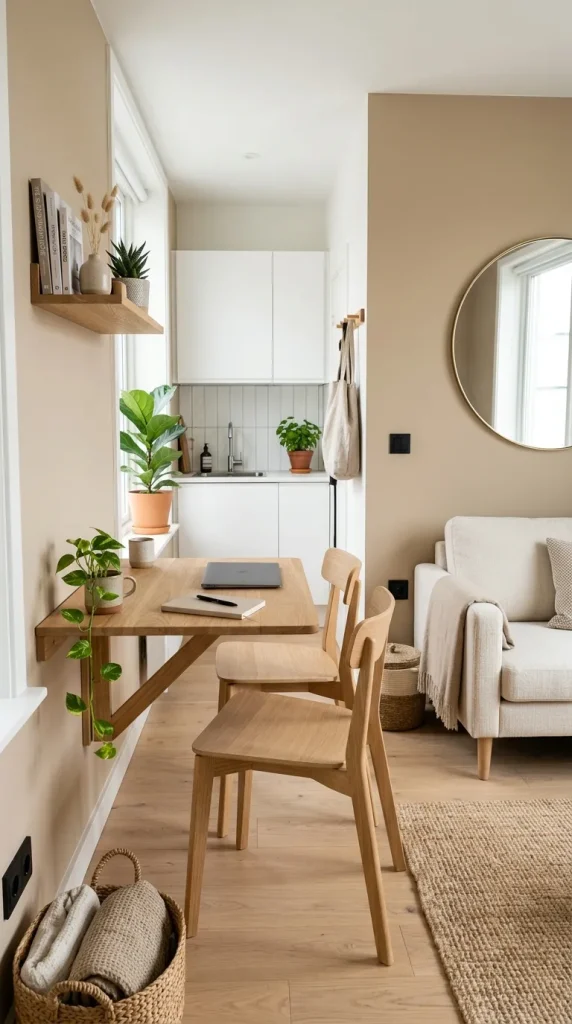
5. Foldable Dining and Workspace
A foldable table can serve multiple purposes in a small studio. During the day, it can function as a desk or dining table, and when it is no longer needed, it can be folded against the wall.
Choose a wall-mounted drop-leaf table in natural wood or white for a clean appearance.
Place two lightweight chairs nearby. When the table is folded, the chairs can be used elsewhere in the apartment.
Add a small wall shelf above the table for stationery, books, plants, or decorative objects.
A compact pendant light can define the workspace without requiring a large floor lamp.
This approach is especially useful for people who work from home because the same area can transition between work and dining.
Keep the tabletop relatively clear. A decorative tray can hold essential items while maintaining a neat appearance.
The ability to change the function of the space throughout the day is one of the biggest advantages of multifunctional furniture in a studio apartment.
6. Mirror-Filled Small Studio
Mirrors are one of the simplest decorating tools for visually expanding a small apartment. Instead of using a single tiny decorative mirror, consider a large statement mirror that reflects light and creates a stronger sense of depth.
Place a tall mirror opposite a window when possible so it reflects natural daylight throughout the room.
A large round mirror can soften a modern space, while a rectangular black-framed mirror can create a more contemporary appearance.
You can also use mirrored cabinet doors to combine storage with visual expansion.
Keep the surrounding furniture relatively simple so the mirror remains effective rather than competing with too many decorative elements.
Pair mirrors with light-colored walls and sheer window treatments to maximize brightness.
This idea works particularly well in darker studio apartments where natural light is limited.
The goal is not to make the room look filled with mirrors, but to strategically reflect light and important architectural views.

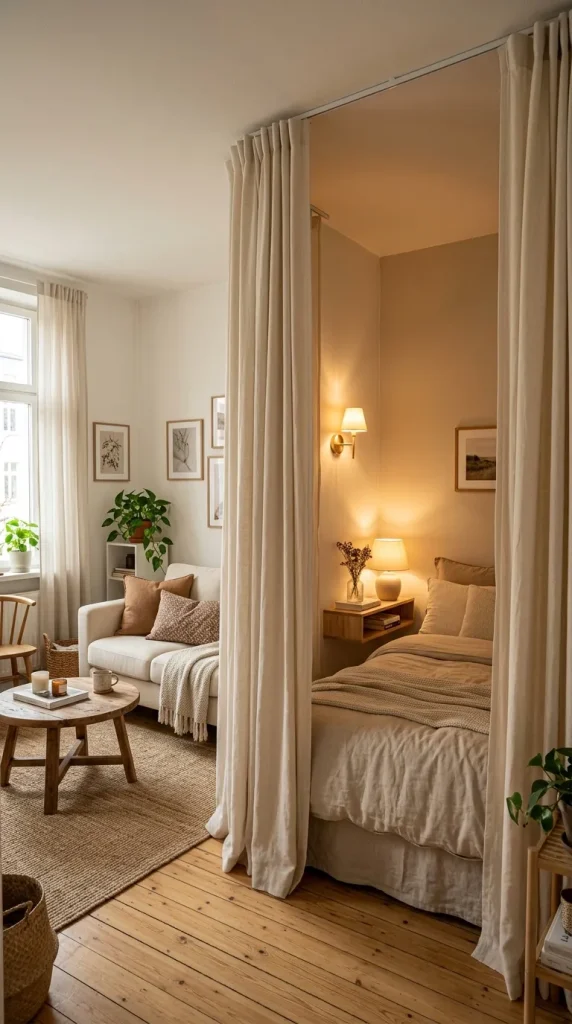
7. Curtain-Divided Sleeping Area
Curtains offer an inexpensive and flexible way to create privacy around a sleeping area. Unlike a solid wall, curtains can be opened during the day to keep the studio feeling spacious.
Install a ceiling-mounted curtain track around the bed and choose full-length curtains in linen, cotton, or another lightweight fabric.
Neutral curtains can blend into the room, while a subtle pattern can become a decorative feature.
When closed, the curtains create a private bedroom zone. When open, they disappear to the sides and restore the open layout.
Add a small bedside table or floating shelf inside the sleeping area. Wall sconces can provide lighting without using floor space.
For a cozy Pinterest-inspired look, layer soft bedding with textured cushions and a throw blanket.
This solution is especially useful for renters because it can often be installed without major structural changes.
8. Compact Sofa with Hidden Storage
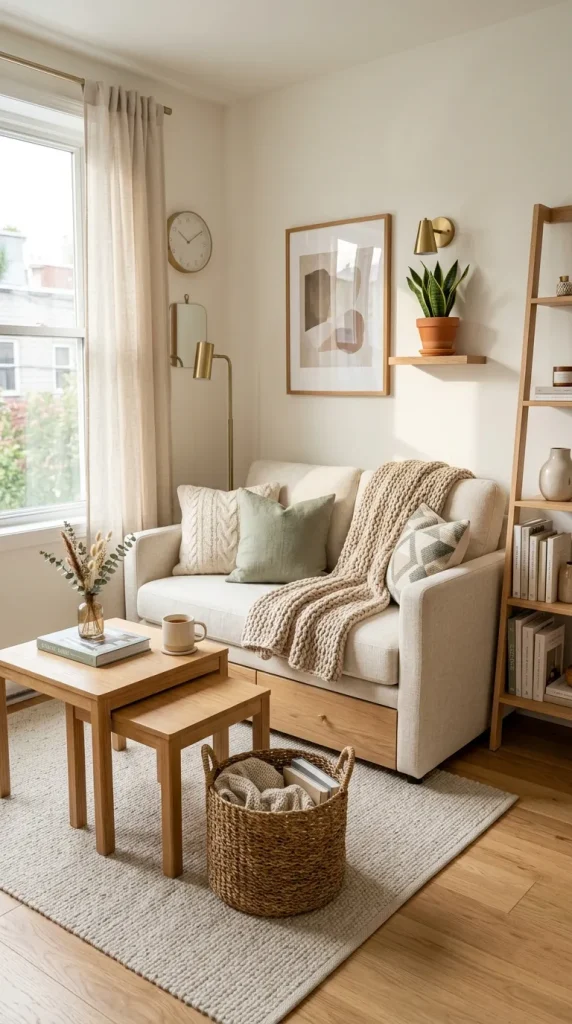
A compact sofa with built-in storage can perform two jobs at once. Choose a loveseat, storage ottoman, or compact sectional with hidden compartments.
The storage can hold blankets, pillows, books, electronics, or other items that would otherwise require additional cabinets.
Choose upholstery in a light neutral shade if you want the room to feel larger. Beige, cream, oatmeal, and soft gray are versatile choices.
Pair the sofa with a nesting coffee table. Smaller tables can be separated when needed and stacked together when floor space is required.
Add a small rug underneath the seating area to define the lounge zone.
Wall-mounted artwork can add personality without using floor space.
This setup works particularly well when the living room needs to remain flexible. The sofa becomes the main anchor while hidden storage reduces visual clutter.
9. Vertical Storage Studio Apartment
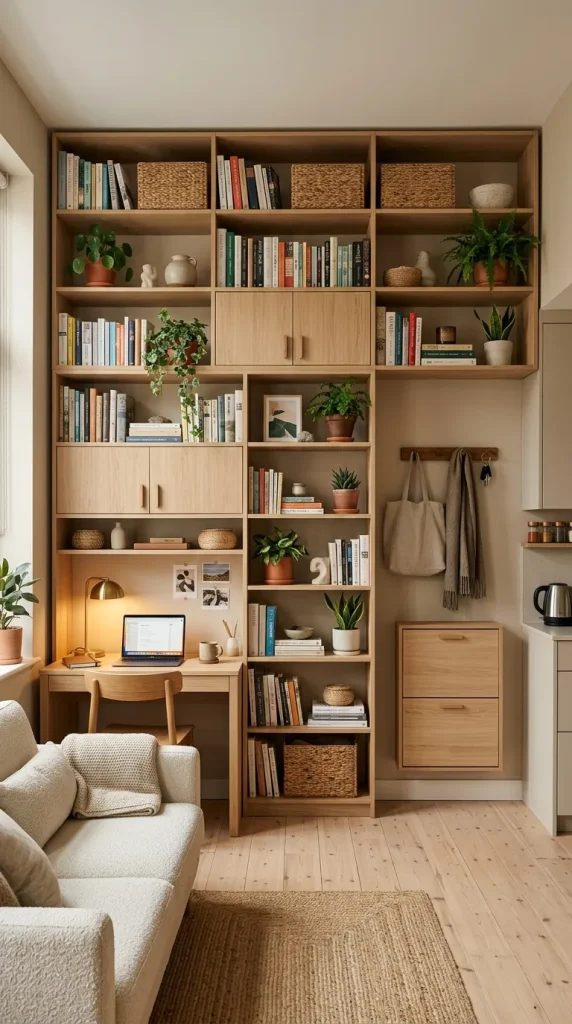
When floor space is limited, think vertically. Tall storage can provide significantly more capacity without consuming the footprint of a wide cabinet.
Use floor-to-ceiling shelving for books, baskets, clothing, decorative objects, and household items.
Closed cabinets should store visually messy belongings, while open shelves can display attractive objects.
Install hooks near the entrance for bags, coats, and hats. Add a narrow shoe cabinet underneath.
Above the desk, use vertical shelves instead of a large desk hutch.
Tall curtains installed close to the ceiling can also emphasize vertical height and make the apartment appear larger.
Keep heavier objects toward the bottom shelves and lighter decorative pieces higher up.
A combination of closed and open storage is usually more practical than completely open shelving because it allows you to hide clutter.
This strategy transforms unused wall height into valuable storage while keeping the floor relatively open.
10. Warm Japandi-Inspired Studio
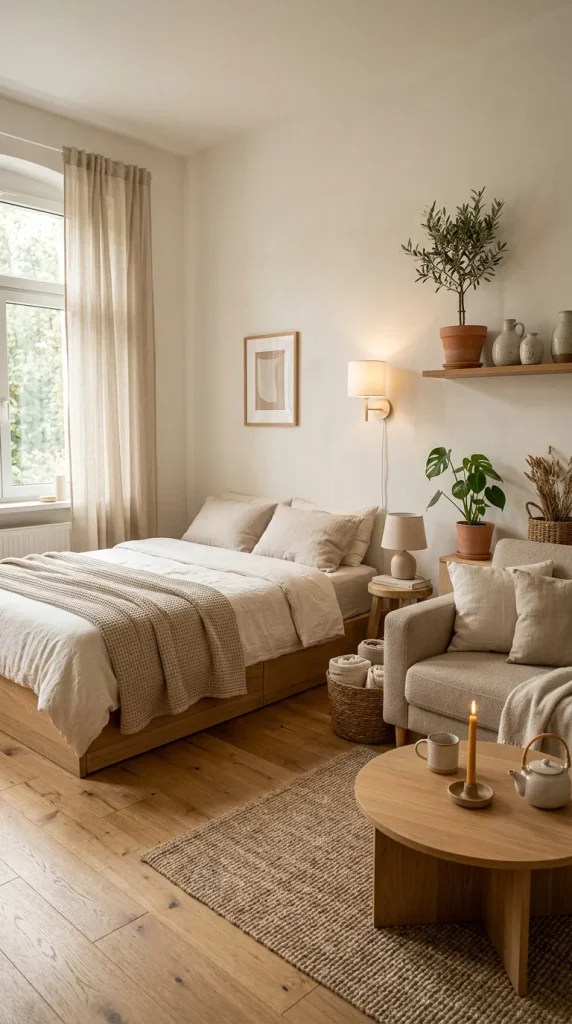
A Japandi-inspired studio combines Japanese simplicity with Scandinavian warmth. It is particularly effective for small spaces because it emphasizes intentional furniture, natural materials, neutral colors, and uncluttered surfaces.
Choose a palette of warm white, beige, taupe, light brown, and muted earthy tones.
Use low-profile furniture with simple silhouettes. A low wooden bed, compact sofa, small round coffee table, and streamlined shelving can create a calm visual flow.
Natural wood is an important material. Combine it with linen curtains, woven baskets, ceramic accessories, and soft textured rugs.
Avoid filling every wall with decorations. Instead, choose a few meaningful pieces and give them enough surrounding space to stand out.
Indoor plants can add a natural element without overwhelming the room.
Use warm lamps rather than relying entirely on ceiling lighting. Several small light sources can create a cozy evening atmosphere.
The final result should feel peaceful, functional, and thoughtfully edited.
Extra Tips for Making a Studio Apartment Feel Larger
Use furniture with exposed legs whenever possible. Seeing more floor underneath furniture can make the room feel visually lighter.
Choose furniture that can perform multiple functions. Storage ottomans, sofa beds, nesting tables, foldable desks, and storage beds are especially useful.
Keep the main walking paths clear. Even a beautifully decorated studio can feel uncomfortable if furniture blocks movement.
Use a consistent color palette across different zones. This creates visual continuity.
Take advantage of natural light. Avoid placing tall furniture directly in front of windows unless necessary.
Use baskets to control small items. They provide hidden organization while adding texture.
Choose one or two statement pieces rather than many small decorations.
Use wall space creatively with floating shelves, hooks, artwork, and vertical storage.
Finally, regularly remove items that are no longer useful. In a small home, clutter becomes noticeable much faster than it does in a large house.
Conclusion
Decorating a small studio apartment is all about making thoughtful decisions. Limited space does not mean you have to sacrifice comfort or style. Instead, it encourages you to choose furniture and décor that work harder and serve multiple purposes.
Bookshelves can divide rooms while providing storage. Platform beds can hide belongings underneath. Foldable tables can transform between dining and working. Curtains can create privacy without permanent walls, while mirrors can visually expand the space.
Vertical storage is particularly valuable because it takes advantage of unused wall height, and multifunctional furniture allows one small area to perform several roles.
The most successful studio apartments usually have a clear layout, consistent colors, practical storage, and carefully selected decorative elements. Rather than trying to fill every available space, leave enough breathing room for the apartment to feel comfortable.
Whether you prefer Scandinavian simplicity, warm Japandi interiors, rustic textures, or contemporary minimalism, these ten small studio apartment decorating ideas can help you create a home that feels organized, stylish, cozy, and distinctly yours.
:::



Leave a Reply