
Introduction
A butler’s pantry does not have to be large to be useful. Even a narrow area between the kitchen and dining room can become a highly functional storage zone with thoughtful planning. The key is to use every available inch without making the space feel cramped.
Small butler’s pantries are especially useful for storing serving dishes, glassware, small appliances, pantry staples, coffee supplies, and entertaining essentials. Instead of allowing these items to crowd the main kitchen, a compact pantry gives them a dedicated home.
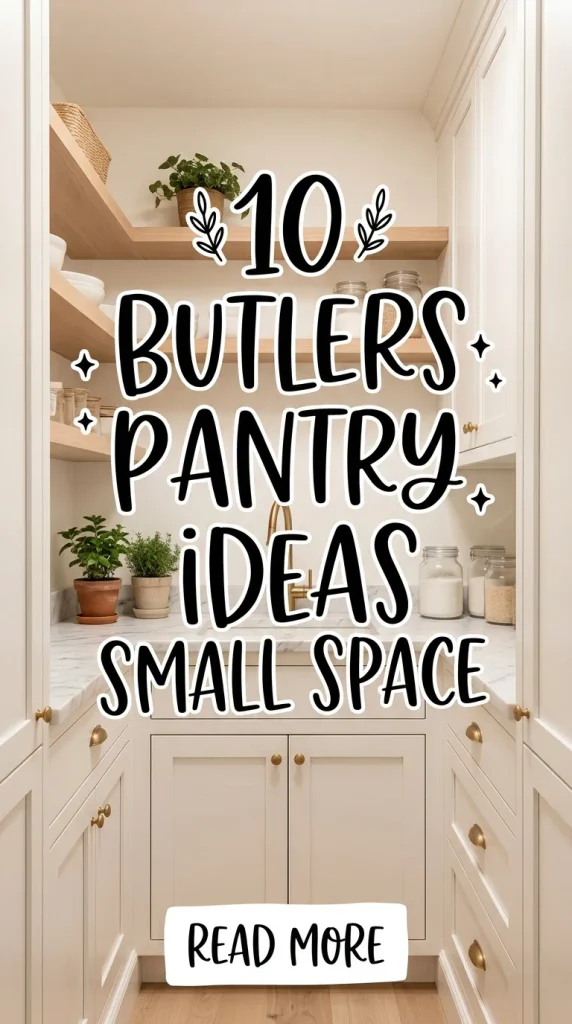
The best butler’s pantry ideas for small spaces focus on vertical storage, shallow cabinets, open shelving, pull-out drawers, and multipurpose countertops. Light colors, glass doors, under-cabinet lighting, and reflective surfaces can also make a narrow pantry feel brighter and more spacious.
A small butler’s pantry can be designed in many styles. White cabinetry creates a clean traditional look, natural wood brings warmth, dark cabinets create drama, and open shelving can make the space feel visually lighter.
Whether you are working with a narrow hallway, a small alcove, or a compact room between the kitchen and dining area, these ideas can help you create a functional butler’s pantry without wasting valuable space.
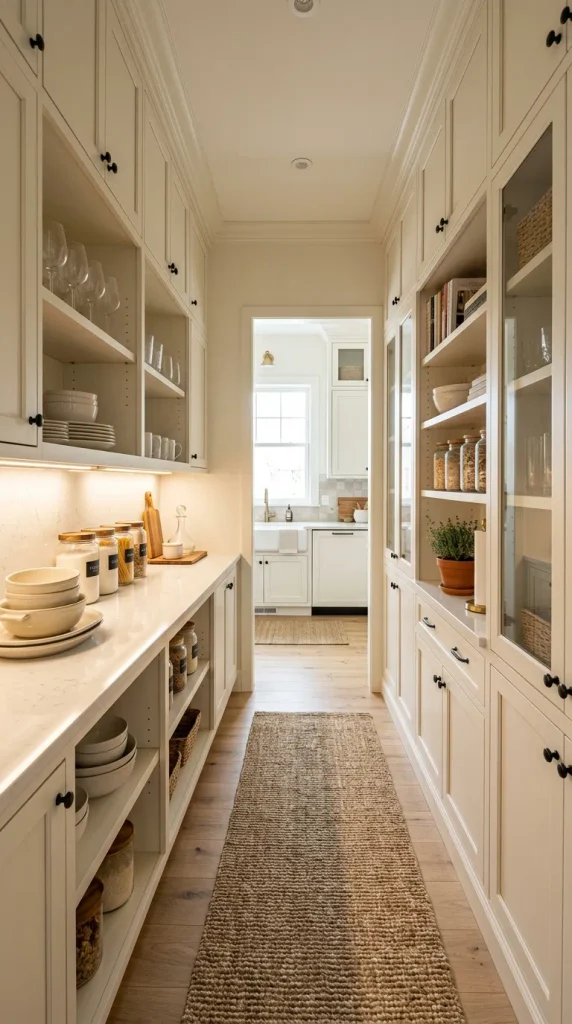
1. Floor-to-Ceiling Cabinetry
When floor space is limited, go upward. Floor-to-ceiling cabinetry is one of the most effective ways to maximize a small butler’s pantry.
Materials Used
Use tall cabinets, adjustable shelves, cabinet hardware, countertop material, drawer organizers, and under-cabinet lighting.
How to Style It
Install cabinets from the floor almost to the ceiling.
Use the lower cabinets for heavier serving dishes and appliances.
Reserve upper shelves for less frequently used items.
Add adjustable shelving so the interior can adapt to different storage needs.
Use matching cabinet doors to create a clean, uninterrupted appearance.
Light-colored cabinetry can make a narrow pantry feel more open.
This approach works particularly well when the pantry has limited width but sufficient ceiling height.
2. Narrow Butler’s Pantry with Open Shelving
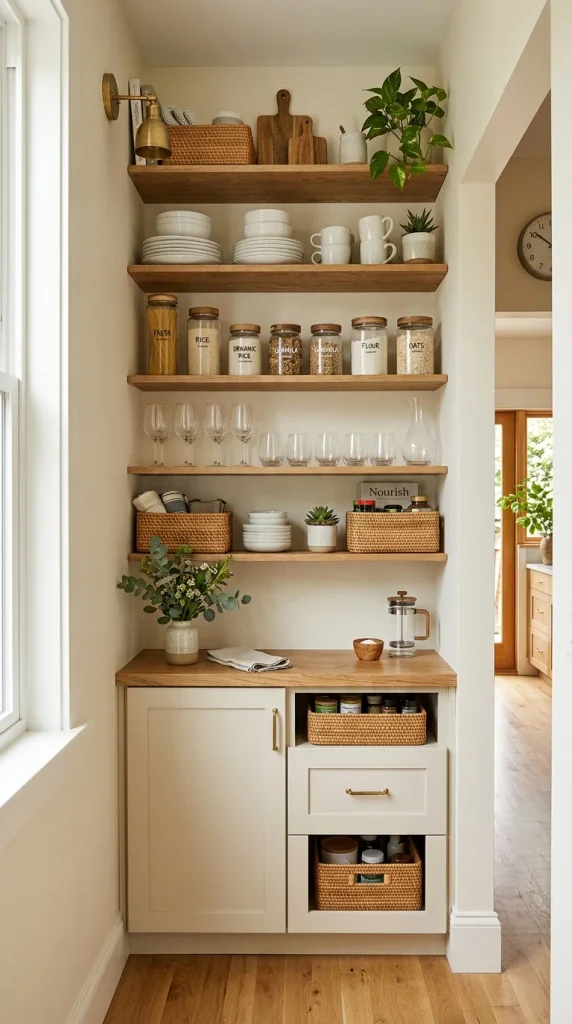
Open shelving can make a small pantry feel less enclosed while keeping frequently used items accessible.
Materials Used
Use wall-mounted shelves, brackets, wood or stone countertop, ceramic containers, glassware, baskets, and small decorative accessories.
How to Style It
Install shelves above the countertop.
Keep everyday dishes and glasses within easy reach.
Use matching containers for pantry staples.
Arrange items by category rather than placing everything randomly.
Leave some empty space between objects to prevent visual clutter.
Open shelving is especially effective in small spaces because it avoids the heavier visual appearance of additional upper cabinets.
3. Small Butler’s Pantry with Glass-Front Cabinets
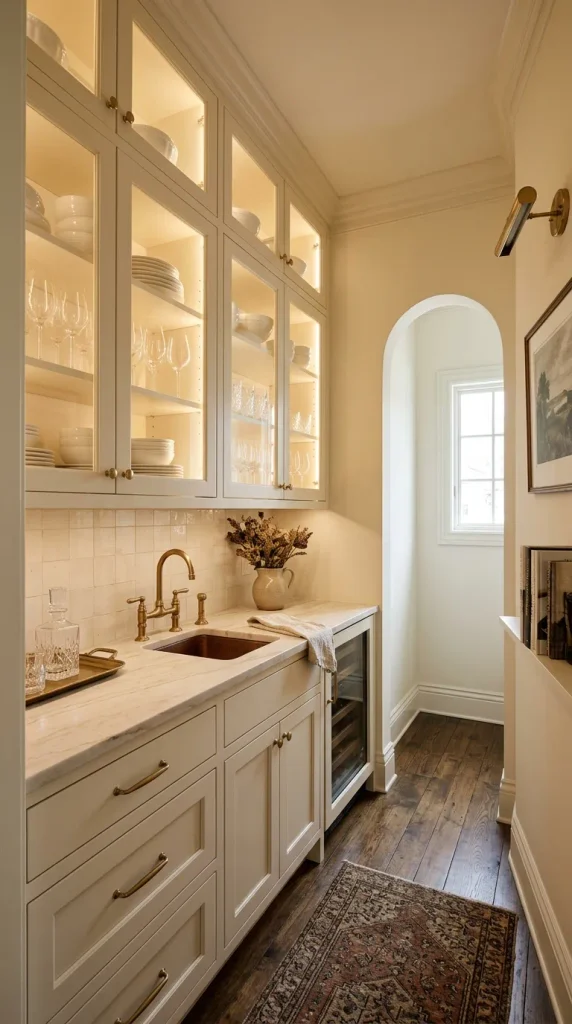
Glass-front cabinets can create an elegant display while still protecting stored items.
Materials Used
Use glass-front cabinets, shelves, cabinet hardware, countertop, lighting, glassware, serving dishes, and decorative objects.
How to Style It
Use glass doors on selected upper cabinets.
Display attractive dishes, wine glasses, serving bowls, and decorative ceramics.
Keep less attractive or less frequently used items behind solid cabinet doors.
Add warm interior lighting to highlight the glassware.
Choose simple cabinet hardware to keep the small space visually refined.
Glass doors can make a compact pantry feel more open because they provide visual depth.
4. Pull-Out Pantry Storage
Pull-out storage is ideal for narrow butler’s pantries because it makes deep or narrow cabinets easier to access.
Materials Used
Use narrow pull-out cabinet organizers, drawer hardware, shelves, countertop, cabinet doors, and storage containers.
How to Style It
Install pull-out shelves or tall pantry organizers.
Use them for oils, sauces, spices, bottles, or packaged foods.
Label containers so everything is easy to locate.
Use drawers for smaller items such as napkins and serving utensils.
Pull-out storage prevents items from getting lost at the back of cabinets.
It is particularly useful when every inch of the pantry needs to perform a specific function.
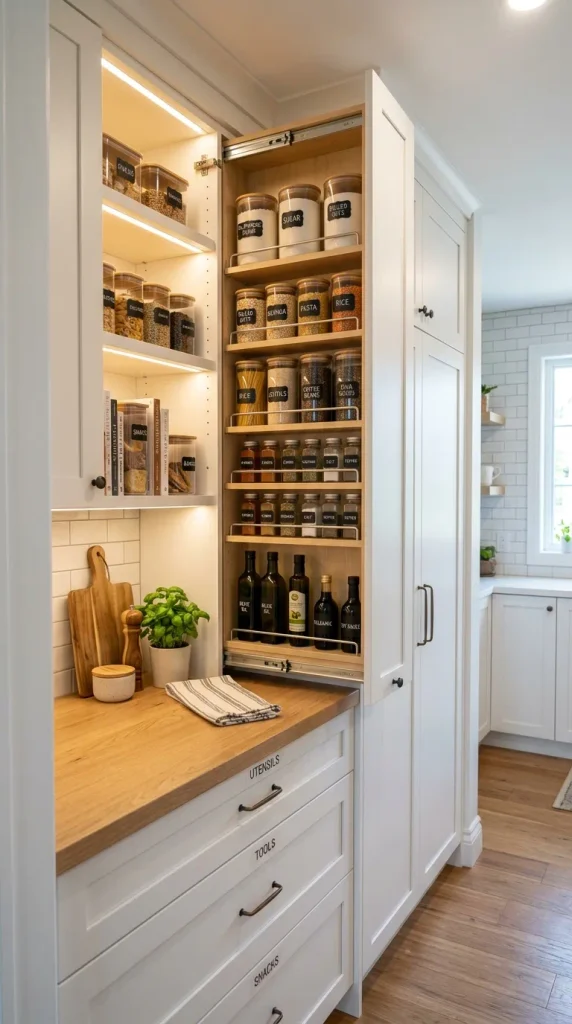
5. Coffee Station Butler’s Pantry
A small butler’s pantry can double as a dedicated coffee station.
Materials Used
Use a compact coffee machine, coffee storage containers, mugs, shelves, countertop, cabinet storage, tray, and under-cabinet lighting.
How to Style It
Reserve a section of countertop for the coffee machine.
Store coffee beans, filters, mugs, and accessories in nearby cabinets.
Use a small tray to organize frequently used supplies.
Add open shelving for attractive mugs.
Keep appliances tucked away behind cabinet doors when not in use if you prefer a cleaner appearance.
This setup keeps the main kitchen counter clear while creating a convenient beverage station.
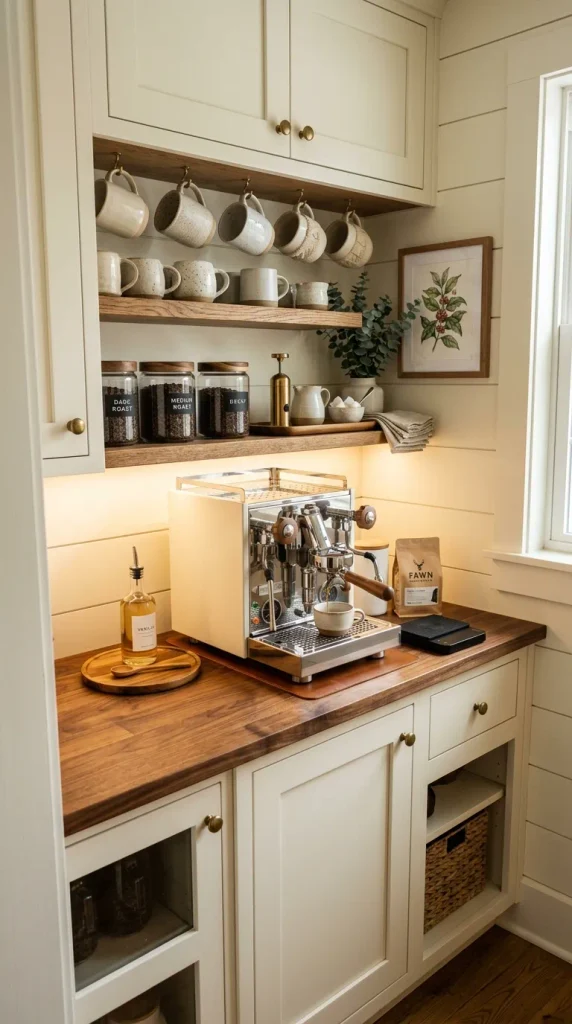
6. Compact Butler’s Pantry with Sink
If plumbing allows, even a small sink can make a butler’s pantry significantly more useful.
Materials Used
Use a compact sink, faucet, countertop, base cabinets, plumbing fixtures, backsplash, and storage accessories.
How to Style It
Choose a small undermount or compact sink.
Use the surrounding countertop for food preparation or entertaining.
Store cleaning supplies underneath in a dedicated organizer.
Add a simple backsplash to protect the wall.
Keep the countertop relatively clear.
A sink can be particularly useful for washing glasses, filling water pitchers, or handling entertaining cleanup without taking over the main kitchen.
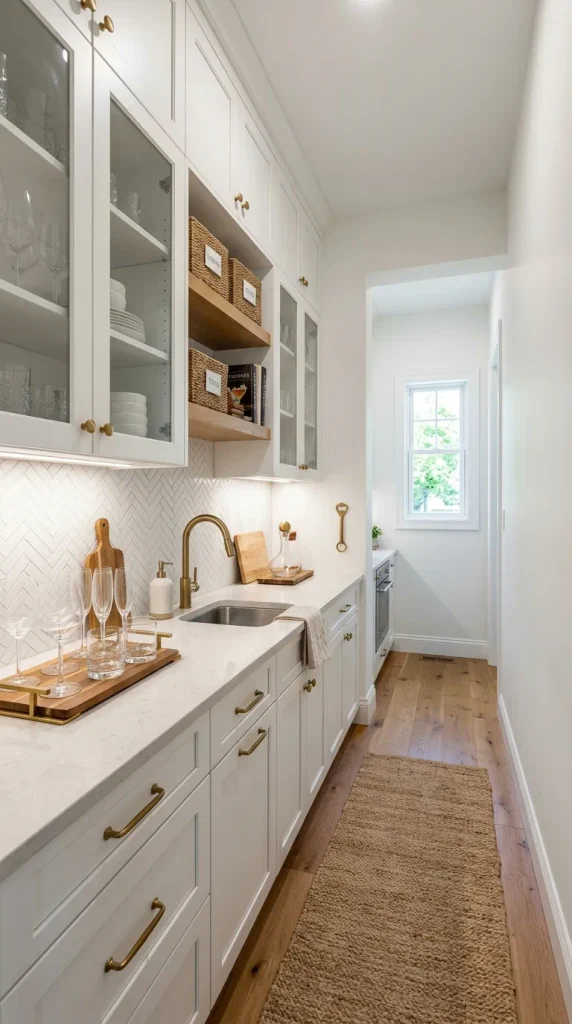
7. Hidden Butler’s Pantry Behind Cabinet Doors
For a seamless kitchen appearance, a small pantry can be concealed behind cabinet-style doors.
Materials Used
Use tall cabinet doors, concealed storage, countertop, shelves, appliances, and internal lighting.
How to Style It
Create a compact pantry area behind full-height doors.
Store appliances such as coffee makers, mixers, or toasters inside.
Keep the countertop available for food preparation.
Close the doors when the pantry is not being used.
Match the cabinet finish to the main kitchen.
This solution is especially attractive in open-plan homes where maintaining a clean visual line is important.
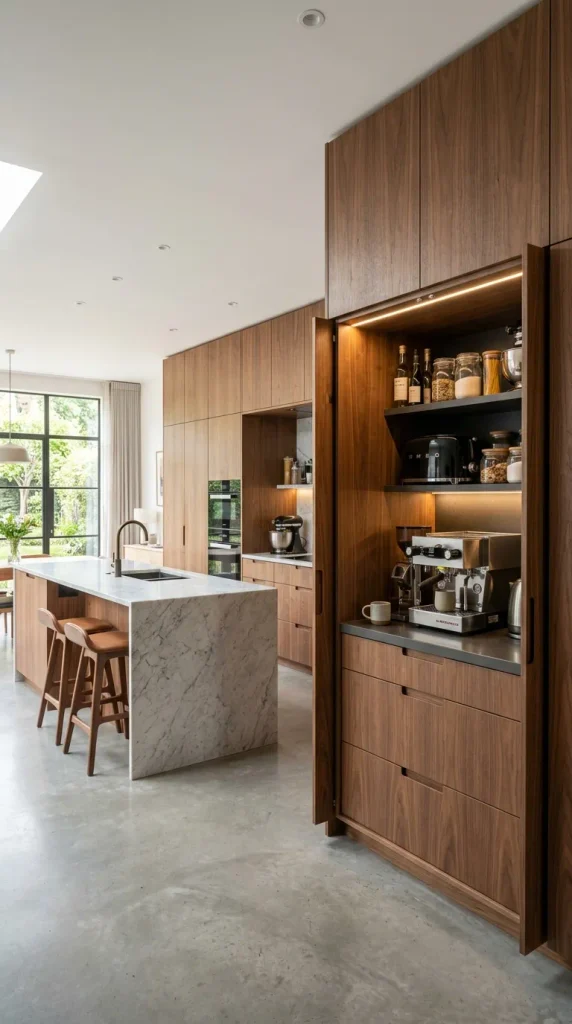
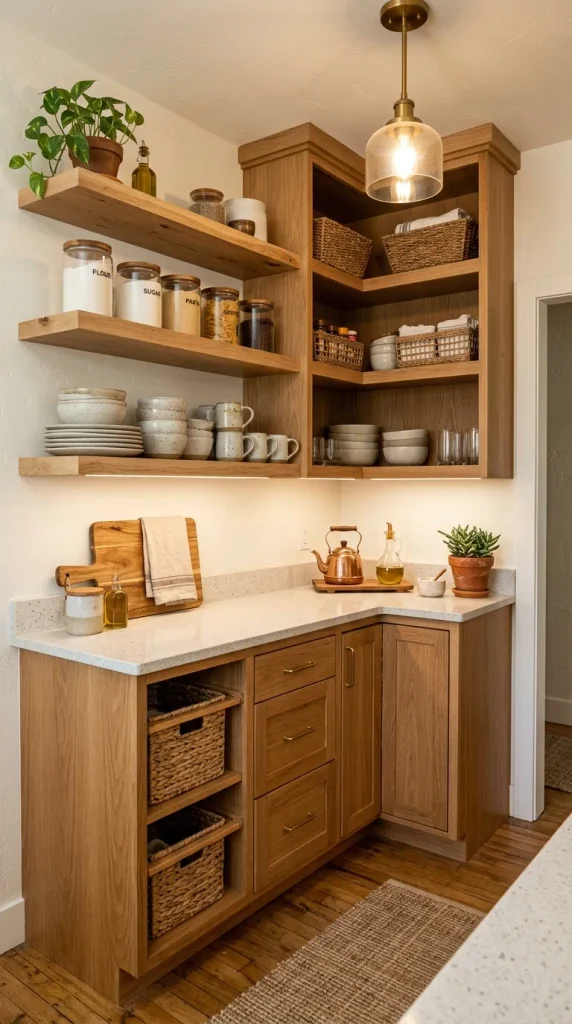
8. Corner Butler’s Pantry
A forgotten corner can sometimes become a surprisingly useful pantry.
Materials Used
Use corner cabinets, floating shelves, countertop, storage baskets, cabinet hardware, and lighting.
How to Style It
Use corner cabinetry to maximize difficult-to-access areas.
Install floating shelves above the countertop.
Use baskets to organize smaller items.
Place frequently used serving pieces in the easiest-to-reach areas.
Consider a small appliance station along one wall.
A corner layout can work particularly well in homes where a full pantry room is impossible.
9. Dark and Moody Small Butler’s Pantry
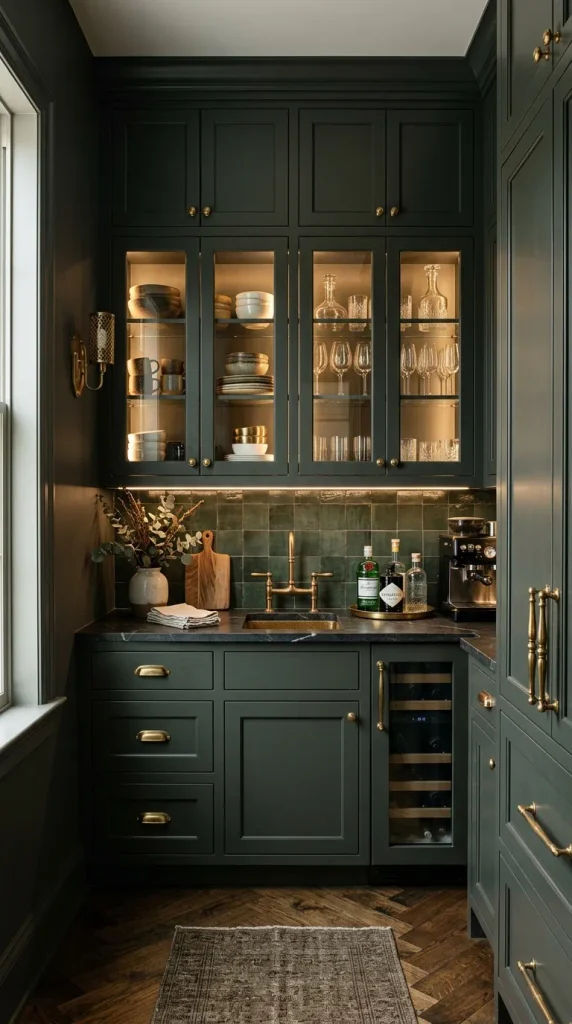
Small spaces do not always need to be white. Dark cabinetry can create a dramatic and sophisticated atmosphere.
Materials Used
Use dark cabinets, stone or quartz countertop, brass or black hardware, glass-front doors, lighting, and decorative ceramics.
How to Style It
Choose deep green, navy, charcoal, or another rich shade.
Use warm lighting underneath cabinets or inside glass-front cupboards.
Add brass hardware for contrast.
Keep countertops relatively uncluttered.
Use lighter ceramics or glassware to create visual contrast.
A dark pantry can feel intimate and luxurious rather than cramped when the lighting is carefully planned.
10. Small Butler’s Pantry with Multi-Functional Countertop
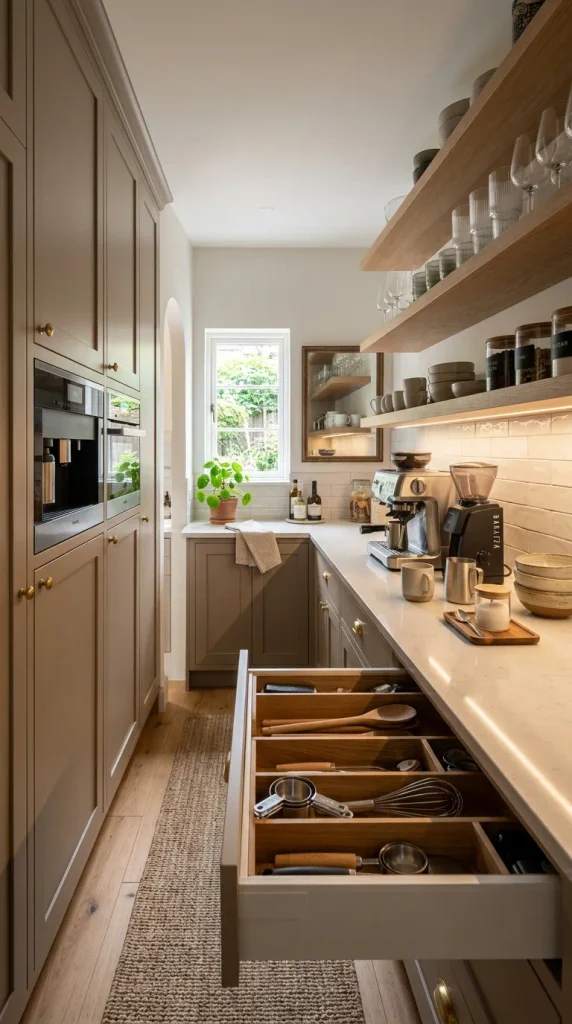
A countertop can do more than provide preparation space. In a small pantry, it can become a multifunctional work surface.
Materials Used
Use a durable countertop, cabinets, drawers, shelving, appliance storage, trays, and organizers.
How to Style It
Use part of the countertop for serving preparation.
Reserve another section for small appliances.
Install drawers underneath for utensils, napkins, and entertaining supplies.
Use vertical shelves above the countertop.
Keep frequently used items close to their designated work area.
A carefully planned countertop can allow one small pantry to serve as storage, coffee station, serving area, and appliance zone.
How to Design a Small Butler’s Pantry
Start by measuring the entire space.
Record the width, depth, ceiling height, door swing, windows, outlets, plumbing locations, and ventilation requirements.
Then decide what the pantry needs to store.
If you primarily need dish storage, prioritize cabinets and shelves.
If appliances are the main issue, plan dedicated appliance storage.
If entertaining is important, include a serving counter and glassware storage.
Planning the function before selecting finishes helps prevent wasted space.
Best Storage Solutions for Small Butler’s Pantries
Vertical storage is one of the biggest advantages in a small pantry.
Consider:
- Tall cabinets
- Pull-out shelves
- Deep drawers
- Floating shelves
- Corner storage
- Door-mounted organizers
- Glass-front cabinets
- Appliance garages
- Stackable containers
- Adjustable shelving
The goal is to make every storage area accessible rather than simply adding more cabinets.
How to Make a Small Butler’s Pantry Look Bigger
Light colors can visually open the room.
White, cream, soft beige, pale wood, and light gray are popular choices.
Glass cabinet doors can provide visual depth.
Reflective backsplash materials can bounce light around the room.
Under-cabinet lighting can eliminate dark areas.
Avoid using too many contrasting finishes in a small space.
A simple material palette often makes the room feel more cohesive and spacious.
Common Small Butler’s Pantry Mistakes
One of the biggest mistakes is trying to fit too much into the space.
Too many cabinets, appliances, and decorative objects can make a narrow pantry difficult to use.
Another mistake is failing to consider door clearance.
Make sure cabinet doors and drawers can open without hitting other furniture or appliances.
Avoid storing frequently used items in inaccessible upper cabinets.
Finally, do not overlook lighting. A small pantry can become frustrating to use if shelves and countertops are poorly illuminated.
Final Thoughts
These 10 butler’s pantry ideas for small spaces prove that limited square footage does not have to mean limited functionality. Floor-to-ceiling cabinets, open shelves, glass doors, pull-out storage, coffee stations, compact sinks, hidden cabinetry, corner layouts, dark finishes, and multifunctional countertops can all help transform a small area into an efficient storage and entertaining zone.
The most important step is planning around your actual needs. Decide what you want to store, identify which items require easy access, and then build your storage around those priorities.
Use vertical space, choose appropriately scaled cabinetry, add practical lighting, and keep the design visually simple.
With thoughtful planning, even a narrow alcove can become a beautiful and highly functional butler’s pantry that keeps your main kitchen organized while adding an elegant, Pinterest-worthy feature to your home.


Leave a Reply