
Introduction
A cubicle does not have to feel plain, boring, or completely controlled by office rules. With the right combination of organization, color, lighting, accessories, and personal touches, even a small workstation can become a space that feels comfortable, inspiring, and uniquely yours. Whether you work in a traditional corporate office, a shared workspace, or a modern open-plan environment, thoughtful cubicle decorating can make your everyday work experience much more enjoyable.
The best cubicle inspiration ideas focus on more than appearance. A beautiful workspace should also help you stay organized, reduce visual clutter, and keep frequently used items within easy reach. Small improvements such as a desk organizer, a few plants, attractive stationery, a comfortable desk mat, or a carefully chosen color palette can completely change the feeling of a workstation.

Pinterest-style cubicle decorating is especially popular because it combines functionality with aesthetic details. Neutral tones create a calm atmosphere, greenery adds freshness, colorful accessories bring personality, and minimalist designs make a small workspace appear more spacious. The key is choosing a style that matches your personality while still keeping your workspace practical and professional.
Below are ten cubicle inspiration ideas that can work for different personalities, office environments, and decorating preferences. Each idea can be adapted to a small or large cubicle, and most can be created without expensive furniture or complicated changes.
1. Minimalist Cubicle Inspiration
A minimalist cubicle is perfect for anyone who prefers a clean, calm, and uncluttered workspace. Instead of filling every available surface with decorations, minimalist decorating focuses on selecting only a few useful and attractive pieces. The result is a workstation that feels organized, peaceful, and easy to maintain throughout a busy workday.
Start with a simple color palette such as white, cream, beige, soft gray, black, or natural wood tones. A neutral desk mat can create a visual foundation for the workspace, while a matching pen holder and document organizer keep everyday supplies coordinated. Instead of displaying dozens of decorative objects, choose two or three meaningful pieces that contribute to the overall look.
Wall space can be used carefully with a small calendar, simple motivational print, minimalist weekly planner, or a few photographs in matching frames. If your office allows you to attach items to cubicle walls, consider using removable hooks, clips, or adhesive organizers rather than permanent fixtures.
Lighting is another important element. A small desk lamp with a simple shape can make the workstation feel warmer while providing additional illumination during long working hours. If additional lighting is not permitted, keep the area visually bright with lighter accessories.
Organization is the foundation of minimalist cubicle décor. Keep frequently used items accessible while storing unnecessary supplies out of sight. Use drawer dividers, small trays, and vertical file organizers to prevent the desk from becoming crowded.
The finished space should feel intentional rather than empty. Minimalist cubicle inspiration works best when every item has a purpose. By combining practical organization with a restrained color palette, you can create a sophisticated workstation that looks polished and remains easy to keep tidy.

2. Cozy Cubicle Inspiration
A cozy cubicle can make a workplace feel warmer and more welcoming without sacrificing professionalism. This style is ideal for people who enjoy soft textures, warm colors, personal photographs, comfortable accessories, and small decorative details that make their workstation feel more like their own space.
Begin with a warm color palette featuring cream, beige, warm brown, muted terracotta, soft green, or dusty rose. A fabric desk mat can instantly soften the appearance of a standard office desk. You can also add a small cushion to your office chair if workplace policies allow it.
One of the easiest ways to create a cozy atmosphere is by introducing personal items. Display a few favorite photographs, postcards, small artwork pieces, or inspirational quotes. Rather than covering the entire cubicle wall, create one carefully arranged display area.
A small plant can add another layer of warmth. Choose a low-maintenance office-friendly plant or a realistic artificial plant if natural plants are difficult to care for. A small woven basket or wooden tray can also introduce natural texture.
Organization should still remain part of the design. Use attractive containers for pens, sticky notes, cables, and other supplies. A small tray can keep everyday items grouped together instead of scattered across the desk.
If allowed, warm desk lighting can make the workspace especially inviting. Choose a compact lamp that does not take up too much working space.
The goal of a cozy cubicle is not to make the workstation look like a bedroom or living room. Instead, use subtle details to create comfort within a professional environment. Soft textures, warm colors, personal photographs, greenery, and organized accessories can transform a cold-looking cubicle into a pleasant space where you enjoy spending your working hours.

3. Aesthetic Cubicle Inspiration
An aesthetic cubicle combines organization with visually appealing décor. This style is especially useful for anyone who wants a workstation that looks polished and Pinterest-worthy while remaining practical enough for everyday office tasks.
The first step is choosing a clear aesthetic direction. You might prefer neutral minimalism, soft feminine décor, modern monochrome, earthy tones, pastel colors, or a sophisticated black-and-white theme. Selecting a consistent palette prevents the workstation from looking random or overcrowded.
Aesthetic stationery can become part of the décor. Coordinated notebooks, planners, pens, folders, and sticky notes create a cohesive appearance. Store them in matching organizers so that practical office supplies become part of the overall design rather than visual clutter.
Cubicle walls provide valuable decorating space. Consider creating a small inspiration board using photographs, printed quotes, postcards, calendar pages, or decorative paper. Keep the arrangement balanced by mixing different sizes and leaving some empty space.
A small plant or vase can provide an organic element. You can also introduce texture with a fabric desk mat, woven storage basket, wooden organizer, or ceramic pen cup.
The desk itself should have a clear working zone. Decorative objects should remain toward the edges or back of the desk so they do not interfere with your keyboard, documents, or computer.
For a Pinterest-style appearance, think about repetition. If your color palette includes beige and black, repeat those colors through the desk mat, frames, stationery, and storage accessories. This makes inexpensive items look intentionally coordinated.
An aesthetic cubicle does not require expensive décor. The overall effect comes from consistency, thoughtful placement, and restraint. When colors, textures, and accessories work together, even a standard office cubicle can look stylish enough to inspire you every time you sit down to work.

4. Small Cubicle Inspiration
Small cubicles require a different decorating strategy because every inch of available space matters. Instead of adding many objects, focus on vertical organization, multifunctional accessories, and décor that occupies very little desk space.
Begin by clearing the workstation completely. Determine which items you use every day and which supplies can be stored elsewhere. This simple step creates more usable space before you purchase or add anything new.
Vertical storage is one of the best solutions for a compact cubicle. Use vertical file holders, wall pockets, hanging organizers, or stackable containers where workplace rules permit. These solutions move supplies away from the main working surface while keeping them accessible.
The cubicle walls can also become a practical decorating zone. A weekly planner, calendar, small inspiration board, or document holder can use wall space instead of valuable desk space. Removable adhesive solutions are useful when permanent installation is not permitted.
Choose compact accessories carefully. A small pen cup is better than a large desktop organizer if you only use a few pens. A narrow desk tray can hold essential items without taking up the entire workspace.
Mirrors can sometimes make small spaces feel visually larger, although workplace policies and cubicle layouts should be considered before using one. Light-colored accessories can also create a brighter appearance.
For décor, select one focal point rather than many small decorations. A single framed print, miniature plant, or attractive calendar can provide personality without overwhelming the workspace.
The most successful small cubicle designs prioritize function first and decoration second. When everything has a designated place, the workstation automatically looks more polished. With vertical storage, compact accessories, light colors, and carefully selected décor, even a tiny cubicle can feel organized, comfortable, and stylish.

5. Colorful Cubicle Inspiration
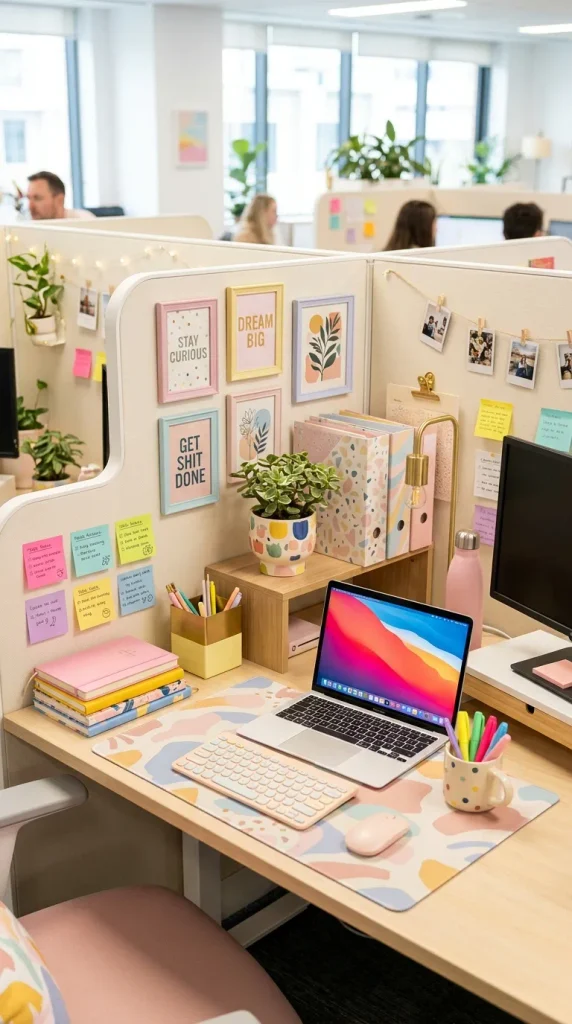
A colorful cubicle is an excellent choice for anyone who enjoys cheerful surroundings and wants their workspace to feel energetic. Color can influence the visual mood of a workstation, and even small amounts can dramatically change a neutral office environment.
You do not need to use every color in the rainbow. Instead, choose one main color and two complementary shades. For example, soft pink can be combined with cream and burgundy, while blue can work beautifully with white and navy. Green can be paired with beige and warm brown for a more natural appearance.
Introduce color through removable and inexpensive accessories. Desk mats, notebooks, pens, sticky notes, file folders, storage boxes, and small artwork can all contribute to the color scheme.
The cubicle wall is a great place for colorful inspiration. Create a small display using photographs, colorful prints, motivational quotes, or a mini mood board. Keep the arrangement organized so that the space feels intentional rather than chaotic.
A colorful calendar or planner can also become a functional decorative feature. If your office allows plants, green foliage provides natural color and helps balance brighter accessories.
When using multiple colors, repeat them throughout the workstation. If you choose pink, for example, use it subtly in stationery, wall art, and perhaps a small storage container. Repetition creates harmony.
It is also important to consider your professional environment. If you work in a formal office, use muted versions of your favorite colors rather than extremely bright shades. A creative workplace may allow a more expressive palette.
The beauty of colorful cubicle inspiration is its flexibility. You can make the space playful, sophisticated, feminine, modern, or energetic simply by changing the color combination. Start small and add color gradually until the workstation feels lively without becoming visually overwhelming.
6. Organized Cubicle Inspiration
An organized cubicle proves that functionality can also be beautiful. If your desk frequently becomes covered with papers, stationery, cables, notebooks, and miscellaneous items, creating a dedicated organizational system can make your workday much easier.
Start by dividing your workspace into zones. Create one area for your computer, another for writing and paperwork, and another for supplies. This prevents different categories of items from mixing together.
Desktop organizers are useful for frequently used supplies. Use separate sections for pens, pencils, markers, sticky notes, clips, and other small objects. A document holder can keep active paperwork upright and visible without covering the entire desk.
For less frequently used supplies, take advantage of drawers. Small containers or drawer dividers can prevent cables, stationery, and office accessories from becoming tangled together.
Wall organization is particularly valuable in cubicles. A hanging file system can store documents, while a small calendar or planner can help manage deadlines. A removable hook system may also be useful for headphones, bags, or small accessories, provided your workplace permits it.
Labels can make an organization system even easier to maintain. Clearly marked folders or containers allow you to quickly return items to their correct location.
The most important part of organized cubicle inspiration is creating a system that you will actually use. An elaborate organization system is useless if it requires too much effort to maintain. Keep the items you use most frequently within arm’s reach and store everything else farther away.
Once your system is established, spend a few minutes at the end of each workday returning items to their designated places. This simple habit keeps the cubicle looking polished and reduces the stress of starting the next day with a messy desk.

7. Greenery-Filled Cubicle Inspiration
Adding greenery is one of the easiest ways to make an office cubicle feel fresh and inviting. Plants introduce natural shapes and textures into an environment that often contains computers, metal furniture, plastic organizers, and other hard surfaces.
For a small cubicle, choose compact plants that fit comfortably on a desk corner or shelf. If your office has limited natural light, select plants that can tolerate indoor conditions or use realistic artificial greenery.
Instead of placing several plants randomly around the workstation, create a small greenery arrangement. A larger plant can become the focal point while one or two smaller plants provide balance.
Plant containers can also contribute to the aesthetic. Ceramic pots create a clean appearance, while woven or natural-fiber containers bring warmth. Neutral planters work particularly well with minimalist and modern cubicle styles.
Greenery can also be incorporated through botanical artwork, leaf-patterned stationery, or small artificial branches. This is useful when workplace policies do not permit live plants.
Keep maintenance in mind. Plants that require frequent watering may become difficult to manage during busy work periods. Choose varieties that match the amount of care you are realistically able to provide.
Avoid allowing plants to interfere with computer equipment, paperwork, or walkways. The goal is to make the workspace more pleasant, not less functional.
A greenery-filled cubicle can also be combined with other styles. Pair plants with beige accessories for an earthy workspace, white décor for a fresh minimalist look, or black accents for a modern botanical aesthetic.
Whether you choose one small plant or create a complete botanical theme, greenery can add life and personality to an otherwise ordinary cubicle. It is a simple decorating choice that works particularly well for Pinterest-inspired office spaces.

8. Feminine Cubicle Inspiration
A feminine cubicle can combine elegance, softness, organization, and personality while still looking professional. This style works especially well with gentle colors, delicate artwork, sophisticated accessories, and subtle decorative details.
Start with a refined palette such as blush pink, cream, beige, soft gray, dusty rose, muted mauve, or white. You do not need to make everything pink. One or two feminine colors can be enough to establish the theme.
Choose stationery that complements the palette. A coordinated notebook, planner, pen set, and folder collection can make everyday work supplies feel decorative.
Wall décor can include elegant typography prints, botanical illustrations, photographs, small calendars, or inspirational phrases. Use matching or complementary frames to create a cohesive display.
Soft textures can also make the workstation feel more comfortable. A fabric desk mat, small cushion, or textured organizer can add warmth without taking up much space.
Metallic accents such as gold, brass, or rose gold can provide a sophisticated finishing touch. Use them sparingly through pen holders, picture frames, clips, or small desk accessories.
A small vase with faux flowers or a delicate plant can serve as a focal point. Choose a compact arrangement so it does not interfere with your work area.
Organization is particularly important because feminine décor can quickly become cluttered if too many decorative objects are added. Keep the desk surface relatively clear and allow a few carefully selected pieces to stand out.
The result should feel polished rather than overly decorated. Feminine cubicle inspiration works best when soft colors, elegant details, useful accessories, and organized storage are balanced together. The finished workstation can feel personal and beautiful while still fitting comfortably into a professional office environment.

9. Modern Cubicle Inspiration
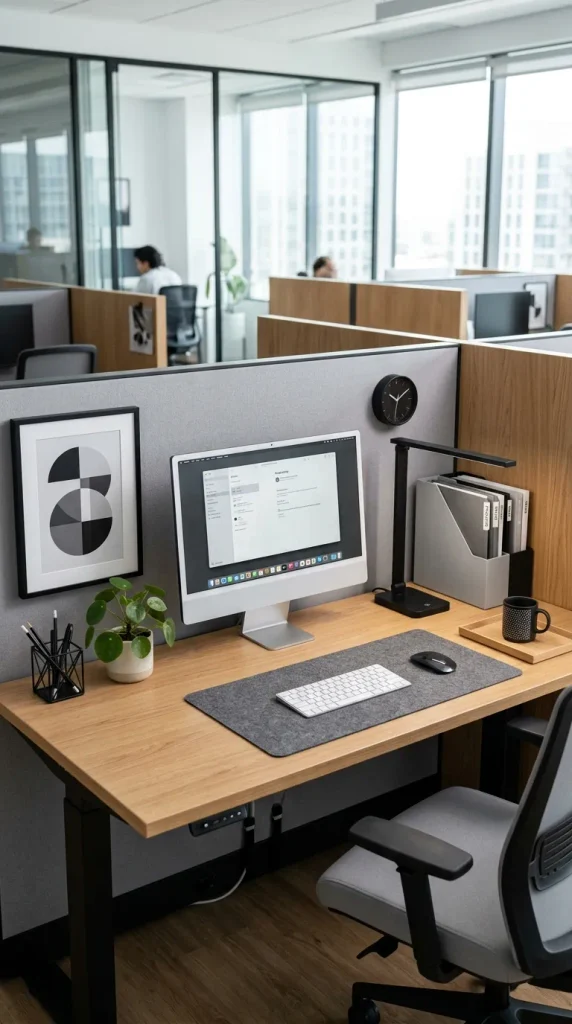
Modern cubicle décor is ideal for anyone who prefers clean lines, sophisticated colors, and a contemporary appearance. The style focuses on simplicity and functionality while using carefully selected accessories to create a polished workspace.
Begin with a modern palette such as black, white, charcoal, gray, beige, or natural wood. One accent color can be added for personality, but keeping the overall palette restrained helps create a sophisticated appearance.
Choose accessories with simple geometric shapes. A sleek pen holder, rectangular desk organizer, minimalist clock, or modern document tray can contribute to the design without unnecessary decoration.
Technology can also become part of the aesthetic. Keep computer cables organized with cable clips or a cable management box. Headphones can be placed on a designated stand rather than left on the desk.
For wall décor, select clean artwork with simple typography, abstract shapes, architectural photography, or monochrome prints. Avoid overcrowding the cubicle walls.
A small plant can soften the modern appearance. Green foliage works especially well with black, white, gray, and natural wood accessories.
Lighting should also have a simple appearance. If desk lamps are permitted, choose a streamlined design that provides useful illumination without dominating the workstation.
Modern design is largely about editing. Before adding another accessory, consider whether it improves the workspace. If the answer is no, leave the surface empty.
This approach makes the cubicle feel more spacious and professional. A modern cubicle does not need expensive furniture or designer accessories. Consistent colors, clean organization, simple shapes, cable management, and carefully selected décor can produce a contemporary look using affordable items.
The final result should feel efficient, calm, and visually balanced—perfect for anyone who enjoys a clean Pinterest-inspired office aesthetic.
10. Creative Cubicle Inspiration
A creative cubicle gives you an opportunity to express your personality through artwork, color, collections, photographs, and unique decorative details. This style is especially suitable for creative workplaces or anyone who feels inspired by visually interesting surroundings.
Begin by deciding what inspires you. Your display might include travel photographs, artwork, illustrations, favorite quotes, magazine cutouts, mood boards, postcards, or personal achievements. Instead of randomly attaching items to the cubicle walls, create a planned composition.
A mood board can become the main feature of the workstation. Combine different sizes and textures while maintaining a consistent color palette. This creates a layered appearance without making the display feel chaotic.
You can also introduce creativity through stationery. Choose unusual notebooks, colorful pens, artistic folders, or decorative sticky notes. These practical objects can become part of the overall design.
A small collection can add personality. For example, you might display miniature artwork, small figurines, travel souvenirs, or meaningful objects. Keep collections limited so they do not interfere with your work.
Lighting can contribute to the atmosphere if workplace rules allow it. A small decorative desk lamp can provide both function and personality.
Creative cubicles should still have an organized working area. Reserve one section of the desk for decoration and keep the main work zone clear.
The best creative workspace tells a story. It should reflect your interests without becoming so visually busy that it distracts you from work.
You can refresh the display periodically by changing photographs, seasonal artwork, or inspirational messages. This keeps the cubicle feeling new without requiring a complete redesign.
Creative cubicle inspiration is ultimately about making your workspace feel personal. When surrounded by meaningful visuals and thoughtfully selected objects, your workstation can become a place that encourages ideas, motivation, and a stronger sense of enjoyment during the workday.

Materials Used for Cubicle Decorating
You do not need a large budget to create a beautiful cubicle. Many of these ideas can be completed with simple office and craft supplies.
Basic Materials
- Desk mat
- Pen holders
- File organizers
- Small storage boxes
- Drawer dividers
- Sticky notes
- Notebooks and planners
- Picture frames
- Printed artwork
- Calendar
- Removable adhesive hooks
- Removable wall strips
- Binder clips
- Cable clips
- Small trays
- Artificial or low-maintenance plants
- Small decorative pots
- Desk lamp, if permitted
- Fabric cushion, if permitted
- Decorative folders
- Labels
- Small baskets
- Personal photographs
- Inspirational prints
Choose materials according to your office policies. Always make sure wall attachments, lighting, plants, and other additions are permitted before installing them.
How to Decorate Your Cubicle Step by Step
Step 1: Clear the Workspace
Remove unnecessary objects from your desk and cubicle walls. Starting with a clean surface makes it easier to determine what you actually need.
Step 2: Choose a Style
Select one overall direction such as minimalist, cozy, colorful, modern, feminine, or creative. A clear theme helps prevent mismatched purchases.
Step 3: Pick a Color Palette
Choose two or three main colors. Repeat those colors through stationery, wall décor, organizers, and accessories.
Step 4: Create Functional Zones
Separate your computer area, paperwork area, stationery area, and personal items. This keeps the workspace practical.
Step 5: Use Vertical Space
Take advantage of cubicle walls with planners, calendars, document holders, photographs, or inspiration boards where permitted.
Step 6: Add Personality
Introduce a few meaningful pieces such as photographs, artwork, plants, or favorite stationery.
Step 7: Organize Cables and Supplies
Use cable clips, trays, folders, and containers to keep small items under control.
Step 8: Leave Working Space
Do not fill every surface. Keep enough clear space for writing, paperwork, and everyday tasks.
Step 9: Review the Finished Look
Stand back and look at the entire cubicle. Remove anything that feels unnecessary or visually distracting.
How to Keep Your Cubicle Pinterest-Worthy
A beautiful cubicle is not created only through decorating. Maintenance is equally important. Spend a few minutes at the end of every workday returning supplies to their proper places.
Keep the desktop clear of unnecessary paperwork. File documents instead of allowing them to accumulate in piles. Replace empty stationery containers and remove damaged or unused decorations.
Seasonal updates can also keep your workspace fresh. You can change a few prints, add seasonal colors, or replace a small decorative item without redesigning the entire cubicle.
Remember that Pinterest-worthy does not mean overcrowded. The most attractive workspaces usually combine decoration with empty space. Allow important pieces to stand out instead of surrounding them with too many competing objects.
Common Cubicle Decorating Mistakes to Avoid
One of the biggest mistakes is adding too many decorations. A cubicle has limited space, and excessive accessories can quickly make it look messy.
Another common mistake is ignoring functionality. Your workstation should support your work rather than make it harder. Avoid placing decorative objects where they block your monitor, keyboard, documents, or essential supplies.
Using too many unrelated colors can also make the cubicle feel disorganized. A simple color palette usually creates a more polished appearance.
Do not forget workplace policies. Some offices have rules regarding wall attachments, electrical items, plants, food, candles, or personal decorations. Always check the rules before making changes.
Finally, avoid copying an aesthetic without adapting it to your personality. Your cubicle should be comfortable and useful for you. The best inspiration is one that you can realistically maintain every day.
Final Thoughts
A cubicle may be small, but it can still become a stylish, comfortable, and inspiring part of your workday. Whether you prefer minimalist organization, cozy details, colorful accessories, modern décor, greenery, feminine touches, or creative displays, there are countless ways to personalize your workstation.
The most successful cubicle inspiration ideas balance style, organization, comfort, and practicality. Start with a clean workspace, choose a simple theme, establish a color palette, and add useful accessories before introducing decorative details.
You do not need to completely transform the office furniture to make a difference. A few carefully chosen items can change the atmosphere dramatically. A beautiful desk mat, organized stationery, a small plant, personal photographs, attractive storage, and thoughtful wall décor can turn an ordinary cubicle into a space that feels intentional and inspiring.
Most importantly, decorate in a way that makes your workday better. Your cubicle should help you feel organized, comfortable, and motivated. With the right balance of personality and function, even the simplest office workstation can become a Pinterest-worthy space that you genuinely enjoy using.

Leave a Reply