
Introduction
Jewel tones are one of the most beautiful ways to make a living room feel rich, elegant, cozy, and full of personality. Inspired by precious gemstones such as emerald, sapphire, ruby, amethyst, and topaz, these saturated colors bring depth and sophistication to an ordinary space. Unlike extremely bright colors, jewel tones have a luxurious quality that can make a room feel dramatic without looking childish or overwhelming.
A jewel tone living room can be created in many different ways. You do not need to repaint every wall or replace all your furniture to achieve the look. Sometimes a velvet sofa, colorful accent chair, patterned rug, decorative pillows, or even a few carefully selected accessories can completely transform the atmosphere.

The key to decorating with jewel tones is balance. Since these colors are naturally bold, pairing them with neutral shades, natural textures, warm metals, wood tones, and soft lighting can help create a comfortable and sophisticated living room. You can also combine several jewel tones together if you use a thoughtful color palette.
Whether you prefer a modern, traditional, bohemian, vintage, glamorous, or eclectic interior, jewel tones can easily be incorporated into your decorating style. From deep emerald green walls to sapphire blue furniture and ruby-colored accessories, there are countless possibilities.
If you have been searching for ways to make your living room more colorful and luxurious, these 10 jewel tone living room ideas can help you create a space that feels stylish, inviting, and perfect for everyday living.
1. Emerald Green Sofa with Neutral Walls
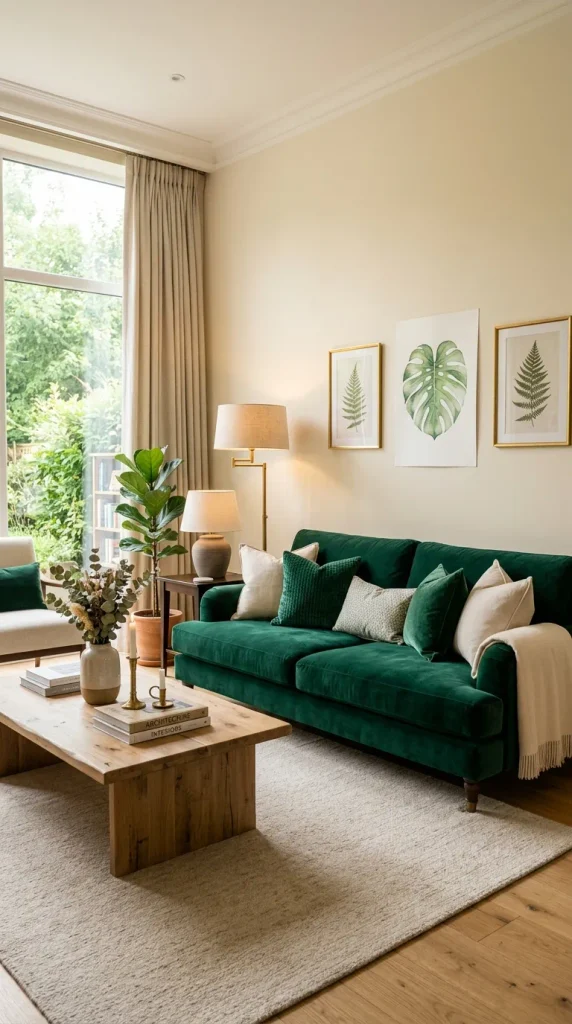
One of the easiest ways to introduce jewel tones into a living room is by choosing an emerald green sofa as the main focal point. Emerald is a deep, sophisticated shade that instantly adds richness while still feeling connected to nature. Because the sofa is usually one of the largest pieces of furniture in the room, choosing an emerald version can make a strong statement without requiring bold colors throughout the entire space.
For a balanced look, keep the walls relatively neutral. White, cream, beige, warm gray, and soft taupe walls work particularly well with emerald green. These understated backgrounds allow the sofa to become the star of the room without making the space feel visually crowded.
When selecting the sofa, velvet upholstery is especially effective because its texture enhances the luxurious character of jewel tones. However, linen, chenille, or other textured fabrics can also work beautifully if you prefer a more relaxed appearance.
Add cream or beige throw pillows to soften the strong green color. You can introduce small amounts of sapphire blue, mustard, or burgundy through cushions, artwork, or decorative objects. A natural wood coffee table can also prevent the room from looking too formal.
For the flooring, consider a neutral rug with subtle patterns. If you want additional warmth, choose a rug containing beige, ivory, brown, or muted gold details.
Lighting is equally important. Warm table lamps, floor lamps, and pendant lights can make emerald green upholstery appear even richer during the evening.
This idea works particularly well for homeowners who want a jewel tone living room without covering every surface in color. The emerald sofa provides enough drama while the neutral surroundings keep the overall design comfortable and timeless.
2. Sapphire Blue Accent Wall
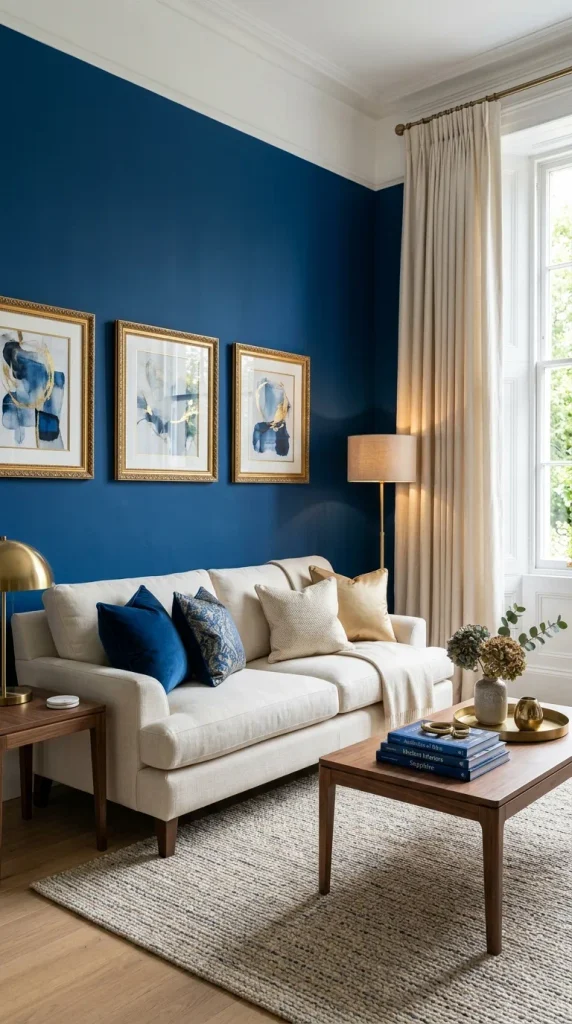
A sapphire blue accent wall can completely change the mood of a living room. Deep blue has a calming yet dramatic quality, making it an excellent jewel tone for creating a sophisticated and relaxing environment.
Instead of painting every wall, consider selecting one wall as the focal point. The wall behind the sofa, fireplace, television, or main seating area is usually a natural choice. A saturated sapphire shade can give that wall architectural importance and make the furniture arrangement feel more intentional.
To keep the room balanced, combine the blue wall with lighter furniture. A cream sofa, light beige sectional, or warm gray seating arrangement can create an attractive contrast against the deep blue background.
Gold and brass accents are particularly beautiful with sapphire. Try incorporating brass table lamps, gold picture frames, metallic candle holders, or a small gold-accented side table. These warm metallic finishes prevent the dark blue from feeling cold.
For additional jewel tone layering, introduce emerald green or amethyst purple through smaller accessories. However, use these secondary colors selectively. The sapphire wall should remain the dominant color.
Natural materials can also soften the appearance. A wooden coffee table, woven basket, jute rug, or rattan accessory can bring organic warmth into the room.
When decorating a sapphire blue wall, pay attention to lighting. Dark colors absorb more light, so the room should have enough artificial and natural illumination. During the daytime, allow sunlight to enter through lightweight curtains. At night, use multiple warm light sources rather than depending on a single ceiling fixture.
This idea is perfect if you want your living room to feel intimate and sophisticated. Sapphire blue works especially well in modern, traditional, contemporary, and transitional interiors.
3. Ruby Red Accent Chairs
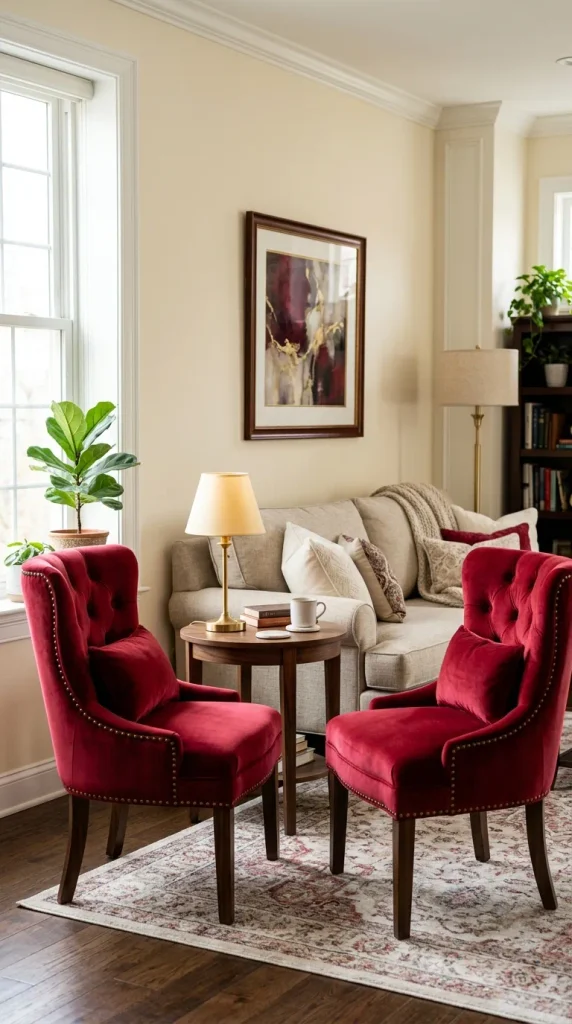
Ruby red is a passionate and energetic jewel tone that can instantly bring personality into a living room. If painting walls or purchasing a colorful sofa feels too bold, ruby red accent chairs are a practical alternative.
Accent chairs allow you to experiment with color while maintaining flexibility. Place one or two ruby-colored chairs opposite a neutral sofa to create a balanced seating arrangement. Cream, beige, gray, black, and brown sofas can all work well with ruby red.
For a luxurious appearance, consider velvet chairs with rounded or curved silhouettes. The combination of saturated red and soft velvet creates an elegant atmosphere reminiscent of classic interiors. If you prefer a contemporary design, choose chairs with clean lines and simple metal or wooden legs.
The surrounding accessories should support the red without competing with it. A few burgundy, blush, or deep plum pillows can create color continuity. Artwork containing small amounts of red can also visually connect the chairs to the rest of the room.
A neutral rug is helpful because it provides visual breathing room beneath the furniture. You can choose a cream rug with a subtle pattern or a darker design featuring several complementary colors.
Wooden furniture is another excellent addition. Warm walnut or medium-toned wood can make ruby red feel inviting and sophisticated rather than overly intense.
If the room has a fireplace, ruby chairs can be positioned around it to create a cozy conversation area. Alternatively, place them beside a window with a small side table to create a comfortable reading corner.
Ruby red does not have to dominate the room. By using it primarily on accent chairs and repeating tiny touches elsewhere, you can enjoy the richness of the jewel tone while maintaining a livable and elegant atmosphere.
4. Amethyst Purple Living Room Accents
Amethyst purple is an excellent jewel tone for anyone who wants something slightly unexpected. Deep purple can make a living room feel artistic, luxurious, and dramatic while adding a sense of individuality.
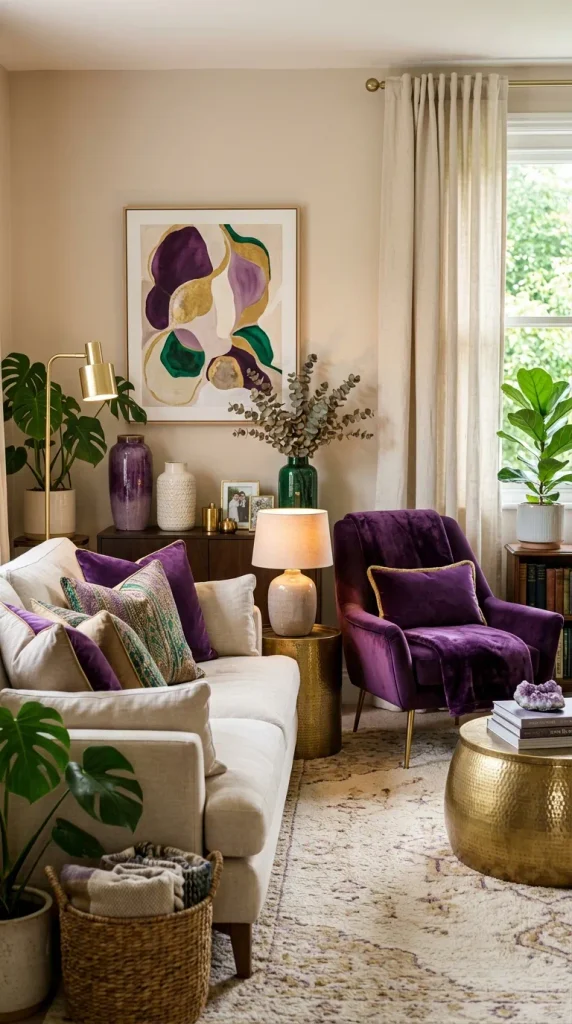
You do not necessarily need purple furniture to achieve this look. Start with smaller decorative pieces such as cushions, curtains, artwork, blankets, vases, or decorative objects. These accessories can introduce amethyst into an otherwise neutral living room.
If you want a stronger effect, consider an amethyst velvet sofa or lounge chair. Pair it with warm neutral walls and natural wood furniture. Cream and beige provide a soft foundation that allows purple to stand out beautifully.
Amethyst also works well with other jewel tones. Emerald green and sapphire blue create a rich, dramatic palette, while ruby and burgundy can produce a warmer and more romantic atmosphere. To prevent the combination from becoming too intense, select one dominant jewel tone and use the others as accents.
Metallic finishes can make purple appear even more luxurious. Brass, antique gold, and champagne-colored details are especially effective. Consider using these finishes in lighting, mirrors, picture frames, and occasional tables.
Texture is important when decorating with purple. Velvet, boucle, woven fabrics, faux fur, and knitted throws can add dimension and make the room feel comfortable.
Lighting should be warm and layered. Floor lamps beside seating, table lamps on consoles, and soft ambient lighting can enhance the depth of the purple tones.
This jewel tone living room idea is particularly suitable for eclectic, glamorous, vintage, and sophisticated interiors. It is also an excellent choice for people who want their home to feel distinctive rather than following a completely neutral decorating trend.
5. Jewel Tone Gallery Wall
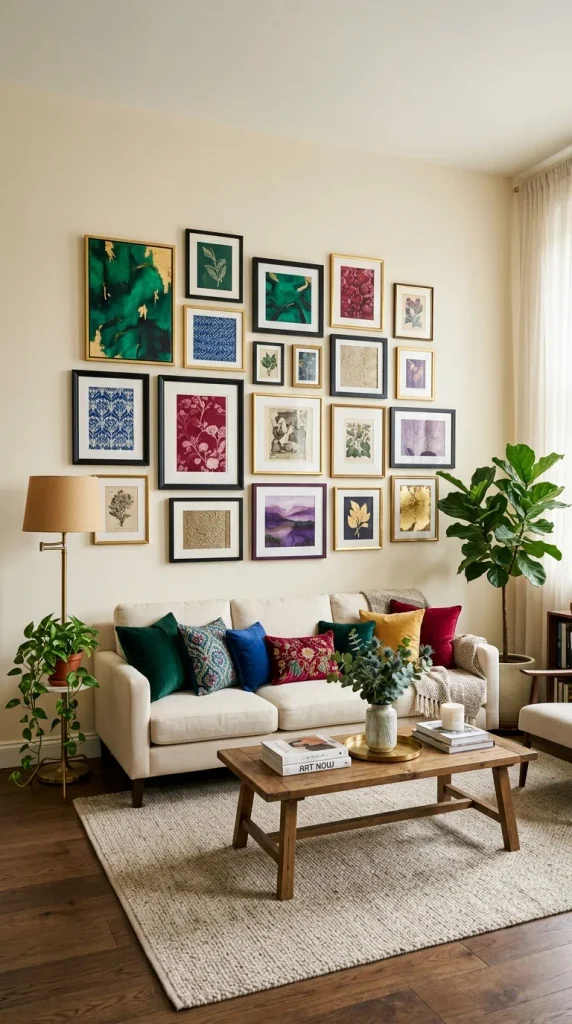
A jewel tone gallery wall is a creative way to introduce multiple rich colors without making major changes to the furniture or walls. Instead of relying on one large colorful object, you can create a collection of artwork featuring emerald, sapphire, ruby, amethyst, teal, and golden shades.
Start by selecting artwork that shares a similar color family. The pieces do not have to match perfectly. In fact, slight differences can make the gallery wall feel more collected and personal.
You can combine abstract paintings, botanical prints, vintage-inspired artwork, photography, geometric designs, and decorative illustrations. The important thing is to repeat your chosen jewel tones throughout the collection.
For the frames, consider using a consistent finish such as black, natural wood, brass, or gold. Matching frames create structure even when the artwork itself is varied.
Place the gallery wall above the sofa, console table, or fireplace. Before hanging everything, arrange the pieces on the floor to determine the best composition. Keeping relatively even spacing between the frames will create a polished appearance.
The rest of the room can remain fairly simple. A beige sofa, neutral rug, wooden coffee table, and understated curtains allow the artwork to receive attention.
You can also repeat one or two colors from the gallery wall in the room’s textiles. For example, if your artwork contains emerald and sapphire, add an emerald cushion and a navy-blue throw.
This approach is especially useful for renters or anyone who wants a colorful living room without committing to bold paint colors. Artwork is easy to replace, rearrange, or update when your preferences change.
A jewel tone gallery wall also gives your living room a more personalized feeling. Instead of looking like a showroom, the space can reflect your personality, favorite colors, travels, interests, and artistic taste.
6. Jewel Tone Velvet Curtains
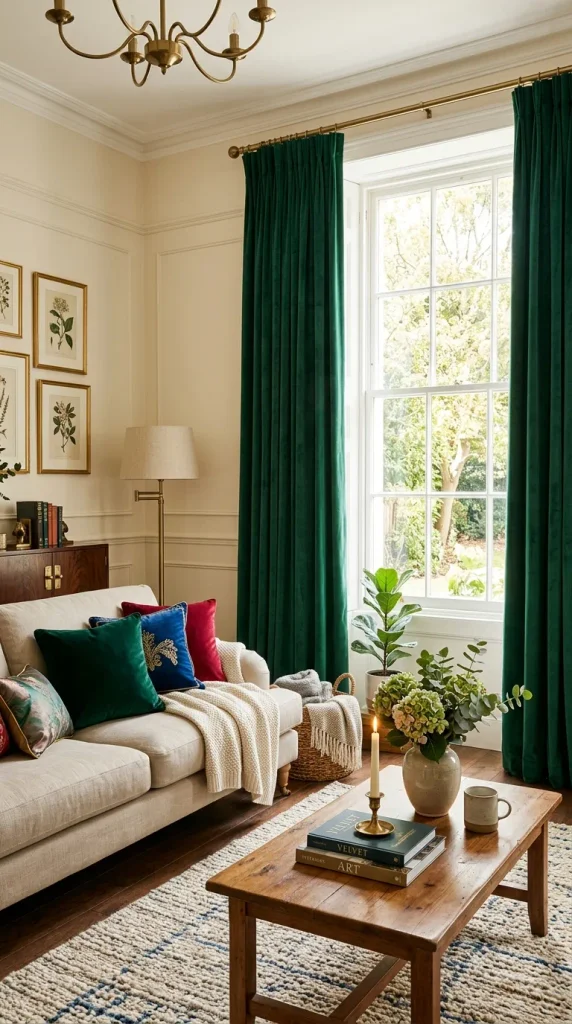
Curtains are often overlooked when decorating a living room, but they can have a major visual impact. Jewel tone velvet curtains are an excellent way to introduce luxury, color, and softness without replacing large furniture pieces.
Emerald, sapphire, teal, burgundy, and deep plum are particularly attractive choices for velvet curtains. Their rich colors can frame windows beautifully and make the entire room feel more sophisticated.
For a balanced appearance, pair bold curtains with neutral walls and furniture. Cream or beige sofas work especially well with emerald or teal curtains, while gray furniture can complement sapphire or plum.
Curtain length also matters. Floor-length curtains generally create a more elegant appearance. If possible, install the curtain rod slightly above the window frame and allow the fabric to extend close to the floor. This can make the windows and ceiling appear taller.
Because velvet is visually heavy, consider using lighter curtains underneath if you need privacy and natural daylight. This layered approach gives you flexibility throughout the day.
You can repeat the curtain color in small decorative details. A few matching cushions, a vase, or artwork can create cohesion without making the room overly coordinated.
Warm lighting works beautifully with velvet because it creates subtle highlights across the fabric. During the evening, lamps positioned near the curtains can emphasize their texture.
If you want a dramatic living room, choose a deeper jewel tone. If you prefer a softer interpretation, select a slightly muted teal, dusty plum, or rich green.
This idea is ideal for traditional, modern-classic, glamorous, and eclectic homes. It provides a strong decorative effect while remaining relatively simple to implement.
7. Emerald and Sapphire Color Combination
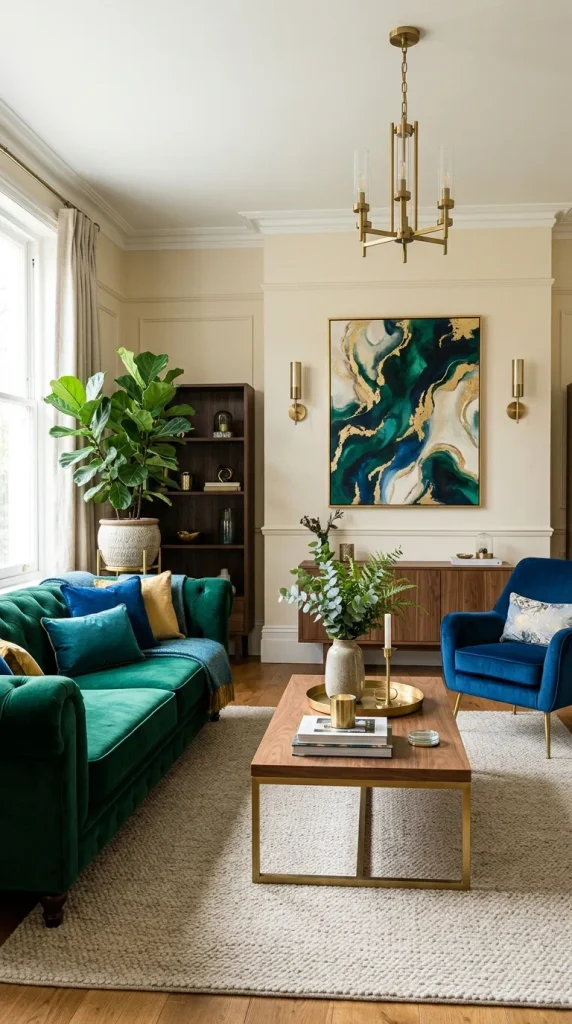
Combining emerald green and sapphire blue is one of the most striking ways to create a jewel tone living room. Both colors are rich and saturated, yet they complement each other because they share a cool, sophisticated quality.
The key to making this combination successful is choosing a dominant color. For example, sapphire can become the main color through a sofa or accent wall, while emerald appears in pillows, curtains, chairs, or artwork.
Alternatively, emerald can dominate through the furniture while sapphire becomes the supporting accent.
Neutral shades should be used between these bold colors. Cream, ivory, beige, warm gray, or soft brown can provide visual breathing space.
Natural wood furniture is particularly useful because it introduces warmth. Walnut, oak, and medium brown wood can prevent the cool jewel tones from making the room feel too cold.
Metallic accents can further enhance the palette. Brass and antique gold create a luxurious contrast, while black metal produces a more contemporary look.
When selecting patterns, look for designs that combine both jewel tones. A patterned rug or decorative pillow containing emerald and sapphire can visually connect separate parts of the room.
Plants are another excellent addition. Green foliage naturally complements emerald while providing a fresh contrast against sapphire.
Avoid introducing too many additional strong colors. If you already have emerald and sapphire as the main palette, allow neutral colors and natural textures to fill most of the remaining space.
This combination works beautifully in sophisticated living rooms where the goal is to create drama without relying on red or purple. It can feel luxurious, calming, and timeless when carefully balanced.
8. Jewel Tone Area Rug as the Focal Point
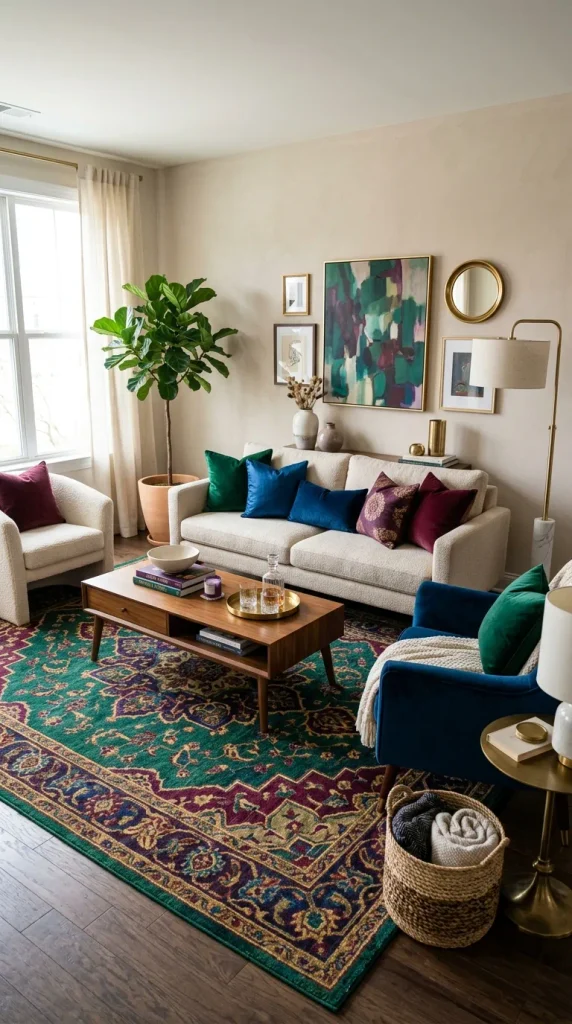
A colorful area rug can be the foundation for an entire jewel tone living room. This is especially useful when you have neutral walls and furniture but want to introduce stronger color.
Look for a rug featuring shades such as emerald, ruby, sapphire, plum, teal, or golden yellow. A patterned design can be particularly effective because it naturally combines multiple colors.
Once you choose the rug, use its colors as a decorating guide. If the rug contains emerald and burgundy, select cushions, artwork, or decorative objects that repeat those shades.
Keep larger furniture relatively neutral if the rug is highly colorful. A cream sofa, beige sectional, or gray seating arrangement can prevent the room from feeling too busy.
The rug should also be large enough to visually connect the seating arrangement. Ideally, at least the front legs of the main furniture pieces should sit on the rug. This helps create a cohesive conversation area.
Texture matters as well. A thick, soft rug can make the room feel cozy, while a low-pile patterned rug may create a cleaner and more contemporary appearance.
If you have children or pets, choose a practical material and pattern that can handle everyday use. Jewel tones can actually be useful in high-traffic spaces because deeper colors may be more forgiving than very pale rugs.
Complete the look with a few carefully selected jewel tone accessories. Avoid matching every item exactly. Instead, repeat colors naturally through different textures and materials.
A jewel tone rug is also easier to replace than major furniture, making this a flexible option for experimenting with color. If your decorating style changes later, you can keep the neutral furniture and simply change the rug and accessories.
9. Jewel Tone Built-In Shelving and Decor
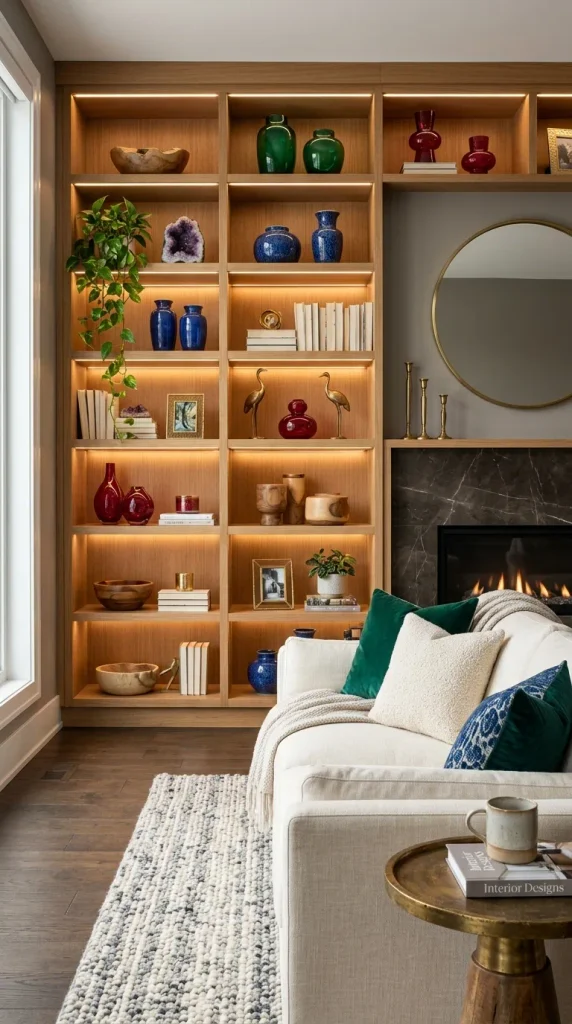
Built-in shelving can become a beautiful display area for jewel tone accessories. Instead of filling every shelf with random decorations, use color intentionally to create a cohesive and sophisticated arrangement.
Start with a neutral background such as white, cream, warm gray, or natural wood. Then introduce jewel colors through books, vases, artwork, ceramics, candle holders, decorative boxes, and small sculptures.
Emerald glass, sapphire ceramics, ruby-colored objects, and amethyst accessories can create a beautiful layered appearance. Because the objects are relatively small, you can combine several jewel tones without overwhelming the room.
Arrange accessories at different heights. Place taller vases or artwork toward the back and smaller objects toward the front. Leaving some empty space between groups is important because it allows individual pieces to stand out.
You can also incorporate natural elements such as dried branches, plants, wooden bowls, and woven baskets. These organic textures soften the richness of the jewel tones.
If the shelves are part of a fireplace wall, use the mantel as another opportunity to introduce color. A large piece of artwork or a decorative mirror can serve as the focal point above it.
Lighting can dramatically improve built-in shelving. Small integrated lights or carefully positioned lamps can highlight colorful objects and create a warm evening atmosphere.
The advantage of this idea is flexibility. You can change accessories seasonally without changing the overall design. For example, emerald and gold can create a sophisticated everyday palette, while burgundy and amber accessories can bring warmth during fall.
This is a wonderful option for homeowners who enjoy decorating and rearranging their interiors. It allows jewel tones to become part of the room’s personality without making them permanent architectural features.
10. Layered Jewel Tone Living Room
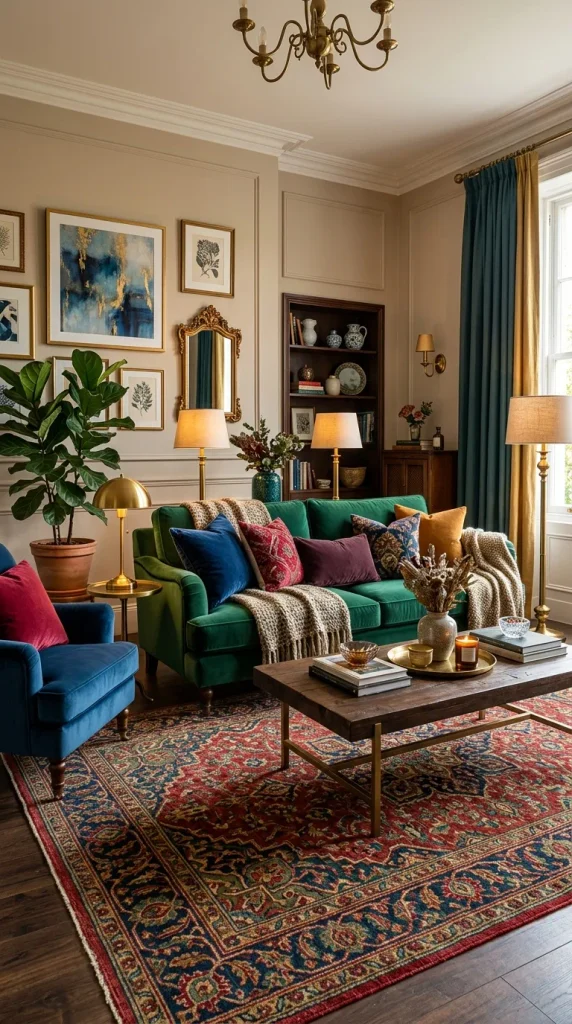
For the ultimate jewel tone look, consider layering several rich colors throughout the living room. Instead of choosing one statement piece, use a carefully planned palette across furniture, textiles, artwork, and accessories.
Start with a neutral foundation. Cream walls, natural wood flooring, and a beige or warm gray sofa can provide a calm base.
Then introduce your primary jewel tone. Emerald green, sapphire blue, or deep teal can become the dominant color. Add a secondary shade such as ruby, plum, or golden yellow.
Textiles are one of the easiest ways to layer color. Mix cushions in different jewel tones, add a richly colored throw blanket, and place a patterned rug beneath the seating arrangement.
Do not make every item equally bright. Some colors should be deeper, softer, or used in smaller amounts. This creates visual hierarchy.
For example, an emerald sofa could be paired with sapphire and burgundy cushions, while brass lamps and a neutral rug balance the composition. Artwork can introduce additional shades without dominating the room.
Texture is essential in a layered jewel tone living room. Combine velvet, linen, wool, woven materials, wood, glass, and metal. Different textures keep the room interesting even when the color palette is bold.
Lighting should be layered too. Use ceiling lighting for general illumination, floor lamps for corners, table lamps for side tables, and accent lighting for artwork or shelving.
Finally, add a few personal accessories. Books, plants, ceramics, photographs, and meaningful decorative pieces prevent the room from feeling overly designed.
The goal is not to make every part of the room colorful. The goal is to create a balanced environment where jewel tones appear repeatedly but naturally. When done correctly, a layered jewel tone living room can feel luxurious, comfortable, welcoming, and highly Pinterest-worthy.
Materials Used for a Jewel Tone Living Room
Creating a jewel tone living room does not require one specific set of materials. The best spaces combine different textures and finishes to prevent saturated colors from feeling flat.
Furniture Materials
- Velvet upholstery
- Linen
- Chenille
- Boucle
- Leather
- Solid wood
- Engineered wood
- Metal accents
Decorative Materials
- Ceramic
- Glass
- Stone
- Brass
- Gold-finished metal
- Wood
- Woven fibers
- Decorative textiles
Textile Materials
- Velvet cushions
- Cotton throws
- Wool rugs
- Linen curtains
- Patterned upholstery
- Knitted blankets
The combination of these materials adds depth to a jewel tone palette. For example, emerald velvet paired with natural wood feels warmer and more inviting than emerald fabric surrounded entirely by glossy surfaces.
How to Create a Jewel Tone Living Room
Step 1: Choose Your Main Jewel Tone
Begin by selecting one dominant color. Emerald green, sapphire blue, deep teal, ruby red, and amethyst purple are all excellent choices.
Step 2: Establish a Neutral Base
Use neutral walls, flooring, or larger furniture pieces to create balance. Cream, beige, taupe, warm gray, and natural wood are especially useful.
Step 3: Add Your Statement Piece
Choose one major jewel tone element such as a sofa, accent wall, area rug, curtains, or large artwork.
Step 4: Introduce Secondary Colors
Add one or two complementary jewel tones through pillows, throws, artwork, chairs, or accessories.
Step 5: Mix Textures
Combine velvet, linen, wood, wool, glass, ceramic, and metal. Texture makes saturated colors look more sophisticated.
Step 6: Add Warm Metallics
Brass, antique gold, and warm bronze can make jewel tones appear luxurious and polished.
Step 7: Balance the Lighting
Use multiple light sources rather than depending only on overhead lighting. Warm lighting is particularly effective with deep colors.
Step 8: Add Natural Elements
Plants, wood, woven baskets, stone accessories, and natural fabrics can soften a dramatic palette.
Step 9: Avoid Over-Matching
Your jewel tones should coordinate rather than perfectly match. Slight variations make the room feel collected and authentic.
Step 10: Personalize the Space
Finish with books, artwork, family photographs, plants, and objects that reflect your personality. A beautiful living room should also feel comfortable and lived-in.
Final Thoughts
A jewel tone living room can be bold without being overwhelming and luxurious without feeling uncomfortable. The secret is finding the right balance between rich color, neutral space, natural materials, and soft textures.
Whether you choose an emerald green sofa, sapphire accent wall, ruby chairs, amethyst accessories, colorful curtains, or a jewel tone rug, there are many ways to bring these beautiful colors into your home.
If you are nervous about using strong colors, start small with pillows, artwork, vases, blankets, or curtains. Once you become comfortable with the palette, you can introduce larger statement pieces.
For a more dramatic transformation, combine multiple jewel tones and balance them with warm neutrals, wood, metallic accents, and layered lighting. This creates a room that feels intentional rather than chaotic.
Most importantly, choose colors that you genuinely enjoy. Interior design should reflect your personality and create a space where you feel comfortable spending time. With thoughtful color placement and a mixture of textures, jewel tones can turn an ordinary living room into a rich, inviting, and stylish retreat.
These 10 jewel tone living room ideas are a great starting point for creating a colorful home that feels elegant, cozy, and beautifully put together.





Leave a Reply