
Introduction
A bedroom should be more than just a place to sleep. It should be a peaceful retreat where you can relax, recharge, and feel completely comfortable. While decorating trends change every year, timeless interior design remains beautiful regardless of the season or the latest fashion. A timeless bedroom combines classic colors, quality materials, balanced furniture, and thoughtful details to create a space that feels elegant for many years.
The best part about timeless bedroom design is that it does not have to be expensive or overly complicated. You can create a sophisticated bedroom with simple furniture, neutral colors, soft textiles, natural textures, and carefully selected accessories. The goal is to design a room that feels personal while maintaining a classic appearance.

Whether you prefer a modern, traditional, farmhouse, Scandinavian, or transitional style, timeless decorating principles can help you create a bedroom that never feels outdated. From choosing the right color palette to layering comfortable bedding, every detail contributes to the overall atmosphere.
In this article, you will discover 10 timeless interior design bedroom ideas that can help you create a stylish, comfortable, and welcoming space. You will also find useful decorating tips, material suggestions, and practical instructions to make each idea work in your own home.
1. Choose a Soft and Neutral Color Palette
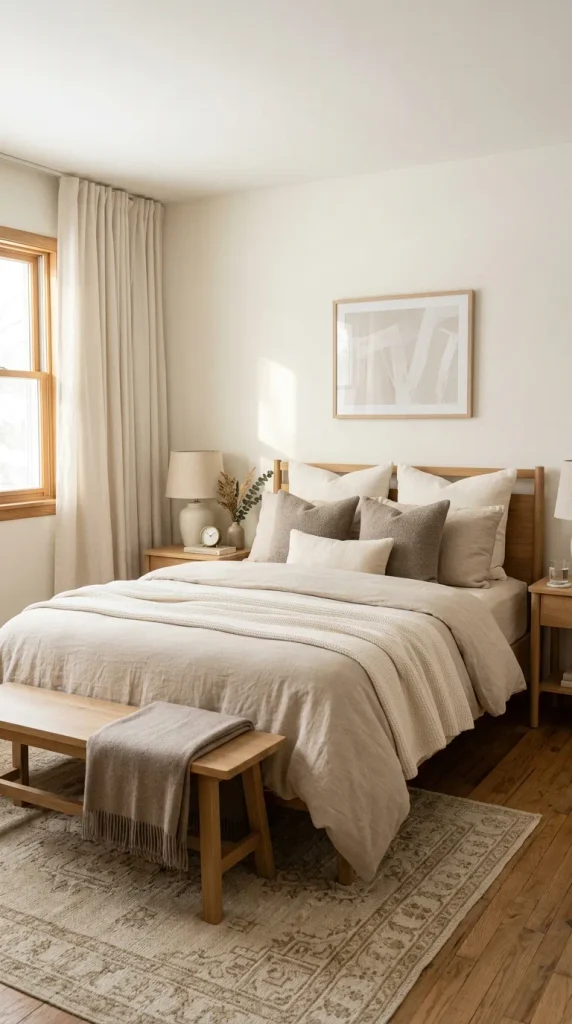
One of the easiest ways to create a timeless bedroom is to begin with a soft and neutral color palette. Colors such as warm white, cream, beige, taupe, light gray, ivory, and soft greige create a calm background that remains attractive for years. Unlike bold colors that may become outdated or overwhelming, neutral shades offer flexibility and work well with different decorating styles.
A neutral bedroom does not have to look boring. The key is to combine several tones and textures instead of using one color throughout the entire room. For example, you can paint the walls a warm white, add a beige upholstered bed, and decorate with ivory bedding and taupe curtains. Small accents in wood, black, brass, or muted green can add personality without overpowering the space.
When selecting your color palette, consider the amount of natural light in your bedroom. Rooms with limited sunlight often look better with warm shades, while bright bedrooms can handle cooler neutrals. Always test paint samples on the wall before making a final decision because colors can look different throughout the day.
You can also introduce color through removable accessories. Soft blue cushions, olive-green throws, or dusty rose artwork can be changed easily whenever your preferences evolve.
Materials to consider:
- Warm white or greige wall paint
- Linen or cotton bedding
- Neutral area rugs
- Beige or cream curtains
- Natural wood accessories
- Soft-colored decorative pillows
A neutral foundation allows you to refresh your bedroom without completely redesigning it. This makes it one of the most practical and lasting interior design choices.
2. Invest in a Classic Upholstered or Wooden Bed
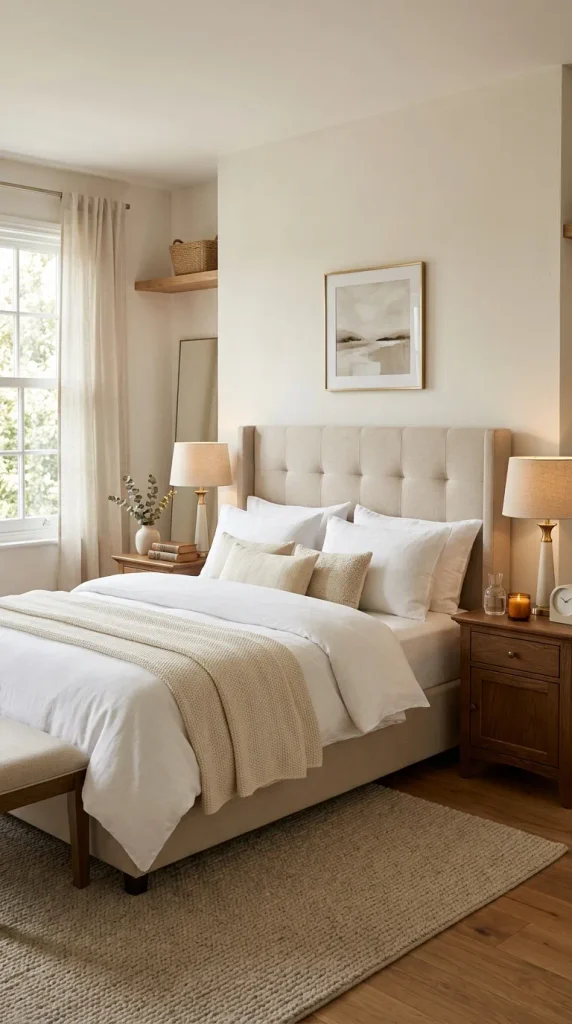
The bed is usually the main focal point of a bedroom, so choosing a classic design is essential for creating a timeless interior. Instead of selecting a bed with an overly trendy shape or complicated details, consider a simple upholstered bed, a traditional wooden frame, or a clean-lined platform bed.
An upholstered headboard can make the bedroom feel soft, luxurious, and comfortable. Linen, cotton, boucle, and neutral velvet are popular choices because they add texture while maintaining a sophisticated appearance. Choose shades such as beige, cream, gray, or light brown for a design that can easily coordinate with future decor changes.
Wooden beds are another excellent option for timeless bedrooms. Oak, walnut, pine, and ash provide natural warmth and bring an organic feeling into the room. A wooden bed with a simple silhouette can work beautifully in modern, farmhouse, Scandinavian, rustic, and traditional interiors.
Pay attention to proportion when selecting your bed. A large bed in a small room may make the space feel crowded, while a small bed in a large bedroom may look unbalanced. Leave enough space around the bed for movement and bedside tables.
You can make a classic bed more inviting by adding layers of bedding. Start with crisp sheets, add a duvet or quilt, and finish with a folded throw blanket and a few decorative pillows. Avoid using too many matching patterns. Instead, combine solid colors with subtle textures.
Useful materials include:
- Solid wood or engineered wood
- Linen upholstery
- Cotton or cotton-blend fabric
- High-quality mattress support
- Metal hardware
- Durable, washable bedding
A well-chosen bed can last for many years and serve as the foundation for the entire bedroom design.
3. Add Natural Wood for Warmth and Character
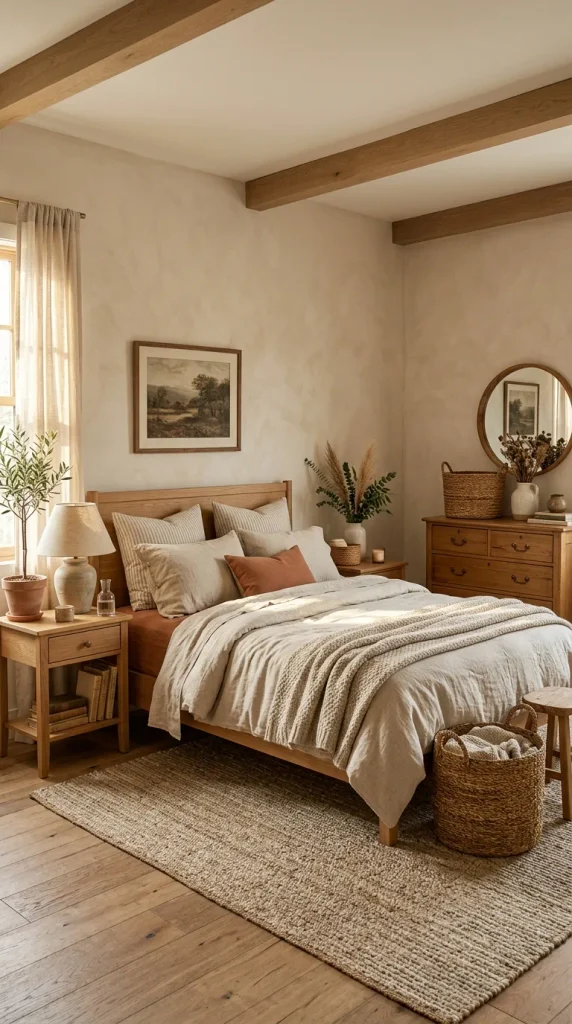
Natural wood is one of the most reliable materials for timeless interior design. It adds warmth, texture, and visual interest while making a bedroom feel more welcoming. Whether you use wood for furniture, flooring, wall accents, or decorative accessories, it can create a classic atmosphere that never feels overly fashionable.
You do not need to fill the entire room with wooden furniture. A few carefully selected pieces can make a significant difference. Consider adding a wooden bedside table, a vintage dresser, a bench at the foot of the bed, or a simple wooden mirror frame. These pieces introduce natural texture without making the room feel heavy.
The type of wood you choose will influence the mood of the bedroom. Light oak and pine create an airy and relaxed atmosphere, while walnut and dark-stained wood offer a richer and more traditional appearance. If you prefer a rustic bedroom, reclaimed wood can provide a sense of history and character.
Try to coordinate wood tones without making every piece look identical. Mixing two complementary wood finishes can create a more collected and natural appearance. For example, a light oak bed can work with a medium-toned wooden dresser and a small walnut accent stool.
Wood can also be introduced through small accessories, including picture frames, trays, lamps, floating shelves, and decorative boxes. These details are especially useful if you are decorating a rental property or working with a limited budget.
Recommended materials:
- Oak or walnut furniture
- Reclaimed wood accents
- Bamboo accessories
- Wooden picture frames
- Rattan baskets
- Natural wood shelving
Natural wood helps balance soft fabrics and neutral walls. It makes a bedroom feel grounded, comfortable, and connected to nature, which is why it remains a popular choice in lasting bedroom designs.
4. Create a Balanced Bedroom Layout
A timeless bedroom is not only about attractive furniture and colors. It is also about creating a balanced and functional layout. Even the most beautiful bedroom can feel uncomfortable if the furniture is arranged poorly or if there is not enough space to move around.
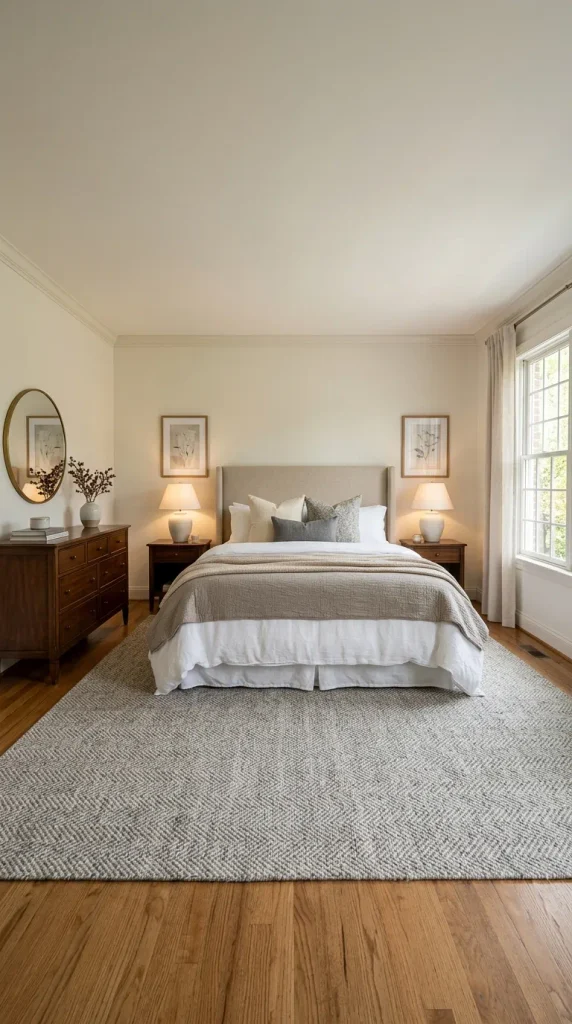
Begin by identifying the main focal point, which is usually the bed. In many bedrooms, placing the bed against the largest uninterrupted wall creates a balanced appearance. If possible, position the bed where it can be seen from the doorway without blocking windows or natural pathways.
Symmetry is another important feature of classic bedroom design. Matching bedside tables and lamps on both sides of the bed can create a calm and organized appearance. However, perfect symmetry is not always necessary. You can use similar-sized objects or complementary materials to create balance while keeping the room relaxed.
Leave enough space around major furniture pieces. A clear walkway makes the room easier to use and helps it feel larger. Avoid placing too many large items in a small bedroom. Choose furniture with legs or open bases if you want the room to appear more spacious.
Think about practical storage as well. A bedroom should look attractive but also support everyday routines. Include drawers, baskets, wardrobes, or under-bed storage to prevent clutter from taking over the space.
Before moving heavy furniture, measure the room and create a simple floor plan. Mark the locations of doors, windows, radiators, and electrical outlets. This step can prevent costly mistakes.
Helpful layout materials and tools:
- Measuring tape
- Graph paper or a digital floor planner
- Furniture dimensions
- Storage baskets
- Bedside tables
- Floor lamps or table lamps
A well-planned layout creates a bedroom that feels peaceful, organized, and easy to live in. Functionality is one of the most important qualities of timeless design.
5. Use Layered Bedding for a Comfortable Look
Beautiful bedding can transform an ordinary bedroom into a cozy and elegant retreat. Layered bedding is a timeless decorating technique because it creates softness, depth, and comfort without relying on temporary trends.
Begin with a high-quality mattress and comfortable sheets. Cotton, linen, and cotton percale are excellent options because they are breathable and suitable for everyday use. Choose neutral or soft colors for the foundation, such as white, cream, beige, light gray, or pale blue.
Next, add a duvet, quilt, or coverlet. A quilt can provide a classic, traditional appearance, while a fluffy duvet creates a relaxed and luxurious feeling. For extra visual interest, fold a lightweight blanket across the lower part of the bed. This simple detail makes the bed look carefully styled without appearing too formal.
Decorative pillows can add personality, but avoid using too many. A combination of standard sleeping pillows, two larger decorative cushions, and one smaller accent pillow is usually enough. Choose different textures rather than relying on numerous patterns. For example, combine linen, cotton, knitted fabric, and velvet in complementary shades.
You can change the appearance of your bedroom throughout the year by switching small bedding accessories. Lightweight cotton blankets work well in warmer months, while wool or knitted throws provide extra comfort during colder seasons.
Make sure all bedding materials are easy to wash and maintain. Timeless design should be practical as well as attractive.
Materials to use:
- Cotton sheets
- Linen duvet covers
- Quilts or coverlets
- Knitted or wool throws
- Textured decorative pillows
- Breathable mattress protectors
Layered bedding gives the bedroom a welcoming appearance and encourages relaxation. It also allows you to update the room easily without replacing large furniture pieces.
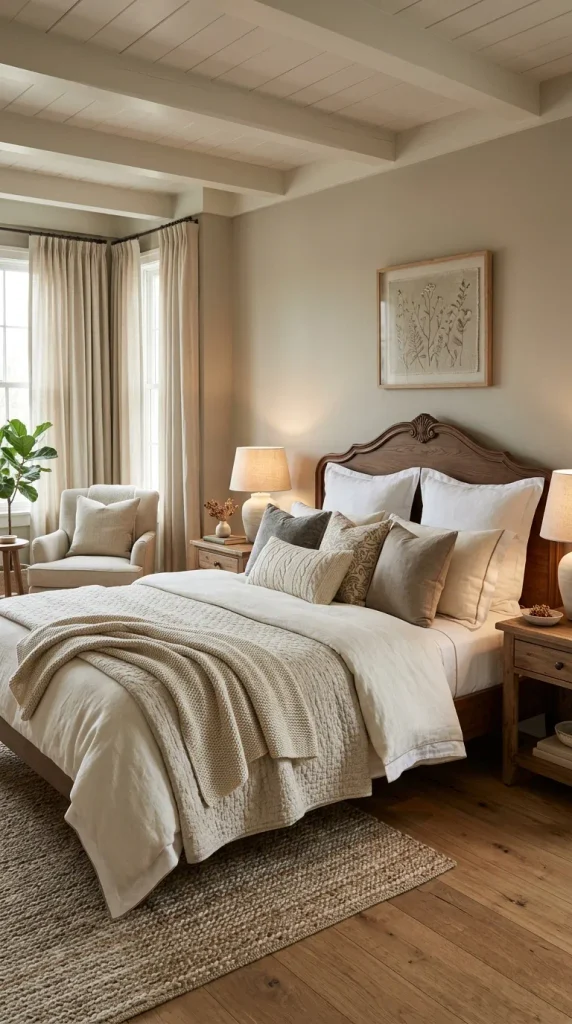
6. Install Classic and Flexible Lighting
Lighting plays a major role in creating a timeless bedroom. The right lighting can make the room feel warm, peaceful, and elegant, while poor lighting can make even a well-decorated space feel uncomfortable.
A timeless bedroom should include several types of lighting instead of relying on one ceiling fixture. Ambient lighting provides general illumination, task lighting helps with activities such as reading, and accent lighting highlights decorative features.
Start with a classic ceiling light. A simple flush-mount fixture, a fabric drum shade, or a traditional chandelier can work well depending on the size and style of the room. Choose a design that complements the furniture without becoming the only noticeable feature.
Bedside lighting is equally important. Matching table lamps create symmetry and provide convenient light for reading or relaxing. Wall-mounted sconces are useful in smaller bedrooms because they save space on bedside tables. Choose fixtures in finishes such as brushed brass, matte black, aged bronze, or polished nickel.
Warm white bulbs are generally ideal for bedrooms because they create a relaxing atmosphere. Dimmable lighting is particularly useful because it allows you to adjust brightness throughout the day.
Do not forget natural light. Use curtains that provide privacy while still allowing sunlight to enter the room. Layer sheer curtains with heavier drapes for greater flexibility.
Lighting materials and options include:
- Fabric lampshades
- Glass pendant lights
- Brass or bronze fixtures
- Wall-mounted sconces
- Dimmable LED bulbs
- Sheer and blackout curtains
Classic lighting fixtures can remain attractive for many years. By combining practical illumination with decorative appeal, you can create a bedroom that feels both functional and sophisticated.
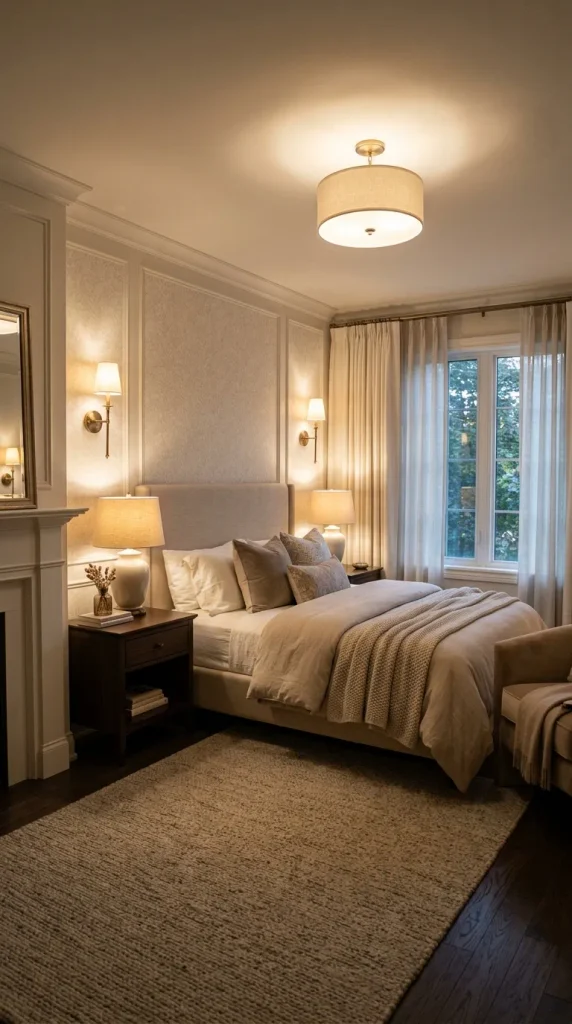
7. Decorate with Classic Artwork and Mirrors
Artwork and mirrors are excellent ways to personalize a bedroom while maintaining a timeless appearance. Instead of selecting pieces based only on current trends, choose artwork that reflects your taste and creates a sense of calm.
Large artwork above the bed can act as a focal point. Abstract designs in muted colors, botanical prints, landscape paintings, and black-and-white photography are all versatile choices. Select artwork that complements your color palette instead of competing with it.
A gallery wall can also look beautiful in a timeless bedroom. To keep the arrangement cohesive, use matching or coordinated frames. Wooden frames create warmth, while black, white, or metallic frames offer a more polished appearance. Arrange the artwork on the floor first to test different layouts before hanging anything.
Mirrors are both decorative and practical. A large mirror can reflect natural light and make a small bedroom appear more spacious. Consider placing a mirror opposite a window to brighten the room. A full-length mirror near the wardrobe is useful for everyday dressing, while a decorative round mirror can add softness above a dresser.
Avoid overcrowding the walls. A few carefully chosen pieces often create a more elegant effect than many small decorations. Leave some empty wall space so the room can breathe.
Useful materials include:
- Framed botanical prints
- Canvas artwork
- Black-and-white photographs
- Wooden or metal frames
- Round or rectangular mirrors
- Picture-hanging hardware
Choose artwork that you will enjoy looking at for years. Personal and meaningful pieces are more likely to remain appealing than decorations selected only because they are fashionable.
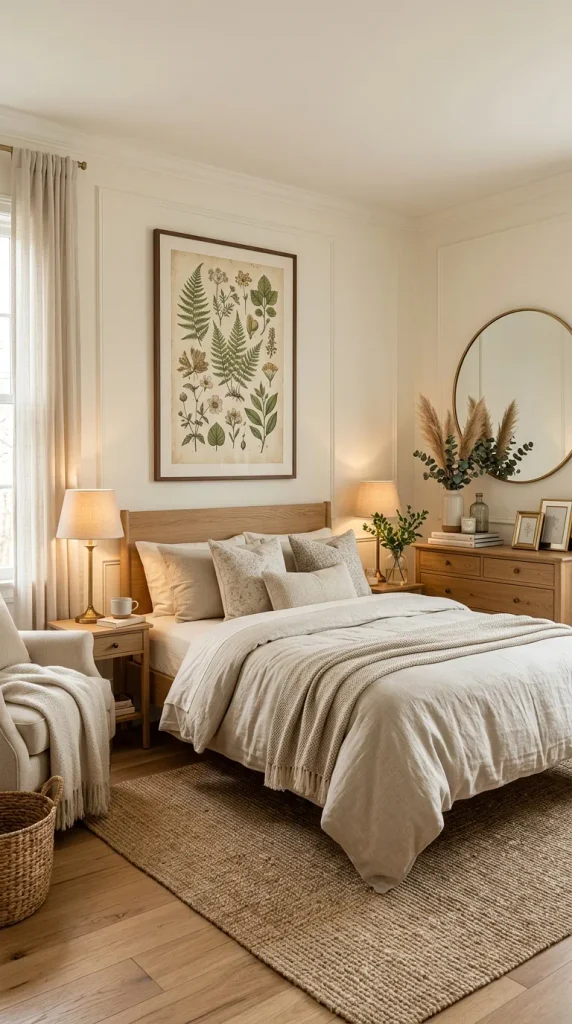
8. Add Soft Textiles and Comfortable Rugs
Textiles are essential for creating a warm and inviting bedroom. They soften hard surfaces, improve comfort, and add layers of visual texture. Rugs, curtains, cushions, and upholstered furniture can make a bedroom feel more complete without requiring major renovations.
A bedroom rug is especially useful because it adds warmth underfoot and helps define the sleeping area. If the room is large enough, place a large rug beneath the bed so that it extends beyond the sides and foot of the frame. In a smaller bedroom, two narrow runners on either side of the bed can create a similar effect.
Choose rug materials according to your lifestyle. Wool rugs are durable and naturally warm, while cotton rugs are lightweight and easy to clean. Jute and sisal provide a natural, textured appearance, although they may feel rougher underfoot.
Curtains also contribute to the overall atmosphere. Linen curtains create a relaxed and airy appearance, while heavier drapes provide warmth and privacy. Neutral shades are usually the most versatile, but subtle stripes or small patterns can add character.
Do not forget smaller textiles. A knitted throw, a soft bench cushion, or a textured pillow can introduce comfort and depth. Try to combine different textures while keeping the colors coordinated.
Recommended textile materials:
- Wool rugs
- Cotton runners
- Linen curtains
- Velvet accent cushions
- Knitted blankets
- Jute or sisal accessories
Textiles should be selected for both appearance and durability. Comfortable materials help create a bedroom that feels inviting every day, while classic colors ensure that the design remains relevant over time.
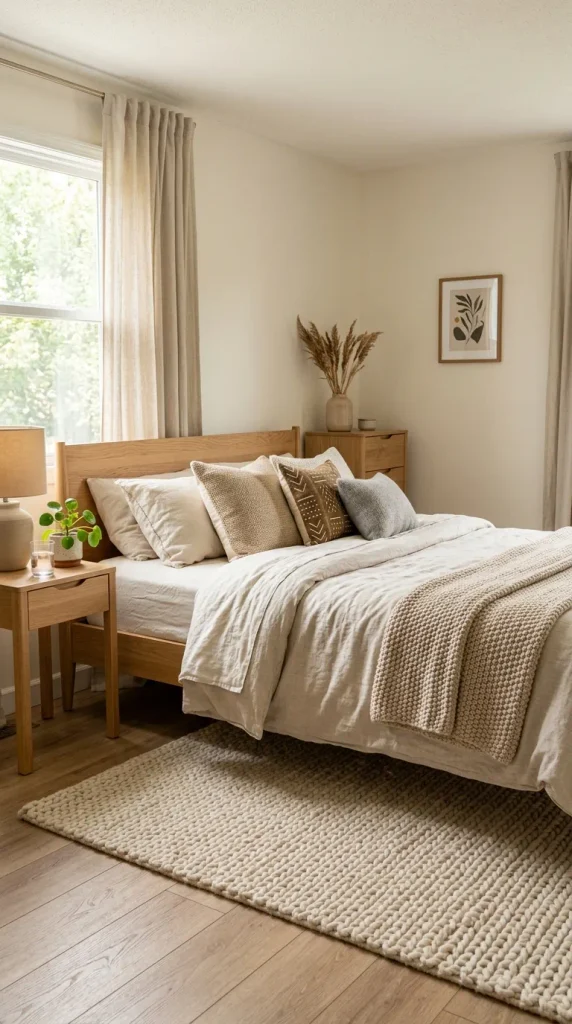
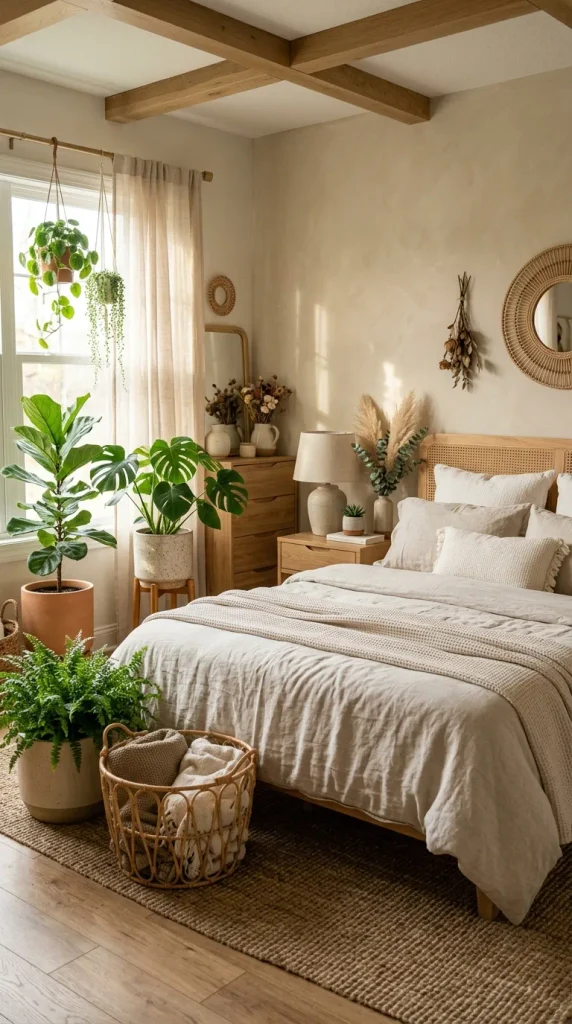
9. Bring Nature Indoors with Plants and Organic Details
Adding natural elements is a simple way to make a bedroom feel fresh, peaceful, and timeless. Plants, flowers, woven baskets, stone accessories, and natural fibers can create a connection to the outdoors and soften the appearance of modern furniture.
If your bedroom receives plenty of natural light, consider adding a low-maintenance indoor plant near a window. Snake plants, pothos, peace lilies, and rubber plants are popular choices, but the best plant depends on the amount of light and the care you can provide.
For bedrooms with limited sunlight, dried flowers or high-quality artificial plants can provide a natural look without requiring regular maintenance. A small vase of eucalyptus, dried grasses, or branches can create an elegant focal point on a dresser or bedside table.
Natural materials can also be introduced through woven baskets, rattan lampshades, seagrass storage containers, and ceramic planters. These details add texture and help keep the room organized.
Be careful not to overcrowd the space with plants and accessories. A few well-placed natural elements are usually more effective than filling every surface. Select containers that coordinate with the room’s color palette and furniture finishes.
You can also use natural scents to improve the atmosphere. Choose subtle fragrances such as lavender, cedar, or vanilla if they suit your preferences. Keep safety in mind when using candles or diffusers, especially near bedding and curtains.
Materials and natural elements to consider:
- Indoor plants
- Ceramic or terracotta pots
- Woven baskets
- Rattan accessories
- Dried flowers
- Stone and wooden decorations
Nature-inspired details can make a bedroom feel calmer and more welcoming. They also work with many decorating styles, making them a reliable choice for timeless interiors.
10. Keep Clutter Under Control with Elegant Storage
A clutter-free bedroom is one of the most important features of timeless interior design. Even a beautifully decorated room can lose its appeal when clothes, accessories, and personal belongings are scattered across surfaces.
The best storage solutions combine practicality with attractive design. Begin by assessing what you actually need to store. Separate everyday items from seasonal clothing, accessories, books, and rarely used belongings. This will help you choose storage that fits your lifestyle.
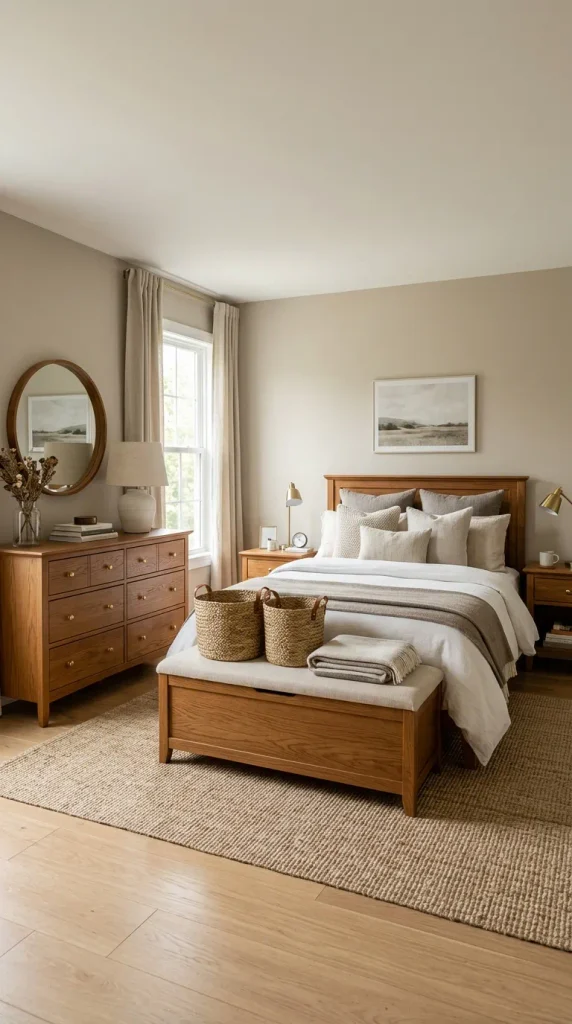
A classic dresser is both useful and decorative. Select a piece with clean lines, durable hardware, and enough space for your daily essentials. A storage bench at the foot of the bed can provide a place to sit while also hiding extra blankets or pillows.
Bedside tables with drawers are helpful for keeping small items organized. Use trays, boxes, or small containers inside drawers to prevent clutter. Floating shelves can display books and decorative objects, but avoid filling them with too many items.
Under-bed storage is ideal for small bedrooms. Flat storage boxes, rolling drawers, or built-in compartments can hold seasonal clothing and extra bedding without taking up additional floor space.
Choose storage materials that complement the rest of the room. Wood, woven baskets, fabric boxes, and simple metal hardware can create a coordinated appearance.
Useful storage materials include:
- Wooden dressers
- Woven baskets
- Fabric storage boxes
- Under-bed containers
- Storage benches
- Floating shelves
- Drawer organizers
A tidy bedroom feels more peaceful and spacious. By selecting storage that is both functional and attractive, you can maintain a timeless design while making daily life easier.
How to Create a Timeless Bedroom: Step-by-Step Guide
Designing a timeless bedroom does not require completing everything at once. Follow these simple steps to create a cohesive and comfortable space.
Step 1: Evaluate Your Current Bedroom
Look at your existing furniture, wall colors, lighting, and storage. Decide which pieces can be reused and which items need to be replaced. Removing unnecessary clutter is an excellent first step.
Step 2: Select a Consistent Color Palette
Choose two or three main colors and a few complementary accent shades. Neutral colors are a strong foundation, while natural wood and muted colors can add warmth.
Step 3: Plan the Furniture Layout
Measure the room and consider the position of the bed, wardrobe, dresser, and bedside tables. Keep pathways clear and make sure doors and drawers can open comfortably.
Step 4: Choose Long-Lasting Furniture
Invest in pieces with classic shapes and durable materials. Avoid selecting furniture simply because it is currently popular.
Step 5: Layer Lighting
Use ceiling lighting, bedside lamps, sconces, and natural light to create different moods. Install dimmable bulbs whenever possible.
Step 6: Add Soft Textiles
Introduce rugs, curtains, bedding, and throws to make the room comfortable. Combine textures for depth while keeping the colors coordinated.
Step 7: Personalize the Space
Add artwork, photographs, books, plants, and meaningful accessories. Your bedroom should reflect your personality rather than look like a showroom.
Step 8: Organize and Edit
Place items where they are easy to use and remove decorations that create visual clutter. A simple room often feels more elegant than an overcrowded one.
Materials Used in Timeless Bedroom Design
Here are some of the most useful materials for creating a classic and long-lasting bedroom:
- Wood: Adds warmth, durability, and natural character.
- Linen: Provides a relaxed and breathable texture.
- Cotton: Works well for sheets, quilts, and curtains.
- Wool: Offers warmth and durability for rugs and blankets.
- Rattan: Adds organic texture to lamps, baskets, and furniture.
- Ceramic: Suitable for lamps, vases, and decorative accessories.
- Glass: Creates a light and elegant appearance in lighting and mirrors.
- Brass: Adds a classic and refined metallic accent.
- Stone: Introduces natural texture through trays and accessories.
- Boucle: Adds softness to upholstered furniture and cushions.
- Jute: Provides a rustic, earthy look in rugs and baskets.
- Metal: Works well for bed frames, lighting fixtures, and hardware.
Choose materials based on durability, maintenance, comfort, and how well they coordinate with the rest of your bedroom.
Common Mistakes to Avoid in Timeless Bedroom Design
Even simple decorating projects can become difficult when certain design mistakes are made. Avoid the following problems:
Using Too Many Trends
A bedroom filled with trendy colors, furniture shapes, and accessories may quickly look outdated. Use current trends only in small, easily replaceable details.
Ignoring Comfort
A bedroom should be comfortable above all else. Avoid choosing furniture or bedding only because it looks attractive.
Overcrowding the Room
Too much furniture can make a bedroom feel smaller and stressful. Keep only the pieces you need and use smart storage solutions.
Choosing Poor-Quality Materials
Cheap materials may wear out quickly. Whenever possible, invest in durable furniture, washable textiles, and reliable lighting fixtures.
Forgetting Lighting
One harsh ceiling light is rarely enough. Use multiple light sources to create a warmer and more practical environment.
Matching Everything Perfectly
A bedroom where every item belongs to the same set can look artificial. Mix complementary materials and finishes for a more collected appearance.
Final Thoughts
Creating a timeless bedroom is about making thoughtful choices rather than following every decorating trend. A soft color palette, classic furniture, natural wood, layered bedding, comfortable textiles, and practical storage can create a space that remains beautiful for many years.
The most successful timeless bedrooms are comfortable, functional, and personal. They combine classic design principles with details that reflect the homeowner’s personality. You do not need to purchase everything at once. Start with the most important elements, such as the bed, color palette, lighting, and layout, and gradually add accessories that make the room feel complete.
Whether you prefer a minimalist retreat, a cozy farmhouse bedroom, a traditional space, or a modern neutral interior, these ideas can help you create a bedroom that feels elegant, peaceful, and welcoming every day.





Leave a Reply