
Mother of pearl bathroom tiles bring an elegant, luminous quality to a space that is difficult to achieve with ordinary ceramic or porcelain finishes. Known for their natural iridescent surface, these tiles reflect light with subtle shades of white, cream, silver, pink, blue, and soft green, depending on the angle. This makes them especially beautiful in bathrooms where natural and artificial light can enhance their delicate shimmer.
Whether you are designing a luxurious primary bathroom, refreshing a small powder room, or creating a spa-inspired shower, mother of pearl tiles can become a stunning decorative feature. They can be used across an entire wall, behind a vanity, inside a shower niche, around a bathtub, or as a carefully controlled accent.

The key to using mother of pearl successfully is balance. Because the material already has movement and shine, it does not need excessive decoration around it. Simple fixtures, natural stone, warm metals, and soft neutral colors can allow the tile to become the star of the room.
Here are 10 mother of pearl bathroom tile ideas to inspire a sophisticated and timeless bathroom makeover.
1. Mother of Pearl Subway Tiles for a Classic Bathroom
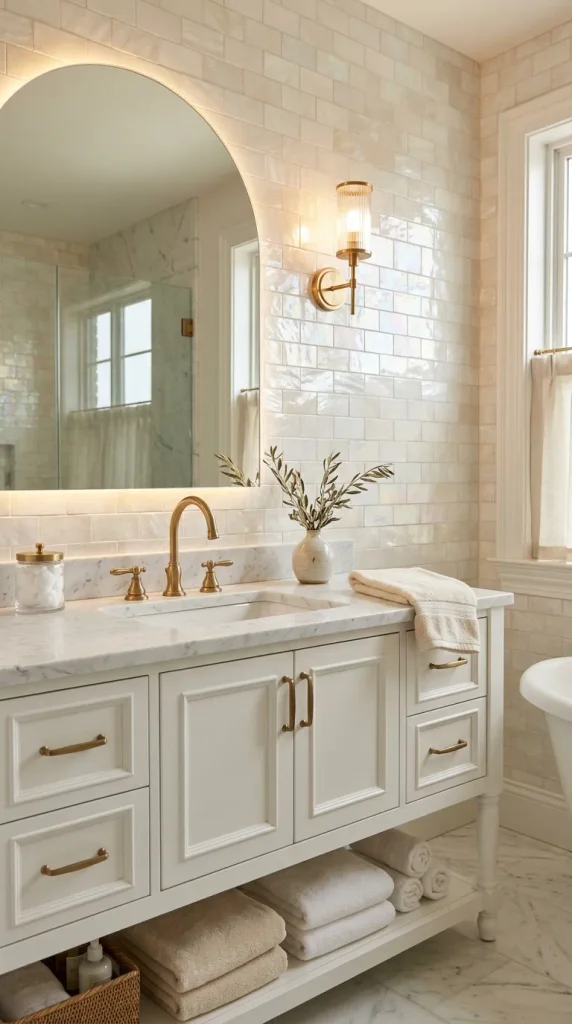
Mother of pearl subway tiles are an excellent choice if you want to combine a classic bathroom layout with a more luxurious finish. The familiar rectangular subway shape keeps the design timeless, while the iridescent surface adds depth and subtle glamour.
Install the tiles in a traditional horizontal brick pattern behind the vanity, across the shower walls, or around the bathtub. The reflective surface will catch light throughout the day, making the bathroom feel brighter and more spacious.
For a sophisticated palette, pair the tiles with white marble countertops, brushed brass faucets, and warm white cabinetry. Natural wood can also soften the reflective finish and prevent the room from feeling overly formal.
A frameless glass shower enclosure works particularly well because it allows the mother of pearl tile to remain visible without interrupting the design. Choose simple white or cream grout so that the individual tiles blend together into a softly shimmering surface.
For a smaller bathroom, consider using subway tiles only on one main wall rather than covering every surface. This creates a focal point while keeping the rest of the room visually calm.
You can also combine the tiles with a marble floor featuring subtle veining. The combination of marble and mother of pearl creates a luxurious spa-like appearance without requiring many additional decorative elements.
This style works especially well for homeowners who love traditional bathroom design but want something more distinctive than standard white subway tile.
2. Mother of Pearl Tile Accent Wall Behind the Vanity
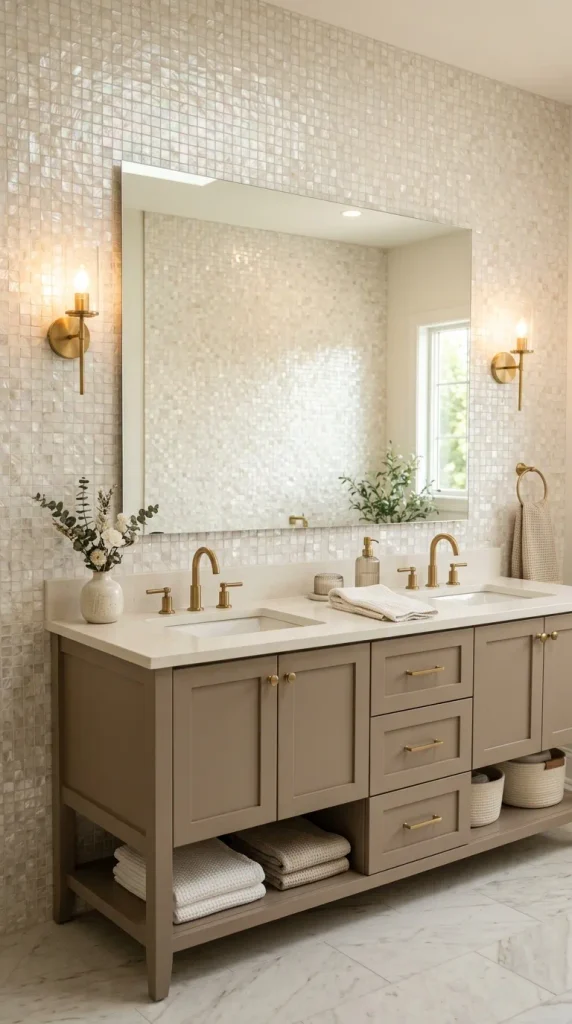
The wall behind the bathroom vanity is one of the best places to showcase mother of pearl tiles. Instead of covering the entire bathroom, use this wall as a dedicated statement feature.
A full-height mother of pearl backsplash behind a double vanity can create an elegant focal point. The iridescent surface catches light from vanity sconces and mirrors, producing a soft glow that changes throughout the day.
For a sophisticated look, pair the tiles with a large frameless or thin-metal mirror. Gold, champagne, brushed brass, or polished nickel fixtures can complement the subtle reflective qualities of the tile.
Keep the vanity relatively simple. White, cream, natural oak, taupe, or soft gray cabinetry will allow the backsplash to stand out without competing with it.
If you have a smaller vanity, a compact vertical section of mother of pearl tile can still create a beautiful statement. Consider extending the tile from the countertop to the ceiling to visually emphasize the height of the room.
Lighting is particularly important with this design. Wall sconces placed on either side of the mirror can highlight the texture and shimmer of the tile. Warm LED lighting will generally create a softer atmosphere than very cool lighting.
Add a few understated accessories such as a stone soap dispenser, ceramic vase, small plant, or folded neutral towels.
The result is a bathroom vanity area that feels polished, luminous, and custom-designed while keeping the overall composition relatively simple.
3. Mother of Pearl Shower Wall Tiles
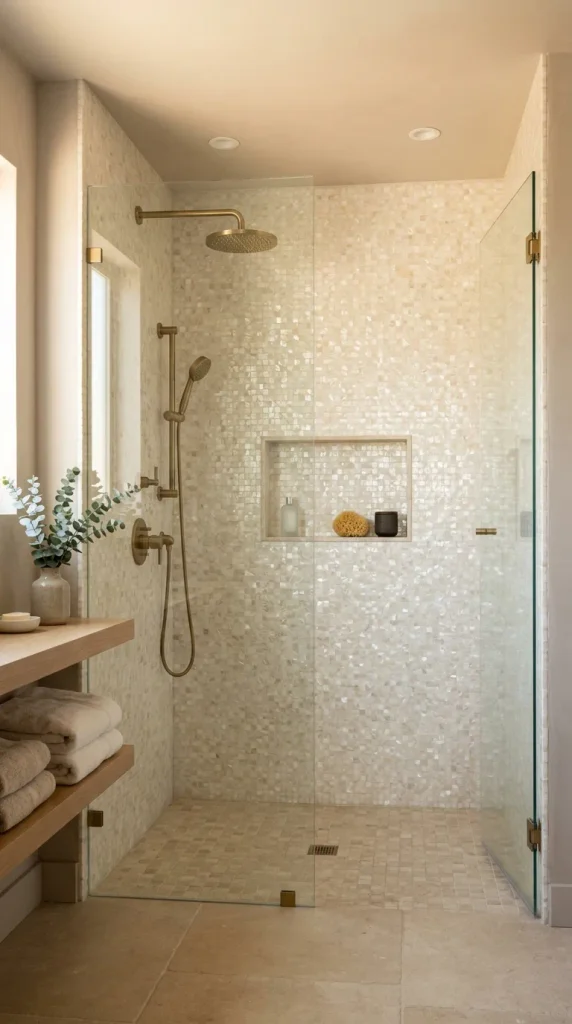
Using mother of pearl tiles inside the shower can transform an ordinary bathing area into a luxurious focal point. The reflective surface looks particularly beautiful behind clear glass because the entire tile installation remains visible.
Choose a subtle shell-inspired color palette such as ivory, pearl white, soft beige, or silver-white. Install the tiles across the main shower walls while keeping the floor in a practical matte stone or porcelain finish.
A contrasting shower floor can provide an important visual balance. Small-format stone tiles, marble mosaics, or textured porcelain can create additional interest without competing with the glossy walls.
Consider incorporating a recessed shower niche covered in the same mother of pearl tile. This makes the niche feel integrated into the overall design.
Brushed brass or polished chrome shower fixtures can both work well, depending on the style of the room. Brass creates a warmer and more glamorous appearance, while chrome provides a crisp and contemporary look.
A frameless glass enclosure is ideal because it keeps the bathroom visually open and allows light to travel across the shimmering tile surface.
For a spa-inspired effect, add a rainfall showerhead, simple stone accessories, neutral towels, and subtle greenery.
Because bathroom surfaces are exposed to moisture, always choose a suitable tile product and installation system specifically rated for the intended application. Proper waterproofing and professional installation are especially important for shower areas.
4. Mother of Pearl Mosaic Bathroom Floor Accent
Mother of pearl does not have to cover an entire bathroom wall. Small mosaic sections can provide just enough shimmer to make the space feel special.
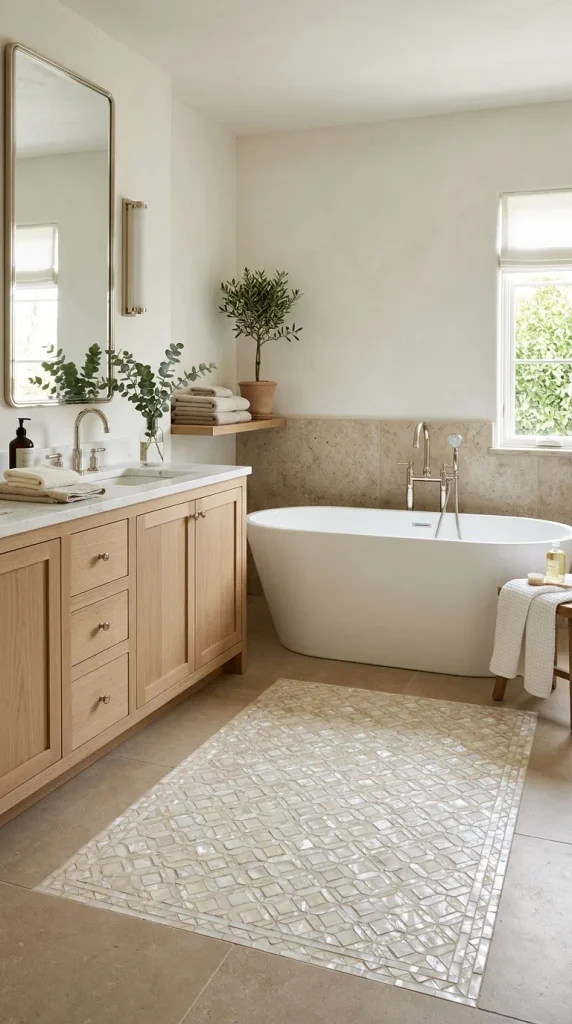
One option is to create a decorative floor accent using small mother of pearl mosaic tiles. You might use them in a central geometric pattern, around a freestanding bathtub, or as a border between larger stone tiles.
For safety and practicality, bathroom floors require careful attention to slip resistance and tile suitability. In many designs, mother of pearl works better as a decorative inset rather than the primary flooring material.
Pair the accent with large-format matte porcelain or natural stone tiles. The contrast between the soft matte floor and glossy mosaic creates an attractive layered effect.
For example, a warm beige stone-look floor can be combined with a narrow pearl mosaic border around the perimeter. Alternatively, a small circular or geometric motif can be positioned beneath a freestanding tub.
Keep the remaining finishes simple. A white bathtub, natural wood vanity, and understated metal fixtures can complement the floor detail beautifully.
This approach is ideal if you love the appearance of mother of pearl but do not want the cost or visual intensity of a full-wall installation.
It also creates a custom look that feels more architectural and carefully designed than simply repeating the same tile across every surface.
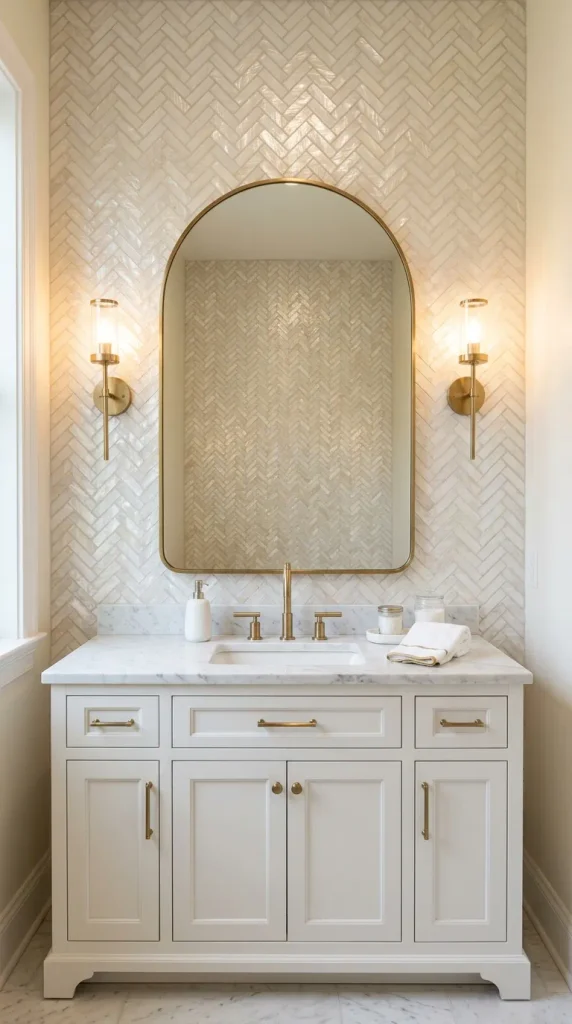
5. Mother of Pearl Herringbone Tile Bathroom
Herringbone patterns add movement and sophistication to bathroom walls, and mother of pearl can make the pattern even more distinctive.
Arrange rectangular or elongated mother of pearl tiles in a classic herringbone pattern behind the vanity, inside the shower, or around a bathtub. The directional layout creates visual movement while the shell surface adds changing reflections.
This design looks especially elegant when paired with simple cabinetry and understated fixtures. White or pale gray vanities can create a fresh appearance, while walnut or natural oak cabinetry introduces warmth.
For a glamorous bathroom, combine the herringbone wall with brass fixtures, marble countertops, and large decorative mirrors. For a modern bathroom, use black-framed mirrors and streamlined chrome fixtures.
The grout color can also influence the final appearance. A closely matched grout creates a more continuous shimmering surface, while a contrasting grout emphasizes the herringbone pattern.
Avoid adding too many competing patterns elsewhere in the room. Let the tile layout provide the visual interest.
Soft lighting placed above or beside the tiled wall can emphasize the geometric pattern and highlight the natural variations within the shell.
This idea is particularly useful when you want a bathroom that feels luxurious but still has a recognizable traditional design element.
6. Mother of Pearl Tiles Around a Freestanding Bathtub
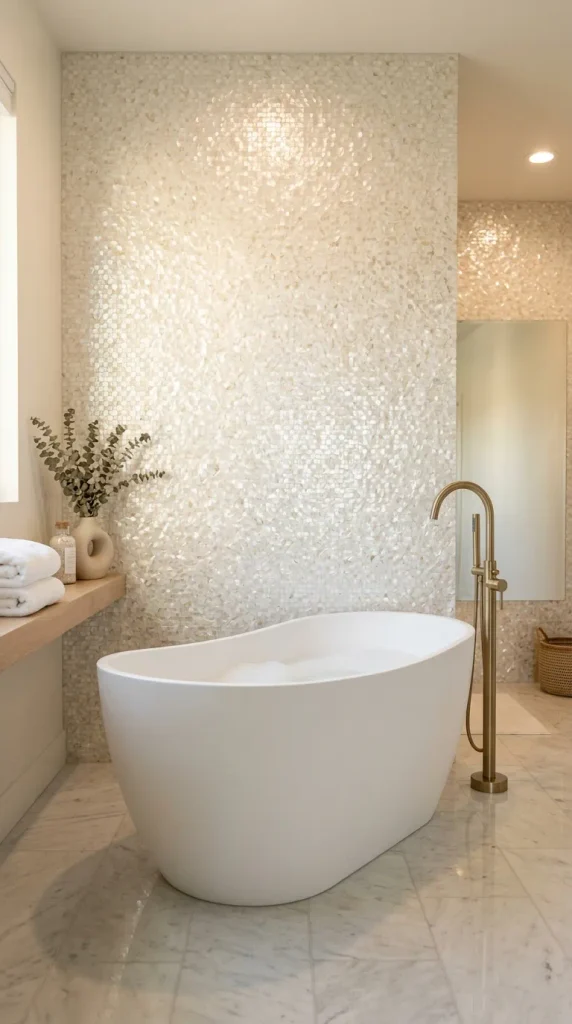
A freestanding bathtub naturally creates a focal point, and mother of pearl tiles can make the wall behind it even more dramatic.
Install the tile on the bathtub feature wall from the floor to the ceiling. A full-height installation can visually emphasize the height of the room and create a luxurious backdrop.
A classic white freestanding tub looks beautiful against pearl-colored tiles. Add a simple floor-mounted faucet in brushed brass, champagne bronze, or polished nickel depending on the overall style.
For additional contrast, use a natural stone or wood vanity elsewhere in the bathroom. This keeps the reflective tile from dominating the entire space.
You can also add a slim floating shelf beneath the tile wall for a few carefully selected accessories, such as a small ceramic vase, rolled towels, or a minimalist bath tray.
Large mirrors can reflect the tile and increase its visual impact, but avoid creating too many reflective surfaces in a small bathroom.
For a spa-inspired appearance, use soft cream towels, natural stone accessories, subtle greenery, and warm lighting.
The bathtub area should feel calm rather than cluttered. The mother of pearl tile already provides texture and visual movement, so simple accessories are usually enough.
This design works particularly well in larger bathrooms where the bathtub wall has enough space to become a dedicated architectural feature.
7. Mother of Pearl Tiles With Natural Wood Vanity
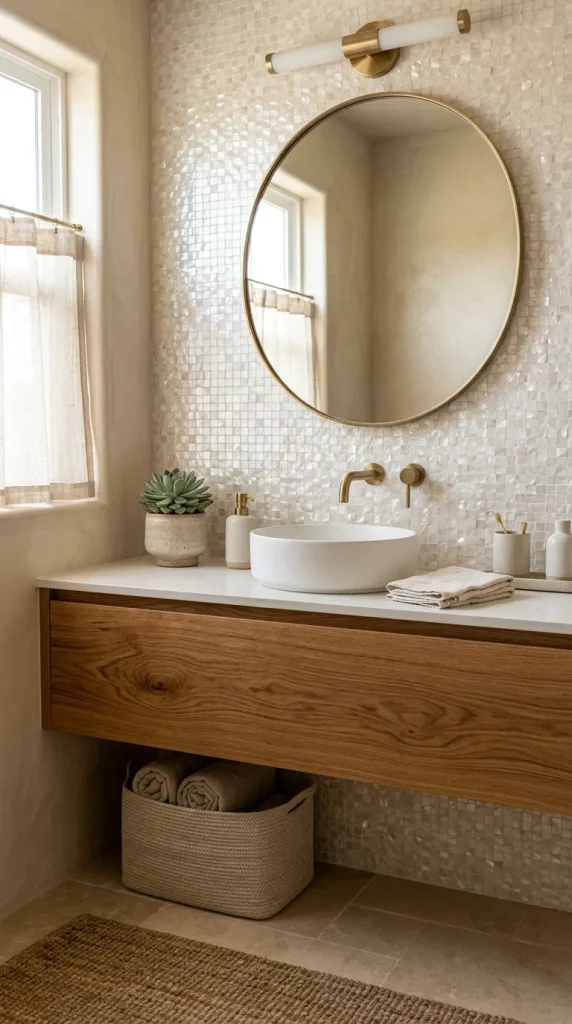
The combination of shimmering mother of pearl and natural wood creates a beautiful balance between luxury and warmth.
Use mother of pearl tiles as the backsplash behind a floating or freestanding wooden vanity. Choose oak, walnut, teak-inspired, or other warm natural wood finishes depending on the style of the bathroom.
The organic variation in wood helps soften the reflective surface of the tile. At the same time, the pearl finish adds sophistication to the otherwise natural palette.
For a modern organic bathroom, combine the design with a white stone countertop, rounded mirror, matte black or brushed brass fixtures, and woven storage baskets.
A large mirror above the vanity can reflect both the wood and tile, making the space appear brighter.
Keep the accessories natural and understated. Stone soap dispensers, ceramic vessels, linen towels, and small green plants can reinforce the organic atmosphere.
This combination is particularly effective if you want a bathroom that feels warm rather than overly glamorous. The mother of pearl provides subtle elegance while the wood keeps the room comfortable and grounded.
Lighting should also be warm and soft. Pendant lights or sconces with warm bulbs can enhance the golden tones of the wood and bring out the delicate colors within the shell tile.
The finished bathroom feels sophisticated, organic, and timeless rather than heavily decorated.
8. Mother of Pearl Tiles in a Small Powder Room
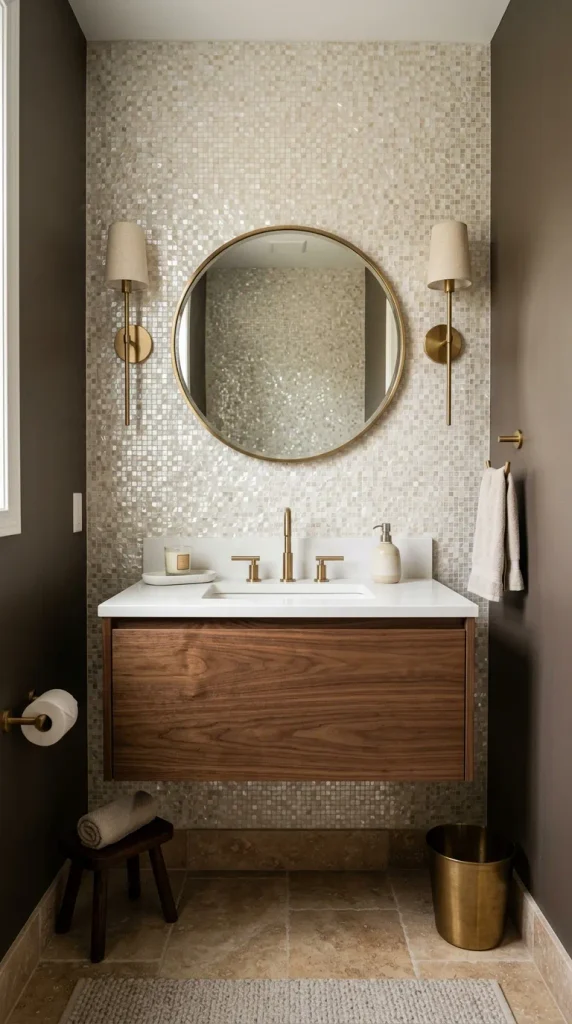
A small powder room can be an ideal place to experiment with mother of pearl because a limited amount of tile can create a major visual impact.
Cover the vanity wall with small pearl tiles or use them across the lower half of the room with painted walls above. Another option is to create a full accent wall behind a floating vanity.
Because powder rooms are often compact, reflective materials can help bounce light around the space. The iridescent surface can make the room feel more detailed and luxurious without requiring large decorative objects.
Pair the tile with a compact vanity in white, walnut, or soft gray. A rounded mirror can soften the hard lines of the tile and create a more balanced composition.
For a dramatic powder room, use deep green, navy, charcoal, or warm taupe paint on the remaining walls. The contrast can make the pearl tiles appear even brighter.
For a lighter look, keep the walls white or cream and add brass hardware.
Since a powder room does not typically need the same amount of storage as a primary bathroom, you can prioritize decorative features such as statement mirrors, sconces, sculptural sinks, or beautiful hardware.
The result can feel like a small luxury jewel box.
If you are hesitant about using mother of pearl throughout a large bathroom, a powder room is an excellent place to test the look on a smaller scale.
9. Mother of Pearl and Marble Bathroom Combination
Mother of pearl and marble are a natural pairing for a luxurious bathroom. Both materials have unique variations, but they provide different types of visual texture.
Use mother of pearl tiles on the shower wall or vanity backsplash and marble on the countertop or floor. The marble’s natural veining creates contrast against the shimmering, fragmented appearance of the shell.
White marble with soft gray veining creates a cool and elegant palette. Warmer marble varieties can introduce cream and beige tones that coordinate beautifully with ivory mother of pearl.
Keep the cabinetry simple so the natural materials remain the focus. White, cream, taupe, or natural wood cabinetry can work particularly well.
Metal finishes can determine the overall character of the room. Brushed brass creates a warm luxurious look, while polished chrome gives the design a cleaner contemporary feel.
Use large mirrors and carefully positioned lighting to reflect the surfaces without making the bathroom feel visually crowded.
The combination works particularly well in spa-inspired bathrooms because both materials have an organic quality despite their luxurious appearance.
To keep the room timeless, avoid combining too many additional patterns. Let the marble veining and shell texture provide most of the visual interest.
This approach creates a bathroom that feels high-end, elegant, and naturally sophisticated.
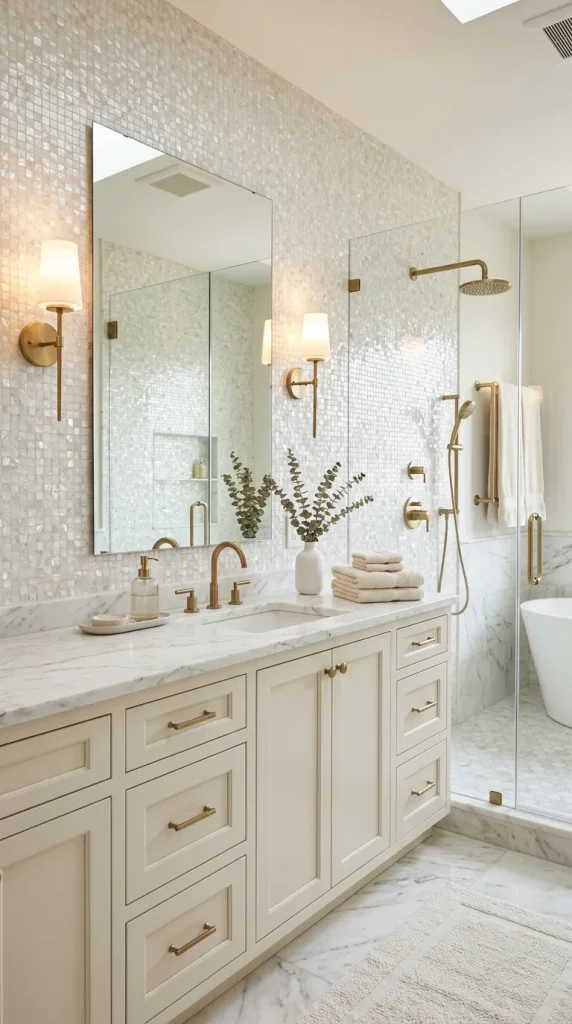
10. Full Mother of Pearl Feature Bathroom Wall
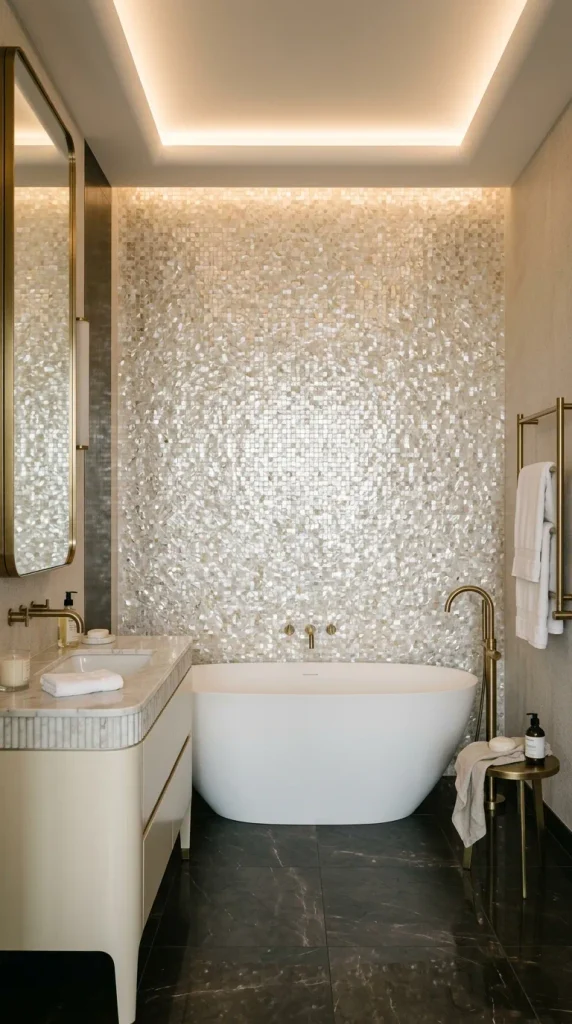
For a truly dramatic design, create a full feature wall covered in mother of pearl tiles. This can become the defining element of the entire bathroom.
Choose the most visible wall in the room, such as the wall behind a freestanding bathtub, vanity, or shower. Install the tile from floor to ceiling for a seamless architectural statement.
Large-format surrounding surfaces can remain simple and matte to create contrast. For example, warm beige porcelain flooring and cream-painted walls can allow the pearl wall to become the main attraction.
Use simple fixtures and furniture so the room does not feel overly busy. A sculptural freestanding tub, streamlined vanity, large mirror, and elegant metal hardware may be all you need.
Lighting can dramatically change the appearance of the wall. Recessed ceiling lights, wall sconces, pendant fixtures, or indirect LED lighting can reveal different shades and reflections within the shell.
For a coastal-inspired bathroom, pair the wall with sandy neutrals, pale wood, and soft blue accents. For a glamorous bathroom, add brass fixtures, marble, and luxurious textiles.
Because a full feature wall requires more material and installation, it is worth planning the design carefully before committing. Order samples and observe them under both daylight and artificial lighting.
The final result can feel like a custom luxury hotel bathroom while still maintaining a calm and timeless atmosphere.
Materials to Consider
Depending on your chosen design, useful materials and finishes may include:
- Mother of pearl mosaic or tile
- White or cream porcelain tile
- Marble or marble-look porcelain
- Natural stone
- White or wood bathroom vanities
- Brushed brass hardware
- Polished chrome fixtures
- Frameless glass shower panels
- Large mirrors
- Warm LED lighting
- Ceramic accessories
- Natural wood accents
- Linen or cotton towels
- Woven baskets
- Small indoor plants
Always confirm that the selected tile is suitable for its intended location, particularly for wet areas and floors.
How to Style Mother of Pearl Bathroom Tiles
The easiest way to make mother of pearl tiles look sophisticated is to give them enough visual space. Avoid surrounding them with too many bold patterns.
Neutral colors are usually the safest foundation. White, ivory, beige, taupe, gray, natural wood, and soft green can all complement the natural variations of pearl tiles.
Lighting is equally important. Because the material is reflective, different lighting angles can change how the tile looks. Consider how both daylight and artificial lighting will interact with the surface before finalizing your design.
When selecting fixtures, choose one dominant metal finish and repeat it throughout the room. Matching the faucets, cabinet hardware, mirror frame, and lighting fixtures can create a more cohesive appearance.
Choosing the Right Mother of Pearl Tile Pattern
The tile shape can dramatically change the overall style.
Subway tiles create a classic and timeless look.
Herringbone tiles add movement and traditional sophistication.
Small mosaics work well for detailed accents and compact spaces.
Scallop or fish-scale shapes create a softer decorative appearance.
Hexagon patterns can provide a more contemporary geometric effect.
Choose the pattern according to the room’s overall architecture rather than selecting the tile independently.
Final Thoughts
These 10 mother of pearl bathroom tile ideas demonstrate how versatile this beautiful material can be. From subtle vanity backsplashes and shower walls to dramatic full-height feature walls, there are many ways to introduce its natural shimmer without overwhelming the bathroom.
For a timeless design, combine mother of pearl with simple cabinetry, natural stone, warm lighting, and carefully selected hardware. If you want a more dramatic result, experiment with full-height installations, patterned layouts, or darker contrasting walls.
The most important step is to view physical tile samples under the actual lighting conditions of your bathroom. Mother of pearl has natural variation, and its appearance can change significantly depending on the surrounding colors and light.





Leave a Reply