
Introduction
The dining room is one of the most welcoming spaces in a home. It is where family members gather for meals, friends enjoy conversations, and special occasions become memorable. If your dining room feels plain or unfinished, adding decorative wall trim is a beautiful way to enhance its appearance without completely renovating the space.
Wall trim adds depth, texture, and architectural character to ordinary walls. From traditional wainscoting and elegant picture frame molding to modern geometric patterns and farmhouse-style paneling, there are many ways to create a dining room that reflects your personal style.

The best part is that wall trim works with almost every interior design style. You can choose white molding for a timeless appearance, natural wood for warmth, or deep green and navy blue for a dramatic atmosphere. With the right materials, paint colors, and layout, even a simple dining room can look thoughtfully designed.
In this guide, you will discover 10 beautiful dining room wall trim ideas, along with the materials needed, practical installation tips, and styling suggestions to help you create an elegant and inviting space.
Materials Used for Dining Room Wall Trim
Before starting your project, gather the appropriate materials. The exact supplies will depend on the design you choose.
- MDF molding: An affordable, smooth material that works well for picture frame molding and decorative wall panels.
- Wood trim: Suitable for traditional, farmhouse, and natural interior styles.
- Measuring tape and level: Essential for creating straight lines and evenly spaced panels.
- Saw and cutting tools: Used to cut molding to the correct length and angle.
- Adhesive and finishing nails: Help secure trim to suitable wall surfaces.
- Caulk and wood filler: Fill small gaps and nail holes for a professional finish.
- Primer and paint: Create a smooth, consistent appearance and protect the finished surface.
- Paintbrushes and rollers: Help apply paint evenly across the walls and molding.
Always check the manufacturer’s installation instructions and use suitable fixings for your wall type and trim material.
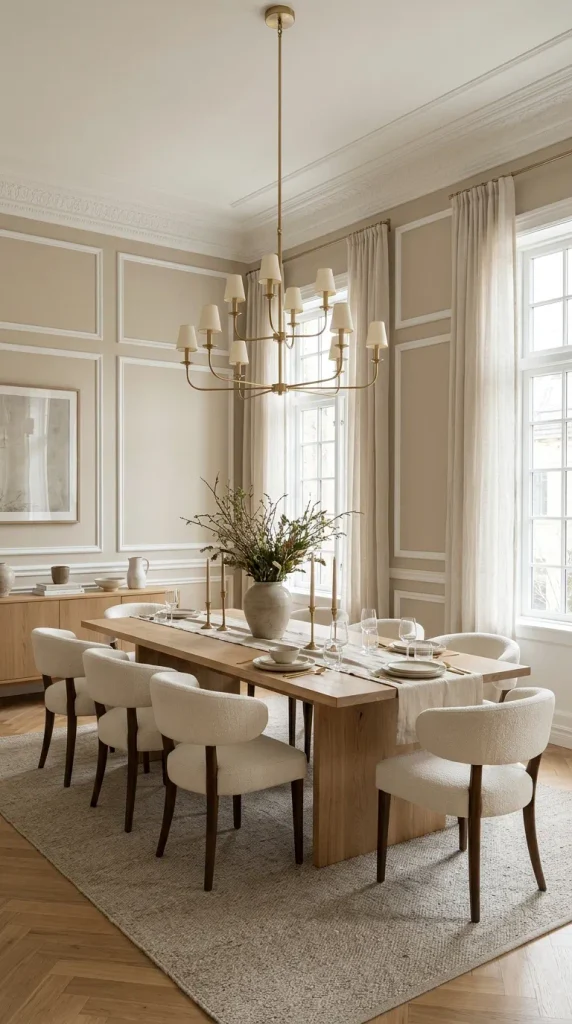
1. Classic Picture Frame Wall Molding
Picture frame molding is a timeless choice for dining rooms because it adds elegant architectural detail without making the space feel overly decorative. This design uses narrow strips of molding arranged into rectangular shapes across the wall, creating the appearance of framed panels.
It works particularly well in traditional, transitional, and modern classic interiors. You can install the molding on the wall behind your dining table or extend it around the entire room for a more coordinated appearance.
White picture frame molding against a warm neutral wall creates a bright, sophisticated look. For a contemporary style, paint both the molding and wall the same color so the panels stand out through subtle shadows rather than strong contrast.
Materials needed: MDF molding, measuring tape, level, saw, adhesive, finishing nails, caulk, filler, primer, and paint.
How to create the look: Measure your wall and sketch a layout with evenly spaced rectangular frames. Mark the positions using a level, cut the molding to size, and test each frame before attaching it. Secure the pieces using suitable adhesive and fasteners. Fill nail holes, caulk small gaps, and paint the completed design.
Styling tip: Pair picture frame molding with a wooden dining table, upholstered chairs, and a statement chandelier. A large mirror or artwork positioned within one of the panels can create an attractive focal point.
This idea is ideal if you want your dining room to look elegant and expensive without undertaking a major renovation.
2. Traditional Wainscoting for an Elegant Dining Room
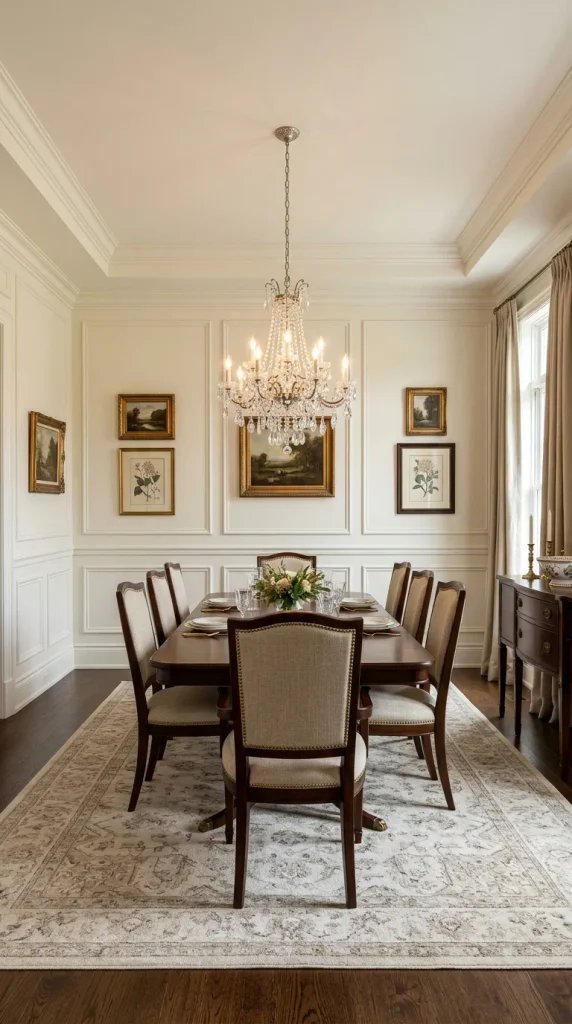
Wainscoting covers the lower portion of a wall with decorative panels or molding. It is a classic dining room feature that combines visual interest with practical benefits, helping protect walls from everyday scuffs caused by chairs and regular activity.
Traditional raised-panel wainscoting suits formal dining rooms, classic homes, and interiors with decorative architectural details. Simpler rectangular panels are equally attractive in contemporary and transitional spaces.
The height of wainscoting can vary depending on the room’s proportions and furniture. A chair rail or decorative cap molding usually finishes the top edge neatly.
Materials needed: MDF or wood panels, decorative molding, chair rail, measuring tape, level, adhesive, fasteners, filler, primer, and paint.
How to create the look: Decide how high the paneling should extend and mark a level line around the room. Plan the panel widths carefully, keeping the spacing consistent. Install the panels or molding according to the selected system’s instructions, then attach the top rail. Fill gaps, prepare the surface, and apply your chosen paint.
Styling tip: White wainscoting paired with beige or soft gray walls creates a timeless combination. For a more dramatic appearance, paint the lower panels sage green, navy blue, or charcoal.
Wainscoting is an excellent option for homeowners who want their dining room to feel polished, welcoming, and full of character.
3. Modern Vertical Slat Wall Trim
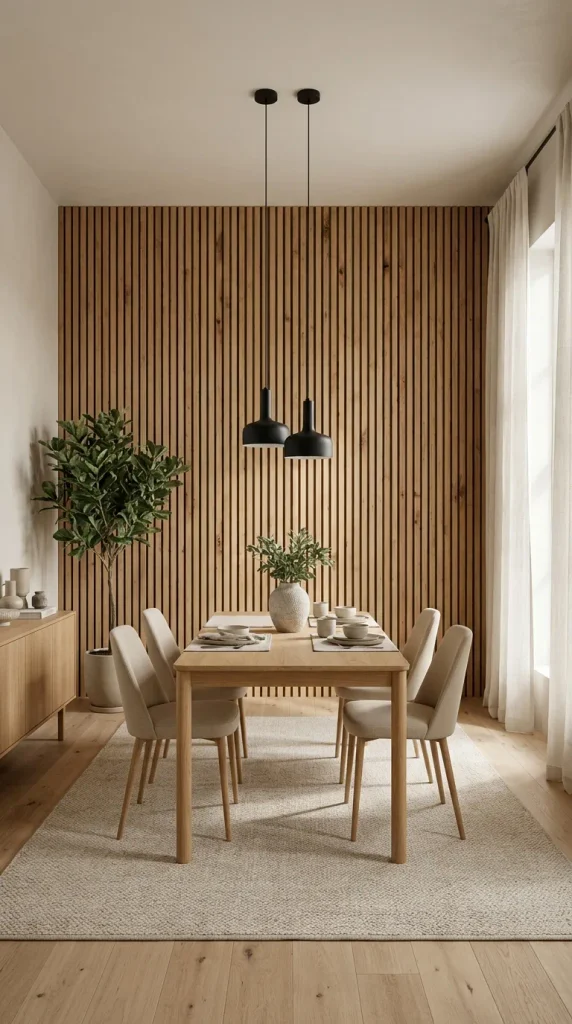
Vertical slat trim is a popular choice for modern dining rooms. It consists of narrow wooden strips or decorative battens arranged vertically across a wall, creating a repeated pattern that introduces texture and visual height.
This style works especially well behind the dining table, where it can create a feature wall without requiring artwork or elaborate decorations. The vertical lines draw attention upward, making the room feel taller and more structured.
Natural oak and walnut finishes bring warmth to contemporary interiors, while painted white or beige slats offer a softer appearance.
Materials needed: Wood battens or decorative slats, measuring tape, level, saw, sandpaper, suitable adhesive and fasteners, and paint or wood finish.
How to create the look: Measure the wall and determine the spacing between each slat. Mark vertical guidelines using a level, then cut the pieces to the appropriate length. Attach them securely using a suitable fixing method for the wall and material. Finish the surface with paint or a protective wood finish where required.
Styling tip: Combine natural wood slats with a simple dining table, neutral upholstered chairs, and pendant lighting. Black metal fixtures create contrast, while cream fabrics and warm wood produce a softer atmosphere.
Keep the surrounding decorations simple because the repeated lines already provide plenty of visual interest.
Vertical slat trim is ideal for contemporary homes and open-plan dining areas that need a stylish, modern focal point.
4. Two-Tone Wall Trim
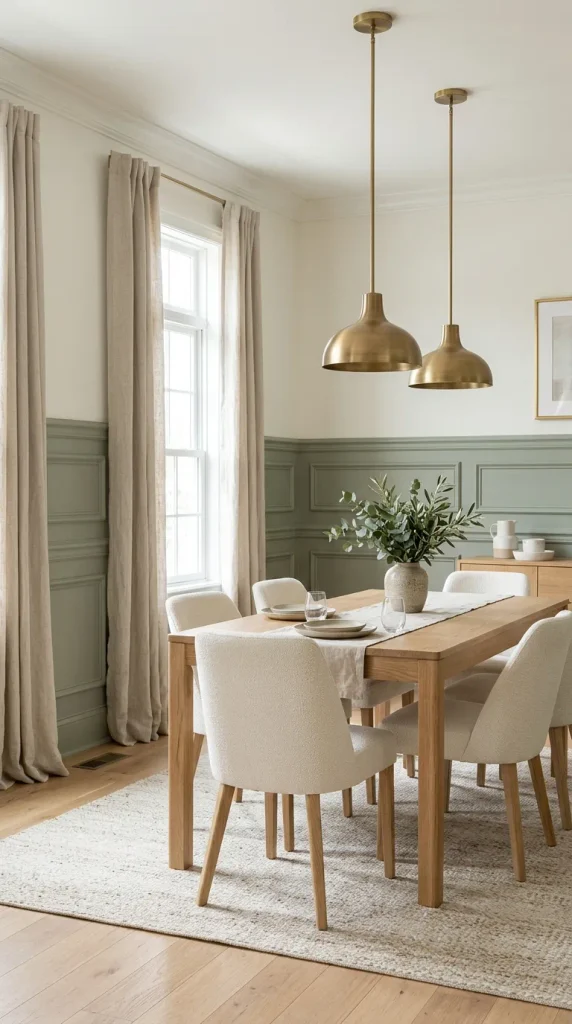
Two-tone wall trim introduces color and contrast into the dining room by combining two complementary shades. A common approach is to paint the lower wall and molding in a deeper color while keeping the upper wall lighter.
This design is attractive because it allows you to experiment with color without making the entire room feel dark. It also creates a clear visual division that makes the walls look more structured.
Sage green paired with warm white creates a calm, natural atmosphere. Navy blue and cream provide a classic combination, while muted terracotta and beige introduce warmth.
Materials needed: Wall molding, measuring tools, suitable fasteners, caulk, filler, painter’s tape, primer, and two coordinating paint colors.
How to create the look: Decide where the color division should sit, ideally following a chair rail or the top edge of the wainscoting. Mark the boundary with a level. Install the trim if necessary, prepare the surfaces, and paint the lower and upper sections in your chosen colors. Use painter’s tape to help achieve a clean transition.
Styling tip: Coordinate the wall colors with the dining table, curtains, and upholstery. Brass lighting works beautifully with green and navy, while natural wood furniture complements earthy shades.
Two-tone wall trim is particularly useful when you want a modern, Pinterest-inspired dining room that feels colorful yet balanced.
5. Floor-to-Ceiling Wall Paneling
Floor-to-ceiling paneling creates a dramatic architectural feature by extending decorative molding from the baseboards toward the ceiling. Unlike traditional wainscoting, which covers only the lower wall, this design makes the entire surface part of the room’s decoration.
It works especially well in formal dining rooms and spaces with high ceilings. Traditional raised panels create a luxurious appearance, while simple rectangular outlines suit modern interiors.
Painting the wall and molding in the same shade creates a sophisticated, unified finish. Warm white, taupe, and beige offer understated elegance, while deep green and navy provide a more dramatic look.
Materials needed: MDF or wood panels, decorative molding, measuring tape, level, cutting tools, adhesive, suitable fasteners, filler, caulk, primer, and paint.
How to create the look: Measure the wall carefully and sketch the arrangement before cutting anything. Divide the wall into balanced sections, accounting for doors, windows, outlets, and furniture placement. Mark the layout, cut the molding, and dry-fit the pieces. Secure them according to the manufacturer’s instructions, then fill gaps and paint the finished surface.
Styling tip: Position a dining table in front of the paneled wall and add a chandelier to reinforce the room’s symmetry. A large mirror or carefully selected artwork can complete the design.
This idea is perfect for creating a sophisticated dining room with a timeless, custom-designed appearance.
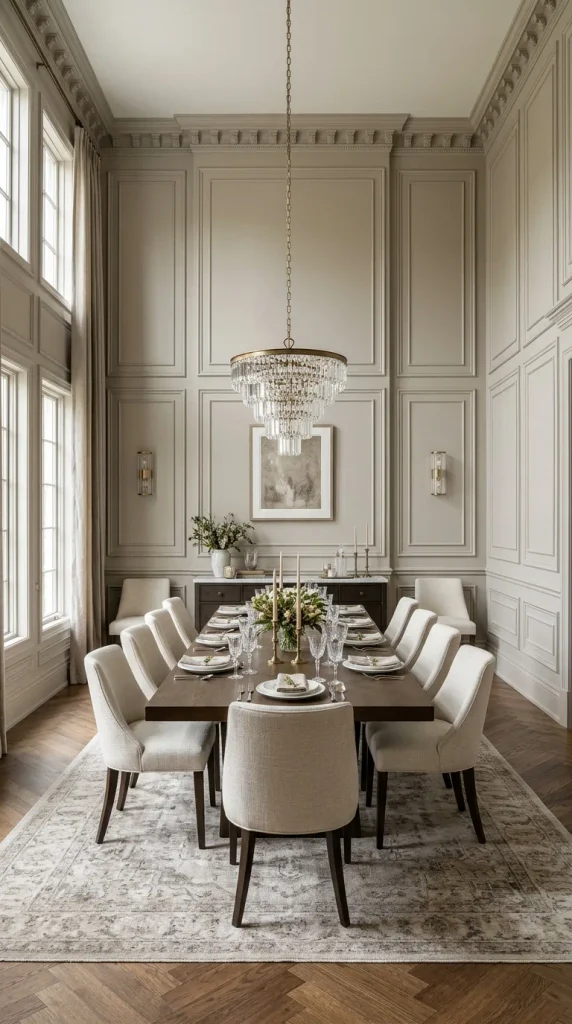
6. Chair Rail Molding with Decorative Panels
Chair rail molding is a horizontal strip installed across the wall, often around the height of dining chair backs. It creates a visual division between the upper and lower sections of the wall while offering some protection against furniture scuffs.
When combined with picture frame molding or wainscoting, chair rails add a traditional architectural detail that works beautifully in classic, cottage, and transitional dining rooms.
The upper wall can feature wallpaper or a contrasting paint color, while the lower section can be decorated with panels or a durable finish.
Materials needed: Chair rail molding, optional panel molding, measuring tape, level, saw, adhesive, suitable fasteners, caulk, filler, and paint.
How to create the look: Measure your dining chairs and decide on an appropriate rail height. Mark a continuous level line across the wall, then measure and cut the molding. Secure it with suitable adhesive and fasteners, checking alignment as you work. If adding decorative panels below the rail, plan their spacing before installation.
Fill nail holes and gaps, then paint the completed design.
Styling tip: Pair white chair rail molding with botanical wallpaper or soft neutral paint above it. Wooden furniture and a classic pendant light help create a cohesive look.
This is a practical option for busy family dining rooms because it combines traditional charm with everyday functionality.
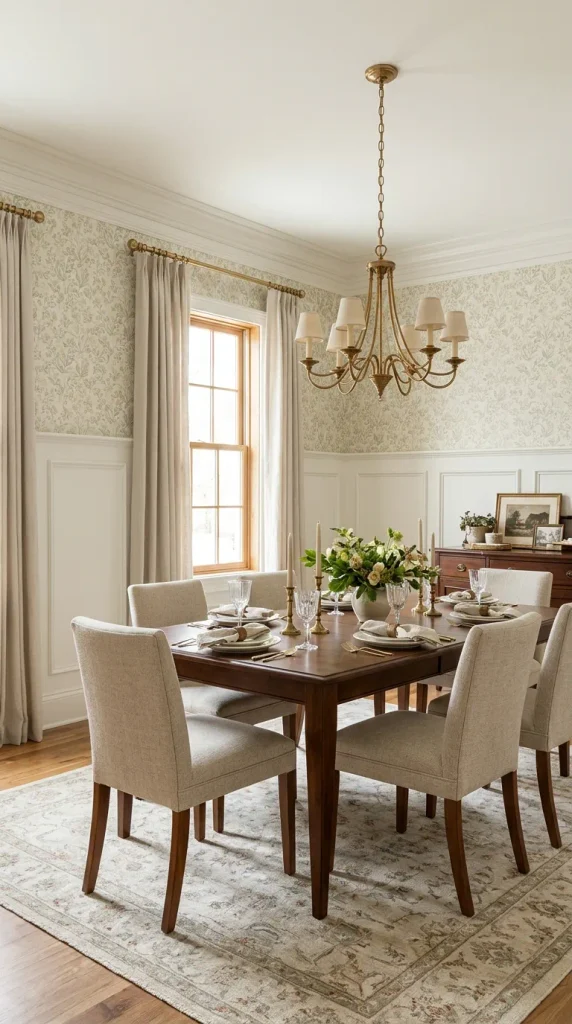
7. Geometric Wall Trim
Geometric wall trim offers a modern alternative to traditional rectangular paneling. It uses carefully arranged lines, squares, rectangles, or asymmetrical shapes to create a distinctive decorative pattern.
This approach is particularly attractive in contemporary dining rooms where simple walls need more personality. You can create a subtle design using repeated rectangles or make a bold statement with larger, more artistic arrangements.
Neutral colors allow the geometry to remain understated, while charcoal, deep blue, or dark olive can emphasize the pattern.
Materials needed: Narrow MDF or wood molding, measuring tape, pencil, level, saw, adhesive, finishing nails, caulk, filler, primer, and paint.
How to create the look: Sketch the pattern on paper before marking the wall. Consider the wall dimensions and the position of the dining table. Use painter’s tape to test the arrangement directly on the wall. Once satisfied, measure and cut the molding, then attach each piece carefully. Fill imperfections and paint the completed design.
Styling tip: Keep the surrounding furniture relatively simple. A streamlined dining table, sculptural pendant light, and neutral chairs allow the geometric pattern to remain the main attraction.
Avoid using too many competing patterns in the same area, as this can make the space feel visually cluttered.
Geometric trim is an excellent choice for homeowners who want a contemporary dining room with distinctive architectural detail.
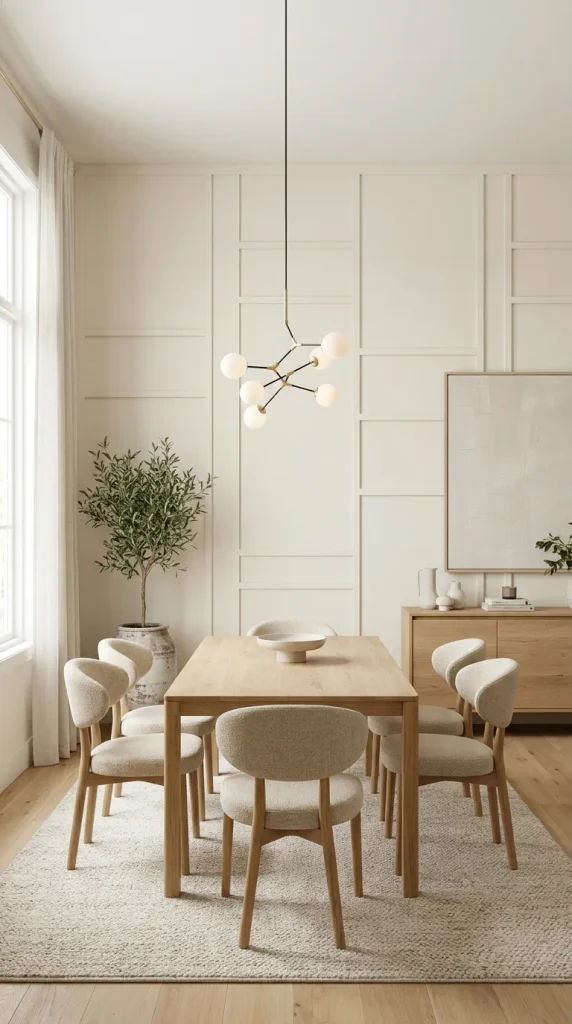
8. Dark Painted Wall Trim
Dark painted wall trim creates a rich, dramatic atmosphere that can make a dining room feel intimate and sophisticated. Deep green, navy blue, charcoal, and near-black shades work particularly well with decorative paneling.
The design can cover an entire room or be limited to a single feature wall behind the dining table. Painting both the wall and trim the same dark color creates a seamless appearance, while contrasting lighter walls provide a more traditional look.
Materials needed: MDF or wood molding, measuring tape, cutting tools, suitable fasteners, filler, caulk, primer, dark interior paint, and brushes or rollers.
How to create the look: Choose a shade that complements your flooring and furniture. Test paint samples in different lighting conditions before deciding. Install the molding, prepare the surface, and apply suitable primer. Paint carefully to achieve even coverage, following the manufacturer’s drying and recoating instructions.
Styling tip: Pair dark green paneling with brass lighting and warm wood furniture. Navy walls look beautiful with cream upholstery, while charcoal trim complements contemporary black fixtures.
If your dining room is small, balance the dark color with good lighting, reflective accents, and lighter textiles.
Dark wall trim is ideal for creating an elegant dining space with depth, personality, and a memorable atmosphere.
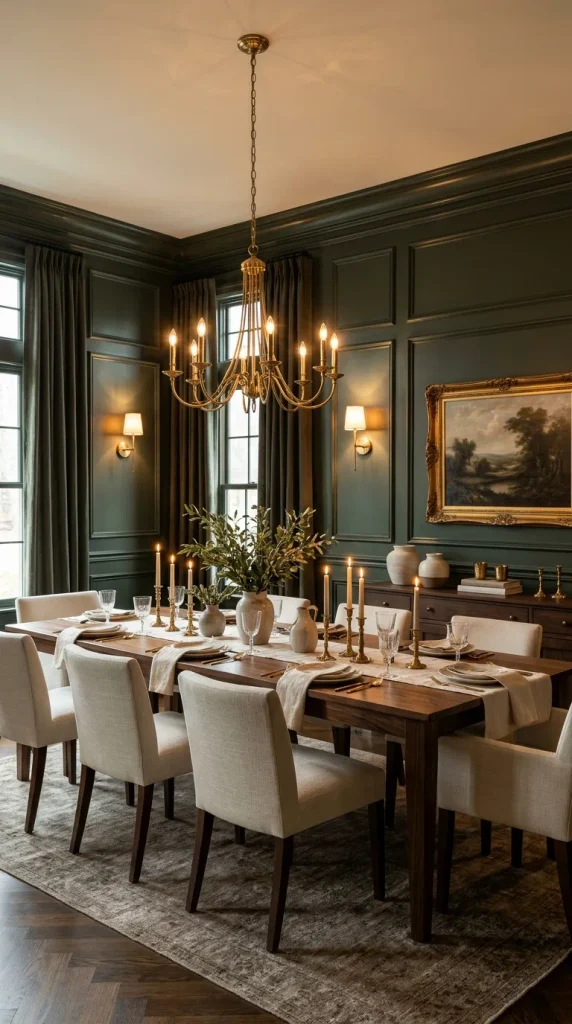
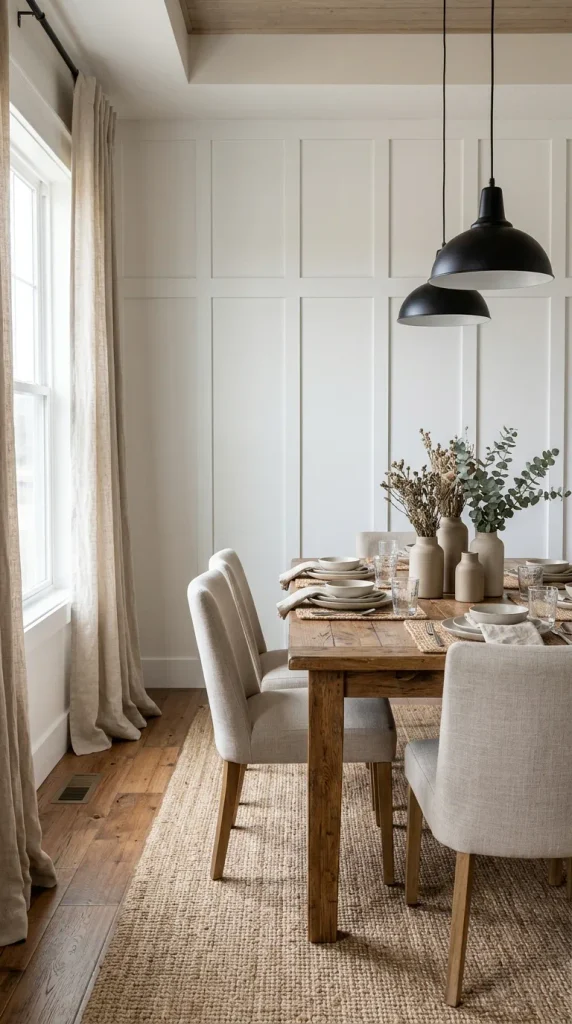
9. Farmhouse Board-and-Batten Wall Trim
Board-and-batten is a popular wall treatment for farmhouse, cottage, and relaxed transitional interiors. It uses vertical boards or battens combined with horizontal rails to create a simple, structured pattern.
Its clean lines add texture without making the dining room feel overly formal. White board-and-batten is a timeless choice, while beige, sage green, and muted blue create a softer, more personalized look.
Materials needed: MDF boards or wood battens, horizontal rails where required, measuring tape, level, saw, adhesive, fasteners, filler, caulk, primer, and paint.
How to create the look: Decide whether the trim will cover the lower wall or extend across the entire surface. Measure the wall and calculate the spacing between battens. Mark vertical guidelines, install the horizontal rails if needed, and attach the battens in the planned positions. Check that every piece is straight and evenly spaced before securing it permanently.
Fill nail holes, smooth imperfections, and paint the completed design.
Styling tip: Pair white board-and-batten with a rustic wooden dining table, woven placemats, linen curtains, and simple ceramic accessories. Black pendant lighting provides contrast, while natural materials keep the space warm.
For a modern farmhouse appearance, choose streamlined furniture and avoid excessive rustic decorations.
This wall trim idea is perfect for creating a casual, welcoming dining room that feels both timeless and comfortable.
10. Minimalist Wall Trim
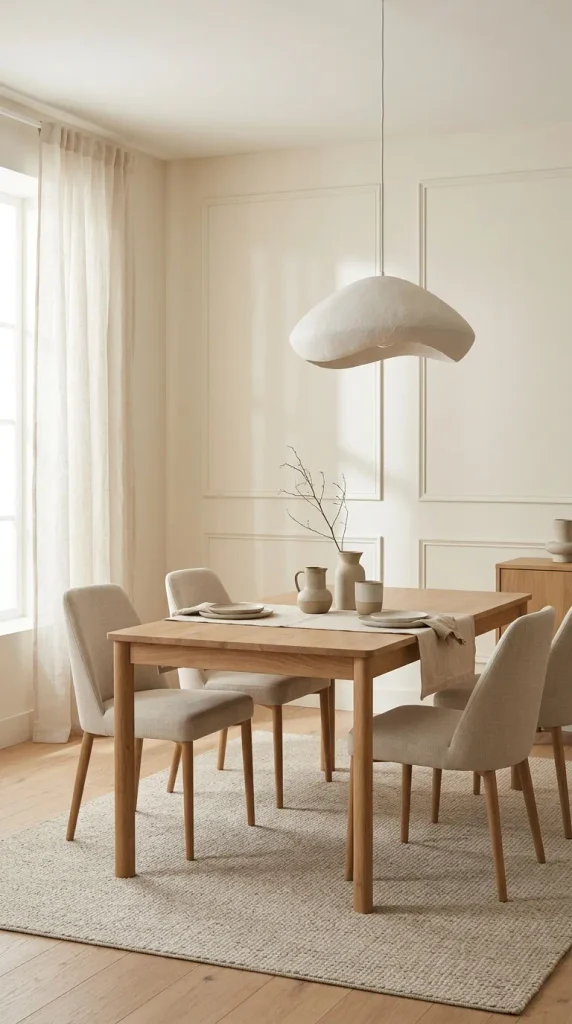
Minimalist wall trim is ideal for contemporary dining rooms where simplicity and clean lines are essential. Instead of elaborate molding or intricate panels, this approach uses narrow trim pieces and carefully planned spacing to create subtle architectural interest.
Simple rectangular outlines, understated horizontal rails, and thin picture frame molding are all suitable choices. Painting the trim the same color as the wall creates a refined appearance that relies on shadows and surface depth rather than strong contrast.
Materials needed: Narrow MDF or wood molding, measuring tape, level, cutting tools, suitable adhesive and fasteners, filler, caulk, primer, and paint.
How to create the look: Choose a wall that would benefit from additional detail, such as the area behind your dining table. Sketch a simple layout and maintain consistent spacing between the trim pieces. Mark the lines with a level, cut the molding carefully, and test the arrangement before installation. Secure the trim, fill gaps, prepare the surface, and paint the wall and molding in matching shades.
Styling tip: Pair minimalist trim with an oak dining table, streamlined chairs, sculptural pendant lighting, and natural fabrics. A single large artwork or mirror can provide a focal point without making the room feel crowded.
Precision is especially important with minimalist designs because uneven lines and poorly finished joints are easy to notice.
This idea works beautifully in modern apartments, small dining rooms, and homes that favor understated elegance.
Tips for Choosing the Right Dining Room Wall Trim
Choosing the right wall trim depends on your room’s size, interior style, furniture, and budget.
- Consider the room’s proportions: Simple molding works well in smaller dining rooms, while larger rooms can accommodate more elaborate panels.
- Match your interior style: Choose raised panels for traditional spaces, vertical slats for modern rooms, and board-and-batten for farmhouse interiors.
- Coordinate your colors: Consider the undertones of your flooring, dining table, curtains, and upholstery before choosing paint.
- Plan around furniture: Make sure the trim complements the placement of your dining table, chairs, artwork, and lighting.
- Prepare the walls properly: Fill holes, smooth uneven surfaces, and use suitable primer for a clean finish.
- Set a realistic budget: Include trim, paint, tools, installation supplies, and professional help if needed.
Conclusion
Dining room wall trim is a beautiful way to introduce architectural detail, texture, and personality into your home. From classic picture frame molding and traditional wainscoting to modern slats, geometric patterns, and minimalist paneling, there is an option for every decorating style.
The key is to choose a design that complements your room’s proportions, furniture, and color palette. With careful measurements, suitable materials, and a well-planned layout, you can transform plain walls into an elegant backdrop for family meals and special gatherings.
Start with the style that best reflects your home, keep the overall design balanced, and use lighting and furniture to highlight the finished walls. Even a relatively simple trim project can make your dining room feel more polished, welcoming, and timeless.





Leave a Reply