
Introduction
Keeping your bedroom organized does not have to be expensive. With a few affordable supplies from Dollar Tree, you can transform cluttered drawers, messy closets, crowded nightstands, and overflowing shelves into functional and attractive spaces. Simple storage baskets, plastic containers, drawer organizers, hooks, and small bins can make a surprising difference when used creatively.
Dollar Tree organization hacks are especially useful for bedrooms because they help you make better use of the space you already have. Whether you live in a small apartment, share a bedroom, or simply want a tidier home, budget-friendly storage solutions can help you create a more peaceful environment without investing in expensive furniture.
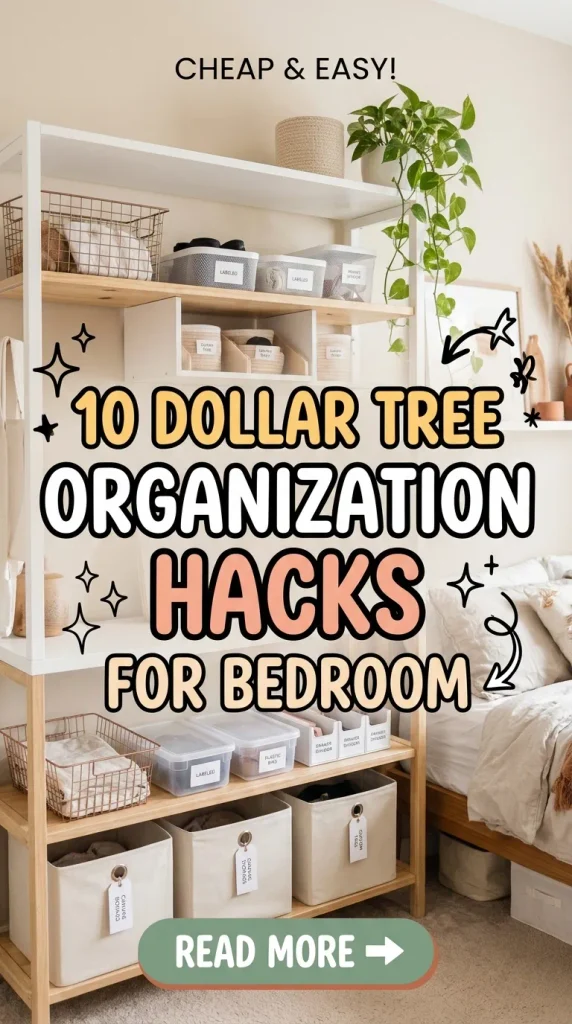
The secret to successful bedroom organization is choosing storage solutions that match your needs. Before purchasing supplies, identify the areas that create the most clutter. You might need better organization for makeup, accessories, clothing, shoes, books, or everyday essentials. Once you know what needs attention, you can select affordable products that keep everything easy to find.
In this article, you will discover 10 Dollar Tree organization hacks ideas for bedroom spaces, including creative ways to organize drawers, maximize closet storage, tidy bedside essentials, and make use of vertical space. Each idea is designed to be practical, affordable, and easy to adapt to different bedroom sizes and decorating styles.
Materials Used for Dollar Tree Bedroom Organization
Before starting your bedroom organization projects, gather a few inexpensive supplies. Availability, sizes, and designs may vary by Dollar Tree location, so choose alternatives that serve the same purpose.
- Plastic storage baskets and bins
- Small drawer organizers and compartment trays
- Clear plastic containers
- Adhesive hooks and removable hooks
- Over-the-door hooks or organizers
- Plastic cups and small containers
- Stackable storage boxes
- Shelf dividers and baskets
- Labels and permanent markers
- Contact paper or decorative paper
- Cable clips and cord organizers
- Zip ties and reusable fastening strips
- Small trays for jewelry and accessories
- Measuring tape and scissors
- Cleaning cloths and mild household cleaner
Before purchasing anything, measure your drawers, shelves, and closet spaces. This prevents you from buying containers that do not fit. Also, check the intended weight limits of hooks and adhesive products, especially when mounting them on painted walls or furniture.
1. Organize Bedroom Drawers with Small Storage Bins
Best for: Underwear, socks, accessories, and everyday clothing.
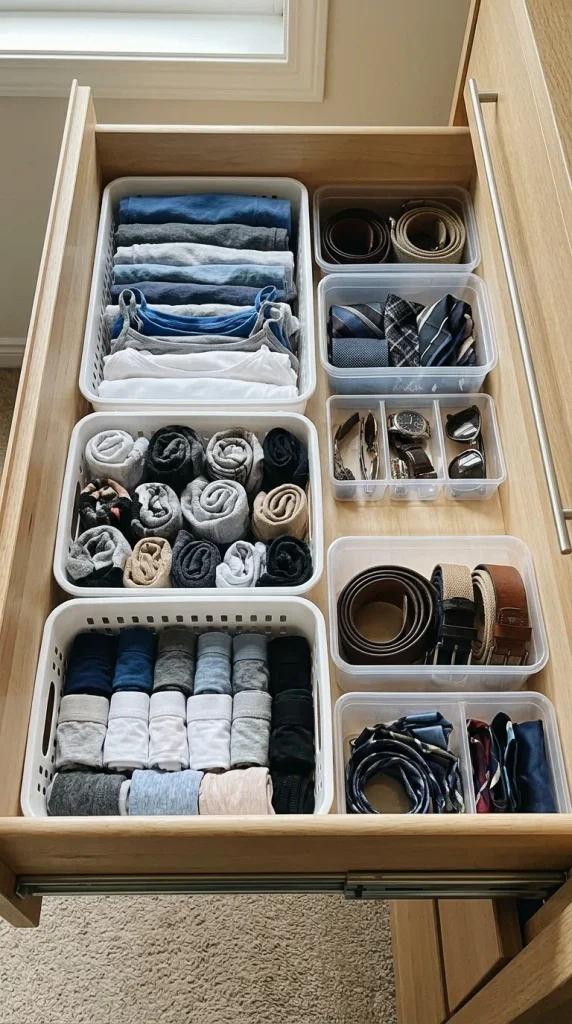
Messy bedroom drawers can make it difficult to find what you need, even when you have plenty of storage space. Small plastic bins from Dollar Tree offer a simple way to separate items and keep everything organized. Instead of allowing clothing and accessories to become mixed together, you can create dedicated sections for different categories.
Start by emptying one drawer completely. Remove items you no longer use, then wipe the inside of the drawer clean. Measure its length, width, and depth before choosing your containers. A combination of small and medium bins often works better than using several identical containers because different items require different amounts of space.
Use narrow bins for socks, underwear, and belts. Wider containers can hold folded T-shirts, leggings, or sleepwear. Small compartments are especially useful for hair accessories, watches, and other frequently used items.
Arrange the bins closely together to reduce wasted space. If the containers slide around when you open the drawer, place a suitable non-slip liner underneath them. You can also label the front of each compartment so everyone in the household knows where items belong.
For a coordinated appearance, choose bins in similar colors. White, gray, beige, or transparent containers create a clean look that works with most bedroom furniture.
This hack can also be adapted for a bedside table. Use a small organizer to separate charging cables, reading glasses, lip balm, notebooks, and other everyday essentials.
The main advantage is that the system makes tidying easier. Instead of reorganizing the entire drawer every week, you simply return each item to its designated container.
Budget tip: Start with one frequently used drawer rather than purchasing organizers for the entire bedroom at once. You can expand the system as needed.
2. Create an Affordable Closet Organization System
Best for: Small closets, folded clothes, handbags, and seasonal accessories.
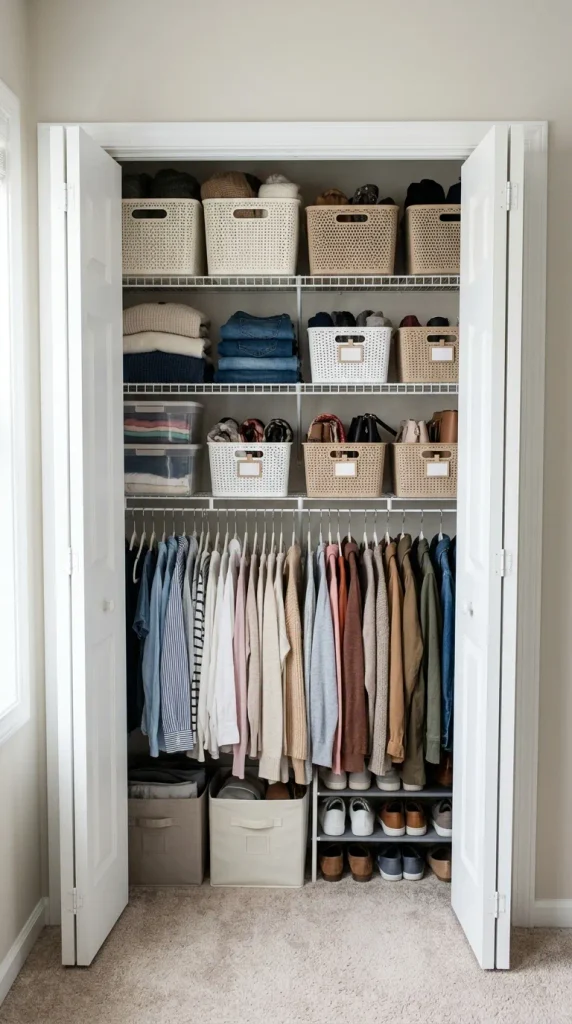
A cluttered closet can make getting dressed stressful, especially when clothes, bags, and accessories compete for limited space. Dollar Tree baskets and storage bins can help divide the closet into manageable sections without requiring a costly closet makeover.
Begin by sorting your belongings into categories such as everyday clothing, workout clothes, accessories, seasonal items, and items you rarely use. Remove anything you no longer need before introducing new storage containers.
Use small baskets on closet shelves to hold scarves, belts, hats, and folded accessories. Medium containers can store handbags or seasonal clothing, while smaller bins can keep socks and other loose items together.
If your closet has a high shelf, use clearly labeled containers for items that you do not need every day. Keep frequently used clothing at a comfortable height so you can reach it easily. Avoid stacking too many containers because tall piles can become unstable and difficult to access.
You can also use simple labels to make the system easier to maintain. Labels such as “Accessories,” “Winter Wear,” and “Everyday Basics” help you find items quickly without opening every container.
For a more polished appearance, select containers in a consistent color palette. Matching baskets make open shelves look less cluttered and create a coordinated storage system.
If you have limited hanging space, consider folding suitable clothing vertically in drawers or placing folded items in shelf baskets. This can help you use existing closet space more efficiently.
Be sure to leave room for air circulation around stored clothing, especially if items are packed away for a long period. Store only clean, completely dry clothing to prevent unpleasant odors.
Budget tip: Use containers you already own for larger categories and reserve new Dollar Tree bins for small accessories that are difficult to organize.
3. Use Adhesive Hooks to Organize Bedroom Accessories
Best for: Jewelry, lightweight bags, hats, scarves, and frequently used accessories.
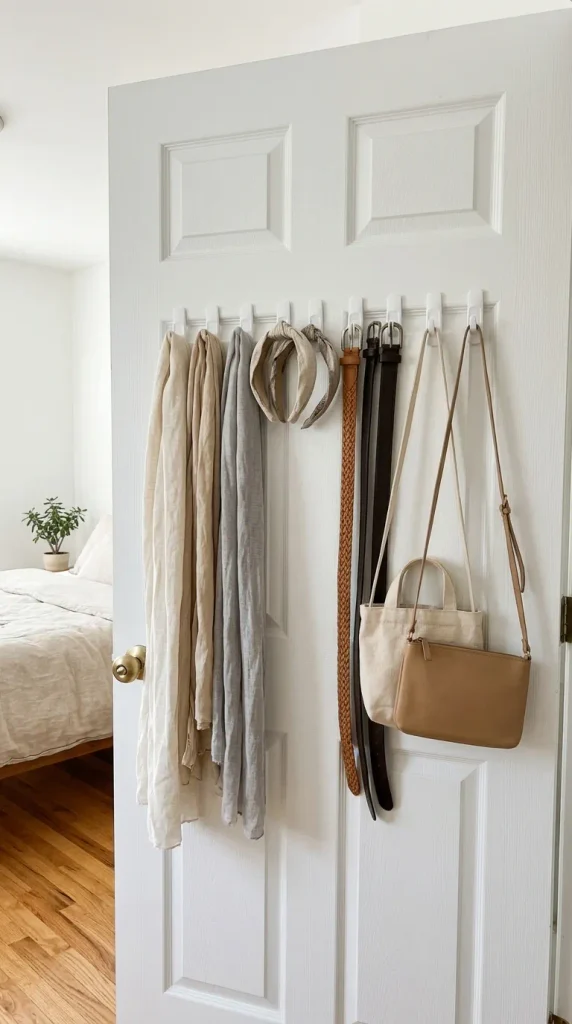
Small bedroom accessories often create clutter because they do not have a dedicated place. Adhesive hooks offer a simple way to use vertical space and keep everyday essentials visible and accessible.
Choose hooks suitable for the surface where you intend to install them. Depending on the product, they may work on smooth walls, the inside of closet doors, or the sides of furniture. Always check the packaging for surface preparation, weight limits, and removal instructions.
One practical idea is to arrange several hooks inside a closet door. Use them for lightweight scarves, belts, fabric headbands, or small handbags. This keeps accessories off the floor and prevents them from becoming tangled in drawers.
Hooks can also help organize necklaces and other jewelry when paired with an appropriate jewelry holder. Keep delicate chains separated to reduce tangling, and avoid placing heavy items on hooks that are not designed to support them.
If you prefer a decorative approach, create a small accessory station near your dressing area. Arrange the hooks in a neat row and group similar items together. You can coordinate the arrangement with a small mirror, a tray for rings, or a basket for hair accessories.
Before applying adhesive hooks, clean and dry the surface according to the manufacturer’s instructions. Allow any recommended setting time before adding weight. Test a discreet area first if you are concerned about damaging paint or furniture finishes.
Avoid using lightweight adhesive hooks for heavy bags, valuable items, or anything that could cause injury if it falls. For heavier storage, use a properly installed hook or another suitable mounting method.
Budget tip: A few strategically placed hooks can be more useful than a large organizer if your main problem is clutter from items you use every day.
4. Make a Dollar Tree Makeup and Beauty Organizer
Best for: Makeup, skincare, brushes, nail products, and hair accessories.
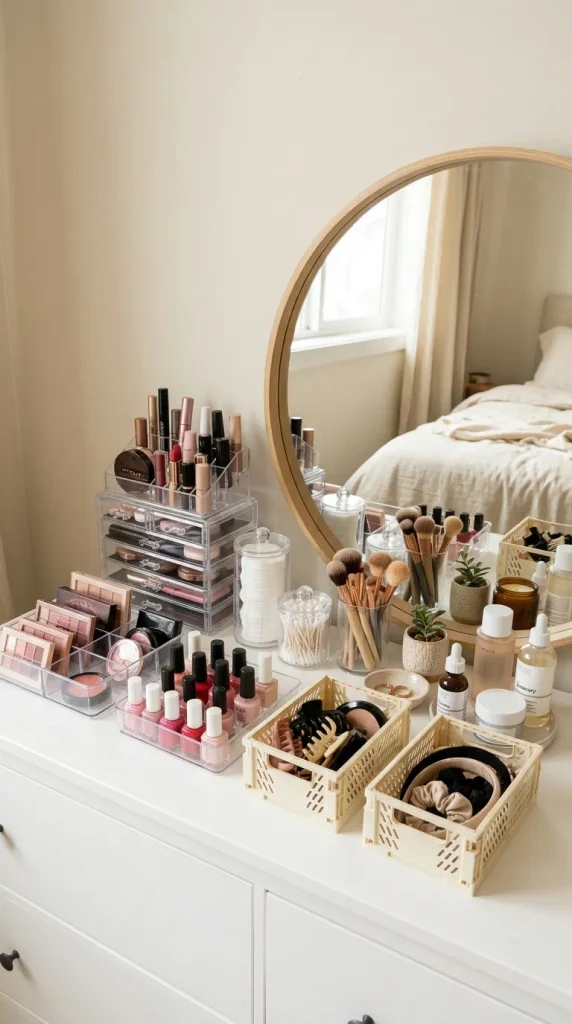
Beauty products can quickly take over a bedroom dresser or vanity. Small Dollar Tree containers provide an inexpensive way to group makeup and skincare products so your everyday routine becomes simpler.
Begin by separating products into categories. Put makeup in one group, skincare in another, and hair accessories in a third. Check expiration dates and discard products that have changed in appearance, smell, or texture, following the product’s disposal guidance.
Use shallow trays for lip products, small cosmetics, and individual beauty tools. Deeper containers can hold bottles and jars upright. Tall cups can keep makeup brushes together, while small divided containers can separate cotton pads, hair ties, and clips.
If your vanity has limited surface space, arrange the containers on a single tray. This creates a compact beauty station that can be moved easily when you need to clean the surface. For products used less frequently, store them in a labeled bin inside a drawer.
Clear containers are especially practical because you can see what is inside without opening every box. If you prefer a more decorative appearance, choose neutral containers or use removable labels to create a coordinated look.
Keep products that require special storage conditions away from excessive heat, direct sunlight, and damp areas. Make sure containers are clean and dry before placing beauty products inside them. Avoid transferring products into unlabeled containers if doing so would make their contents or expiration information unclear.
For a tidy finish, keep only the products you use regularly on top of the dresser. Store backups and occasional-use items elsewhere.
Budget tip: Repurpose small cups or containers you already have for brushes and hair accessories before purchasing a dedicated organizer.
5. Organize Your Nightstand with Small Dollar Tree Containers
Best for: Reading glasses, charging cables, books, stationery, and nighttime essentials.
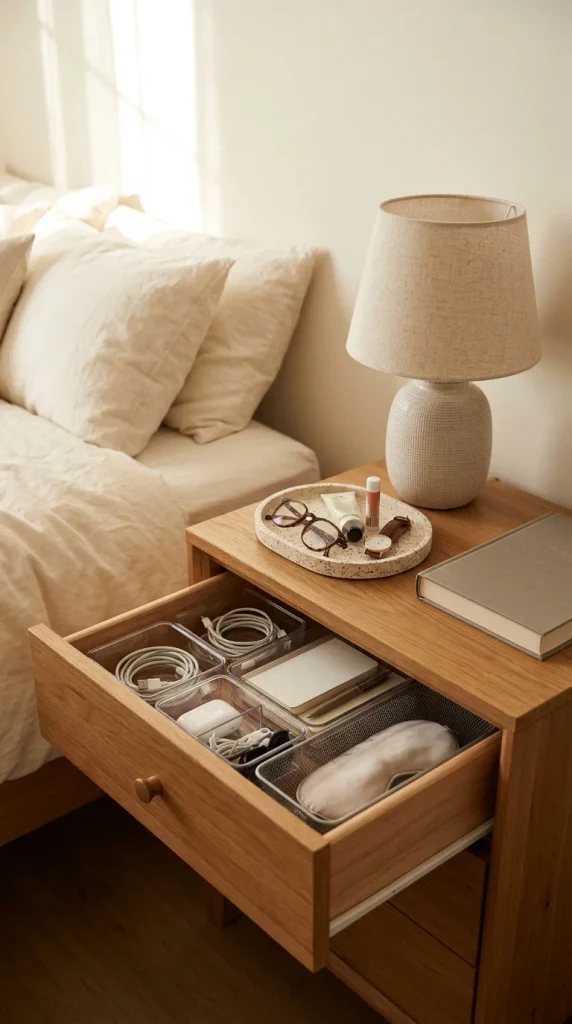
A nightstand should make your bedtime routine easier, but it can quickly become a dumping ground for chargers, notebooks, skincare products, and miscellaneous objects. A few small containers can help keep these essentials organized while maintaining a peaceful bedroom atmosphere.
Start by clearing the entire surface and deciding which items genuinely need to stay nearby. Keep the essentials you use every night and move occasional-use items into a drawer or another storage area.
Place a small tray on top of the nightstand for items such as reading glasses, lip balm, hand cream, or a watch. A compact bin inside the drawer can hold charging cables, earbuds, spare batteries, and other small accessories. Use a separate container for pens, bookmarks, or sticky notes if you enjoy reading or journaling before bed.
Cable organization is particularly helpful. Use suitable cable clips to keep charging cords from slipping behind the nightstand. Make sure cables are not pinched by furniture and that chargers remain well ventilated. Avoid covering power adapters with fabric or placing them beneath piles of belongings.
If your nightstand has open shelves, matching baskets can hide visual clutter while keeping items accessible. Choose baskets that fit the available depth and do not block drawers or doors.
For a calming appearance, limit the visible objects to a lamp, a small decorative item, and your essentials tray. A less crowded nightstand can make the entire bedroom feel more restful.
Budget tip: One small tray and one drawer organizer may be enough to transform a cluttered nightstand without buying additional furniture.
6. Maximize Under-Bed Storage with Affordable Bins
Best for: Extra bedding, seasonal clothing, spare linens, and rarely used accessories.
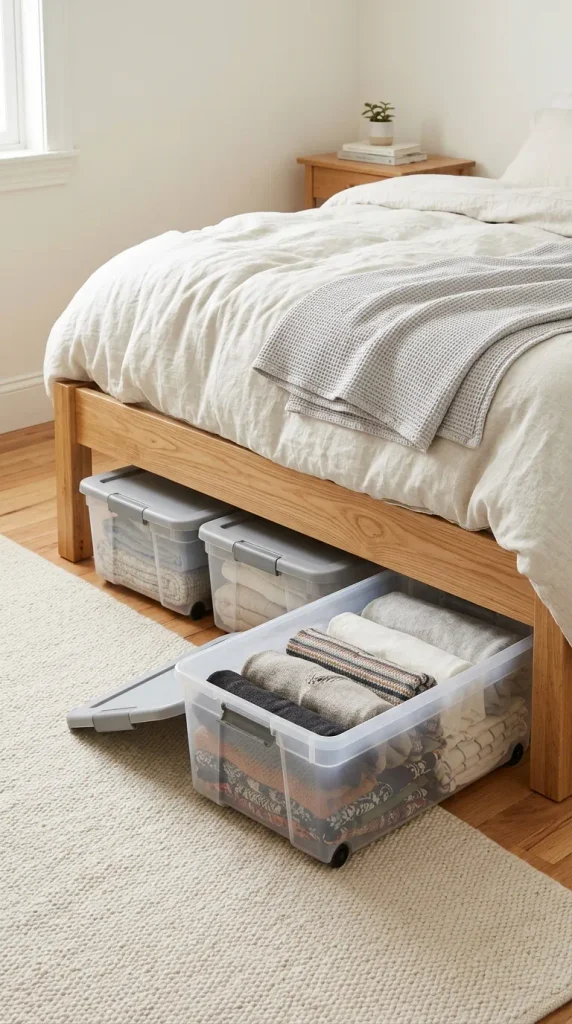
The area beneath your bed is valuable storage space that often goes unused. Suitable Dollar Tree bins and containers can help you store lightweight belongings neatly, especially if your bedroom lacks a large closet.
First, measure the available height beneath the bed, including any frame supports that could interfere with sliding containers in and out. Select low-profile bins that fit comfortably and leave enough clearance for easy access.
Use separate containers for categories such as spare pillowcases, lightweight blankets, seasonal accessories, or off-season clothing. Label each container clearly so you can identify its contents without pulling everything out.
If your bed has limited clearance, shallow containers may be more practical than deep bins. For a bed without a frame that leaves accessible space underneath, consider organizing a different area rather than forcing storage containers into a tight space.
Before storing anything, wash and completely dry the items. Use clean containers and check stored belongings occasionally for dust or moisture. If your room is humid, avoid storing moisture-sensitive fabrics beneath the bed unless they are protected with an appropriate storage solution.
You can also divide the space into zones. For example, keep bedding on one side and seasonal clothing on the other. This makes it easier to retrieve items without disturbing everything else.
Do not overfill the bins. Containers that are too heavy may be difficult to pull out and can crack if they are not designed for the load. If the floor beneath the bed is uneven, choose stable containers that will not tip when moved.
Budget tip: Reserve under-bed storage for items you do not need daily. Frequently used belongings are better kept in drawers or accessible closet baskets.
7. Create a Jewelry Organizer with Small Trays and Containers
Best for: Earrings, rings, bracelets, necklaces, and hair accessories.
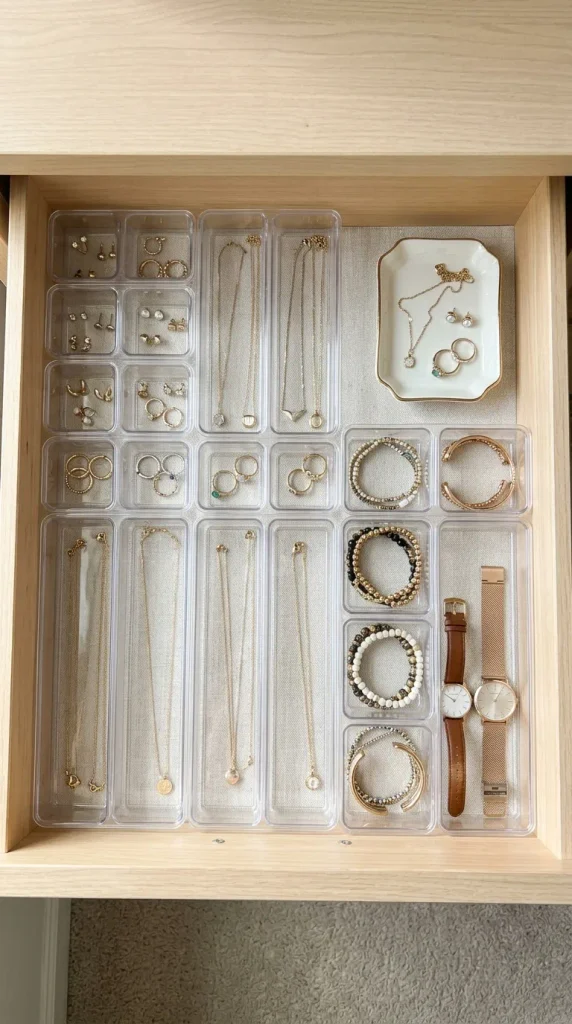
Jewelry can become tangled or misplaced when it is stored in one large box. Small trays and compartment containers from Dollar Tree can create an affordable organization system that makes it easier to find the pieces you want to wear.
Start by sorting jewelry into categories. Separate earrings, rings, bracelets, necklaces, and watches. Check clasps and fastenings while sorting, and set aside pieces that need repair.
Use a divided tray for earrings and rings, placing similar items together. Small individual containers can hold delicate pieces that need extra separation. For necklaces, use a suitable hanging organizer or separate compartments to help prevent chains from tangling.
A shallow drawer is a useful place for this system because it keeps jewelry protected from dust while allowing you to see everything at a glance. If you prefer displaying your collection, place a few frequently worn pieces in a decorative tray on your dresser and keep the rest stored securely.
You can make the arrangement look more polished by lining the tray with a clean, soft material suitable for the jewelry. Avoid rough surfaces that may scratch delicate finishes. Keep valuable or sentimental pieces in a secure location rather than leaving them exposed.
If you have limited drawer space, use a small lidded container that can be stored inside a closet or on a shelf. Labels can help distinguish everyday jewelry from special-occasion accessories.
Remember that some jewelry materials require specific care. Store pieces according to their material and manufacturer’s recommendations, and keep items that can tarnish or become damaged away from excessive moisture.
Budget tip: Small compartment boxes designed for crafts can often serve as jewelry organizers without the cost of a dedicated jewelry cabinet.
8. Use Dollar Tree Baskets to Organize Open Shelves
Best for: Books, hobby supplies, accessories, and everyday miscellaneous items.
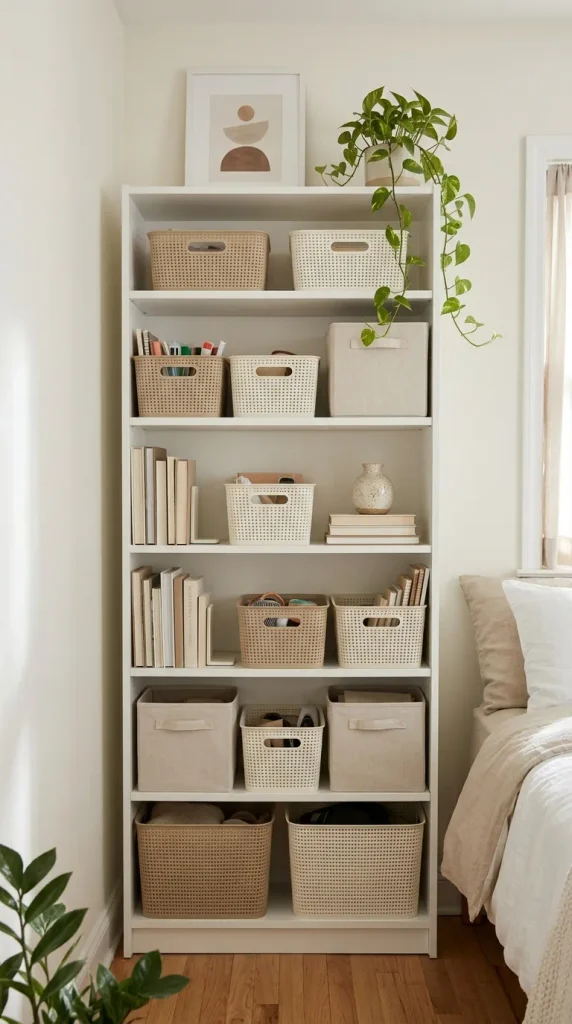
Open shelves can make a bedroom feel spacious, but they can also highlight clutter when too many small items are displayed together. Affordable baskets provide a simple solution by grouping loose belongings and giving shelves a cleaner appearance.
Start by removing everything from the shelf and sorting the contents into categories. Decide which items deserve to remain visible and which are better stored inside containers.
Use baskets for small objects such as charging accessories, stationery, craft supplies, or personal care products. Place books and attractive decorative items directly on the shelf, while hiding less visually appealing belongings in baskets.
Choose baskets that fit the shelf dimensions and allow you to pull them out comfortably. If your shelves are narrow, shallow containers may be easier to use. Avoid placing heavy items in flimsy baskets that are not designed to support them.
For a coordinated appearance, select baskets in similar colors or materials. Neutral tones create a calm look, while a few contrasting baskets can introduce color without making the room feel busy.
You can also combine storage with decoration. For example, place a basket on the lower shelf for everyday items, books in the middle, and a small decorative vase or framed print on top. This arrangement balances practical storage with visual interest.
Do not fill every inch of the shelves. Leaving some open space prevents the arrangement from looking crowded and allows individual objects to stand out.
For items you use regularly, position the basket at an accessible height. Store occasional-use belongings on higher shelves only if they can be reached safely.
Budget tip: Use the same basket style across several shelves to create a cohesive appearance, even if the items inside are different.
9. Create a Shoe and Slipper Organization Station
Best for: Everyday shoes, slippers, sandals, and lightweight footwear.
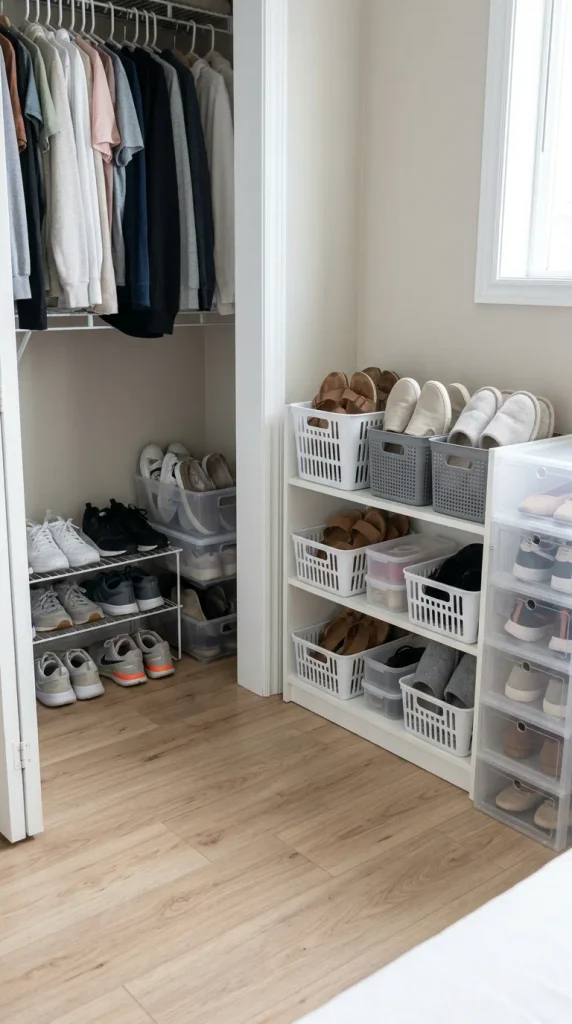
Shoes scattered around the bedroom can make the floor look messy and reduce usable walking space. Dollar Tree baskets and small storage containers can help create a simple shoe organization station without investing in a large shoe cabinet.
Begin by sorting footwear according to how often you wear it. Keep everyday shoes accessible, and move occasional or seasonal pairs to a closet or another suitable storage area.
Use a sturdy basket for slippers and lightweight sandals. Smaller containers can separate flip-flops or indoor footwear, while a shelf basket can hold shoes that are suitable for that container’s size and weight capacity.
If you store shoes inside a closet, place them in a designated lower section to keep the rest of your clothing organized. Use labels if different family members share the same storage area.
Before storing footwear, allow wet shoes to dry completely and remove loose dirt. Avoid placing damp or muddy shoes directly into enclosed plastic bins, as trapped moisture can contribute to unpleasant odors or material damage.
For a neat appearance, choose containers that complement your bedroom or closet color scheme. If you prefer open storage, keep shoes arranged in pairs with the toes facing the same direction.
If you have limited floor space, consider a suitable over-the-door organizer designed for footwear. Check its dimensions, weight limits, and compatibility with your door before purchasing.
Make sure the storage station does not block the bedroom entrance or create a tripping hazard. The goal is to make shoes easier to find while keeping the walking area clear.
Budget tip: Start with one dedicated basket for slippers and everyday sandals. Even a small designated spot can reduce floor clutter significantly.
10. Organize Cables, Chargers, and Small Electronics
Best for: Phone chargers, earbuds, spare cables, power accessories, and small devices.
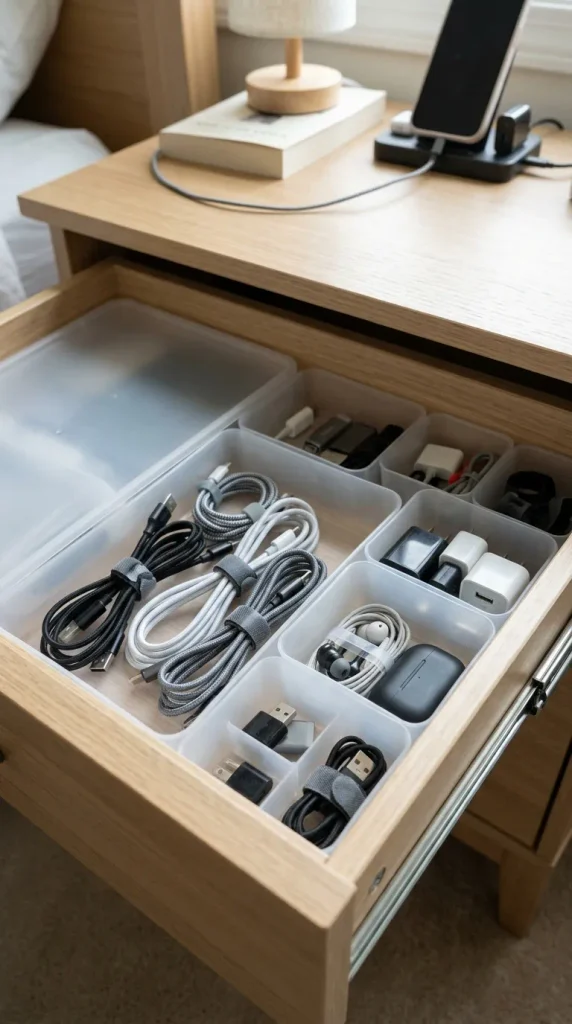
Cables and small electronics can create a surprising amount of clutter in a bedroom. Charging cords may become tangled in drawers, earbuds can disappear between other belongings, and spare accessories can accumulate on nightstands.
A simple organization system using small containers, labels, and suitable cable clips can keep these items together and easier to locate.
Begin by gathering all your cables and accessories in one place. Identify what each cable belongs to, test only items you can safely test, and separate any damaged cables or accessories for appropriate disposal. Avoid keeping unidentified cords unless you have a practical reason to retain them.
Use small containers to separate phone cables, earbuds, charging adapters, and other accessories. Roll cables loosely rather than bending them tightly, and secure them with reusable cable ties or fasteners suitable for electronics. Label the containers so you can find the correct accessory quickly.
If you keep a charging station on your nightstand, use cable clips that are compatible with the surface to guide cords along the side or back of the furniture. This helps prevent cables from falling behind the table whenever you unplug a device.
Keep chargers and power adapters uncovered and ventilated during use. Do not store electronics while they are warm, and avoid running cables beneath rugs, mattresses, or furniture where they could become damaged.
A small lidded box can hold spare accessories in a drawer, while the cords you use daily remain accessible near your charging station. This separation keeps the visible area neat without making essential items difficult to reach.
Budget tip: A single small box with clearly labeled compartments may be enough to organize an entire collection of cables and adapters.
How to Organize Your Bedroom on a Small Budget
Dollar Tree organization hacks work best when they solve specific problems instead of adding more containers to an already cluttered room. Use these practical steps to create a bedroom organization system that lasts.
1. Declutter Before Buying Supplies
Remove items you no longer use, need, or enjoy. Organizing unnecessary belongings takes up valuable space and makes maintenance more difficult. Start with one drawer, one shelf, or one section of your closet so the task feels manageable.
2. Measure Before Shopping
Measure the inside of drawers, closet shelves, and under-bed spaces. Check the height, width, and depth of each area before choosing baskets or bins. This reduces wasted money on organizers that do not fit.
3. Organize by Category
Keep similar belongings together. Group socks with socks, beauty products with beauty products, and charging accessories with other electronics. Category-based storage makes items easier to find and return to their proper places.
4. Use Vertical Space
Hooks, hanging organizers, and shelf baskets can help you use the space behind closet doors and on available shelves. Always check the suitability and weight limits of mounting products before use.
5. Choose a Consistent Style
Using containers in a similar color palette can make your bedroom look more organized. White, clear, beige, and gray organizers are versatile choices, but you can choose any colors that complement your decor.
6. Label Containers Clearly
Labels help you identify stored items quickly, particularly when bins are opaque or stored on high shelves. Keep labels simple and specific so you know exactly where belongings belong.
7. Keep Everyday Items Accessible
Store frequently used belongings within easy reach. Items you use only occasionally can be placed on higher shelves or beneath the bed, provided the storage area is suitable.
8. Maintain the System Regularly
Spend a few minutes each week returning items to their designated locations. A small amount of regular maintenance helps prevent drawers, shelves, and nightstands from becoming cluttered again.
Common Mistakes to Avoid with Dollar Tree Bedroom Organization
Affordable organizers can be useful, but a few common mistakes may reduce their effectiveness.
- Buying containers before measuring: Always check the available space first.
- Overfilling bins: Too many items make containers difficult to use and can damage lightweight products.
- Using unsuitable hooks: Check surface compatibility, weight limits, and removal instructions.
- Storing damp clothing or shoes: Allow items to dry fully before putting them away.
- Mixing unrelated items: Assign a clear purpose to each container.
- Ignoring safety: Keep exits and walking paths clear, and avoid unstable stacks of containers.
- Using flimsy bins for heavy objects: Match the container’s strength to the items being stored.
- Creating overly complicated systems: Simple storage arrangements are easier to maintain.
- Hiding everything without labels: Labeled containers make stored belongings easier to find.
- Buying more than you need: Begin with the most cluttered area and expand your system gradually.
Conclusion
These 10 Dollar Tree organization hacks ideas for bedroom spaces show how affordable storage products can help create a cleaner, more functional, and more relaxing environment. From drawer organizers and closet baskets to jewelry trays, under-bed storage, and cable management, small changes can make a noticeable difference.
The most effective approach is to start with the areas that cause the most frustration. If your drawers are messy, begin with small storage bins. If accessories are scattered around the room, try adhesive hooks or compartment trays. If your closet lacks space, use labeled baskets to organize smaller belongings and make existing shelves more useful.
Remember that you do not need to purchase every product at once. Reuse containers you already own, measure your storage spaces before shopping, and focus on solutions that fit your daily routine. Dollar Tree inventory varies by location, so look for affordable alternatives that provide the same function.
With a little planning and consistent maintenance, you can organize your bedroom on a budget while making the space feel calmer and easier to enjoy every day.




Leave a Reply