
Introduction
A meditation room should feel peaceful the moment you enter it. Unlike spaces designed around entertainment, work, or busy daily routines, a meditation room benefits from simplicity, softness, natural textures, and an intentional connection to nature. Boho decor is especially well suited to this purpose because it combines relaxed styling with earthy colors, handmade details, organic materials, and comfortable layers.
A boho meditation room does not need to be large or expensive. A quiet bedroom corner, spare room, enclosed balcony, reading nook, or unused section of a living room can become a calming meditation space with the right arrangement. The goal is to create an environment that encourages you to slow down and disconnect from visual and mental clutter.
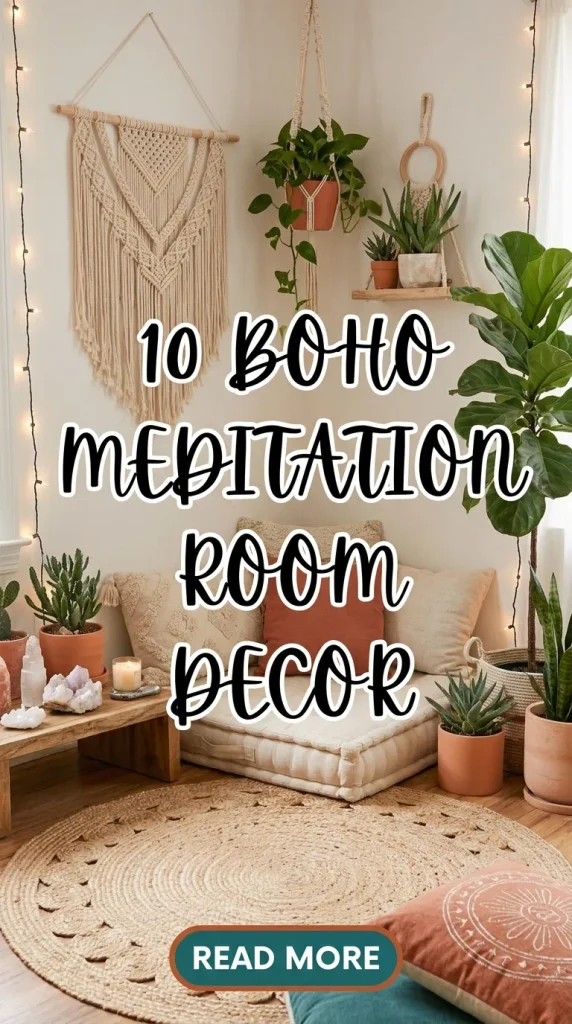
Natural materials are one of the most recognizable elements of boho decorating. Woven baskets, rattan furniture, jute rugs, bamboo accessories, linen fabrics, wooden stools, macramé wall hangings, and ceramic pieces can all add warmth without making the room feel overly decorated. Soft lighting is equally important. Instead of depending on harsh overhead lights, use floor lamps, table lamps, candles where appropriate, or warm decorative lighting to establish a gentle atmosphere.
Color also plays an important role. Earthy shades such as beige, cream, terracotta, sand, warm brown, muted green, and dusty blush can make a meditation room feel grounded. You can introduce deeper colors through cushions, rugs, artwork, or small accessories while keeping the overall palette calm.
The following ten boho meditation room decor ideas offer different ways to create a relaxing space. Some focus on floor cushions and natural textures, while others incorporate plants, macramé, low furniture, soft lighting, and earthy accessories. Each idea can be adapted to your available space and personal style.
1. Neutral Boho Meditation Room With Floor Cushions
One of the easiest ways to create a boho meditation room is to build the entire space around comfortable floor cushions. This approach keeps the room simple, relaxed, and intentionally low to the ground, which naturally creates a different atmosphere from conventional living spaces.
Begin with a soft neutral rug covering the meditation area. A jute, wool, cotton, or woven rug can provide warmth and texture while defining the space. On top of the rug, arrange several floor cushions in cream, beige, tan, and soft brown shades.
Choose cushions with different textures rather than using identical designs. Linen, cotton, boucle, woven fabric, and subtle geometric patterns can create visual interest without making the room feel busy.
A low wooden stool or small round table can sit beside the cushions. Use it to hold a ceramic vase, a small plant, or another simple decorative object. Keep the surface relatively uncluttered.
For the walls, choose simple boho artwork, a woven wall hanging, or a large piece of neutral textile art. Avoid covering every wall because empty space contributes to the peaceful feeling.
Lighting should remain soft. A warm floor lamp with a fabric shade can provide gentle illumination in the evening, while natural daylight can brighten the room during the day.
You can also add a small basket nearby for storing blankets, meditation cushions, books, or other personal items.
The key to this style is restraint. The room should feel cozy but not crowded. Neutral colors, natural textures, low seating, and soft lighting create a welcoming meditation environment that can easily be adapted to both large and small rooms.
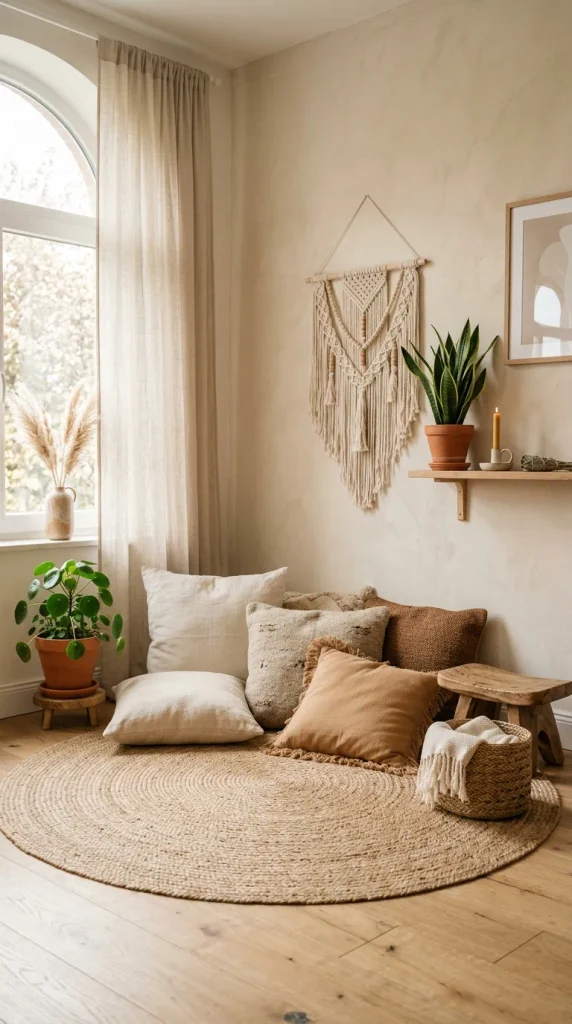
2. Boho Meditation Corner With Macramé Wall Decor
If you do not have an entire room available for meditation, transform an unused corner into a dedicated boho retreat. A small corner can become visually separate from the rest of the home simply through a rug, floor cushion, plant, and wall decoration.
Begin by placing a round or rectangular woven rug in the chosen corner. The rug establishes a boundary and visually communicates that the area has a specific purpose.
Add a comfortable meditation cushion or low floor pillow in a natural color. Terracotta, cream, warm beige, and muted olive are particularly attractive against woven materials.
Above the cushion, hang a large macramé wall piece. Macramé immediately introduces handmade texture and gives the corner a recognizable boho character. Choose a simple cream or natural cotton design if you want a calm appearance.
Add one tall plant beside the meditation cushion. A large leafy plant can soften the corner and create a stronger connection to nature. If natural light is limited, choose a plant appropriate for the available lighting conditions.
A small wooden stool can provide another layer of height. Place a ceramic bowl, small vase, or simple decorative object on top.
For evening use, add a warm floor lamp or small table lamp nearby. Avoid extremely bright lighting because it can make the corner feel more like a workspace than a retreat.
This approach works especially well in bedrooms, living rooms, home offices, and open-plan spaces. The corner does not need to be completely enclosed.
For Pinterest styling, photograph the meditation corner from a slightly wider angle so the macramé, rug, cushion, plant, and surrounding architecture are visible together. Keep the composition uncluttered and use natural daylight whenever possible.
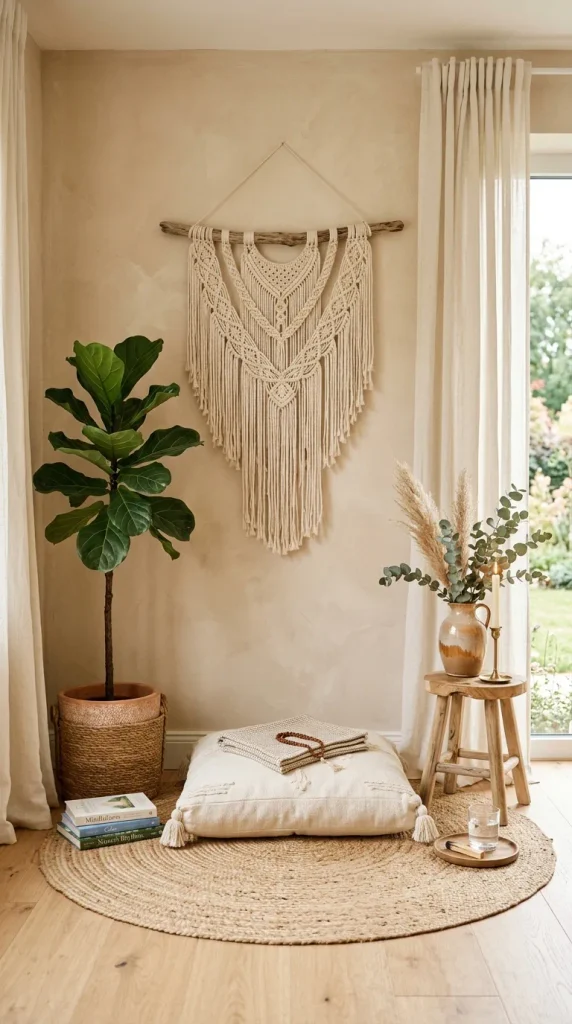
3. Earthy Terracotta Boho Meditation Room
Terracotta tones can make a meditation room feel warm, grounded, and connected to natural materials. This color works beautifully with classic boho decorating because it adds richness without requiring bright or overwhelming colors.
Begin with a warm neutral foundation. Cream walls, light wood flooring, beige curtains, and a natural fiber rug can create a soft backdrop for terracotta accents.
Introduce terracotta through floor cushions, ceramic planters, woven baskets, pottery, blankets, or a small accent rug. You do not need to use the color everywhere. A few repeated terracotta elements are enough to create cohesion.
A low wooden meditation bench can provide an alternative to floor cushions. Place it on a woven rug and surround it with a few soft cushions or folded blankets.
Decorative ceramics are particularly effective in this style. Handmade-looking vases, bowls, candle holders, and small pottery pieces can add personality while maintaining the earthy theme.
Add dried grasses or branches in a large ceramic vase for additional texture. Pampas grass, dried palm leaves, or simple natural branches can create height without introducing strong colors.
Lighting should complement the warm palette. Choose a floor lamp with a woven or linen shade, or use warm ambient lighting around the room.
For wall decor, consider a large abstract artwork featuring beige, clay, cream, and muted brown tones. This creates a focal point without introducing visual chaos.
The finished room should feel warm and organic rather than heavily themed. Terracotta works best when balanced with plenty of cream, natural wood, and woven materials.
This idea is ideal for anyone who wants a boho meditation room with more color while still maintaining a calm and grounded atmosphere.
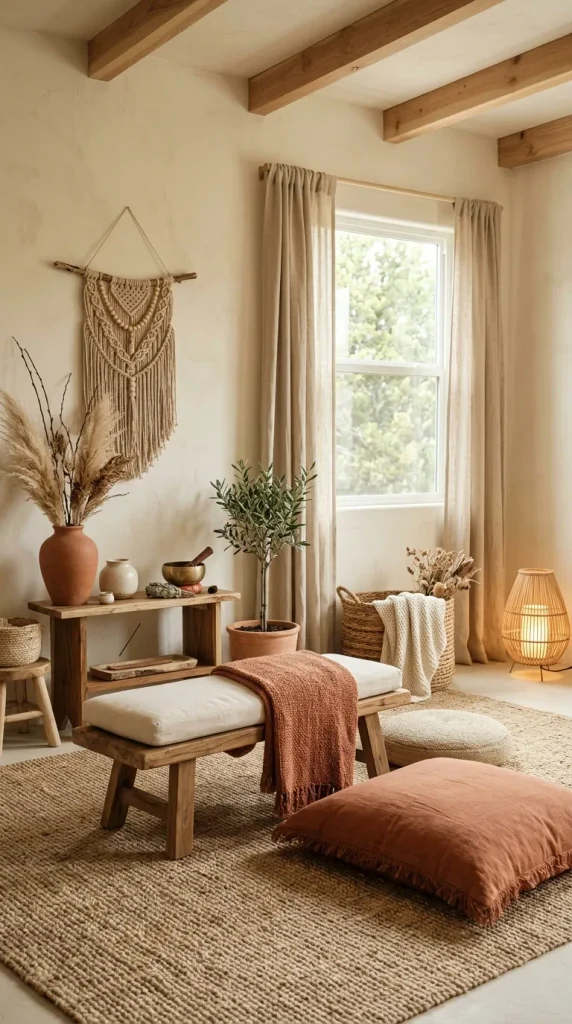
4. Indoor Plant-Filled Boho Meditation Space
Plants can completely change the feeling of a meditation room. Their organic shapes, natural colors, and connection to the outdoors make them especially appropriate for a calming boho environment.
Start by choosing a comfortable meditation area near a suitable natural light source. Place a large woven or jute rug on the floor and add a low meditation cushion or simple floor mattress.
Introduce plants at different heights. A tall plant can occupy an empty corner, medium-sized plants can sit on wooden stands, and smaller plants can rest on shelves or low tables.
Use natural containers such as terracotta pots, woven planters, ceramic vessels, or simple wooden plant stands. Mixing container textures can enhance the boho aesthetic.
Avoid filling every part of the room with plants. Leave enough open floor space for movement and meditation. The goal is to create a natural atmosphere rather than an indoor jungle that feels visually overwhelming.
Wooden furniture works particularly well with greenery. A small low bench, side table, or floating shelf can provide useful surfaces while keeping the room visually light.
Add cream or beige textiles to soften the space. A lightweight throw, floor cushion, or linen curtain can make the room feel comfortable.
Natural daylight is ideal during the day. In the evening, use warm lighting positioned near the plants and meditation area.
For Pinterest styling, combine plants with woven textures, neutral walls, wooden furniture, and soft textiles. The green foliage should act as the main color accent against an earthy neutral background.
This design works especially well for people who enjoy biophilic interiors and want their meditation space to feel connected to nature.
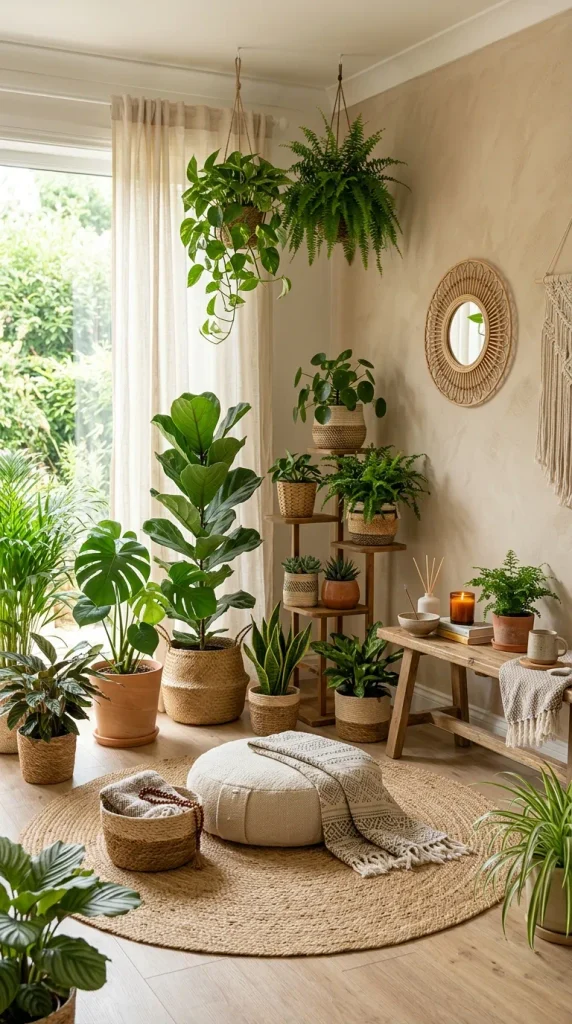
5. Cozy Boho Meditation Room With Layered Textiles
Layered textiles can make a meditation room feel exceptionally cozy without requiring many decorative objects. This idea focuses on rugs, cushions, blankets, curtains, and soft fabrics to create an inviting environment.
Begin with a large neutral area rug. Add a smaller patterned rug on top if the room is spacious enough. A subtle geometric or tribal-inspired pattern can introduce classic boho character.
Place several meditation cushions in complementary colors. Combine cream, tan, muted rust, olive, and soft brown rather than choosing many unrelated shades.
Add a folded throw blanket to a low bench or basket. Chunky woven blankets, cotton throws, and lightweight linen fabrics can provide different textures.
Curtains should be soft and slightly flowing. Linen or cotton curtains in cream, beige, or warm white can filter daylight and make the room feel more private.
A low wooden table can sit in the center or beside the meditation cushion. Keep its surface simple with a small ceramic vase, plant, or decorative bowl.
Wall decor should remain relatively minimal. A woven textile, framed botanical artwork, or handmade-looking wall piece can provide enough visual interest.
The key is to avoid excessive pattern mixing. If the rug has a noticeable pattern, keep the cushions and curtains more subdued. If the textiles are mostly solid colors, one patterned piece can become the focal point.
This design is especially suitable for cooler seasons because layered textiles add warmth and comfort.
For Pinterest photography, emphasize the tactile quality of the room. Include close enough detail to show the woven rug, cushions, blanket, and natural materials while still capturing the overall composition.
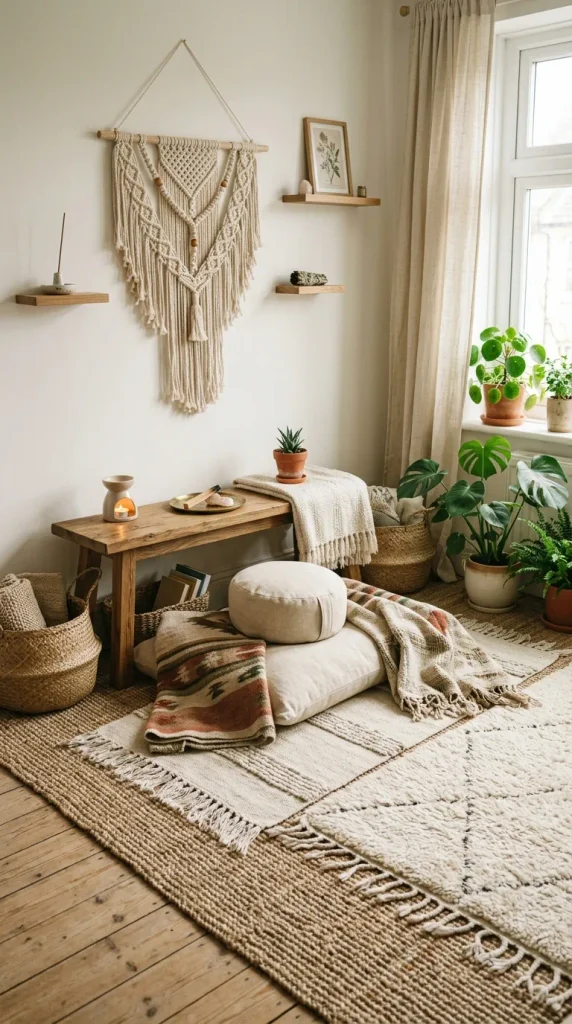
6. Minimal Boho Meditation Room With Low Wooden Furniture
Boho decor does not have to mean maximal layering. A minimalist interpretation can create an exceptionally peaceful meditation room by combining natural materials with a limited number of carefully selected pieces.
Start with a light neutral wall color such as warm white, ivory, sand, or pale beige. Keep the floor mostly open and use one large natural fiber rug to define the meditation zone.
Choose a low wooden platform, meditation bench, or simple floor cushion as the primary seating. Light oak, bamboo, or natural wood finishes work particularly well.
Add one small side table or stool. The furniture should have simple lines without excessive decorative detailing.
For wall decor, choose one large handmade-looking piece rather than a gallery wall. A woven wall hanging, organic abstract artwork, or simple wooden decoration can create a focal point.
Introduce one or two plants for natural color. A single large plant may be more effective than many small ones because it keeps the room visually organized.
Lighting should be soft and warm. A simple floor lamp with a natural fabric shade can provide enough illumination without becoming the room’s main decorative feature.
Storage should also be simple. A woven basket can hold blankets, cushions, or meditation accessories while maintaining the natural aesthetic.
The main principle is intentional emptiness. Leave areas of the floor and walls open so the room feels spacious.
This style is particularly useful for small rooms because it avoids visual clutter. It also works well for people who love boho materials but prefer a clean and modern environment.
For Pinterest styling, use a neutral palette, strong natural textures, and one or two carefully chosen focal pieces. The result should feel warm, organic, and peaceful rather than bare.
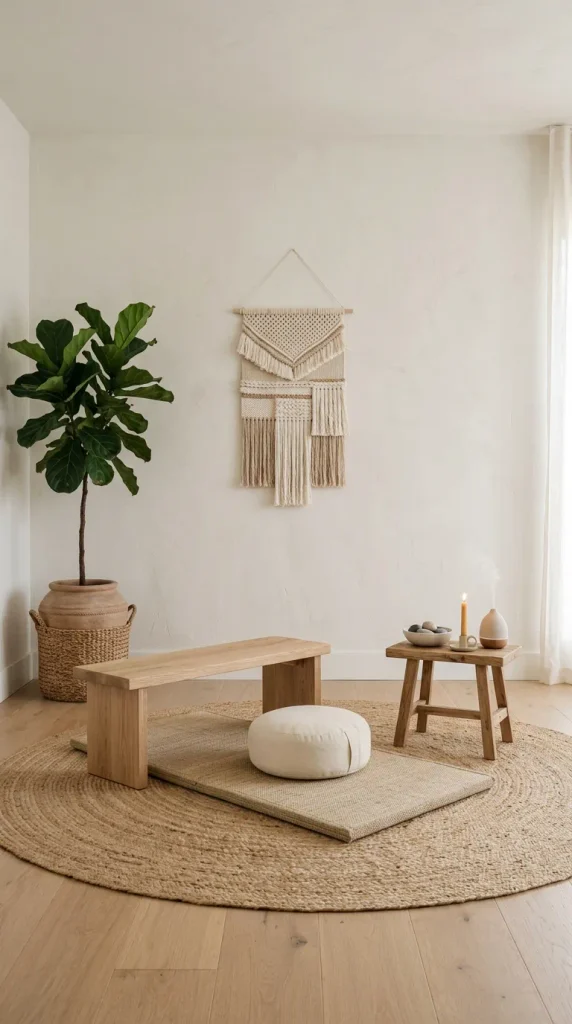
7. Boho Meditation Room With a Hanging Chair
A hanging chair can turn a meditation room into a cozy retreat while introducing an attractive sculptural element. Rattan, wicker, or woven hanging chairs are especially suitable for boho interiors.
Position the chair in a corner where it does not interfere with the primary meditation area. Make sure the ceiling structure and installation system are appropriate for safely supporting the chair.
Place a large woven rug underneath or nearby to visually connect the chair with the rest of the room. Add a soft cushion and lightweight throw inside the chair for comfort.
The main meditation area can sit opposite the hanging chair. Use a floor cushion, low wooden bench, or small meditation mat.
Plants work beautifully around a hanging chair. Place one large floor plant beside it and perhaps a smaller plant on a wooden stand nearby.
Keep the color palette natural. Cream, beige, tan, warm brown, muted green, and soft terracotta can create a cohesive atmosphere.
Macramé or woven wall decor can reinforce the boho aesthetic, but avoid placing too many large objects around the hanging chair because its woven shape already provides plenty of texture.
Soft lighting can make the corner especially inviting in the evening. A warm floor lamp positioned behind or beside the chair can create gentle shadows and highlight the woven structure.
This idea is ideal for a larger meditation room where there is enough space to create multiple zones. The hanging chair can serve as a place for quiet reading, reflection, or relaxation in addition to meditation.
For Pinterest styling, make the chair a secondary focal point while keeping the meditation area visually clear. Natural textures and greenery will help connect both zones.
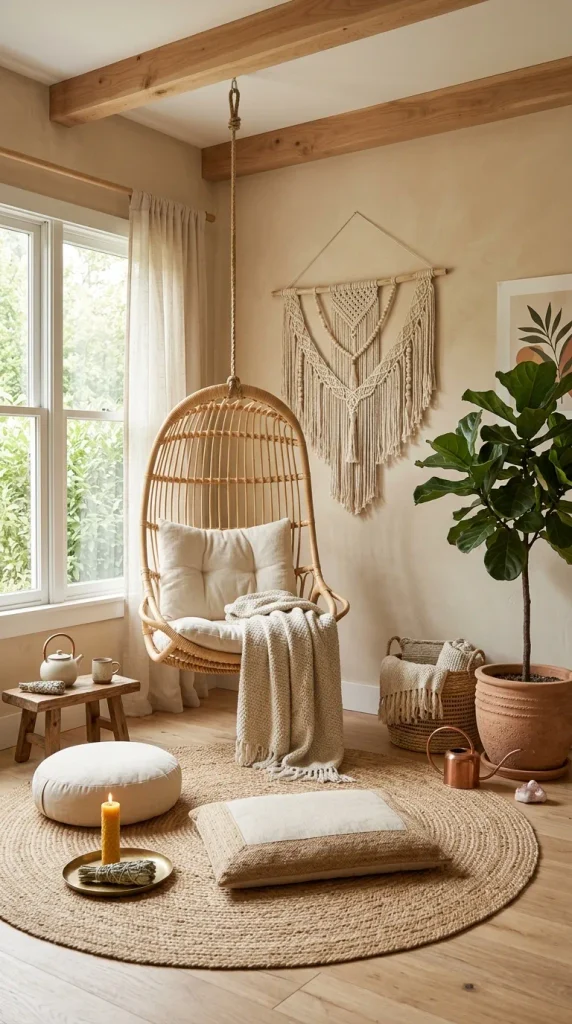
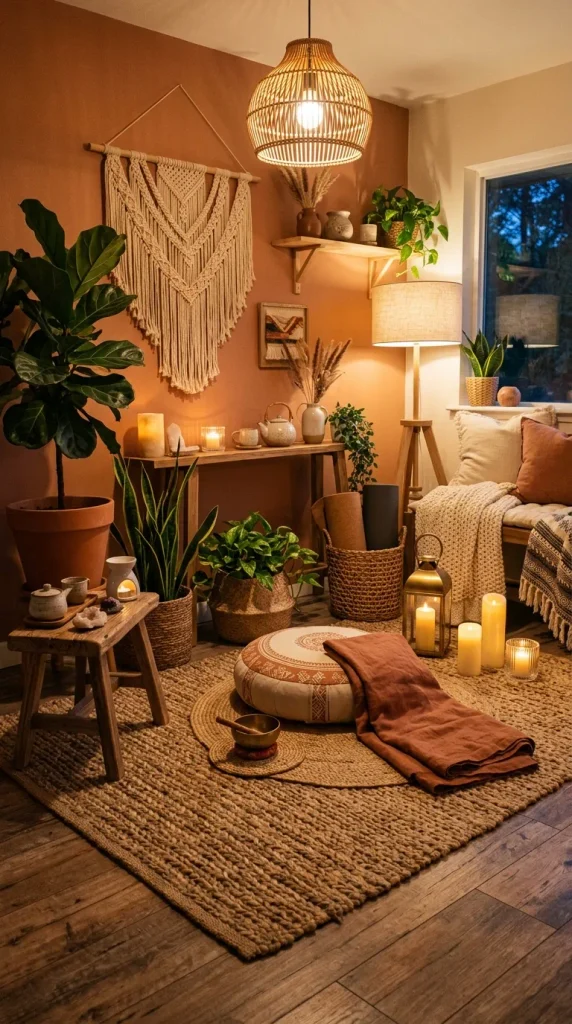
8. Boho Meditation Room With Candles and Warm Lighting
Lighting can have a major impact on the atmosphere of a meditation space. A boho room centered around warm ambient lighting can feel especially peaceful during the evening.
Begin with a neutral foundation of cream walls, natural wood, and woven materials. Add a comfortable meditation cushion on a textured rug.
Use several safe candle holders or decorative lanterns where appropriate, but place them carefully and never leave open flames unattended. Battery-operated candles can provide a similar visual effect with fewer concerns.
Combine candles with warm floor lamps, table lamps, or decorative string lighting. Choose warm-toned illumination rather than cool white light.
A woven pendant light can provide a beautiful overhead feature. Rattan, bamboo, or natural fiber shades filter the light and create subtle patterns across the room.
Add soft textiles such as cushions and throws in earthy colors. Cream, caramel, terracotta, brown, and muted green can work together beautifully.
Keep reflective surfaces limited. Too many shiny materials can make the room feel more energetic, while natural matte textures create a softer appearance.
A small wooden tray can hold a few carefully selected meditation accessories. Keep it organized rather than filling it with decorative objects.
For Pinterest photography, an evening scene can highlight the lighting beautifully. Capture the warm glow across the woven textures, cushions, plants, and wooden surfaces.
This design is particularly useful for creating a meditation room that transitions from daytime relaxation to a cozy nighttime retreat. The combination of soft illumination and natural materials creates a peaceful visual environment.
9. Boho Meditation Room With a Natural Stone Accent
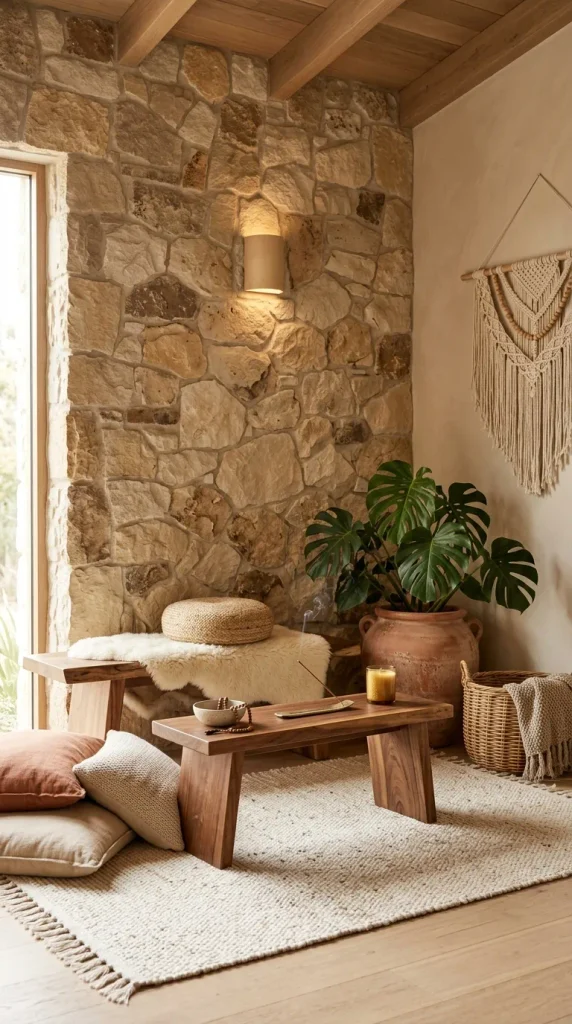
Natural stone can add an earthy, grounding quality to a boho meditation room. Whether used as a small decorative element, accent wall, stone floor, or substantial architectural feature, stone pairs beautifully with wood and woven materials.
Start with a natural color palette based on cream, beige, sand, gray, brown, and muted green. These colors allow the stone texture to become part of the room’s visual identity.
A textured stone wall can act as the main focal point behind a meditation cushion or low wooden bench. If a full stone wall is not practical, use a stone side table, decorative bowl, planter, or small collection of natural stones instead.
Add a large jute or wool rug to soften the harder stone surface. Layer it with cushions and a folded blanket.
Wooden furniture can balance the natural stone. Choose unfinished or lightly finished wood for a relaxed boho appearance.
Plants can introduce organic greenery and soften the architectural materials. Choose containers in terracotta, ceramic, or woven finishes.
Keep wall decorations simple because stone already creates visual texture. One macramé piece or organic artwork may be enough.
Lighting should highlight the textures without becoming harsh. Warm directional lighting can gently emphasize the stone and wood surfaces.
For Pinterest styling, combine three major natural materials—stone, wood, and woven fibers—and allow each one to remain visible. This creates a sophisticated interpretation of boho decor.
The finished room can feel earthy and grounded while still being elegant. It is particularly suitable for homeowners who want a meditation room that feels more architectural and less traditionally decorative.
10. Dreamy Boho Meditation Room With Soft Earthy Layers
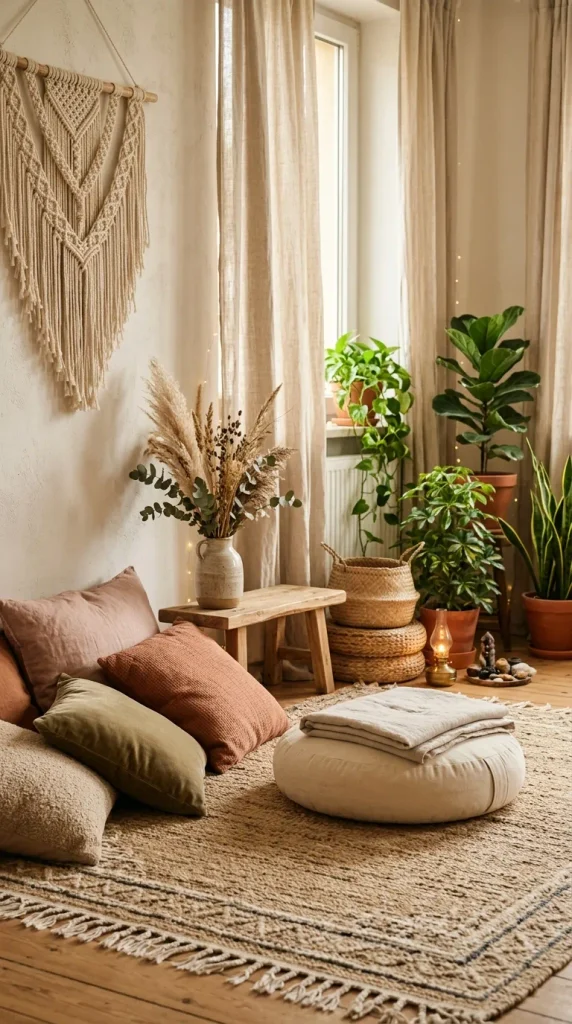
A dreamy boho meditation room can combine the best elements of relaxed bohemian decor into one harmonious space. This approach uses soft colors, natural materials, layered textiles, plants, low furniture, and gentle lighting.
Begin with a warm neutral backdrop. Cream, ivory, beige, and light taupe create a peaceful foundation.
Place a large woven rug in the center of the room and add a comfortable meditation cushion or low floor mattress. Layer cushions in cream, dusty blush, terracotta, tan, and muted olive.
Add a low wooden table beside the meditation area. A ceramic vase filled with dried grasses can provide height while maintaining the earthy aesthetic.
Place plants in several locations, but leave enough empty space to prevent visual clutter. A tall plant in one corner and a smaller plant near the meditation cushion may be sufficient.
For the walls, combine one macramé wall hanging with a simple organic artwork. Avoid creating an overly busy gallery wall.
Use woven baskets for storage. They can hold blankets, meditation cushions, books, or other personal items while becoming part of the decor.
Lighting should be layered. Combine natural daylight, a woven pendant, a warm floor lamp, and carefully placed decorative lighting if needed.
The room should feel collected and personal rather than perfectly matched. Slight variations in texture and material make boho interiors feel authentic.
For Pinterest styling, create a strong central composition with the meditation cushion as the focal point. Frame it with plants, woven textures, warm wood, and soft lighting.
This final approach is ideal for anyone who wants a complete boho meditation sanctuary that feels peaceful, cozy, natural, and visually inspiring.
Materials Used for Boho Meditation Room Decor
You do not need every material to create a beautiful meditation room. Select pieces that match your space and personal style.
- Jute rugs
- Cotton rugs
- Wool rugs
- Woven floor cushions
- Meditation cushions
- Linen cushions
- Cotton throws
- Woven baskets
- Rattan furniture
- Bamboo accessories
- Natural wood stools
- Low wooden benches
- Wooden side tables
- Macramé wall hangings
- Woven wall decor
- Ceramic vases
- Terracotta pots
- Natural stone accessories
- Dried grasses
- Dried palm leaves
- Indoor plants
- Hanging plants
- Rattan pendant lights
- Linen lampshades
- Warm LED lighting
- Decorative lanterns
- Battery-operated candles
- Neutral curtains
- Organic artwork
- Small storage baskets
The best boho meditation rooms combine several natural textures without making the space feel crowded.
How to Create a Boho Meditation Room
Start by choosing the quietest practical area in your home. It can be an entire room or simply a dedicated corner.
Clear unnecessary objects from the space. Meditation areas benefit from visual simplicity.
Choose a calm color palette first. Warm neutrals, earthy browns, muted greens, terracotta, cream, and dusty blush are excellent starting points.
Next, define the meditation area with a rug. This immediately creates a visual boundary.
Add your primary seating, such as a meditation cushion, floor pillow, low bench, or comfortable floor mattress.
Introduce natural textures through baskets, wood, rattan, linen, cotton, and woven materials.
Add greenery if the room receives appropriate light. Plants can soften the space and introduce a natural element.
Choose wall decor carefully. One large macramé hanging or organic artwork can be more effective than many small decorations.
Finally, layer the lighting. Use natural daylight during the day and warm, gentle lighting in the evening.
Before finishing, remove anything that feels unnecessary. The goal is not to fill the room but to create an environment that feels calm and intentional.
Proper Pinterest-Style Pattern for Boho Meditation Room Decor
A Pinterest-worthy boho meditation room should look natural, layered, cozy, and intentional.
Start with one hero element, such as a floor cushion arrangement, hanging chair, macramé wall hanging, or beautiful woven rug.
Use a limited earthy color palette. Cream, beige, brown, terracotta, muted green, and warm white work especially well together.
Create texture through layering. Combine woven rugs with linen cushions, wooden furniture, rattan baskets, ceramic accessories, and soft blankets.
Use different heights. A floor cushion, low table, medium plant, and tall floor plant create visual movement.
Include natural materials wherever possible. Wood, jute, rattan, bamboo, stone, cotton, and linen reinforce the boho aesthetic.
Maintain negative space. Empty areas are important in a meditation room because too many objects can make the space feel visually busy.
For Pinterest photography, use a vertical 2:3 composition, natural daylight when possible, warm neutral styling, and a clear focal point. Show enough of the room to communicate the overall design while keeping the meditation area prominent.
Final Thoughts
A boho meditation room can become one of the most peaceful spaces in a home. It does not require expensive furniture or a large dedicated room. With a comfortable meditation cushion, natural textures, earthy colors, soft lighting, and a few meaningful decorative pieces, even a small corner can become a calming retreat.
The beauty of boho decorating is its flexibility. You can create a minimalist space with a single rug and wooden bench, a plant-filled sanctuary surrounded by greenery, or a richly layered room filled with woven textiles and warm lighting.
The most important principle is balance. Natural materials should create warmth, while open space keeps the room peaceful. Plants should bring life without overwhelming the room, and decorative accessories should add personality without creating clutter.
Choose materials and colors that make the space feel comfortable to you. Combine jute, rattan, wood, linen, ceramics, plants, and soft textiles to create an environment that feels connected to nature.
Whether you have an entire room or only a small corner, these 10 boho meditation room decor ideas can help you create a space that feels warm, grounded, peaceful, and Pinterest-worthy.



Leave a Reply