
A small dining area can be just as stylish, comfortable, and functional as a large dining room. In fact, a thoughtfully designed dining nook can make a compact home feel more organized and inviting. The key is to use the available space wisely while choosing furniture, lighting, colors, and décor that make the nook feel open rather than crowded.
Whether you live in a small apartment, townhouse, studio, or compact family home, creating a dedicated dining nook gives you a comfortable place to enjoy meals, work, entertain, or simply start the day with a cup of coffee.

The best small dining nooks are designed around proportion. Instead of trying to squeeze a full-sized dining set into a limited area, consider benches, round tables, wall-mounted furniture, built-in seating, or multifunctional pieces. These solutions allow you to create a dining zone without sacrificing valuable floor space.
In this article, you’ll find 10 dining nook ideas for small spaces, from cozy corner benches and round tables to minimalist breakfast nooks, window-side dining areas, and clever storage solutions. Each idea focuses on combining practicality with a Pinterest-worthy appearance.
1. Built-In Corner Bench Dining Nook
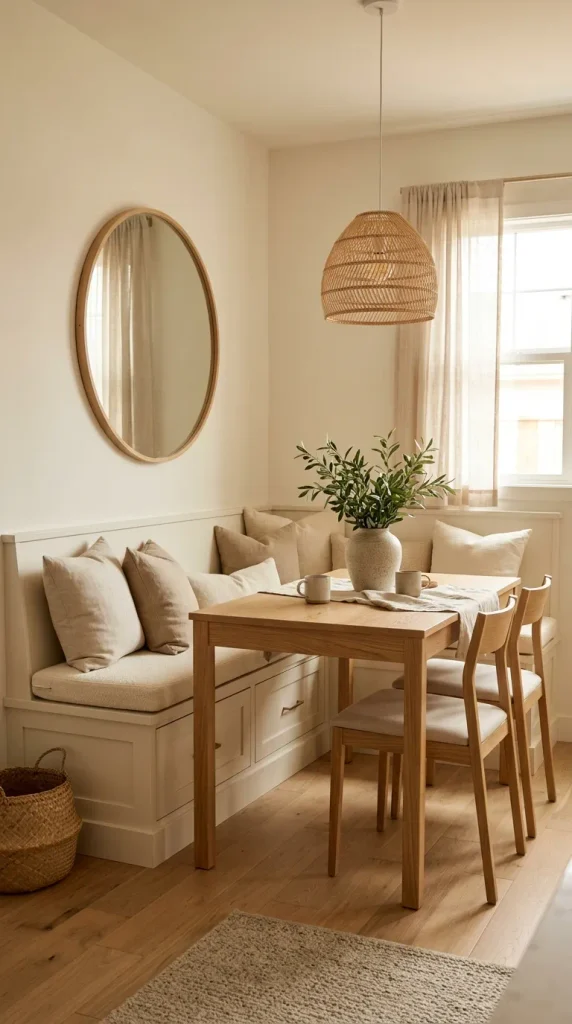
A built-in corner bench is one of the smartest ways to create a dining nook in a small space. Instead of leaving clearance around several individual dining chairs, a bench can fit neatly against two walls and make use of an otherwise awkward corner.
Start with a compact rectangular or square dining table that fits comfortably in front of the bench. A light wood table works beautifully in small spaces because its natural finish adds warmth without making the room feel visually heavy.
For seating on the opposite side, use one or two slim dining chairs. This creates enough seating for everyday meals while keeping the walkway open.
The built-in bench can also provide hidden storage underneath. Lift-up seats or drawers can be used to store placemats, table linens, serving pieces, small kitchen appliances, or other items that would otherwise take up cabinet space.
Keep the color palette light and cohesive. Cream, beige, white, soft gray, and natural wood can help the nook feel spacious. Add cushions in subtle patterns or textures for comfort.
Above the table, install a compact pendant light to visually define the dining zone. A round mirror on the wall can reflect light and make the corner feel larger.
For décor, avoid filling every available surface. A small vase, ceramic bowl, or simple piece of artwork is usually enough.
This style works especially well in open-plan kitchens where a corner would otherwise be unused. It also works beautifully in apartments because the seating can be customized to the exact dimensions of the room.
The result is a cozy dining space that feels built into the architecture rather than squeezed into it.
2. Round Table Dining Nook for a Tiny Space
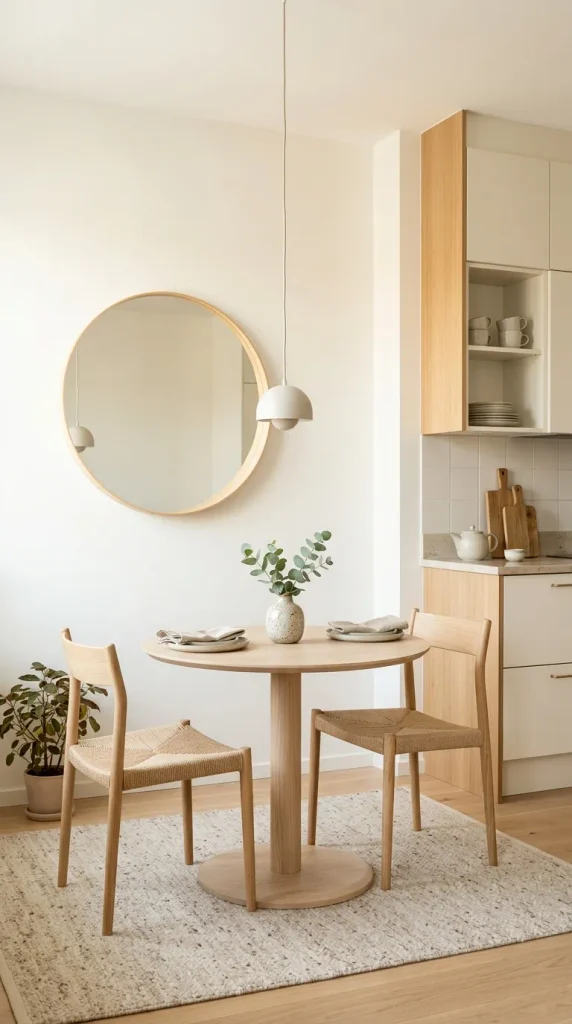
A round dining table can be a game changer when floor space is limited. Unlike a rectangular table with sharp corners, a round table creates a softer visual flow and makes it easier to move around a compact room.
Choose a table that is proportionate to your space. A small round pedestal table is particularly useful because the central pedestal eliminates bulky table legs that can interfere with chairs.
Pair the table with two to four lightweight dining chairs depending on the size of the room. Chairs with slim frames are preferable because they maintain visual openness.
For a small kitchen nook, place the table near a window if possible. Natural light can make the area feel larger and more pleasant during the day.
Keep the tabletop styling minimal. A small vase with greenery or a simple bowl can create a finished appearance without reducing useful dining space.
A pendant light centered above the table can make the dining nook feel intentional. Choose a fixture with a relatively compact profile so it does not overwhelm the table.
For walls, consider a round mirror, small gallery arrangement, or one oversized piece of artwork. Repeating rounded shapes through the mirror, table, and pendant can create a cohesive look.
If you want to add color, introduce it through the dining chairs, cushions, artwork, or tableware rather than using a dark color throughout the entire nook.
Round tables are particularly useful for apartments, breakfast corners, studio homes, and narrow kitchen areas.
They are also more comfortable for conversation because everyone faces toward the center.
The combination of a small round table, slim chairs, warm lighting, and minimal accessories can create a dining nook that feels surprisingly spacious.
3. Window-Side Breakfast Nook
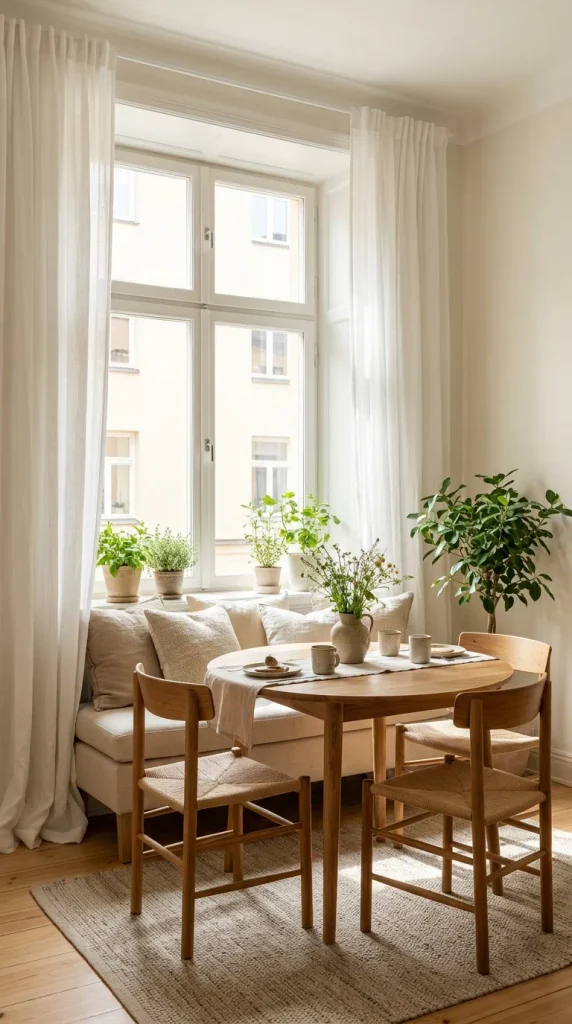
A window can become the perfect natural focal point for a small dining nook. Instead of placing furniture in the middle of the room, position a compact dining table near the window and allow the natural light to make the area feel brighter.
A small rectangular or round table can work depending on the shape of the space. If the window has a deep ledge, you can also use it to display a few small plants or decorative objects.
For seating, consider a bench placed directly beneath the window. This creates a comfortable dining zone while using the wall efficiently.
Keep the window treatment simple. Lightweight curtains or Roman shades can provide privacy without blocking too much natural light.
A neutral color palette works especially well here. Cream walls, light wood, beige upholstery, and soft green plants can create a fresh and calming breakfast nook.
For a cozy touch, add cushions to the bench in natural fabrics such as linen or cotton. Choose washable covers if the dining nook will be used frequently.
A small pendant or wall-mounted light can provide additional illumination in the evening.
If the window overlooks a garden, street, or attractive outdoor view, keep the décor around the window minimal so the view remains part of the design.
This idea is especially effective in kitchens with unused space beside a window. Instead of creating a separate dining room, you can turn that small area into a dedicated breakfast spot.
Add a small vase of flowers, a ceramic coffee cup, and a simple table runner for a Pinterest-worthy morning setting.
The natural light, compact furniture, and connection to the outdoors can make even a tiny dining area feel open and refreshing.
4. Wall-Mounted Drop-Leaf Dining Table
When space is extremely limited, a wall-mounted drop-leaf table can provide dining space exactly when you need it and disappear when you don’t.
This solution is particularly useful in studio apartments, tiny kitchens, and narrow rooms where a permanent table would interfere with movement.
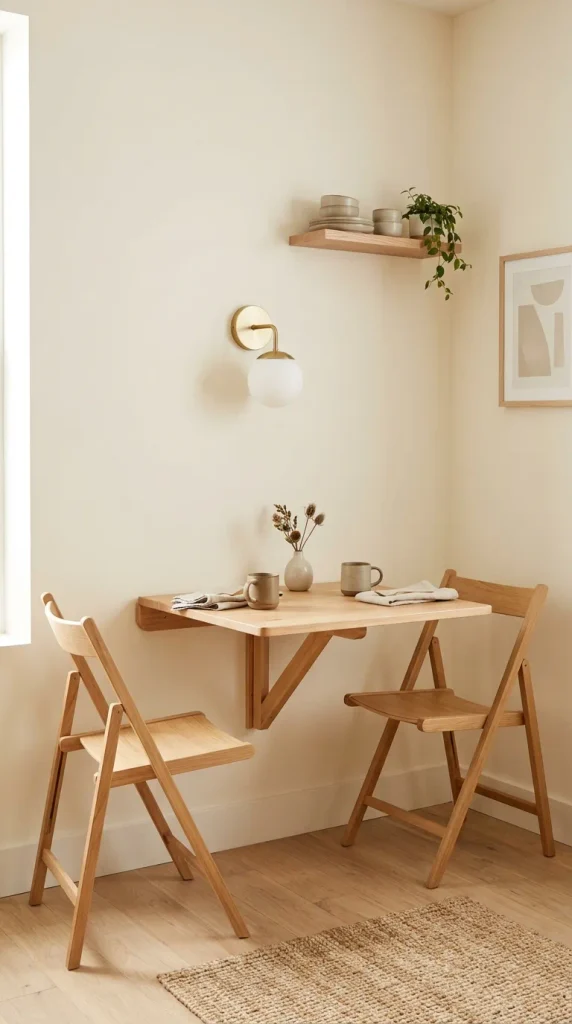
Choose a simple wall-mounted table in natural wood, white, or another finish that coordinates with the surrounding cabinetry. When the table is folded down, it can function as a compact dining surface. When folded away, the floor becomes available for other activities.
Pair the table with two lightweight folding chairs or slim dining chairs that can be moved elsewhere when necessary.
Because the table itself is minimal, you can use the surrounding wall to add personality. A small framed artwork, floating shelf, or decorative wall light can create visual interest.
Keep the shelf styling restrained. A few ceramic pieces, a small plant, or a framed print are enough.
If the table is located near a kitchen, repeat the kitchen’s finishes to make the dining area feel integrated.
For example, a wood drop-leaf table can connect beautifully with wood shelves or cabinet accents.
Choose warm lighting to make the area feel inviting during dinner. A small wall sconce can be especially useful because it does not take up table or floor space.
This is one of the most practical dining nook ideas for people who need maximum flexibility.
It proves that a small home does not require a permanent dining room. With thoughtful furniture choices, you can create a comfortable eating area that adapts to your daily routine.
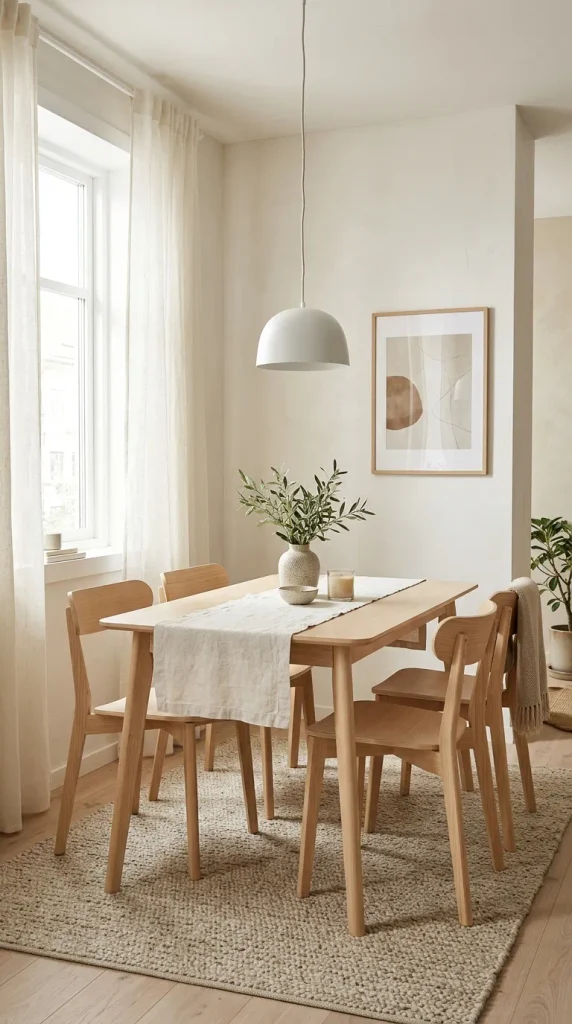
5. Scandinavian Minimalist Dining Nook
A Scandinavian-inspired dining nook is ideal for small spaces because it combines simplicity, functionality, and visual lightness.
Start with a compact light-wood dining table. Pair it with simple chairs featuring slim legs and neutral upholstery or natural wood seats.
Keep the surrounding walls white, cream, or very light gray. These colors reflect natural light and help the dining area feel more spacious.
Instead of adding lots of decorative accessories, focus on texture. A linen table runner, woven pendant shade, ceramic vase, and small plant can provide enough visual interest.
Choose a pendant light with a simple shape and place it directly over the center of the table. The fixture should create a cozy pool of light without visually dominating the room.
If the dining nook is positioned against a wall, hang one large minimalist artwork rather than creating a busy gallery wall.
A narrow floating shelf can provide additional storage for a few attractive dishes, cups, or decorative objects.
For seating, select chairs with clean lines. Avoid oversized upholstered chairs because they can make the area appear crowded.
Wood is particularly important in Scandinavian interiors because it introduces warmth into an otherwise neutral palette.
You can also add a small rug underneath the table if the space allows. Choose a light-colored design with a subtle pattern so the floor does not feel visually fragmented.
This style works particularly well in modern apartments and open-plan kitchens.
The final result should feel bright, calm, organized, and functional.
The Scandinavian approach proves that a small dining nook does not need lots of decoration to look beautiful. Thoughtful proportions, natural materials, warm lighting, and a restrained palette can create an inviting space with very little furniture.
6. Banquette Seating With Hidden Storage
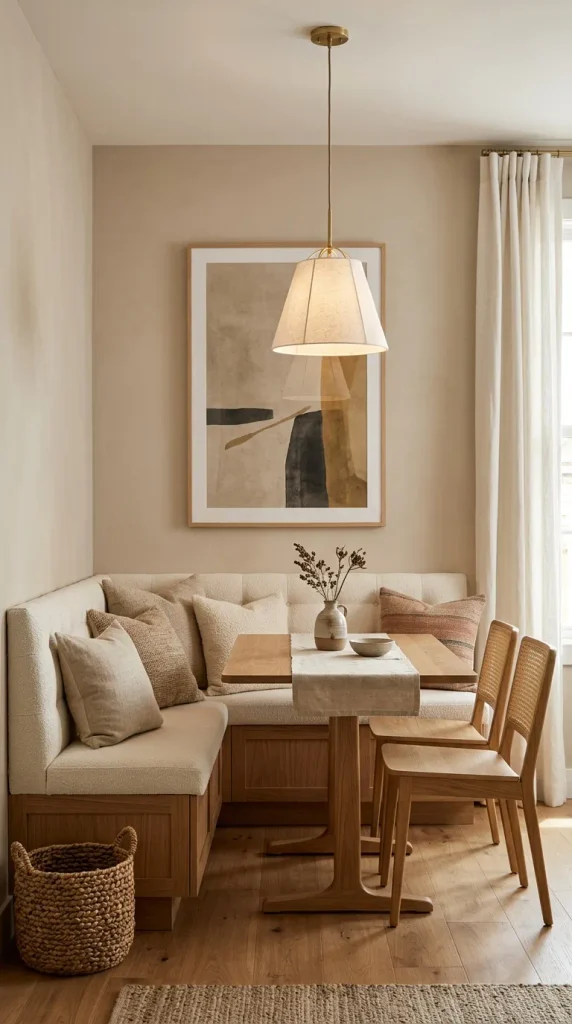
A banquette dining nook combines comfortable seating with valuable storage, making it one of the most practical choices for a small home.
A banquette can be installed along one wall, beneath a window, or into a corner. The seating can be custom-built or created with a storage bench topped with a comfortable cushion.
Choose upholstery that complements the surrounding kitchen or living space. Neutral shades such as cream, beige, taupe, and soft gray are versatile and help the nook feel visually calm.
Place a small rectangular table in front of the banquette. A pedestal base can provide more legroom than a traditional four-legged table.
The storage underneath the bench can be used for items you don’t need every day. Consider storing tablecloths, extra dishes, board games, small appliances, seasonal decorations, or kitchen accessories.
Add two slim chairs on the opposite side if you need additional seating.
Above the banquette, decorate the wall with framed artwork, a mirror, or a narrow picture ledge.
For lighting, a pendant centered above the table works beautifully. You can also use a wall sconce if ceiling space is limited.
Layer the seating with two or three cushions. Avoid adding too many pillows because the bench needs to remain functional for dining.
A small indoor plant can soften the corner and introduce natural color.
This arrangement is particularly useful for families because the storage can help reduce clutter in other areas of the home.
It also creates a cozy restaurant-booth feeling, making everyday meals feel more special.
With the right upholstery, lighting, and accessories, a practical storage bench can become one of the most attractive features in your kitchen or dining area.
7. Narrow Dining Nook Along a Wall
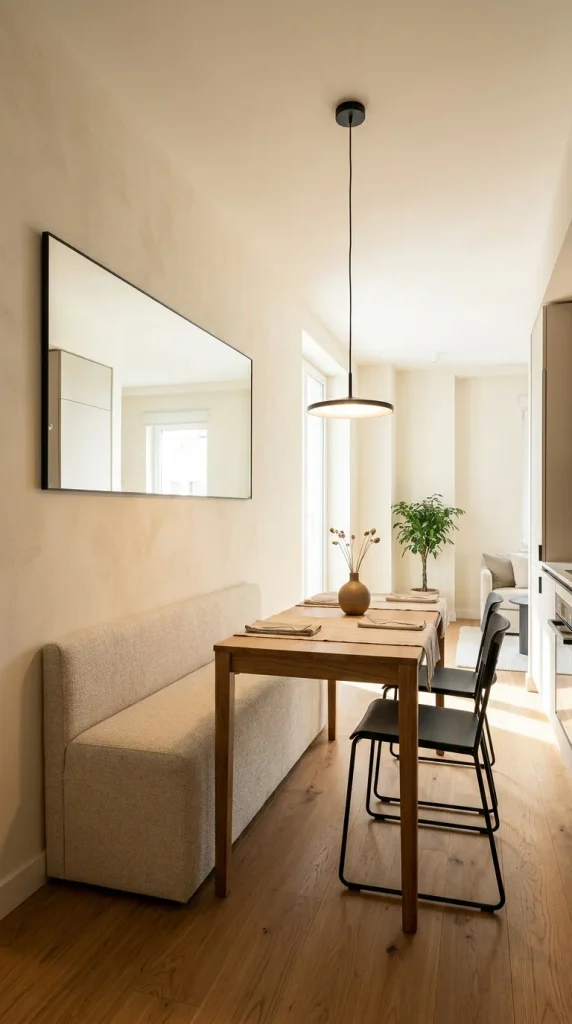
A narrow wall can become an excellent dining area if you choose furniture designed specifically for compact dimensions.
Instead of trying to fit a traditional dining table into the center of the room, position a narrow rectangular table directly against the wall. This allows people to sit on one side while keeping the opposite side open for movement.
A bench can be particularly useful because it can slide underneath the table when not in use.
Choose a table with slim legs and a simple profile. Light wood or white finishes can help the furniture blend into the room.
Above the table, install a long horizontal mirror. The mirror can visually extend the space and reflect light across the room.
Alternatively, use a narrow picture ledge with a few pieces of artwork.
A pendant light or wall sconce can provide focused lighting without taking up valuable surface area.
Keep the tabletop almost empty except for one centerpiece. A small ceramic vase or bowl can provide enough decoration.
If your kitchen is already busy with cabinets, appliances, and accessories, keeping the dining nook simple will prevent visual overload.
For seating, consider two slim chairs paired with a narrow bench.
This setup can work beautifully in long kitchens, apartments, hallways that are wide enough for dining, or open-plan spaces where you need to preserve a walkway.
The goal is to create a dedicated dining zone without interrupting the natural flow of the room.
With careful furniture selection, even a very narrow wall can become a comfortable and attractive dining nook.
8. Cozy Cottage-Style Dining Nook
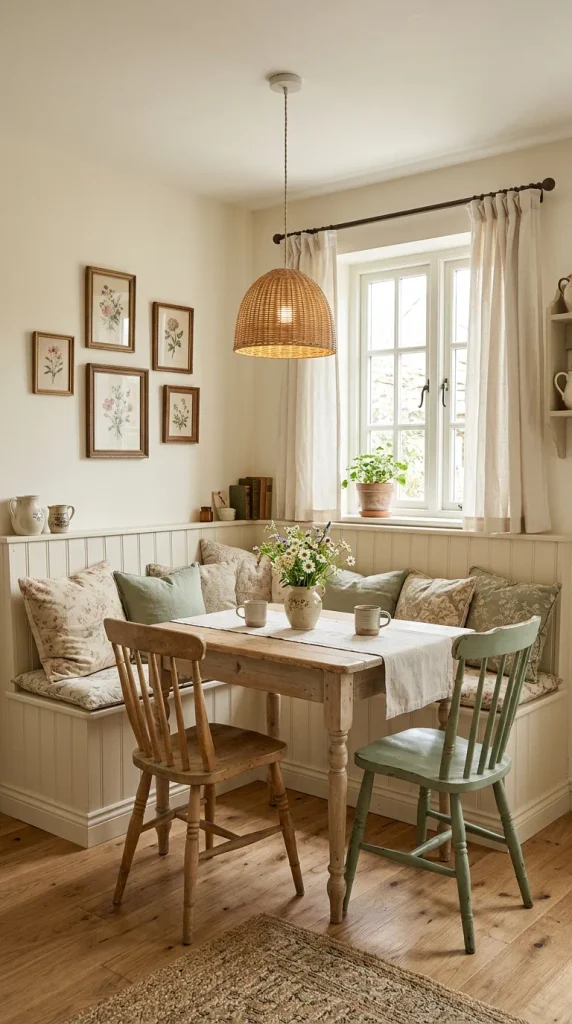
A cottage-inspired dining nook can make a small space feel warm, personal, and welcoming. This style is especially beautiful when you want the dining area to feel less formal and more like a cozy corner of the home.
Start with a small wooden table featuring a slightly traditional shape. A painted white, cream, or natural wood finish works beautifully.
Pair it with a built-in bench or vintage-style dining chairs. Mismatched chairs can actually enhance the relaxed cottage appearance.
Use soft textiles to create comfort. Add a seat cushion, linen curtains, a small table runner, and perhaps a patterned cushion on the bench.
For the walls, consider floral artwork, botanical prints, vintage-inspired frames, or a simple collection of small plates.
A woven pendant light can introduce natural texture and provide a warm focal point.
Keep the color palette soft. Cream, sage green, dusty blue, warm beige, and muted floral tones work particularly well.
Add a small vase of fresh or dried flowers to the dining table.
If there is a window nearby, use lightweight curtains to soften the natural light.
Storage can be incorporated through a small cabinet, floating shelf, or bench with hidden compartments.
The goal is not to make the nook look perfectly coordinated. Cottage style works best when it feels collected and lived-in.
However, avoid too many small decorative items because a small space can quickly become cluttered.
Choose a few meaningful pieces and allow them to stand out.
This style is ideal for homes that prioritize warmth and character. It can turn a small dining area into a charming gathering place that feels comfortable throughout the day.
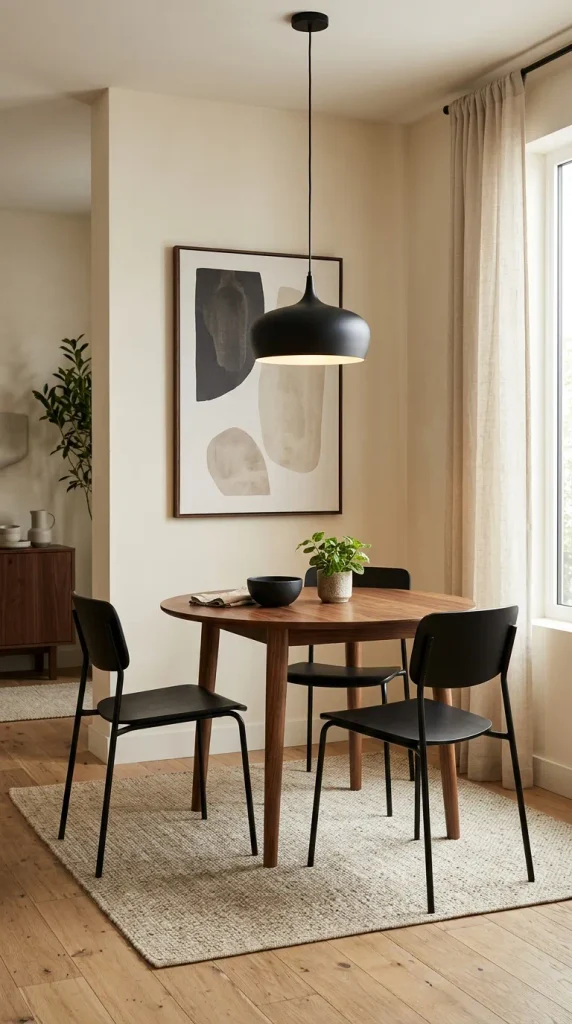
9. Modern Black-and-Wood Dining Nook
For a contemporary look, combine black accents with warm natural wood. This combination creates contrast while keeping a small dining nook sophisticated and visually grounded.
Start with a compact wooden dining table. Oak, walnut, or medium-toned wood can provide warmth.
Pair the table with slim black dining chairs. The dark chairs create definition without taking up additional visual space.
A black pendant light above the table can repeat the color and create a cohesive look.
Keep the walls light, particularly if the nook is small. White, cream, warm beige, or light gray can provide contrast against the black furniture.
For decoration, use a large simple artwork or oversized mirror rather than many small accessories.
A ceramic vase, black bowl, and small plant can complete the tabletop.
If storage is needed, consider a narrow wood-and-black cabinet positioned along the wall.
The combination of wood and black can work with modern, contemporary, industrial, and Japandi-inspired interiors.
To soften the look, introduce natural textiles such as linen cushions or a woven rug.
Lighting is particularly important because black furniture can appear heavy if the space is poorly lit. Use a warm pendant and take advantage of natural daylight whenever possible.
Avoid using too much black on the walls or ceiling unless the room is particularly bright and spacious.
This style is ideal for people who want their small dining nook to feel modern and sophisticated without becoming cold.
The natural wood balances the black accents, creating a comfortable visual contrast.
The result is a simple but polished dining area that works beautifully in modern apartments and compact open-plan homes.
10. Multi-Functional Dining and Work Nook
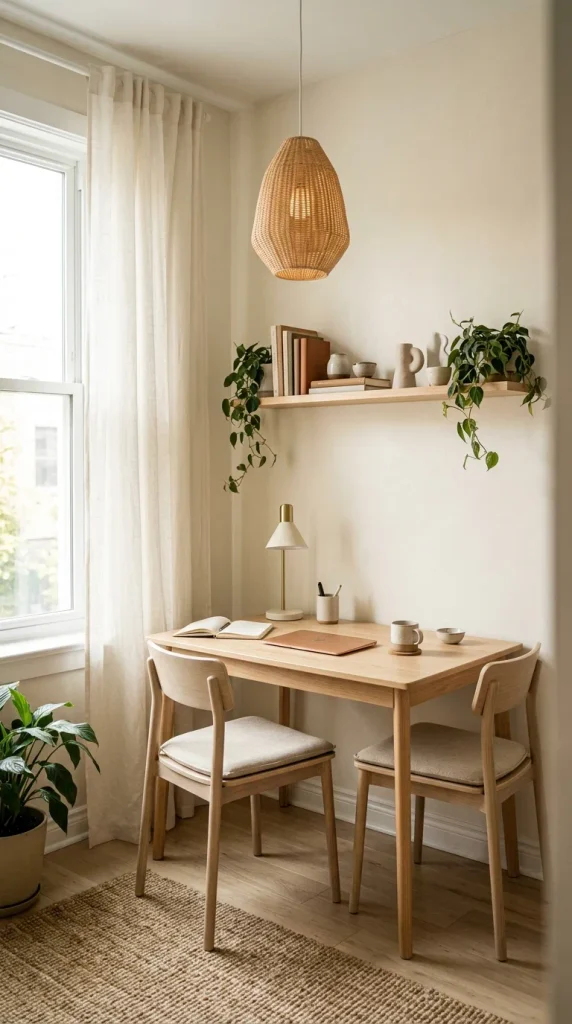
A small dining nook can serve more than one purpose. With the right furniture, it can become a dining area, homework station, coffee corner, or compact home office.
Choose a table with enough surface area for meals but a slim enough profile to avoid overwhelming the room.
A wall-mounted shelf above the table can provide space for books, artwork, plants, or kitchen items.
For seating, choose comfortable chairs that can be used for both dining and working.
If the nook is located near a window, natural daylight can make it particularly pleasant for daytime work.
Keep the décor organized and uncluttered. Use small baskets or storage boxes to hide office supplies when they are not needed.
A compact pendant light above the table can provide focused illumination during dinner, while a small desk lamp can provide task lighting when necessary.
Choose a neutral palette so the nook can transition easily between different activities.
Wood, cream, beige, black, and soft green are particularly versatile combinations.
A small upholstered bench can provide additional seating while also creating hidden storage.
When the area is being used for dining, clear the work materials from the table and add a simple centerpiece. When it becomes a workspace, keep the décor minimal and bring out only the necessary items.
This approach is especially useful in apartments, studio homes, and smaller houses where every square meter needs to serve a purpose.
The goal is to create a flexible space that feels intentional rather than temporary.
A well-designed multifunctional nook can prove that a small home does not have to sacrifice comfort or style.
Materials and Furniture for a Small Dining Nook
The materials you choose can make a major difference in how spacious and comfortable your dining nook feels.
Natural Wood
Wood adds warmth and works with almost every interior style. Light wood is particularly useful for making compact spaces feel airy.
Glass
A glass tabletop can visually disappear into the room and is useful when you want to minimize visual weight.
Metal
Slim black or brass metal frames can provide structure without taking up much visual space.
Upholstery
Linen, cotton, boucle, and washable performance fabrics can make benches and chairs more comfortable.
Woven Materials
Rattan, wicker, jute, and cane introduce texture without making the space feel overly formal.
Marble or Stone
A small marble tabletop can create an elegant appearance, although it should be proportionate to the room.
Mirrors
Mirrors reflect light and can visually expand a small dining nook.
Functional Storage
Use benches with storage, floating shelves, narrow cabinets, or wall-mounted organizers wherever possible.
How to Create a Small Dining Nook
Step 1: Measure the Available Space
Measure the width, depth, and height of the area before buying furniture.
Remember to leave enough space for people to pull out chairs and move comfortably.
Step 2: Choose the Table Shape
Round tables are excellent for tight areas, while rectangular tables work well against walls or in narrow spaces.
Step 3: Consider Bench Seating
Benches can often accommodate more people than individual chairs while using less floor space.
Step 4: Choose Visually Light Furniture
Slim legs, open bases, light finishes, and transparent materials can make the area feel larger.
Step 5: Add Focused Lighting
A pendant light above the table can define the dining area and make it feel intentional.
Step 6: Add Storage
Look for opportunities underneath benches, above tables, or along unused walls.
Step 7: Decorate Vertically
Use wall shelves, mirrors, artwork, or sconces instead of taking up valuable floor space.
Step 8: Keep the Tabletop Simple
A small vase or centerpiece is often enough.
Step 9: Add Soft Textures
Use cushions, runners, rugs, and curtains to make the space feel comfortable.
Step 10: Keep the Walkway Clear
The most beautiful dining nook will not work if it blocks the natural movement through the home.
Proper Pinterest-Style Pattern
For a Pinterest-worthy small dining nook, use this simple formula:
Compact Table + Space-Saving Seating + Statement Light + Wall Décor + Natural Texture + Minimal Styling
Start with a table that fits the proportions of the room.
Add a bench or slim chairs to maximize seating without creating visual clutter.
Install a pendant light directly above the table so the dining area has a clear focal point.
Use a large mirror or carefully selected artwork on the wall.
Add one or two natural elements such as greenery, wood, rattan, or ceramic.
Finish the space with a simple centerpiece and soft textiles.
The result should look comfortable, functional, and intentionally designed.
Styling Tips for Small Dining Nooks
Choose Proportion Over Size
Do not simply buy the smallest table available. Choose furniture that is appropriately scaled to the room and comfortable to use.
Use Light Colors
Cream, white, beige, pale gray, and light wood can make a compact dining nook feel more spacious.
Add One Statement Piece
A beautiful pendant, mirror, artwork, or chair can create personality without requiring lots of décor.
Use Vertical Space
Shelves, artwork, and wall lighting can add interest without taking up floor area.
Prefer Multifunctional Furniture
Storage benches, drop-leaf tables, and extendable tables can make a small home much more practical.
Keep the Center Clear
Avoid oversized table accessories or furniture that interrupts movement.
Use Mirrors Strategically
A mirror positioned opposite a window can reflect natural light and visually enlarge the room.
Mix Textures
Wood, linen, ceramic, woven materials, and metal can make a small space feel layered and interesting.
Keep Clutter Under Control
A compact dining nook becomes visually crowded very quickly. Give every item a purpose.
Final Thoughts
Creating a beautiful dining nook in a small space is less about having more room and more about using the room you already have intelligently.
A built-in corner bench can transform an unused corner into a cozy gathering spot. A round pedestal table can make movement easier, while a wall-mounted drop-leaf table can provide dining space only when you need it. Window-side nooks bring in natural light, while multifunctional designs allow one small area to serve several purposes.
The most successful small dining nooks combine practical furniture with thoughtful styling. Choose pieces that fit the scale of your room, use vertical walls for decoration and storage, and avoid filling every available surface.
Lighting also plays an important role. A beautiful pendant can instantly define a dining area and make even a tiny corner feel like a purposeful part of the home.
For the finishing touches, use warm wood, soft textiles, greenery, ceramics, mirrors, and a few carefully chosen accessories. These details can make a compact space feel cozy without becoming cluttered.
Whether your home is a small apartment, studio, townhouse, or compact family house, these 10 dining nook ideas for small spaces can help you create a dining area that feels comfortable, stylish, and functional.
A small dining nook does not have to feel like a compromise. With the right proportions, smart storage, flexible furniture, and Pinterest-inspired styling, even the smallest corner can become one of the most inviting spaces in your home.




Leave a Reply