
Introduction
DIY outdoor projects are a wonderful way to make patios, balconies, gardens, porches, decks, and backyards feel more personal without spending a fortune. Handmade outdoor features can add storage, seating, lighting, privacy, organization, and decorative character while allowing you to customize every detail to match your home.
The best DIY outdoor projects combine function and style. A simple wooden planter can become a garden focal point, while a pallet lounge can create an inexpensive outdoor seating area. A privacy screen can make a patio more comfortable, and a vertical garden can transform a blank wall into a lush green feature.
When planning an outdoor DIY project, always consider the weather conditions in your area. Materials exposed to rain, sunlight, humidity, or temperature changes should be suitable for outdoor use. Exterior-grade wood, weather-resistant paint, galvanized hardware, outdoor fabric, and rust-resistant finishes can significantly improve durability.
Pinterest-style outdoor spaces usually look effortless because they combine practical pieces with natural textures. Wood, stone, metal, woven materials, greenery, and neutral colors work particularly well together. You can also repeat colors from your home’s exterior or existing outdoor furniture to make a DIY project feel professionally designed.
Below are ten creative DIY outdoor project ideas that can work across different spaces and decorating styles.
Materials Used for DIY Outdoor Projects
Depending on the project, you may need:
- Outdoor-rated lumber
- Cedar or pressure-treated wood
- Reclaimed wood
- Plywood
- Concrete
- Gravel
- Galvanized screws
- Exterior wood glue
- Metal brackets
- Outdoor paint
- Exterior wood stain
- Waterproof sealant
- Outdoor fabric
- Rope
- Planters
- Terracotta pots
- Wire mesh
- Solar lights
- Hooks
- Casters
- Garden soil
- Decorative stones
- Plants and flowers
Basic Tools
- Measuring tape
- Pencil
- Drill
- Screwdriver
- Saw
- Hammer
- Level
- Sandpaper
- Paintbrush
- Work gloves
- Safety glasses
Choose materials according to the specific project and outdoor conditions. Any structure designed to carry significant weight should be properly supported and securely anchored.
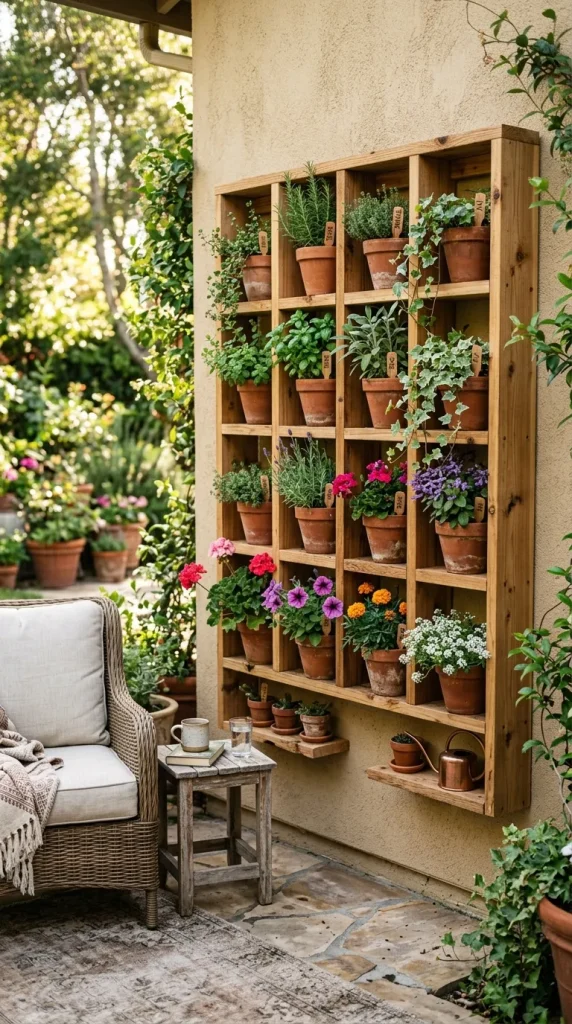
1. DIY Wooden Vertical Garden
A DIY vertical garden is one of the easiest ways to add greenery when you have limited floor space. Instead of spreading plants across the ground, you can build upward and turn an empty wall, fence, balcony corner, or patio surface into a living feature.
Start with a weather-resistant wooden frame. Cedar is an attractive choice because of its natural appearance, while properly treated exterior lumber can also work. Sand the surface to remove rough edges before applying an outdoor stain or protective finish.
Attach small planters or planting pockets to the frame. Arrange them in rows while leaving enough space between plants for growth and maintenance.
Choose plants based on the amount of sunlight the wall receives. Herbs, flowers, trailing plants, succulents, and suitable vegetables can all work depending on the conditions.
For a Pinterest-inspired appearance, use matching terracotta pots or simple neutral planters. Repeating one material keeps the arrangement visually organized.
You can also combine plants of different heights. Trailing greenery can hang downward while compact plants fill the middle sections.
A vertical garden is especially useful on small patios and balconies because it adds greenery without consuming much floor area.
2. DIY Pallet Outdoor Sofa
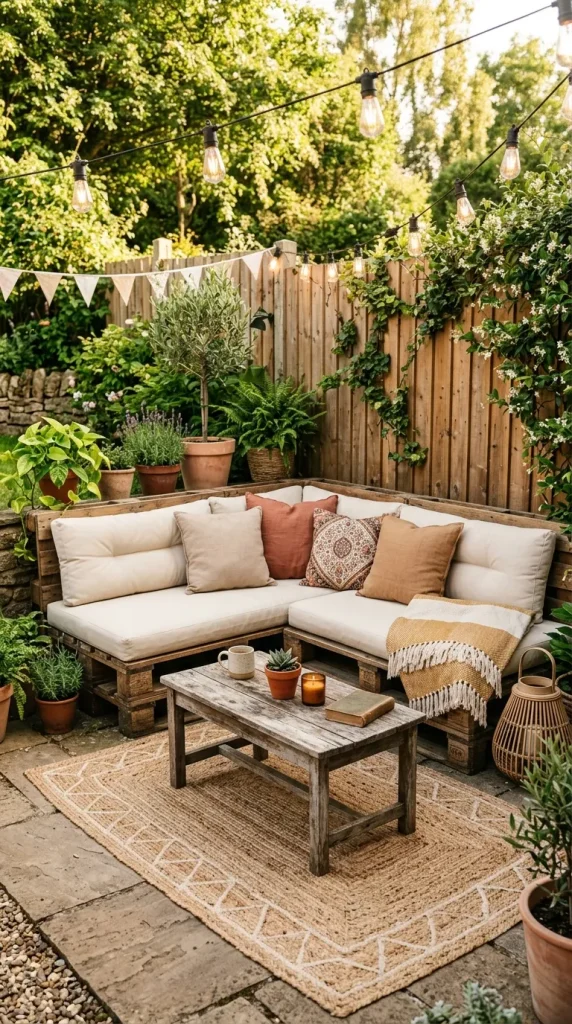
A pallet sofa can transform an empty patio into a comfortable lounge area using relatively inexpensive materials. The simple wooden structure works particularly well for rustic, farmhouse, bohemian, and casual outdoor spaces.
Begin with clean, suitable pallets that are appropriate for furniture construction. Sand all exposed surfaces thoroughly to reduce splinters.
Stack or arrange the pallets to create the desired seat height and secure them appropriately. Add a strong back-support structure if the design requires one.
Finish the wood with an exterior stain or weather-resistant paint. Natural wood tones create a relaxed appearance, while white, charcoal, or muted earthy colors can coordinate with different outdoor styles.
Add thick outdoor cushions designed for exterior use. Cream, beige, olive, terracotta, or muted blue can create an inviting color palette.
Place a small outdoor coffee table in front of the sofa. Add a washable outdoor rug underneath to visually define the seating area.
Decorative lanterns, potted plants, and woven baskets can complete the setup.
The key is to ensure that the pallet structure is stable, properly secured, and suitable for the intended weight.
3. DIY Outdoor Privacy Screen
A privacy screen can make a patio, balcony, or deck feel much more comfortable. It can block unwanted views, define an outdoor room, and provide a backdrop for plants or decorative lighting.
A simple wooden slat screen is one of the most versatile options. Build a rectangular frame and attach evenly spaced vertical or horizontal wooden slats.
The spacing between slats can be adjusted depending on how much privacy you need. Narrower gaps provide more visual coverage, while wider gaps maintain a more open appearance.
Paint the screen in a color that coordinates with your home. Natural wood creates a warm organic look, while black or dark charcoal can produce a modern appearance.
For additional softness, add climbing plants or hanging planters.
String lights can also be attached to the screen, creating a beautiful evening atmosphere.
Before installation, make sure the screen is properly anchored and structurally secure, especially if it is tall or located in an exposed area.
A DIY privacy screen can therefore function as both a practical barrier and a decorative feature.

4. DIY Outdoor Planter Boxes
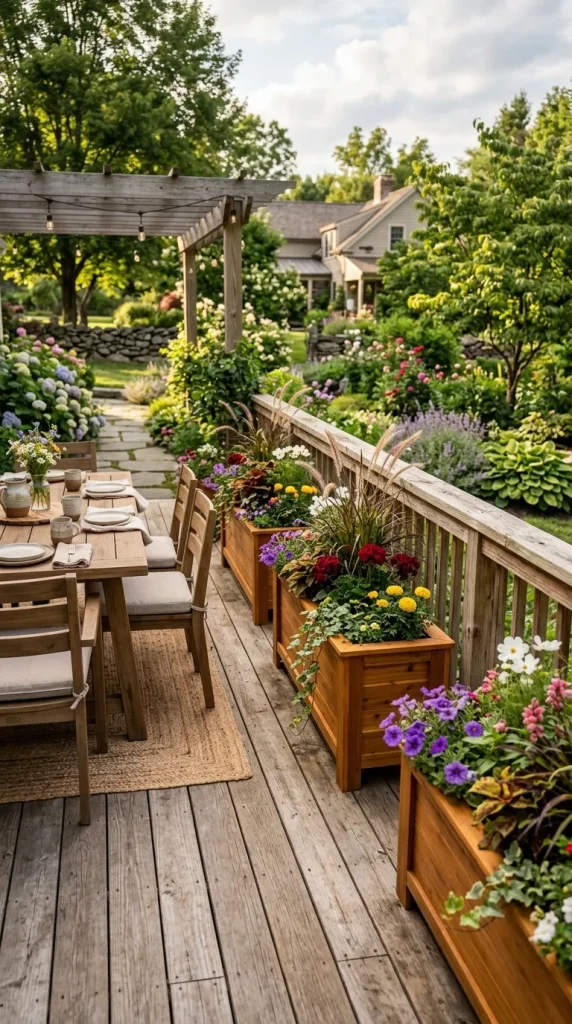
Custom planter boxes can instantly make a patio or deck feel greener and more finished. Building your own boxes allows you to choose the exact dimensions needed for your space.
Use exterior-grade wood and create rectangular or square frames. Sand the surfaces before applying an outdoor stain or paint.
For a modern appearance, use clean rectangular shapes with a dark exterior finish. For a farmhouse or cottage aesthetic, choose natural wood or a soft painted color.
Place planter boxes along a deck railing, patio edge, entrance, or garden pathway.
You can fill them with flowers, herbs, ornamental grasses, or compact vegetables.
Combine plants with different heights for a more natural appearance. Taller plants can provide structure while trailing varieties soften the edges.
If multiple planter boxes are used, keep their materials and finishes consistent. This creates a cohesive outdoor design.
Make sure the boxes have appropriate drainage so excess water can escape.
A row of matching DIY planters can turn even a plain patio into a lush and welcoming outdoor room.
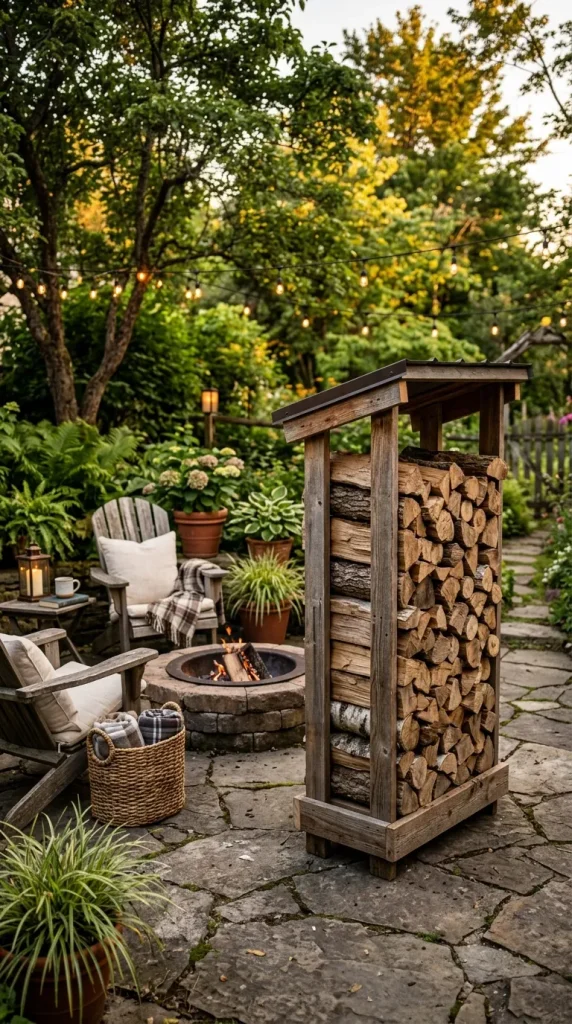
5. DIY Outdoor Firewood Storage
If you have an outdoor fireplace or fire pit, a dedicated firewood storage unit can keep logs organized while adding rustic character to the space.
A simple wooden rack can be constructed using sturdy exterior lumber. Create a raised base to keep firewood off damp ground and provide airflow around the logs.
Add side supports to prevent the wood from rolling outward.
A roof or small overhang can provide additional protection from rain. Make sure the structure remains well ventilated rather than completely enclosed.
For a modern patio, paint the frame matte black or charcoal. For a rustic garden, leave the wood natural or use a warm brown stain.
Place the rack near the fire pit but at a safe distance from flames and heat.
You can also add a small upper shelf for fire-starting supplies or outdoor tools, provided they are stored safely.
This project demonstrates how practical storage can become part of your outdoor décor instead of something that needs to be hidden.
6. DIY Hanging Herb Garden
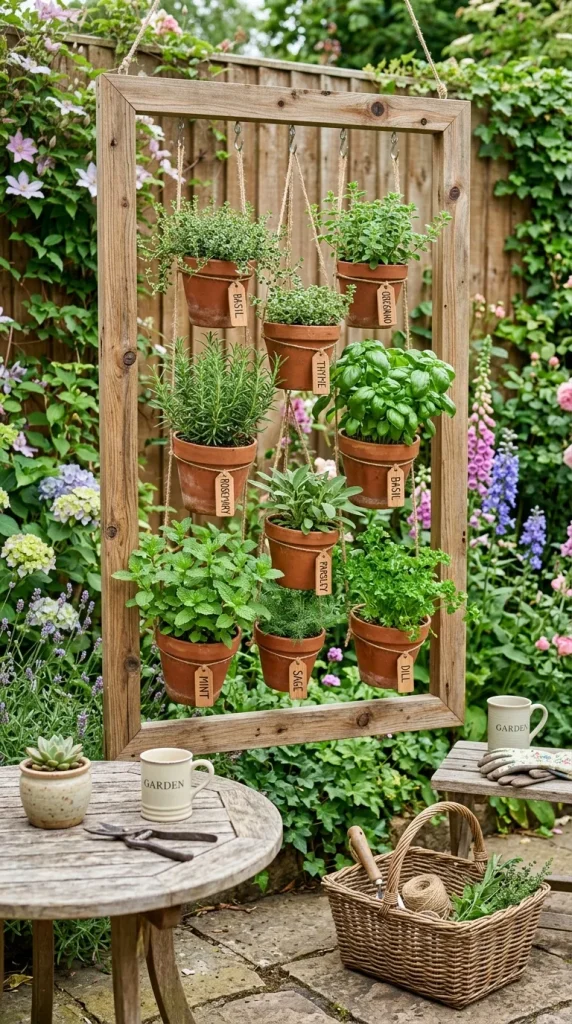
A hanging herb garden is perfect for patios, balconies, kitchens with outdoor access, and small gardens.
Start with a strong wooden frame, hanging rail, or weather-resistant support structure. Attach small containers using hooks, rope, or suitable mounting hardware.
Choose herbs according to your climate and available sunlight. Basil, mint, rosemary, thyme, parsley, and other suitable herbs can create both beauty and usefulness.
Use matching terracotta pots for a traditional appearance or simple neutral containers for a modern design.
Label each herb with small wooden or metal tags. This creates a charming decorative detail while making the garden easier to maintain.
Arrange the containers at different heights if the support system allows it. The variation creates a more dynamic appearance.
Place the garden close to an outdoor kitchen or dining area for easy access.
A hanging herb garden combines gardening, organization, and décor in one small project, making it particularly useful when floor space is limited.
7. DIY Outdoor Coffee Table
A custom outdoor coffee table can become the centerpiece of a patio seating area. Building one yourself allows you to control its size, shape, height, and finish.
A simple wooden design can be constructed using exterior-rated boards. A rectangular table works well with sofas, while a round design can soften a compact seating arrangement.
Sand all surfaces carefully before applying exterior stain or paint.
For a rustic appearance, choose a warm natural wood finish. For a contemporary patio, consider a clean dark finish or a simple pale wood tone.
You can add a lower shelf for outdoor books, baskets, or decorative accessories.
Another creative option is a slatted tabletop, which creates a relaxed outdoor aesthetic and allows water to drain more easily.
Style the finished table with a weather-resistant tray, ceramic planter, lantern, or small decorative object.
Make sure the table is stable and appropriately designed for outdoor use.
A handmade coffee table can make a patio feel more custom while providing a useful central surface.

8. DIY Solar Lantern Display
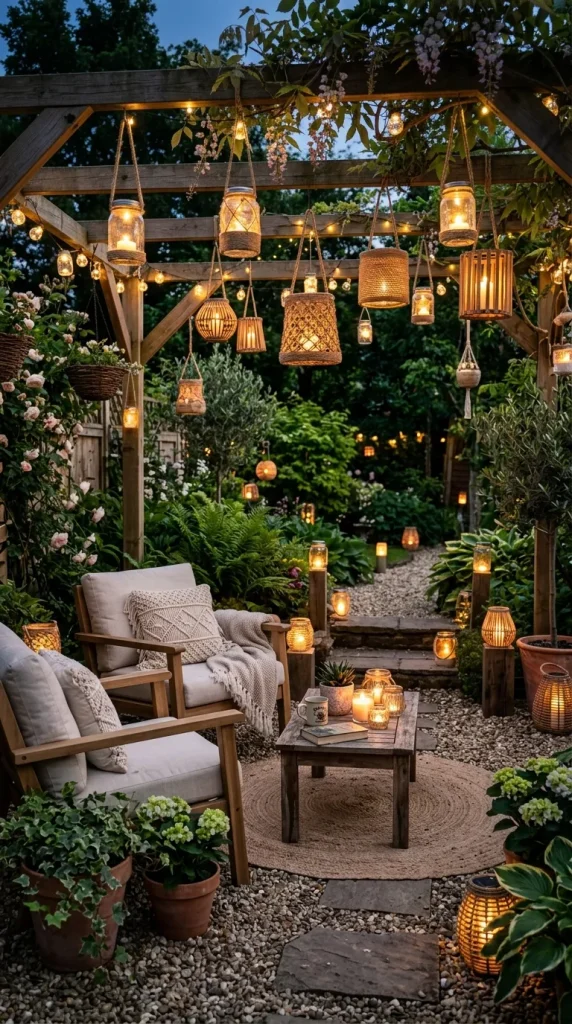
Outdoor lighting can completely change the atmosphere of a garden or patio after sunset. A DIY solar lantern display provides soft illumination without requiring electrical wiring.
Use outdoor-rated solar lights and place them inside suitable lanterns, jars, or decorative containers designed for exterior conditions.
Hang the lights from a wooden frame, pergola, fence, or tree branch where appropriate.
For a cozy atmosphere, use multiple lights rather than relying on one bright source.
Combine different heights to create visual depth. A few lanterns can sit on the ground while others hang above.
Natural materials such as wood, rope, woven fibers, and metal can complement the lights.
Place them around a seating area, along a garden path, or near an outdoor dining table.
Avoid positioning electrical components or unsuitable materials where they can become exposed to standing water.
The finished arrangement can create a warm, magical atmosphere that makes the outdoor space feel like an extension of the home.
9. DIY Garden Bench with Planters
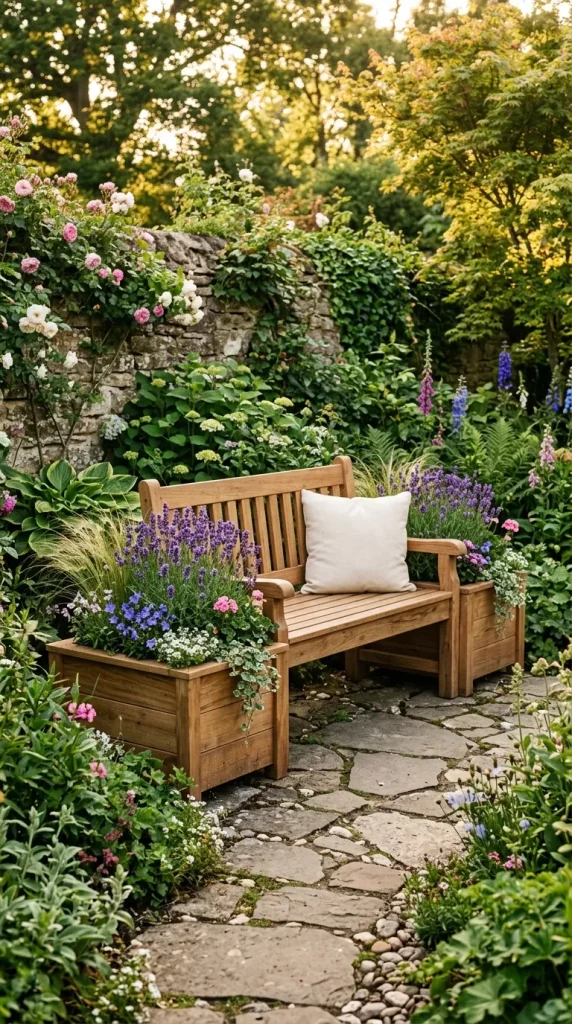
A garden bench combined with built-in planters can create a beautiful multifunctional feature. Instead of placing seating and plants separately, this project combines them into one structure.
Construct a sturdy wooden bench with planters positioned on either side. Use appropriately treated exterior lumber and secure the structure properly.
The planters can hold flowers, ornamental grasses, herbs, or suitable shrubs.
Choose a simple rectangular bench for a modern look or add curved details for a cottage-inspired design.
Paint the structure in a soft neutral tone or use a natural wood finish.
Add an outdoor cushion to make the bench more comfortable. Choose a weather-resistant fabric that coordinates with nearby furniture.
Place the bench along a garden wall, fence, patio edge, or quiet corner.
The surrounding plants can make the bench feel tucked into the landscape, creating a natural reading or relaxation spot.
This project is particularly effective in small gardens because it combines seating and planting without requiring two separate pieces of furniture.
10. DIY Outdoor Beverage Station
An outdoor beverage station can make patios and entertaining areas more convenient. It can provide a dedicated location for drinks, glasses, serving trays, and outdoor accessories.
A simple wooden console or narrow cabinet can be converted into a beverage station. Choose a weather-resistant finish and add shelves for storage.
A tray on top can hold glasses and drinks. Lower shelves can store outdoor serving pieces, baskets, or non-perishable accessories.
For entertaining, add hooks on the side for towels or lightweight utensils.
A small cooler can be incorporated into the design if the structure is appropriately constructed and protected from weather.
Style the station with a small potted herb, outdoor-safe serving accessories, and a decorative sign if desired.
For a coastal aesthetic, use pale wood and white accents. For a rustic look, choose reclaimed-looking wood and black hardware. For a modern patio, use clean lines and a dark finish.
Position the beverage station near the dining or lounge area but away from high-traffic paths.
This DIY project can make outdoor gatherings easier while giving the patio a polished entertaining zone.

Extra Tips for Successful DIY Outdoor Projects
Before beginning any outdoor DIY project, measure the available space carefully. A project that looks small in a photograph can become surprisingly large once constructed.
Always choose materials appropriate for exterior conditions. Outdoor projects experience moisture, sunlight, temperature changes, and wind that indoor furniture does not.
Protect wooden surfaces with a suitable exterior finish. Inspect them periodically and reapply protection as needed.
Use corrosion-resistant hardware wherever possible. Standard indoor screws can deteriorate quickly outdoors.
Think about drainage. Planters, outdoor furniture, and decorative structures should not trap standing water.
Keep pathways clear. Outdoor décor should never create unnecessary tripping hazards.
Consider maintenance before choosing a design. A beautiful project that requires constant upkeep may not be practical for your lifestyle.
Finally, make the design feel connected to your home. Repeat colors, materials, and textures from your existing outdoor furniture and landscaping.
Conclusion
DIY outdoor projects are an excellent way to personalize your exterior space while solving practical problems. A vertical garden can bring greenery to a small patio, while a pallet sofa can create affordable outdoor seating. Privacy screens can make open spaces feel more comfortable, and custom planter boxes can introduce color and structure.
Functional projects such as firewood racks, herb gardens, coffee tables, beverage stations, and garden benches can make everyday outdoor living easier while adding visual interest.
The most successful DIY designs are not necessarily the most complicated. Simple shapes, natural materials, neutral colors, and thoughtful placement can create an outdoor space that feels polished and intentional.
Before beginning any project, prioritize structural stability, weather resistance, drainage, and safe installation. Once those practical requirements are addressed, you can personalize the design with paint, plants, textiles, lighting, and decorative accessories.
Whether you have a large backyard, a small patio, a balcony, or a compact garden corner, these 10 DIY outdoor projects ideas can help you create a more functional, comfortable, and Pinterest-worthy outdoor retreat.

Leave a Reply