
A balcony can become one of the most beautiful and relaxing areas of a home with the right combination of plants, textures, and thoughtful styling. Even a small balcony can feel like a private garden when hanging plants are used creatively. Instead of keeping every plant on the floor, hanging planters allow you to use vertical space while keeping the balcony open, airy, and functional.
Hanging plants are especially useful for balconies because they add greenery without taking away valuable floor space. They can be suspended from the ceiling, mounted against walls, attached to balcony railings, or displayed from decorative plant stands. Depending on your personal style, you can create anything from a lush tropical balcony to a minimalist green corner or a cozy boho-inspired outdoor retreat.
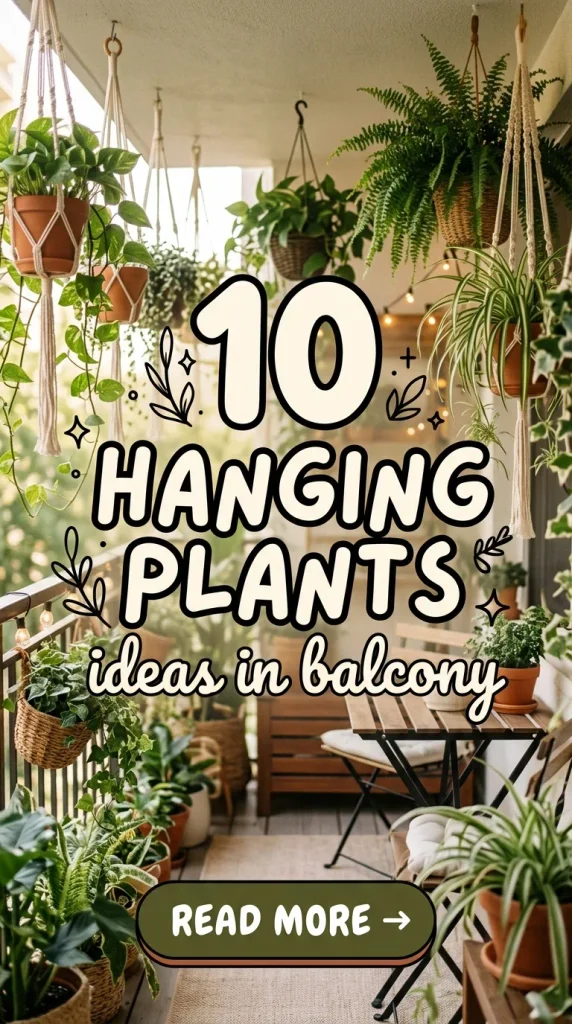
Another advantage of hanging plants is their ability to add different heights to a balcony. Plants positioned at different levels create depth and make the space feel more layered. Trailing varieties can also cascade downward, creating a beautiful waterfall effect that softens hard architectural surfaces such as concrete walls, metal railings, and tiled floors.
When designing a hanging plant balcony, it is important to consider sunlight, wind, watering, drainage, and the weight of the planters. Choose plants that are appropriate for the amount of light your balcony receives, and make sure every hanging planter is securely installed.
Below are 10 beautiful hanging plants ideas in balcony that can help transform even a simple outdoor space into a Pinterest-worthy green retreat.
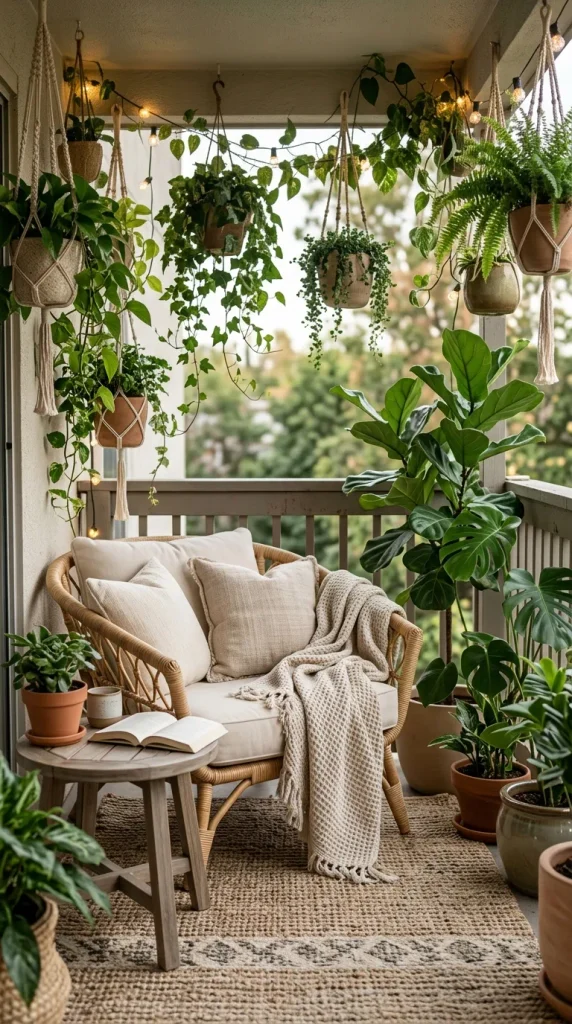
1. Hanging Macramé Planters for a Boho Balcony
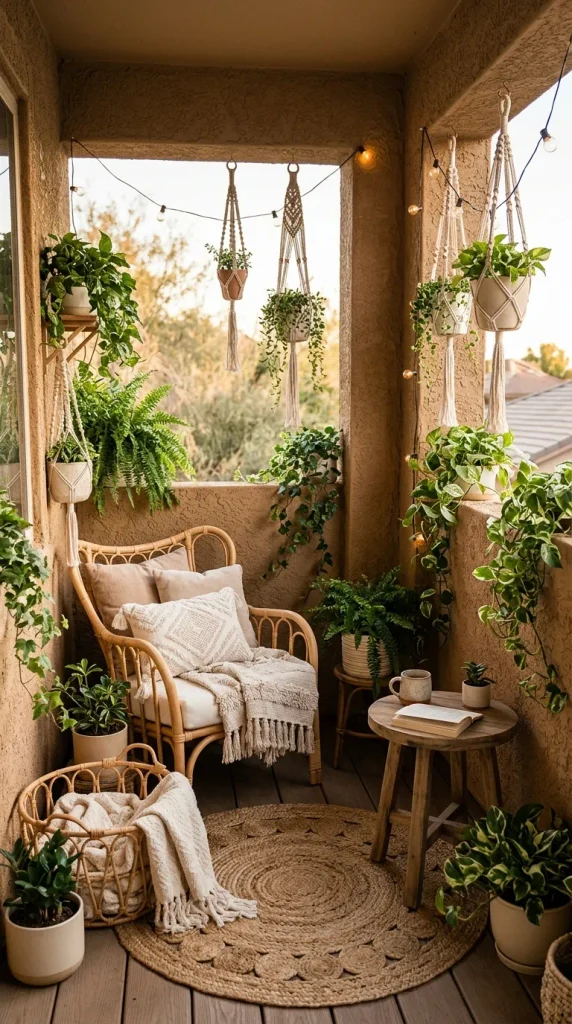
Macramé hanging planters are one of the easiest ways to give a balcony a warm and relaxed bohemian atmosphere. Their handmade-looking texture works beautifully with greenery, natural wood, woven furniture, and neutral outdoor textiles.
For this idea, choose several macramé plant hangers in different lengths. Instead of hanging every planter at exactly the same height, create a layered arrangement. One plant can hang slightly higher while another sits lower, allowing trailing foliage to overlap naturally.
Plants such as pothos, string of pearls, spider plants, tradescantia, and trailing ivy can work beautifully in hanging planters when their light and care requirements match your balcony conditions. Their cascading leaves create movement and make the balcony feel more lush.
Use ceramic or terracotta pots inside the macramé holders. Neutral shades such as cream, white, beige, and warm terracotta keep the look natural and sophisticated.
You can also combine the hanging planters with a small wooden bench, woven chair, jute-style outdoor rug, and soft neutral cushions. A few lanterns or warm outdoor lights can make the balcony especially inviting in the evening.
For a Pinterest-style appearance, avoid filling every available area with plants. Instead, create a carefully styled green corner with enough empty space around each hanging planter.
The key to this look is layering natural textures. Macramé, terracotta, greenery, wood, and woven fabrics naturally complement each other.
Materials Used: Macramé plant hangers, ceramic or terracotta pots, suitable trailing plants, potting soil, hooks, wooden furniture, woven accessories, and outdoor cushions.
Styling Tip: Use three to five hanging planters in varying heights rather than creating a perfectly symmetrical arrangement.
2. Hanging Plants Along the Balcony Railing
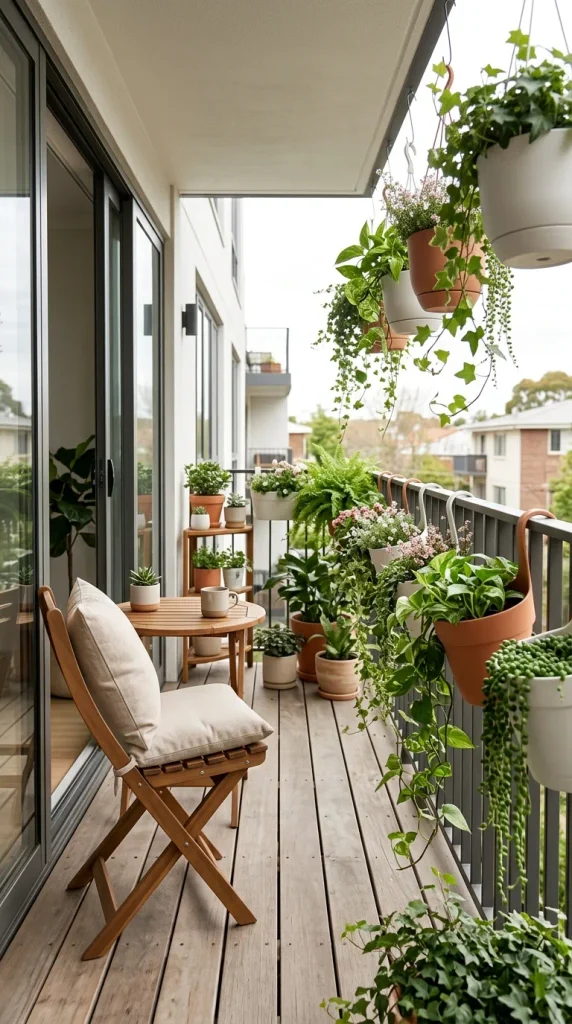
If your balcony has limited floor space, the railing can become an excellent location for hanging plants. Railing planters allow you to add greenery around the outer edge of the balcony without occupying the walking area.
Choose lightweight planters designed specifically for balcony railings or use secure hanging brackets suitable for the railing structure. Arrange several planters along the railing while leaving enough space between them for visual breathing room.
You can use flowering plants, herbs, leafy plants, or trailing varieties depending on the amount of sunlight available. Colorful flowers can create a cheerful balcony, while green foliage creates a calmer and more sophisticated appearance.
For a cohesive look, use planters in the same material or color. Terracotta creates a Mediterranean atmosphere, black planters provide a modern appearance, and white ceramic containers work well with minimalist balconies.
Trailing plants can be especially attractive because their foliage can spill over the railing and create a natural green curtain. This also helps soften the hard lines of metal or concrete railings.
For additional interest, combine plants with small decorative lanterns or outdoor string lights. However, keep the railing arrangement uncluttered so that the plants remain the primary feature.
When using railing planters, pay special attention to drainage. Water should be able to escape without collecting around the roots or damaging the balcony surface. Also make sure containers are firmly secured, particularly if your balcony is exposed to strong wind.
This idea is perfect for apartment balconies because it maximizes available space while creating a lush appearance from both inside and outside the balcony.
Materials Used: Railing planters, secure brackets, potting mix, suitable balcony plants, drainage trays where appropriate, and decorative outdoor accessories.
Styling Tip: Keep all railing planters visually coordinated for a clean and intentional Pinterest-style arrangement.
3. Cascading Hanging Plants for a Green Waterfall Effect
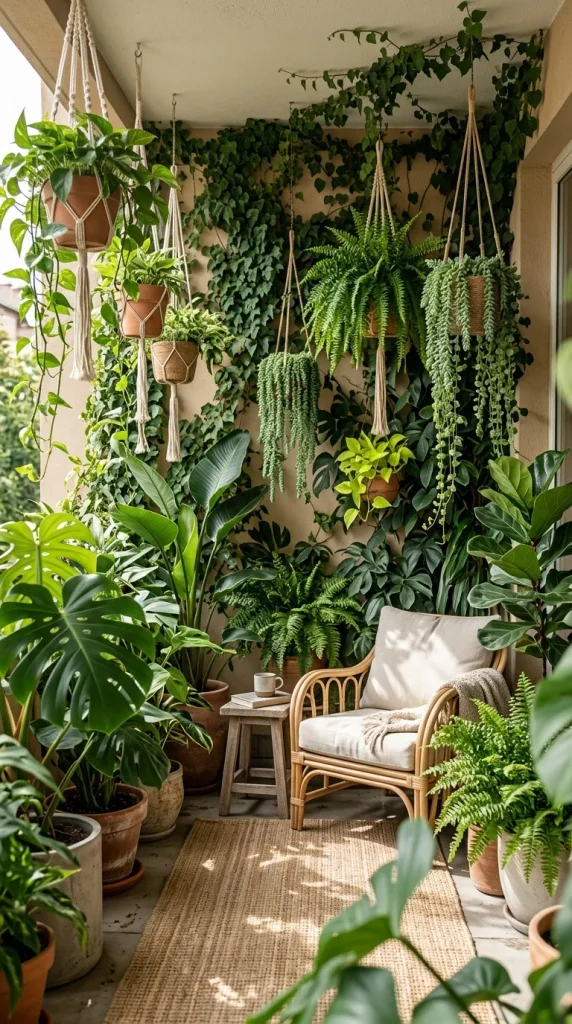
For a balcony that feels like a miniature garden, create a dramatic cascading plant display. The goal is to use trailing plants at different heights so the foliage creates a beautiful waterfall-like effect.
Start by selecting a mixture of hanging planters that can be installed at different levels. Place larger plants toward the back and smaller trailing plants toward the front. This creates depth and allows the foliage to overlap naturally.
Plants with long trailing stems are especially effective for this look. Depending on your climate and balcony conditions, suitable varieties may include trailing petunias, ivy, string plants, pothos, or other cascading species.
Use simple containers so that the greenery remains the focus. Neutral ceramic pots, woven baskets, terracotta containers, or matte planters all work beautifully.
A cascading arrangement is particularly effective against a plain balcony wall. The plants soften the wall and introduce movement without requiring additional artwork or decoration.
You can also combine hanging plants with potted plants on the floor. Place tall plants underneath the hanging planters and smaller containers around the edges. This creates several layers of greenery from floor level to ceiling.
Be careful not to make the display too dense. Plants need sufficient air circulation and light, and an overcrowded arrangement can become difficult to water and maintain.
The finished effect should feel lush but intentional. Think of the plants as creating a living curtain rather than simply filling every available space.
This idea works especially well for people who want their balcony to feel private, tropical, and connected to nature.
Materials Used: Hanging baskets, secure ceiling or wall hooks, trailing plants, suitable potting mix, drainage containers, and complementary floor planters.
Styling Tip: Use plants with different leaf shapes and trailing lengths to create a more natural waterfall effect.
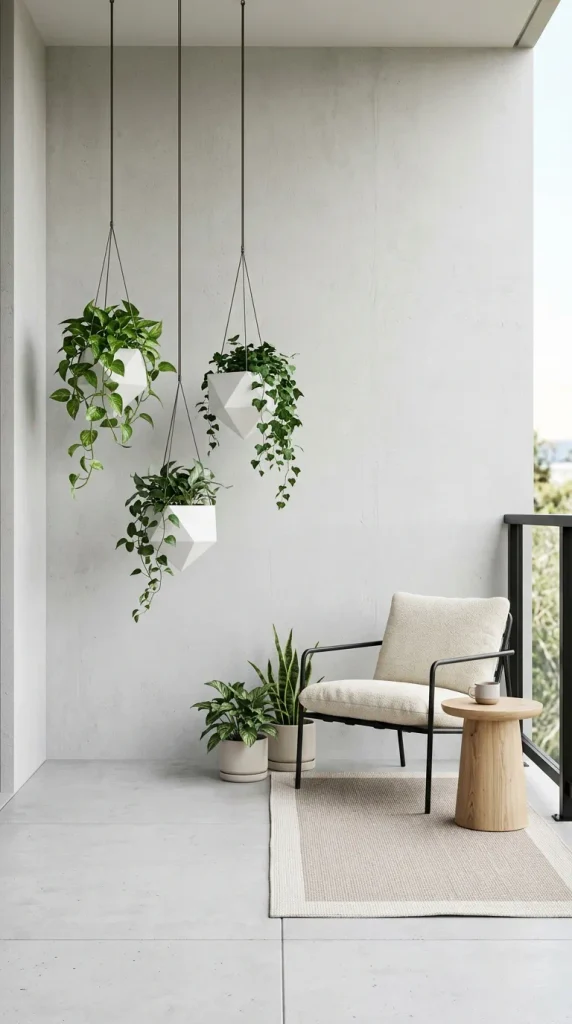
4. Minimalist White Hanging Planters for a Modern Balcony
Hanging plants do not always need to create a dense jungle. For a modern minimalist balcony, a small collection of carefully selected plants in white planters can create an elegant and peaceful appearance.
Choose simple geometric planters with clean lines. White, cream, light gray, or soft beige containers work particularly well against darker balcony walls or natural wood.
Instead of using many different plants, choose two or three varieties with interesting foliage. Plants with sculptural leaves can make a strong visual statement without requiring excessive decoration.
Hang the planters in a balanced arrangement. You can use identical planters at slightly different heights, or create a simple linear composition along one wall.
Keep the surrounding furniture equally minimal. A slim outdoor chair, small round table, neutral cushion, and simple rug may be enough.
The color palette should remain restrained. White, green, beige, gray, and natural wood create an effortlessly sophisticated combination.
This design is particularly useful for small balconies because a minimalist approach prevents the area from feeling crowded. Hanging planters add greenery while keeping the floor open for movement.
Choose plants according to the actual lighting conditions rather than selecting them purely for appearance. A beautiful minimalist balcony still needs plants that can thrive in their environment.
For a Pinterest-worthy photograph, focus on clean lines, natural daylight, and a limited number of carefully styled accessories.
The result is a balcony that feels fresh, modern, and peaceful rather than overly decorated.
Materials Used: White or neutral hanging planters, suitable greenery, secure hooks, potting soil, compact outdoor furniture, and a simple rug.
Styling Tip: Leave generous empty space around the plants. In minimalist design, negative space is part of the decoration.
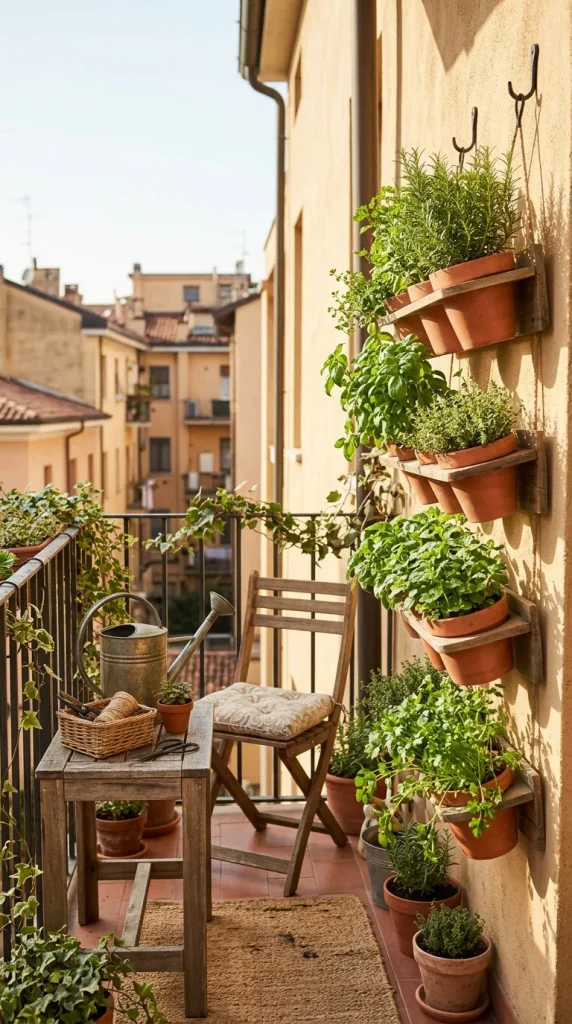
5. Hanging Herb Garden for a Small Balcony
Turn your balcony into a practical mini garden by creating a hanging herb display. This idea is perfect for people who want their plants to be both decorative and useful.
Choose herbs that suit the amount of sunlight available. Depending on your environment, options may include basil, mint, thyme, oregano, rosemary, parsley, or other suitable herbs.
Use small hanging pots arranged vertically along a wall or balcony railing. Labeling each herb can be practical, although for a purely decorative Pinterest-style appearance, simple matching planters can create a cleaner look.
Terracotta pots are especially attractive for herb gardens because their warm color contrasts beautifully with green foliage. You can also use ceramic or metal containers for a more contemporary appearance.
Place the herbs somewhere convenient so you can easily access them while cooking. If your balcony is attached to the kitchen, positioning the garden near the kitchen-facing door can be particularly useful.
Make sure each container has suitable drainage. Herbs generally perform best when their growing conditions match their specific requirements, so avoid treating all herbs as identical.
You can combine the herb planters with a small wooden shelf, watering can, woven basket, or compact outdoor table. Keep accessories limited so the greenery remains the main feature.
This idea can make even a tiny apartment balcony feel more purposeful. Instead of simply decorating with plants, you are creating a living garden that can contribute fresh herbs to your meals.
The combination of terracotta, herbs, wood, and sunlight also creates a charming Mediterranean-inspired appearance.
Materials Used: Small hanging pots, herb plants, potting mix suitable for herbs, secure hooks or brackets, labels if desired, and a small watering can.
Styling Tip: Group the herb containers together so the balcony feels like a deliberate mini kitchen garden.
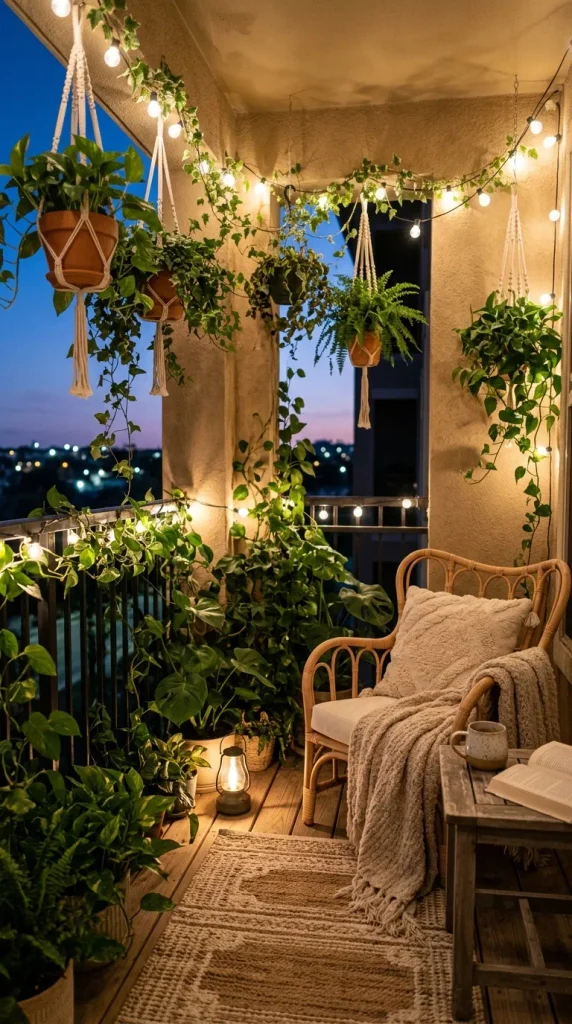
6. Hanging Plants With Warm String Lights
Combine greenery with warm lighting to create a cozy balcony that looks magical in the evening. Hanging plants and string lights work especially well together because the lights highlight the foliage while creating a warm atmosphere.
Begin with several hanging planters positioned along a wall, ceiling beam, or balcony railing. Choose plants with interesting shapes and textures so their leaves remain attractive after sunset.
Next, install outdoor-rated warm string lights securely around the balcony. Rather than wrapping lights randomly around every plant, create a clean line along the ceiling, railing, or wall.
The combination of green foliage and warm illumination can transform a basic balcony into a relaxing evening retreat.
Add a comfortable outdoor chair or small loveseat underneath the plants. A soft cushion and lightweight throw can make the area feel more inviting.
Use neutral planters to prevent the lighting and greenery from competing visually. Terracotta, beige, black, or natural woven containers all work well.
You can also place a few small lanterns on the floor or table for additional warmth, provided they are suitable for outdoor use and positioned safely.
The key is to keep the lighting soft rather than excessively bright. Warm illumination creates a more intimate environment and photographs beautifully.
This idea works especially well for balconies used for evening coffee, reading, entertaining, or relaxing after work.
Always choose lighting and electrical products that are appropriate for outdoor conditions and follow the manufacturer’s instructions.
Materials Used: Hanging planters, suitable plants, secure hooks, outdoor-rated string lights, outdoor furniture, cushions, and optional lanterns.
Styling Tip: Keep the lighting warm and subtle so the plants remain visible without making the balcony look overly decorated.
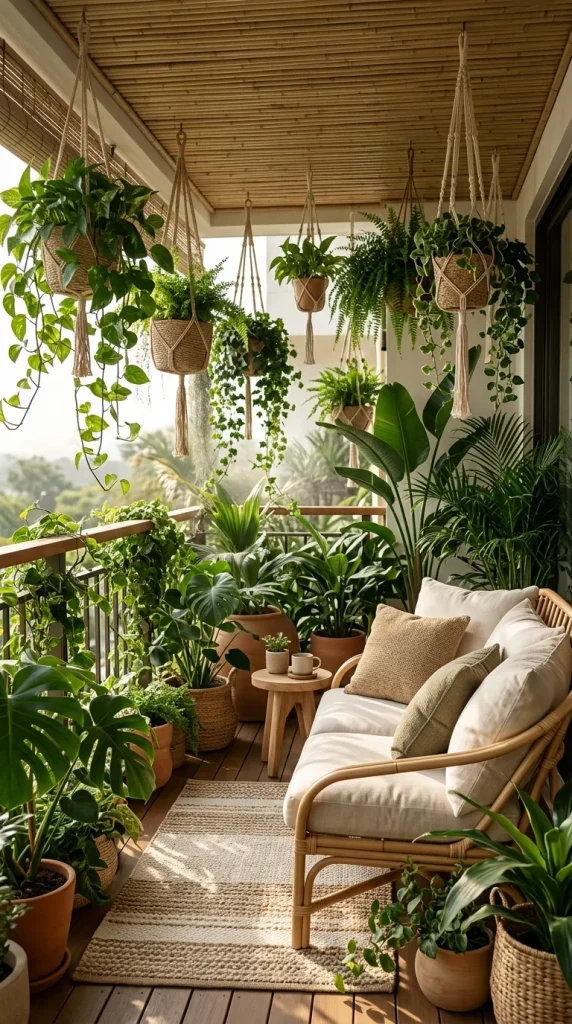
7. Tropical Hanging Plant Balcony
Create the feeling of a private tropical escape by combining lush hanging plants with natural textures and comfortable outdoor furniture.
Choose plants with large or abundant foliage that suit your balcony’s light and climate conditions. The goal is to create a rich green atmosphere without overcrowding the space.
Use hanging baskets at different heights around the balcony. Add a few larger floor plants underneath to create a layered jungle effect.
Natural materials are essential for this style. Incorporate rattan chairs, bamboo details, wooden furniture, woven baskets, and natural-fiber textiles.
Choose cushions in cream, earthy green, muted beige, or subtle tropical-inspired patterns. You do not need bright colors everywhere; greenery itself can provide most of the visual interest.
A small outdoor rug can define the seating area while making the balcony feel more like an extension of the home.
If privacy is important, strategically placed trailing plants can help create a softer screen. However, make sure plants do not obstruct required balcony access or create unsafe conditions.
Use a mixture of leaf sizes to make the arrangement feel natural. Large leaves provide drama while smaller trailing plants add delicate movement.
The finished balcony should feel lush but comfortable. Include a chair or loveseat where you can actually sit and enjoy the plants.
This design is ideal for people who want their balcony to feel like a vacation-inspired retreat. With the right plant selection and natural accessories, even a compact balcony can become a peaceful green escape.
Materials Used: Hanging baskets, tropical-style plants suited to local conditions, rattan furniture, wooden accessories, woven baskets, outdoor cushions, and a natural-texture rug.
Styling Tip: Layer plants from ceiling height to floor level to create a full tropical garden effect.
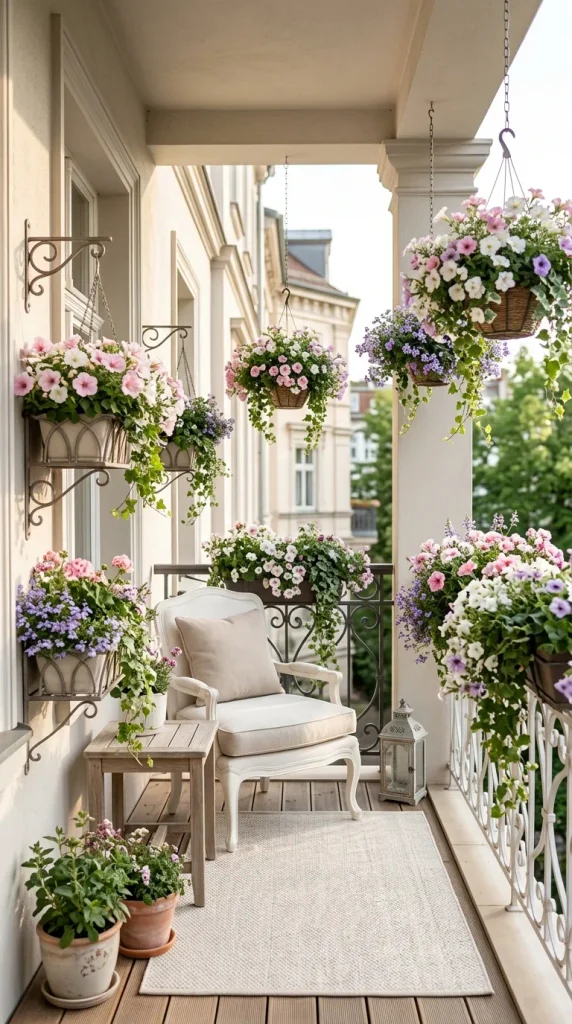
8. Hanging Flower Baskets for a Colorful Balcony
If you love cheerful outdoor spaces, use hanging flower baskets to introduce seasonal color to your balcony.
Flowering plants can instantly make a balcony feel brighter and more welcoming. Choose varieties that are suitable for your balcony’s sunlight and local growing conditions.
Arrange several baskets around the balcony rather than placing all the flowers in one location. You can hang them from the ceiling, railing, or wall brackets depending on the available structure.
For a sophisticated appearance, choose a controlled color palette. Soft pink and white flowers create a romantic look, while purple and lavender tones feel elegant. Bright mixed colors can create a more playful garden atmosphere.
Use matching baskets if you want the arrangement to look cohesive. Alternatively, combine different textures while keeping the flower colors coordinated.
Add simple furniture in a neutral shade so the flowers remain the main visual feature. A white chair, wooden stool, or natural rattan seat can work beautifully.
Regular maintenance is important for flowering plants. Remove spent flowers when appropriate, monitor watering requirements, and provide the amount of sunlight each variety needs.
This idea can also be changed seasonally. You can refresh the plants or flowers throughout the year to give the balcony a constantly evolving appearance.
For Pinterest photography, capture the balcony during the time of day when the flowers receive soft natural light. A slightly angled view can show the hanging baskets, seating area, and overall arrangement together.
Materials Used: Hanging flower baskets, suitable flowering plants, potting mix, secure hooks or brackets, neutral furniture, and optional outdoor cushions.
Styling Tip: Coordinate flower colors with one or two balcony accessories for a polished and intentional look.
9. Hanging Plants Around a Cozy Balcony Seating Area
Instead of making the plants the only feature, create a complete relaxation zone where hanging greenery frames a comfortable seating area.
Start with a compact outdoor chair, loveseat, or small bench. Position the seating where it receives comfortable levels of sunlight and does not interfere with balcony access.
Then place hanging plants around the seating area. One planter can hang above or slightly behind the chair, while others can be positioned along the side wall or railing.
Choose plants with different heights and leaf shapes to create depth. Trailing plants can frame the seating area beautifully and make it feel more private.
Add comfortable cushions in neutral colors and a small outdoor rug underneath. A compact side table can hold drinks, books, or decorative objects.
Warm outdoor lighting can complete the arrangement. String lights or a suitable outdoor lantern can make the space feel especially inviting at night.
The goal is to create a small outdoor room rather than simply a collection of plants.
Keep the furniture proportional to the balcony. A large sofa may make a small balcony feel cramped, while a compact chair and table can provide plenty of comfort without sacrificing floor space.
This idea works well for balconies used for morning coffee, reading, evening conversations, or quiet relaxation.
For the best visual effect, allow some greenery to hang around the seating without completely blocking the view. This creates a sense of privacy while maintaining openness.
Materials Used: Hanging planters, suitable plants, outdoor chair or loveseat, cushions, outdoor rug, side table, and warm outdoor lighting.
Styling Tip: Think of the plants as a natural frame around the seating area rather than scattering them randomly across the balcony.
10. Layered Hanging Plant Wall for a Pinterest-Worthy Balcony
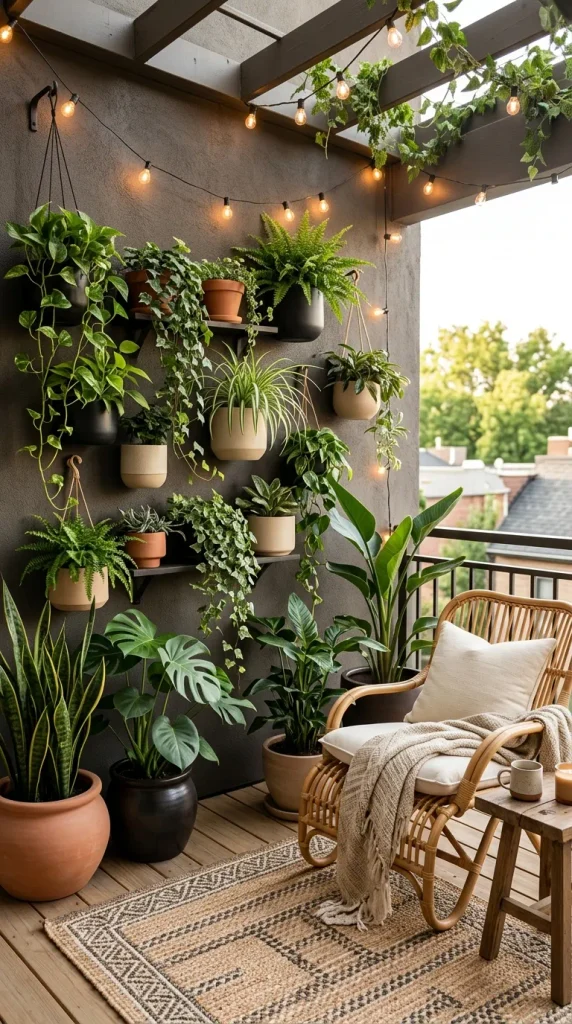
For the ultimate statement balcony, create a layered hanging plant wall using multiple planters arranged at different heights.
This idea is perfect for a blank balcony wall that needs personality. Instead of hanging plants in a straight line, create a balanced composition using different sizes and heights.
Start with a few larger planters toward the lower portion of the wall and smaller planters higher up. Trailing plants can connect the different levels visually as their foliage grows downward.
Choose a consistent planter palette to keep the arrangement from looking chaotic. Black, white, terracotta, or neutral ceramic containers can all work depending on your balcony style.
You can combine several plant types, but make sure their individual light and watering requirements are compatible with their locations.
Add one or two larger floor plants below the hanging display to connect the wall with the rest of the balcony. A compact bench or chair can sit opposite the green wall.
For a sophisticated appearance, avoid filling the entire wall immediately. Allow space between containers and let the plants gradually grow into the arrangement.
You can also incorporate small wall-mounted shelves for decorative objects, but greenery should remain the primary feature.
The finished result resembles a living piece of wall art. It brings vertical interest to the balcony and can become a beautiful focal point visible from inside the home.
This is one of the best options for creating a dramatic Pinterest-style balcony because the layered greenery creates depth, texture, and visual movement.
Materials Used: Multiple hanging planters, secure wall hooks or brackets, suitable plants, potting mix, floor planters, compact furniture, and optional decorative lighting.
Styling Tip: Use a triangular or staggered arrangement rather than a rigid grid to make the plant wall feel more organic.
Materials Used for Hanging Plants on a Balcony
Before creating your hanging plant display, gather the right materials. The exact supplies depend on the style you choose, but the following items are useful for most balcony arrangements:
- Hanging planters or baskets
- Macramé plant holders
- Railing planters
- Secure hooks and brackets
- Suitable potting mix
- Plants appropriate for your balcony’s light conditions
- Pots with adequate drainage
- Watering can
- Outdoor-safe string lights if desired
- Plant saucers or suitable drainage solutions
- Outdoor furniture
- Cushions and throws
- Outdoor rug
- Woven baskets
- Decorative lanterns
- Small side tables
- Plant labels for herb gardens
Choose materials that can withstand your balcony’s weather conditions. Outdoor exposure can affect fabrics, metal, wood, and other materials, so select products designed for the environment.
How to Create a Hanging Plant Balcony
Step 1: Study Your Balcony
Observe how much direct sunlight your balcony receives throughout the day. Also consider wind exposure, rain, temperature, and privacy.
Step 2: Select Appropriate Plants
Choose plants based on their actual growing requirements rather than appearance alone. Plants that naturally thrive in your conditions will be easier to maintain.
Step 3: Plan the Layout
Before installing anything, decide where each planter will go. Think about different heights, spacing, and how the plants will look as they grow.
Step 4: Choose the Right Hanging Method
Use hooks, brackets, railing planters, or other mounting systems suitable for the structure. Follow the manufacturer’s instructions carefully.
Step 5: Prepare the Containers
Use appropriate potting mix and containers with suitable drainage. Avoid containers that are excessively heavy for the intended mounting point.
Step 6: Install the Planters Securely
Make sure every hanging planter is properly supported. Test the stability of the installation before placing valuable or delicate plants inside.
Step 7: Arrange Plants by Height
Create layers by positioning some plants higher and others lower. This gives the balcony more visual depth.
Step 8: Add Seating
If space permits, introduce a comfortable chair, bench, or small loveseat. This makes the balcony more functional.
Step 9: Add Decorative Details
Use rugs, cushions, lanterns, small tables, or outdoor lighting to complement the greenery.
Step 10: Maintain the Display
Water according to each plant’s requirements, remove damaged foliage, check drainage, and regularly inspect hanging hardware.
Proper Pinterest-Style Pattern for Hanging Balcony Plants
A successful Pinterest-style balcony usually follows a simple visual formula:
Hanging Greenery + Layered Heights + Natural Texture + Cozy Seating + Warm Lighting
For example:
Macramé Planters + Trailing Greenery + Rattan Chair + Woven Rug + Warm String Lights
Or:
Terracotta Hanging Pots + Herbs + Wooden Furniture + Neutral Cushions + Natural Daylight
The most important principle is balance. You do not need dozens of plants to create a beautiful balcony. A carefully arranged selection with different heights, textures, and leaf shapes can have a much stronger visual impact.
For Pinterest photography, photograph the balcony vertically so the full height of the hanging plants can be seen. Use natural light whenever possible and avoid excessive clutter.
Styling Tips for Hanging Plants in a Balcony
Use Different Heights
Hanging plants look more interesting when they are positioned at different levels. This creates depth and prevents the arrangement from appearing flat.
Coordinate Your Planters
Matching or complementary planters can make even a large collection of plants feel organized.
Mix Textures
Combine greenery with rattan, wood, terracotta, linen, metal, and woven materials to create visual richness.
Keep the Floor Open
One major advantage of hanging plants is that they preserve floor space. Avoid filling the floor with too many additional containers.
Consider Plant Growth
A tiny plant may eventually become large and trailing. Plan the arrangement with future growth in mind.
Create a Focal Point
Choose one area to receive the most visual attention. This could be a hanging plant wall, cozy seating corner, or dramatic cascading display.
Add Warm Lighting
Warm outdoor lighting can make a balcony feel inviting after sunset while highlighting the plants.
Use a Limited Color Palette
Greenery already provides plenty of visual interest. Neutral furniture and accessories can help maintain a sophisticated appearance.
Final Thoughts
Hanging plants are one of the most effective ways to transform a balcony into a beautiful green retreat without sacrificing valuable floor space. From simple macramé planters and railing baskets to dramatic cascading displays and layered plant walls, there are countless ways to create a balcony that reflects your personal style.
The best designs combine greenery with comfort and thoughtful styling. Start by understanding your balcony’s sunlight and weather conditions, choose suitable plants, and then build the arrangement around your available space.
For a Pinterest-worthy result, focus on different plant heights, coordinated containers, natural textures, comfortable seating, and warm lighting. Avoid overcrowding the balcony and give each element enough space to stand out.
Whether you have a tiny apartment balcony or a large outdoor terrace, hanging plants can introduce color, texture, privacy, and life. With a little planning, an ordinary balcony can become a peaceful garden-inspired space that feels like a beautiful extension of your home.


Leave a Reply