
A staircase with a landing is more than just a functional part of the home—it can become a beautiful architectural feature when styled thoughtfully. Adding a stair runner is one of the easiest ways to bring warmth, texture, pattern, and personality to a staircase while also making the steps more comfortable and visually connected to the landing area.
When decorating stairs with a landing, the runner should work as one continuous design rather than treating the stairs and landing as completely separate spaces. The right pattern, material, color, and installation style can create a polished transition from one level to another. Whether your home has a traditional staircase, modern architecture, farmhouse details, or a cozy transitional interior, there are plenty of stair runner ideas to explore.

A landing also gives you an opportunity to extend the runner visually and create a small decorative moment. You can coordinate the runner with a landing rug, artwork, console table, lighting, or surrounding wall colors. The goal is to make the entire staircase feel intentional and balanced.
Below are ten stylish stair runner ideas with landing inspiration, ranging from classic neutral designs to bold patterns and modern textures.
1. Classic Neutral Stair Runner With a Coordinated Landing
A neutral stair runner is one of the most timeless choices for a staircase with a landing. Shades such as beige, ivory, taupe, oatmeal, warm gray, and soft brown work especially well because they complement many different interior styles.
Choose a runner with a subtle woven texture or a simple border. The understated pattern allows the architectural details of the staircase to remain visible while creating a finished appearance. A runner with a darker border can be particularly effective because it visually frames each step and adds definition without overwhelming the space.
For the landing, continue the same runner if the staircase layout allows it. This creates visual continuity and makes the stairs feel like one connected design. If the runner cannot continue onto the entire landing, use a small coordinating rug in a similar color and texture.
Natural wood stair treads look beautiful alongside neutral runners. White risers can create a fresh contrast, while stained wood can make the staircase feel warmer and more traditional.
Add a simple console table or narrow bench to the landing if space permits. A ceramic vase, framed artwork, or small table lamp can complete the area.
This design works particularly well in transitional, traditional, farmhouse, Scandinavian, and contemporary homes. It is also an excellent choice if you want a staircase that will remain stylish even when the rest of your home’s decor changes.
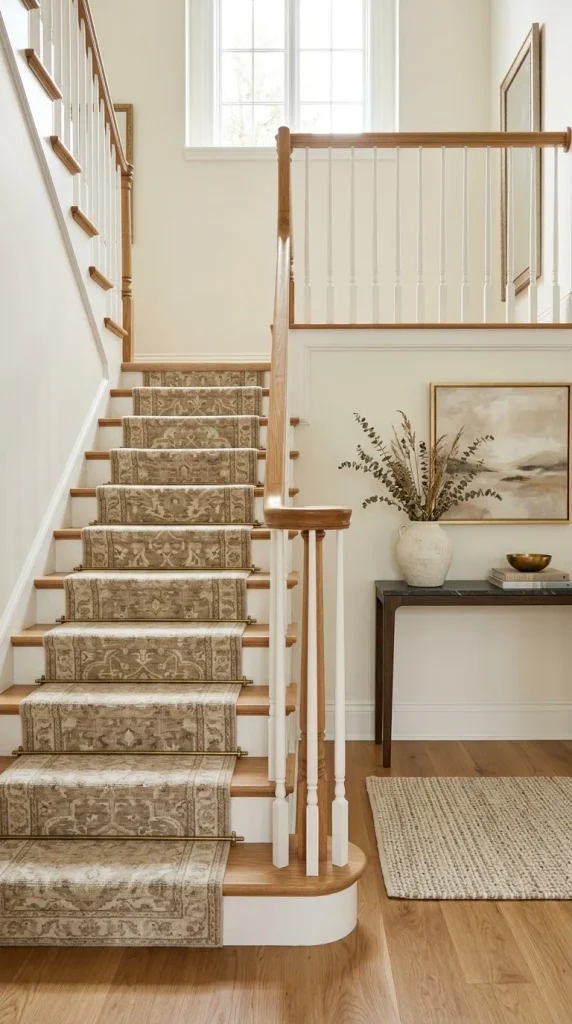
2. Patterned Stair Runner With a Simple Landing
If your staircase feels plain, a patterned runner can instantly introduce personality. Geometric patterns, subtle diamonds, stripes, botanical motifs, and traditional Persian-inspired designs can all work beautifully.
The key is to let the staircase runner become the main decorative feature. Choose a pattern that complements the colors already present in your home rather than introducing too many unrelated shades.
For example, a cream runner with charcoal geometric lines can create a sophisticated modern look. A beige-and-brown pattern can complement warm wood floors, while a muted blue design can bring subtle color into a neutral hallway.
When the stairs include a landing, keep the landing decor relatively simple. The runner should visually connect the staircase to the landing without competing with artwork or furniture.
If the landing is large enough, consider using a small solid-color rug that picks up one of the runner’s secondary colors. This creates coordination without making the pattern feel repetitive.
Pattern scale is also important. Small repetitive patterns can make a narrow staircase feel detailed and cozy, while larger patterns can create a more dramatic statement on wider stairs.
This idea is especially suitable for homeowners who want their staircase to feel decorative rather than purely functional. A patterned runner can become an unexpected focal point and give an otherwise ordinary hallway much more character.
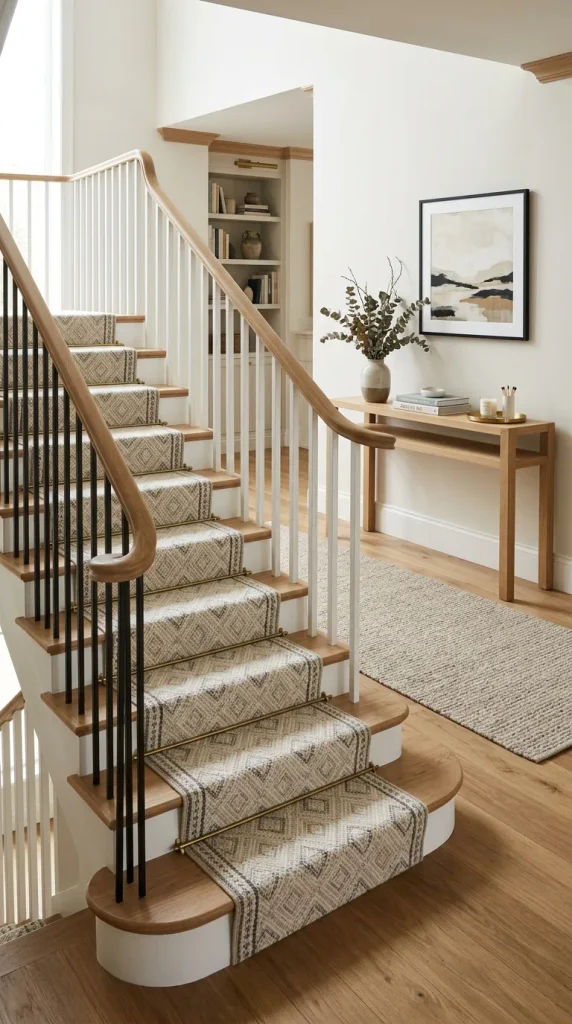
3. Black and White Stair Runner With Landing
Black and white is a classic combination that works beautifully on staircases. A black-and-white runner can make a staircase look crisp, structured, and sophisticated without relying on bright colors.
For a traditional look, choose a runner with black edging and a soft white or cream center. For a modern home, consider a bold geometric pattern with clean lines.
The landing provides an important opportunity to soften the contrast. Instead of adding more black-and-white accessories, introduce natural wood, beige textiles, greenery, or warm metallic accents.
If your staircase has white risers, a dark runner can create a particularly striking contrast. Wooden handrails can add warmth and prevent the design from feeling too stark.
On the landing, continue the runner or place a small neutral rug with a simple black border. A slim black console table can echo the runner’s color, while a large piece of neutral artwork can keep the surrounding walls calm.
Lighting is another important consideration. Warm lighting works particularly well with black-and-white stair runners because it prevents the space from appearing too cold.
This style works in contemporary, modern farmhouse, transitional, and classic interiors. It is also a practical choice when you want a high-contrast design that still feels timeless.
The combination is visually strong but versatile enough to work with changing seasonal decorations.
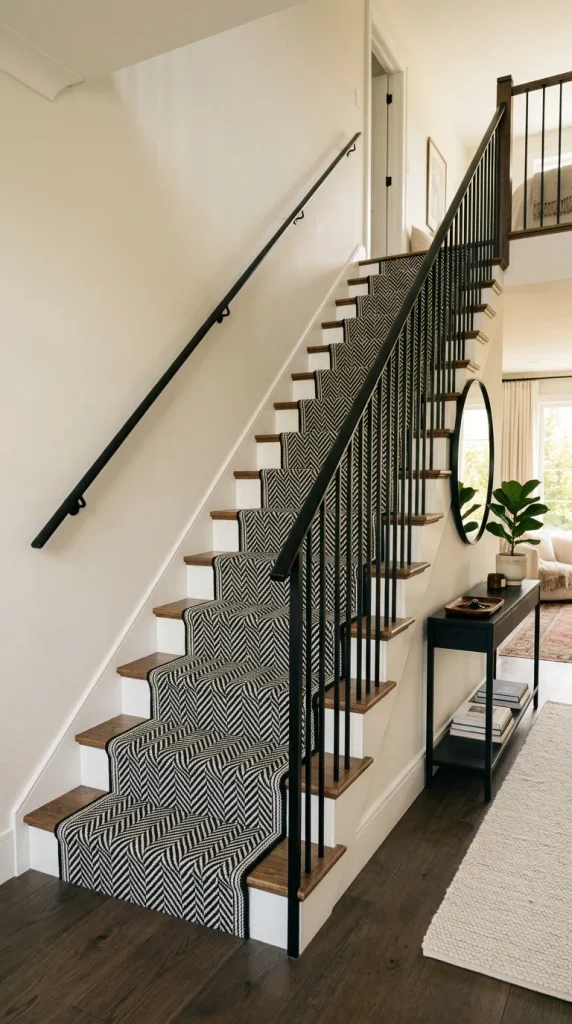
4. Vintage-Inspired Stair Runner With a Landing
A vintage-inspired stair runner can give a staircase a sense of history and character. This style works especially well in older homes, traditional interiors, cottage-style spaces, and homes with original woodwork.
Look for runners featuring faded patterns, distressed details, muted reds, soft blues, warm browns, cream, or dusty green. Persian-inspired patterns are particularly effective because they create visual interest without looking overly modern.
The slightly aged appearance of a vintage runner pairs beautifully with natural or dark wood stairs. If your staircase has traditional balusters or decorative molding, the vintage style can emphasize those architectural details.
For the landing, continue the runner whenever possible. If the landing requires a separate rug, select one with similar colors and an understated pattern.
Decorate the landing with vintage-inspired accessories such as an antique-style mirror, a wooden console, framed botanical prints, or a ceramic lamp. Avoid adding too many decorative objects because the runner already provides visual detail.
One of the benefits of vintage-inspired designs is that small imperfections can actually enhance the aesthetic. A slightly faded pattern or worn-looking texture can make the staircase feel welcoming and lived-in.
This idea is perfect for creating a warm, collected interior rather than a highly polished showroom appearance.
If you want a staircase that feels elegant but relaxed, a vintage runner with coordinating landing decor can provide exactly that balance.
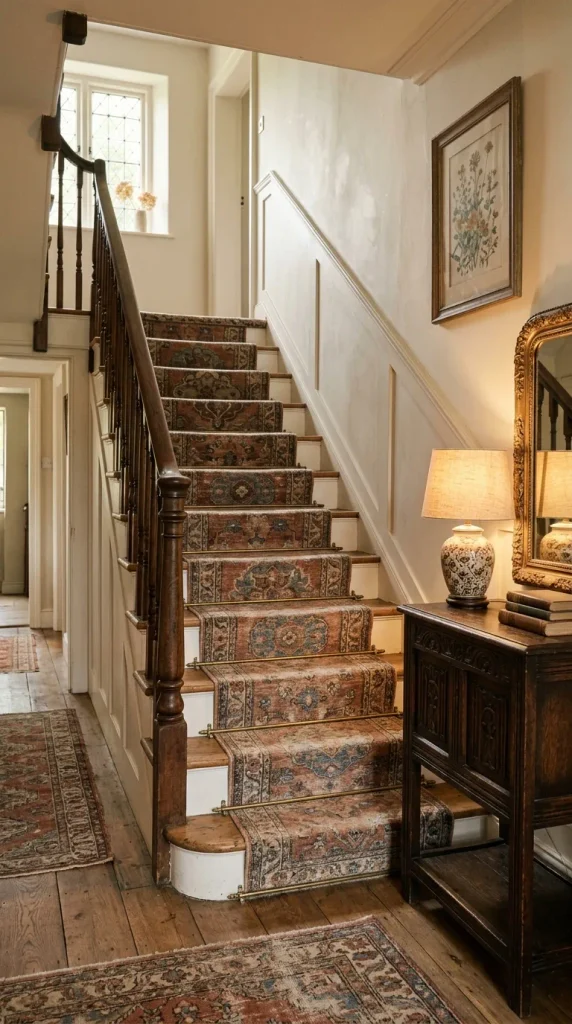
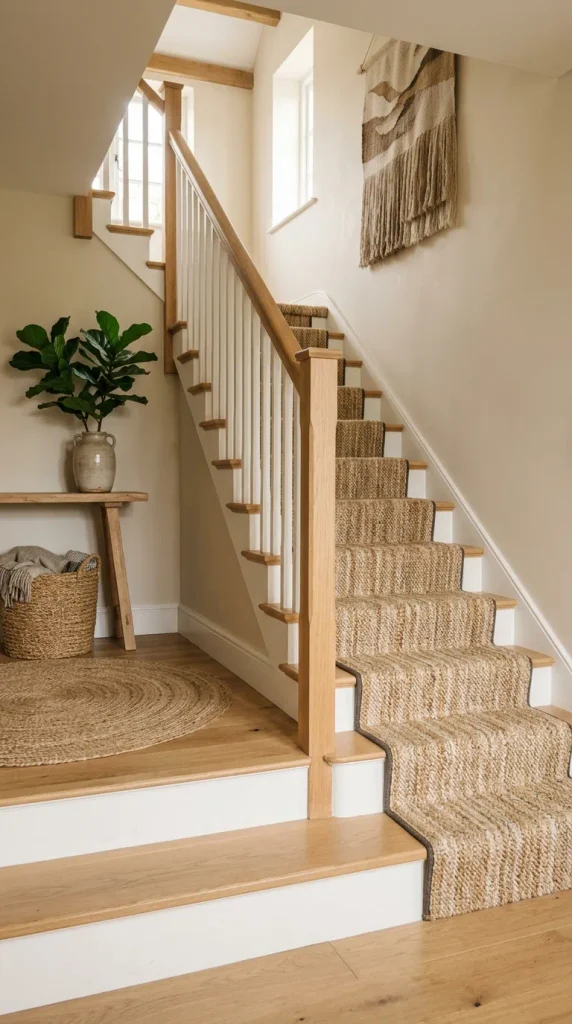
5. Natural Jute Stair Runner With a Cozy Landing
For a warm and organic staircase, consider a natural jute or woven-fiber runner. This option is especially attractive in coastal, farmhouse, organic modern, Scandinavian, and bohemian interiors.
Jute runners typically feature natural shades of tan, beige, sand, and warm brown. Their textured surface adds depth even when the design itself is simple.
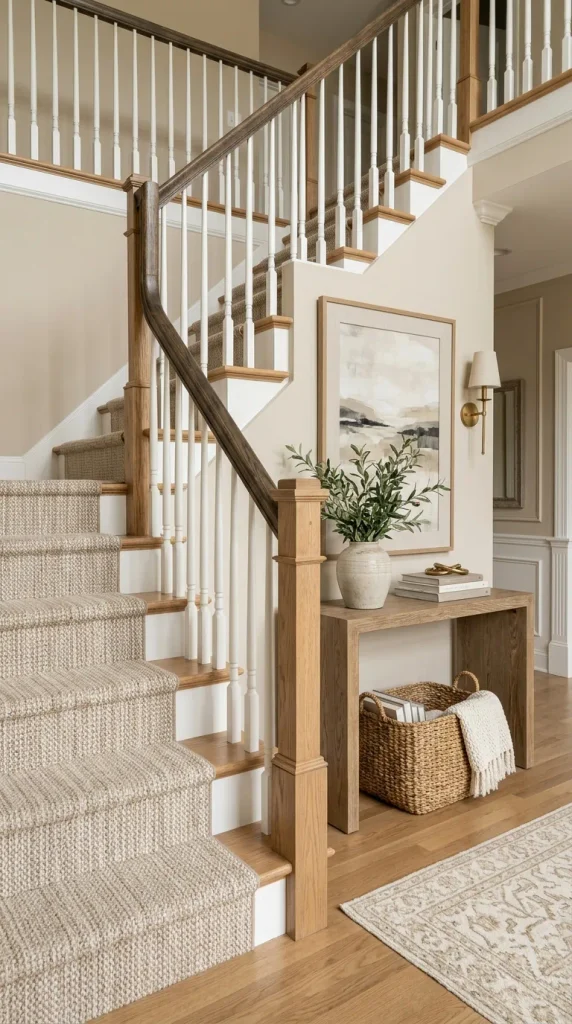
Pair the runner with natural wood stairs and a wooden handrail for a cohesive organic appearance. White walls and light-colored trim can keep the staircase bright and airy.
If the staircase includes a landing, continue the natural material wherever practical. A small woven rug on the landing can reinforce the texture without making the area feel overly decorated.
Add a few simple accessories such as a woven basket, ceramic vase, wooden stool, or leafy plant. These details can make the landing feel connected to the staircase.
The beauty of this style is its versatility. Natural textures work with both minimalist and layered interiors. You can keep the rest of the staircase extremely simple or combine the runner with artwork and decorative lighting.
For a more sophisticated look, choose a tightly woven runner with a subtle border instead of a very rustic texture.
Natural runners can also help soften a staircase visually. Their organic appearance creates warmth and makes a potentially hard architectural element feel more inviting.
This is an excellent option if your decorating style focuses on earthy materials, neutral colors, and comfortable spaces.
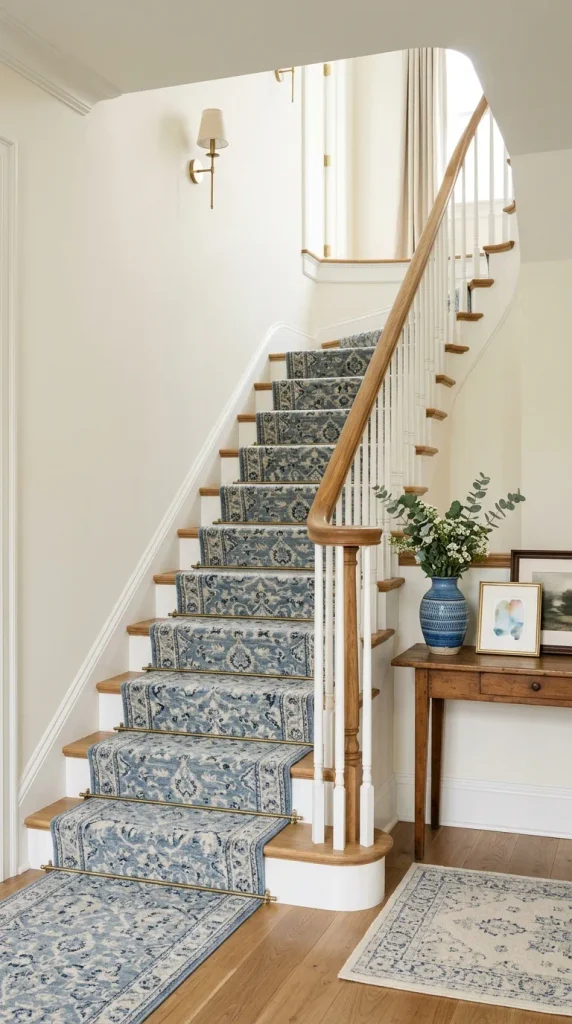
6. Blue and Cream Stair Runner With Landing
A blue and cream stair runner can bring color into a staircase while maintaining an elegant and timeless appearance. Soft navy, dusty blue, denim, slate, and muted blue-gray shades all work well with cream.
This color combination is particularly attractive in homes with white walls and natural wood flooring. The blue adds personality while the cream prevents the staircase from feeling too dark.
Choose a runner with stripes, traditional motifs, diamonds, or a subtle repeating pattern. For a more contemporary look, select a simple blue border against a cream background.
On the landing, repeat the blue through small decorative accents rather than introducing another strong pattern. A blue ceramic vase, artwork, cushion, or table lamp can create subtle coordination.
If the landing has a window, natural light can make the blue tones appear softer and more dimensional. Warm wood elements can further balance the cooler color.
A blue-and-cream runner also works particularly well with brass or aged-metal hardware. A brass wall light or small decorative mirror can add a polished finishing touch.
This style is suitable for coastal, traditional, transitional, cottage, and modern farmhouse homes.
If you want to introduce color into your staircase without committing to a very bold design, blue and cream provide a balanced solution. The palette feels decorative but remains easy to coordinate with other rooms throughout the house.
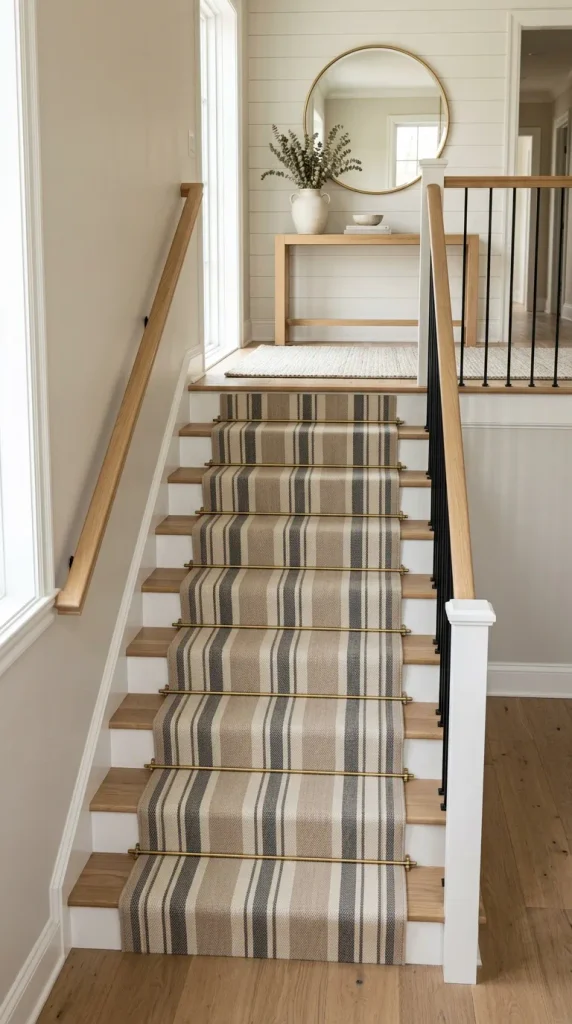
7. Striped Stair Runner With a Stylish Landing
Stripes are one of the most effective patterns for staircase runners because they naturally follow the direction of the stairs. They can make the staircase appear longer, more structured, and visually streamlined.
Choose from thin pinstripes, wide stripes, alternating neutral bands, or irregular woven stripes. The right choice depends on the overall style of your home.
A neutral striped runner in beige and ivory creates a subtle look, while black and cream stripes make the staircase much more dramatic.
For stairs with a landing, use the same runner throughout if possible. At the landing, the direction of the stripes may change depending on how the runner is installed. This can actually create an interesting architectural transition.
Keep the surrounding landing decor relatively restrained. A simple console, round mirror, or framed artwork can provide enough decoration.
If the staircase has a narrow width, thinner stripes may be more suitable because they create detail without making the runner appear visually heavy. Wider staircases can handle larger stripe patterns.
Wooden stair treads paired with a striped runner create a classic combination. White-painted stairs can make the design feel fresher and more contemporary.
Stripes are also useful when you want a staircase that feels slightly more architectural. The repeated lines create rhythm and draw the eye naturally from one floor to the next.
This makes striped runners a practical and decorative choice for both traditional and modern homes.
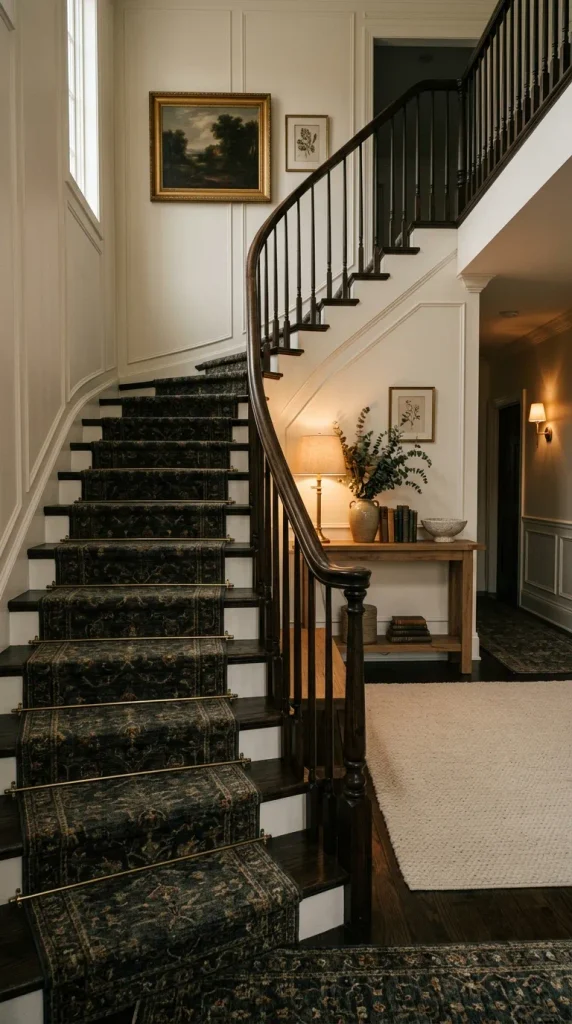
8. Dark Moody Stair Runner With Warm Landing Decor
For a dramatic staircase, consider a deep charcoal, espresso, navy, or dark olive runner. Dark runners can create an elegant and sophisticated atmosphere, especially when combined with warm lighting.
This look works particularly well in homes with white walls because the contrast makes the staircase stand out. It can also work beautifully with darker wood flooring and traditional architectural details.
Instead of making the landing equally dark, introduce warm neutral elements. A cream-colored rug, natural wood console, woven basket, or warm brass lighting can soften the overall look.
A dark runner with a subtle pattern is often more forgiving visually than a completely solid runner. Small geometric or traditional details can add depth without reducing the dramatic effect.
For a luxury-inspired appearance, combine the dark runner with brass stair rods, a dark wood handrail, and warm metallic lighting.
The landing can become a small atmospheric space with a statement mirror, decorative lamp, and a few carefully selected accessories.
This style is especially suitable for moody interiors, traditional homes, modern classic spaces, and sophisticated transitional designs.
Because darker colors visually ground the staircase, they can also make an open staircase feel more substantial.
The key is balance. Pair the dark runner with enough lighter surrounding elements so the staircase feels dramatic rather than visually heavy.
9. Stair Runner With Brass Stair Rods and Landing Details
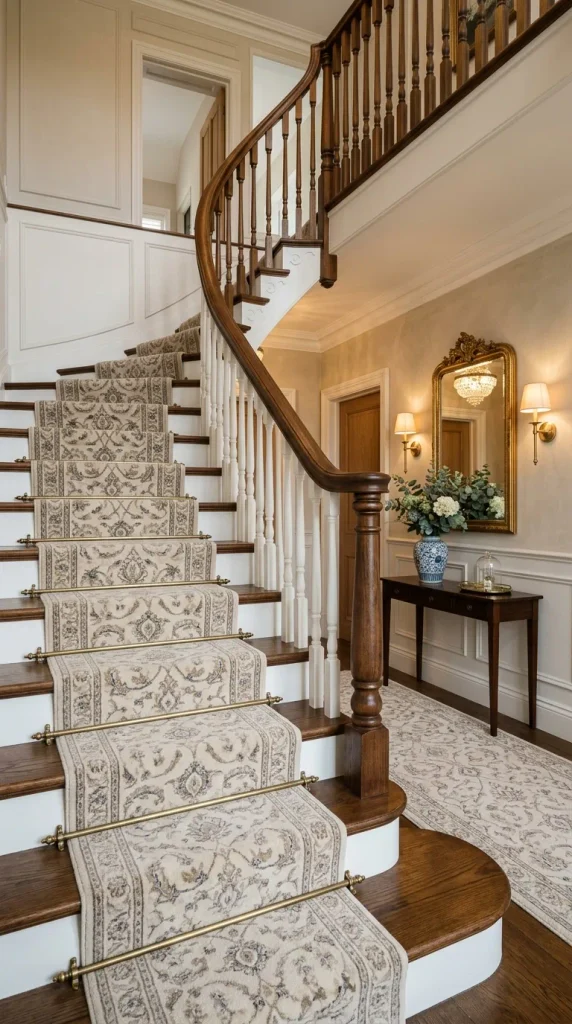
For a classic and luxurious staircase, combine a beautiful runner with decorative brass stair rods. Brass rods can secure the runner while also adding an architectural detail that makes the installation look intentional.
Choose a runner in a neutral, traditional, or subtly patterned design. Cream, beige, taupe, charcoal, navy, and muted botanical patterns all work well with brass.
The rods create a repeating horizontal detail across each stair, giving the staircase a tailored appearance.
On the landing, continue the runner if possible and repeat the brass finish through a mirror frame, wall light, console hardware, or small decorative accessories.
This approach works especially well in traditional and transitional homes where architectural details are an important part of the design.
The landing can be styled with a narrow wooden console and a large mirror. Add one or two decorative objects rather than filling the surface completely.
If your staircase has white risers and natural wood treads, brass hardware can provide the perfect connection between the two materials.
For a more contemporary version, choose a simple runner and minimal brass rods. For a traditional interior, select a patterned runner with ornate brass hardware.
The combination feels timeless because both the runner and brass details can complement a wide variety of furnishings.
It also gives the staircase a custom-designed appearance, making even a relatively simple runner feel more sophisticated.
10. Layered Stair Runner and Landing With Coordinated Decor
A layered staircase design can create the most complete and intentional look. Instead of focusing only on the runner, coordinate the stairs, landing, walls, lighting, and accessories as one visual composition.
Start with a runner in a neutral or subtle pattern. Then use the landing as an opportunity to introduce complementary textures and decorative elements.
For example, a beige runner can be paired with a small vintage-style landing rug, a natural wood console, woven basket, ceramic lamp, framed artwork, and a leafy plant. The colors should remain within the same overall palette so the staircase does not feel visually disconnected.
You can also coordinate the stair runner with nearby hallway flooring. If the hallway has wood flooring, the runner can introduce soft texture. If the surrounding area is carpeted, choose a runner that complements the carpet rather than matching it exactly.
Wall art can be especially effective on the landing. A gallery wall, oversized artwork, or statement mirror can create a focal point without interfering with the staircase itself.
Lighting should also be considered. Wall sconces can illuminate the stairs while adding decorative character. A pendant light above the landing can create an elegant vertical focal point.
Layering works because it turns the staircase into part of the overall interior rather than treating it as an isolated feature.
This approach is ideal if you want your staircase and landing to feel warm, sophisticated, cohesive, and highly styled.
Materials Used for Stair Runner Decor
Before installing or styling a stair runner, gather the right materials. Depending on the runner and installation method, you may need:
- Stair runner carpet
- Carpet padding or stair pad
- Measuring tape
- Carpet adhesive or appropriate installation materials
- Stair rods, if desired
- Brass or metal hardware
- Staple gun and staples when appropriate
- Runner binding or finished edges
- Landing rug if the runner does not continue onto the landing
- Wooden or metal handrail
- Console table for the landing
- Wall mirror or artwork
- Decorative lighting
- Woven baskets
- Ceramic vases
- Indoor plants
- Neutral decorative accessories
The exact installation materials should depend on your staircase construction and the runner you select.
How to Style a Stair Runner With Landing
Start by measuring the entire staircase, including the landing. Consider the width of each stair, the depth of the tread, the height of the risers, and the shape of the landing.
Next, determine whether you want the runner to continue across the landing. A continuous installation generally creates the most cohesive appearance, but the staircase layout may determine what is practical.
Choose the runner color after considering the surrounding flooring and wall colors. Neutral runners are versatile, while patterned designs can make the staircase a focal point.
Once the runner is selected, coordinate the landing decor using one or two colors from the runner. Avoid matching every accessory exactly.
Finally, add lighting and a few decorative elements. A mirror, console table, artwork, plant, or small lamp can make the landing feel finished without overcrowding it.
Proper Pinterest-Style Pattern for Stair Runner Decor
For a Pinterest-worthy staircase, focus on visual continuity, texture, and a clear color palette.
A simple formula is:
Runner + Wood or Painted Stairs + Coordinated Landing + Statement Lighting + Minimal Accessories
Use one primary runner color, one secondary accent color, and natural materials to keep the staircase visually cohesive.
For example:
Cream runner + natural wood + black accents + woven textures
or:
Vintage runner + dark wood + brass details + warm lighting
Photography also matters when showcasing your staircase. A vertical composition that captures the full staircase, landing, runner pattern, and surrounding architecture will create a stronger visual story.
Keep the landing uncluttered so the staircase remains the main focus.
Tips for Choosing the Right Stair Runner
Consider durability before choosing a runner. Staircases receive frequent foot traffic, so a durable material is important.
Think about pattern scale. Small patterns can work well on narrow stairs, while larger patterns may be better suited to wider staircases.
Consider the landing carefully. A runner that looks beautiful on individual stairs should also work visually when it reaches the landing.
Choose colors that complement the surrounding flooring and walls instead of treating the staircase as a completely separate space.
Finally, consider safety. A properly fitted and securely installed runner should remain stable and suitable for everyday use. For installation, follow the manufacturer’s instructions or work with a qualified professional when necessary.
Final Thoughts
A staircase with a landing offers plenty of opportunities to create a beautiful design feature. From classic neutral runners and vintage patterns to bold stripes, natural textures, dark colors, and luxurious brass details, the right runner can completely transform the character of a staircase.
The most successful designs connect the runner with the landing and surrounding interior through coordinated colors, materials, and accessories. Whether your style is modern, traditional, farmhouse, coastal, boho, or transitional, there is a stair runner approach that can make the entire space feel more polished.
Focus on durability, proportion, comfort, and visual continuity, then use the landing as a small decorative extension of the staircase. With the right combination, your stairs can become one of the most memorable design features in your home.



Leave a Reply