
Introduction
Outdoor umbrellas are one of the easiest ways to make a patio, porch, deck, garden seating area, or poolside space more comfortable. They provide shade during sunny afternoons, help define outdoor seating zones, and can also become an attractive part of an outdoor decorating scheme. However, an umbrella is only as practical as the stand supporting it. A poorly chosen stand can look out of place, become unstable in windy weather, or fail to complement the rest of the outdoor furniture.
That is why choosing the right umbrella stand is an important part of outdoor design. Today’s umbrella stands are available in many materials, shapes, finishes, and styles, making it possible to combine stability with beautiful décor. From heavy stone bases and concrete stands to wooden frames, metal designs, planter-style stands, and creative DIY solutions, there are options for almost every outdoor aesthetic.
Pinterest-style outdoor spaces often focus on creating a cohesive atmosphere rather than simply adding individual functional objects. An umbrella stand can contribute to that atmosphere when its material and color coordinate with the surrounding furniture, flooring, planters, cushions, and architectural details.

For example, a natural stone umbrella stand can complement an organic patio filled with greenery, while a matte black metal stand can look sophisticated beside contemporary outdoor furniture. A terracotta planter-style stand can create a Mediterranean feeling, and a wooden umbrella base can add warmth to a rustic or coastal deck.
Functionality should always come first. An outdoor umbrella can catch a significant amount of wind, so the base needs enough weight and stability for the size and style of the umbrella. The surface beneath the stand should also be considered. A heavy stone base may work beautifully on concrete or stone but could be less convenient on a delicate wooden deck.
The location matters as well. A stand positioned beside an outdoor dining table may need a different shape from one used beside a lounge chair. Poolside areas may benefit from materials that are easy to clean, while gardens can accommodate more decorative planter-style designs.
The following ten umbrella stand ideas combine practicality with attractive outdoor styling. They can inspire everything from simple budget-friendly setups to sophisticated patio designs that look polished enough for a magazine or Pinterest board.
Materials Used for Outdoor Umbrella Stands
The best material depends on the umbrella size, location, weather conditions, and overall outdoor decorating style.
Common Base Materials
- Concrete
- Cast iron
- Steel
- Aluminum
- Natural stone
- Granite
- Marble
- Wood
- Ceramic
- Terracotta
- Resin
- Recycled plastic
- Composite materials
Decorative Materials
- Pebbles
- Gravel
- Outdoor paint
- Exterior wood stain
- Mosaic tiles
- Rope
- Woven materials
- Metal accents
- Weather-resistant fabric
- Outdoor planters
- Decorative stones
- Faux greenery
Helpful Tools
- Measuring tape
- Level
- Drill
- Screwdriver
- Exterior screws
- Sandpaper
- Outdoor adhesive
- Paintbrush
- Protective gloves
- Cleaning cloth
Always select weather-resistant materials and make sure the umbrella stand is appropriately weighted for the umbrella being used.
How to Choose and Style an Outdoor Umbrella Stand
Start by measuring the umbrella pole and checking the manufacturer’s recommended base size. A stand should fit the pole securely rather than relying only on weight.
Next, consider the umbrella canopy. Larger canopies generally require heavier and more stable bases, particularly in areas where wind is common.
Think about the surface where the stand will sit. Concrete patios, stone terraces, wooden decks, grass, and gravel each present different stability requirements.
After selecting the base, coordinate its appearance with your outdoor furniture. You do not necessarily need an exact match, but repeating a material or color can make the space look more intentional.
Finally, consider how the umbrella stand interacts with the rest of the space. It should provide stability without becoming a tripping hazard or interfering with chairs, pathways, planters, or doors.
1. Heavy Stone Umbrella Stand
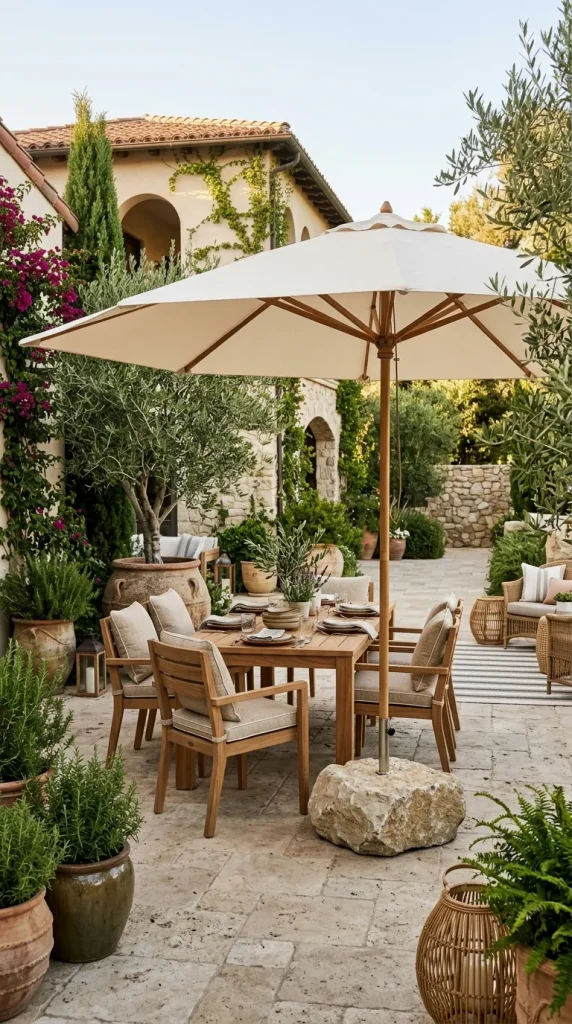
A heavy natural stone umbrella stand is one of the most timeless options for an outdoor space. Stone naturally provides substantial weight, making it useful for supporting umbrellas while also introducing texture and an organic appearance.
Choose granite, limestone, sandstone, or another weather-resistant stone depending on the climate and the style of your patio. A simple square or round stone base can look particularly elegant beside wooden or woven outdoor furniture.
For an organic modern patio, pair the stone with neutral cushions, teak furniture, woven accessories, and plenty of greenery. The natural material blends beautifully with plants and outdoor landscaping.
A stone stand can also become part of a more luxurious setting. Place it beside a large outdoor dining table with neutral upholstered chairs and a simple linen-look umbrella. Add stone planters around the area to repeat the material.
One advantage of stone is its visual permanence. Unlike lightweight plastic bases, it feels substantial and intentional.
However, stone can be difficult to move. Choose the location carefully before placing it, particularly if the stand is extremely heavy.
Clean the surface regularly to prevent moss, dirt, and outdoor residue from accumulating. Avoid harsh cleaning products that could damage natural stone.
This style is ideal for homeowners who want their umbrella base to feel like a natural architectural element rather than an ordinary piece of outdoor equipment.
2. Concrete Umbrella Stand
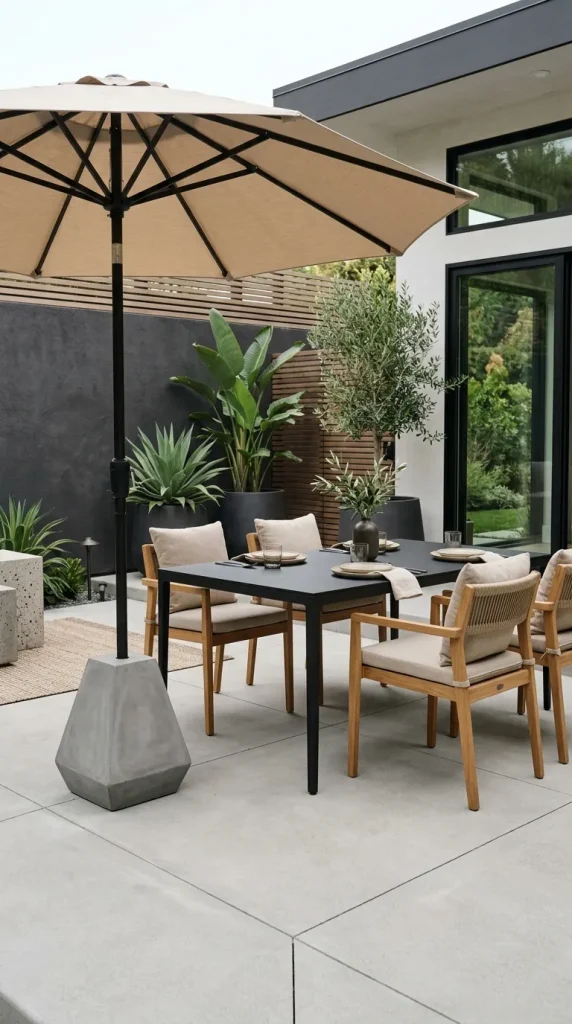
Concrete is a practical material that can provide excellent weight and a modern appearance. Its simple, architectural quality makes it particularly suitable for contemporary patios and minimalist outdoor spaces.
A smooth concrete base can have a clean geometric shape, such as a square, rectangle, or cylinder. For a softer appearance, choose a rounded design with subtly curved edges.
Concrete pairs beautifully with natural wood, black metal, stone, and neutral outdoor fabrics. A concrete umbrella stand can therefore work across many decorating styles.
For a modern patio, combine it with a black-framed outdoor dining table, gray cushions, warm wood accents, and large architectural planters.
For an industrial-inspired space, leave the concrete in its natural gray finish and combine it with dark metal furniture.
Concrete can also be customized with exterior paint or decorative finishes if you want more color. Neutral shades such as charcoal, cream, taupe, and warm gray are especially versatile.
Because concrete is heavy, it can provide useful stability. However, it should be placed carefully because moving it after installation may be difficult.
Make sure the umbrella pole fits securely into the central opening. If necessary, use the appropriate hardware recommended for the umbrella.
This design is ideal for homeowners who prefer a minimalist outdoor aesthetic and want a functional umbrella base that blends naturally into a contemporary environment.
3. Decorative Planter Umbrella Stand
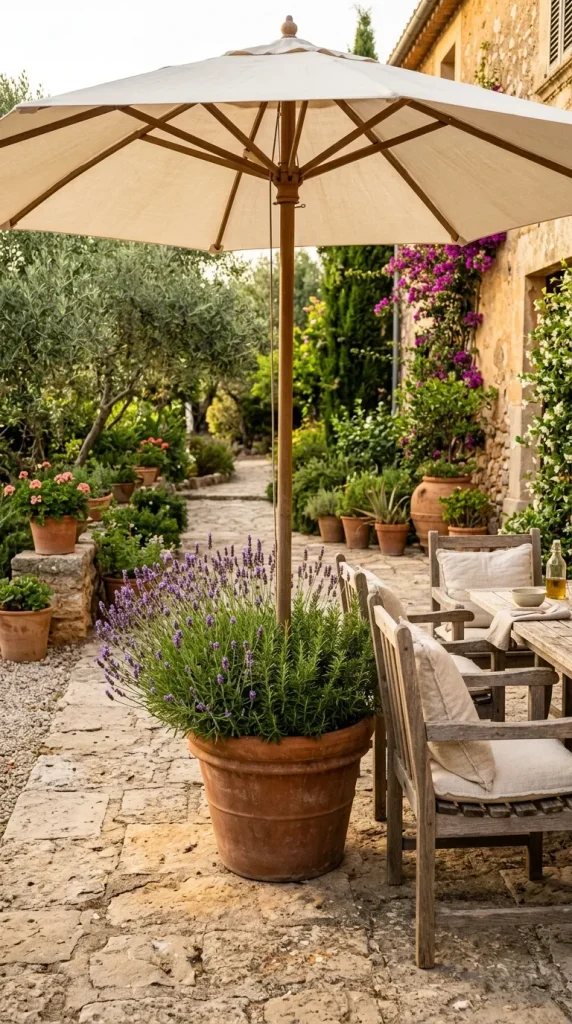
A planter-style umbrella stand combines two useful outdoor features: umbrella support and greenery. Instead of hiding the base, this approach turns it into part of the landscaping.
Choose a large weather-resistant planter with enough weight and structural strength to support the umbrella. Depending on the design, the planter can be filled with soil, decorative stones, or another appropriate stabilizing material.
Add plants around the umbrella pole to create a lush, integrated appearance. Low-growing ornamental grasses, herbs, flowers, or suitable container plants can work beautifully.
For a Mediterranean patio, use a terracotta-colored planter with lavender, rosemary, or drought-tolerant greenery. For a modern garden, choose a large charcoal planter with architectural foliage.
The planter should not interfere with the umbrella mechanism or make it difficult to close and remove the canopy.
One of the biggest advantages of this design is visual integration. The umbrella does not appear to sit on a separate base because the support becomes part of the planting arrangement.
Choose plants according to the amount of sunlight available. A poolside location may have strong direct sunlight, while a covered porch could require shade-tolerant varieties.
This creative idea is especially attractive for garden patios where greenery is already an important part of the overall design.
4. Wooden Umbrella Stand for a Rustic Patio
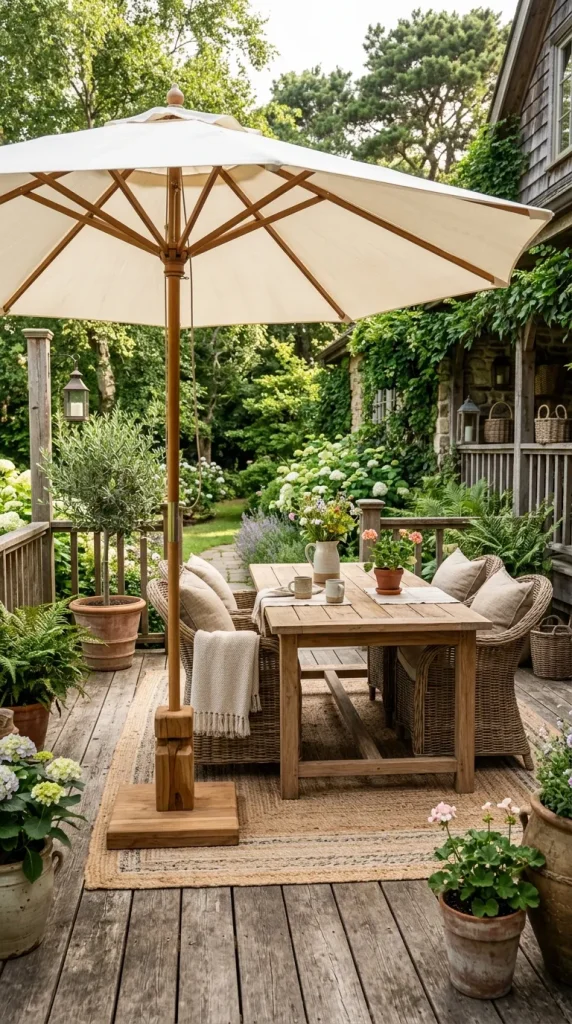
A wooden umbrella stand can bring warmth and natural character to an outdoor seating area. It works particularly well with farmhouse, rustic, coastal, cottage, and organic decorating styles.
Choose a durable outdoor wood such as teak or another weather-resistant option. The base can be constructed as a substantial wooden box or designed as a decorative frame around a heavy internal support.
A warm wood finish pairs beautifully with neutral outdoor fabrics, woven chairs, rattan furniture, and natural stone.
For a coastal patio, use a lighter wood finish and combine it with white cushions, soft blue accents, woven accessories, and simple greenery.
For a rustic setting, a darker stained wood can complement a farmhouse-style dining table and metal outdoor chairs.
Wood requires more maintenance than some synthetic materials. Apply appropriate exterior protection and inspect the stand periodically for moisture damage, cracking, or other signs of wear.
The wooden structure should also be heavy and stable enough for the umbrella being used. Decorative appearance should never replace proper support.
When designed correctly, a wooden umbrella stand can look less like outdoor equipment and more like custom furniture.
This approach is especially useful when the goal is to create a warm, cohesive outdoor room that feels connected to the natural surroundings.
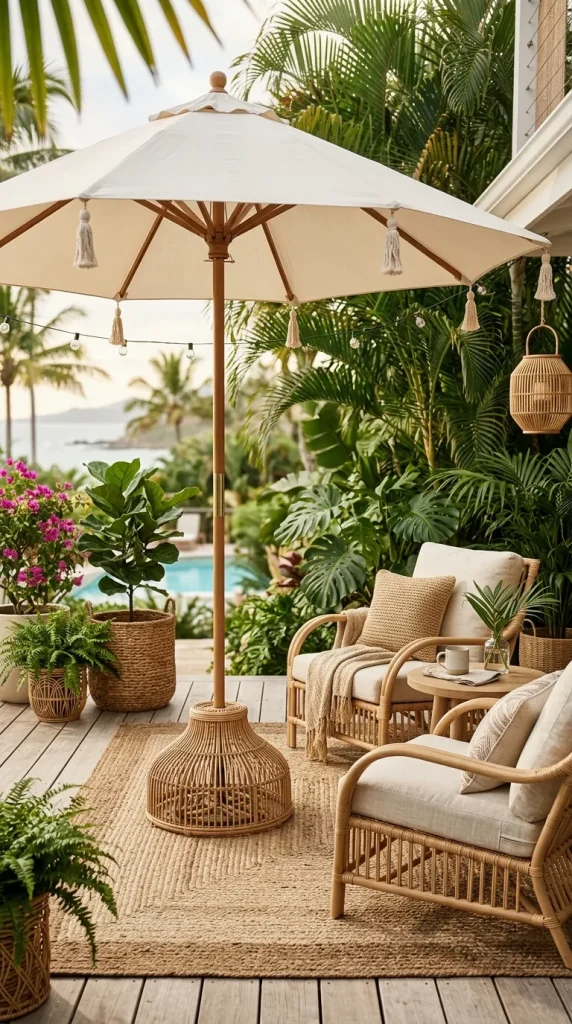
5. Woven Rattan-Style Umbrella Base
A rattan-style umbrella base can add relaxed texture to patios, balconies, and covered outdoor spaces. It is particularly effective in bohemian, coastal, tropical, and resort-inspired designs.
Because natural rattan may not be suitable for prolonged exposure to rain, weather-resistant synthetic wicker or resin wicker can provide a more practical alternative.
The exterior can resemble a woven basket while concealing a heavy internal base. This creates the appearance of lightweight natural furniture without sacrificing stability.
Pair the stand with rattan lounge chairs, linen-look cushions, woven pendant lights, and neutral outdoor rugs.
A warm natural brown finish creates a relaxed appearance, while black or charcoal woven materials can give the design a more contemporary feeling.
Add large potted plants nearby to reinforce the natural texture. Palm-inspired foliage, ornamental grasses, or broad-leaf plants can create a resort-like atmosphere.
This umbrella stand style is especially effective beside outdoor lounge furniture because its woven texture helps soften harder surfaces such as concrete and metal.
Always check that the decorative outer structure does not interfere with the umbrella’s support mechanism.
With the right combination of materials, a woven umbrella base can make a practical object feel like an intentional part of the outdoor decorating scheme.
6. Modern Black Metal Umbrella Stand
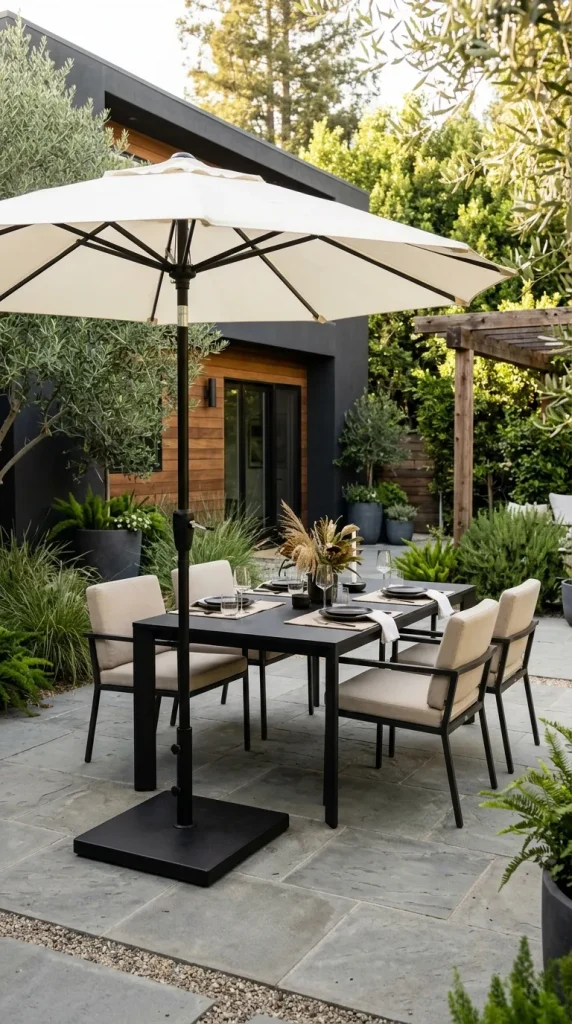
A matte black metal umbrella stand can create a sophisticated appearance in a contemporary outdoor space. Black is particularly useful because it coordinates with many other outdoor materials, including aluminum furniture, black-framed windows, charcoal planters, and dark lighting fixtures.
Choose a heavy-duty cast iron or steel design appropriate for the umbrella size. Look for weather-resistant finishes designed for outdoor use.
The clean dark silhouette works beautifully with light-colored umbrellas. Cream, white, beige, and soft gray can create attractive contrast.
For a dramatic modern patio, pair the black stand with a black outdoor dining table, warm wood chairs, neutral cushions, and architectural greenery.
For a softer look, combine black metal with natural rattan and light wood.
Metal bases can be easier to clean than porous materials. However, inspect the finish periodically for chips or signs of corrosion, particularly in areas exposed to moisture.
A black metal base can also coordinate with other black details throughout the garden, such as fencing, planters, lanterns, or outdoor furniture frames.
This idea is perfect for homeowners who prefer clean lines and sophisticated contrast. It allows the umbrella stand to look intentional without becoming the main decorative feature of the patio.
7. Mosaic Tile Umbrella Stand
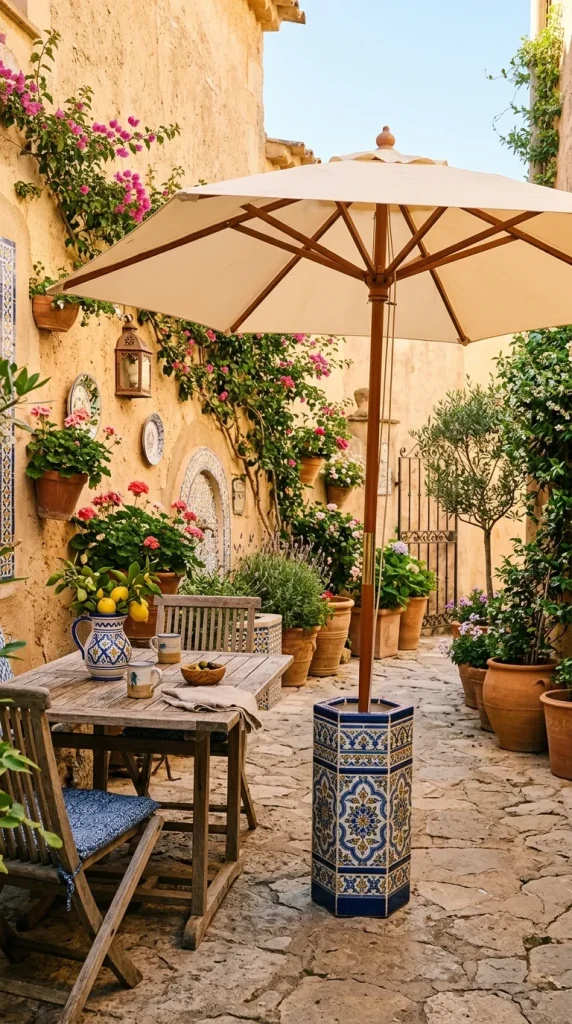
For a more artistic outdoor space, consider a mosaic-tiled umbrella stand. Colorful tiles can turn a simple functional base into a decorative feature.
A concrete or stone base can be covered with weather-resistant mosaic tiles in a carefully selected pattern. Blue and white tiles create a Mediterranean or coastal feeling, while terracotta, cream, and green can create a rustic garden aesthetic.
If your patio already contains patterned cushions or rugs, choose tile colors that repeat those tones rather than introducing too many unrelated colors.
The mosaic should be sealed appropriately for outdoor exposure so moisture does not damage the surface.
A mosaic umbrella base works particularly well near outdoor dining areas, courtyard gardens, and Mediterranean-inspired patios.
Keep the rest of the décor relatively simple so the mosaic remains the focal point. Plain cushions, neutral furniture, and simple planters allow the pattern to stand out.
This design can also be an enjoyable DIY project for homeowners who enjoy handmade décor. Old tiles can potentially be incorporated into the design, giving the base a unique character.
A mosaic stand is more than a support structure. It becomes a small piece of outdoor art that adds personality and color to the space.
8. Umbrella Stand with Built-In Wheels
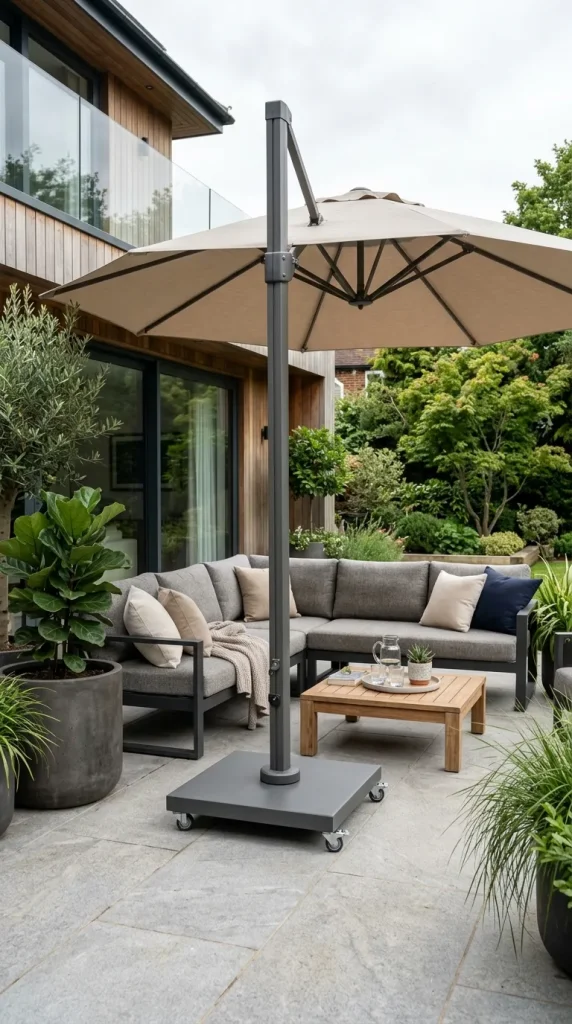
A wheeled umbrella stand is a practical option when outdoor furniture needs to be rearranged frequently. Large umbrellas can be difficult to move, so adding wheels to the base can make seasonal changes and cleaning much easier.
Choose a heavy base with sturdy locking wheels. The wheels should be designed for outdoor surfaces and strong enough to support the full weight of the stand and umbrella.
This design is especially useful on large patios where the umbrella needs to move between dining and lounge areas.
The wheels should remain locked whenever the umbrella is open. Mobility is useful when repositioning the stand, but stability is essential during use.
A wheeled base can be made from concrete, resin, metal, or other durable materials. Choose a finish that matches the outdoor furniture.
For example, a charcoal wheeled base can coordinate with contemporary furniture, while a neutral resin finish can blend into a casual patio.
Keep the area around the wheels clear of loose rugs, cords, and other objects that could interfere with movement.
This design prioritizes practicality without sacrificing style. It is particularly valuable for homeowners who frequently rearrange outdoor furniture or need to store the umbrella during storms or seasonal weather changes.
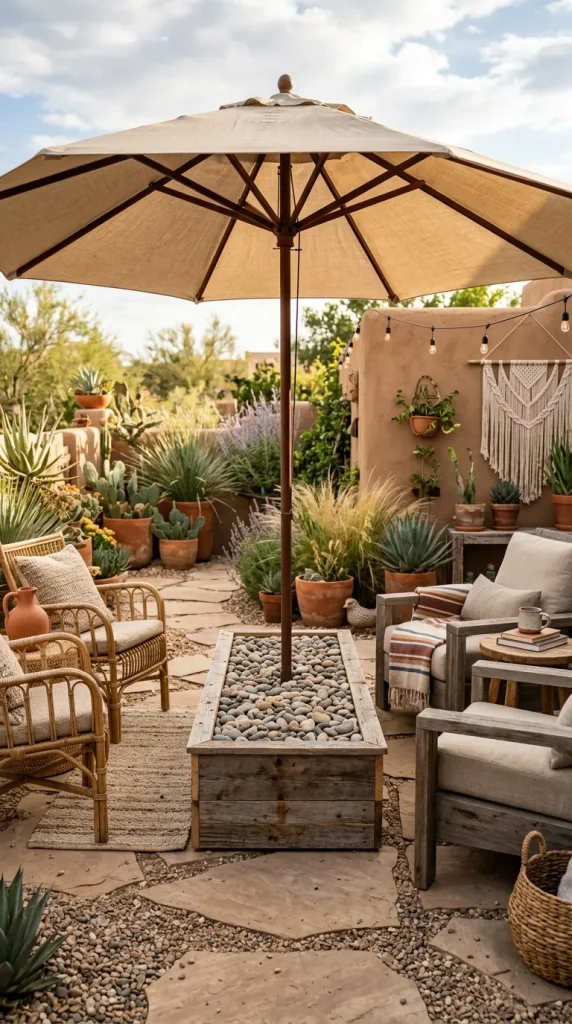
9. Gravel-Filled DIY Umbrella Stand
A gravel-filled DIY umbrella stand can provide a creative and budget-conscious solution when you want a custom appearance.
A sturdy outdoor planter, wooden box, or heavy-duty container can be used as the outer structure. The interior can be designed to accommodate the umbrella pole and filled with appropriate heavy material.
Decorative gravel can provide both weight and visual appeal. Choose white, gray, tan, or dark stones depending on the surrounding landscape.
For a desert-inspired patio, warm beige gravel can complement terracotta pots and drought-tolerant plants. For a modern patio, dark charcoal stones can create a sophisticated appearance.
The container itself can be painted or finished to coordinate with your outdoor furniture.
However, DIY bases require careful attention to stability. The finished stand must be appropriately weighted and securely designed for the umbrella’s dimensions and local conditions.
Use a proper pole sleeve or mounting system rather than simply placing the pole into loose gravel.
This idea works especially well when you want a custom shape or color that is difficult to find in ready-made umbrella stands.
The result can look like a decorative planter or sculptural outdoor object while providing functional support.
10. Stone-and-Planter Combination Stand
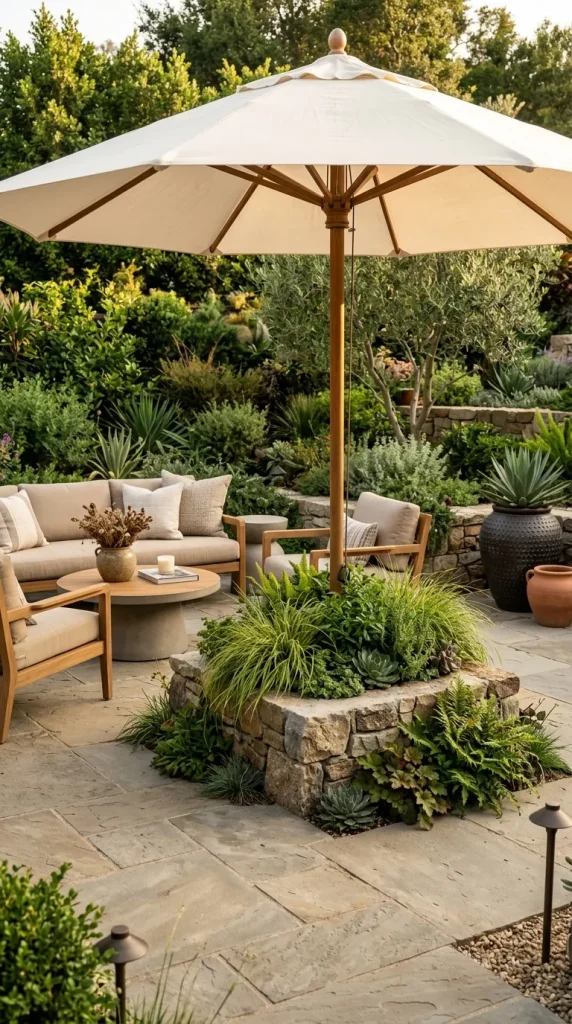
A stone-and-planter combination creates a sophisticated outdoor feature by combining structural weight with natural greenery.
Start with a large, heavy stone or concrete base that provides the necessary support for the umbrella. Surround or integrate it with a decorative planter containing suitable outdoor plants.
The stone provides visual grounding, while the greenery softens the overall appearance.
This style works beautifully in contemporary gardens where architectural landscaping is important. Pair the base with large stone pavers, neutral outdoor furniture, ornamental grasses, and sculptural planters.
For a more traditional garden, use natural stone and flowering plants. For a modern patio, choose a charcoal concrete base with minimalist greenery.
Keep the planting arrangement low enough that it does not interfere with the umbrella mechanism or seating.
The combination also allows the umbrella to feel connected to the surrounding landscape rather than appearing as a separate piece of equipment.
Choose plants based on sunlight, water requirements, and local weather conditions. Outdoor containers should also have appropriate drainage.
This approach creates a polished Pinterest-style patio where practical shade, landscaping, and furniture feel like parts of one cohesive design.
Outdoor Styling Tips for Umbrella Stands
An umbrella stand should coordinate with the rest of your outdoor environment rather than appearing as an isolated object.
Repeat materials whenever possible. If your patio furniture uses teak, consider a wooden or wood-look base. If your outdoor lighting is black metal, a black metal umbrella stand can create visual continuity.
Color is another useful tool. A neutral umbrella can work with almost any base, while a colorful canopy can become a statement feature.
Consider the surrounding flooring as well. Stone bases look particularly natural on stone or concrete patios, while wooden designs can blend beautifully into decking.
Plants are one of the easiest ways to integrate an umbrella stand into an outdoor setting. Surround the area with greenery, but make sure plants do not interfere with movement or umbrella operation.
Outdoor rugs can also help define the seating zone. Place the umbrella and furniture so the canopy provides shade over the main seating area during the times of day when the space is most frequently used.
Always prioritize stability. The visual appearance of the stand should never be more important than its ability to safely support the umbrella.
Conclusion
An outdoor umbrella stand is much more than a functional base. With thoughtful selection, it can become an attractive part of your patio, deck, porch, garden, or poolside design.
From natural stone and concrete to wooden, woven, metal, mosaic, planter-style, and DIY designs, there are countless ways to combine stability with beautiful outdoor décor. The best option depends on your umbrella, outdoor surface, climate, furniture, and personal decorating style.
For a timeless appearance, natural stone and concrete are excellent choices. If warmth is the priority, wood can create a welcoming rustic or coastal feeling. Black metal offers modern sophistication, while woven materials create a relaxed resort atmosphere. Planter-style designs can integrate the umbrella into the landscape, and mosaic finishes can introduce artistic personality.
When choosing an umbrella stand, always consider weight, pole compatibility, weather resistance, and placement. A beautiful base is only successful when it provides dependable support.
Once the practical requirements are handled, styling becomes much easier. Coordinate the base with your furniture, repeat materials and colors, add greenery, and create a comfortable seating zone around the umbrella.
The right umbrella stand can help turn an ordinary outdoor area into a comfortable, organized, and Pinterest-worthy retreat. Whether your goal is a cozy farmhouse patio, minimalist modern deck, tropical garden lounge, or elegant poolside setting, the right combination of shade, stability, and style can make your outdoor space feel complete.




Leave a Reply